Yet more of my photos to share with you.

oooo

oooo

oooo

oooo

oooo
oooo

oooo

The final set of photos in another week’s time.
Stay safe all of you!
Dogs are animals of integrity. We have much to learn from them.
Year: 2020
Yet more of my photos to share with you.
oooo
oooo
oooo
oooo
oooo
oooo
oooo
The final set of photos in another week’s time.
Stay safe all of you!
Independence Day should also apply to our beloved dogs!
This was first published four years ago but I wonder if there has been any real change. So it’s being published again for the 2020 Independence Day.
ooOOoo
So today is July 4th. One of the key days of the year in the American calendar, if not the key day.
Freedom and independence are the corner stones of a healthy nation. That ‘nation’ should include our dogs. Ergo, I have no hesitation in republishing the following that first was seen on the Care2 site.
ooOOoo
 By: Natalia Lima June 28, 2016
About Natalia Follow Natalia at @TheNatiLima
The sight is heartbreaking: a sad animal, exposed to the heat or the cold, often without shelter, chained in a backyard. Sometimes all it takes to secure them is a thin rope tied around their collar on one end and a dog house on the other, in others it’s a thick metal chain that keeps the dog from moving away from a tree. Whatever the case, it’s enough to inspire any animal lover to change that dog’s life, but how? The answer is simpler than one would imagine: build a fence.
“Building a fence really changes the relationship between dogs and owners,” explains Michele Coppola, President of Fences for Fido, a nonprofit organization that builds fences in houses that have chained dogs so the dogs can run freely in the backyard. “Many times dogs who were outside 24/7 go on to become a family member, spending time in the house and outside because they’re no longer a location.”
Since 2009, Fences for Fido has been helping dogs in the Southwest Oregon and Washington state areas. People can anonymously nominate a house with a chained dog on their website or people can nominate themselves if they don’t have the means to build their own fence. According to the Coalition to Unchain Dogs, who helped Fences for Fido get started and has been building fences since 2006 in North Carolina, that lack of resources is the most common reason why people keep dogs chained.
“When we first started we thought we would build this fence and solve a problem but we quickly saw the problem is not chained dogs, it’s poverty,” explains Lori Hensley, Director of Operations at Coalition to Unchain Dogs. “No one wants to chain a dog. They just don’t have the means to build a fence.”
Other common reasons are not understanding that dogs are social animals that need to run around, an owner not knowing how to address behavioral problems and trying to keep the dog from running away, says the Humane Society of the United States.
“People chain their dogs for a variety of reasons so we always approach them without judgement because most times we’re not seeing the whole story,” says Coppola adding that those issues are addressed when building a fence for someone to make sure they’re educated on why chaining their dogs shouldn’t be a solution. “Maybe they didn’t have a fence to start with and someone, maybe a family member, dumped a dog with them and they’re keeping it out of the goodness of their hearts but they don’t have a fence. You don’t know.”
Between the two organizations, over 3,400 dogs have been freed from chains but since they only operate locally, they have created resources for people in other parts of the country who want to help. Unchained Planet, a Facebook group of volunteer fence builders, offers advice and tips to anyone looking to start their own fence building organization and a DIY tutorial is also available for free download.
From materials needed to step by step instructions, anyone can start building a fence to help chained dogs in their communities, though to complete novices, the guidance of a seasoned builder or a professional is encouraged.
“If you’re starting out for the very first time, it might be a good idea to pair up with a fence company who may be willing to help and even donate the materials,” suggests Coppola. “Or you want to find somebody who’s done a fence before and can kind of show you how to go about it.”
Photo Credit: ThinkStock
ooOOoo
Please, please help these poor dogs in any way that you can.
An outstanding center of excellence.
Let me start this review of Southern Oregon Vet Center (SOVC) with an extract from a recent blog post by Rob Mielcarski about Cognitive Biases and his presentation of the Cognitive Bias Codex :
I counted them. There are 195 distinct cognitive biases named and described in the list.
Have a look. Do you notice something very odd?
The most important and powerful of all human cognitive biases, and the one that created our unique species, is not on the list: denial of unpleasant realities.
Nor is its progenitor, denial of death.
Any half-wit who studies human history will notice that the first wacky thing our species did after evolving into behaviorally modern humans was make up stories (religions) to deny death.
Today our species aggressively denies every single unpleasant reality of substance that threatens its survival including: over-population, non-renewable resource depletion, climate change, pollution, habitat destruction, and species extinction.
The reason I started with Rob’s post is that at SOVC one comes face-to-face with the reality of the difference between dogs and humans. More of that later.
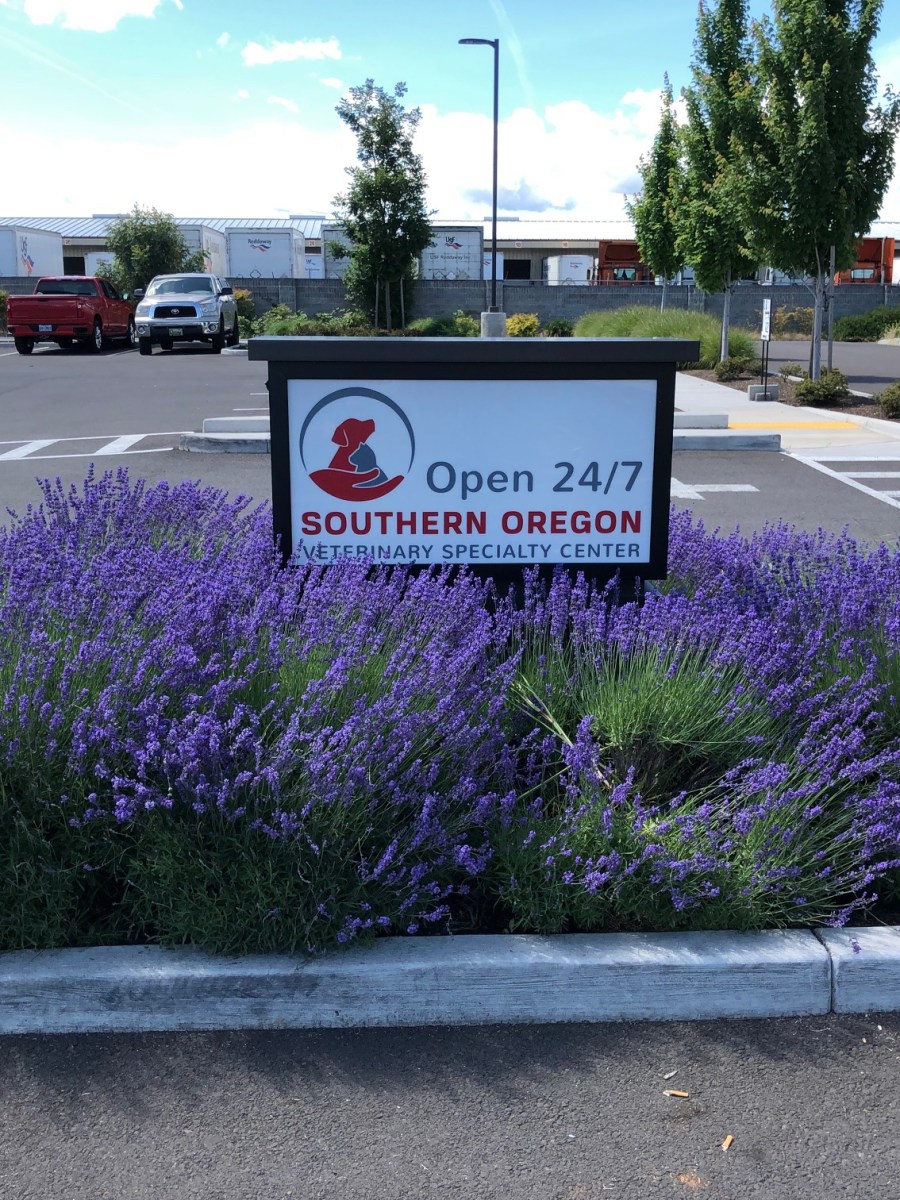
SOVC was formed in 2004 by Dr. Adam Reiss, DVM, and Dr. Steven Ferreira, DVM.
The facility at the time of formation was, and still is, the only 24-hour facility within a 250 miles radius in all directions. Now that straightforward statement needs thinking about for a moment.
Portland, Oregon is 268 miles to the North by road and Williams, California is a tiny town just off the Interstate I-5 some 254 miles to the South. It’s an enormous area and that’s without heading to the East!
I’m taking from the SOVC website more information on Dr.’s Reiss and Ferriara.
Dr. Adam Reiss
Adam Reiss, DVMDiplomate, American College of Veterinary Emergency and Critical Care
Dr. Reiss was born and raised in the suburbs of New York City. He graduated from New York State College of Veterinary Medicine at Cornell in 1993. Following graduation, he completed a small-animal internship at Alameda East Veterinary Hospital and residency in emergency and critical care at Denver Veterinary Specialists. Dr. Reiss obtained board certification in emergency and critical care in October 2002. Dr. Reiss has been involved in the growth and development of two large 24-hour emergency and referral centers in Denver, Seattle, Medford and Portland. He has published a paper on traumatic cardiac injuries, as well as book chapters on subjects such as dystocia and pneumonia. Dr. Reiss has special interests in trauma, transfusion medicine, critical care nutrition and pulmonary diseases.
Dr. Reiss moved to Medford from Seattle with his wife, Dawn, their daughters, Alexys and Makayla, son Deryk and a multitude of pets. His interests outside of veterinary medicine include woodworking, snowboarding and classic cars. Dr. Reiss moved to Southern Oregon to provide veterinary services not previously available in the area, as well as to enjoy the wide variety of activities the region has to offer.
oooo
Dr. Steven Ferriara.
Steven D. Ferreira, DVM
Diplomate, American College of Veterinary SurgeonsDr. Ferreira is originally from Arizona, but was raised in Houston, Texas. He received his DVM from the Texas A&M College of Veterinary Medicine in 1994. He worked in private practice in both Seattle and Houston for three years prior to completing a small-animal surgical residency at Denver Veterinary Specialists. During his residency, Dr. Ferreira completed and published orthopedic research focused on the effect of gas plasma sterilization on demineralized bone matrix grafts at Colorado State University. In February of 2002, he became board certified into the American College of Veterinary Surgeons. After three years as staff surgeon in a large veterinary referral practice in Denver, Dr. Ferreira moved to Medford to help establish the Southern Oregon Veterinary Specialty Center. Dr. Ferreira’s special interests include general orthopedics, trauma and fracture management, TPLO stabilization for cranial cruciate ligament injury, spinal surgery for disc herniation and surgical management of abdominal disorders.
Dr. Ferreira lives in the Medford area with his wife, daughters and their Chihuahua. In his spare time, he enjoys family life, golf, reading, hiking, snowboarding, music and fly fishing.
My appointment was with Renee Self who has been with the center, as in the hospital, for four years. She started in reception having come to SOVC from running her own finger nail business. At first Renee worked for 25 hours a week but since then she has advanced to her present position responsible for a whole myriad of things.
As well as the main contact person, Renee is also responsible for the relationships with their referring veterinarians; and they have 5,000 on their database, mainly from the U.S West coast but also other parts of the U.S. continent.
I didn’t understand at first that this entails annual blood work for lots of animals, running continuing education classes on a co-sponsored basis (under normal circumstances for 55 – 80 people), fund raising, and being a partner to the Grants Pass Homeless Pet Project and No Pet Left Behind.

Another fact that bowled me over was hearing about the number of vets supported by SOVC. Now not all them are active at any one time, of course, but nevertheless a large number on their database nonetheless.
In Renee’s words, Dr. Reiss is a brilliant man in many areas including planning, veterinary medicine, critical care and he also engages in some surgeries. He has always had a passion for veterinary medicine and has previously started six hospitals.
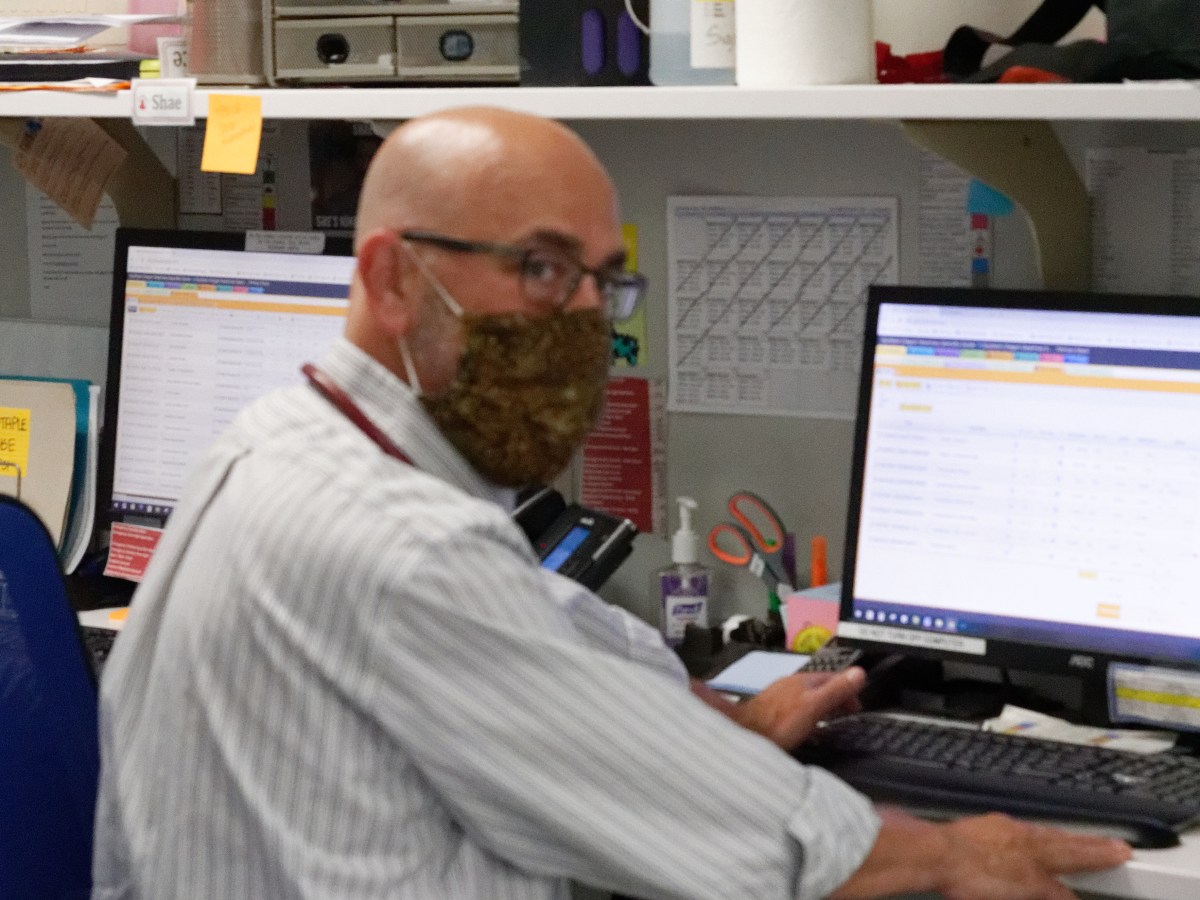
The present building at 4901 Biddle Rd was purpose built as a veterinary centre and everyone moved here in 2017. Before that they were in 4,000 square feet of building that was relatively close by.

In view of tomorrow being a Federal holiday the next part of this article will be published on Monday, 6th July.
This is a gorgeous story about a Corgi.
There was a story in the Daily Dodo that is just lovely.
I wondered why the Corgi was named Potato but that’s another question!
Enjoy the story!
ooOOoo
By Lily Feinn
Published on 6/8/2020.
Potato the corgi never misses an opportunity to say hi to her neighbors. So when social distancing started in Portland, Oregon, Potato’s parents, Cee and Pan, knew their dog wouldn’t be getting the kind of attention she was used to.

“She loves everyone — any dog, any kid, any adult human, doesn’t matter,” Cee told The Dodo. “Even dogs who snarl at her she’s like, ‘It’s OK, I’ll check back in five minutes.’”
“She’s in a polyamorous relationship with all of the mail, UPS and FedEx delivery people but the UPS man is her primary partner,” Cee added. “If you’re having a picnic at the park she will invite herself to your blanket and join in on the gossip.”

Potato knows a number of tricks, including how to ring a bell when she wants to go outside to the yard and socialize with the passersby. Cee, who works from home running a web agency, is always there to keep an eye on Potato when she goes out. And they noticed right away how difficult it was for Potato when her friends started ignoring her.
“Potato takes her job of getting pats through the fence very seriously and honestly seemed depressed that people stopped saying hi to her when social distancing started,” Cee said. “People kept looking really guilty when we’d catch them patting Potato through the fence, or others would ask if they could still pat her.”

To put an end to the confusion, they decided to make a little sign letting everyone know that it was still OK to give Potato the pets she craved, along with a few facts about her. “She’d bark at people she knew who normally would pat her when they’d walk by without saying hi,” Cee said. “So we wanted to make it known that it was consensual for us to take that slight risk of exposure.”
They laminated the sign and tacked it above Potato’s favorite spot on the fence. Potato was instantly happier.

The sign reads: “This is Potato! She’s friendly and yes you can pet her, even now with the virus. She also loves every dog so feel free to intro your dog!”
The sign has done more than cheer up Potato — it’s helped to connect Cee and Pan with neighbors they hadn’t met before. “People approach us more if we’re in the yard, or they send us little notes on [Potato’s] Instagram account,” Cee said. “There’s also an older neighbor lady who specifically comes by every single day to give her treats. It’s pretty wholesome.”
ooOOoo
That’s a really great good-news story!

 Learning from Dogs