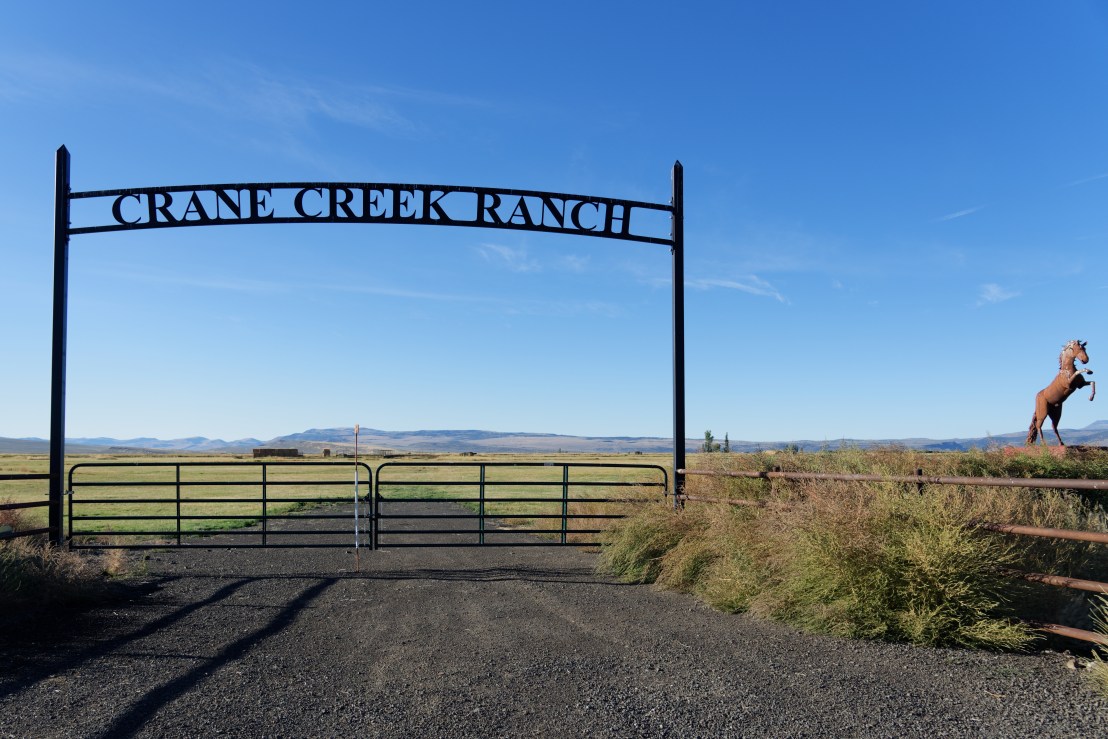
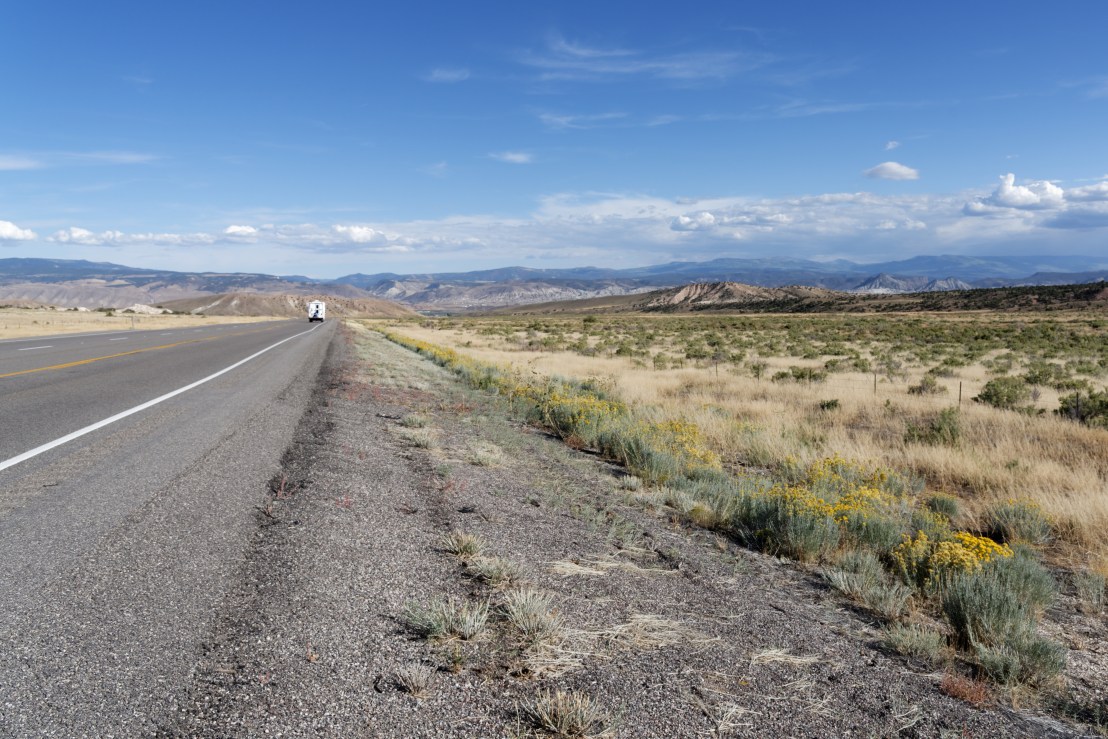
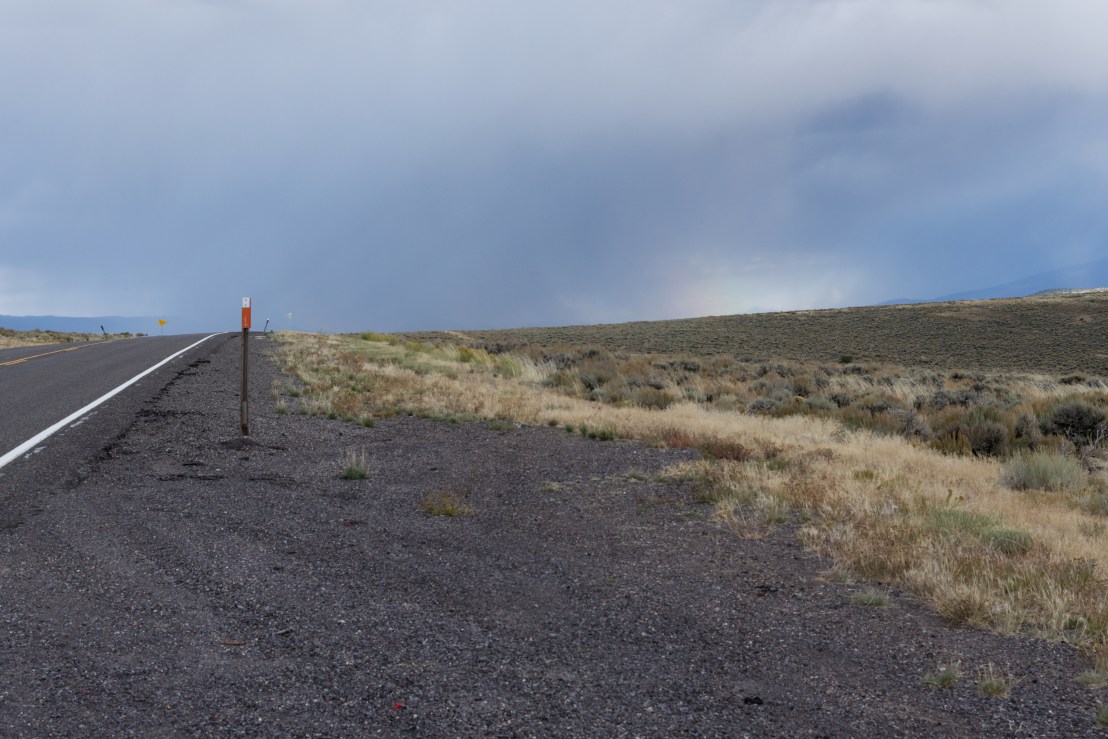
Today and for the next two Sundays I am going to display more pictures of Utah. They are further to the photographs shown over six days back in October 2019.
To be honest these new photographs are more to show off the facilities of my new editing software DxO PhotoLab.
oooo
oooo
oooo
oooo
oooo
oooo
oooo
I sincerely hope you enjoy these; I’m conscious that I have become engrossed in the facilities of PhotoLab.
A new sense recently discovered in the dog’s nose.
I subscribe to AAAS and their last email newsletter contained this fascinating information.
ooOOoo
An infrared photo of a golden retriever in a functional magnetic resonance imaging scanner reveals the cold temperature of a dog’s nose versus its glowing, warm body. Anna Bálint
New sense discovered in dog noses: the ability to detect heat
Dogs’ noses just got a bit more amazing. Not only are they up to 100 million times more sensitive than ours, they can sense weak thermal radiation—the body heat of mammalian prey, a new study reveals. The find helps explain how canines with impaired sight, hearing, or smell can still hunt successfully.
“It’s a fascinating discovery,” says Marc Bekoff, an ethologist, expert on canine sniffing, and professor emeritus at the University of Colorado, Boulder, who was not involved in the study. “[It] provides yet another window into the sensory worlds of dogs’ highly evolved cold noses.”
The ability to sense weak, radiating heat is known in only a handful of animals: black fire beetles, certain snakes, and one species of mammal, the common vampire bat, all of which use it to hunt prey.
Most mammals have naked, smooth skin on the tips of their noses around the nostrils, an area called the rhinarium. But dogs’ rhinaria are moist, colder than the ambient temperature, and richly endowed with nerves—all of which suggests an ability to detect not just smell, but heat.
To test the idea, researchers at Lund University and Eötvös Loránd University trained three pet dogs to choose between a warm (31°C) and an ambient-temperature object, each placed 1.6 meters away. The dogs weren’t able to see or smell the difference between these objects. (Scientists could only detect the difference by touching the surfaces.) After training, the dogs were tested on their skill in double-blind experiments; all three successfully detected the objects emitting weak thermal radiation, the scientists reveal today in Scientific Reports.
Next, the researchers scanned the brains of 13 pet dogs of various breeds in a functional magnetic resonance imaging scanner while presenting the pooches with objects emitting neutral or weak thermal radiation. The left somatosensory cortex in dogs’ brains, which delivers inputs from the nose, was more responsive to the warm thermal stimulus than to the neutral one. The scientists identified a cluster of 14 voxels (3D pixels) in this region of the dogs’ left hemispheres, but didn’t find any such clusters in the right, and none in any part of the dogs’ brains in response to the neutral stimulus.
Together, the two experiments show that dogs, like vampire bats, can sense weak hot spots and that a specific region of their brains is activated by this infrared radiation, the scientists say. They suspect dogs inherited the ability from their ancestor, the gray wolf, who may use it to sniff out warm bodies during a hunt.
“The study is consistent with other research that describes the combined dog nose and brain as a sophisticated platform for processing a broad range of signals,” says Gary Settles, an emeritus professor of mechanical engineering at Pennsylvania State University, University Park, who has studied dogs’ sniffing abilities. He doubts, however, “that the dog rhinarium can distinguish patterns of hot and cold objects at a distance,” suggesting dogs’ thermal detection skills may not be useful for long distance hunting. “[T]hat needs further study.”
If nothing else, the work suggests the extraordinary skills of the sled dog Buck, who tracked prey “not by sight or sound or smell, but by some other and subtler sense” in Jack London’s Call of the Wild, aren’t completely fictional after all.
ooOOoo
Dogs are in the news again. For their incredible noses; this time we are learning how they track heat.
In fact, I am ‘stealing’ the whole of Colin’s post, albeit with his permission, because recently he posted on his blog Wibble a poem written by Linda Ellis that is perfect. Indeed, it is more than perfect, it is a unique view of our lifetimes: yours; mine, everyone’s.
I learnt about ‘living your dash’ from Robby Robin’s Journey. ‘The dash’ is the one that goes between your dates of birth and death. Mine, for instance, is in “1960-” (because I’m not dead yet). Jane Fritz says:
This expression was popularized by Linda Ellis’s poem
The Dash; it provides a powerful metaphor for your life and helps us think about how our own dashes might be evaluated.
I went googling for the poem. It wasn’t hard to find it. However, reproducing it is subject to licence… which I applied for and was kindly granted. So here it is:
~~~~~~~~
The Dash
by Linda Ellis
I read of a man who stood to speak at the funeral of a friend.
He referred to the dates on the tombstone from the beginning… to the end.
He noted that first came the date of birth and spoke of the following date with tears, but he said what mattered most of all was the dash between those years.
For that dash represents all the time they spent alive on earth
and now only those who loved them know what that little line is worth.
For it matters not, how much we own, the cars… the house… the cash.
What matters is how we live and love and how we spend our dash.
So think about this long and hard; are there things you’d like to change?
For you never know how much time is left that still can be rearranged.
To be less quick to anger and show appreciation more
and love the people in our lives like we’ve never loved before.
If we treat each other with respect and more often wear a smile…
remembering that this special dash might only last a little while.
So when your eulogy is being read, with your life’s actions to rehash,
would you be proud of the things they say about how you lived your dash?
Maybe it is because I am in my mid-seventies. Maybe it is because I have never thought of it before; as in the dash! Maybe it is because I am looking for something that is beautifully clear; an antidote to the complicated world we appear to be living in.
I can’t fathom it out but that doesn’t matter in the slightest.
It is a very beautiful, inspiring poem that gets to the heart of living!
I can’t remember how long ago it was that I came across Alexandra Horowitz but the name stuck. For Alexandra is an author of many titles although many of them are about dogs.
But here’s a quote from someone who reviewed her book, On Looking: A Walker’s Guide to the Art of Observation.
“Horowitz writes like a poet, thinks like a scientist, and ventures like an explorer. Her book will have you looking in a new way at the world around you, and make you glad you did.” – Susan Orlean, author of Rin Tin Tin
If you haven’t already read some of her books then don’t delay!
Now I want to introduce a different side of Alexandra. That of her being a broadcaster, for want of a better description.
This is not a short video, it is 49 minutes long. But that’s a reason to sit down and thoroughly immerse oneself in her talk.
It is introduced thus:
To a dog, there is no such thing as “fresh air.” Every breath is full of information—in fact, what every dog knows about the world comes mostly through their nose. Dogs, when trained, can identify drugs of every type, underwater cadavers, cancer, illicit cell phones in prison, bed bugs, smuggled shark fins, dry rot, land-mines, termites, invasive knapweed, underground truffles, and dairy cows in estrous. But they also know about the upcoming weather, earthquakes before they happen, how “afternoon” smells, what you had for breakfast, and whether a cat touched your leg yesterday. And of course, they sniff their way home and know the distinctive odor of each spot of sidewalk as you travel there.
Alexandra Horowitz is a research scientist in the field of dog cognition and the New York Times bestselling author of “Inside of a Dog”. Her new book “BEING A DOG: Following the Dog into a World of Smell” explores in even greater depth what dogs know, delving into all of these remarkable abilities and revealing a whole world of experiences we miss every day. Alexandra visited Google Seattle to share her research and open eyes (and noses!) of pet parents everywhere.
At the end of May this year there was an article on The Dodo blog that just had to be shared with you. It was about the remarkable trait of Zelda, a foster dog that was being cared for. It is about coming home.
Read it for yourself:
ooOOoo
Dog Travels 40 Miles To Find Her Way Back To The Woman She Loves
Photo Credit: Seneca Krueger
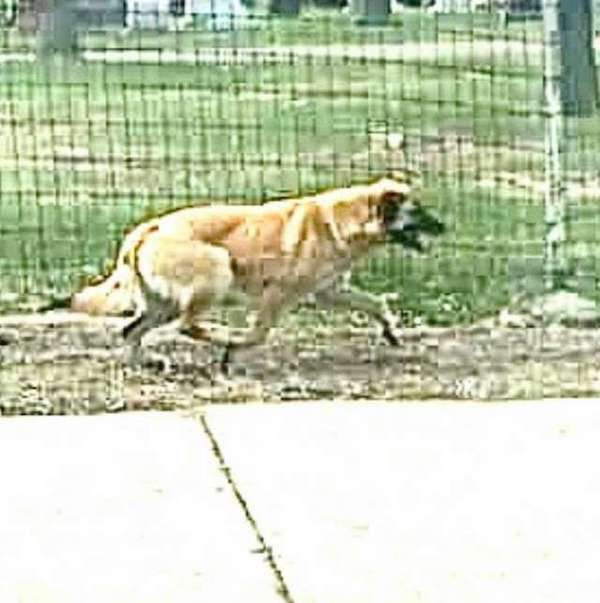
When Seneca Krueger first picked up her foster dog Zelda last year, she could never have predicted the remarkable journey the dog would one day make to be with her again.
Krueger, who works as a psychotherapist, is a dog foster mom who specializes in helping rescued dogs learn to trust people again. She’s fostered 30 dogs so far, but Zelda was an especially difficult case.
“She came with anti-anxiety medications,” Krueger told The Dodo. “Zelda paced. All day long she was either pacing or hiding.”
Krueger noticed that Zelda seemed calmest when on a leash, so she began tether training her — and slowly the skittish dog began to open up. “When I was home, she was attached to me,” Krueger said. “Over the course of two weeks of tether training, I had also weaned her off of her anti-anxiety medications, and the pacing had decreased. She was even willing to come out of hiding on her own for brief periods of time.”
After two months of living with Krueger and her two family dogs, Zelda finally wagged her tail. At four months, she began to bark and play — though she still struggled with unexpected noises and when visitors dropped by.
Photo Credit: Seneca Krueger
Still, Krueger knew that she had helped Zelda as much as she possibly could, and it was time to let her go. “As Zelda began to gain a little more confidence, I decided it was time for her to find her forever home,” Krueger said. “This is what you are supposed to do as a dog foster; help them adjust and then happily say goodbye as they go and live their best lives.”
Krueger drove Zelda 40 miles to her new home, but parting with her was more difficult than she anticipated. “I had to pull over to the side of the road because I couldn’t see through my tears,” Krueger said. “For the first time in my 12 years of dog fostering, I felt like I had given away my dog.”
Ten days after saying goodbye, Krueger received the call that every dog owner dreads — Zelda had gone missing after slipping her leash. Krueger immediately jumped in the car to begin searching for her.
An all-volunteer dog search team called START (Search, Track and Retrieval Team) had also gotten word of Zelda’s disappearance. The team set up feeding stations and trail cams around the area, and sightings of Zelda began to pour in.
As temperatures dropped below zero, Krueger refused to give up on her search. “The coldest days were the days I spent the most time searching because I was desperate to get Zelda warm and safe,” Krueger said. “[I] spent hours out in the freezing cold, following dog tracks through ravines, frozen swamps and fields.”
Photo Credit: Seneca Krueger
Over two months later, Krueger got word that Zelda had been spotted in Minneapolis, halfway between the dog’s new home and her foster home.
Only then did Krueger realize that Zelda was trying to make her way back to her.
The adopters surrendered Zelda back to Wags and Whiskers Animal Rescue, the organization that set up the adoption, and Krueger was thrilled to have her dog back — if only on paper. “She was mine again, and I was more determined than ever to find her,” Krueger said.
Two weeks later, Krueger received news that Zelda had been spotted near her home. She put out feeding stations around her house and began dumping dirty laundry on the front lawn in hopes that the smell would coax Zelda back to safety.
A couple reached out to Krueger to let her know that they had been feeding a very skittish dog who looked like Zelda. But after so long, Krueger didn’t want to get her hopes up. “Although I really wanted this dog to be my Zelda, I knew that if there was a lost, scared dog out there on the streets, we had to help it,” Krueger said. “Even if it wasn’t the dog that I knew and loved, and missed so much.”
Finally, the couple was able to trap the emaciated dog and called Krueger in the early hours of the morning to let her know. Inside the cage, Krueger saw a small, nervous dog, who barely resembled the Zelda she once knew. But when the manager of START arrived, a quick scan of the dog’s chip confirmed the impossible.
Photo Credit: Seneca Krueger
After over three months on the run, Zelda had found her way home.
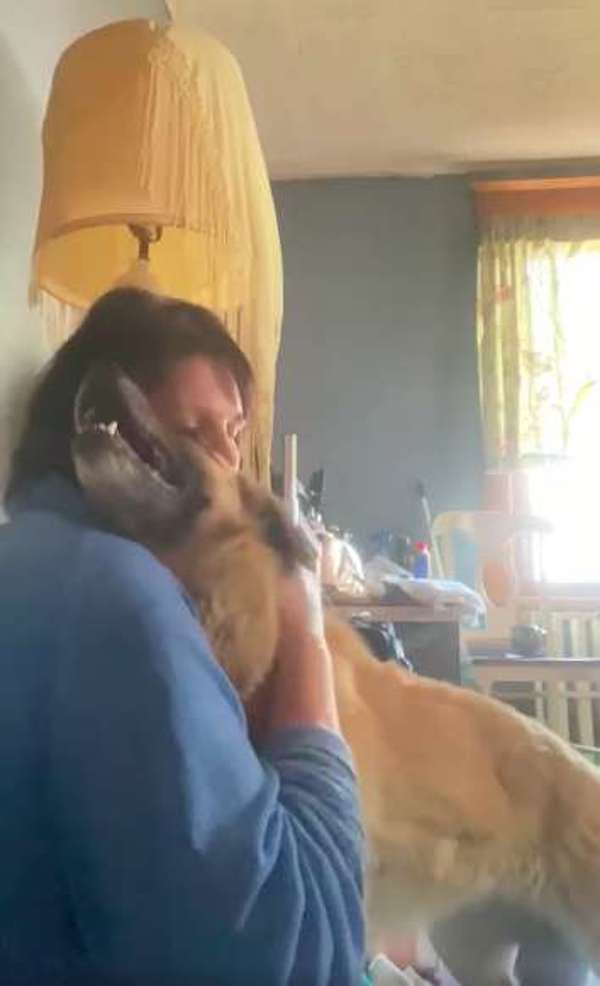
“It was a miracle, and what else do you do in the face of a miracle? I sobbed,” Krueger said. “I apologized to Zelda for not recognizing her. I touched her for the first time in 97 days. I assured her that she was going home forever and that I never stopped looking for her.”
Zelda has been adjusting well to being at home, and couldn’t be happier to be with her mom again.
“She has become my Velcro dog, and is never more than a few feet away from me at all times,” Krueger said. “My other dogs are happy to have her back as well and groom her a lot.”
For Zelda, this family is forever. “I never could have imagined that the whole time I was searching for Zelda, she was searching for me, too,” Krueger added. “Zelda is officially my dog. But let’s be honest, it’s not like I had a choice. She is very persistent.”
ooOOoo
Seneca Krueger is one hell of a lucky person and so, too, is Zelda!
Zelda was on her own for 97 days and Seneca for the same amount of time was also on her own.
This is a story that warms the cockles of your heart.






 I learnt about ‘living your dash’ from

 Learning from Dogs