We are staying at the Noor Hotel in Torrey, Utah. We are here for just one night and will be heading South in a few hours time on Highway UT-12, a scenic route, from this stupendous area of geological wonderland down to Kanab, about 200 miles away.
Tomorrow we will have been on our travels for just one week. To say that we have done a lot would be an understatement! It started by us getting to Lakeview, SE Oregon, on Monday evening and finding that Brandy was very unhappy. So much so that on the Tuesday morning we drove the 4 hours back to Merlin and left him with Jana and the gang. He was so pleased to be back and all the other dogs likewise to see Brandy.
Then we drove back to Lakeview the same day!
Now we have seen such sights that are beyond words. This part of the world is variously 7,000 – 8,000 feet high. We are over 7,000 feet now. The region is known as the Waterpocket Uplift that includes Capitol Reef National Park and is dramatic, sensational and overwhelmingly beautiful. I have taken over 150 photographs already. Trust me, I can’t wait to post some of the better ones in about 10 days time.
So that’s all for now. Jeannie and I are well, very fortunate to have come this way, but missing our dogs!
So love to you all.
It may be quite a long time before there’s another update from us, and I’m sorry I can’t yet welcome new visitors or engage in responses to individual comments. And apologies for not being able to share a picture. That will come!
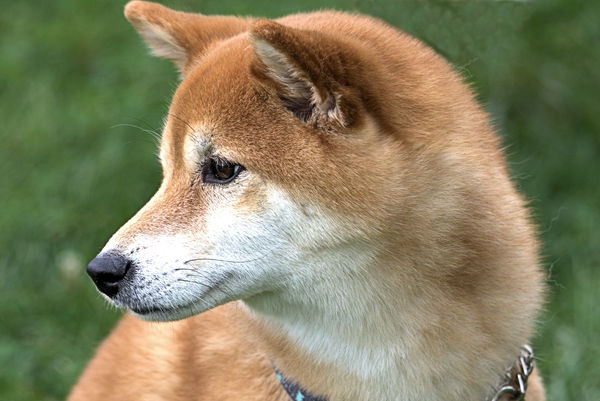
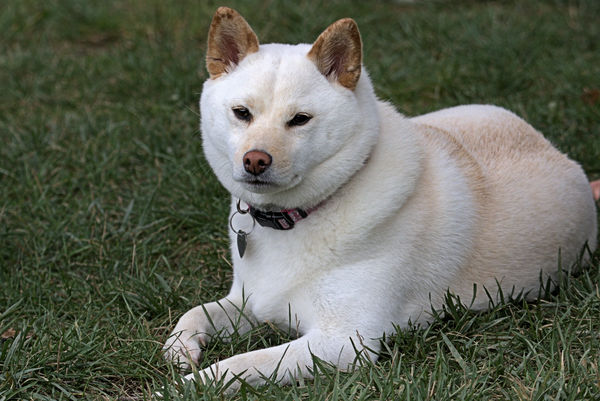
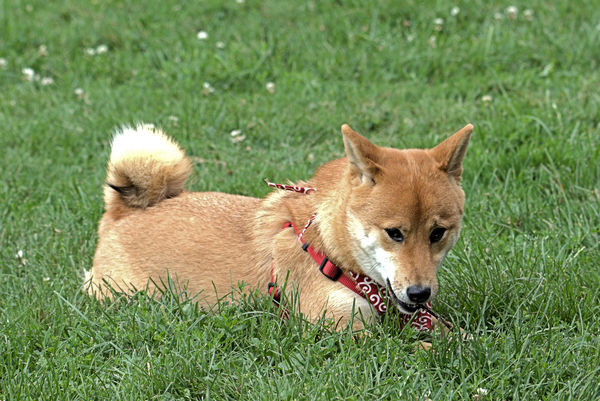
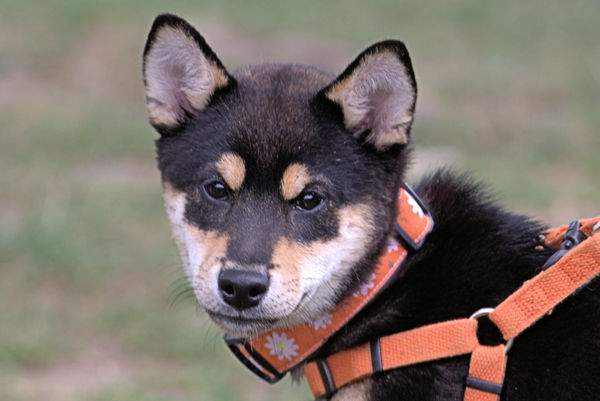
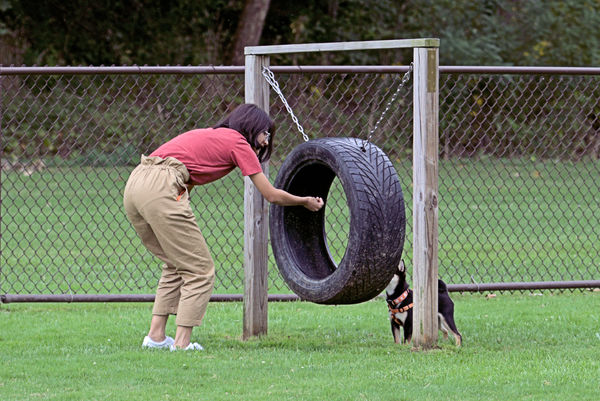
My wife & I do volunteer work for a breed specific dog rescue, the Shiba Inu Rescue Association. Actually my wife does the work & I drive the car, offer words of encouragement and take photos. Yesterday we met up with Several Shibas & their owners. For those not familiar with this breed, they are a small Japanese dog, averaging 18 to 20 lbs although some are as small as 10 lbs & others 30 lbs or more. They are, genetically, still very close to wolves. Their coat color varies a bit but primarily, as seen below, either red, black & tan or creamy. We have over the years fostered and placed in new “forever homes” approx. 25 dogs. They are extremely intelligent and very “cat like” in their temperament.
Written by Rob Moir, Ph.DI recently returned from a research sail through the Denmark Straits and I couldn’t be more in awe of mother nature.
We sailed aboard the gaft-rigged ketch Tecla out of Isafjordur, Iceland, bound for Greenland. We were thirteen women and men on a hundred-foot steel-hulled sailing vessel.
As we cleared the steep-sided fjord and sailed out into the bay past towering headlands, we saw a humpback whale breach. It rose straight out of the water, extended enormous knobby flippers, rotated and fell on its side with a large splash.
We sailed on, and another wheeled before us.
Further out, white-beaked dolphins streaked, exhaled, and splashed in the bow waves at the front of our boat.
Gray and white fulmars with outstretched wings carved the sky and nearly scratched the sea. And then there were icebergs.
The natural beauty of Mother Earth never ceases to take my breath away, no matter how many times I see it.
We traversed the threshold between the Atlantic and the Arctic Oceans. The south-bound East Greenland current squeezed between the craggy coasts of Iceland and Greenland to become a “superhighway” for turbulent water. Here, the denser Arctic water mass crashes into the bulwark front of warmer Atlantic Water. Arctic water plunges downwards into the Denmark Strait Cataract. This is the world’s largest waterfall. Yet, skimming the surface of immense water all we see are waves that crest white tumble and stream like the tossed manes of charging horses.
Unfortunately, we also saw the threats to nature.
First, a quick science lesson: When seawater freezes at the ocean surface, the ice is actually made of freshwater; the salt gets rejected back into the surrounding water. That surrounding water then becomes denser and sinks. This happens on a massive scale, which results in ocean currents around the world. Think of it like an organic engine that circulates the oceans’ water.
Now, because global warming exposes more of the surface every summer than it used to (about twice as much, in fact) that means more surface ice each winter. That means that our ocean circulation engine is twice as big, which radically alters the seascape, threatens not only the ocean ecosystem – from tiny algae to those humpback whales – but life worldwide.
We caused global warming. Now we must come together to decrease carbon emissions and increase carbon capture. For the Denmark Strait, for the humpback whales, and for our own places of habitation.
ooOOoo
I will do no better than to repeat that last paragraph.
We caused global warming. Now we must come together to decrease carbon emissions and increase carbon capture. For the Denmark Strait, for the humpback whales, and for our own places of habitation.
PUBLISHED ON 09/13/2019
To Loijuk the elephant, nothing is more important than family — especially now that she is starting one of her own.
In 2006, the orphaned elephant was found all alone at only 5 months old, and was rescued by the Sheldrick Wildlife Trust (SWT) in Kenya. She was hand-raised by SWT until she was old enough to return to the wild.
Years have passed, but Loijuk still has a close bond with her human family. She returns to the grounds of the sanctuary every month to visit. But in September, Loijuk surprised her former caretakers with a newborn elephant calf in tow.
Sheldrick Wildlife Trust
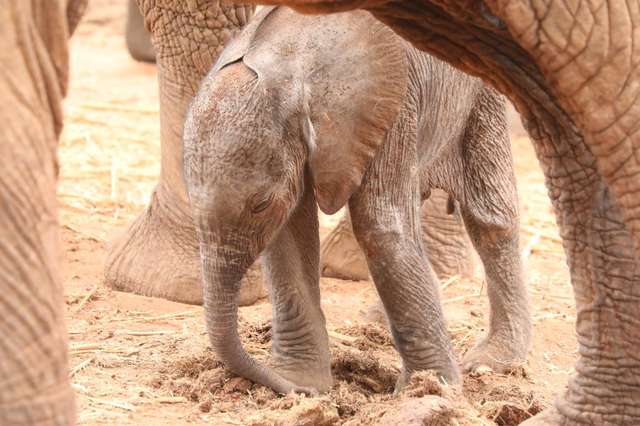
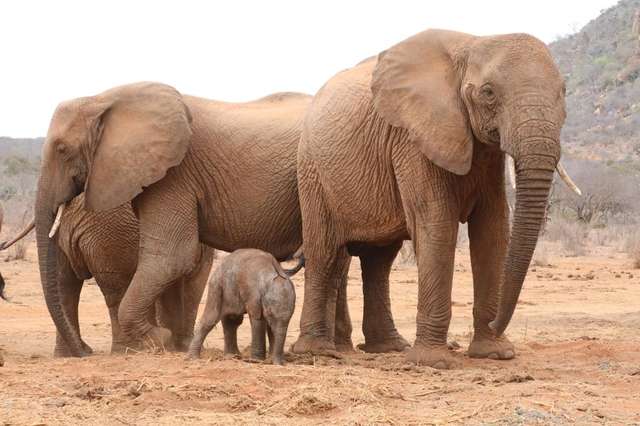
It was clear the proud elephant mom couldn’t wait to show off her baby. The calf, who has since been named Lili, was only hours old — likely born only the night before.
Loijuk has never forgotten the kindness of those who helped her. She even invited Benjamin Kyalo, the head keeper, to have a special moment with her newborn calf.
Sheldrick Wildlife Trust
“Benjamin was able to get close to Lili (who nestled into his legs), stroke her delicate newborn skin and breathe into her trunk, thereby letting her know who he was via his scent,” Rob Brandford, executive director of SWT, told The Dodo. “Elephants have an incredible memory and sense of smell and our keepers will often breathe into the orphans’ trunks so they can recognize who they are.”
You can watch a video of Loijuk and Lili’s touching visit here:
Lili was quite wobbly on her feet during the meeting, but over the course of the week, Kyalo watched as she got stronger and stronger.
“Loijuk has stayed close to the area around the unit, allowing our keepers to watch over her and check how she’s getting on,” Brandford said. “Considering September is the peak of the dry season in Tsavo, not the most favorable of conditions for a new baby, we are delighted that Loijuk has returned close to home so that we can help supplement her diet when she visits.”
Sheldrick Wildlife Trust
In the wild, calves are raised with the help of female relatives within the herd. Loijuk has played nanny to other babies before giving birth to Lili, and now her calf has nannies of her very own — two other wild orphans named Naserian and Ithumbah.
Lili will remain with her mom’s herd in the wild for life, and if she is ever in need, she now knows there is a safe place she can always return to.
Sheldrick Wildlife Trust
Lili is the 31st calf born to female orphaned elephants raised by SWT now living wild, and she is a beacon of hope for threatened elephant populations everywhere.
“Moments like these are momentous,” Brandford said. “In saving one orphaned elephant’s life, we are not only seeing that orphan thrive but start a family.”
“Lili has a brighter future ahead of her than many elephants,” Brandford added, “and we look forward to watching this little girl grow up in the wild.”



 Gray and white fulmars with outstretched wings carved the sky and nearly scratched the sea. And then there were icebergs.


 Learning from Dogs