This is a TED video presented by Will Marshall. A quick web search reveals that Will Marshall is:
Co-founder & CEO of Planet Labs.
Planet Labs is helping share near-real-time images of our planet, from a constellation of earth-observing satellites.
In his Twitter bio, William Marshall calls himself a “quantum physicist cum space scientist in search of world peace and harmony.” And when you hear about his job, it falls into place: he and his cofounders at Planet Labs want to show the earth what it looks like, almost real time, via a new network of compact, capable satellites. They hope that up-to-date images will inform future humanitarian and commercial projects all over our planet; it will enable people to make decisions that enable us to take care of our dearest spaceship, spaceship earth.
Before co-founding Planet Labs, Marshall was a scientist at NASA/USRA, where he helped to formulate the Small Spacecraft Office at NASA Ames Research Center. He worked on lunar orbiter mission LADEE, lunar impactor mission LCROSS and the groundbreaking PhoneSat project, building satellites out of consumer parts.
It was only a couple of mouse clicks to find the website for Planet Labs.
All of which is my way of introducing the TED video but not before thanking next door neighbour Larry Little who emailed me the link to the video.
Published on Nov 18, 2014
Satellite imaging has revolutionized our knowledge of the Earth, with detailed images of nearly every street corner readily available online. But Planet Labs’ Will Marshall says we can do better and go faster — by getting smaller. He introduces his tiny satellites — no bigger than 10 by 10 by 30 centimeters — that, when launched in a cluster, provide high-res images of the entire planet, updated daily.
Another example of the fabulous ways in which blogging connects people.
In the last twenty-four hours, Learning from Dogs has attracted a new follower. As always, I went across to this person’s blogsite and left a ‘thank you’ note. I loved what I saw because the blogsite was called Wolves of Douglas County Wisconsin authored by Rachel Tilseth. Better than that, there were a number of posts that I know LfD readers would enjoy very much.
Let me offer you an example of what you will find over on Rachel’s blog: Compassionate Conservation. Republished here with Rachel’s kind permission (but see my note at the very end of the post).
ooOOoo
Compassionate Conservation
When I think of compassionate conservation several well known conservationists, scientists, and psychologists come to mind. On a scale one to ten Dr. Jane Goodall, Joy Adamson, Bill Travers and Virginia McKenna, and Marc Bekoff Ph.D all rate in the top ten for their compassionate ideals and work regarding wild animals. I believe that it is wrong for humankind to kill off one species to save another because it is not acting in the best interests of wild animals and the ecosystems they support.
In a recent Facebook post on Todd Wilkinson’s timeline I was alerted to a column by Dr. Marc Bekoff on the subject of ‘compassionate conservation’ and decided to post Beckoff’s thought provoking article on my blog.
The broad and interdisciplinary field of conservation biology(link is external) has received a good deal of attention in the past two weeks that has stimulated researchers and others to weigh in on what sorts of human-animal interactions are permissible as we try to save nonhuman animals (animals) and their homes. For example, some of the challenging questions that arise are: Should we kill in the name of conservation? Is it okay to trade off the lives of animals of one species for the good of their own or other species? Is seeking the “most humane” way of killing animals the only way to move forward? Is it possible to stop the killing of other animals and factor compassion that centers on the lives of individuals into our decisions? Should we try a “hands off” policy to see if it works where it’s clear our interference, despite our best intentions, has not solved the problems at hand? How do we factor in the interests of other animals and humans as we deal with the numerous — and growing — challenging and frustrating conflicts at hand? The field of anthrozoology (link is external) focuses on these and other questions.
Clearly, there are going to be differences among the people who are trying to save other animals and their homes and also take into account the interests of humans. And, this is what makes the field of conservation biology so exciting, for we are the only animals who are able to do what needs to be done to reverse the rather dismal and depressing situations in which humans and other animals find themselves in conflict. It goes without saying that the major problem is that there are too many humans and if we don’t stop making more of us it’s going to be a long and hard battle to right the wrongs for which we are responsible. And, given all of the information that is currently available, I like to call attention to a quote from William Wilberforce sent to me by Sadie Parr of Wolf Awareness(link is external), “You may choose to look the other way but you can never say again that you did not know. (link is external)”
Compassionate conservation comes of age
A recent meeting that centered on the rapidly growing international field called compassionate conservation (link is external) brought people together from all over the world, all of whom are trying to reduce or eliminate human-animal conflict. The conference was sponsored and coordinated by the Born Free Foundation (link is external) and the Centre for Compassionate Conservation(link is external) at the University of Technology, Sydney and hosted by the Animal Welfare Program(link is external) at the University of British Columbia (for more on compassionate conservation please click here, here (link is external), and here (link is external)). A most exciting part of the meetings was the presence of numerous students and young researchers. And, also very stimulating, were the obvious differences of opinion — the expected shades of gray — in what is possible and what methods are permissible as we try to deal with rampant and growing global human-animal conflicts. Some people argued that in the “real world” the “most humane” ways of killing are the only ways forward, whereas others argued that compassionate conservation is not about the “most humane” way of killing, but rather centers on stopping the killing because it is unethical and in many instances it really hasn’t worked. For them, individual animals are the focus of concern and the guide for compassionate conservation and “First do no harm (link is external)” means not harming or killing other animals “in the name of conservation.”
There also was very valuable discussion of the words people use to refer to the killing of otherwise healthy animals “in the name of conservation,” with the recognition that it is not euthanasia, or mercy-killing, but rather “zoothanasia” when it’s done in zoos or slaughter when done in other situations (please see “Animal ‘Euthanasia’ Is Often Slaughter: Consider Kangaroos“). Also of interest was the use of the word “pests” to refer to animals who are causing problems. Many agreed that it’s humans who are the pests, but because we can dominate and control other animals, they pay the price for just doing what comes naturally for them but is bothersome for us.
Clearly, there were many valuable discussions, and the abstracts of the broad array of papers that were presented can be seen here (link is external). They are a goldmine of information on the broad topics that were covered, the numerous different species discussed, and anthrozoologists should them to be indispensable for future studies of human-animal relationships. We learned that many wild animals really aren’t free (Yolanda Pretorius of the Centre for Wildlife Management at the University of Pretoria told us that elephants in South Africa are fenced and can’t migrate) and that “methods to assess the well-being of elephants are not included as a requirement for developing an elephant management plan.” Moles are ruthlessly killed in the UK because they destroy gardens and in many locations geese are killed because they poop on golf courses. We take away the geese’s habitats and then we kill them because they have nowhere else to go.
We also learned in a paper by MarÍa Fàbregas and G. M. Koehler of Save China’s Tigers(link is external) that in order to reintroduce critically endangered captive South China tigers back to restored protected areas within their historic range in China, they are allowed to practice killing ungulates. Many people were rather concerned with this practice, and it reminded me of breeding golden hamsters to allow endangered black-footed ferrets to practice killing them before being released into wild habitat. For many, these sorts of trade-offs are unacceptable.
In another project that was the focus of discussion, almost 900 wolves and other non-target animals were killed in Alberta, Canada (please also see and and), to try to save woodland caribou (it didn’t work) and not only were families broken up but there also are trans-generational effects. Simply put, far too many other animals are harmed or killed because we move into their homes and they have nowhere else to go and thus, they, innocent victims, become the “problems.” It’s a no-win situation for millions of other animals and we need to do much better so the killing stops.
Compassionate conservation meets Cecil the slain lion
It was also rather timely, and of course incredibly sad, that news about the thoroughly unnecessary killing of Cecil the lion(link is external) by Walter Palmer (please also see the numerous articles listed here (link is external) and Jennifer Jacquet’s “The Shaming of Walter Palmer (link is external)“) was making world-wide headlines as the meeting got under way. A few of us received requests for interviews the first morning of the meeting and Cecil was the topic of conversation at a number of talks and also at the coffee breaks, as was Marius, the young giraffe who was mercilessly killed at the Copenhagen Zoo in February 2014, because he didn’t fit into the zoo’s breeding program. Marius us a classic case of an animal who was zoothanized, not euthanized, as claimed by zoo administrators.
Many people are interested in the status and fate of African lions and as I was writing this essay I came across a review of a book called Lions in the Balance: Man-Eaters, Manes, and Men with Guns(link is external) by world renowned lion researcher Dr. Craig Packer(link is external) (the Kindle edition can be found here(link is external)). In the review by Iris Barber(link is external) called “Lions in the Balance: Can hunting save the kings of the jungle?” we learn that Dr. Packer argues, “‘Lions need trophy-hunting just as much as trophy-hunting needs lions.’ His plan: kill only male lions over the age of 6, so cubs aren’t killed by a lion mating with their mother who seeks to safeguard his own progeny. This is a fresh approach to conservation, where hunting is essential to survival.”
While numerous compassionate conservationists would argue against killing lions, when experts like Dr. Packer speaks, it’s highly worthwhile to listen carefully because it makes clear just how complex the issues are. As the book’s description notes, “Packer is sure to infuriate millionaires, politicians, aid agencies, and conservationists alike as he minces no words about the problems he encounters. But with a narrative stretching from far flung parts of Africa to the corridors of power in Washington, DC, and marked by Packer’s signature humor and incredible candor, Lions in the Balance is a tale of courage against impossible odds, a masterly blend of science, adventure, and storytelling, and an urgent call to action that will captivate a new generation of readers.”
Putting an end to dancing bears: All stakeholders count
Another tenet of compassionate conservation is that all stakeholders count, human and nonhuman. Of course, this is very challenging because various animals kill or harm humans or kill or harm animals on whom the livelihoods of humans and their communities depend. In an earlier essay I wrote about two projects in India that stress peaceful coexistence between humans and nonhumans who harm and kill the humans and destroy their businesses. Another excellent example of a project that took into account the interests of humans and nonhumans centered on putting an end to the use of dancing bears, discussed by Kartick Satyanarayan and Geeta Seshamani of the organization Wildlife SOS, India (link is external). The abstract for their talk reads as follows:
“Wildlife SOS spearheaded a conservation success story in India by resolving the barbaric dancing bear practice in which sloth bear cubs were poached from the wild, brutally trained in inhumane ways and spent their short tragic lives at the end of a four foot rope dragged through towns and villages to earn for the indigent, nomadic community called the Kalandars. Wildlife SOS’s initiative was to both rehabilitate the sloth bears held in captivity and the Kalandars themselves in alternative livelihoods. This in turn made a huge difference to the sloth bear population in the wild helping in its conservation.
“Compassionate Conservation and sustainability of wildlife and forests was the focus of the program which is still ongoing. Wildlife SOS also works with human-animal conflict situations similarly aiming for compassionate conservation and rehabilitation measures which educate the stakeholders, such as the villagers or dwellers around a forested area, in avoidance behavior.
“The education awareness programs are run in Maharashtra where the conflict species is the leopard and in Kashmir where the conflict species is the black bear and in Delhi and Agra the program deals with the rhesus macaque which seems to be the species humans have declared war on. Attempts at resolution involve creating safe spaces for the animals (rehabilitation centres) teaching people behaviours which do not lead to confrontation with the animals in question (awareness and education) but most importantly to inculcate a feeling for the animals in question emphasizing adjustment and acceptance of the existence of wildlife close to our human habitations. Our work with captive elephants is yet another conservation attempt at bringing down an ancient Indian traditional bastion that emphasizes training elephants using pain, fear and physical abuse by replacing it with compassion.
“Our training school – the kindness school provide straining to elephant keepers on modern and humane elephant management systems, compassionate handling, replacing negative management with positive reinforcement. However conservation also demands use of the law so the Wildlife SOS Anti-Poaching enforcement unit works to gatherintelligence on wildlife traffickers and smugglers and enforces the law working in partnership with the Indian Government.
“Compassionate conservation is the key to the future ahead of us.”
Another wonderful project in which human and nonhuman interests were taken into account and satisfied was concerned with how to deal non-lethally with “problem” raccoons at a fast food restaurant in Vancouver. Dr. Sara Dubois, who works with theBritish Columbia SPCA (link is external), outlined various strategies for coming to terms with urban “pests.” She noted, “The overall goal of developing humane standards for nuisance wildlife control is to create an educational and enforcement tool, setting a higher bar for control measures, whether they are done for conservation or nuisance purposes.”
The coming of age of compassionate conservation: It’s a “sad bad” if killing is the only viable option for “peaceful” coexistence
The field of compassionate conservation is slowly coming of age and it’s essential that all opinions come to the table to be discussed. Ethicist Bill Lynn, who supported the experimental humane killing of a few thousand barred owls to try to save endangered snowy owls, called this practice a “sad good.” While it may be a “sad good” for the snowy owls, it’s surely not for the slaughtered barred owls. I would call it a “sad bad” for the barred owls and many other animals if killing remains the only option. A “sad good” is a very slippery slope that sets a lamentable precedent for opening the door for the more widespread “experimental killing” of barred owls and other species just to see if it works.
Compassionate conservation requires a large change in heart and practices, and like any other revolutionary paradigm shift it will take time. Many hope that this most needed paradigm shift in conservation biology that entails stopping the killing “in the name of conservation” will endure its growing pains as more and more researchers and others realize that killing is not the answer. I hope those who see the “real world” as mandating killing will change their minds and hearts. Future and young researchers are critical to the development and implementation of compassionate conservation, as are those careerconservation officers, zoo administrators, and researchers who come to realize that using “the most humane killing” is not what compassionate conservation is all about. I like to imagine a world where killing is no longer part of the conservationist’s toolkit. The welfarist calculus patronizes other animals and when push comes to shove, or often when it’s merely convenient, the nonhumans suffer and are killed when it’s determined that the benefits to humans outweigh the costs to the animals.
It’s time to put away the guns, the traps, the snares, the poisons, and other “weapons of mass destruction” (as a few attendees called them) and figure out how to live in peaceful coexistence with the fascinating animals with whom we’re supposed to share our most magnificent planet. There does not have to be blood. I dedicated my talk to Cecil the lion and also to Bryce Casavant, a most courageous conservation officer who refused to kill two black bear cubs (link is external) near Port Hardy on northern Vancouver Island and was suspended because he said “no.” More people simply have to say “no” to killing other animals. We need to stop the violence and recognize that “The world becomes what we teach (link is external).” Compassion begets compassion and violence begets violence. By rewilding our hearts (link is external) and by becoming re-enchanted and reconnecting with nature I like to think that the killing will come to an end, slow as it may be.
If some people argue the killing cannot stop, it will not stop. It saddens me to think that we’ve gotten to the point where for some, killing is the only viable option for peaceful coexistence. Shame on us. As Kartick Satyanarayan and Geeta Seshamani concluded, “Compassionate conservation is the key to the future ahead of us.” I couldn’t agree more. We need to leave our comfort zones and think and act “outside of the box.”
The next meeting that will focus on compassionate conservation is slated for 2017 in Sydney, Australia. I often say that compassionate conservation is a wonderful meeting place for people who would otherwise not, but should, meet. This was so in Vancouver and I anticipate this will be the case in Sydney. Please stay tuned for more information on this future gathering and the exciting, challenging, and forward-looking field of compassionate conservation in general.
Note: I just learned of an essay titled “Mutant Animals Bred to be Brutally Killed by Hunters(link is external)” in which the person offering up these freaks outlandishly claims, “Conservation is a by-product of what I do.”
Marc Bekoff’s latest books are Jasper’s story: Saving moon bears (with Jill Robinson), Ignoring nature no more: The case for compassionate conservation, Why dogs hump and bees get depressed, and Rewilding our hearts: Building pathways of compassion and coexistence. The Jane effect: Celebrating Jane Goodall (edited with Dale Peterson) has recently been published. (marcbekoff.com; @MarcBekoff)
As Rachel points out in an earlier paragraph, the bulk of this essay was published by Marc Bekoff and I included the links in the third paragraph back to Marc’s essay.
However, Marc’s essay, via Rachel’s post, had a very great number of links including the many ‘link is external’ references and, sadly, far too many for me to enter in this reposting. So if you are curious about any aspect of Rachel/Marc’s essay then please re-read it here where all the links will be available to you.
Yes Paul, I too recognise the value in understanding the neural substrates involved, regardless of what may in any case be reliably inferred and readily apparent in behavioural evidence. The social intelligence of the dog seems remarkably advanced of course, and so naturally provides a rich source for such research. Having said that, I am struck by the amount of academic funding that goes into confirming what is already self-evident, and wonder if the apportioning of funds is done quite as effectively as it could be. Much is determined by commercial interests of course.
“Much is determined by commercial interests …”
I have been a resident of the United States since April 2011. There has been much to take in and embrace at so many levels. However, one of the things that has seemed very foreign to my eyes was the extent of the obesity seen almost everywhere that one is out and about. At first it seemed more of an American issue, but over the last few years watching news items from the UK and seeing other general items on the internet from ‘the old country’ I came to realise that countries both ‘sides of the pond’ are grappling with what could be fairly described as an epidemic.
Yesterday, George Monbiot published an essay called Slim Chance. As with so many of Mr. Monbiot’s essays this one highlights issues that I am sure are not widely appreciated. It is republished here with Mr. Monbiot’s kind permission.
ooOOoo
Slim Chance
11th August 2015
New evidence suggests that obesity might be incurable. So why does the government propose to punish sufferers?
By George Monbiot, published in the Guardian 12th August 2015
Is overeating more addictive than crack cocaine? It’s hard to compare addiction rates, or to produce a clear definition that holds true across all substances and behaviours. But consider this crude contrast. Between 10 and 20% of people who use crack cocaine become addicted to it. Across a 9-year study of 176,000 obese people, 98.3% of the men and 97.8% of the women failed to return to a healthy weight. Once extreme overeating begins, it appears to be almost impossible to stop.
A paper published in the journal Neuroscience and Biobehavioral Reviews proposed that “food addiction” is a less accurate description of this condition than “eating addiction”. There is little evidence that people who are driven to overeat become dependent on a single ingredient; instead they tend to seek out a range of highly palatable, energy-dense foods, of the kind with which we are now surrounded.
The activation of reward systems in the brain and the loss of impulse control are similar to those involved in dependency on drugs. But eating addiction appears to be more powerful. As the same paper notes, in laboratory experiments “a majority of rats will prefer a sweet reward over a cocaine reward.”
Once you become obese, an article published in the Lancet this year explains, biological changes lock you in. Fat cells proliferate. The brain becomes habituated to dopamine signalling (the reward pathway), driving you to compensate by increasing your consumption. If you try to lose weight, the body perceives that it is being starved, and powerful adaptations (such as an increase in metabolic efficiency) try to bounce you back to your previous state. People who manage, against great odds, to return to a normal weight must consume 300 fewer calories per day than those who have never been obese, if they are not to put the weight back on. “Once obesity is established, … bodyweight seems to become biologically stamped in”. The more weight you lose, the stronger the biological pressure to get back to your former, excessive size.
The researchers find that “these biological adaptations often persist indefinitely”: in other words, if you have once been obese, staying slim means sticking to a strict diet for life. The best you can hope for is not a dietary cure, but “obesity in remission”. The only effective, long-term treatment for obesity currently available, the same paper says, is bariatric surgery. This can cause a number of grim complications.
I know this statement will be unwelcome. I too hate the idea that people cannot change their circumstances. But the terrible truth is that, except through surgery, for the great majority of sufferers, obesity is an incurable disease. In one respect it resembles cancer: the changes in lifestyle that might have prevented it are unlikely to be of use in curing it.
Fat-shaming is worse than useless. Another paper found that the more weight-conscious people are, the more likely they are to overeat: the stress it induces is a trigger for comfort eating. As Sarah Boseley points out in her book The Shape We’re In, “the diet industry … is one of the biggest frauds of our time”. For the obese, temporary reductions in weight will almost inevitably be reversed.
People who are merely overweight, rather than obese (in other words who have a BMI of between 25 and 30) appear not to suffer from the same biochemical adaptations: their size is not “stamped in”. For them, changes of diet and exercise are likely to be effective. But urging obese people to buck up produces nothing but misery.
The crucial task is to reach children before they succumb to this addiction. As well as help and advice for parents, this surely requires a major change in what scientists call “the obesogenic environment” (high energy foods and drinks and the advertising and packaging that reinforces their attraction). Unless children are steered away from overeating from the beginning, they are likely to be trapped for life.
You might have expected this knowledge to lead to acceptance, empathy and an end to stigmatisation. Fat chance. A fortnight ago, just after the figures I mentioned at the top of this article were published, David Cameron announced a review that could lead to obese people being deprived of social security payments if they fail to accept “treatment” for their condition.
This review, conducted by Dame Carol Black, has already pre-empted its conclusions: eight times it describes obesity as “treatable”. Really? How? It will consider the case “for linking benefit entitlements to take up of appropriate treatment”. Are Cameron and Black proposing that benefit claimants will be forced to undergo surgery? Or will they be pressed into a useless and punitive dietary regime? These proposals look to me like a transfer of blame for the disease away from food manufacturers and advertisers and onto those afflicted.
Why do we have an obesity epidemic? Has the composition of the human species changed? Have we suffered a general collapse in willpower? No. The evidence points to high-fat, high-sugar foods that overwhelm the impulse control of children and young adults, packaged and promoted to create the impression that they are fun, cool and life-enhancing. Many are placed in the shops where children are bound to encounter them: around the tills, at grasping height.
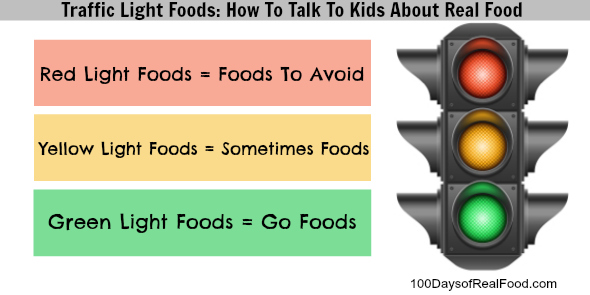
The disease will keep ravaging the population (and slowly overwhelm the health service) until these circumstances change. But the government’s sole contribution has been to tear down mandatory controls, replacing them with a voluntary – and therefore useless – “responsibility deal” with manufacturers and retailers. It allows them to choose whether or not to use the traffic light system, which is the most effective way of informing people about the likely impact of what they eat. And many corporations, unsurprisingly, choose not to. As far as nutritional content is concerned, food manufacturing is effectively unregulated.
Industry and government will resist the obvious solutions until they can be resisted no longer. Eventually, the change will have to happen: similar restrictions on advertising, sponsorship, display and accessibility to those imposed on the tobacco pedlars. One day, though not before many thousands have needlessly died, it will become illegal to advertise any food or drink that merits a red traffic light warning. They will be sold only in plain packaging, with health warnings, on high shelves.
Does this seem draconian to you? If so, remember that obesity afflicts a quarter of the adult population, and is rising rapidly. It causes a range of hideous conditions, just one of which – diabetes – accounts for one sixth of NHS admissions and 10% of its budget. If smoking demands fierce intervention, why not overeating?
This is the choice we face. To recognise that the only humane and effective means of addressing the obesity epidemic is to prevent more people from being hooked, by restricting the pushers. Or to continue a programme of fat-shaming, bullying and compulsory treatment, whose only likely outcome is unhappiness. Now ask yourself again: which of these two options is draconian?
Let me close with an image. The image that George Monbiot believes will be seen very widely and representing the same common-sense in eating that we have been used to with regard to No Smoking signs.
Jean and I were out for much of yesterday resulting in me not sitting down to compose today’s post until nearly 5pm (PDT) in the afternoon. I must admit I didn’t have a clue as to what to write about. Then sitting in my email inbox was another email from Chris Gomez with this short but valuable sentence, “Love is real….Check this out! (via ABC7 Los Angeles local news iOS app) Study reveals scientific reason your dog is happy to see you.” Chris included a link to the ABC7 news item. I’m republishing it here.
ooOOoo
STUDY REVEALS SCIENTIFIC REASON YOUR DOG IS HAPPY TO SEE YOU
A new study explains why your dog gets so happy to see you. (Shutterstock)
Tuesday, August 11, 2015 11:04AM
Is your dog overwhelmed with joy anytime you walk through the door? There’s a scientific reason behind their excitement, a new study shows, and it’s not just because you feed them.
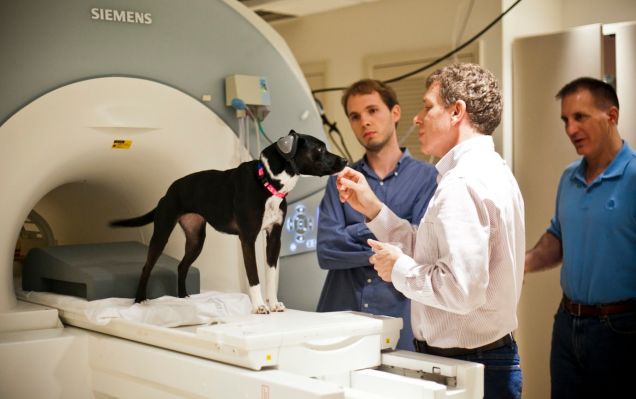
Researchers at Emory University used functional magnetic resonance imaging (fMRI) to scan dogs’ brains for activity when they were shown images of dog faces, human faces and ordinary objects.
The dogs’ temporal lobes lit up “significantly more” when presented with the faces than with the objects. These findings suggest that dogs may recognize both human and dog faces.
Facial recognition causes dog brains to activate in the same areas as in monkey and human brains, the study found. This is separate from the “reward areas” that would be triggered by anticipation of food.
“What we’re finding with the imaging work is that dogs love their humans-and not just for food,” researcher Gregory Berns told io9. “They love the company of humans simply for its own sake.”
“The existence of a face-selective region in the temporal dog cortex opens up a whole range of new questions to be answered about their social intelligence,” the researchers explained, such as whether dogs can understand different facial expressions and whether they can read body language.
This isn’t the first time scientists have explored what makes dogs’ tails wag with excitement when reunited with their owners. A January study that Berns was also involved in found that dogs have a positive reaction to the scent of familiar humans compared with other smells, even those of other dogs.
The results of that study “suggested that not only did the dogs discriminate that scent [of familiar humans] from the others, they had a positive association with it.”
A 2013 behavioral study found that dogs can show when they’re happy to see their owners by lifting their eyebrows. Their left eyebrow went up when they saw their respective owners, the study found. They didn’t have this reaction for other things that may excite them, such as attractive toys.
ooOOoo
Granted there was some overlap with Monday’s post but there was more than enough in the ABC7 article to warrant sharing it with you.
Unlike a certain companion animal that will go unnamed, dogs lose their minds when reunited with their owners. But it’s not immediately obvious why our canine companions should grant us such an over-the-top greeting—especially considering the power imbalance that exists between the two species. We spoke to the experts to find out why.
Call of the Wild
In order to gain an appreciation for dog behavior, it’s important to understand that dogs are descended from wolves (or at least a common wolf-like ancestor). Clearly, the two species, separated by about 10,000 to 15,000 years, share a lot in common.
Like dogs, wolves greet each other with vigorous face licking (Credit: Sander van der Wel CC A-SA 2.0)
That reference to wolves seemed like as good a reason as any to write further about the wonderful wolf. Or more specifically about the wolves of Oregon.
It’s been a busy last few days for Oregon’s wolves and those working to protect them, with new places, new dates, and new pups!
When I wrote to you last, it was about an important Oregon Department of Fish and Wildlife (ODFW) Commission meeting in Seaside. But there’s been a change! The agenda for that meeting has moved and the ODFW Commission will now be taking comments on whether to delist gray wolves on Friday, Oct. 9th in Florence, Oregon. Please sign up to attend and testify on behalf of Oregon’s wolves. After all, they can’t testify for themselves!
I also shared with you a video of the Rogue Pack yearlings playing, caught by trail cam. These were Journey’s pups from last year, but it was also reported that he and his mate had produced another litter this year. Thanks to the US Fish and Wildlife Service, we have a look at these new pups.
Here’s that video:
Published on Jul 8, 2015
A camera captured images of three yearling wolves playing in June, providing biologists with confirmation the offspring of Oregon’s wandering wolf OR7 and his mate have survived.
I can well imagine that the majority of the readers of Learning from Dogs will not be able to attend that ODFW Commission meeting in Florence, OR, on the 9th October (as we can’t) but that doesn’t stop you from wanting to support wolf recovery here in Oregon by signing and sharing the Oregon Wild petition.
When I first started writing this blog, more than six years ago now, I had no idea whatsoever that the community of friends who read and follow Learning from Dogs would develop to the point where the volume of ideas and suggestions sent in are, are by far, the biggest source of creative posts.
Take today’s for example. The link to the article was sent to me by Chris Gomez a little over a week ago and yesterday was the first time that I read the article in full.
It’s a fascinating and incredibly interesting piece.
Unlike a certain companion animal that will go unnamed, dogs lose their minds when reunited with their owners. But it’s not immediately obvious why our canine companions should grant us such an over-the-top greeting—especially considering the power imbalance that exists between the two species. We spoke to the experts to find out why.
Call of the Wild
In order to gain an appreciation for dog behavior, it’s important to understand that dogs are descended from wolves (or at least a common wolf-like ancestor). Clearly, the two species, separated by about 10,000 to 15,000 years, share a lot in common.
Like dogs, wolves greet each other with vigorous face licking (Credit: Sander van der Wel CC A-SA 2.0)
But there’s only so much we can extrapolate from wolves; dogs are categorically different by virtue of the fact that their ancestors actively sought out the company of humans. Making matters even more complicated is the realization that Paleolithic era wolves are not the same as the ones around today. Consequently, any inferences we make about dog behavior and how it relates to wolves is pure speculation.
Neuroscientist Gregory Berns, author of How Dogs Love Us, says there’s a fundamental difference between modern wolves and those that lived long ago.
“The most social of those ancestral dogs who were hanging around humans had to have been the most social of those wolves,” he told io9. “They joined humans and eventually evolved to become dogs. The remainder of the wolf population were among the most antisocial of those animals, and did not want to have anything to do with humans.”
That said, however, Berns says we can clearly see behaviors in wolves that are similar to those expressed by dogs. For instance, wolves greet each other by licking each others’ faces. For these pack animals, this licking behavior serves as an important social greeting, but also as a way to check out and determine what the other wolves have brought home in terms of food.
Wolves, says University of Trento neuroscientist Giorgio Vallortigara, greet each other in different ways depending on the type of individual relationships they’ve forged. Feral dogs, he says, behave in similar ways. But the big change in terms of adaptive sociality has been the ability of domesticated dogs to interact with humans using our own communicative signals, such as gazes and gestures.
Dog expert Jessica Hekman, who blogs at DogZombie, has witnessed greeting behaviors among wolves first hand.
“When I’m at Wolf Park in Battle Ground, Indiana, I am always struck by how much some of the specific wolf behaviors resemble behaviors I see in dogs—but so much more ritualized, and sort of writ large,” she told io9. “I witnessed one behavioral study there in which wolves who knew each other well had been separated for a few days and were put back together. The greeting rituals were fascinating, with lots of crouching and chin-licking from the subordinate wolves. You do see these behaviors in dogs, but more sporadically, without such intensity.”
At the same time, dogs exhibit behaviors that are markedly different from wolves. As Hekman explained to me, one of the most dramatic differences between dogs and wolves is the ability of dogs to accept novelty. Simply put, dogs are less fearful than wolves.
“It may sound a little odd to say that a wolf, who can easily kill you, is afraid of you, but that is precisely why they can be dangerous: because they may choose to take proactive measures to protect themselves, using their teeth,” says Hekman. “Dogs are a lot less likely to do this.”
Indeed, given their wolf ancestry, it’s remarkable that dogs get along with humans so well. But as Berns pointed out to me, sociability has turned out to be a rather powerful adaptation, one that has worked a lot better for dogs than it has wolves.
“I mean, look around the world and see how many dogs there are,” he says. “With dogs, it’s proven to be a highly effective evolutionary strategy. There are in the order of tens of millions of dogs in the world, so in many ways, dogs have out-evolved wolves.”
Berns says that whatever the sociality that dogs have evolved, one of the defining traits of a dog is the degree to which they will interact with humans as well as other animals.
How Dogs See Humans
A key aspect of Berns’ brain imaging research is to study how dogs perceive us. We humans know that dogs are a separate species, but are dogs cognizant of this as well? Or do they see us as members of their pack, or as some kind of weird dog?
Callie gets outfitted with ear protection prior to entering the noisy fMRI machine. The research team includes, from left, Andrew Brooks, Gregory Berns and Mark Spivak. (Credit: Bryan Meltz, Emory University)
According to Berns’ research, dogs that are presented with certain smells in scanners can clearly tell the difference between dogs and humans, and also discern and recognize familiar and strange odors. In particular, the scent of a familiar human evokes a reward response in the brain.
“No other scent did that, not even that of a familiar dog,” Berns told io9. “It’s not the case that they see us as ‘part of their pack as dogs,’ they know that we’re something different— there’s a special place in the brain just for us.”
Berns stresses that dogs are social with us not just because of their scavenging tendencies.
“What we’re finding with the imaging work is that dogs love their humans—and not just for food,” he says. “They love the company of humans simply for its own sake.”
Hekman says it’s hard to know what dogs are thinking, but she suspects they understand that we’re not quite like them. As evidence, she points to aggressiveness in dogs as it’s directed to other dogs and humans—differences that aren’t correlated. She says it’s quite common for a dog to have a problem with one and not the other. In other words, dogs appear to perceive other dogs as one group, and humans as a separate group. What’s more, dogs will seek the help of humans and not other dogs—a possible sign that dogs understand that humans have resources that dogs do not, and are thus a different kind of social entity.
But do dogs see us as part of the pack?
“It’s important to note that a pack of wolves is a family—literally, usually mom, dad, puppies, and some young offspring from previous years who haven’t gone off on their own yet,” says Hekman. “Do dogs see us as part of their family? I think they do.”
So Happy to See Us
Virtually all experts agree that the happiness dogs feel is comparable to what humans experience, and that it’s similar to how humans feel towards each other.
One happy dog (Credit: Lars Curfs/CC-A-SA 3.0)
“All the things that we’ve done with the brain imaging—where we present certain things to the dogs and map their reward responses—we see analogous brain responses in humans,” says Berns. “Seeing a person that’s a friend or someone you like, these feelings are exactly analogous to what a dog experiences.”
Berns says that dogs don’t have the same language capacities as humans, and that they’re not capable of representing things in their memory like we can. Because dogs don’t have labels or names for people, he suspects that they have an even purer emotional response; their minds aren’t filled with all sorts of abstract concepts.
It’s also important to consider the dog-human bond and the degree of attachment each feels toward each other. When used with dogs, the “Strange Situation Test” devised by developmental psychologist Mary Ainsworth, suggests that during absence and then at the rejoining with the owners, a dog’s behavior is very similar to that observed in children and mothers in similar situations. As Vallortigara pointed out to me, it’s appropriate and correct to speak of the dyad dog/owner in terms of “attachment.”
A dog’s particular greeting, however, is dependent on several factors, such as the dog’s temperament, the personality of the owner, the nature of their relationship, the level of stress and anxiety, and the dog’s tendency/capacity for self-control.
It’s important to note, however, that stress manifests differently in dogs than it does in humans.
“The separation from the owner for the dog is not voluntary,” says Vallortigara. “It is always unnatural for a dog to detach and abandon the pack.”
Dogs will sometimes go solo on a temporary basis if they’re sufficiently motivated to do so, but they do it knowing that social contact can be resumed at virtually any time.
“The exaggerated level of greeting that can be observed in some dogs is likely due to the fact that they have not yet learned to accept the possibility of non-voluntary detachment,” says Vallortigara.
When trying to appreciate a dog’s over-the-top greeting, Hekman says we need to imagine what it was like for a dog to be alone all day while we were gone.
So bored. (Credit: Pixabay/Pinger/10 images/CC0 Public Domain)
“This dog probably had a pretty boring day without much enrichment, and moreover may have been alone all day, which is unpleasant for a social animal,” she told io9. “So in addition to being glad to see us, they are probably feeling some relief that they will get to do something interesting, like go for a walk, and have someone else around. Some people are able to have a dog walker come in or send their dogs to daycare—this is a great solution to what can otherwise be a difficult lifestyle for a dog.”
And as Berns points out, the greeting ritual is a social bonding mechanism—but it’s also a function of curiosity.
“When they jump up, they’re trying to lick you in the face,” says Berns. “Part of that is a social greeting, but they’re also trying to taste and smell you to figure out where you’ve been and what you’ve done during the day. So some of it is curiosity. If I’ve been with other dogs, for instance, my dogs know it, and they resort to sniffing intensely.”
How to Greet Your Dog Back
It’s obviously important to respond to your dog when you get home, but according to Marcello Siniscalchi, a veterinary physician from the University of Bari, how you should react will depend on the context of the situation and the needs of the dog itself.
“The greeting ritual will vary from dog to dog because any individual dog perceives and reacts to detachment from the owner in a very personal way,” he told io9. “Some dogs need to be greeted, in others it is better to avoid any escalation in the level of excitation, others need to learn strategies for coping with the stress associated with detachment.”
Hekman says there’s definitely a tension between our buttoned-down greeting rituals (“Hi, honey, I’m home!”) and theirs (“I want to lick you on the face repeatedly!”).
“My dog Jenny is a very enthusiastic greeter, and I hate having her jump all over me in her efforts to get at my face,” she says. “So I have taught her to get on a couch when I come home. I generally have to remind her to ‘get on your couch,’ but now she does with great enthusiasm, and waits for me to come over. The couch puts her more on my level, so she doesn’t have to jump, and I can bend forward and let her lick my cheek, which is a very important part of the ritual for her.”
Hekman stresses that, for any dog, it’s important for us not to tell them what not to do (e.g. “don’t jump on me!”), but to tell them what to do.
“Many is the retriever owner who has taught their dog to get a toy when they come home to channel their excitement,” she added.
The main point, she says, is that it’s important for dogs to have the greeting ritual, but it can be redirected in ways to make it easier on the owners such that everyone enjoys it.
ooOOoo
So a huge thank you to all of you that send in remarkable items for Learning from Dogs.







 Learning from Dogs