If you would like to donate to Manitoba Mutts Dog Rescue in Winnipeg, MB please go here.
Our 6 month old lab mix rescue pup taught our 8 week old foster pup (adopted now) from Manitoba Mutts Dog Rescue in Winnipeg to go down the stairs once she got up and couldn’t get down! Please adopt and do not shop. This video is hoping to spread awareness to adopt a dog rather than shop around for one.
Rescue animals are just as great, if not more!
Please search your area for local rescues if you are looking for a dog or cat. These lovely pups are from Manitoba Mutts Dog Rescue in Winnipeg, Manitoba, Canada.
Jean and I were looking for something to watch on Wednesday evening and, as is our want, took a browse through the latest films on Top Documentary Films.
There was an intriguing title under the recently added list – People in Motion.
This was how the film was described.
We were hunters and foragers. The frontier was everywhere. We were bounded only by the earth, the ocean and the sky.
Today we go about our business, unencumbered by the frontier. Society guides us, it gives us permission to drive on roads, to stop at red lights, and go on green.
But something is not right.
It often feels as if something is missing. As if the life society has allowed isn’t quite enough. We spend so much time planning for the future it seems we’re forgetting how to live in the moment. How to feel deep and profound satisfaction with life.
It was this feeling that led us to watch people in cities, trying to understand what drives them. They typically did the same three things: walk, sit and shop.
People in Motion is a film showcasing the potential people have to move through time and space. The film is shot in true slow motion edited using a composite technique which illustrates stretches of time in an instant.
Now before you watch the film, and I really hope you do, just reflect on our closest animal companion; dogs. As is stated on the home page of Learning from Dogs,
Dogs live in the present – they just are! Dogs make the best of each moment uncluttered by the sorts of complex fears and feelings that we humans have.
One of the many wonderful ways that dogs enjoy the present is through play.
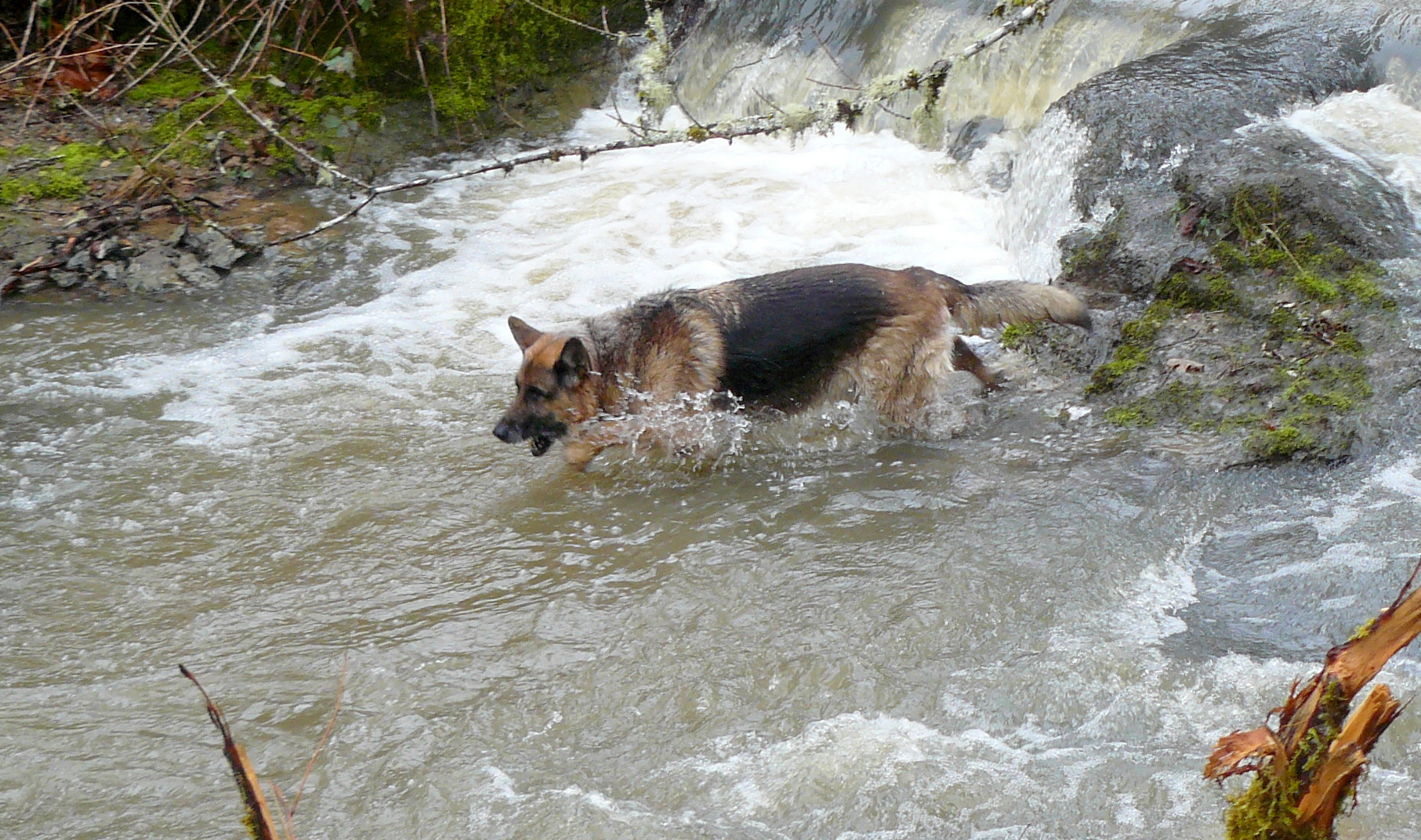
Rain had raised the flow of water in our creek and earlier on that Wednesday we had given the dogs a run in the rain. Of course, they went immediately to the creek to play in the rushing waters. The top picture shows Sweeny doing just that, Pharaoh equally having fun as below.
The simple joy of playing in the water.
Play is so important for humans as well as dogs.
Now watch the film and be amazed – the music is pretty cool as well.
Published on Dec 31, 2012
Music by…
* Lindsey Stirling:
** songs: Crystallize, Transcendence
* Niklas Aman:
** songs: Stirred Up, Momentum, Up A Storm
* Michael Marantz:
** song: Earth – The Pale Blue Dot
Directed by: Cedric Dahl
Produced by: Bennett Hoffman
Staring: Paul Whitecotton, Brian Orosco, David Agajanian, Lonnie Tisdale, Jacob Siel
Finally, after you have watched the film you will enjoy this interview with film director Cedric Dahl. But watch the film first!!
I closed yesterday’s post with this quotation from Carl Sagan, “It is far better to grasp the universe as it really is than to persist in delusion, however satisfying and reassuring.“
So easy to write. Nay, a thousand times more easy to trot out than to embrace. Even that word embrace is too warm and fuzzy.
I’m sure that the human psyche lives in a bubble of delusion. Clearly, if the level of delusion is abnormal then we can’t function properly as social animals. Just take a moment or two to muse over the ways that you ‘shelter’ from reality. Trust me I don’t exclude myself.
However, there are times when reality with a capital ‘R’ smacks us in the face. Death of a loved one, unanticipated break-up of one’s marriage are two that come to mind. Undoubtedly, there are others.
In yesterday’s post where I wrote of my experiences from reading Guy McPherson’s book, Walking Away from Empire, I freely admitted the struggle of embracing the truth, the Reality of where we are; ‘we’ as in industrialised man.
Aristotle (384 BC – 322 BC)
Reflect on the relationship that hope has with reality. Aristotle wrote, “Hope is a waking dream” and that comes from over 2,300 years ago!
More recently, the aforementioned Professor wrote of hope:
With respect to the question, I spoke and wrote about hope way back in August 2007, when this website was launched. In that long essay — the bloated, unedited, transcript of a presentation I had delivered a few days earlier — I described hope as follows:
I view hope as the left-brain product of love, analogous to democracy as the product of freedom, or liberty. Notably, Patrick Henry did not say, “Give me democracy or give me death.” Like the rest of the founding fathers, Henry knew that freedom was primary to democracy; without the guiding light of freedom, or liberty, democracy breaks up on the shoals. Love keeps our left brain in check — that’s the message of the world’s religions. But our right-brain love creates the foundation for hope: love for nature, love for our children and grandchildren, love for each other. Without love to light the way, hope breaks up on the shoals.
Staying with Guy McPherson for a tad longer, over on Transition Voice there was an essay from him under the title of Sadly, extinction is no laughing matter.
Picking up on the Carl Sagan quote again (“It is far better to grasp the universe as it really is than to persist in delusion, however satisfying and reassuring.“) McPherson writes:
Many people disagree with Sagan, choosing delusion over reality, believing we can have infinite growth on a finite planet with no consequences for people or other creatures, other life forms, other organisms. The people in this latter group seek hope, and many of them disparage me and my actions for inducing despair.
Finally, though, I’ve concluded that hope is hopeless. As Friedrich Nietzsche pointed out, “Hope is the most evil of evils, because it prolongs man’s torment.”
To put Ed Abbey’s spin on it, “Action is the antidote to despair.” So, even though I no longer think my actions matter for humans, I’ll take action.
A worthy pity party
Near-term human extinction is a difficult pill to swallow, as is economic collapse. But ignoring ugly truths does not make them any less true. Despair is an expected and appropriate response to this information. Recognizing, accepting, and moving beyond despair are important subsequent steps.
But first, let’s despair.
Ed Abbey’s idea that action is the antidote to fear reminds me of a recent essay from Alex Jones over at The Liberated Way. (If you haven’t previously come across Alex’s writings trust me you will be inspired!)
That essay was How to change the world published on the 28th February last. Here’s how it opens:
Changes to self acts as ripples of change to the world.
Throw a rock into a pool it creates ripples, eventually the pool grows still again. Like the pool nature will move to a state of harmony if given the chance.
We all know that humanity and this planet suffer many challenges. Many feel they need to change or improve the world. Those people fail to realise that nature knows where the state of harmony is, and is attempting to get to that state of harmony, therefore one has no need to change or improve the world.
The reason those words jumped off the page at me (OK, screen!) was the key message that letting go of what man feels compelled to do and allowing the natural forces on this planet to reign supreme is the answer. The message that we have to go back to the natural way of doing things. Right back to the harmony that early man had with the planet before farming corrupted our values.
Alex’s essay continues:
The problem with the desire to change the world is it becomes a form of control, attempting to force others to do something they have no desire to do. One of the problems of humanity is control, everyone trying to control each other, self and nature, which ends in conflict where nobody but the strongest wins. The problem with control is choice, liberty and creativity is taken away from those being controlled, and there is no opportunity to gain wisdom from mistakes.
I have spent too many years of my life trying to change or improve the world. I won some battles, I lost others. Worse, I became sometimes no better than those I fought against. Often control made the situation worse. I am reminded of the Greek legend of King Sisyphus who was condemned to roll a boulder up a steep hill only to see it roll down again, an activity he was condemned to repeat for all of eternity. Trying to change or improve the world was my equivalent of King Sisyphus.
The answer is to be a ripple of change to the world by doing our own thing. By changing ourselves, by living our dreams, setting an example, we emanate ripples of change into the world. We transform the world by transforming ourselves. Remember that stone that splashed into the pool? We are the stone, our activities in making ourselves happy, healthy and abundant becomes the ripples of change into the world. We force nobody to do anything, since all our efforts are focused on ourselves, we show by example which others may copy. People will follow our example since they see what we do works.
It is hard to let go, but let go we must. Change is inside rippling outwards.
It’s the old adage about change. It first has to start from within. As I warned in yesterday’s post, “When you read this book brace yourself for what you see staring out of the mirror back at you. There will be no room left for delusion.”
Ironically for a post that carries the title of ‘Going beyond the self” going out of oneself is the only way to see reality, to brush away delusion. From which place one can then allow change from within to occur.
I shall close with a quote from one of my favourite authors Aldous Huxley:
“Experience is not what happens to you; it’s what you do with what happens to you.”
“Once you eliminate the impossible, whatever remains, no matter how improbable, must be the truth.” Arthur Conan Doyle.
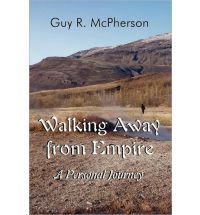
Ten days ago, I finished reading the book Walking Away from Empire: A Personal Journey. It had been sent to me by the author.
Let me explain how this came about.
A few weeks ago, I published an item under the title of Doggedly seeking the truth. I included the video “The Twin Sides of the Fossil-Fuel Coin: Developing Durable Living Arrangements in Light of Climate Change and Energy Decline.“ That video was a presentation by Prof. Guy McPherson.
Subsequently, during an exchange of emails with Prof. McPherson there was an offer to receive a free copy of his book, Walking Away from Empire: A Personal Journey. Naturally, I accepted.
Having finished reading the book it seemed only fair to write a review.
So far, so good!
I tried to marshal my thoughts for well over a week. Couldn’t get started. Strange, because when immersed in the book the messages were crystal clear.
Why the struggle to embrace Guy McPherson’s messages? Then in a moment of insight I realised that I was struggling to understand why I was struggling!
Published by PublishAmerica, LLLP
Because the blunt truth of the matter is that this book spells out the bleedin’ obvious. Humanity is between a rock and a hard place!
Look no further than the very first paragraph of the first chapter, Reason,:
At this late juncture in the era of industry, it seems safe to assume we face one of two futures. If we continue to burn fossil fuels, we face imminent environmental collapse. If we cease burning fossil fuels, the industrial economy will collapse. Industrial humans express these futures as a choice between your money or your life, and tell you that, without money, life isn’t worth living. As should be clear by now, industrial humans — or at least our “leaders” — have chosen not door number one (environmental collapse) and not door number two (economic collapse), but both of the above.
Sandy Krolick of Transition Voice wrote a review of Guy McPherson’s book in September, 2011. His last sentence was, “This is a book you will not put down; and having read it, you’ll no longer be able to ignore its conclusions.”
Again, what Sandy Krolick writes is perfectly correct. No argument. Yet …. something about that sentence from Sandy doesn’t speak to me. That struggle again.
Then I got it!
Let me go straight to page 177 of Prof. McPherson’s book and quote this:
It’s no longer just the living planet we should be concerned about. It’s us. The moral question, then: What are you going to do about it?
Then one paragraph later, come this:
There is simply no feeding the hollow spot in my gut and my psyche, as there was when I replaced my invisible, omnipotent friend in the sky with reason. Instead of abandoning the mirage of eternal life, I’m abandoning the mirage of globalization. Instead of giving up an everloving god, I’m giving up a comfortable life spent with my best friend. I’m taking yet another step in the path from make-believe to reality. And, as we all know, reality is a harsh, dispassionate mistress who doesn’t give a damn about the emptiness in my fragile little psyche. Fortunately, I still have the amusing memories of the absurdity of my former life, in which I believed I was saving the world by conducting and publishing mundane research and teaching irrelevant concepts to a largely disinterested audience.
I found the first step to be the most difficult. Simply recognizing the industrial economy as an omnicidal imperial beast forced me to cross a threshold most people find far too formidable to attempt.
Just reflect on those key words, “a threshold most people find far too formidable to attempt.”
Keep those words in mind as I quote the next paragraph from the book.
We’ve never been here as a species, much less as individuals. And every cultural message tells us we’re wrong, that the industrial age will last forever, that justice and goodness will prevail over every enemy (i.e., terrorist), that progress is a one-way street to industrial nirvana, that the harbinger of hope will keep the oil coming and the cars running and the planes flying so we can all soak up the sun on a sandy beach any time we need a break from our tumultuous lives in the cube farms of empire.
This, then, was the result of reading the book. The realisation of the reality of our existence. The immensity of the truth of where mankind is. The here and NOW!
Sorry, let me amend those last sentences. My realisation of the reality of my existence. The immensity of the truth of where I am. My here and NOW!
No wonder I struggled.
So not much of a book review, more a review of yours truly! That is the power of this book. Sandy Krolick was right; “This is a book you will not put down; and having read it, you’ll no longer be able to ignore its conclusions.”
Be warned. When you read this book brace yourself for what you see staring out of the mirror back at you. There will be no room left for delusion.
As Carl Sagan said, “It is far better to grasp the universe as it really is than to persist in delusion, however satisfying and reassuring.“
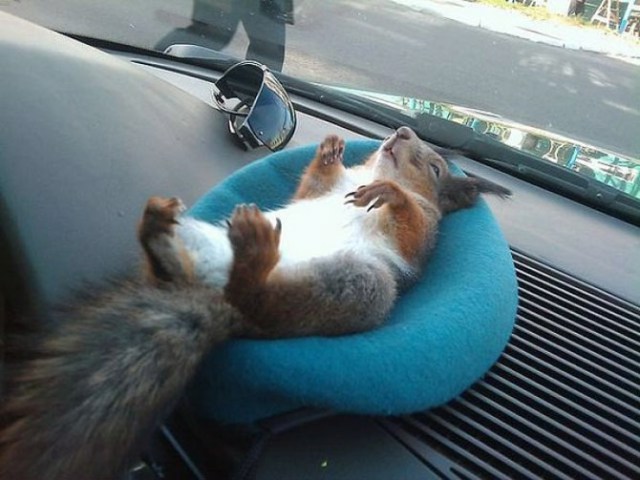
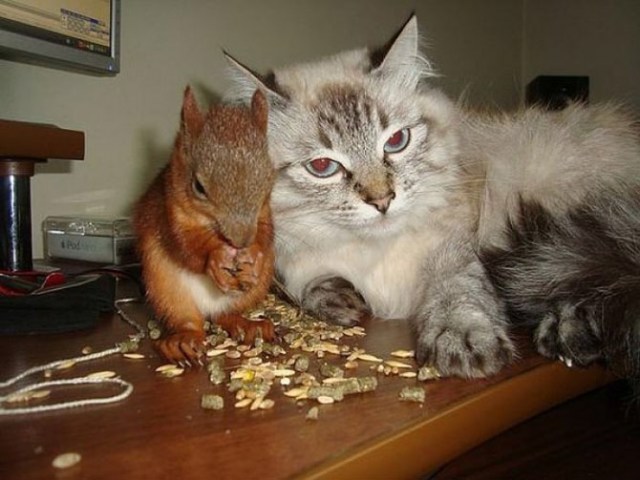
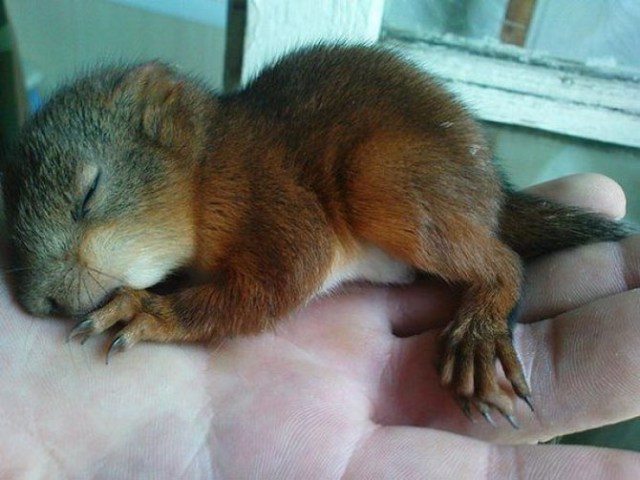
This beautiful story recently sent to me from Cynthia.
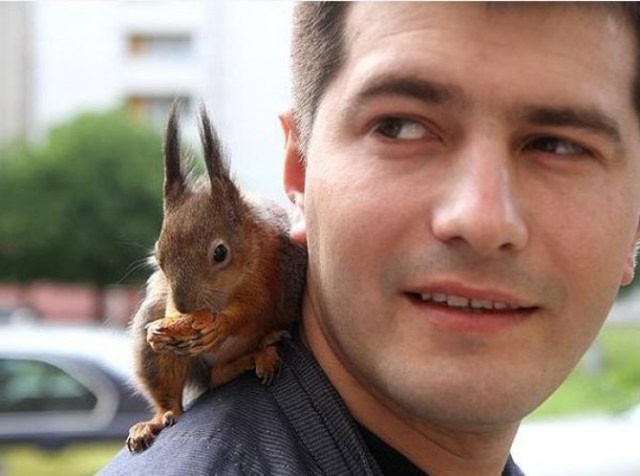
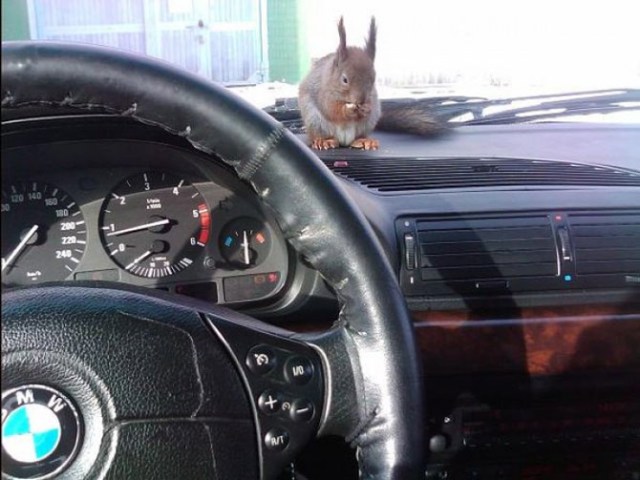
Soldiers in Belarus found a little squirrel and brought it to their Warrant Officer. The squirrel was very weak and close to death. Remarkably, the officer took care of it, feeding it like a baby every four hours.
Now he has left the army and works as a humble taxi driver. But his reward for saving the squirrel is beyond measure, as the following sequence of photographs show so clearly.
For every one of us there is no escaping change. It’s always been been that way; always will be.
Today, however, there’s an additional unsettling element. I’m speaking of the growing realisation that humanity could be facing the perfect storm. The ultimate storm of runaway climate change and the collapse of our global economy.
Therefore, when one comes across the wind of common-sense it needs to be promoted. My reason for promoting the opening speech by Jennifer Granholm at the TED2013 conference.
Because if we are to find a way of avoiding this storm, we have to do it through innovative ways of thinking and behaving. Each and every one of us deciding to work for a better future. (And see my P.S.)
P.S.
Back in the days of dogs living as coherent packs, one of the key roles of the alpha dog was to decide a change of territory. Then she, because the alpha dog was always a female, would lead the pack to a better place.
So we should learn from our ancient furry friends and take personal responsibility to find a ‘better’ place for ourselves and all our loved ones.






 Learning from Dogs