Back on April 2nd this year, I posted a piece called I am your dog! The item was motivated by coming across a personal reflection of the relationship that I had, and still have, with Pharaoh, my German Shepherd dog, back in 2007 when I was still living in England; I met Jean in Mexico Christmas 2007!
Among the many comments was one from Perfect Stranger who writes the fabulous blog Dogs of Doubt. He said in his comment,
Hi Paul, I do believe this comment belongs on this post … two videos, part of a true story about an Aussie dog, a modern day “Dog on the Tucker Box”, a true blue friend to an entire town who eventually ended up building him a statue … yeah, not “it” but “HIM”.
First video shows you how tough Aussies animals are ,, watch the fight, it’s awesome, I laugh every time I watch it. they say it really happened. 🙂
Second video is the trailer for “Red Dog” – The Pilbara Wanderer! , hope you get to see the movie
I promised to make that comment a post all on it’s own right – then promptly forgot! So apologies and here are those two movies.
Yesterday, I republished the recent Post from Martin Lack under my title of Playing with fire! In that Post there was a reference to just one example of the very different climatic world that we all live in. That reference was to the recent huge devastation of the apple and soft-fruit crops in Northern USA and Canada.
A catastrophic freeze has wiped out about 80 per cent of Ontario’s apple crop and has the fruit industry looking at losses already estimated at more than $100 million.
“This is the worst disaster fruit growers have ever, ever experienced,” Harrow-area orchard owner Keith Wright said Friday. “We’ve been here for generations and I’ve never heard of this happening before.
“This is unheard of … all fruit growing areas in the Great Lakes area, in Michigan, Pennsylvania, New York State, Ontario, are all basically wiped out.”
Wright lost hundreds of thousands of dollars worth of apples and peaches Sunday morning when freezing temperatures killed the blossoms.
Warm temperatures caused fruit trees to bloom early and when temperatures plummeted Sunday morning it damaged or wiped out much of the $60-million apple crop and 20 to 30 per cent of Ontario’s $48-million tender fruit crop which includes peaches, cherries, pears, plums and nectarines.
Brian Gilroy, a Georgian Bay-area apple grower who is chairman of the Ontario Apple Growers, said the loss to fruit growers and the economy will easily be more than $100 million. On top of the lost yield or no crop at all, orchard workers and spinoff industries such as juice, packing, storage and farm supplies will be affected.
Gilroy said consumers will find locally grown apples pricey and difficult to find this fall. Some varieties of apples, such as Empire, will be very difficult to find.
Washington State has a good crop but consumers should expect apple prices to jump because all of northeastern North America was affected, he said.
The article goes on to report from the Globe and Mail and the Toronto Star. It does not make for pretty reading!
April 2012: Earth’s 5th Warmest On Record And La Niña Officially Ends, So The Heat Is On.
By Climate Guest Blogger on May 19, 2012 at 3:09 pm
JR: It’s remarkable how warm it was globally in April considering that we were only just coming out of a double dip La Niña. If we don’t triple dip, we’ll set more temperature records soon. Indeed, NOAA models predict a good chance of an El Niño forming in the late summer, which would make it quite likely next year would be the hottest on record. As for April, you’ll note it was hot in the ‘wrong’ places again — over much of the tundra, which is a carbon time bomb
The Think Progress article then draws heavily on an extensive comment from Dr.Jeff Master’s WunderBlog that I am going republish, hopefully in the interests of helping to spread the truth about this planet of ours.
April 2012 was the globe’s 5th warmest April on record, according to the National Oceanic and Atmospheric Administration’s National Climatic Data Center (NCDC). NASA rated April 2012 as the 4th warmest April on record. April 2012 global land temperatures were the 2nd warmest on record, and the Northern Hemisphere land surface temperature was 1.74°C (3.13°F) above the 20th century average, marking the warmest April since records began in 1880. Global ocean temperatures were the 11th warmest on record, and April 2012 was the 427th consecutive month with ocean temperatures warmer than the 20th century average. The last time the ocean temperatures were below average was September 1976. The increase in global temperatures relative to average compared to March 2012 (16th warmest March on record) was due, in part, to warming waters in the Eastern Pacific, due to the La Niña event that ended in April. Global satellite-measured temperatures for the lowest 8 km of the atmosphere were 6th or 4th warmest in the 34-year record, according to Remote Sensing Systems and the University of Alabama Huntsville (UAH). April temperatures in the stratosphere were the 1st to 4th coldest on record. We expect cold temperatures there due to the greenhouse effect and to destruction of ozone due to CFC pollution. Northern Hemisphere snow cover during April was 4th smallest in the 46-year record. Wunderground’s weather historian, Christopher C. Burt, has a comprehensive post on the notable weather events of April in his April 2012 Global Weather Extremes Summary. Notably, national heat records (for warmest April temperature on record) occurred in the United States (a tie), Germany, Austria, Poland, Belarus, Lithuania, Moldova, Hungry, Croatia, Ukraine, and Slovakia as well as the cities of Moscow and Munich.
Figure 1. Departure of temperature from average for April 2012. The most notable extremes were the warmth observed across Russia, the United States, Alaska, and parts of the Middle East and eastern Europe. There were no land areas with large-scale cold conditions of note. Image credit: National Climatic Data Center (NCDC) .
La Niña officially ends
According to NOAA’s Climate Prediction Center (CPC), La Niña conditions are no longer present in the equatorial Pacific, where sea surface temperatures were approximately average as of May 13. The threshold for a La Niña is for these temperatures to be 0.5°C below average or cooler. CPC forecasts that neutral conditions will persist though the summer, with a 41% chance of an El Niño event developing in time for the August – September – October peak of hurricane season. El Niño conditions tend to decrease Atlantic hurricane activity, by increasing wind shear over the tropical Atlantic.
Figure 2. Arctic sea ice extent in 2012 (blue line) compared to the average (thick grey line.) The record low year of 2007 (dashed green line) is also shown. Arctic sea ice was near average during April, but has fallen well below average during the first half of May. Image credit: National Snow and Ice Data Center (NSIDC).
April Arctic sea ice extent near average
Arctic sea ice extent was near average in April 2012, the 17th lowest (18th greatest) extent in the 35-year satellite record, according to the National Snow and Ice Data Center (NSIDC). This was the largest April Arctic sea ice extent since 2001. However, ice in the Arctic is increasingly young, thin ice, which will make it easy for this year’s ice to melt away to near-record low levels this summer, if warmer than average weather occurs in the Arctic.
So to those that still think the jury is out on climate change, let me just repeat the title, “What part of the word change are you having trouble with?”
A republication of a powerful essay from Martin Lack.
Martin and I haven’t seen eye-to-eye on everything, as each of us would readily admit. But there’s no taking away the power contained in many of Martin’s essays over on his Blog Lack of Environment. Unlike me, Martin has strong academic credentials that he uses well to support his position.
Martin recently published a strong Post called It doesn’t have to be like this and has kindly given written permission for it to be republished on Learning from Dogs.
Tomorrow, I plan to expand on the fruit crop disaster that Martin refers to below. So here is the essay,
—————
Planet Earth is not just another business!
It doesn’t have to be like this
In 1974, the former World Bank economist Herman E Daly published an article on ‘The Economics of the Steady State’, beginning with a quote from the famous scientist Sir Arthur Eddington: “But if your theory is found to be against the Second Law of Thermodynamics, I can give you no hope; there is nothing for it but to collapse in deepest humiliation.” Daly is also on record as having quoted Aleksandr Solzhenitsyn (from Letter to the Soviet Leaders [i.e. published in 1974]), who said: “Society must cease to look upon ‘progress’ as something desirable. Eternal ‘progress’ is a nonsensical myth. What must be implemented is a not a steadily expanding economy but a zero growth economy; a stable economy.”
The essential point of Thomas Malthus’ (1798) ‘Essay on the Principle of Population’ was that populations increase faster than the supply of food can be made available to meet their needs. With this in mind, in 1972, Meadows et al predicted that the biophysical limits to growth would be exceeded at some point within 100 years: “If the present growth trends in world population, industrialization, pollution, food production, and resource depletion continue unchanged, the limits to growth on this planet will be reached sometime within the next one hundred years. The most probable result will be a rather sudden and uncontrollable decline in both population and industrial capacity.”
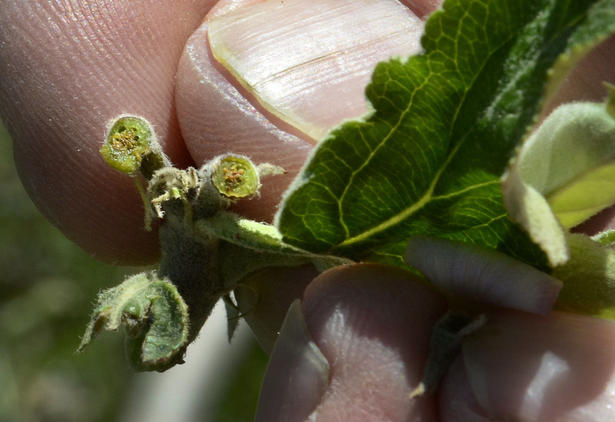
Recent strange weather in the USA – specifically a very warm March followed by unseasonal frosts in May – has all but wiped out all kinds of fruit crops. This may not have been the industrial collapse envisaged by Meadows et al (that is yet to come), but it is evidence of the way in which anthropogenic climate disruption (ACD) – or what some would have us be more precise and call human induced rapid global overheating (HIRGO) – threatens our ability to feed ourselves.
In 1992, the Meadows et al team summarised their revised conclusions as follows:
— 1. Human use of many essential resources and generation of many pollutants have already surpassed rates that are physically sustainable. Without significant reductions in material and energy flows, there will be in the coming decades an uncontrolled decline in per capita food output, energy use and industrial production.
— 2. This decline is not inevitable. To avoid it two changes are necessary. The first is a comprehensive revision of policies and practices that perpetuate growth in material consumption and in population. A second is a rapid, drastic increase in the efficiency with which materials are used.
— 3. A sustainable society is still technically and economically possible. It could be much more desirable than a society that tries to solve its problems by constant expansion. The transition to a sustainable society requires a careful balance between long-term and short term goals, and an emphasis on sufficiency, equity, and quality of life rather than on quantity of output. It requires more than productivity and more than technology; it also requires maturity, compassion, and wisdom.
In general, Meadows et al have been consistently ignored. In 1993, frustrated by the absence of discussion on population growth in international politics, Garrett Hardin pointed out that: “Two centuries of intermittent wrestling with population problems have produced useful insights about the reality and nature of limits… Four centuries of sedation by the delusion of limitlessness have left humanity floundering in a wilderness of rhetoric… From this it must be inferred that someday political conservatism will once again be defined as contented living within limits. The limitless world view will have to be abandoned.”
In this context, the words growth and development should not be confused. As Daly has pointed out: “the Earth may be developing but it is not growing.”!
In their 30-year update of Limits to Growth, in a section entitled ‘Why Technology and Markets Alone Can’t Avoid Overshoot’, the Meadows et al team pointed out that if we put off dealing with limits to growth we are more likely to come up against several of them simultaneously. With regard to the computer modelling undertaken, they observed that in most cases the simulations ran out of the ‘ability to cope’ when too much industrial output has to be diverted to solving problems; and concluded: “Growth, and especially exponential growth, is so insidious because it shortens the time for effective action. It loads stress on a system faster and faster, until coping mechanisms that have been adequate with slower rates of change finally begin to fail.”
Just because Meadows et al have not yet been proven right does not mean that they were wrong.
In Small is Beautiful (1973), E. F. Schumacher wrote: “The illusion of [mankind’s] unlimited powers, nourished by astonishing scientific and technological achievements, has produced the concurrent illusion of having solved the problem of production… based on the failure to distinguish between income and capital where this distinction matters most… A businessman would not consider a firm to have solved its problems of production and to have achieved viability if he saw that it was rapidly consuming its capital…”
What he meant was:
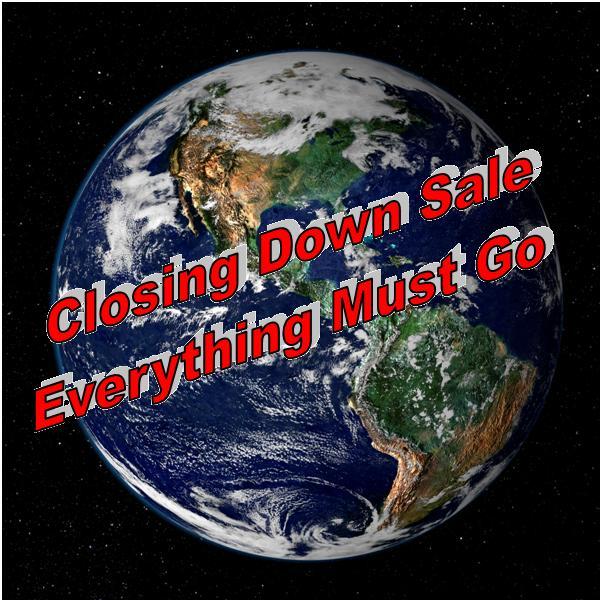
There is something fundamentally wrong in treating the Earth as if it were a business in liquidation. ― (Herman E. Daly)
The second fascinating contribution from a guest author.
On Monday I mentioned that I had been approached by two authors who wanted to share their articles with the readers of Learning from Dogs and on that day I published a guest post from Dr. Jane Brackman. Today, I’m delighted to share with you the thoughts of the second of those authors, Kylie Dunning, who describes herself as a writer who holds a strong passion for Psychology, especially in the field of Forensics. She is a lover of animals and an avid hiker in her spare time.
Trainer Julio Simuel (left) watches as his student “Walker” gets congratulations from admirers following a graduation ceremony at Nash Correctional Institution last Wednesday.
Here now follows Kylie’s essay,
Psychology of Healing: Dogs and Inmate Rehabilitation
In 1981, Sister Pauline Quinn envisioned a prison pet partnership program where inmates would train dogs for people with disabilities. Designed to benefit unwanted dogs, the inmates, and the future dog owners, the program was initiated in the Washington state prison for women. The success of the program led to dog training programs in prisons all over the country and has since become part of the material in forensic psychology programs and criminal rehabilitation programs.
Male and female inmates train anywhere from three to fifty dogs at a time for adoption into new families, as service animals, and sometimes for specialized purposes such as bomb-sniffing. There are other benefits. The prisoners who worked as trainers hope to find jobs in animal care as soon as they leave prison. Others, serving longer sentences, are given a sense of purpose and an improved outlook. Psychologically, having a dog to care for serves as a form of therapy and decreases depression, and it brings out good qualities in the inmates, even improving their attitude toward each other.
The Nash Correctional Institution in North Carolina has a program called “New Leash on Life,” in partnership with Southern Siberia Rescue, which pays for all the food and medical treatment for the dogs. Three dogs at a time are trained for eight weeks, then offered for adoption. Jerome Peterson, who has served 19 years for a second-degree murder charge, is one of the trainers. He says that teaching the dogs has taught him compassion and made him a better man. “You have to be patient with the dogs,” he explained. “Some have been abused, and some were left stranded.” He says that though only six of the inmates train the dogs, all 980 of the inmates at the medium-security prison benefit from the program. “A lot of guys wake up mad at the world for no reason,” he said. “When they see the dogs, they get happy — excited. Their whole demeanor just changes.”
Lansing Correctional Facility in Kansas, a combined medium- and maximum-security prison, has a population of 2,500 criminals. Their Safe Harbor Prison Dog Program rescues dogs from death row. About 50 of them are trained by about 100 inmates on any given day. So far, about 1,200 dogs of all breeds and ages have found new homes under the program. Inmate Jerry McMullin trains his dogs in 15-minute intervals four times a day, rewarding them with treats he buys for 45 cents a pound at the canteen (out of the dollar a day he earns at his prison job—prisoners aren’t paid for training the dogs). “You don’t want to work with them too long or they stop paying attention. They get bored,” he says. “I use no force or fear, positive reinforcement only.” Inmates like Pete Spencer will go to lengths to help troubled dogs. “I had one who was so physically abused, he had no trust in humans,” Spencer says. “I slept on the floor with him for a month to get his trust and then I taught him commands.”
The inmates can see positive changes from working with dogs. Spencer says of his fellow inmate, “When I first met (McMullin), he was … well, pretty grouchy,” Spencer says. “Now he’s more open and alive and he has a positive outlook.” Other work programs can help prepare inmates for a job after release, but working with dogs may psychologically be a more effective way to rehabilitate them. With prison populations stressing already taxed resources, and the more and more animals in need of homes, the use of dog training programs in prisons is more than a happy accident. It is a creative way of using state resources to do real and lasting change in society.
oooOOOooo
Well what another wonderfully interesting guest post. Thank you, Kylie. More please!
Using details in Kylie’s article, it was very easy to find this video, plus the photograph at the head of the article came from the Southern Siberian Rescue website.
Homeless dogs are getting special help from inmates. The Columbia County Sheriff’s Office has launched their own “New Leash on Life” program that benefits inmates at the Columbia County Jail and the dogs.
Please indulge me with this purely personal reflection.
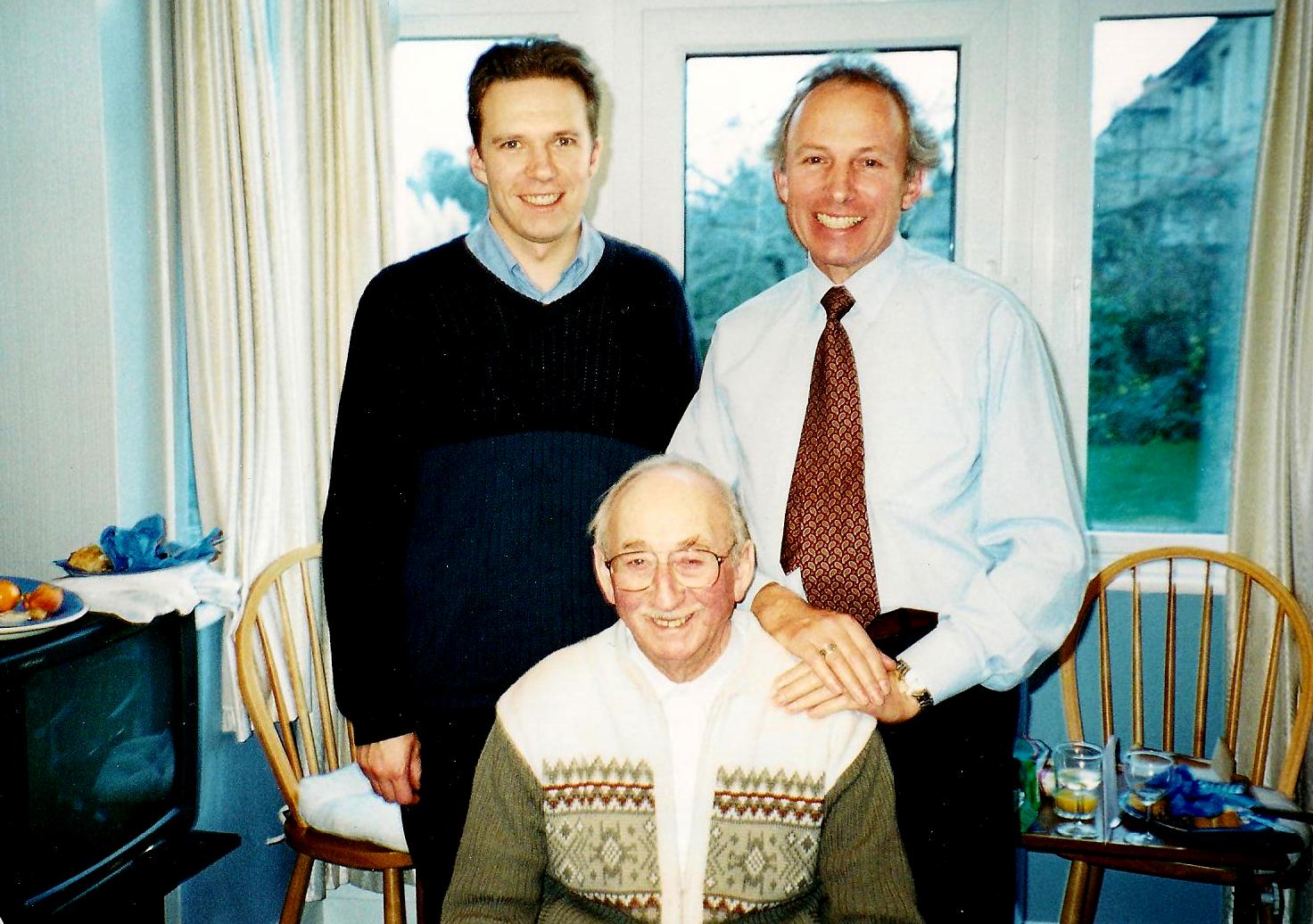
My Uncle Peter died in his sleep at 1.30am UK time on Monday, the 21st May, 2012. He was 91 and had been suffering from declining health for a while.
As my parting gift from across the seas, I just wanted to record the great inspiration that he was to both me and my son, Alex.
Peter was a great gliding fan (sailplane in American speak!). He must have started gliding not many years after the end of the war in 1945. Anyway, when I was a young lad, back in the mists of time, my Uncle Peter took me for a glider flight. That left a memory in me that lay dormant for many years until the late 1970s when a colleague, Roger Davis, introduced me to the Rattlesden Gliding Club and that started a 25-year interest in gliding and later power flying.
My son, Alex, also when he was a young boy was taken up for his first flight in a glider by Uncle Peter and later flew with me many times both in gliders and power aircraft. Today he is a Senior Captain with a British airline.
So, dear Uncle Peter, what an aviation inspiration you have been for two generations.
Uncle Peter and two generations of pilots.
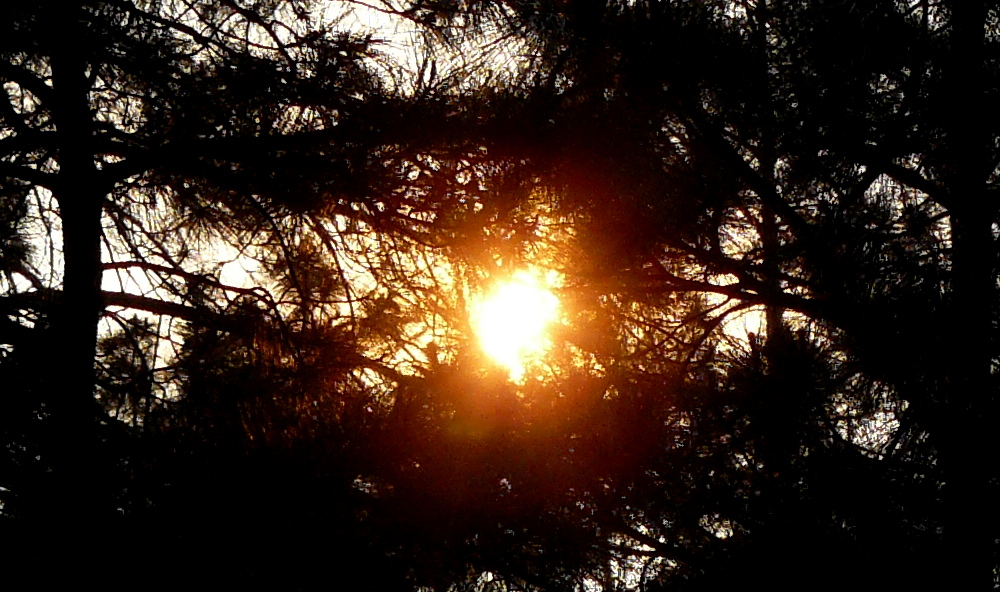
As it happens, 1.30 am UK time on Monday the 21st was 5.30pm Arizonan time on Sunday the 20th. At that very moment, well 5.26pm to be precise, Jean and I were watching the solar eclipse and I took the photograph below of what was the partial eclipse here in Payson.
Partial solar eclipse partly hidden by the pine trees.
A tribute to a wonderful family man with a great sense of humour.
Dear readers, from time to time I am approached by other authors who have flattered me by asking if I would like to publish their Blog posts from time to time. So I have been doubly flattered by having two authors contact me in the last week.
So to the first. It is with great pleasure that I welcome Jane Brackman, Ph.D., author of the blog Doctor Barkman Speaks who will, from time to time, republish her posts on Learning from Dogs. I have no doubt that you will enjoy her scientific expertise regarding dogs
So today, please enjoy …
oooOOOooo
HOW DOGS THINK – NEW SCIENCE LOOKS INSIDE THEIR MINDS WITH MRI IMAGING
Canine illustrator Robert Dickey assigned thoughts and feeling to his Boston Terrier based on the dogs’s expressions. Here he illustrates contentment, sympathy and misery. (Dogs from Life, Page & Co., 1920)
**
“Are you gonna eat that? Are you gonna eat that? I’ll eat it.”
Is this what dogs think? Or do they experience more complex thoughts? Apparently science is getting pretty close to figuring it out. If not exactly WHAT they’re thinking, then where in the brain the thoughts are coming from. Since brains are pretty much the same across mammal species, if researchers identify which parts of the the brain light up, based on what humans have said, they can guess what the dogs’ thoughts are, too.
A couple of smart guys, Gregory Berns and Andrew Brooks of Emory University, watching a military dog assist Navy Seals as they overran the Osama Bin Laden compound, got a brilliant idea. If you can teach dogs to jump out of helicopters, surely dogs could be trained to enjoy themselves inside an fMRI machine while scientists calculate what the dogs are thinking by scanning their brains.
The researchers, who are dog-lovers, explained, “We want to understand the dog-human relationship, from the dog’s perspective. From the outset, we wanted to ensure the safety and comfort of the dogs. We wanted them to be unrestrained and go into the scanner willingly.”
So they recruited a professional dog trainer, Mark Spivak, and two companion dogs, a Feist Terrier named Callie and a Border Collie named McKenzie. The team said that both dogs were trained over several months to walk into an fMRI scanner and hold completely still while researchers measured their brain activity.
In the photo below Callie wears ear protection as she
prepares to enter the scanner. The research team
includes, from left, Andrew Brooks, Gregory Berns and Mark Spivak.
(Credit: Photo by Bryan Meltz)
This is what the researchers wrote in the journal article that was published in PLOS last week:
Because of dogs’ prolonged evolution with humans, many of the canine cognitive skills are thought to represent a selection of traits that make dogs particularly sensitive to human cues. But how does the dog mind actually work? To develop a methodology to answer this question, we trained two dogs to remain motionless for the duration required to collect quality fMRI images by using positive reinforcement without sedation or physical restraints. The task was designed to determine which brain circuits differentially respond to human hand signals denoting the presence or absence of a food reward.
Eventually they hope to answer the more profound questions we all ask: Do dogs have empathy? Do they know when we are happy or sad? How much language do they really understand?” (And here’s one from me- When they pee on the carpet and we don’t find it until the next day, when we scold them do they know why we are scolding them?)
Well, I don’t know about you but I found this a most fascinating article. All of us who live around dogs, both physically and emotionally, sense the closeness, may I use the word ‘magic’, of the relationships.
Take a look at the photograph below. Until I left the UK in 2008, a few of us owned a lovely old Piper Super Cub. It was a joy to fly. I used frequently to take Pharaoh to the grass airfield, Watchford Farm, up on the Devon moors. One day he showed such interest in the aircraft that I lifted him up to the passenger’s seat, strapped him in and taxied all over the grass airfield. This picture shows something that is difficult to explain otherwise – Pharaoh’s real joy at sharing the adventure. Of course, I didn’t fly with him, that would have been a step too far, but we did taxi almost up to take-off speed. Dr. Barkman, what do you make of that?







 Learning from Dogs