A reflection on the huge changes facing our global society.
I am reading James Howard Kunstler’s book The Long Emergency. On the front cover there is a quote from a review in The Independent newspaper, “If you give a damn, you should read this book.” On the back cover, the quote, “Stark and frightening. Read it soon.” – Daily Camera. The quotes are spot on!
Rather than give my own opinion at this stage (I should finish the book first!), let me quote from the opening of Chapter Five, Nature Bites Back.
I was a at a four-day conference called Pop Tech in the seaside village of Camden, Maine, at the peak of the fall foliage season in October 2003, having a pretty good time at the talks, and enjoyiong a series of extravagant dinners – one featuring a free oyster raw bar and gratis Grey Goose vodka – not to mention all the lobsters, steaks, and other products of our bountiful cheap-oil economy. Then, on Saturday afternoon, a scientist from the University of Washington, Peter D. Ward, got up in the old-time opera house where the conference was held and did a presentation about the life and death of the planet Earth, Using a series of vivid artist’s renderings delivered on PowerPoint, Ward showed us how, hundreds of millions of years hence, all land animals would become extinct, the green forests and grasslands would broil away, the oceans would evaporate, and eventually our beloved planet would be reduced to a pathetic ball of inert lifeless lint – prefatory to being subsumed in the expanded red giant heat cloud of our baking sun. Few members of the audience had any appetite for the spread of cookies and munchables laid out for the break that followed. Personally, I was so depressed that I felt like gargling with razor blades.
The human spirit is remarkably resilient, though. A few hours later, the horror of it all was forgotten and the conference-goers reported to the next supper buffet with the appetites recharged, happy to scarf more lobster and beef medallions and guzzle more liquor, while chatting up new friends about their various hopes and dreams for the continuing story of civilized life here on good old planet Earth, which, it was assumed, had quite a ways to go before any of us needed to worry about its fate, if ever.
Wasn’t it John Maynard Keynes who famously remarked to a group of fellow economists dithering about the long-term this and the long-term that: “Gentlemen, in the long term we’re all dead.” Our brains are really not equipped to process events on a geological scale – at least in reference to how we choose to live, or what we choose to do in the here-and-now. Five hundred millions years is a long time, but how about the mad rush of events in just the past 2,000 years starring the human race? Rather action-packed, wouldn’t you say? Everything from the Roman Empire to the Twin Towers, with a cast of billions – emperors, slaves, saviors, popes, kings, queens, navies, rabbles, conquest , murder, famine, art, science, revolution, comedy, tragedy, genocide, and Michael Jackson. Enough going on in a mere 2,000 years to divert anyone’s attention from the ultimate fate of the earth, you would think. Just reflecting on the events of the twentieth century alone could take your breath away, so why get bent out of shape about the ultimate fate of the earth? Yet, I was not soothed by these thoughts, nor by the free eats, and even the liquor failed to lift me up because I couldn’t shake the recognition that in the short term we are in pretty serious trouble, too.
OK, that’s enough for today – I’ll continue this important extract on Monday. Let me close by inviting you to watch James Kunstler in interview.
I can’t recall how I came across this story but I’m so glad I did. Just watch this video and be very moved.
September 2010 Ellen welcomed Zak & Michelle Anderegg to the show to talk about Zak’s amazing rescue of an abandoned puppy. He saved the young pup, Riley, from 350 feet down a canyon — and then brought him here to meet Ellen!
The event being over a year ago doesn’t change anything – it was, is, and forever will be a wonderful example of what dogs bring out in us.
NBC — A puppy rescued from the bowels of a deep Utah canyon is now recovering in Salt Lake City.
The man who rescued him documented much of the incredible story with his own video camera. They don’t know his real name, so they just call him Puppy.
He’s now a temporary shop-dog at The Wrench-It Center, owned by Zak & Michelle Anderegg.
“He was completely starved,” Zak Anderegg said. “He was, my best guess, 24 to 48 hours from being dead.
“That was last week in a slot canyon near the Utah-Arizona border.It’s so deep and narrow and twisted, some sections are dark in the middle of the day.
Zak was rappelling when he suddenly saw a dog, starving and dehydrated. “I cannot believe I found this guy down in this frickin’ pothole in this canyon,” he said.
He climbed out to get water. On the way back down he wondered how the puppy got there. “The rim of the canyon is 350 feet above us, so falling from the rim would have killed him,” Zak said. “Every single time I work it through my head, I come up with the same answer: someone put him there — left, abandoned“.
He climbed out again and drove to Page, Arizona to recruit a rescue team. “They told me flat-out, ‘We’re certainly not going to send out the fire department or the sheriff’s department to help you.‘ So I said, ‘All right, I’ll manage on my own.'”
The next morning he was back with a cat carrier and a plan, using ropes in a one-man rescue operation.
“I took risks,” Zak said, “but none above what I do anyway.”
He rigged up a system to attach the cat carrier to his ropes and stabilize it. Then he climbed back out.
The Page Animal Hospital saved Puppy’s life. Most of the costs were covered by the hospital’s Angel Fund. “The rate of improvement is just incredible,” Zak said. “I’d say within two weeks he’ll be at his weight.”
Michelle and Zak still haven’t decided whether to keep him, since they’re already a pet-heavy family. They’re welcoming inquiries from qualified people who can give him a good home, and they’re encouraging contributions to the Angel Fund for future emergencies. (Website is here.)
Well, Michelle and Zak did decide to keep Puppy, indeed Puppy has his own Facebook page here – http://www.facebook.com/canyonpuppy from which this photograph was taken.
A very happy and lucky Puppy!
Finally, I took the liberty of calling the Wrench-It Center and to my great pleasure the call was answered by Michelle. So if you are ever within reach of the Wrench-It Center 1245 South 700 West, Salt Lake City, Utah 84104, Tel : 801-977-7500, give them your business.
The concluding part of what we might care to leave for the next generation
Mankind over the next few years is facing the start of an interval of economic chaos and social stress between the end of the fossil fuel age and whatever follows. That interval could well last a lifetime or more. Some might argue that the economic challenges that have been the mark of 2011 are, indeed, the first signs of this economic chaos.
How well we cope, adapt and survive is not going to be down to those of my age (born 1944) but to the bright youngsters who have been born in the 21st century.
That was the motivation behind publishing, on December 1st, the speech given by Steve Jobs, the 2005 Stanford Commencement Speech, and on December 6th, the famous and fabulous speech given by Sir Ken Robinson at the 2005 TED Talks conference.
The third and concluding message is a subsequent speech given by Sir Ken, this time in May 2010. It isn’t as stirring as his speech in 2005 but still a wonderful focus on what is our, as in homo sapiens, only chance of surviving – the innovation and creativity of the next generations.
In this poignant, funny follow-up to his fabled 2006 talk, Sir Ken Robinson makes the case for a radical shift from standardized schools to personalized learning — creating conditions where kids’ natural talents can flourish.
A reminder that other people in other places may not be so fortunate as you.
In that sub-heading is an assumption that everyone who calls by Learning from Dogs enjoys a life where they are, relatively speaking, free to make their own life decisions. My apologies if that is a false assumption.
Amnesty International have a December campaign Write for Rights. It is so worth supporting. Here are some details from that website,
YOUR WORDS CAN CHANGE LIVES.
Your words can be a SPOTLIGHT that exposes the dark corners of the torture chamber. They can bring POWER to a human rights defender whose life is in jeopardy. They can IGNITE hope in a forgotten prisoner.
Your words can SAVE LIVES.
Join hundreds of thousands of people around the world in marking International Human Rights Day this December by taking part in Amnesty International’s Write for Rights Global Write-a-thon – the world’s largest human rights event. Through letters, cards and more, we take action to demand that the human rights of individuals are respected, protected and fulfilled. We show solidarity with those suffering human rights abuses, and work to bring about positive change in people’s lives.
Will you write a letter to save a life?
Sign up now to Write for Rights!
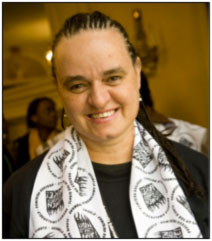
Jenni Williams
“I am alive today, after 34 arrests, because members of Amnesty International spoke out for me.”
– Jenni Williams, human rights defender in Zimbabwe
It really doesn’t make any difference which Amnesty case you support – just pick one and do it before the end of the month.
Amnesty also offer a full suite of resources, obtainable from here, to assist you with producing your letter.
Jean and I have decided to write in support of Jabbar Savalan, as described here and below,
AZERBAIJAN – Jabbar Savalan / Youth activist detained after using facebook
Jabbar Savalan
Hours after he posted a note on Facebook calling for protests against the government, Jabbar Savalan told his family that he was being followed. The next evening, February 5, 2011, police arrested him without explanation and took him to the Sumgayit police station, where they “discovered” marijuana in his outer coat pocket. Police questioned him without a lawyer for two days, reportedly hitting and intimidating him to make him sign a confession.
Authorities in Azerbaijan have a history of using trumped-up drug charges to jail perceived critics. Jabbar maintains that he does not use drugs and that the marijuana was planted on him. In May 2011, he was was convicted of possessing illegal drugs and sentenced to two-and-a-half years in prison. Amnesty International believes that authorities fabricated the drug charges against Jabbar to silence him. Amnesty considers him to be a prisoner of conscience.
A history student in college, Jabbar was an active member of an opposition political party. In January 2011, he posted on Facebook a newspaper article that described Azerbaijan’s President Ilham Aliyev as corrupt.
On February 4, Jabbar was inspired by the protests in the Middle East and North Africa to use Facebook to call for a “Day of Rage” to protest the government in Azerbaijan. The next day, police arrested him. He was 19 years old at the time.
In a sense the discovery of a potential life-supporting planet isn’t news.
What do I mean by that sub-heading?
Many (and I mean ‘many’) years ago I was a student at Faraday House Electrical Engineering College in Southampton Row, London. The College was closely associated with London University and one year there was an invite to attend a lecture by the famous British astronomer, Sir Bernard Lovell.
Sir Bernard Lovell and the Jodrell Bank radio telescope
Despite that lecture being about 45 years ago, I still recall Sir Bernard explaining the statistics of the universe to demonstrate that the odds of another planet somewhere ‘out there’ that could support life were huge. (Just as an aside do read this interesting story of Jodrell Bank picking up signals from the Russian Lunar 15 just as Neil Armstrong and Buzz Aldrin prepared to leave the moon’s surface.)
So with the positive identification of this planet some 600 light-years away, Sir Bernard’s speculation has been proved spot-on.
But in another very real sense, the discovery of Kepler 22b is astounding. Step outside the science of the find and just cogitate a little about the implications; the deep philosophical issues that Kepler 22b raises. Here’s an extract from Northern Voices Online news,
The excitingly named Kepler 22b, a planet believed to have been discovered orbiting a star a mere 600 light years away, is being hailed as a “New Earth”. But sci-fi fans shouldn’t get too excited just yet: as always with these stories, the likelihood is that we have not met the neighbours. Or, if we have, they probably aren’t very exciting conversationalists.
Talking about the likelihood of intelligent life on Kepler 22b, Dr Lewis Dartnell, of the Centre for Planetary Sciences at UCL, said, “There are big hurdles that life has to get over, and we don’t know how big a hurdle the origin of life itself is. You simply can’t tell with a single datum – you can’t do stats when N=1.”
The N that Dr Dartnell mentioned was earth: the only known planet inhabiting intelligent life forms, or better still, life forms of any kind.
Dr Dartnell further adds, “The interesting thing will be when we go to Mars and Europa and see whether there are bacteria there. It would be enormously significant if life is found there. But the next step, once Kepler has looked at a lot of planets, will be to see what their atmospheres are made of, using infrared spectroscopy.
“If one or two of them have oxygen in the atmosphere, it may be a transient thing – like Venus, undergoing a runaway greenhouse effect – but if we find, say, 20 Earth-like planets, all with the signature of oxygen in their atmosphere, then that would be very unlikely. Life would be the more reasonable explanation,” concluded Dr Dartnell.
There are many news reports online but this short video caught my eye.
The latest NASA report is here from which is quoted,
NASA’s Kepler Mission Confirms Its First Planet in Habitable Zone of Sun-like Star
NASA’s Kepler mission has confirmed its first planet in the “habitable zone,” the region where liquid water could exist on a planet’s surface. Kepler also has discovered more than 1,000 new planet candidates, nearly doubling its previously known count. Ten of these candidates are near-Earth-size and orbit in the habitable zone of their host star. Candidates require follow-up observations to verify they are actual planets.
The newly confirmed planet, Kepler-22b, is the smallest yet found to orbit in the middle of the habitable zone of a star similar to our sun. The planet is about 2.4 times the radius of Earth. Scientists don’t yet know if Kepler-22b has a predominantly rocky, gaseous or liquid composition, but its discovery is a step closer to finding Earth-like planets.
Previous research hinted at the existence of near-Earth-size planets in habitable zones, but clear confirmation proved elusive. Two other small planets orbiting stars smaller and cooler than our sun recently were confirmed on the very edges of the habitable zone, with orbits more closely resembling those of Venus and Mars.
“This is a major milestone on the road to finding Earth’s twin,” said Douglas Hudgins, Kepler program scientist at NASA Headquarters in Washington. “Kepler’s results continue to demonstrate the importance of NASA’s science missions, which aim to answer some of the biggest questions about our place in the universe.”
So let me leave you with this tantalising thought. One day it will be confirmed that there is intelligent life on a planet out there in the universe. That is likely to be one of the astounding events ever in the history of man on this planet. Even trying some wild guesses about how that will change mankind’s self-perception is more than difficult – yet it will change the way we look at ourselves irrevocably!
I pray that I am still alive when that happens, as I’m sure many others must do.




 Learning from Dogs