Again, apologies for a ‘thin’ posting – here’s why.
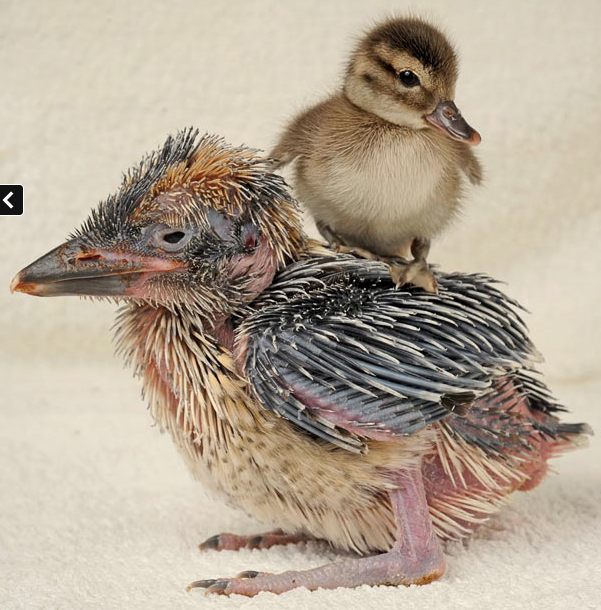
I first saw this in Naked Capitalism but the picture came from the UK’s Daily Telegraph newspaper 6th August, 2010.
Trust!
The accompanying text:
This baby six-week old kookaburra called Kookie and a tiny duckling have struck up a friendship at the Seaview Wildlife Encounter, near Ryde in the Isle of Wight. Kookie was saved by staff after they feared his parents would kill him. And the duckling was rescued from one of the park’s aviaries because he was thought too small to defend himself against larger birds. Keepers took a chance and decided to see what would happen if they were put together. The duckling instantly cuddled up under Kookie’s protective wing, thinking he was his mum and Kookie didn’t seem to mind playing the caring parent
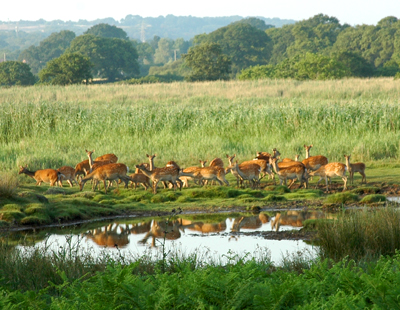
Julie has gone on ahead, but returns to tell me that the sika deer are feeding in the reed beds ahead of us. (These are one of two types of deer found at Holton Lee.) She offers to stay with Genie while I go and photograph them, so that Genie won’t frighten them off. They see me, but continue feeding whilst remaining alert.
It really is a magical sight – I am quite converted from my original anxiety about deer leaping out in front of the car!
There is something extremely primeval about deer, which is probably not surprising as their bodies have provided everything from meat and clothing to fish hooks and sinews for many indigenous people, while still remaining wild. It is hard to see why anyone would hunt them simply for sport, though, and I fear that Walt Disney has spoilt me for enjoying venison – ancient, organic, sustainable, non-farmed food source or not, it would be like eating Bambi!
Sometimes looking down the other end of the telescope reveals more, much more!
Afghanistan - where is it leading?
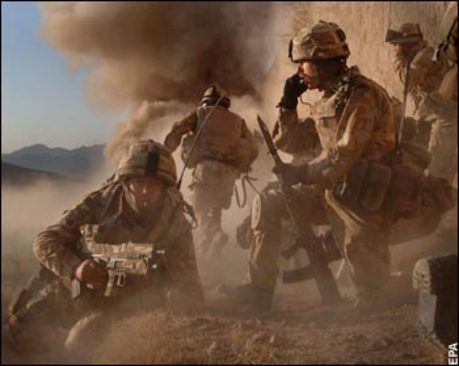
Now that coalition forces have just recently suffered their deadliest month yet in the conflict in Afghanistan, it now has become more crucial than ever to rethink the strategy of the United States and its allies in the region. Currently, the cornerstone of this strategy rests upon two key factors – winning over the local peoples of the region, and training local forces to carry the burden when, and if, coalition forces leave the region.
At least on the exterior, these goals in Afghanistan do make some sense. The only possible way to succeed via a continued military occupation of Afghanistan is to attain and bank on the support of the local peoples. Also, if western powers are ever to withdraw from the region, local forces will have to be able to maintain whatever structure these forces leave in their wake.
However, while this strategy is not completely outlandish and does show some merit on the part of military strategists in that they are leaning more towards localized models that entail comprehension of diverse local factors, the question still must be asked – is this strategy actually possible to carry out and have the sought-after effects in the region? Can the United States and its allies actually win over the peoples of Afghanistan and western Pakistan, and can these same powers possibly train forces that will remain peacekeepers in the years to come?
Despite the fact that I admire the intentions of the military’s current strategy in this region, I do not think that their plan is in fact possible. It seems to me that rather we are fighting an unwinnable war to win over a people that we do not and cannot understand, and that by funding the Afghani security forces of today, we are inevitably funding our enemy of tomorrow, just as our nation has mistakenly done so many times in the past in this very region.
I cannot foretell the future. Nor can anyone else. However, I can comment on what is likely to occur. And, in constructing such a model, two of the most important subjects to understand are history and praxeology, or human behavior.
An attempt by the United States to make Afghanistan a stable, western-friendly state is by no means a new happening. The date of the beginnings of our intervention in the region could be debated, but a decent starting point is the late 1970’s when President Carter put forth the Carter Doctrine, which stated that the United States would defend its interests in the Middle East.
This doctrine just barely preceded the Soviet invasion of Afghanistan, and it was this invasion that saw the beginnings of American forces, at this point being mostly CIA and other such agencies, which were attempting to hamper the Soviet forces by funding the Afghani resistance.
Now, there is no room here for a history of American involvement in Afghanistan. However, what must be noted is that during the 1980’s and 1990’s, a pattern developed in the Middle East – the United States would fund a group in the hope of combating some common enemy, and then in later years the group funded with American taxpayer money would inevitably end up turning against the United States.
A few prominent examples of this are Al Qaeda, who received $6 billion from the United States from 1989 to 1992, the Afghani Taliban, who was receiving US foreign aid up to the very minute American forces entered their country (and continues to receive US foreign aid through Pakistani backchannels) and Saddam Hussein, who received chemical weapons from the US during the Iraq-Iran War of the 1980’s, weapons he later used to kill American soldiers.
This, though briefly put, is the history, or the “what.” So now must come an examination of the “why,” or the element of praxeology. For obviously, our attempts to forge friendships in the region in the past have failed. Our friends have become our enemies, in fact our worst enemies.
There are several possible explanations for why this occurs. However, mine is quite simple – we do not understand these people, we do not understand this region, we do not understand Islamic culture, and, to be quite blunt, we never will. It is not a wrongdoing by the West to look at the Middle East through Western eyes. Rather, it is the only way that a westerner possibly can look at the Middle East.
On top of this extremely problematic misunderstanding of the Middle East by Western peoples then comes another layer of problems, these being the base problems of intervention in any context, amplified by the extreme foreignness and instability of the Middle East as a whole. The consequences of intervention in any scenario are so unpredictable, so many, and so far-reaching that no one can possibly intervene and successfully fulfil their objectives without in the process creating a dozen new problems. This is seen with the federal government intervening in states in their own country – how much greater then are the problems when intervening in a region like the Middle East?
All this now brings us back to the point on considering the future. As I mentioned previously, I cannot say what the future holds. However, I can make an educated guess. And, based on analyses of both history and human behavior, it is safe to say that by both indirectly and directly funding the training of a new military force in Afghanistan, we very likely are creating our enemy of tomorrow. For when these people that we are now training realize that the United States is not leaving, that they are not in fact a free state, that they have become a part of the American empire, and that if they want to live culturally independent of western influence they will have to forcibly remove Western elements within their borders, it seems extremely probable that they will do exactly that.
To say that we are creating a force that will do what we expect it to do in the future is a wish at best. The reality is that we do not and cannot understand what is truly a foreign mindset, and our best course of action would be to distance ourselves from what is and will be for many years of region of perpetual conflict.
I don’t know Ms. Romer personally but I certainly know her work both in and out of the White House. I can only hope that the inconsistency between her work as a truth-seeking academic and as an Obama apologist finally got to her and is, at least in part, one of the reasons she resigned as chair of the White House Council of Economic Advisers.
It will be very interesting to see how her writings progress from here.
Jon Lavin wrote a Post on the 13th June, 2010 entitled, “Dealing with the fear of the known.” I’ve been thinking about that in recent weeks including the comment to Jon’s article from Per. Here’s how Jon closed that article:
If more of us got used to coming out of the mind before making an important decision, and simply sat with the question for a while, the answer would probably present itself.
This will probably raise more questions than it answers but that’s not a bad thing.<!–
And here’s the recent comment from Per:Great advice… but how do we remove the fear of what is known?
Presumably Per was implying that we shouldn’t fear the known. However, I beg to differ here; it is actually fear of the UNKNOWN that is rather pointless (I am not afraid of aliens), while fear of the KNOWN is CRUCIAL to our survival.
But like anything else, you can have too little or too much. Too little, and you survive a very short time. Too much, and you sit cowering in your cellar afraid to go out. As with EVERYTHING in life it is a question of BALANCE.
How do we know how much fear to deploy? Instinct, intelligence, knowledge and experience. If any of these are deficient, we may apply an inappropriate fear quotient.
Let’s take “Global Warming”! How afraid of it should I be? What are my marks out of 10 for the four fear-factors above?
Instinct = 8 – I instinctively fear a situation when my environment is getting hotter, as I don’t know what that will imply. Intelligence = 8 – I am (just) intelligent enough to appreciate the dangers of a rise in temperature. Knowledge = 4 – I have no real idea exactly what is going on or how far it will go; the messages are mixed and I see no real panic among governments. Experience = 0
So, a score of just 20 out of 40, which means IGNORANCE and DOUBT and these add up to FEAR ….. so I am quite afraid.
Home grown vegetables
More apparently, than my leaders seem to be, who can’t even ban flying across the Atlantic at a cost of 60,000 tons of CO2 per day. The question is, will this considerable amount of fear push me into actually DOING something about GW? What is my inertia level and what is my tipping point? What would it take to get me to dig up my garden and plant potatoes? To sell my car and buy a horse? Sadly, humans are in general pretty inert …… it is much easier to do nothing or too little until it is (almost) too late.
So, “fear” is absolutely essential to our survival. If you’re a driver who doesn’t fear accidents then please keep out my my way until you very soon die in one.
Fear is also what pushes me to drive very carefully. People who greedily lent money to Madoff had no fear they would lose it, having lost all control of whatever ration of commonsense and/or logic they might once have had. Perhaps now people will fear rather more about losing their money and therefore invest it more wisely.
To take another topical example, any company in the future (is there one?) drilling for oil in the Gulf of Mexico will fear the lash of Obama’s tongue and stick and this fear will push them to be a bloody sight more careful and to have an effective contingency plan. Actually, why more people don’t have a lot more fear is a mystery to me.
Right, having dealt with fear, we come to our response to it, which is of course the interesting bit. The world is changing so fast that almost all of us have limited control. Even the US President has limited control. This is not comfortable.
How then can we gain more control and become more comfortable? Jon has pointed the way; we must become more self-reliant. Jon will presumably now have much less fear of starving to death, since he is producing a proportion of his own grub. Anyone installing solar-panelled heating will be much less fearful about their electricity being cut off.
I would go further. Anyone owning a horse will or would have much less fear about running out of fuel and being immobile – or more to the point, of being unable to plough and sow his fields, without which we really are stuck. (Incidentally, I am predicting a big comeback for work horses. They are slower, yes, but you can’t breed a tractor (or indeed talk to it) or produce your own fuel, which is where the horse wins out. We’ll have to move more slowly, but then speed is vastly overrated.)
Now Jon with his chickens is a special case. Is there, I wonder, a small element of “fear” in his decision to keep chickens? Humans are complex …. Another major factor pushing Jon down this road could be (and in his case probably is) social responsibility.
It seems pretty clear that if EVERYONE became more self-reliant then vast, expensive, high-consuming centres of production would be scaled down. Unfortunately, social responsibility is not exactly fasionable in today’s consumer world (or we wouldn’t use plastic bags for a start, just to take one small example). Like the vegetarians of 30 years ago, Jon might be seen as an exception if not crank; until of course the fear factor becomes higher and then everyone will try to grow their own potatoes.
So, fear of powerlessness drives us to take initiatives that will help to remove at least some of this fear; a circular but inevitable process. Nothing new about it; the only sad thing is that humans seem to need to travel quite a long way down the path of doom before they really start to react.
This of course is why we did nothing when Hitler invaded the Rheinland in 1936; wait and see seemed easier at the time. It’s also why America totally ignored Jimmy Carter’s ideas of some decades ago about reducing America’s dependence on Arab oil. It was much easier to deride him and do the easy (but totally wrong) thing, especially of course as the oil companies have loads of money and can buy off people who otherwise might see the light.
Well, we’re well past “Wait-and-see” now …… we are now entering the “Do-it-or-else ….” period. And where Jon is of course achieving a double-whammy is that his increasing self-reliance is also GOOD FOR SOCIETY. If everyone were more self-reliant in every way a vast saving in energy and everything else could be achieved. Flying exotic fruits into Britain from South Africa is insane, yet so normal that it seems … errrmmmm … normal.
All this was obvious years if not millennia ago, but the current state of the world has increased the fear factor and is pushing people like Jon down this road. But it is an interesting road. Being self-reliant has multiple advantages, though it will be pretty hard on the rich, who may have to learn how to do things they usually pay underlings to do.
But Jon is in the vanguard of this movement; there is VAST scope for increasing self-reliance. It could and should be an adventure, though it will involve enormous change. The latter of course can also be stressful, but less so when it is clearly a change for the better, as I believe it will be.
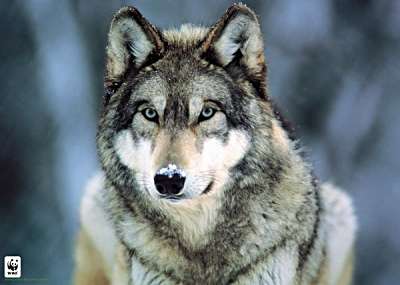
The wonderful news that US Gray Wolves are now back under protection reminded me of the beautiful story of Tim and his ‘pet’ wolf Luna that was published on Learning from Dogs September, 2009.
The first article opened up as follows:
An amazing true story of a relationship between a wild wolf and a man.
This is a story of a particular event in the life of Tim Woods told to me by his brother, DR. It revolves around the coming together of a man sleeping rough, with his dog, on Mingus Mountain, and a fully grown female Gray or Grey Wolf. Mingus is in the Black Hills mountain range between Cottonwood and Prescott in Arizona, USA
But then I added a postscript which I am going to reproduce in full again.
The story of Luna has some interesting connections.
The person taking the picture in the Post about Tim Woods was Willie Prescott. He just happens to be the grandson of William H. Prescott from whom the town of Prescott is named. Here’s that picture again.
Can’t better what was published in the New York Times a few days ago:
Donald Molloy, a Federal District Court judge in Montana, ruled Thursday that gray wolves in Montana and Idaho must be provided federal protection under the Endangered Species Act. This is a welcome decision. The immediate effect will be to spare the animals from hunts planned for this fall that are now illegal. The larger hope is that Washington will devise a protection plan ensuring the wolves’ survival not only in Montana and Idaho but across the northern Rocky Mountains.
Wolves in Montana and Idaho were removed from federal protection under rules proposed by the Bush administration. The rules were upheld by President Obama’s Interior Department, which said that both states had developed satisfactory management plans and that the wolves, in effect, could be released into their custody.
Wyoming’s plan was deemed inadequate, and federal protections remained. But in Montana and Idaho, the first reaction was to authorize limited wolf hunts that — though the states argued otherwise — would slowly guarantee the extinction of the species.
Judge Molloy ruled that protections for what is essentially a single species cannot be different in each state — either the wolf must be removed from the list or listed as an endangered species in every state, meaning throughout its range. Judging by early comments, the Interior Department’s preference seems to be to persuade Wyoming to improve its management plan so that the government can delist the wolf there — thus bringing the three states into harmony.
This is a terrible idea, and could end up authorizing hunts in three states, not two. The Interior Department, instead, should write an areawide management plan. There are roughly 1,700 wolves across the Rockies — far more than when they were reintroduced in the 1990s. But most biologists believe there should be a minimum of 2,000, with enough breeding pairs to ensure the long-term survival of a dynamic population across the range.
State plans meant to satisfy hunters rather than protect the wolves cannot do that. The gray wolf may need federal protection for years to come.
A Guest Post from Daniela Caride. Daniela writes the Blog The Daily Tail
Something about being a dog dazzles me. Maybe it’s the freedom. Dogs don’t care what others think of them. They do whatever pleases them most without guilt or worries.
This morning, it became so clear to me. My walk around Fresh Pond Reservation in Cambridge didn’t feel very pleasant. I was worried about my mother’s persistent headache.
Today promised to be the hottest day of the summer, and the heat was not helping my mood. It was only 9 a.m., and I was already convinced something had changed in our constellation, and the sun was about to barbeque the Earth.
But my dogs, Frieda, Geppetto and Lola, were oblivious to anything going on outside Fresh Pond. They trotted happily to the doggie pond awaiting them less than a mile away, stopping only to sniff around and greet other dogs.
At the pond, they refreshed themselves in the water, not minding that the water gets dirtier as the summer wears on. They love that stinky pond, from the day the ice starts cracking and we can finally see our reflections in the moving water, to the beginning of winter when the water turns into ice again.
We completed our lap and approached my car, parked in front of a huge grassy area, where dogs are not allowed. One
Dog days!
of the landscaping employees was testing the park’s brand new lawn sprinklers. He turned them on and watched as half a dozen sprinklers soaked the grass.
Geppetto ran toward the spinning sprinklers, ignoring leash laws, of course. He was dying for a sip. The water flowed so strong that Geppetto had to close his eyes when trying to get the spray into his mouth again and again.
Frieda and Lola followed him, first exploring the artificial rain until they felt comfortable enough to play beneath it. Soon they were romping under the sun without feeling the effects of the boiling heat.
I watched the beauty of that canine dance with envy. My dogs were free, living the moment, unfettered of any concern. Then I asked myself why we humans don’t act more like them, especially in situations like this, in which no harm would be done.
Geppetto and Daniela
First, I went into one of the sprinklers, wetting my hair and face. Then another sprinkler surprised me, showering me head to toe with a refreshing jet. I raised my arms to let the water reach the rest of my body.
Park regulars watched their dogs and me from careful distance, not wanting to get wet. I didn’t care any more. I felt whole.




 Learning from Dogs