Year: 2010

Perkins and “The Daily Mail”

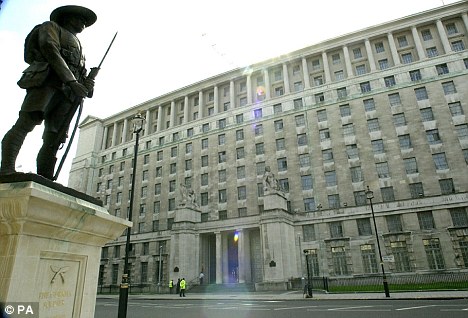
Whitehall Ministry

Transcripts from our bug in the Ministry of Misinformation, Whitehall, London

Morning, Perkins! … Good grief, man! What’s that under your arm?

It’s today’s “Daily Mail“, Sir.

“Daily Mail”! What on earth are you doing with that?

Well, I thought I’d check it out, Sir.

Check it out?

Yes Sir. People have been attacking it.

Attacking it?

You keep repeating me, Sir …

I’m just stunned Perkins! Why on earth would anyone sane want to “check it out”?

Well, I’ve always been suspicious of situations where the establishment and so-called cognoscenti collectively attack something, Sir.

Why on earth is that, Perkins?

Well, they could have an ulterior motive, Sir.

Ulterior motive?”

You’re doing it again, Sir.

Look Perkins, the Mail is a ghastly, sensationalist rag.

When did you last read it, Sir?

Goodness me, Perkins. I have better things to do with my time.

How can you be sure then that you’re not just baying the mindless mantra of your peers?

Look Perkins. I don’t read the Mail because it appeals to the mob and has no analysis.

But “the mob” are the mass of the people, Sir.

Exactly, Perkins. Now you’re on the right track.

So you don’t believe in democracy, Sir?

Don’t ask silly questions, Perkins. Of course I do, just as long as the people don’t get their hands on government. But seriously, the Mail has little analysis; just a crude statement of facts.

But why are you so attached to “analysis”, Sir? Surely it’s the facts that are most important?

Well if you don’t have analysis then how do you know what’s really going on? You need analysis to explain the headlines.

But surely any analysis depends on the spin of the author? Why can’t people be given the facts and allowed to make up their own minds?

“Make up their own minds?” Be serious, Perkins. The mob hasn’t got a mind to make up; that’s why it’s called “the mob”.

I think you’ll find it was the mob that fought and died in two World Wars to protect freedom and democracy in Britain, Sir.

Aha! That proves my point! You don’t need to understand much to pop your head over the top and get it shot off, do you! The mob is ideally suited to it.

But “analysis” is overrated, Sir. People should be encouraged to think for themselves.

“Think for themselves!” Now Perkins, those who went to public school can be expected to think for themselves, but as for the rest …

I’m sorry, Sir; there is in fact too much analysis. I was put off at school at an early age. No sooner had we opened a Shakespeare play than we had FR Leavis shoved down our throats telling us what to think about it rather than being allowed to interpret and analyze it ourselves.

I’m sorry your education seems to have gone so seriously wrong, Perkins. Did you in fact go to a public school?

Only a poor man’s one, Sir …. but analysis in the press just seems to me a clever way of trying to tell people what they should think. I believe Goebbels was very good at analysis, and of course Tony Blair …

Now Perkins, analysis is all that differentiates us from unthinking morons who cannot understand the law.

You mean British MPs and their expense accounts, Sir?

No … errm …. perhaps I should rephrase that … but really Perkins, this “Defend the Mail” crusade is really a bit OTT, isn’t it?

Perhaps, Sir, but it’s because it is so heavily attacked by verbal diarrhoearists who support totalitarianism. My principle is that your enemy’s enemy is your friend, so to speak. If someone who supports dictatorship attacks it at every chance then it can’t be all bad, sort of thing.

I’m sorry, Perkins. I don’t think I will ever be able to follow the tortured meanderings of your mind.

I think that’s because deep down I identify with “the mob”, Sir, or as I prefer to call them; “the people” ……..

Hmm …… if I were you Perkins I wouldn’t go trumpeting that too loudly round Whitehall. It could put an end to a promising career.

By Chris Snuggs

Three buses arrive at once ….

Hang on, folks.  We have some good news!

It is a sad and lonely vigil that we who long for good news sometimes keep. But now and again, like London buses, it does arrive in welcome batches, and so it has proved this week.

Oh look! Here's five of them!

US Health Care

First of all, our faith in Obama has been somewhat resurrected from what had become – in my case at least – a depressingly-comatose condition.  For he has managed to squeeze his

Band-aid or long-term fix?

health bill through Congress, which is more than the glamorous Clinton duo managed the last time it was tried.

Now I am sure Learning from Dogs has many American friends – at least, I hope so. And they are surely better-qualified to give an objective view of exactly what has been achieved. To listen to the Republicans, you’d think the end of the world had arrived, yet it is surely surreal that “the greatest country in the world” should NOT have universal health care, isn’t it?

As far as I understand, another 32 million Americans will now have health cover, even if that still – apparently – leaves some outside the fold. Well, let’s not quibble; it’s a major step forward. How even the reddest-necked Republicans could accept poor Cuba having better overall health care for their poorest citizens than the mighty USA was always a mystery to me. So, let’s chalk it up and celebrate.

Palestine

Secondly, the Obama-Clinton team is AT LAST standing up to Israel. Now this is a major topic, and beyond the scope of one post, but if you empathize – as I feel one should – then from a Palestinian’s point of view, the Israelis are occupying their territory by force. And they are not alone in this belief; the international community has long considered the Israeli presence in the West Bank and Jerusalem to be illegal. Yes, Israeli supporters may find ways of rationalizing their presence there, but the facts speak for themselves.

“Whom the Gods seek to destroy, they first make mad.” Well, Netanyahu may not quite be mad, but he was certainly very silly – in my opinion – to so impudently announce more building in Jerusalem just as efforts to restart serious negotiations were under way. How he could imagine this would not be a major slap in the face to the US is a mystery. Perhaps he was just seeing how much he could get away with? Well, he seems to have found out, and for once – after nearly a year of pussy-footing about with Israel – the USA is moving closer to the international community’s position.

The world – let alone the Palestinians – needs a permanent solution to the problem, and that will not be achieved by Netanyahu prattling on about Jerusalem “belonging to Israel”. It is obvious to any outsider that the city has to be shared. As with Berlin, what will no doubt be a divided city for some time will eventually – through the force of position and logic – become a united one. WITHOUT goodwill (and there has been precious little in recent years from victorious Israel) this running sore will only come back to bite the Israelis time and time again. Friends of Israel – as I count myself in fact – should make this point more strongly.

However, the only friend that really counts is the USA, and we need them to keep up the pressure. Can and will Obama tough this one out in the face of the very powerful Israeli lobby? I believe Obama has said that he would prefer to be a one-term President if it meant he could get some real reforms through, and this is a welcome change from the “I’ll do anything to stay in office” syndrome that we seem to be seeing in Britain right now.  Let’s hope he can live up to this promise. It is after all now nearly a decade since 9/11, after which there was so much talk about “finding a solution” that has – so far – come to little.

Google & China

Where next?

Finally, we hear from Asia that China is cross with Google for removing filters from its search engines. Now we have got used to cosying up to China, to the point where the west imports a VAST quantity of cheap goods that have helped China’s economy to make a real leap forward, and of course pay for a vast increase in their military spending.

Yet the truth remains the truth, no matter how you dress it up. It remains a Communist dictatorship.

That Google even tolerated acquiescence in the fascist suppression of free speech in the first place was a disgrace, but they seem now to be moving to a more defensible position. What was sad about their original  move into China was that they are big and powerful enough to have made a stand before. All over that vast country, individuals are trying to stand up to a fascist state, so how must they have felt when a vast, rich and powerful organisation from the west (Statue of Liberty and all that) got into bed with their oppressors?

Well, perhaps those little people will feel a bit better now. Predictably, the Chinese are now making threats against other “partners” of Google, saying that they “must obey its laws”. Well, we’ll see how this plays, but united we stand, divided we fall, and is it moral to respect immoral laws?

Yes, it will irritate the Chinese Communist Party leaders (I won’t be losing any sleep there …) and No, it won’t make a vast practical difference in the short-term; the Chinese have their OWN search engines, but it is a symbol, and symbols count. Sooner or later, the Chinese will join the modern world; but every now and then the free world needs to give it a prod in the right direction.

By Chris Snuggs

[Explanation of title to our non-UK readers. Londoners are so used to waiting in the cold for a bus to arrive and then having three arrive at once, that the phrase has become a little bit of English folklaw! Ed.]

Why do we cheat?

Behavioral Economist concludes that most people cheat.

In a very interesting video on the website TED, Dan Ariely, Professor of Behavioral Economics at Duke University, explains his research into why people think it is okay to cheat and steal.

Here is Ariely’s presentation from YouTube:

From his research, he concludes the following:

  • A lot of people will cheat.
  • When people cheat, however, they cheat by a little, not a lot.
  • The probability of being caught is not a prime motivation for avoiding cheating.
  • If reminded of morality, people cheat less.
  • If distanced from the benefits from cheating, like using “chips” instead of actual money in transactions, people cheat more.
  • If your in-group accepts cheating, you cheat more.
Dan Ariely

I quibble with the interpretation of some of his findings, which may justify a separate post on how people perceive what they do and do not know, but there are always issues of this sort with a given research project.  Where I draw the line is when he expands his conclusions to include all of Wall Street and the stock market, which is totally beyond the scope and nature of his research.

On what basis does he draw this conclusion?  As explained in this short video (as I have not read his book, though I’ve read excerpts and am familiar with the study upon which the book is based), Ariely claims that because stocks and derivatives are not in the form of money, they “distance people from the benefits of cheating,” which leads individuals who engage in the stock market to cheat more.  He alludes to Enron as proof.

This is almost too silly to spend a lot of time on trying to discredit, but I fear that a lot of people who hear his talks or read his book may be lulled into accepting what he says about the stock market as true.  But it is not! Enron is the exception, not the rule.

Companies who issue stocks are raising money to provide a good or service that is valued by society; they are rewarded by profits.  Investors who buy and sell stocks, trade derivatives, and invest in portfolios are trying to make their money go further. They are trying to earn a return on their savings.  Cheaters do not survive in the stock market, unlike the “consequences-free” classroom in Areily’s experiment.

On the other hand, these factors are in glaring abundance in the government:  politicians never “see” the taxes they spend as the hard-earned income of the citizens. And the “benefits” of cheating, including power and privilege, are amorphous and vague, and couched in the so-called morality of “doing the greater good.”  I’m surprised Ariely does not condemn the federal government using the same logic as his does the stock market.

His last take-away from this research project?  That we find it “hard to believe that our own intuition is wrong.”

I think Dr. Ariely ought to apply that caveat to the conclusions he draws about his own research.  Very interesting, very compelling, but his interpretation of the results as they apply to the stock market falls victim to the very same biases that he claims to find in others.

by Sherry Jarrell

Poor old Europe!

Why has it seemed like pushing water uphill for so long?

I’m in my mid-60s, having been born six months before the end of WWII.  From the earliest days that I can remember, my parents loved to holiday in France and Spain.  In those days if one was to motor into Europe then it was a case of the car being craned aboard the ferry from England to France.  How things change!

Modern cross-channel ferry

Much later on in life, I did business extensively in many European countries and, for a while, taught sales and marketing at the international school, ISUGA, in Quimper, NW France.  (Indeed, fellow Blog author Chris Snuggs was my Director of Studies at ISUGA – that’s how we came to meet.)  I like to think that I have a reasonable understanding of the variety of cultures that is Europe.

So while acknowledging the convenience of a common currency (sort of) and ease of border transits, the one thing that has remained in my mind is that each country in Europe is very, very different to the other.  These core differences have always struck me as so strong and deep-rooted that any form of real union was a ridiculous concept.  The present deep problems with Greece seem to be the tip of this fundamental issue.  Thus a couple of recently published articles, on Baseline Scenario and The Financial Times seem worthy of being aired on Learning from Dogs.

First, the article by Simon Johnson on Baseline Scenario:
Read more of this Post

The Love of a Dog

Pharaoh – from whom I have learnt so much.

German Shepherd, Pharaoh, born June 3rd, 2003

I am your dog and have something I would love to whisper in your ear.

I know that you humans lead very busy lives.  Some have to work, some have children to raise, some have to do this alone.  It always seems like you are running here and there, often too fast, never noticing the truly grand things in life.

Look down at me now.  Stop looking at your computer and look at me.  See the way my dark, brown eyes look at yours.

You smile at me.  I see love in your eyes.

What do you see in mine?  Do you see a spirit?  A soul inside who loves you as no other could in the world? A spirit that would forgive all trespasses of prior wrong doing for just a single moment of your time?  That is all I ask. To slow down, if even for a few minutes, to be with me.

So many times you are saddened by others of my kind passing on.  Sometimes we die young and, oh, so quickly, so suddenly that it wrenches your heart out of your throat.

Sometimes, we age slowly before your eyes that you may not even seem to know until the very end, when we look at you with grizzled muzzles and cataract-clouded eyes.  Still the love is always there even when we must take that last, long sleep dreaming of running free in a distant, open land.

I may not be here tomorrow.  I may not be here next week.  Someday you will shed the water from your eyes, that humans have when grief fills their souls, and you will mourn the loss of just ‘one more day’ with me.

Because I love you so, this future sorrow even now touches my spirit and grieves me.  I read you in so many ways that you cannot even start to contemplate.

We have now together.  So come and sit next to me here on the floor and look deep into my eyes.  What do you see?  Do you see how if you look deeply at me we can talk, you and I, heart to heart.  Come not to me as my owner but as a living soul.  Stroke my fur and let us look deep into the other’s eyes and talk with our hearts.

I may tell you something about the fun of working the scents in the woods where you and I go.  Or I may tell you something profound about myself or how we dogs see life in general.

I know you decided to have me in your life because you wanted a soul to share things with. I know how much you have cared for me and always stood up for me even when others have been against me.  I know how hard you have worked to help me be the teacher that I was born to be.  That gift from you has been very precious to me.  I know too that you have been through troubled times and I have been there to guard you, to protect you and to be there always for you.  I am very different to you but here I am.  I am a dog but just as alive as you.

I feel emotion.  I feel physical senses.  I can revel in the differences of our spirits and souls.  I do not think of you as a dog on two feet; I know what you are.  You are human, in all your quirkiness, and I love you still.

So, come and sit with me.  Enter my world and let time slow down if only for a few minutes.  Look deep into my eyes and whisper in my ears.  Speak with your heart and I will know your true self.  We may not have tomorrow but we do have now.

(Based on an article sent to me, unfortunately from an unknown author, and modified to reflect the special relationship that I have with my 6 year old German Shepherd, Pharaoh.)

By Paul Handover

Even more Tim Berners-Lee

The powerful spread of open data.

Sir 'Tim' Berners-Lee

Tim Berners-Lee was, or is, the father of the Internet, that remarkable network that has done to connect millions together.  Indeed, my personal view is that the Internet may be the only real tool that people have to protect and defend democracy.

I’m sure thousands know the background of Sir Timothy John “Tim” Berners-Lee, to give him his full name, an Englishman living in the USA.

There was an introduction to the the way that Sir Tim wants to see the web move in yesterday’s Post.

But Tim recently (February 2010) gave a talk in Long Beach, California, entitled The year open data went worldwide. This takes the concept much further.

It’s a fascinating presentation.

By Paul Handover

More Tim Berners-Lee

Not content with ‘inventing’ the world wide web, Sir Tim is still at it.

This Post doesn’t really require any introduction.

If you see Sir Tim as the hero that he is then you will want to watch this presentation given to a TED audience in 2009.

Enough said!

By Paul Handover

The GPS and the AAAs

Welcome Per Kurowski Egerström

On the 22nd March, Learning from Dogs had the pleasure of a Post from our first Guest Author, Elliot Engstrom.  We are doubly delighted to have Per Kurowski join us as our second Guest Author.

Per Kurowski

Per is a prolific blogger.  He has had a full career including serving as an Executive Director of the World Bank from 2002 until 2004 for Costa Rica, El Salvador, Guatemala, Honduras, Mexico, Nicaragua, Spain and Venezuela.  More about Per’s life experiences can be found here.

Here is Per’s first Guest Post for Learning from Dogs.

——————-

The GPS and the AAAs

Not so long ago I asked my daughter to key in an address in the GPS and then even while I continuously heard a little voice inside me telling me I was heading in the wrong direction I ended up where I did not want to go.

Whither we are led?

Something similar caused the current financial crisis.

First the financial regulators in Basel decided that the only thing they would care about was the risk of individual financial defaults and not one iota about any other risks.

Second then, though they must have known these were humanly fallible they still empowered some few credit rating agencies to be their GPS on default risks.

Finally, by means of the minimum capital requirements for banks, they set up all the incentives possible to force them to heed what the GPS said and to ignore any internal warning voices.

Of course, almost like if planned on purpose, it all ended up in a crisis. In just a couple of years, over two trillion dollars followed some AAA signs over the precipice of badly awarded mortgages to the subprime sector. Today, we are still using the same financial risk GPS with the same keyed in instructions… and not a word about it in all recent Financial Regulatory Reform proposals

I hate the GPS type guidance of any system since I am convinced that any kid brought up with it will have no clue of what north, south, east or west means; just as the banker not knowing his client’s business or how to look into his client’s eyes or how to feel the firmness of his client’s handshake, can only end up stupidly following someone else’s opinion about his client on a stupid monitor.

I hate the GPS type guidance system because, on the margin, it is making our society more stupid as exemplified by how society, day by day, seems to be giving more importance to some opaque credit scores than to the school grades of their children. I wait in horror for some DNA health rating scores to appear and cause a total breakdown of civilization as we know it.

Yes, we are buried under massive loads of information and these systems are a tempting way of trying to make some sense out of it all, but, if we used them, at least we owe it to ourselves to concentrate all our efforts in developing our capacity to question and to respond adequately when our instincts tell us we’re heading in the wrong way.

Not all is lost though. I often order the GPS in my car to instruct me in different tongues so as to learn new languages, it gives a totally new meaning to “lost in translation”, and I eagerly await a GPS system that can describe the surroundings in more extensive terms than right or left, AAA or BBB-, since that way not only would I get more out of it but, more importantly, I would also be more inclined to talk-back.

By Per Kurowski

Snowdrops

The snowdrop – a real harbinger of Springtime

The winter can seems very long when the temperature remains extremely cold and the news headlines show dramatic pictures of villages completely cut off by drifting snow.  And the old debate about cold weather payments for pensioners comes around once again.

We are often still able to enjoy time in our garden well into October, but the weeks that follow up to March can be very long and drawn out.  Then comes my favourite flower, The Snowdrop.

Snowdrops

There are several different types of this beautiful little plant, and in the county of Hampshire in England [where Bob and his family live, Ed.], in particular there seem to be clumps of this special white flower everywhere.

Heale House

However the other day I was able to see a complete field of them in the grounds of Heale House, a private residence owned by Patrick Hickman,an ex Lancaster pilot, now 89, who is still very active and keeping his yew bushes well trimmed in the art of topiary.

Heale House is open at this time of year for people to visit the lovely gardens and again enjoy the snowdrops.

Spring has arrived, but it is the first flower that is my favourite!

By Bob Derham

The Delusions of Leadership

The British ‘silly season’ approaches!

The current British Prime Minister

Well, this is election season in Britain, or as near as it gets ….. no doubt British PM Gordon Brown will wait to the last possible moment in the hope that either oil in vast quantities will be struck  on Salisbury Plain or that David Cameron will be found wandering around near the men’s toilets on Wandsworth Common late one night.

But Gordon-Brown’s procrastination has almost reached its consume-by date and everyone expects an announcement soon for an election on May 6th.

This will be a momentous election. As it seems that British politics has evolved into mammoth-long parliamentary stints – a bit like Japan – the government of the next 15 years could be up for grabs.  Will we stagger along under the camel-breaking weight of turgid bureaucracy, overspending and debt under Labour or emerge post-election into the great entrepreneurial leap forward à la Maggie Thatcher Mark II? (this is a slight over-simplification for newcomers to British politics).

We’ll see, but one of the most fascinating aspects of general elections is always to listen to what politicians say.  On rare occasions we may be inspired and amazed by their vision and rhetoric, but unfortunately one’s reaction is more often one of total disbelief. I had one of the latter yesterday when I read the following in the Guardian:

“I will continue as Labour leader even if I lose election, “Gordon Brown says.

Now nobody pretends being British PM is easy, but one does at least hope that one’s leader – the one with the finger on the nuclear button after all – will not lose touch with reality. And the idea that Brown could soldier on after a defeat is surreal.

He was never actually elected by his party in the first place, nor of course as PM by the British Public. He has already nearly been thrown out a couple of times by his own party so what possible justification could there be for trying to stay on in defeat? Is the following a justification?

“I owe it to people to continue and complete the work we have started of taking this country out of the most difficult global financial recession.” (Reuters)

Does he really think that NOBODY ELSE can save Britain? Megalomaniac delusions, I fear. And IF he loses the election, the Labour Party could face another 15 years in opposition. The idea of Brown staggering on until he drops is rather sobering.

Mr Brown didn’t NEED to say what he did; the usual politician’s deviousness would have sufficed: “no point speculating about hypothetical situations …. ” and so on …. the fact that he cannot seem to imagine NOT being leader after so many years of playing sulky bridesmaid to the slick and charismatic Tony Blair is pathetic in the true sense of the word.

In sport, business, love and politics, there comes a time when you have to give up, and leading your party to defeat at an election is one of them ……..

PS Of course, he could WIN the election! Oh dear …… pass me the Glenfiddich …..

Glenfiddich Caoran Reserve 12 Years Old

By Chris Snuggs