More fabulous photos.
Again, these are taken from Unsplash.
oooo

oooo

oooo

oooo

oooo

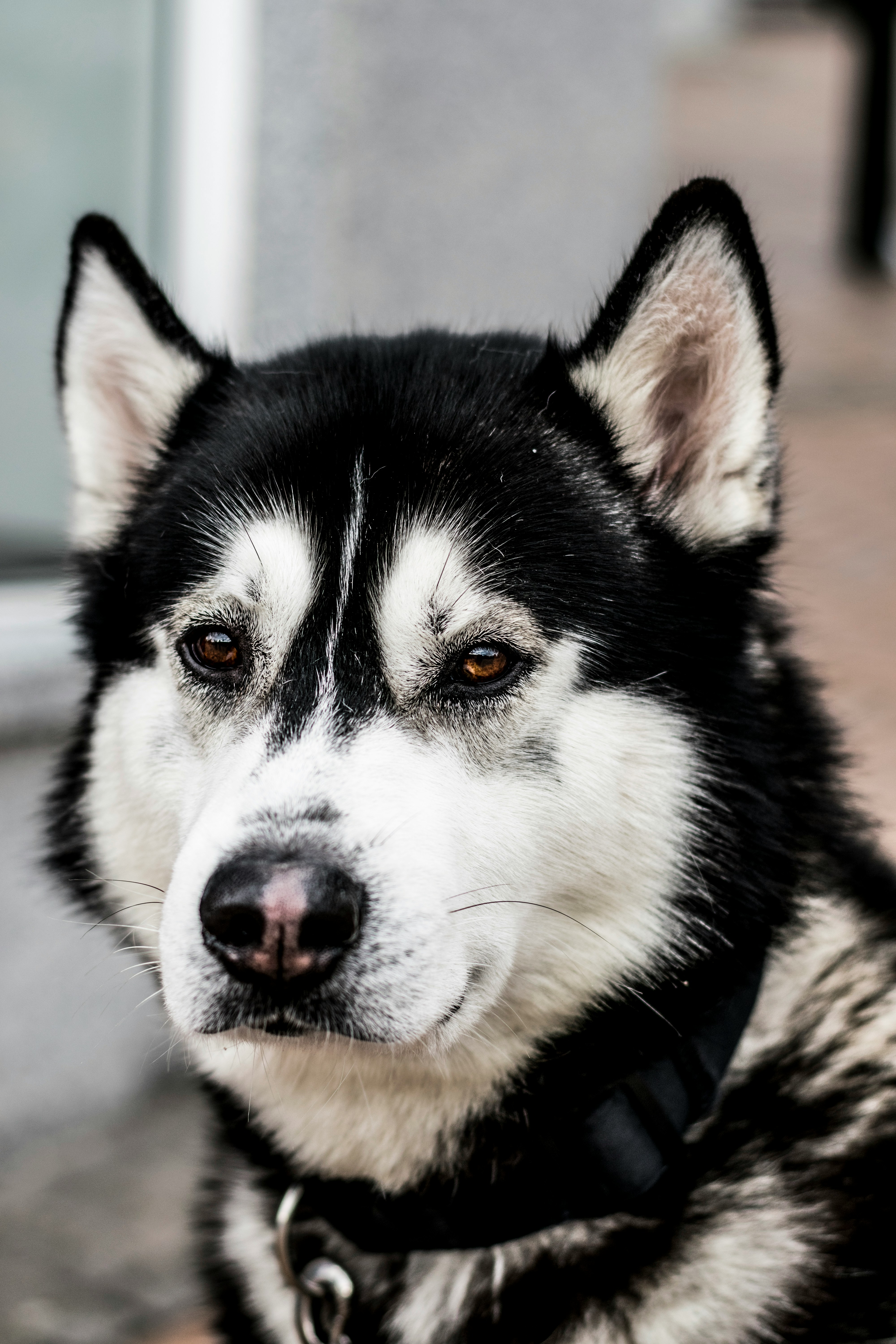
Dogs are animals of integrity. We have much to learn from them.
Year: 2025
More fabulous photos.
Again, these are taken from Unsplash.
oooo
oooo
oooo
oooo
oooo
Scientists have identified five ages of the human brain.
“Neuroscientists at the University of Cambridge have identified five “major epochs” of brain structure over the course of a human life, as our brains rewire to support different ways of thinking while we grow, mature, and ultimately decline.”
So wrote Fred Lewsey. Fred is the Communications Manager (Research) and is Responsible for: School of the Humanities and Social Sciences. (And I took this from this site.) He went on to report that: Four major turning points around ages nine, 32, 66 and 83 create five broad eras of neural wiring over the average human lifespan.
Being in my early 80’s I was most interested in that last turning point. This is the information about that era:
The last turning point comes around age 83, and the final brain structure epoch is entered. While data is limited for this era, the defining feature is a shift from global to local, as whole brain connectivity declines even further, with increased reliance on certain regions.
“Looking back, many of us feel our lives have been characterised by different phases. It turns out that brains also go through these eras,” added senior author Prof Duncan Astle, Professor of Neuroinformatics at Cambridge.
“Many neurodevelopmental, mental health and neurological conditions are linked to the way the brain is wired. Indeed, differences in brain wiring predict difficulties with attention, language, memory, and a whole host of different behaviours”
“Understanding that the brain’s structural journey is not a question of steady progression, but rather one of a few major turning points, will help us identify when and how its wiring is vulnerable to disruption.”
The research was supported by the Medical Research Council, Gates Foundation and Templeton World Charitable Foundation. The full report may be read here: https://www.newscientist.com/article/2505656-your-brain-undergoes-four-dramatic-periods-of-change-from-age-0-to-90
Finally, here is an image of this amazing organ that we humans have.

What is revealed in most dogs’ genes.
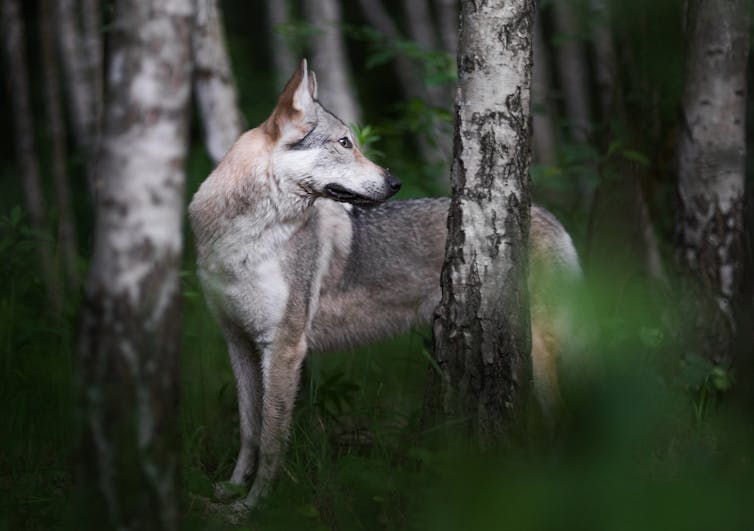
On November 24th this year, The Conversation published an article that spoke of the ancient closeness, as in genetically, of wolves and dogs.
I share it with you. It is a fascinating read.
ooOOoo
Audrey T. Lin, Smithsonian Institution and Logan Kistler, Smithsonian Institution
Dogs were the first of any species that people domesticated, and they have been a constant part of human life for millennia. Domesticated species are the plants and animals that have evolved to live alongside humans, providing nearly all of our food and numerous other benefits. Dogs provide protection, hunting assistance, companionship, transportation and even wool for weaving blankets.
Dogs evolved from gray wolves, but scientists debate exactly where, when and how many times dogs were domesticated. Ancient DNA evidence suggests that domestication happened twice, in eastern and western Eurasia, before the groups eventually mixed. That blended population was the ancestor of all dogs living today.
Molecular clock analysis of the DNA from hundreds of modern and ancient dogs suggests they were domesticated between around 20,000 and 22,000 years ago, when large ice sheets covered much of Eurasia and North America. The first dog identified in the archaeological record is a 14,000-year-old pup found in Bonn-Oberkassel, Germany, but it can be difficult to tell based on bones whether an animal was an early domestic dog or a wild wolf.
Despite the shared history of dogs and wolves, scientists have long thought these two species rarely mated and gave birth to hybrid offspring. As an evolutionary biologist and a molecular anthropologist who study domestic plants and animals, we wanted to take a new look at whether dog-wolf hybridization has really been all that uncommon.
Dogs are not exactly descended from modern wolves. Rather, dogs and wolves living today both derive from a shared ancient wolf population that lived alongside woolly mammoths and cave bears.
In most domesticated species, there are often clear, documented patterns of gene flow between the animals that live alongside humans and their wild counterparts. Where wild and domesticated animals’ habitats overlap, they can breed with each other to produce hybrid offspring. In these cases, the genes from wild animals are folded into the genetic variation of the domesticated population.
For example, pigs were domesticated in the Near East over 10,000 years ago. But when early farmers brought them to Europe, they hybridized so frequently with local wild boar that almost all of their Near Eastern DNA was replaced. Similar patterns can be seen in the endangered wild Anatolian and Cypriot mouflon that researchers have found to have high proportions of domestic sheep DNA in their genomes. It’s more common than not to find evidence of wild and domesticated animals interbreeding through time and sharing genetic material.
That wolves and dogs wouldn’t show that typical pattern is surprising, since they live in overlapping ranges and can freely interbreed.
Dog and wolf behavior are completely different, though, with wolves generally organized around a family pack structure and dogs reliant on humans. When hybridization does occur, it tends to be when human activities – such as habitat encroachment and hunting – disrupt pack dynamics, leading female wolves to strike out on their own and breed with male dogs. People intentionally bred a few “wolf dog” hybrid types in the 20th century, but these are considered the exception.

To investigate how much gene flow there really has been between dogs and wolves after domestication, we analyzed 2,693 previously published genomes, making use of massive publicly available datasets.
These included 146 ancient dogs and wolves covering about 100,000 years. We also looked at 1,872 modern dogs, including golden retrievers, Chihuahuas, malamutes, basenjis and other well-known breeds, plus more unusual breeds from around the world such as the Caucasian ovcharka and Swedish vallhund.
Finally, we included genomes from about 300 “village dogs.” These are not pets but are free-living animals that are dependent on their close association with human environments.
We traced the evolutionary histories of all of these canids by looking at maternal lineages via their mitochondrial genomes and paternal lineages via their Y chromosomes. We used highly sensitive computational methods to dive into the dogs’ and wolves’ nuclear genomes – that is, the genetic material contained in their cells’ nuclei.
We found the presence of wild wolf genes in most dog genomes and the presence of dog genes in about half of wild wolf genomes. The sign of the wolf was small but it was there, in the form of tiny, almost imperceptible chunks of continuous wolf DNA in dogs’ chromosomes. About two-thirds of breed dogs in our sample had wolf genes from crossbreeding that took place roughly 800 generations ago, on average.
While our results showed that larger, working dogs – such as sled dogs and large guardian dogs that protect livestock – generally have more wolf ancestry, the patterns aren’t universal. Some massive breeds such as the St. Bernard completely lack wolf DNA, but the tiny Chihuahua retains detectable wolf ancestry at 0.2% of its genome. Terriers and scent hounds typically fall at the low end of the spectrum for wolf genes.

We were surprised that every single village dog we tested had pieces of wolf DNA in their genomes. Why would this be the case? Village dogs are free-living animals that make up about half the world’s dogs. Their lives can be tough, with short life expectancy and high infant mortality. Village dogs are also associated with pathogenic diseases, including rabies and canine distemper, making them a public health concern.
More often than predicted by chance, the stretches of wolf DNA we found in village dog genomes contained genes related to olfactory receptors. We imagine that olfactory abilities influenced by wolf genes may have helped these free-living dogs survive in harsh, volatile environments.
Because dogs evolved from wolves, all of dogs’ DNA is originally wolf DNA. So when we’re talking about the small pieces of wolf DNA in dog genomes, we’re not referring to that original wolf gene pool that’s been kicking around over the past 20,000 years, but rather evidence for dogs and wolves continuing to interbreed much later in time.
A wolf-dog hybrid with one of each kind of parent would carry 50% dog and 50% wolf DNA. If that hybrid then lived and mated with dogs, its offspring would be 25% wolf, and so on, until we see only small snippets of wolf DNA present.
The situation is similar to one in human genomes: Neanderthals and humans share a common ancestor around half a million years ago. However, Neanderthals and our species, Homo sapiens, also overlapped and interbred in Eurasia as recently as a few thousand generations ago, shortly before Neanderthals disappeared. Scientists can spot the small pieces of Neanderthal DNA in most living humans in the same way we can see wolf genes within most dogs.

Our study updates the previously held belief that hybridization between dogs and wolves is rare; interactions between these two species do have visible genetic traces. Hybridization with free-roaming dogs is considered a threat to conservation efforts of endangered wolves, including Iberian, Italian and Himalayan wolves. However, there also is evidence that dog-wolf mixing might confer genetic advantages to wolves as they adapt to environments that are increasingly shaped by humans.
Though dogs evolved as human companions, wolves have served as their genetic lifeline. When dogs encountered evolutionary challenges such as how to survive harsh climates, scavenge for food in the streets or guard livestock, it appears they’ve been able to tap into wolf ancestry as part of their evolutionary survival kit.
Audrey T. Lin, Research Associate in Anthropology, Smithsonian Institution and Logan Kistler, Curator of Archaeobotany and Archaeogenomics, National Museum of Natural History, Smithsonian Institution
This article is republished from The Conversation under a Creative Commons license. Read the original article.
ooOOoo
Well thanks to Audrey Lin and Logan Kistler for this very interesting study. So even modern dogs have visible traces of wolf in their DNA. It is yet another example of the ability of modern science to discover facts that were unknown a few decades ago.
An incredible fact, as in the truth, that almost nobody will accept.
Until the 22nd November, 2025, that is last Saturday, I believed this lie. A lie that spoke of the dangers, the hazards, the imminent end of the world as I believed it; as in Climate Change!
Very few of you will change your minds, of that I’m sure.
Nonetheless, I am going to republish a long article that was sent to me by my buddy, Dan Gomez.
ooOOoo
Latest Science Further Exposes Lies About Rising Seas
By Vijay Jayaraj
It’s all too predictable: A jet-setting celebrity or politician wades ceremoniously into hip-deep surf for a carefully choreographed photo op, while proclaiming that human-driven sea-level rise will soon swallow an island nation. Of course, the water is deeper than the video’s pseudoscience, which is as shallow as the theatrics.
The scientific truth is simple: Sea levels are rising, but the rate of rise has not accelerated. A new peer-reviewed study confirms what many other studies have already shown – that the steady rise of oceans is a centuries-long process, not a runaway crisis triggered by modern emissions of carbon dioxide (CO2).
For the past 12,000 years, during our current warm epoch known as the Holocene, sea levels have risen and fallen dramatically. For instance, during the 600-year Little Ice Age, which ended in the mid-19th century, sea levels dropped quite significantly.
The natural warming that began in the late 1600s got to a point around 1800 where loss of glacial ice in the summer began to exceed winter accumulation and glaciers began to shrink and seas to rise. By 1850, full-on glacial retreat was underway.
Thus, the current period of gradual sea-level increase began between 1800-1860, preceding any significant anthropogenic CO2 emissions by many decades. The U.S. Department of Energy’s 2025 critical review on carbon dioxide and climate change confirms this historical perspective.
“There is no good, sufficient or convincing evidence that global sea level rise is accelerating –there is only hypothesis and speculation. Computation is not evidence and unless the results can be practically viewed and measured in the physical world, such results must not be presented as such,” notes Kip Hansen, researcher and former U.S. Coast Guard captain.
New Study Confirms No Crisis
While activists speak of “global sea-level rise,” the ocean’s surface does not behave like water in a bathtub. Regional currents, land movements, and local hydrology all influence relative sea level. This is why local tide gauge data is important. As Hansen warns, “Only actually measured, validated raw data can be trusted. … You have to understand exactly what’s been measured and how.”
In addition, local tide-gauge data cannot be extrapolated to represent global sea level. This is because the geographic coverage of suitable locations for gauges is often poor, with the majority concentrated in the Northern Hemisphere. Latin America and Africa are severely under-represented in the global dataset. Hansen says, “The global tide gauge record is quantitatively problematic, but individual records can be shown as qualitative evidence for a lack of sea-level rise acceleration.”
A new 2025 study provides confirmation. Published in the Journal of Marine Science and Engineering, the study systematically dismantles the narrative of accelerating sea-level rise. It analyzed empirically derived long-term rates from datasets of sufficient length – at least 60 years – and incorporated long-term tide signals from suitable locations.
The startling conclusion: Approximately 95% of monitoring locations show no statistically significant acceleration of sea-level rise. It was found that the steady rate of sea-level rise – averaging around 1 to 2 millimeters per year globally – mirrors patterns observed over the past 150 years.
The study suggests that projections by the Intergovernmental Panel on Climate Change (IPCC), which often predicts rates as high as 3 to 4 millimeters per year by 2100, overestimate the annual rise by approximately 2 millimeters.
This discrepancy is not trivial. It translates into billions of dollars in misguided infrastructure investments and adaptation policies, which assume a far worse scenario than what the data support. Because we now know that local, non-climatic phenomena are a plausible cause of the accelerated sea level rise measured locally.
Rather than pursuing economically destructive initiatives to reduce greenhouse gas emissions on the basis of questionable projections and erroneous climate science, money and time should be invested in supporting coastal communities with accurate data for practical planning to adapt to local sea level rise.
Successful adaptation strategies have existed for centuries in regions prone to flooding and sea-level variations. The Netherlands is an excellent example of how engineering solutions can protect coastal populations even living below sea level.
Rising seas are real but not a crisis. What we have is a manageable, predictable phenomenon to which societies have adapted for centuries. To inflate it into an existential threat is to mislead, misallocate, and ultimately harm the communities that policymakers claim to protect.
This commentary was first published by PJ Media on September 10, 2025.
Vijay Jayaraj is a Science and Research Associate at the CO₂ Coalition, Fairfax, Virginia. He holds an M.S. in environmental sciences from the University of East Anglia and a postgraduate degree in energy management from Robert Gordon University, both in the U.K., and a bachelor’s in engineering from Anna University, India.
ooOOoo
I shall be returning to this important topic soon. Probably by republishing that 2025 Study referred to in the above article.
I hope that you read this post.
Thank you, Dan.
 Learning from Dogs
