As Stephen Messenger, the author of the article, says: “It was a moment of pure awe.” I am not going to waffle on in a prelude to this story, that was taken from The Dodo, so I am going straight into it.
ooOOoo
Animal Shelter Finds A Crate At The Door — And Most Touching Handwritten Note
Earlier this week, staff at North Carolina’s Fayetteville Animal Protection Society arrived to find that a crate has been placed outside their door, covered in a blanket.
In an instant, their hearts sank.
“Our first thought was, ‘Oh no, not another case of irresponsible pet ownership,’” Jackie Peery, executive director of the shelter, told The Dodo. “We were bracing for an accidental litter dumped at our doorstep due to not spaying/neutering, or someone moving and not willing to bring their pet.”
Inside the crate was indeed a litter of bouncy puppies. But there was more.
“Then we saw the note,” Peery said. “It was a moment of pure awe.”
As the note explained, this wasn’t an act of abandonment.
It was an act of love.
The letter reads as follows:
“Please help! I found these puppies sadly after noticing a local stray dog that I would often feed when I could, dead by the road. She had been hit by a car. I knew from feeding her that she had puppies somewhere and after searching where I would usually see her I found them. I’m sorry for leaving them like this but I myself am homeless and cannot afford to care for them …”
“My heart shatters for them and their mother. I just want them to be given the chance their mother, like myself, was never given. Please do not think poorly of me but it felt wrong leaving them alone in the cold waiting on a mother that would not be coming home. Sincerely, nameless man.”
He’d saved them.
Reading the note, Peery was stunned.
“This nameless man made it his mission to find these puppies to ensure their safety,” she said. “He remains a mystery — our very own nameless hero.”
Meanwhile, the puppies he rescued are now thriving, thanks to him.
“When they first arrived, you could tell they weren’t in the best shape. But now, it’s a whole different story,” Peery said. “It’s like they understand they’ve been given a second chance and are just soaking up all the love and joy.”
In time, Peery has no doubt that each of the puppies will be adopted into loving homes. But she hopes the unnamed hero will make himself known so he can be the recipient of the same sort of kindness he’s shown.
“We’re keeping our fingers crossed that he comes forward,” Peery said. “There’s a whole community here ready to support him just as I have supported these puppies. It would be wonderful to thank him in person and perhaps even help him in return.”
ooOOoo
I am almost lost for words that this event, that was written in 2024, is so beautiful.
Are there any persons who would like to adopt a puppy? Because I want to leave you with the address, email address and contact telephone number for the Fayetteville Animal Protection Society.
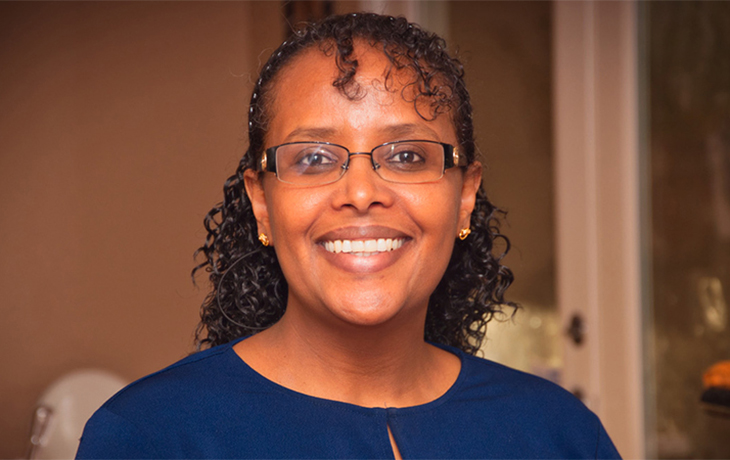
There have been so many disastrous activities on climate change, and I am not belittling them, but it was amazing to come across a TED Talk last Saturday that I watched. But first the speaker, Asmeret Asefaw Berhe, who was born in Asmara, Eritrea. Her bio (in part):
From WikiPedia:
ooOOoo
Asmeret Asefaw Berhe is a soil biogeochemist and political ecologist who is the current Director of the Office of Science at the US Department of Energy. She was previously the Professor of Soil Biogeochemistry and the Ted and Jan Falasco Chair in Earth Sciences and Geology in the Department of Life and Environmental Sciences; University of California, Merced.[1] Her research group worked to understand how soil helps regulate the Earth’s climate.
Advocacy and global impact work
Berhe’s work at the intersection of soil, climate change, and political ecology lends itself well to a number of global issues. During her graduate career, she was a member of the working group that produced the Millennium Ecosystem Assessment, which was called for by the United Nations Secretary Kofi Annan to assess the impact of humans on the environment. She was one of the lead authors on the 2005 report’s chapter on “Drivers of Change in Ecosystem Condition and Services.”[19] The Assessment received the Zayed International Prize for the Environment in 2005.[20]
In 2018, Berhe was selected as part of the inaugural National Academies of Sciences, Engineering, and Medicine New Voices in Sciences, Engineering, and Medicine cohort, as an early career leader working to advance the conversation around key emerging global issues and communicate the evidence base around those challenges.[21]
An advocate for women in science, Berhe is currently a co-Principal Investigator of ADVANCEGeo, which is working to transform the workplace climate of the geosciences to increase retention of women in the field and develop a sustainable model that can be transferred to other scientific domains. Currently, the Earth Science Women’s Network (ESWN), the Association for Women Geoscientists, and the American Geophysical Union (AGU) have partnered to address the issue of sexual harassment in the earth, space and environmental sciences.[22] The program led by Erika Marín-Spiotta and is run with support from a four-year $1.1 million grant from the National Science Foundation.[23]
She currently serves as an advisory board member of 500 Women Scientists, a grassroots organization working to make science open, inclusive, and accessible, and is on the leadership board of the Earth Science Women’s Network.
Earth’s soil can store vast amounts of carbon. Biogeochemist Asmeret Asefaw Berhe says soil could be a powerful tool for fighting climate change – if only we stopped treating it like dirt.
About Asmeret Asefaw Berhe
Asmeret Asefaw Berhe is a soil biogeochemist and President Biden’s nominee to lead the Department of Energy Office of Science. She is a professor of soil biogeochemistry at University of California, Merced. Her research group works to understand how soil helps regulate the earth’s climate.
Berhe’s work exists at the intersection of soil, climate change, and political ecology. During her graduate career, she was a member of the working group that produced the Millennium Ecosystem Assessment, which was called for by the United Nations to assess the impact of humans on the environment.
Berhe received a B.Sc. in Soil and Water Conservation at the University of Asmara in Eritrea. She has an M.Sc. in Political Ecology from Michigan State University and a Ph.D. in Biogeochemistry from University of California, Berkeley.
This segment of the TED Radio Hour was produced by Matthew Cloutier and Sylvie Douglis and edited by Rachel Faulkner and Katie Simon. You can follow us on Facebook @TEDRadioHour and email us at TEDRadioHour@npr.org.
Now that positive TED Talk:
We wish Asmeret the very best of fortune in bringing about these changes.





 Learning from Dogs