Bertie County is a small county most people pass through on their way to vacation on the Outer Banks. The county’s tiny shelter is the next to last stop on a road that ends at the regional jail. The shelter sits on a property prone to flooding, and although the county has had plans to move it, the folks we talked to were skeptical that the collection of sheds, trailers, and kennels would leave the spot it has occupied as long as anyone can remember.
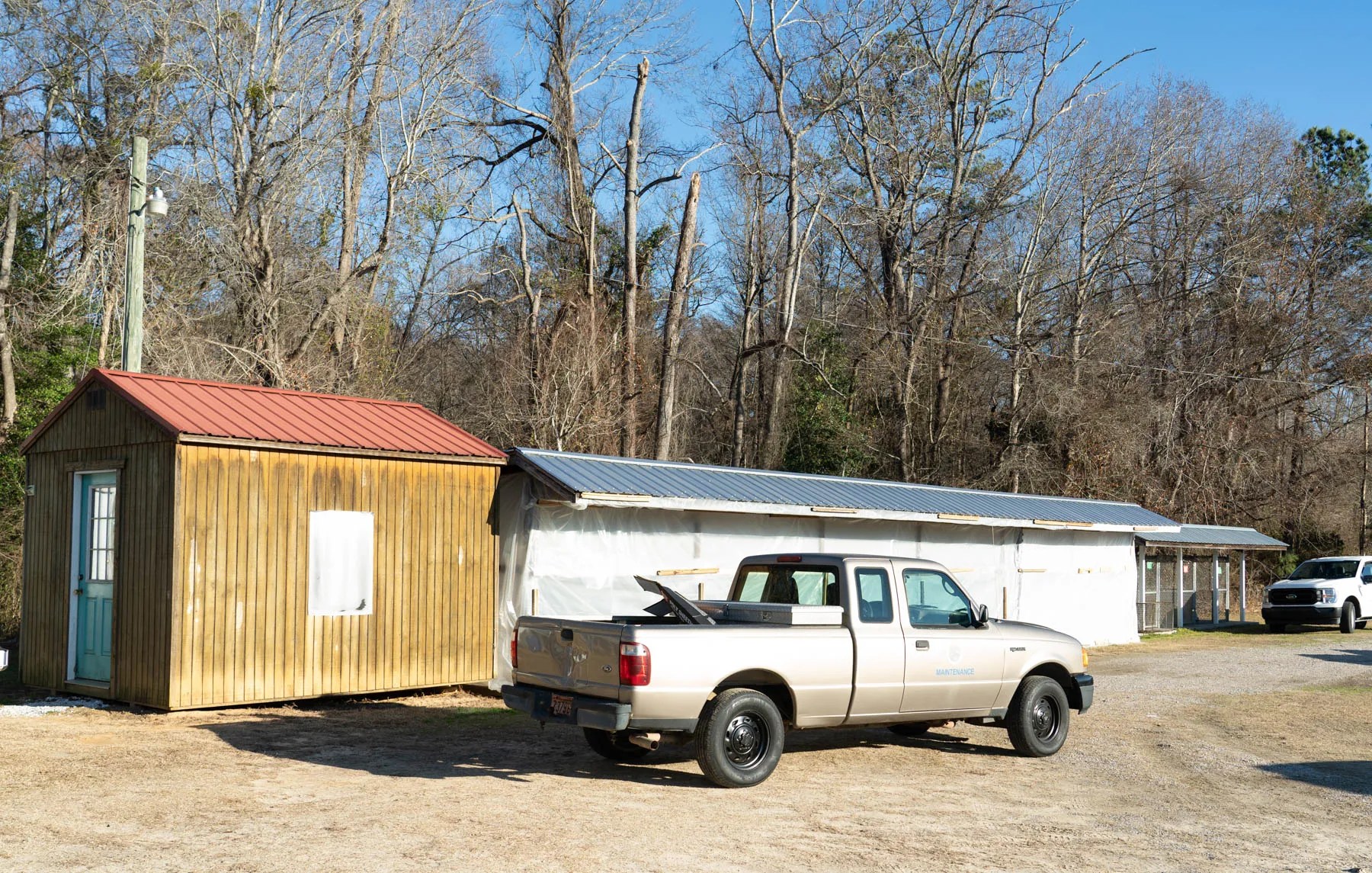
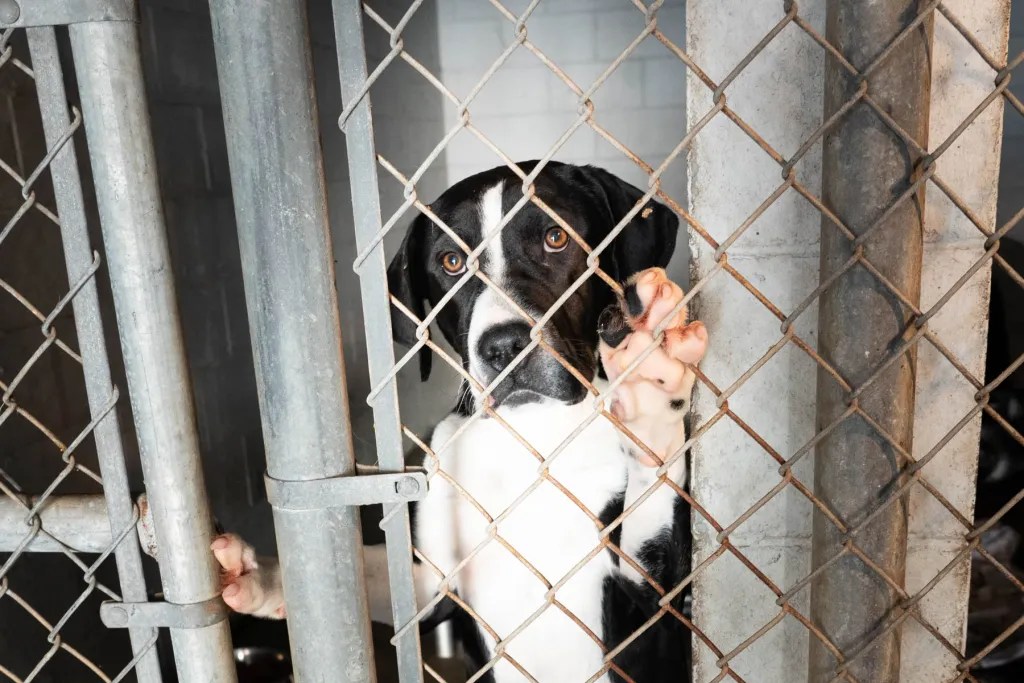
Bertie County Animal Control in Windsor is a municipal, open-intake shelter comprised of ten kennels on a concrete pad with a roof, plus two quarantine kennels, and three puppy runs.
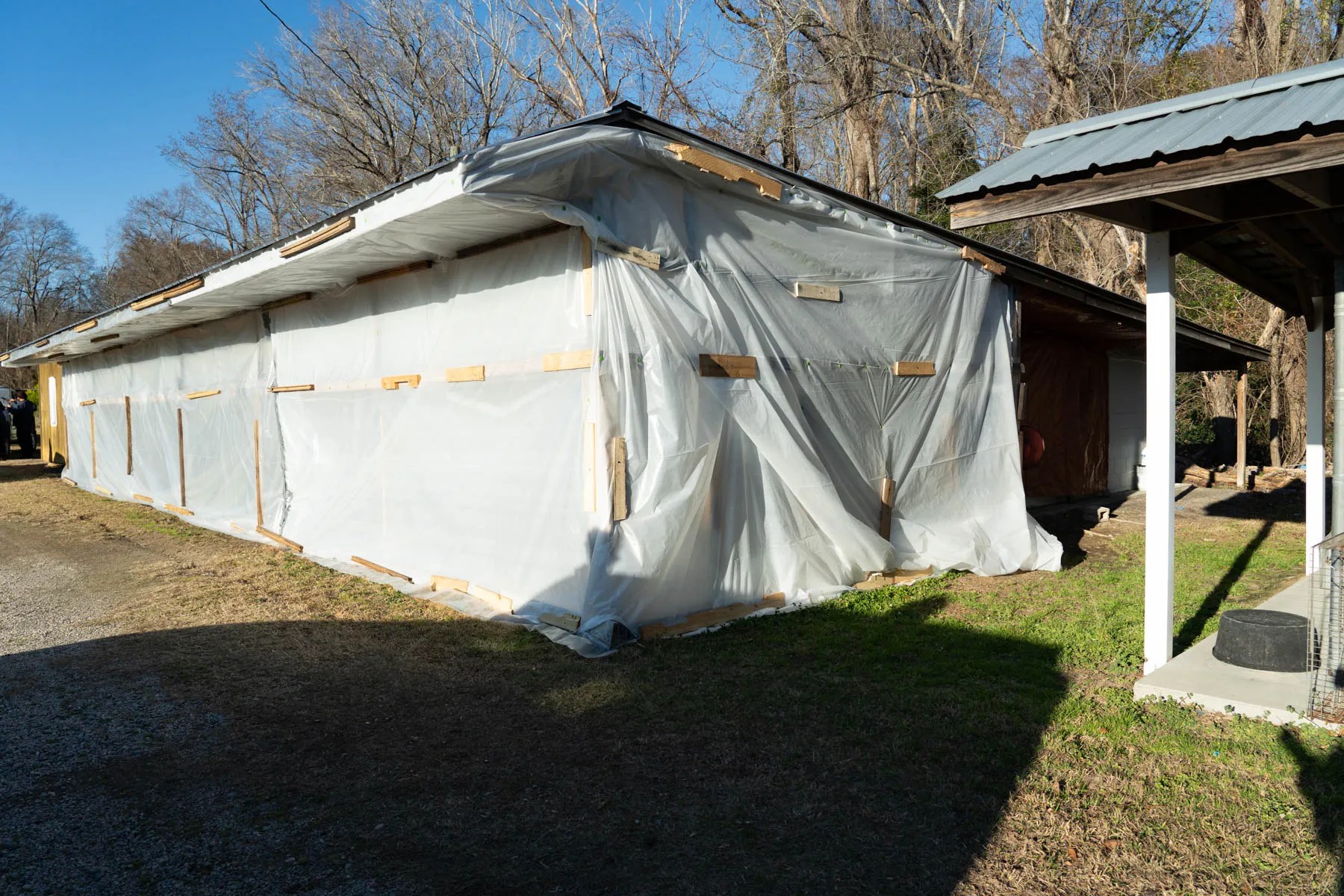
There is no heat or AC or walls, for that matter. The day we arrived, county maintenance workers were busy wrapping plastic around the kennels to try to give the dogs some protection from the cold.
The county has two full-time Animal Control officers and one part-time ACO, but the care of the dogs is done by Josh, a full-time kennel tech. The county pays for Josh (and a part-time person who comes in once on Saturday and Sunday to feed/clean), plus the ACO salaries, and the property utilities, but everything else is left up to the Bertie County Humane Society.
Beyond the $2000/year the county gives the Humane Society, they must raise the money to pay for everything else – veterinary needs, vaccinations, spay/neuter, food/treats, transport to rescues, beds, heartworm preventative, flea/tick treatment, dewormers and anything else.
Pretty much every dog that comes in is heartworm positive. As Vicky, a volunteer who used to be the kennel manager at the shelter, told me, “If we get one that’s negative, I go buy a lottery ticket!”
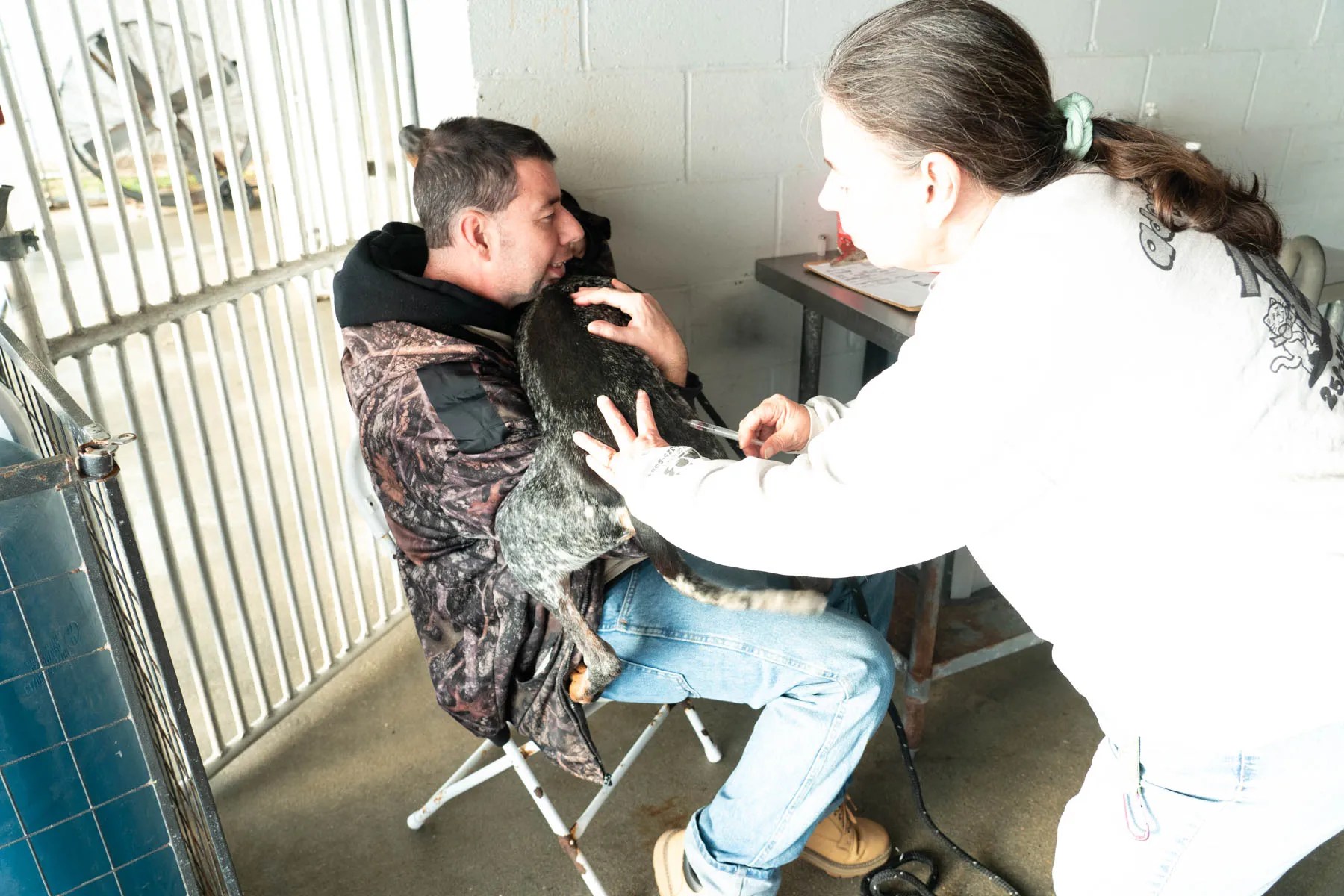
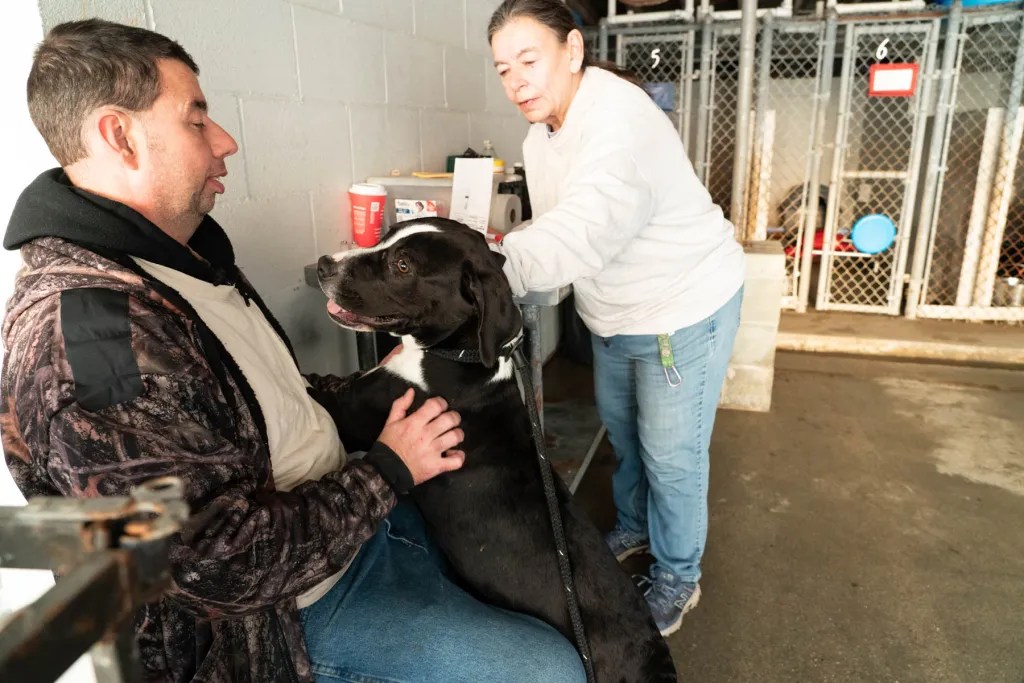
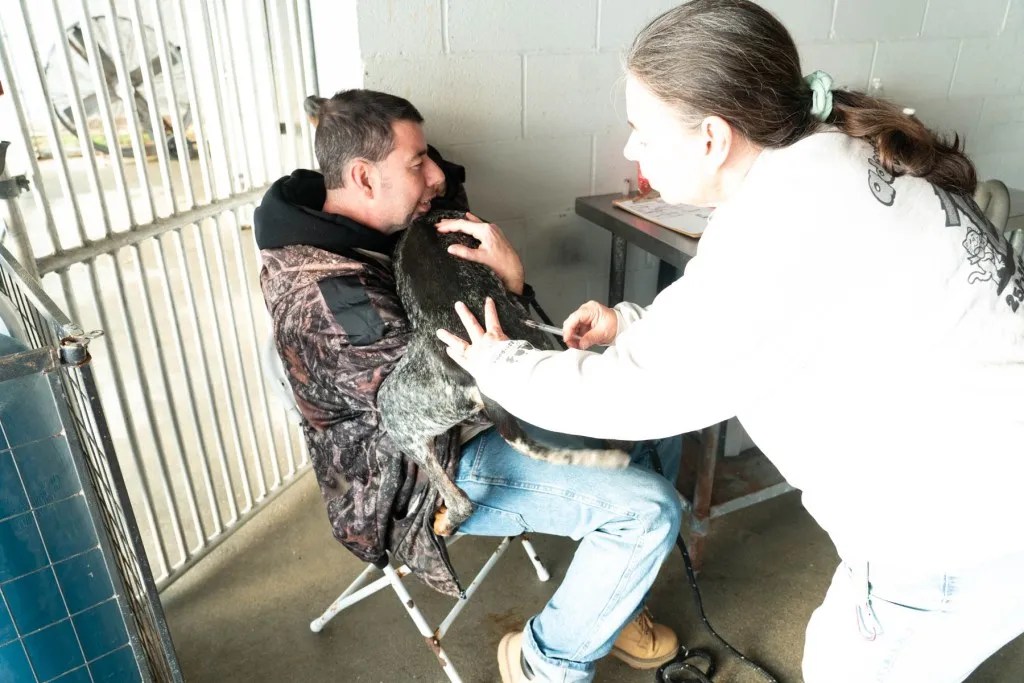
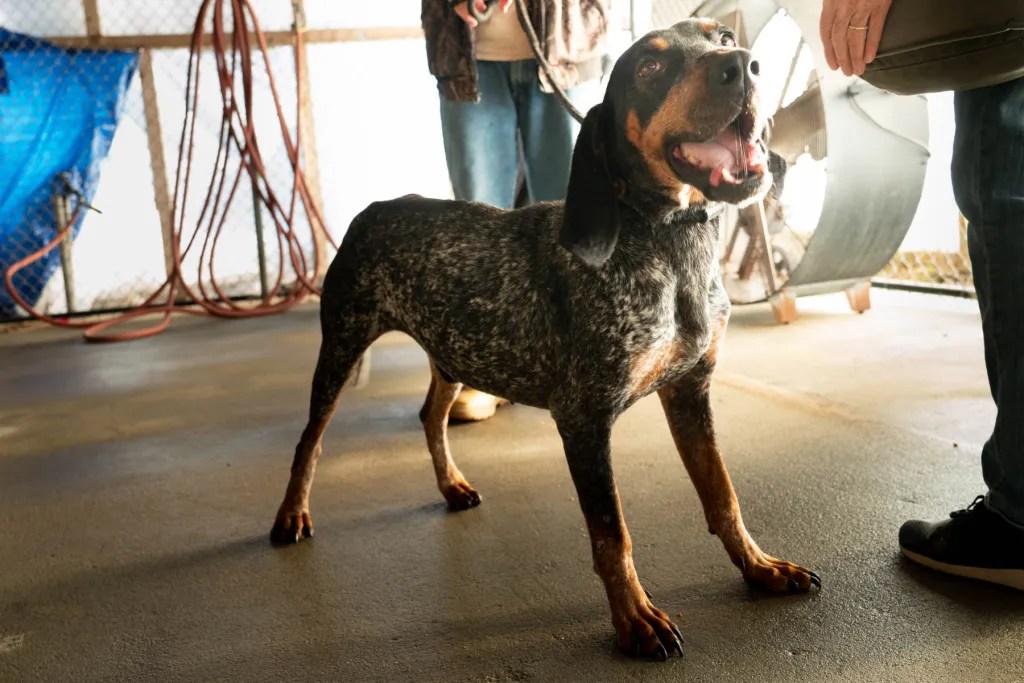
Vicky was at the shelter that day to give rabies vaccines to Cooper and Spot, two young dogs at the shelter. (NC is the first state I’ve discovered that doesn’t require that rabies vaccines be given by a veterinarian.)
oooo
oooo
We learned about Bertie County after we connected with another of their volunteers, Gina. Gina lives two hours away, but she is a tireless advocate for the dogs and the shelter. She networks the dogs to rescues, arranges for veterinarian appointments and transports, even finds donors to pay for heartworm treatment. Gina is one of those rescue warriors with a heart that just slays me. It’s inhuman how many hours and how much work she puts in to save these dogs, many she has never met.
Gina has been involved with BCHS ever since she discovered how many dogs were being killed in Bertie County. She began pulling dogs to foster within her rescue operation and eventually called on other rescues to get involved. Because she lives so far away, she depends on Diane, who lives in Bertie County and is the president of the Humane Society, and Vicky, who used to be the kennel manager at the shelter and still volunteers her time there.
There were only six dogs (and lots of cats) the day we visited thanks to Gina’s work to find rescues to empty the shelter just before the holidays and the bitter, record cold that came. The shelter normally handles about 100 dogs a year.
oooo
oooo
oooo
oooo
ooOOoo
Because of the number of photographs, beautiful photographs I would add, this is today’s Picture Parade.
This is a great post. As I just said a guest post that covers an important question; for those that have cats and dogs read on!
ooOOoo
How to Stop a Dog Aggression Towards Cats
By Ashly Brown.
Meta Description
Learn how to stop dog aggression towards cats with these helpful tips and techniques. Discover how to train and manage your dog to live peacefully with cats and prevent any dangerous incidents.
How to Stop a Dog Aggression Towards Cats
Dogs and cats are known to be natural enemies, and it’s not unusual for dogs to act aggressively towards cats. Even though it’s natural for a dog to feel territorial or defensive around a cat, this can be dangerous for the cat and stressful for the owner. So, it’s important to do something to stop a dog from being mean to cats. Here are some tips:
Watch out for your dog around cats.
The first thing you can do to stop your dog from being mean to cats is to always watch your dog when it’s around cats. Even if you think your dog is friendly towards cats, you should never leave your dog alone with a cat. Dogs can be hard to predict, and their instincts to hunt can come out at any time.
Slowly get your dog used to the cat.
It’s important to go slowly and carefully when bringing a new cat into your home or letting your dog meet a cat for the first time. Keep your dog on a leash and let your cat come up to it at its own speed. Give your dog treats for being good, and keep a close eye on them at all times.
Teach your dog the basic commands for obedience.
If you teach your dog basic obedience commands like “sit,” “stay,” and “leave it,” it will be less likely to attack cats. By teaching your dog to do what you say, you can take its mind off the cat and keep it from chasing or hurting it.
Give your dog and cat separate places to live.
If your dog and cat don’t get along, you may need to give them each their own place to live. This could mean putting your cat in a different room or putting a baby gate between your cat and dog. Make sure your cat’s separate living space has a place to eat, drink, and go to the bathroom.
Use training with positive reinforcement
Positive reinforcement is a great way to teach your dog how to behave well. When your dog acts well around your cat, praise them or give them treats. This will make them more likely to keep behaving well and make them feel good about the cat behavior.
Think about asking an expert.
If your dog is very mean to cats, you may need to get help from a professional dog trainer or behaviorist. They can help you come up with a plan for training your dog that fits its needs and habits. They might also be able to give you more advice on how to stop your dog from being mean to cats.
Think About Medications
In some cases, a dog may need to be put on medicine to stop being mean to cats. Talk to your vet about whether your dog can take a certain medicine. They might be able to give you medicine to help your dog feel less anxious or less likely to attack cats.
Be steady and patient.
Stopping a dog from being mean to a cat can take a long time and patience and consistency. Don’t stop working with your dog if you don’t see results right away. You can teach your dog to get along with cats if you give it time and work at it.
Figure out the cause
Find out what makes your dog act mean towards cats. This can help you stop the behavior. It could be a certain sound or smell, or it could be something the cat does. You can work to get rid of the trigger or get your dog used to it if you know what it is.
Desensitize Your Dog
Desensitizing your dog means slowly exposing them to the thing that makes them aggressive towards cats, while keeping them far away. This can help them feel less scared or worried about the trigger and keep them from getting angry. Start by showing the trigger to your dog from a distance where they don’t show any signs of aggression. Over time, you can slowly get closer.
Use a muzzle or head collar.
Putting your dog in a head collar or giving it a muzzle can help keep it from attacking the cat. Dog bark collars can help you keep your dog from moving around too much, and muzzles can stop them from biting or attacking. It’s important to know how to use these tools right and to never leave your dog alone while they are on.
Manage Your Dog’s Environment
Taking care of your dog’s environment can help stop your dog from being mean to cats. This could mean keeping your dog on a leash when there are cats around or putting up baby gates to keep them apart. It’s important to give your dog and cat a safe and secure place to live.
Conclusion
In conclusion, it is possible to stop a dog from being mean to a cat, but it takes time, patience, and consistent work on the part of the owner. Understanding why your dog is mean to cats is very important for coming up with a good plan to stop the behavior. You should never punish or hurt your dog physically if he or she is mean to cats. This can make the problem worse and cause fear and anxiety.
Focus instead on training with positive reinforcement, desensitization, and management techniques like making a safe space and using head collars or muzzles. Your dog can learn to live peacefully with cats with consistent training and management. This can prevent any dangerous or harmful situations from happening.
It’s important to remember that every dog is different, and what works for one dog might not work for another. Talking to a professional dog trainer or behaviorist can help you come up with a custom plan to stop your dog from being mean to cats.
Author Bio:
Ashly Brown is an experienced writer and pet enthusiast who loves to share her knowledge and insights on the latest trends in pet care. As a dedicated pet cat owner, Ashley understands the importance of finding the best gadgets to keep your feline friend healthy, happy, and entertained in the pet cats world. With her expertise in technology and pet care, Ashley provides valuable information and advice to help cat owners make informed decisions about the latest gadgets for their furry friends
ooOOoo
Ashly shows her experience as a pet lover and being a writer; in spades!
There will be many that have cats and dogs who take her advice with great interest and many of you that will find in Ashly’s tips some very educational ideas.
This post attracted me and I wanted to share it with you.
Here in Oregon we are lucky because the ground water is of a high quality and there is plenty of it. At home we drink our water straight from our well without any filtering or chlorination. Have been doing that ever since we moved in back in 2012.
But water is a much deeper subject than I tend to think of and this article is an in-depth review of the topic. It is an article from The Conversation.
ooOOoo
Water in space – a ‘Goldilocks’ star reveals previously hidden step in how water gets to planets like Earth
Without water, life on Earth could not exist as it does today. Understanding the history of water in the universe is critical to understanding how planets like Earth come to be.
Astronomers typically refer to the journey water takes from its formation as individual molecules in space to its resting place on the surfaces of planets as “the water trail.” The trail starts in the interstellar medium with hydrogen and oxygen gas and ends with oceans and ice caps on planets, with icy moons orbiting gas giants and icy comets and asteroids that orbit stars. The beginnings and ends of this trail are easy to see, but the middle has remained a mystery.
I am an astronomer who studies the formation of stars and planets using observations from radio and infrared telescopes. In a new paper, my colleagues and I describe the first measurements ever made of this previously hidden middle part of the water trail and what these findings mean for the water found on planets like Earth.
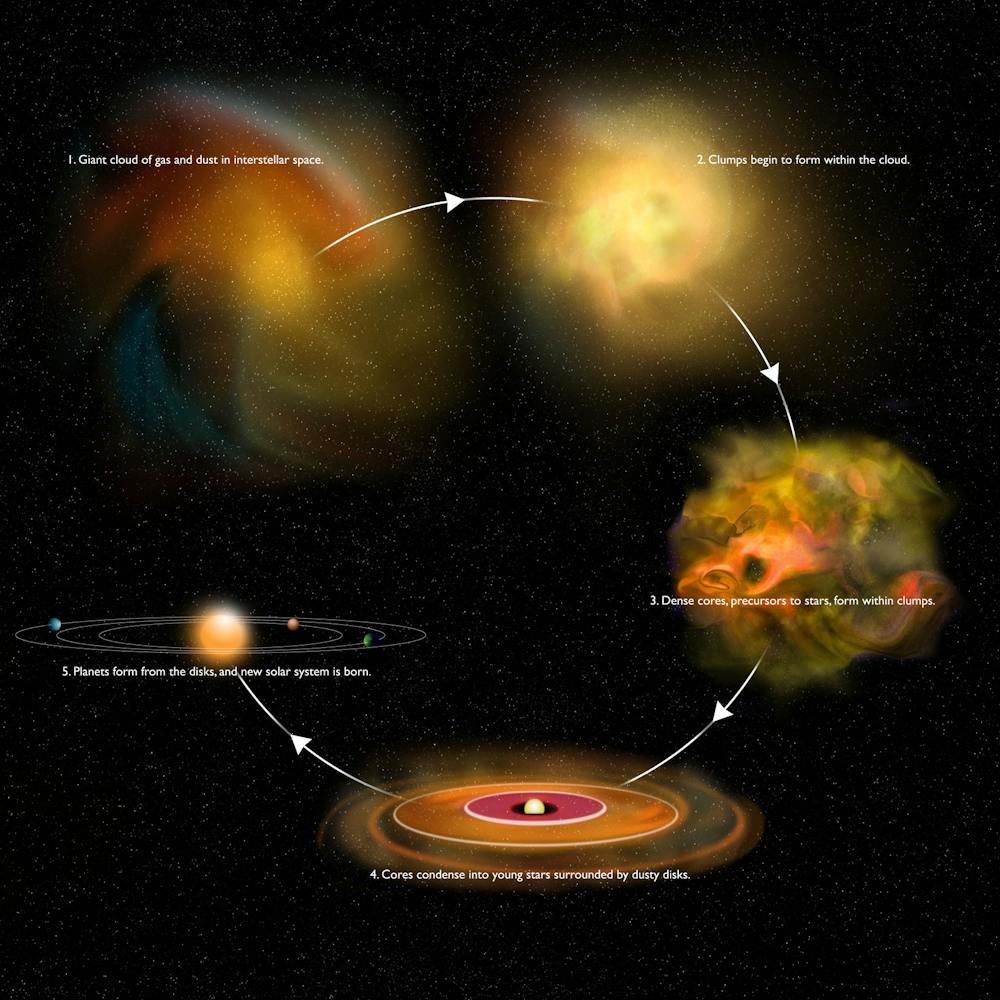
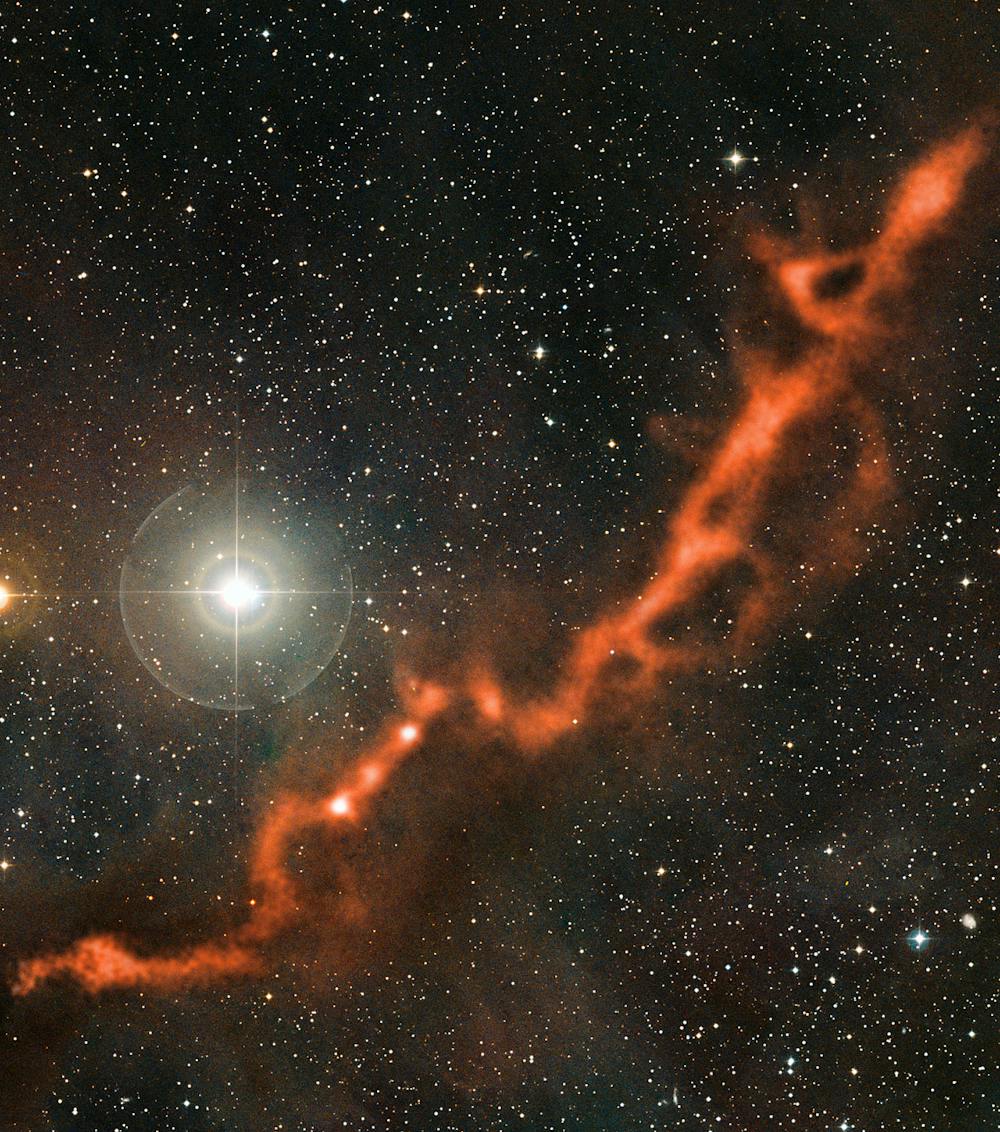
Star and planet formation is an intertwined process that starts with a cloud of molecules in space. Bill Saxton, NRAO/AUI/NSF, CC BY
Stars begin to form when parts of the collapsing cloud reach a certain density and heat up enough to start fusing hydrogen atoms together. Since only a small fraction of the gas initially collapses into the newborn protostar, the rest of the gas and dust forms a flattened disk of material circling around the spinning, newborn star. Astronomers call this a proto-planetary disk.
As icy dust particles collide with each other inside a proto-planetary disk, they begin to clump together. The process continues and eventually forms the familiar objects of space like asteroids, comets, rocky planets like Earth and gas giants like Jupiter or Saturn.
There are two potential pathways that water in our solar system could have taken. The first, called chemical inheritance, is when the water molecules originally formed in the interstellar medium are delivered to proto-planetary disks and all the bodies they create without going through any changes.
The second theory is called chemical reset. In this process, the heat from the formation of the proto-planetary disk and newborn star breaks apart water molecules, which then reform once the proto-planetary disk cools.
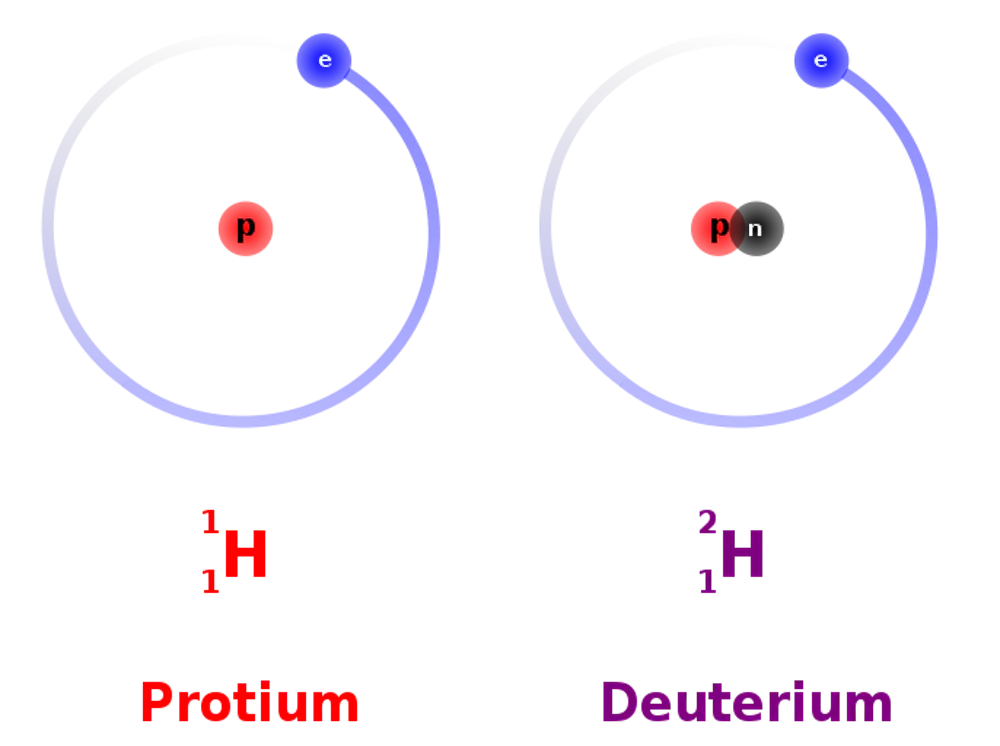
Normal hydrogen, or protium, does not contain a neutron in its nucleus, while deuterium contains one neutron, making it heavier. Dirk Hünniger/Wikimedia Commons, CC BY-SA
To test these theories, astronomers like me look at the ratio between normal water and a special kind of water called semi-heavy water. Water is normally made of two hydrogen atoms and one oxygen atom. Semi-heavy water is made of one oxygen atom, one hydrogen atom and one atom of deuterium – a heavier isotope of hydrogen with an extra neutron in its nucleus.
The ratio of semi-heavy to normal water is a guiding light on the water trail – measuring the ratio can tell astronomers a lot about the source of water. Chemical models and experiments have shown that about 1,000 times more semi-heavy water will be produced in the cold interstellar medium than in the conditions of a protoplanetary disk.
This difference means that by measuring the ratio of semi-heavy to normal water in a place, astronomers can tell whether that water went through the chemical inheritance or chemical reset pathway.
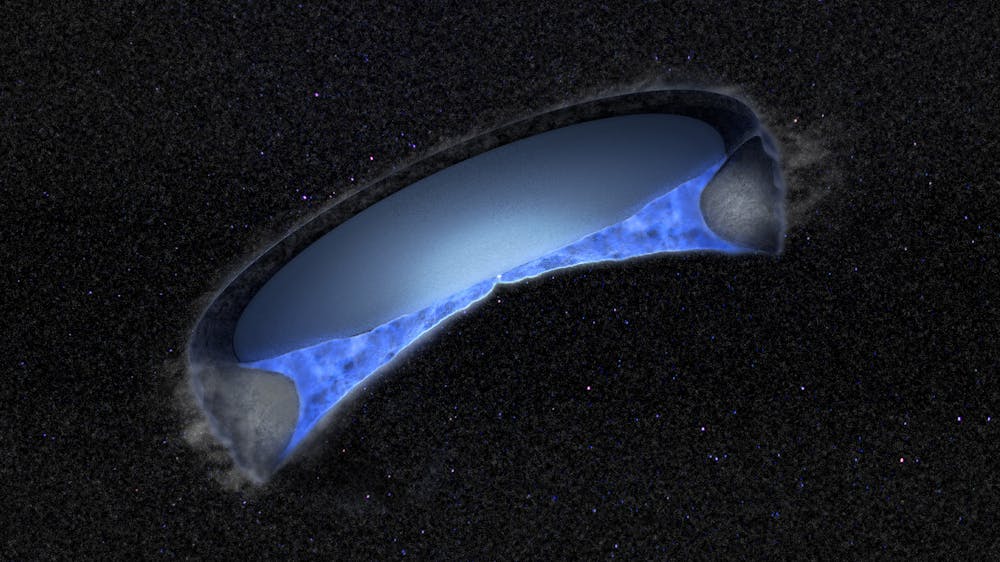
V883 Orionis is a young star system with a rare star at its center that makes measuring water in the proto-planetary cloud, shown in the cutaway, possible. ALMA (ESO/NAOJ/NRAO), B. Saxton (NRAO/AUI/NSF), CC BY
Measuring water during the formation of a planet
Comets have a ratio of semi-heavy to normal water almost perfectly in line with chemical inheritance, meaning the water hasn’t undergone a major chemical change since it was first created in space. Earth’s ratio sits somewhere in between the inheritance and reset ratio, making it unclear where the water came from.
To truly determine where the water on planets comes from, astronomers needed to find a goldilocks proto-planetary disk – one that is just the right temperature and size to allow observations of water. Doing so has proved to be incredibly difficult. It is possible to detect semi-heavy and normal water when water is a gas; unfortunately for astronomers, the vast majority of proto-plantary disks are very cold and contain mostly ice, and it is nearly impossible to measure water ratios from ice at interstellar distances.
A breakthrough came in 2016, when my colleagues and I were studying proto-planetary disks around a rare type of young star called FU Orionis stars. Most young stars consume matter from the proto-planetary disks around them. FU Orionis stars are unique because they consume matter about 100 times faster than typical young stars and, as a result, emit hundreds of times more energy. Due to this higher energy output, the proto-planetary disks around FU Orionis stars are heated to much higher temperatures, turning ice into water vapor out to large distances from the star.
Using the Atacama Large Millimeter/submillimeter Array, a powerful radio telescope in northern Chile, we discovered a large, warm proto-planetary disk around the Sunlike young star V883 Ori, about 1,300 light years from Earth in the constellation Orion.
V883 Ori emits 200 times more energy than the Sun, and my colleagues and I recognized that it was an ideal candidate to observe the semi-heavy to normal water ratio.
These results fill in the gap of the water trail forging a direct link between water in the interstellar medium, protostars, proto-planetary disks and planets like Earth through the process of inheritance, not chemical reset.
The new results show definitively that a substantial portion of the water on Earth most likely formed billions of years ago, before the Sun had even ignited. Confirming this missing piece of water’s path through the universe offers clues to origins of water on Earth. Scientists have previously suggested that most water on Earth came from comets impacting the planet. The fact that Earth has less semi-heavy water than comets and V883 Ori, but more than chemical reset theory would produce, means that water on Earth likely came from more than one source.







 Learning from Dogs
