And now for something completely different!
This is a wonderful photograph of the moon taken at the beginning of this week.

Fabulous!
Dogs are animals of integrity. We have much to learn from them.
Year: 2022
And now for something completely different!
This is a wonderful photograph of the moon taken at the beginning of this week.
Fabulous!
The breed has come full circle!
We have had a couple of pit bull mixes here at home and they have been nothing but fabulous dogs.
So just three weeks ago The Conversation published an extensive account of the recent history of the breed. It is republished for you all today.
ooOOoo
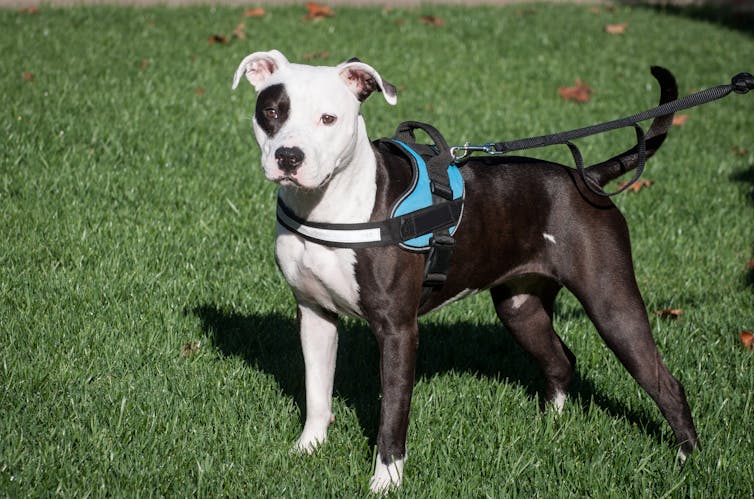
Colin Dayan, Vanderbilt University
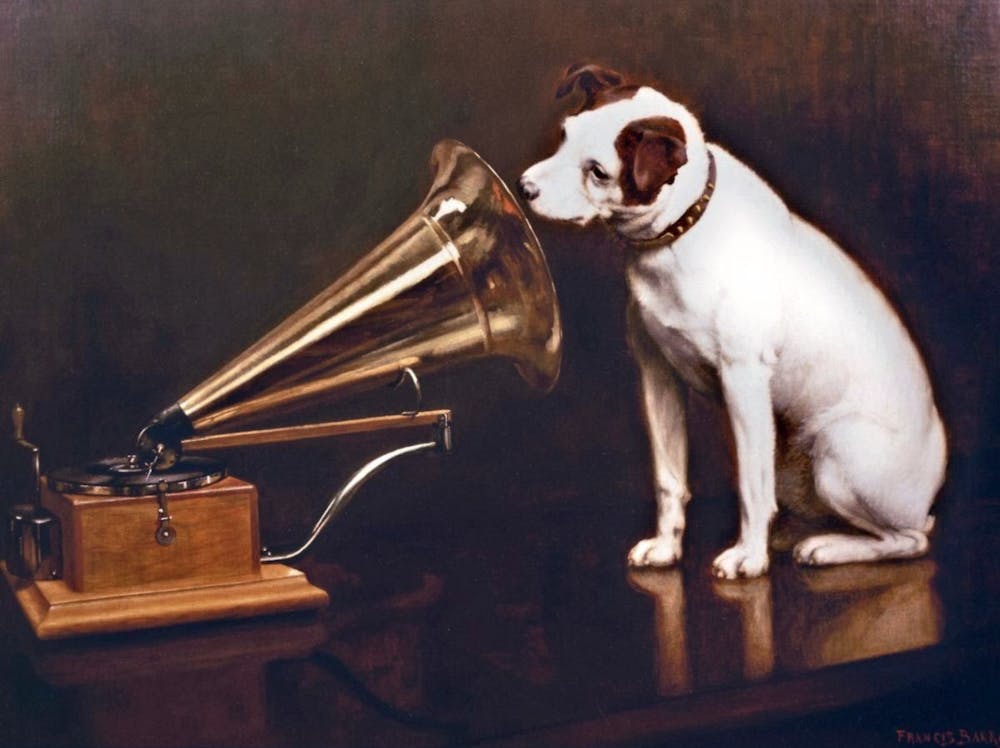
As recently as 50 years ago, the pit bull was America’s favorite dog. Pit bulls were everywhere. They were popular in advertising and used to promote the joys of pet-and-human friendship. Nipper on the RCA Victor label, Pete the Pup in the “Our Gang” comedy short films, and the flag-wrapped dog on a classic World War I poster all were pit bulls.
With National Pit Bull Awareness Day celebrated on Oct. 26, it’s a fitting time to ask how these dogs came to be seen as a dangerous threat.
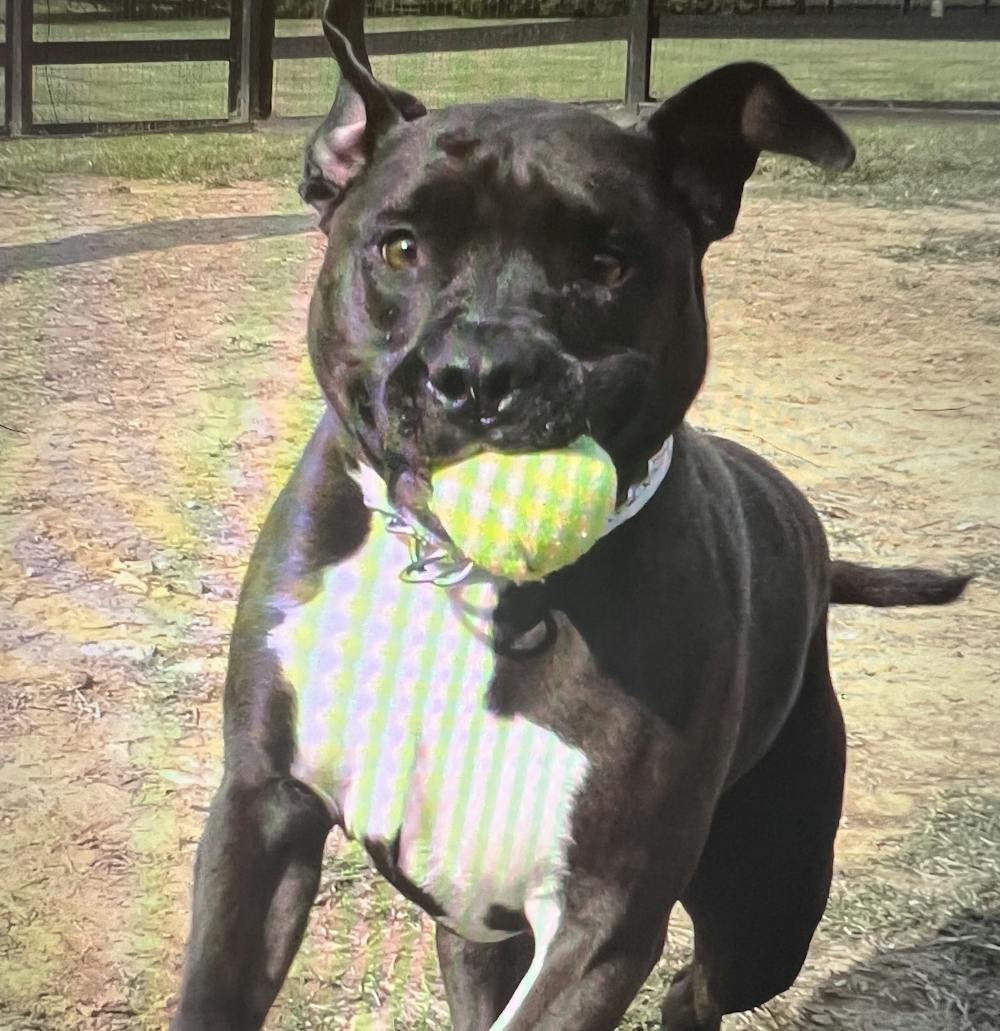
Starting around 1990, multiple features of American life converged to inspire widespread bans that made pit bulls outlaws, called “four-legged guns” or “lethal weapons.” The drivers included some dog attacks, excessive parental caution, fearful insurance companies and a tie to the sport of dog fighting.
As a professor of humanities and law, I have studied the legal history of slaves, vagrants, criminals, terror suspects and others deemed threats to civilized society. For my books “The Law is a White Dog” and “With Dogs at the Edge of Life,” I explored human-dog relationships and how laws and regulations can deny equal protection to entire classes of beings.
In my experience with these dogs – including nearly 12 years living with Stella, the daughter of champion fighting dogs – I have learned that pit bulls are not inherently dangerous. Like other dogs, they can become dangerous in certain situations, and at the hands of certain owners. But in my view, there is no defensible rationale for condemning not only all pit bulls, but any dog with a single pit bull gene, as some laws do.
I see such action as canine profiling, which recalls another legal fiction: the taint or stain of blood that ordained human degradation and race hatred in the United States.
The pit bull is strong. Its jaw grip is almost impossible to break. Bred over centuries to bite and hold large animals like bears and bulls around the face and head, it’s known as a “game dog.” Its bravery and strength won’t allow it to give up, no matter how long the struggle. It loves with the same strength; its loyalty remains the stuff of legend.
For decades pit bulls’ tenacity encouraged the sport of dogfighting, with the dogs “pitted” against each other. Fights often went to the death, and winning animals earned huge sums for those who bet on them.
But betting on dogs is not a high-class sport. Dogs are not horses; they cost little to acquire and maintain. Pit bulls easily and quickly became associated with the poor, and especially with Black men, in a narrative that connected pit bulls with gang violence and crime.
That’s how prejudice works: The one-on-one lamination of the pit bull onto the African American male reduced people to their accessories.
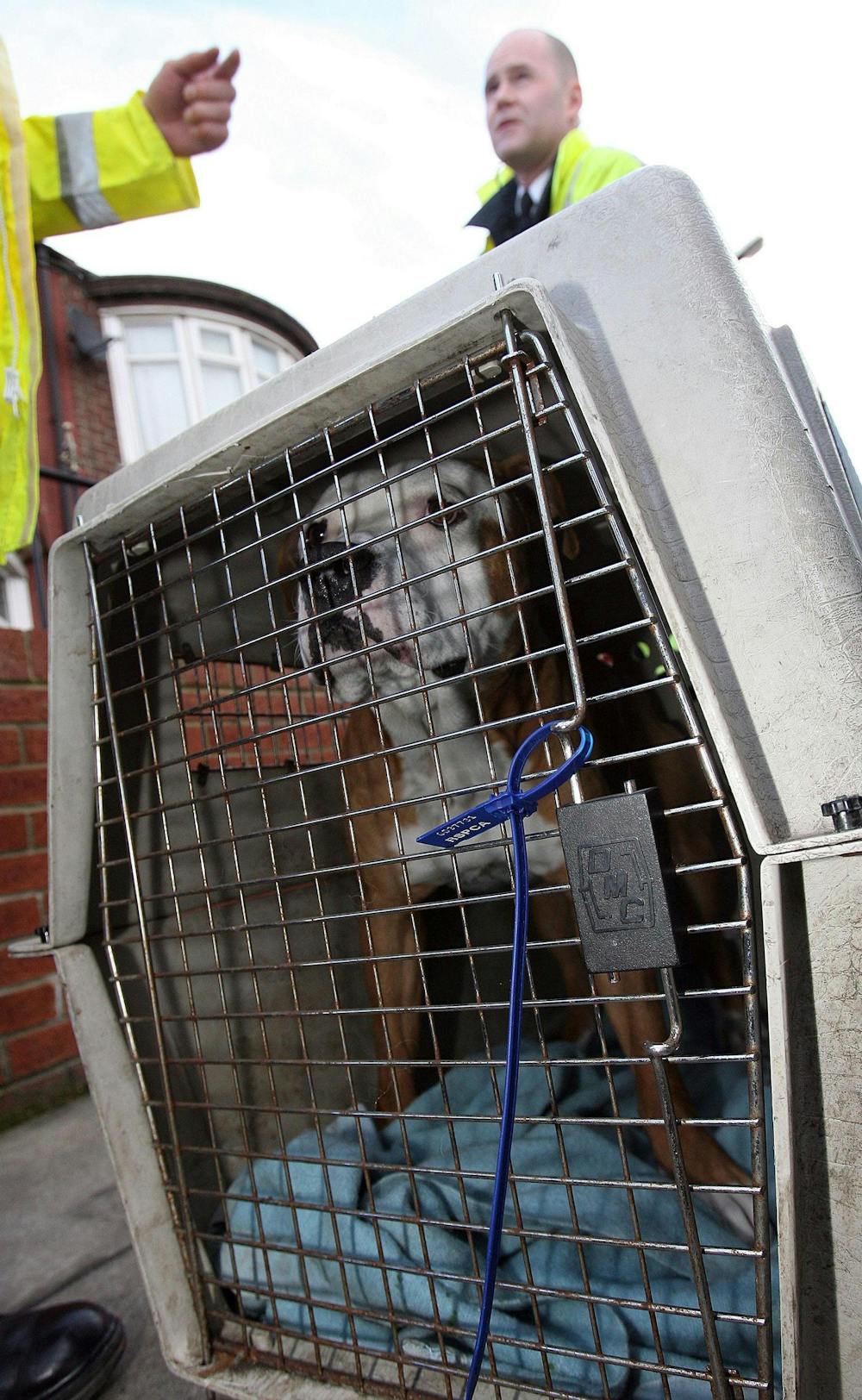
Dogfighting was outlawed in all 50 states by 1976, although illegal businesses persisted. Coverage of the practice spawned broad assertions about the dogs that did the fighting. As breed bans proliferated, legal rulings proclaimed these dogs “dangerous to the safety or health of the community” and judged that “public interests demand that the worthless shall be exterminated.”
In 1987 Sports Illustrated put a pit bull, teeth bared, on its cover, with the headline “Beware of this Dog,” which it characterized as born with “a will to kill.” Time magazine published “Time Bombs on Legs” featuring this “vicious hound of the Baskervilles” that “seized small children like rag dolls and mauled them to death in a frenzy of bloodletting.”
If a dog has “vicious propensities,” the owner is assumed to share in this projected violence, both legally and generally in public perception. And once deemed “contraband,” both property and people are at risk.
This was evident in the much-publicized 2007 indictment of Atlanta Falcons quarterback Michael Vick for running a dogfighting business called Bad Newz Kennels in Virginia. Even the Humane Society of the United States and People for the Ethical Treatment of Animals – two of the nation’s leading animal welfare advocacy groups – argued that the 47 pit bulls recovered from the facility should be killed because they posed a threat to people and other animals.
If not for the intervention of Best Friends Animal Society, Vick’s dogs would have been euthanized. As the film “Champions” recounts, a court-appointed special master determined each dog’s fate. Ultimately, nearly all of the dogs were successfully placed in sanctuaries or adoptive homes.
This 2010 report describes the successful rehabilitation of dogs rescued from Michael Vick’s Bad Newz dogfighting operation.
Pit bulls still suffer more than any other dogs from the fact that they are a type of dog, not a distinct breed. Once recognized by the American Kennel Club as an American Staffordshire terrier, popularly known as an Amstaff, and registered with the United Kennel Club and the American Dog Breeders Association as an American pit bull terrier, now any dog characterized as a “pit bull type” can be considered an outlaw in many communities.
For example, in its 2012 Tracey v. Solesky ruling, the Maryland Court of Appeals modified the state’s common law in cases involving dog injuries. Any dog containing pit bull genes was “inherently dangerous” as a matter of law.
This subjected owners and landlords to what the courts call “strict liability.” As the court declared: “When an attack involves pit bulls, it is no longer necessary to prove that the particular pit bull or pit bulls are dangerous.”
Dissenting from the ruling, Judge Clayton Greene recognized the absurdity of the majority opinion’s “unworkable rule”: “How much ‘pit bull,’” he asked, “must there be in a dog to bring it within the strict liability edict?”
It’s equally unanswerable how to tell when a dog is a pit bull mix. From the shape of its head? Its stance? The way it looks at you?
Conundrums like these call into question statistics that show pit bulls to be more dangerous than other breeds. These figures vary a great deal depending on their sources.
Any statistics about pit bull attacks depend on the definition of a pit bull – yet it’s really hard to get good dog bite data that accurately IDs the breed
Prince George’s County, Md., is negotiating with advocates suing to revoke the county’s pit bull ban.
Over the past decade, awareness has grown that breed-specific legislation does not make the public safer but does penalize responsible owners and their dogs. Currently 21 states prohibit local government from enforcing breed-specific legislation or naming specific breeds in dangerous dog laws. Maryland passed a law reversing the Tracey ruling in 2014. Yet 15 states still allow local communities to enact breed-specific bans.
Pit bulls demand a great deal more from humans than some dogs, but alongside their bracing way of being in the world, we humans learn another way of thinking and loving. Compared with many other breeds, they offer a more demanding but always affecting communion.
Colin Dayan, Professor of English, Robert Penn Warren Professor in the Humanities, and Professor of Law, Vanderbilt University
This article is republished from The Conversation under a Creative Commons license. Read the original article.
ooOOoo
That is a very interesting account of the breed and shows the complexities of owning Pit Bulls in certain States, or rather local communities enacting breed-specific bans.
However, in our experience, we have found them to be smart, loving animals, and we know we are not alone in having those thoughts.
This is our last chance
The 2022 United Nations Climate Change Conference, more commonly referred to as Conference of the Parties of the UNFCCC, or COP27, is the 27th United Nations Climate Change conference and is being held from 6 November until 18 November 2022 in Sharm El Sheikh, Egypt.
The above reported by WikiPedia.
It is my birthday today. I am not a young man and trying not to think of the next few years for there’s no guarantee that I shall be alive.
I was born in London in the last few months of the Second World War and grew up in those early days thinking that it was normal to see bombed-out buildings in many areas. However I have had a lucky life, born of atheist parents, and I would like to see the planet becoming more and more hospitable, in terms of a minimum of global warming, as I approach the end days.
COP27 has to be different to all the COPs that have proceeded it. We have to have nations commit to actions now and move forward from the pledges and promises made last year. This is not like an asteroid hitting the planet! This is a subtle increase in the temperature and all that goes with that. Frankly, 1.5 deg C. is likely to be difficult to achieve. But 1.51 deg C. is better than 1.6 deg C. and so on. That is why we need action now.
I am going to continue today’s post by republishing the President’s Welcome Message. Here is the President Abdel Fattah El-Sisi, and the copy of his address to the delegates.
ooOOoo
The hosting of COP27 in the green city of Sharm El-Sheikh this year marks the 30th anniversary of the adoption of the United Nations Framework Convention on Climate Change. In the thirty years since, the world has come a long way in the fight against climate change and its negative impacts on our planet; we are now able to better understand the science behind climate change, better assess its impacts, and better develop tools to address its causes and consequences.
Thirty years and twenty-six COPs later, we now have a much clearer understanding of the extent of the potential climate crisis and what needs to be done to address it effectively. The science is there and clearly shows the urgency with which we must act regarding rapidly reducing emissions of greenhouse gases, taking necessary steps to assist those in need of support to adapt to the negative impacts of climate change, and finding the appropriate formula that would ensure the availability of requisite means of implementation that are indispensable for developing countries in making their contributions to this global effort, especially in the midst of the successive international crises, including the ongoing food security crisis exacerbated by climate change, desertification and water scarcity, especially in Africa that suffers the most impacts.
In 2015, the world came together and showed the will to make the necessary compromises which led to the successful adoption of the Paris Agreement. Today and in light of the unmistakable messages in the recent IPCC reports, and following COP26 in Glasgow, we are once again called upon to act rapidly if we are to really meet the 1.5-degree goal, build our resilience, and enhance our capacity to adapt. And while these are no doubt major undertakings, I sincerely believe that they can also become opportunities for transformation towards sustainability if we collectively think creatively and demonstrate the necessary political will.
With this in mind, Egypt and its people look forward to welcoming you all at COP27 in Sharm El-Sheikh, where we trust the world will come together, yet again, to reaffirm its commitment to the global climate agenda despite the difficulties and uncertainties of our time. I am positive that all parties and stakeholders will be coming to Sharm El-Sheikh with a stronger will and a higher ambition on mitigation, adaptation and climate finance, demonstrating actual success stories on implementing commitments and fulfilling pledges.
I deeply believe that COP27 is an opportunity to showcase unity against an existential threat that we can only overcome through concerted action and effective implementation. As incoming Presidency Egypt will spare no effort to ensure that COP27 becomes the moment when the world moved from negotiation to implementation and where words were translated to actions, and where we collectively embarked on a path towards sustainability, a just transition and eventually a greener future for coming generations.
Welcome to Sharm El-Sheikh. Welcome to COP27.
ooOOoo
Lastly, one of the items on the COP27 news feed:
Tackling climate change will require world leaders to take action on a global level. But as individuals we also contribute to damaging emissions. Here are some things you can do to reduce your personal impact.
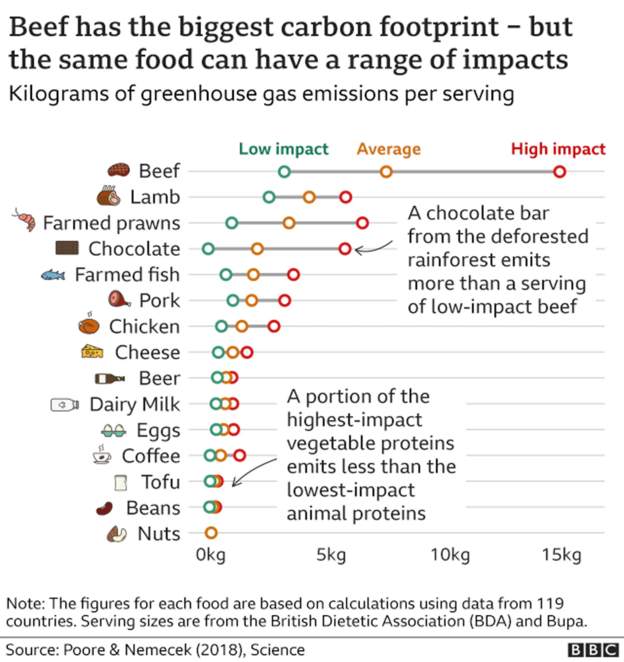
There you go! Please be green! We are in the last chance saloon!
 Learning from Dogs

