Last Friday, Jean and I were musing about the mice that had appeared in the house and the idea came up that we might return to having a cat. Our online research found a place in Medford, Committed Alliance to Strays or C.A.T.S., a place devoted to rescuing cats. We made an appointment for 2pm.
We came home with two Siamese. They are twins, both male, born on 15th March, 2017. Their names are Hogan and Skippy but we are thinking of renaming them.
Friday afternoon when we came home. Jean put them in a spare room and closed the door.
oooo
Saturday morning and they are in the main living room for a while.
One is more confident than the other but all the dogs, save Sheena, have had cats in their lives when we had our cats before.
The previous owner left a note on their cage at C.A.T.S. It read:
This is Skippy and Hogan! They were my cats and unfortunately my living situation changed drastically and I couldn’t keep them. 😦 They are very sweet, just a bit shy and timid. If you consider adopting them just know that they deserve the world. All I can hope is that they go to a good home!! They need to stay together; they are very attached.
It is early days but we have a hunch that this was a good move!
It’s fair to say that our relationships in life require mental presence and a willingness to connect in order to thrive. Well, the same goes for your relationship with your dog.
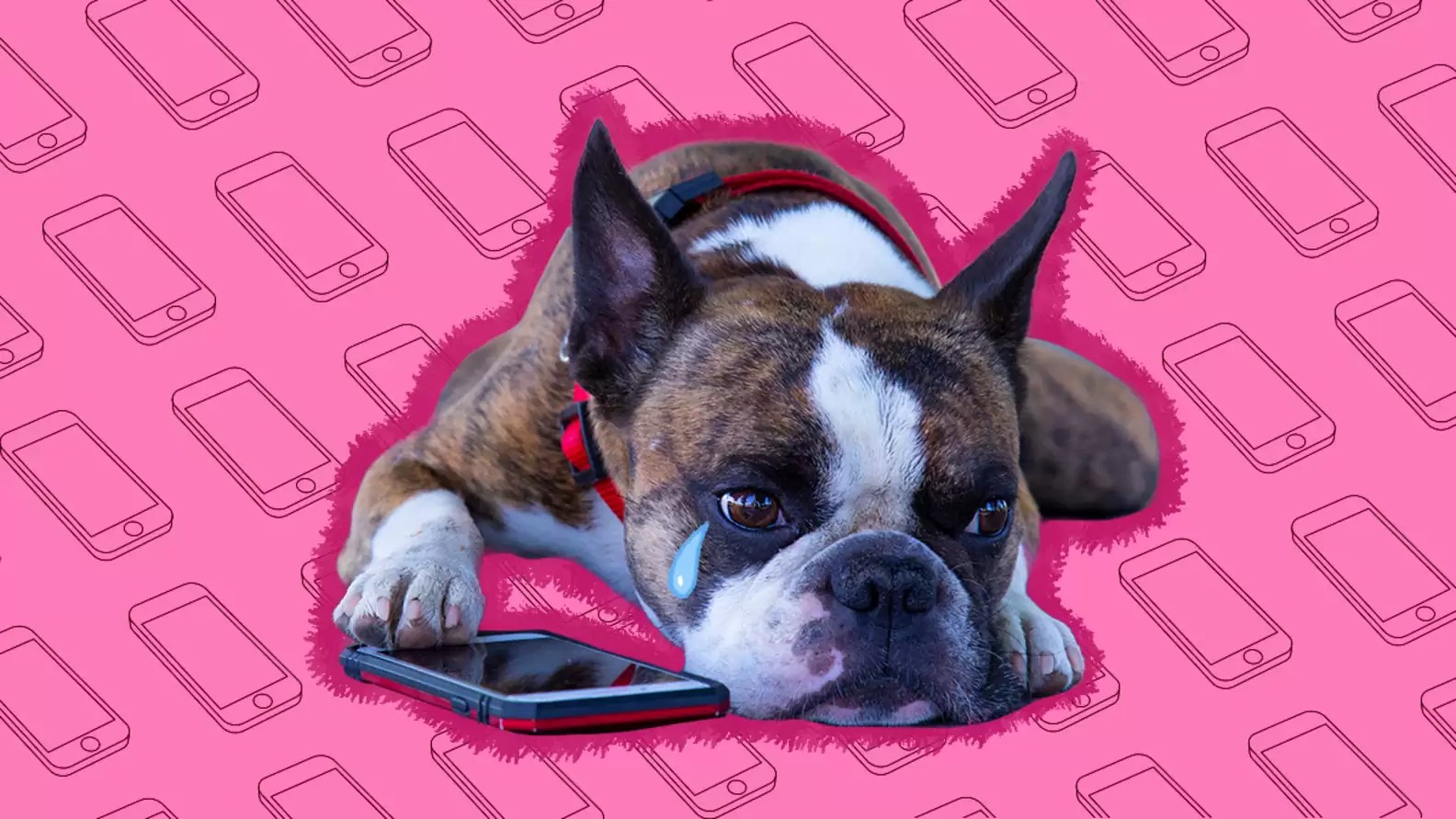
In a busy world of daily distractions (social media being a prime example), what happens when we spend too much time on our phones — do our pets notice? Is your phone making your dog depressed?
Dr. Iain Booth, a veterinary surgeon in the United Kingdom, made this assertion more than four years ago. We’ve decided to revisit the topic because during the pandemic, many people became pet parents while simultaneously spending more time on their phones.
We spoke with Colleen Safford, a dog trainer, behavior expert and owner of Far Fetched Acres, for more insight on our relationship with our pets and what dogs might be thinking when we’re on our phones.
Is your phone making your dog depressed?
While no two relationships are the same, each benefits from communication and attention. When it comes to the friendship between humans and dogs, we should try and understand their wants and needs so every pet can live their best life. While we rely on our dogs for love and companionship, they rely on us for, well, everything.
“While I hesitate to ever say that humans can fully understand exactly what is going on in the brain of man’s best friend, dogs by their very nature are deeply dependent on humans,” Safford told The Dodo. “We control every resource in their life, including food, exercise, affection, guidance and support. By their very nature, dogs are codependents in the world of domestic living! Simply put, we are their everything.”
While the larger issue of our dependence on phones is worth countless studies, a few things are clear: Too much screen time can lead to depression and anxiety in humans, among other issues. And it can isolate us from anyone in our presence — including our dogs.
“In relationship to dog depression, if an owner has thumbs too busy to provide petting, eyes too distracted to see that their dog is trying to play fetch, and a brain too busy to provide all those verbal ‘good boys,’ it is easy to understand why phone use can impact a dog’s overall health,” Safford said. “By not supplying our dogs with exercise, verbal attention or physical contact, we are ignoring their needs and increasing the chances of behavior issues and anxiety.”
As Booth said in his interview (in reference to ignoring your dog in favor of your phone), “You do that consistently for weeks, months and years on end, and you’re going to get some real behavioral issues.” So some dogs may even start misbehaving to get your attention.
While wholly dependent on the individual dog, this is something that every dog parent should be aware of, especially considering current events — as mentioned above, during the pandemic, dog adoptions went up as did smartphone usage.
Putting the phone down is step one
“Humans and dogs both release oxytocin from petting and affection, and release endorphins during exercises,” Safford said. “No petting or affection — no love hormone. No movement — no feel-good hormones. It’s as simple as that.”
Physical activity is necessary to maintain a bond with your dog. “Grab a ball and leash, and nurture and deepen that bond. Give your dog all those words of affirmation,” Safford said.
He definitely deserves it.
ooOOoo
I guess the question is how much is too much. But I have my doubts that the majority of dog owners are that disconnected from their precious animals
Indiana sends me a ‘doc’ file with his guest post and I convert it to ‘Mac OS’ by using the software Pages. This time I missed the last section as it was on another page.
Three Simple Ways to Prioritize Your Dog’s Mental Health
Dogs provide unconditional love, companionship, and so much more. They can even improve your physical and mental well-being with their presence alone. For many people, dogs are more than just pets – they’re members of the family.
There’s actually more truth to that thought than you may realize. According to contemporary science, dogs go through similar chemical and hormonal changes as humans when they’re experiencing emotions. Simply put, dogs have feelings just like we do.
Dogs can experience stress, anxiety, depression, grief, and more. Because they depend on us for care, it’s important to make sure you’re prioritizing their mental well-being as well as their physical health. Your dog can’t ask you for help when they’re feeling stressed or depressed. It’s up to you to recognize some of the common signs and understand what you can do to help.
So, how can you prioritize your dog’s mental well-being? Let’s cover a few tips that can make a difference for your four-legged friend.
1. Recognize Signs of Distress
If someone in your family is feeling anxious or depressed, they can talk to you about it. They can reach out for help when it’s needed. You might even have an easier time picking up on some of the common signs, including a sense of hopelessness or social isolation.
While your dog can’t ask for help when they’re feeling stressed or depressed, there are still signs you should look out for. According to the American Kennel Club, some of the most common symptoms of depression in dogs include
Clingy behavior
Loss of interest in things they typically love
Withdrawing from people
You know your dog better than anyone. If it seems like their demeanor has changed and they look sadder or seem lethargic, don’t ignore it. Depression can be brought on by everything from grief to chronic pain. Rule out any medical issues that could be causing those changes by working with your dog’s vet. If they’re otherwise healthy, it’s fairly safe to assume their mental health is suffering and they need help.
2. Keep Them Active
Like humans, dogs need regular exercise. It benefits their physical health, but it also promotes mental wellness. Different breeds need different amounts of physical activity. However, a good rule of thumb is anywhere from 30-45 minutes each day.
A sedentary lifestyle isn’t just harmful to your dog’s physical health. It can fuel symptoms of depression. How would you feel if you had to lay around all day with no mental or physical stimulation? It might be fine for a while, but it would be easy to fall into a “funk” without something to look forward to.
Taking your dog for a walk each day, going to the local park to let them run around, or even hiking with your four-legged friend can improve their mental health as well as yours. Exercising together will also strengthen your bond and provide your dog with the mental stimulation they need to reduce stress and feel calmer.
You’ve probably heard the saying that a tired dog is a well-behaved dog. However, a dog that’s tired from an hour or so of exercise is also likely to be a happier dog!
3. Learn What They Love
Dogs often get stereotyped as being happy or excited all the time. While there’s no better feeling than seeing your furry friend wag their tail when you get home each day, it’s important to understand that they can have interests and hobbies they enjoy more than others.
Finding out what your dog loves to do can make it easier to improve their mental well-being.
You’ll boost your own social connections (and mental health) in pet-friendly environments by meeting like-minded people and getting more support. You can also quickly learn more about your dog’s interests, simply through exploration. Maybe they prefer long nature hikes as opposed to walking in the city. Maybe they get really excited when they’re around other dogs, so you can spend more time at local parks or pet-friendly restaurants.
Don’t be afraid to try new things with your canine companion. Even bringing them to work with you can help to improve your bond and keep them from feeling lonely all day.
The most important thing you can do for your dog’s mental health is to pay attention. Look for any changes in their behavior, and get to the bottom of it as soon as possible. Your dog depends on you for everything, and it’s not fair to assume that their mental health can’t change and fluctuate as much as anyone else’s.
ooOOoo
(That’s better this time)
Right on! Dogs sleep a great deal more than we humans but they still need their exercise. Just as we humans need it, exercise is key. Key to their physical fitness but also key to their mental fitness as well. This is a great post from Indiana and I shall conclude with this video:



 Learning from Dogs