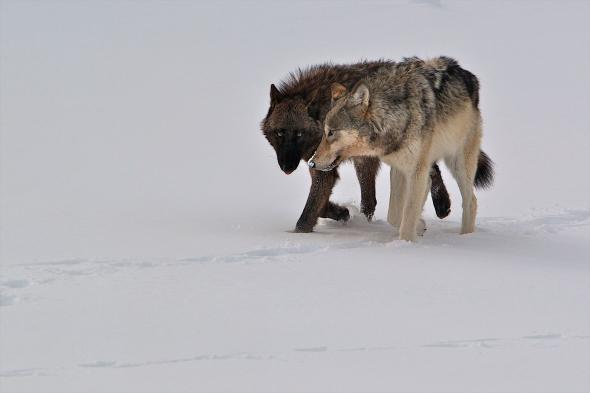
In further recognition of our wonderful wolves.
The background to these photographs, and the first set of six, was a week ago.

oooo
oooo

oooo

oooo

oooo

oooo
You all have a great week.
Dogs are animals of integrity. We have much to learn from them.
Year: 2015
In further recognition of our wonderful wolves.
The background to these photographs, and the first set of six, was a week ago.
oooo
oooo
oooo
oooo
oooo
oooo
You all have a great week.
With grateful thanks to neighbour, Dordie, who sent this to me.
Test Your Brain
This is really cool.
Count every “F” in the following text:
Finished?
HOW MANY ‘F’s?
What incredible, beautiful animals they are!
Close neighbour, Dordie, sent me an email with a link to a recent item that was broadcast on CBS.
Published on Oct 1, 2015
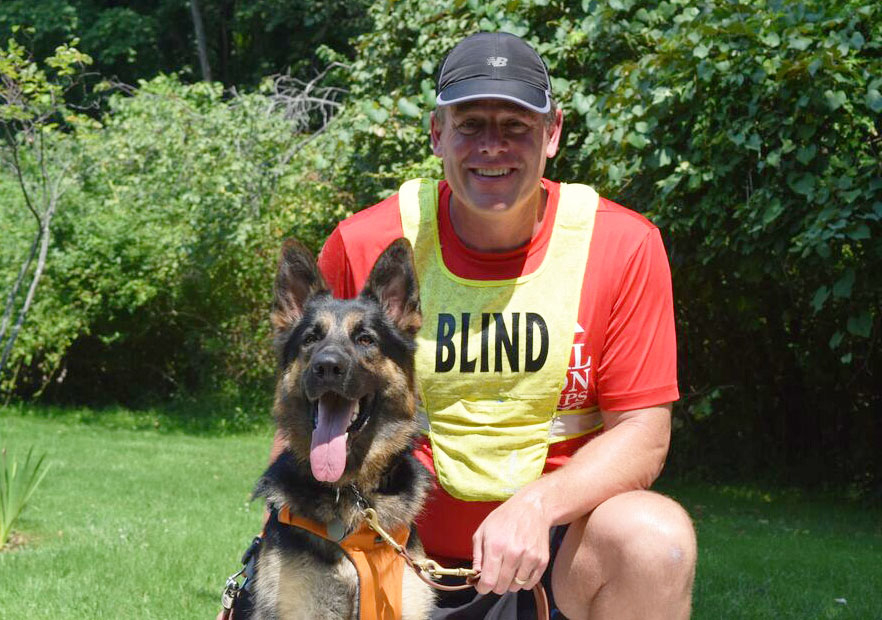
For thousands of blind athletes across the country, just setting foot out the door can be a huge challenge. Now one special dog is helping his owner not just walk out the door, but run. Only on “CBS This Morning,” Barry Petersen reports on the extraordinary story of one man’s journey to find the perfect running mate.
Richard and Klinger, and all those who made it happen, Jean and I salute you!
The power of dogs, and other animals, to heal.
The terrible shooting here in Oregon back on the 1st October doesn’t need to be reminded of. Or does it?
For there was a beautiful story that came out of that terrible event that I want to share with you, some three weeks after that tragic day. The story was sent to me by Dan Gomez and appeared on AKC News.
ooOOoo
By: Mara Bovsun
Sarena Moore’s dream was to someday open a ranch where she would train horses as therapy animals for handicapped children.
She was pursuing that dream as a business student at Oregon’s Umpqua Community College on October 1, when Christopher Harper-Mercer, 26, burst into her classroom and started shooting, killing nine. Moore, 44, was among them.
She was in her wheelchair, which she needed for debilitating back pain, and her service dog, Bullet, was by her side, when Harper-Mercer burst into their classroom. He ordered the teacher and students to get on the floor. When Moore complied, eyewitness Tracy Heu told the New York Times, the gunman told her to climb back into the chair. She then became his first victim.
Travis Dow, Moore’s fiancé, learned that Moore was among the dead in the massacre, and assumed the dog was gone, too. The next day, he learned that the killer had spared Bullet when police came to his door with the bewildered dog on a leash.
Bullet stayed by Moore’s side through the ordeal, witnesses said, as he had been trained to do.
“He knows she ain’t coming home because he was there when the fatal day happened,” Dow told CNN. Bullet had lived with the couple for seven months and she had trained him to be her helper.
In a statement released by her family, Moore was remembered as a lifelong animal lover. During her teens, she practiced gymnastics on horseback. At the same time, she also raised money to help disabled people learn to ride. “She had a caring heart that was bigger than life itself,” the family wrote. Her Facebook page was filled with images of animals, most recently there were many pictures of her new service dog.
Now, as Dow and Bullet face the world without the kind woman with the bright smile, they’ll lean on one another for strength. “[Bullet] was her world. He was not only her dog, [but] her best friend, beside me” Dow told CNN.
In the wake of the tragedy, other canine comforters traveled to Roseburg, Oregon, to help the community cope. Here’s their story.
ooOOoo
I can do no better than to close today’s post with a photograph of Bullet.

A good philosophical “coating of thought”.
In yesterday’s Part One, I focused on the hugely damaging effects of inequality in society. Reinforced only last Monday by an article by Professor Adam Levitin, a Professor of Law at Georgetown Law School. (Who also recently served on the Consumer Financial Protection Bureau’s Consumer Advisory Board and was Special Counsel to the Congressional Oversight Panel for the Troubled Asset Relief Program.) Levitin’s article was published by Naked Capitalism and opened with this statement:
A lot of Americans — right and left — are frustrated with what has happened to the middle class. The gap between the superrich and the rest of the country has widened, and it seems like everyone is having to work harder just to stay in place: wages have been stagnant, two-incomes are nearly mandatory (creating a subsidiary child care issue), and millions have lost their home equity in foreclosures. While there are a lot of people who bemoan the fate of the middle class, and even some want to do something about it, they don’t or can’t do the heavy lifting necessary to figure out why the system is broken and who wants to ensure it remains that way.
(I strongly encourage you to read the rest of the article.)
Trust me, as a good middle class Brit (albeit now living in America), it’s not just Americans who are frustrated!
However, one happening in this modern world is wonderful. I’m speaking of the ways that ideas can circulate around the world.
Better than that, the wonderful way we can “listen in” on the reflections of others in a manner that would have been impossible twenty years ago.
A few days ago, Patrice Ayme (PA) published a post called Human Kind, Yet Evil Rule. As so frequently happens, it attracted a clutch of fascinating responses. One of those responses came from a PA reader who writes under the name of EugenR. EugenR offered in his response a fascinating dialogue between a group of persons, and I saw that dialogue as promoting the value of philosophising about the more challenging aspects of present life.
Eugene explained, “It was edited from a conversation in the past. I found it to be a relevant response to the essay.” It matters not the names of the people described by the initials, what matters so much more is the value of an introspective “coating of thought”.
ooOOoo
EugenR: The worst rule the world, because they are the worst.
GD: Not for long
EugenR: For ever
GD: What about Non Violent Civil Disobedience ?
EugenR: At the end the “Non Violent Civil Disobedience” is a human organization, and as such it will either die out, or in worse case will have an organizational structure in which the worst bullies will be on the top. There is nothing new under the sun.
GD: At the end the truth, that at the age of internet is a simple finger click away, will win.
EugenR: At the end the truth wins, the question is when and at what price. In between the lie and cruelty celebrates. Just remember the last century events (Hitler, Stalin, Mao Zedong, Pol Pot, Mugabe i mean Dr Mugabe, etc.). All of them are gone (except the least evil Dr Mugabe). Did you know Pol Pot studied in Paris? Don’t be upset by history but learn from it. And now you have the Islam fundamentalism, that is all about cultural and religious non tolerance, racism (Sudan, Darfur, etc.), legitimization of enslavement of the non Muslims, intellectual degradation of women, death penalty for apostasy (Under current laws in Islamic countries, the actual punishment for the apostate (or murtadd مرتد) ranges from execution to prison terms. Islamic nations with sharia courts use civil code to void the Muslim apostate’s marriage and deny child custody rights, as well as his or her inheritance rights for apostasy. Twenty-three Muslim-majority countries, as of 2013, additionally covered apostasy in Islam through their criminal laws.), etc.
GD: The real question is do we have less fear because we have more access to knowledge? Or more fear because the media has portrayed fear as the new normal? I am not sure that mass herd mentality works in modern society anymore. And that is how dictators ruled. The new fear is forced acceptance. It is worse. Or should I say financially forced acceptance.
AH: I believe that unarmed truth and unconditional love will have the final word in reality. This is why right, temporarily defeated, is stronger than evil triumphant. Take the example of Martin Luther King, Jr.
EugenR: Yes, they were in history few good leaders who won. Martin Luther King is among them, others are N.Mandela, M. Gandhi, V. Havel all of them won, but at what personal price. Two of them murdered, two served years in jail. And anyway after them came some scoundrels destroyed anyway their achievements. Still the strife for self evident justice (that’s what these leaders were after) must go on. But who are the new Mendelas, Gandhis, Kings or Havels? In the best case those who came after them are at the best Obamas.
AH: It is a process. In the last 500 years from time of Galileo (who was threatened by his Church for telling the truth about the nature of the planets) to today there has been tremendous progress on a global scale. We with progressive values and committed to the path of love, must remember that darkness is also part of human nature (perhaps an essential part) and remain vigilant — and hopeful.
EugenR: I assume you never lived in a country where the government terrorizes its citizens. Try to express your truth in one of the terror countries, like Saudi Arabia, Iran, Afghanistan, Pakistan, etc. Try to say there, it is wrong not to let women to have education (about 50% of them are illiterate). Try to say something about freedom of faith. Communism was wiped out only 20 year ago, its leftovers are regimes like the one in N. Korea but also Cuba. You say, ……darkness is also part of human nature…. The question is not if darkness is part……..it definitely is and nobody can deny it, but how do you fight it. In most of the cases the fight is with even more darkness.
AH: I have never lived in a terrorizing country. I did have terrorizing parents and an entrenched belief in a terrorizing Pentecostal God. I am a racial minority in a world that devalues everything I do because of my skin colour. We all have our challenges. In the end, it is arrogant for me to think you can make (force) people do what I think they should do or feel what I think they should feel. This is exactly the mindset of the dictator and I reject that thinking completely. The best I can do is look at my inner signaling. I seek to elevate my own consciousness and change myself for the better. The next step is the social conversation. I share my thinking and values with others in the hope that they too will be inspired to change themselves for the better.
Darkness cannot drive out darkness: only light can do that.
Hate cannot drive out hate: only love can do that.
― Martin Luther King, Jr.
EugenR: Sorry Alexi, this time M.L.King had it wrong. The Nazis were defeated by Stalin, just because his cruelty did not have limits, while the Nazis limited their cruelty only to the non Germans. Without Stalin the Western powers would never stand against the Nazis.
AH: If you think about it carefully, the darkness of Hitler was replaced by the darkness of Stalin. This was true for the USSR, East Germany, East Berlin and most of East Europe. So Stalin did not drive out darkness, he just replaced it with his own dark shadow.
Alexi: Stalin was in control by 1923, ten years before Hitler (Lenin tried to stop him at the end of his life).
PA: The French started the nuclear bomb program in 1938. Nobel Laureate Irene Curie was certain that a bomb could be made. The program went to Manhattan, in total secret to the Nazis, and total opening to Stalin. Hitler would have been nuclear bombed into submission.
EugenR: If we speak about destiny probably Hitler would survive even the nuclear bomb, as he survived about 30 assassination attempts. If to believe in God here you have him. God is against humanism and humanity, and mainly against his “chosen people”. As he misled His Own People, some Jewish rabies made a trial of God in some extermination camp, and their verdict was, Death penalty. But then after the verdict they went to the next ceremonial pray. The religion is not about morality (mostly in contrary), not about reality or evidence, not about belief in truth (I know many skeptic believers), not even about tribalism since there are religious newcomers, who did not grow in the tribal tradition.
It is all this about some false answers to questions of eternal life? It can be right for some, but not for everyone. So tell me, what it is all about? The faith in communism did not include even belief in eternal life, and still it has so many followers. It seems religion or faith is a need of the human spices to believe in some fundamental dogma, be it even an obvious lie, all it needs is enough followers, and supporters of a false idea. In a way to be a football club fun is also a religion.
ooOOoo
As I said, I found the dialogue a compelling example of thinking ideas through.
This is not some intellectual exercise; far from it!
As often happens, a number of seemingly disconnected articles and reports seem to have provided a common theme. A theme that has previously been aired on Learning from Dogs yet a theme that always needs to be in the front of our faces: integrity.
Here are some of those articles.
Firstly, I presented recently in this place an essay from George Monbiot that proposed (my italics):
The revelation that humanity’s dominant characteristic is, er, humanity will come as no surprise to those who have followed recent developments in behavioural and social sciences. People, these findings suggest, are basically and inherently nice.
Patrice Ayme, however, pointed out in a reply:
Saying that “people are good, while tolerating bad things” is an ineffective morality. The crux, indeed, is the moral nature of institutions, controlled by a few, not whether humans are kind or not.
That struck me as central to the theme: it is the terrible lack of integrity that we see in those who hold positions of power that totally overrides the premise that people are fundamentally good.
The next article read was an essay by Professor Michael Perelman published on Naked Capitalism. Perelman is a professor of economics at California State University. He also writes at Unsettling Economics. Here is a little from that essay:
The architecture of inequality must be carefully constructed. As the founding fathers of the United States clearly understood, democracy must be kept in check. For this purpose, they invented the Electoral College to prevent the president from being elected by popular vote.
To ensure an effective electoral system, an obsequious media must be skilled in drowning the public with a flood of misinformation to maintain a constant level of fear to make them more likely to side with the CS (corporate system).
If there is ever one example of how that lack of integrity manifests itself in our world it is through inequality. Professor Perelman’s essay is clearly written “tongue-in-cheek” but that doesn’t lessen the impact of his essay. Try his closing paragraphs: (CES = a subset of CS; WEM = The Wondrous Efficiency of Markets)
Regulators are not the only ones to see the benefits of working with the CES. Politicians who resign or are defeated are almost inevitably destined to enjoy the benefits of their dedication to the WEM with the returns from taking a rewarding position with a major corporation, lobbying, or even a lucrative contract to write a book that virtually no one would want to read.
When done correctly, this system works magnificently, although it periodically it seems to fall apart until the detested government apparatus rescues it. In the meantime, huge amounts of wealth and income fall into the hands of the top 1%, the people of greatest importance, while the rest of the public can enjoy watching the spectacular performance of the CES, a reward worthy of their place in society especially because envy of the wealthy brethren will obviously make them work harder to succeed, adding to WEM.
All power to WEM!
Does this have anything to do with dogs?
Yes!
Let me steal a little from Chapter 16: Community from my forthcoming book:
When dogs lived in the wild, their natural pack size was about fifty animals and there were just three dogs that had pack status: the mentor, minder and nanny dogs, as described in Chapter 5. [Pharaoh: the Teaching Dog] As was explained in that chapter, all three dogs of status are born into their respective roles and their duties in their pack are instinctive. There was no such thing as competition for that role as all the other dogs in that natural pack grouping would be equal participants with no ambitions to be anything else.
Anyone who has had the privilege of living with a group of dogs will know beyond doubt that they develop a wonderful community strength. Let’s reflect on the lessons being offered for us in this regard by our dogs.
To reinforce the fact that this is not a new phenomena, at the time I was drafting my book last November, a new report was issued by the Center of Economic Policy Research (CEPR) on the latest (American) Survey of Consumer Finances. It painted a picture very familiar to many: the rich becoming richer while those with less wealth are falling further and further behind.
David Rosnick of the CEPR, and one of the report co-authors, made this important observation:
The decline in the position of typical households is even worse than the Consumer Finances survey indicates. In 1989, many workers had pensions. Far fewer do now. The value of pensions isn’t included in these surveys due to the difficulty of determining what they are worth on a current basis. But they clearly are significant assets that relatively few working age people have now.
Sharmini Peries, of The Real News Network, in an interview with David Rosnick, asked:
PERIES: David, just quickly explain to us what is the Consumer Finance Survey. I know it’s an important survey for economists, but why is it important to ordinary people? Why is it important to us?
ROSNICK: So, every three years, the Federal Reserve interviews a number of households to get an idea of what their finances are like, do they have a lot of wealth, how much are their house’s worth, how much they owe on their mortgages, how much they have in the bank account, how much stocks do wealthy people own. This gives us an idea of their situations, whether they’re going to be prepared for retirement. And we can see things like the effect of the housing and stock bubbles on people’s wealth, whether they’ve been preparing for eventual downfalls, how they’ve reacted to various economic circumstances, how they’re looking to the long term. So it’s a very useful survey in terms of finding out how households are prepared and what the distribution of wealth is like.
PERIES: So your report is an analysis of the report. And what are your key findings?
ROSNICK: So, largely over the last 24 years there’s been a considerable increase in wealth on average, but it’s been very maldistributed. Households in the bottom half of the distribution have actually seen their wealth fall, but the people at the very top have actually done very well. And so that means that a lot of people who are nearing retirement at this point in time are actually not well prepared at all for retirement and are going to be very dependent on Social Security in order to make it through their retirement years.
PERIES: So, David, address the gap. You said there’s a great gap between those that are very wealthy and those that are not. Has this gap widened over this period?
ROSNICK: It absolutely has. As, say, the top 5 percent in wealth, the average wealth for people in the top 5 percent is about 66 percent higher in 2013, the last survey that was completed, compared to 1989. By comparison, for the bottom 20 percent, their wealth has actually fallen 420 percent. They basically had very little to start with, and now they have less than little.
PERIES: So the poorer is getting poorer and the richer is getting extremely richer.
ROSNICK: Very much so.
To my way of thinking, if in the period 1989 through to 2013 “the average wealth for (American) people in the top 5 percent is about 66 percent higher” and “for the bottom 20 percent, their wealth has actually fallen 420 percent” it’s very difficult not to see the hands of greed at work and a consequential devastating increase in inequality.
In other words, the previous few paragraphs seemed to present, and present clearly, the widening gap between the ‘haves’ and the ‘have-nots’, comparatively speaking, and that it was now time for society to understand the trends, to reflect on where this is taking us, if left unchallenged, and to push back as hard as we can both politically and socially.
I wrote that shortly before another item appeared in my email ‘in-box’ in the middle of November (2014), a further report about inequality that, frankly, emotionally speaking, just smacked me in the face. It seemed a critical addition to the picture I was endeavouring to present.
Namely, on the 13th October, 2014, the US edition of The Guardian newspaper published a story entitled: US wealth inequality – top 0.1% worth as much as the bottom 90%. The sub-heading enlarged the headline: Not since the Great Depression has wealth inequality in the US been so acute, new in-depth study finds.
The study referred to was a paper released by the National Bureau of Economic Research, Cambridge, MA, based on research conducted by Emmanuel Saez and Gabriel Zucman. The paper’s bland title belied the reality of the research findings: Wealth Inequality in the United States since 1913.
As the Guardian reported:
Wealth inequality in the US is at near record levels according to a new study by academics. Over the past three decades, the share of household wealth owned by the top 0.1% has increased from 7% to 22%. For the bottom 90% of families, a combination of rising debt, the collapse of the value of their assets during the financial crisis, and stagnant real wages have led to the erosion of wealth. The share of wealth owned by the top 0.1% is almost the same as the bottom 90%.
The picture actually improved in the aftermath of the 1930s Great Depression, with wealth inequality falling through to the late 1970s. It then started to rise again, with the share of total household wealth owned by the top 0.1% rising to 22% in 2012 from 7% in the late 1970s. The top 0.1% includes 160,000 families with total net assets of more than $20m (£13m) in 2012.
In contrast, the share of total US wealth owned by the bottom 90% of families fell from a peak of 36% in the mid-1980s, to 23% in 2012 – just one percentage point above the top 0.1%.
The report was not exclusively about the USA. As the closing paragraphs in The Guardian’s article illustrated:
Among the nine G20 countries with sufficient data, the richest 1% of people (by income) have increased their income share significantly since 1980, according to Oxfam. In Australia, for example, the top 1% earned 4.8% of the country’s income in 1980. That had risen to more than 9% by 2010.
Oxfam says that in the time that Australia has held the G20 presidency (between 2013 and 2014) the total wealth in the G20 increased by $17tn but the richest 1% of people in the G20 captured $6.2tn of this wealth – 36% of the total increase.
I find it incredibly difficult to have any rational response to those figures. I am just aware that there is a flurry of mixed emotions inside me and, perhaps, that’s how I should leave it. Nonetheless, there’s one thing that I can’t keep to myself and that this isn’t the first time that such inequality has arisen; the period leading up the the Great Depression of the 1930s comes immediately to mind.
What on earth is coming down the road this time!
If only we truly could learn from our dogs!
At home with Canadian sled dogs.
There was an item on the BBC News website that I saw over the weekend that prompted me to do a YouTube search for the film clip. This is what I read on the BBC website:
Until the 1970s, it was impossible to travel around Canada’s Yellowknife region in the winter if you weren’t travelling by dogsled.
Even though transportation options have increased, sled dogs are still prized and prominent in this Arctic region.
Matt Danzico of BBC Pop Up was invited to visit with some sled dogs during the team’s trip to Canada.
Film by Matt Danzico.
Unsurprisingly, that BBC video wasn’t available on YouTube. But I did find this:
Enjoy!
 Learning from Dogs