Sorry, folks, the headline was half-designed to set you off down the wrong road. Because the television series Antiques Roadshow is well known both sides of the Atlantic.
No, today’s post is a lovely silly story sent to me by dear friend Richard Maugham back in England. Prompted by the guest post on Tuesday about the risks to dogs of throwing sticks for them.
This is what he sent me:
Antique Road Show.
Paddy took two stuffed dogs to the Antiques Roadshow.
”Ooh”, said the presenter. “This is a very rare set produced by the celebrated Johns Brothers taxidermists who operated in London at the turn of the last century.
Do you have any idea what they would fetch if they were in good condition?”
Hot on the heels of yesterday’s post The power of hope comes this wonderful story about the increasing population of wolves in Europe. I can’t recall what led me to the item in the UK’s Guardian newspaper but this is what I read:
Incredible journey: one wolf’s migration across Europe
Slavc is a wolf. In 2011, he began an epic 2,000 kilometre migration across Europe from Slovenia to Italy via the Austrian Alps. Several months earlier, he had been fitted with a collar that allowed his movements to be tracked in incredible detail. I talked to Hubert Potočnik, the biologist whose work made this possible.
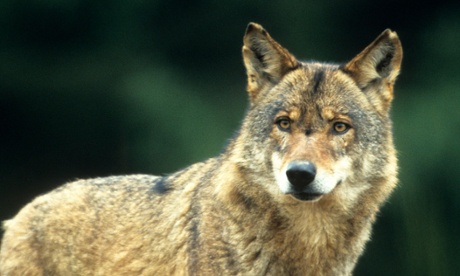
It has been estimated that there are now around 10,000 wolves in Europe. Photograph: tbkmedia.de/Alamy
Every year, Hubert Potočnik and his colleagues at the University of Ljubljana in Slovenia capture and collar a number of wolves in order to get a handle on the movements of these much-misunderstood creatures. In July 2011, he collared a young male that became known as Slavc. In June, I spoke to Potočnik for a feature that appears in New Scientist this week and he told me about Slavc’s extraordinary journey across Europe. What follows is an edited transcript of the interview …
HN: After you captured and collared Slavc in July 2011, he stayed with his pack for several months. Then, on 19 December 2011, he began to move. How did you know?
HP: We knew something was different because the GPS points showed that he had crossed two large motorways far outside of his natural territory.
Tell me about these collars. How do they work?
The collar is equipped with three types of different technology. It has a GPS receiver, a GSM modem to send SMS and also with a VHF radio transmitter as a back-up. We programme all our wolves to send a GPS signal every three hours, so we get about seven locations a day to give us continuous location sampling data.
Hubert Potočnik fits Slavc with the collar in July 2011, a device that will reveal the wolf’s incredible 2000-km migration from Slovenia to Italy. Photograph: Nina Ražen
To read the rest of this fascinating article then you will need to go here. Please do so as the article is breathtakingly interesting. It closes, thus:
HN: How would you sum up this experience?
There are lots of data about long-distance dispersal of wolves but there are very few cases where we have had the opportunity to follow an animal in such detail. Following Slavc across Europe offered a rare insight into the secret life of the wolf. It was one of the most amazing events in my life.
A quick web search came across this short but wonderful video; albeit without sound.
Published on Aug 26, 2013
Two wolf cubs were documented in Lessinia Regional Nature Park on August 7, 2013. At the end of the video it is possible to partially see an adult wolf, the mother of the cubs, that was recognized as Giulietta. Giulietta and Slavc became famous because they brought together two wolf populations that were separated for over 150 years. Wolf Slavc originates from the Dinaric-Balkan wolf population and was collared in Slovenia. He travelled over 1500km over Austria to Italy, where he met Giulietta, originating from the wolf population from the western Alps (Piemonte region).
Yesterday evening we had close friend Don Reeve staying with us. To put this into context, it was Don and his wife, Suzann, who in 2007 invited me to spend Christmas with them at their Winter home down in San Carlos, Mexico. That, in turn, led me to meeting Jean, Suzann’s best friend, and look where that got me! 🙂
(Can’t resist adding that Jean and I were born in London, some 23 miles from each other!)
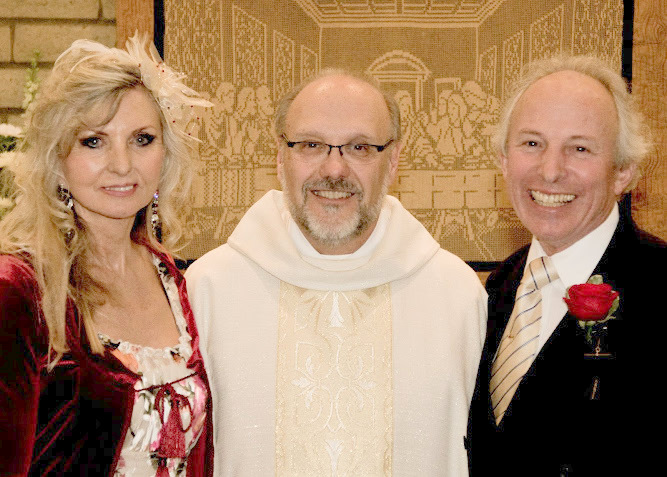
Fr. Dan Tantimonaco with the newly weds! Payson, AZ. November 20th., 2010.
Thus you can understand the pleasure it was for Jean and me again to see Don; albeit for a brief overnight stay.
What was an extra, unanticipated pleasure was meeting a young, rescue dog that Don had adopted in recent weeks. Her name is Margarita and she was found and rescued by Suzann from the streets in San Carlos. What was so glorious was to see the love and hope for a better future that flowed between Don and the sweet, young Margarita. It resonated so perfectly well with Suzan’s post published here on Monday: Rescued dogs are life-savers.
By the time I sat down at my desk yesterday, I was conscious of a) not having a clue as to what to write, and b) inspired by the sense of hope that dogs offer us humans. Serendipitously, the theme of hope led me to a post written by Jennifer Broudy de Hernandez over on her Transition Times blog. It was called Warriors for the Planet and was the most beautiful essay.
I’m delighted to reblog that here with Jennifer’s approval.
ooOOoo
Warriors for the Planet
Another summer, another war. I wonder how many summers there have been in the last 5,000 years when human beings were not occupied with killing each other?
Correction: not “human beings,” “men.”
Let’s be frank: even though there may be women in the armed forces of many countries now, war still remains a masculine activity and preoccupation. The women who serve as soldiers must adhere to the masculine warrior code and become honorary “bros,” for whom the worst insult is still be called a “girl” or a “pussy.”
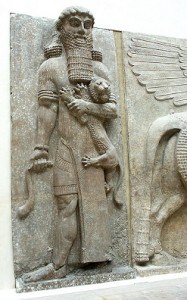
I have been reading Anne Baring’s magisterial book The Dream of the Cosmos, in which she gives a detailed account of the shift, around the time of Gilgamesh, from the ancient, goddess- and nature-worshipping “lunar cultures” to the contemporary era of solar, monotheistic, warrior-worshipping cultures.
In her elaboration of this shift, I read the tragedy of our time, enacted over and over again all over the planet, and not just by humans against humans, but also by humans against the other living beings with whom we share our world. I quote at length from Baring’s remarkable book:
“The archetype of the solar hero as warrior still exerts immense unconscious influence on the modern male psyche, in the battlefield of politics as well as that of corporate business and even the world of science and academia: the primary aim of the male is to achieve, to win and, if necessary, to defeat other males. The ideal of the warrior has become an unconscious part of every man’s identity from the time he is a small child.
“With the mythic theme of the cosmic battle between good and evil and the indoctrination of the warrior went the focus on war and territorial conquest. War has been endemic throughout the 4000 years of the solar era. The glorification of war and conquest and the exaltation of the warrior is a major theme of the solar era—still with us today in George W. Bush’s words in 2005: ‘We will accept no outcome except victory.’ This call to victory echoes down the centuries, ensuring that hecatombs of young warriors were sacrificed to the god of war, countless millions led into captivity and slavery, countless women raped and widows left destitute. It has sanctioned an ethos that strives for victory at no matter what cost in human lives and even today glorifies war and admires the warrior leader. This archaic model of tribal dominance and conquest has inflicted untold suffering on humanity and now threatens our very survival as a species.
“The cosmic battle between light and darkness was increasingly projected into the world and a fascination with territorial conquest gripped the imagination and led to the creation of vast empires. It is as if the heroic human ego, identified with the solar hero, had to seek out new territories to conquer, had to embody the myth in a literal sense and as it did so, channel the primitive territorial drives of the psyche into a Dionysian orgy of unbridled conquest, slaughter and destruction. We hear very little about the suffering generated by these conquests: the weeping widows, the mothers who lost sons, the orphaned children and the crops and patterns of sowing and harvesting devastated and disrupted by the foraging armies passing over them, the exquisite works of art pillaged and looted….The long chronicle of conquest and human sacrifice, of exultation in power and the subjugation of enemies might truly be named the dark shadow of the solar age” (118;124).
Like Baring, I see our time as a critical era in the long history of homo sapiens on the planet. There is still hope that enough of us will be able to detach ourselves from the pressures and busyness of our lives—will become conscious of what is happening to the planet and human civilization writ large—will understand that there are other ways to relate to each other and to the Earth, ways that will seem increasingly possible and obvious once we focus on them and begin to put our energies into manifesting our visions of a creative, collaborative, respectful mode of being.
Baring ends her disturbing chapter on the ascendancy of the solar warrior culture with a hopeful quote from The Passion of the Western Mind by Richard Tarnas, from which she springs into her own positive vision of the potential of our time.
“’We stand at the threshold of a revelation of the nature of reality that could shatter our most established beliefs about ourselves and the world. The very constriction we are experiencing is part of the dynamic of our imminent release. For the deepest passion of the Western mind has been to reunite with the ground of its being. The driving impulse of the West’s masculine consciousness has been its quest not only to realize itself, to forge its own autonomy, but also, finally, to recover its connection with the whole, to come to terms with the great feminine principle in life; to differentiate itself from but then rediscover and reunite with the feminine, with the mystery of life, of nature, of soul. And that reunion can now occur on a new and profoundly different level from that of the primordial unconscious unity, for the long evolution of human consciousness has prepared it to be capable at last of embracing the ground and matrix of its own being freely and consciously.’
“As this deep soul-impulse gathers momentum, the ‘marriage’ of the re-emerging lunar consciousness with the dominant solar one is beginning to change our perception of reality. This gives us hope for the future. If we can recover the values intrinsic to the ancient participatory way of knowing without losing the priceless evolutionary attainment of a strong and focused ego, together with all the discoveries we have made and the skills we have developed, we could heal both the fissure in our soul and our raped and vandalized planet” (130-131).
My heart aches for the suffering of the innocent civilians trapped in the crossfire in Gaza this summer, and for the grieving families of the passenger plane heinously shot down by warriors who were either poorly trained or just plain evil.
I am heartsick when I think about the holocaust that is overtaking living beings on every quadrant of our planet as humans continue to ravage the forests and seas, to melt the poles with our greenhouse gases, and to poison the aquifers and soil with our chemicals.
This is where the solar cultures, with their “great” warrior kings, have led us. And yet, as Baring says, they have also presided over the most amazing advances in science and technology that humans have ever known in our long history on the planet.
We don’t need or want to go back to the simple innocence of ancient lunar societies. We don’t have to bomb ourselves back into the Stone Age.
What we need is to go forward, wisely and joyously, into a new phase of consciousness, in which the masculine warrior spirit is used for protection and stewardship rather than destruction, and the Earth is honored as the Mother of all that she is.
Never let anyone tell you it can’t be done. It is already happening.
ooOOoo
May I tempt you to go back and re-read that penultimate paragraph. A sentence that I cannot resist emphasising:
What we need is to go forward, wisely and joyously, into a new phase of consciousness, in which the masculine warrior spirit is used for protection and stewardship rather than destruction, and the Earth is honored as the Mother of all that she is.
It is the differences between us that are to be praised.
On the 10th August, Alex Jones, he of The Liberated Way, published a post under the title of Wisdom comes out of calm. I read it and approved of the sentiments expressed. Here’s a flavour of what Alex wrote:
My attitude towards dogs, and everything I do, is it is better to act in harmony with my world than impose violent control upon it. Nature is my teacher, and calm is one of its teachings. Calm is the sister of patience and tolerance, letting nature flow at its own pace and in its own way. When I planted acorns, I was unable to force them to grow, they acted in their own timing, at their own pace. I am like a parent rather than the master of eight strong oak saplings. I provide my saplings with opportunity through water, sun and good soil; protecting them from caterpillar and fungus; they follow their own nature in becoming fast growing little trees.
Well, Paul, the entire essay answered why it’s wrong to equate calm with wisdom, as Alex does. If it was only him, it would be an interesting quirk. However, it’s pretty much a mass mood.
That philosophy of boiled vegetable leaves the plutocrats free to do a home run, home being, for them, hell. Part of the program is biospheric annihilation.
I didn’t agree with Patrice and my immediate reaction was try and take sides. Yet both writers were the authors of many fine essays. What to do? As I expressed to Alex:
I have read both posts and, frankly, are bemused. It feels as though each is describing something utterly different to the other. I have a number of hours of electrical work today but will also give the matter a ‘coating of thought’ while working and offer my humble conclusions later on.
Serendipitously, the answered then arrived.
I’m about a third of the way through an audio course on Building Great Sentences delivered by Professor Brooks Landon, Professor at the University of Iowa English Department. Professor Landon talks about style and how difficult it is to define a particular author’s style.
It was at that moment that a flashbulb went off in my mind. Wouldn’t literature be incredibly plain and boring if there were no real differences in the styles of all the many authors; past and present!
It brought me back to Patrice and Alex and, by default, hundreds of other authors of blogs right across the ‘blogosphere’. Of course they express themselves differently! Of course they hold different opinions! It is those differences that are critical, utterly so, to each and every reader coming to their own conclusions; conclusions to a wide range of subjects and topics.
This was hammered home to me as I watched our dogs playing so well together. The differences in each dog’s backgrounds and experiences contributed to the wonderful, unconditional way that they played and lived together. The power of their unconditional love.
It is those differences that offer us insight into our own beliefs and prejudices. It is those differences that allow us, and dogs, to make sense of ourselves. One might argue that it is the differences that deliver truth.
Yesterday, the guest post published by Suzan from Romania touched many of you. In that guest post there was mention of the dog Joe.
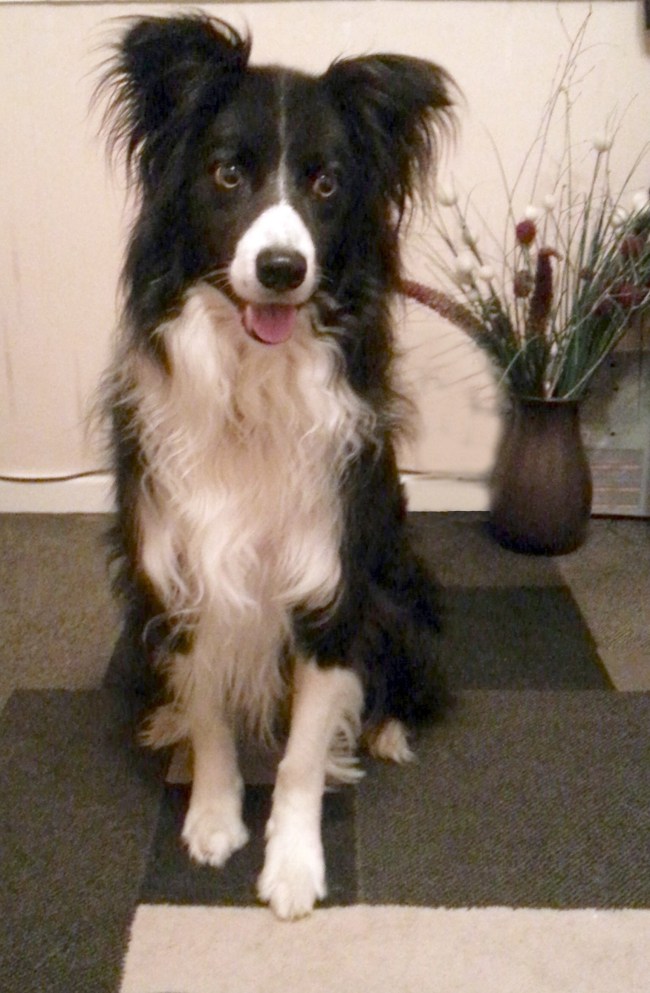
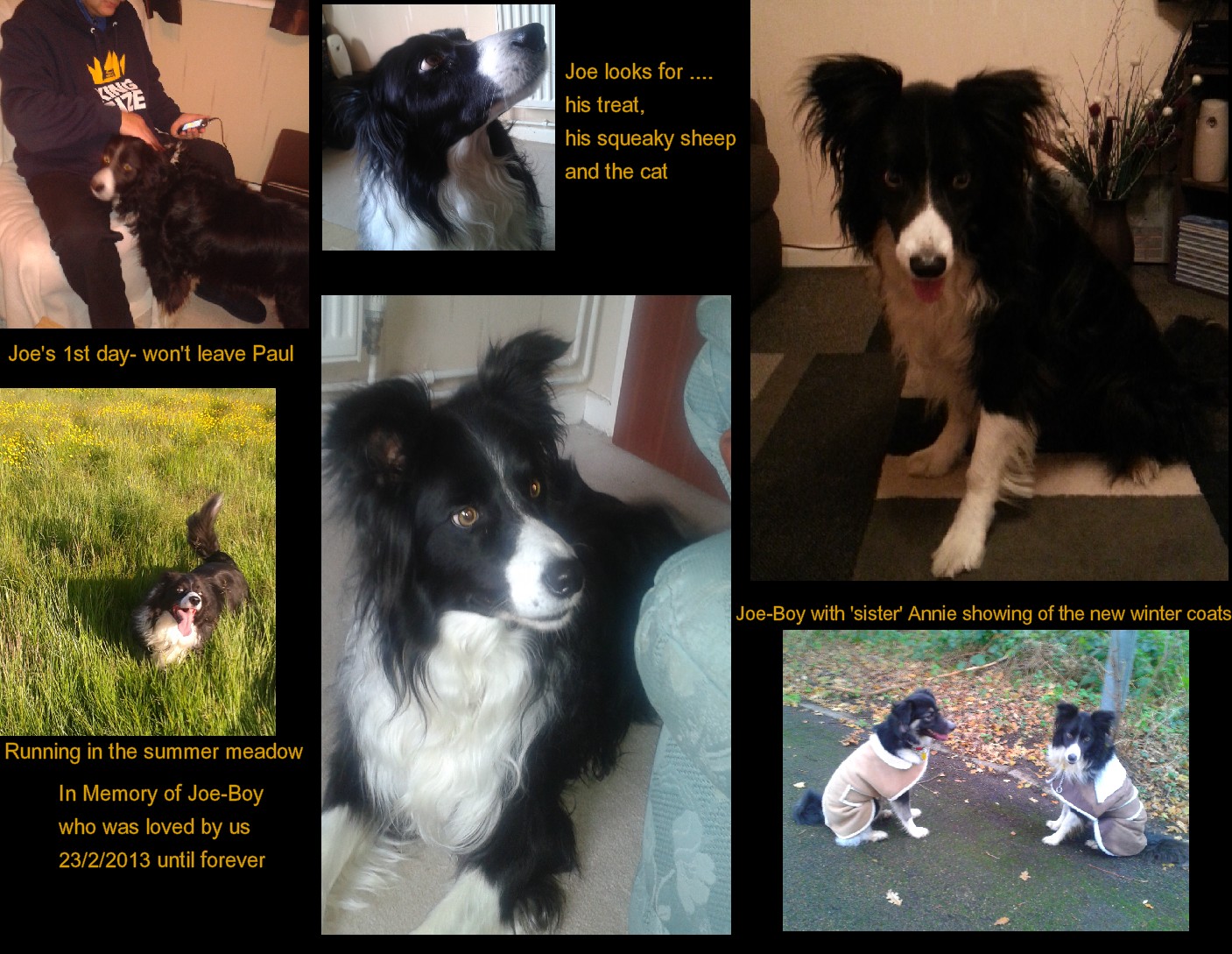
Take Joe. Joe had been sold on Facebook and bought by dog-baiters, bitten so severely vets thought he would die. You’d think that’s turned him off to humans? But no! He was a beautiful 6yr-old Collie. He was awesome. He obeyed, loved and cherished us, giving cuddles, playing gently … I’ve never had such a beauty under my roof.
I also wrote that I would publish more today. Taken directly from Mrs Skeats’ blog.
ooOOoo
Joe died but his death is still carrying a message.
It’s 19th June 2014. Joe died 6 months ago on 23rd December 2013.
Joe was a 6 year old beautiful boy taken from us after only 10 months by a cruel twist .. an accident due to a lack of information .. so I started a mini campaign. And I’ve just read about another poor soul, a friend of a friend, having to wait to see if his dog will survive a stick injury. Heartbreaking.
Ok so writing about it channelled my grief but the whole thing goes beyond that.
What was to be thought a rare, freak accident turned out to be all too familiar to vets and families worldwide. What was thought to be a personal kick in the nuts turns out to be a case of ignorance that is most definitely not bliss.
I received hundreds of comments on my first post after Joe died. I received hundreds of facebook and twitter comments too. The current ‘WordPress’ views are at over 139,000 which is great, and yet not enough. Dogs are still being treated for nasty stick injuries, vets see a few each month. I can’t preach and say stop it, but I can let anyone and everyone who cares know what a potential danger stick throwing is: better than being totally ignorant of the risks.
What happened to Joe, and happens to dogs all over the world at a frighteningly too-often rate, was borne of ignorance, stupidity, even years of “that’s what we do with dogs”. We simply never thought about the consequences it could bring.
Historically, when man decided to have dogs as pets and not merely working companions (not all that long ago in the UK) chasing a stick was a favourite game. We’ve all seen the old adverts in faded yellows and reds with a boy, stick in hand and his faithful dog panting happily as he waits for the ‘toy’ to be thrown. Why should we think it’s dangerous? We see things like celebs on the One Show with their dog, happily throwing it a stick, or in videos…. Dogs and stick throwing seems synonomous.
These are but a few stories of reasons why we should try and change this ……………..
Please think twice before you throw a stick for your dog to chase.
In memory of a beautiful dog, whose life will not ever have been in vain, but will mean so much more if we save others from pain.
ooOOoo
Please follow those links that Suzan included and read the articles. The message is clear. If you are the owner of a dog or play with dogs, don’t ever throw them a stick to catch.
As with yesterday’s post, please share this as widely as you can.
Jean would be the first to tell you that I’m always remarking to her how this funny old world of blogging creates links and friendships right across the world. Many of the kind people who follow Learning from Dogs are themselves the authors of blogs and in the vast majority of cases when I read their posts I sense a kindred spirit.
T.O.R.A Rescue shelter to close – Dogs need homes Foster or Adopt
TORA will close. This is indeed sad news for me but devastating for the dogs still left at the rescue shelter. My beautiful Annie came from there. Rescued off the street as a frightened puppy: Just look at her now.
Beautiful Annie.
TORA, like many other rescue shelters in Romania have been fighting against all odds to get dogs off the streets, and now out of the public shelters since the killing law has been passed. Dogs are in public shelters for only a short time before they are put to sleep. There are horrific stories and pictures around. Some may see it as practical, culling the population. That’s a valid opinion but not one I and thousands upon thousands of dog/animal lovers can share.
All TORA asks now though is for people to view the site on Facebook or contact them [Ed. via that Facebook link] and foster or adopt one of the remaining dogs. If there are dogs left in October when they must close, then they will be returned to the public shelter to receive their fate.
EVEN IF YOU CANNOT HAVE A DOG YOURSELF, please share, someone somewhere will, and for each one that does, another beautiful dog is safe. They didn’t ask to be thrown on the streets. They didn’t ask to be cast out like vermin. All they want is a chance to have a human family and a life of kindness.
ABOUT ASOCIATIA
T.O.R.A. is a small non-profit dog rescue organization that is based in Bistrita, North of Romania (Transylvania). TORA is dedicated to the rescue and placement of stray dogs.
We are an animal charity of 2-4 volunteers, with funds available only from public support, with a shelter of 20 spacious kennels, 11 indoor & outdoor and 9 only outdoors ones. We have a vet attending the dogs daily and a caretaker.
All of our dogs get neutered, (with the exception of puppies under the age of 6 months old and very old dogs), vaccinated, microchipped , defleed and dewormed prior to adoption.
T.O.R.A. shelter cares for the rescued dogs entirely from donations received from private people, that’s why there is a constant need of support whether its financial, material (food or medicine donations, beds, dog clothes, etc) or by sharing and promoting the dogs to find good homes so that space becomes available to help others .
T.O.R.A. helps an average of 40-60 animals at any given time.
Many who follow my scribblings know that of the nine dogs we have here at home, seven are rescues. When I first met Jean down in Mexico she was rescuing feral dogs off the streets and finding homes for them. Over the many years, Jean estimates that well over two-hundred stray dogs had been found loving homes. Indeed, when Jean and I moved from Mexico to Payson, AZ., we came with fourteen dogs of which thirteen were ex-rescues! Pharaoh being the notable exception!
Anyway, back to Mrs Skeats.
I was so moved by what I read on her blogsite that I implored her to write a guest post for you, dear reader. Suzan was gracious enough to agree and here is her post.
ooOOoo
Rescued dogs are life-savers.
by Suzan.
Paul asked if I would post as a “guest” after reading my post(s) about dogs that have been or need to be rescued from some quite awful conditions. “OH here we go again” some of you will say. Well, then it is your choice to read on or close the page.
I hope you read on as this is not about begging for funds or equipment or even a home for these lovely creatures. It’s about what THEY can offer you.
I love animals – not just dogs. I’ve cared for many in my time, but dogs have to be top of my list. Dogs love to love. They don’t know how to be any other way until they are mistreated in some way.
Dog’s are like having a permanent 3 years old around you, with the exception they don’t answer back (often) and are usually not quite so stubborn. I’ve had 7 children under my roof in the years (hence the menagerie at times) – I know.
Dogs look to their human companion as leader, feeder, soul mate, room mate, walker, talker, and all they want to do is to please …. literally their life is lived for you. But rescued dogs do this to a deeper level than dogs raised from a pup. Not just me but thousands of others find this.
Raised dogs are no less loyal, please don’t think I say different. There’s just something about a dog that has had a bad start, lonely, captured, mistreated … whatever. These dogs reach deeper into your heart and aim to please as if they are desperate to say thank you. Perhaps they have a fear that the person who has been so lovely will leave if they misbehave. I can’t say, I’m not a dog.
I do know as I have had both kinds; from a pup and rescued from kennels. My last ‘pup raised’ dog, Dizzi, was with me 18 years and a star in her own right, but my rescues … it’s hard to say, but they love me in a different way, unique to rescues.
Take Joe. Joe had been sold on Facebook and bought by dog-baiters, bitten so severely vets thought he would die. You’d think that’s turned him off to humans? But no! He was a beautiful 6yr-old Collie. He was awesome. He obeyed, loved and cherished us, giving cuddles, playing gently … I’ve never had such a beauty under my roof. [Ed: Joe’s early and tragic death will be the subject of tomorrow’s post.]
Annie is a Romanian street dog, rescued age 9 months from under a pile of pallets in the cold Romanian winter, never having had a home. Now two, and she too has a special love for us. I swear if we’re annoyed with her she cries (not the doggy whine – I mean from the heart) and she’ll do ANYTHING to get a hug from us. Not once has she ever messed in the house from day 1, she goes to bed when told, sits politely for treats or her lead and wags herself to death when we come in the front door. Very rarely has she “got it wrong” and is so sorrowful if she does, her worst misdemeanour being chewing her bedding when she was about 14 months old, and obviously bored.
I could go on, I’ve had 5 rescues and two from pups…..
All I’ll now say is if you’re looking for a dog to share your life with – consider very carefully as they love you warts and all for a long time – then get a rescued dog. Once you look into those soulful eyes, and hold that paw, you’ll connect and feel the love and be very humbled ……. but you won’t regret it.
ooOOoo
Please share the message as much as possible! These dogs need to find loving homes. Thank you.
 oooo
oooo oooo
oooo


 I have been reading Anne Baring’s magisterial book The Dream of the Cosmos, in which she gives a detailed account of the shift, around the time of Gilgamesh, from the ancient, goddess- and nature-worshipping “lunar cultures” to the contemporary era of solar, monotheistic, warrior-worshipping cultures.
 “The archetype of the solar hero as warrior still exerts immense unconscious influence on the modern male psyche, in the battlefield of politics as well as that of corporate business and even the world of science and academia: the primary aim of the male is to achieve, to win and, if necessary, to defeat other males. The ideal of the warrior has become an unconscious part of every man’s identity from the time he is a small child.



 Learning from Dogs