The amazing development of electronics over 50 years.
(A republication of a post first shown on the 13th August, 2009)
The calendar reliably informs me that this is my 65th year. My brain, of course, lags somewhat in accepting this!
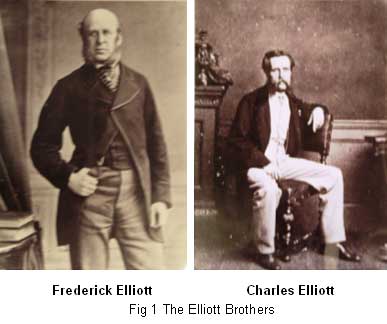
My step-father during my early teenage years worked for Elliott Brothers (the link goes to an interesting history of the firm that started in 1804) in Borehamwood, just north of London. He encouraged me to fiddle with ‘steam’ radios and
try and understand how these basic circuits worked. It was then a small step to deciding to become a radio amateur, popularly known as a radio ham! In those days it was a case of some pretty intensive studying to pass a Theory exam as well as being able to pass an exam in sending and receiving Morse code.
So joining the local radio society seemed like a sensible idea. That was (and still is!) called the Radio Society of Harrow. That it is still in existence after all these years is truly delightful. Those Friday night sessions at the Society and extra-curricular classes on Sunday morning at Ron Ray’s (G2TA) house, an hour’s bicycle ride away from home, ensured that shortly after my 16th birthday I was granted a Licence, G3PUK. It was a very proud moment.
Anyway, once granted a licence it was time to build my own radio transmitter. Most of the details have been lost in the mists of time but what is recalled was that the final amplifier was a pair of 803s driving an 813 (These are radio valve numbers). It sounds like something from the ark! But again ploughing the inexhaustible files of the Web, it’s possible to see what these radio valves looked like. Thanks to the National Valve Museum.
Here are pictures, courtesy of the National Valve Museum of those two radio valves:
803 – The substantial wide glass tube envelope is 58 mm in diameter (2 1/4 in) and, excluding the special five pin base pins, is 216 mm tall (8 1/2 in).
813 The classic envelope is substantial at 60 mm diameter (2 1/3 in) and 170 mm (6 2/3 in) long excluding the special base pins. The anode is 53 mm long and 48 mm wide. The metal is 1 mm thick.
803 radio valve813 radio valve
It’s difficult, today, to imagine devices which are essentially diodes (well, technically the 803 was a pentode and the 813 a tetrode) being between 6 and 8 inches tall!
My own self-build transmitter had not really been successful emitting more heat than light, so to speak. Literally, in the sense that these large radio valves kept me warm in my converted garden shed at the bottom of the garden. They also completely wiped out TV reception for those households with a 1/4 mile range that had invested in early television sets! It was time to move on to the R1155.
Around this era, less than 20 years after the end of the War in Europe in 1945, war-surplus equipment was widely available including ‘compact’ transmitter-receiver units.
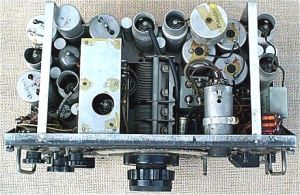
One popular one was the RAF R1155 which had been fitted to RAF Lancaster bombers and RAF marine craft. It was also fitted to the Sunderland flying boat. This information plus the photos below is from this fascinating web site for those wishing to be ‘geeky’ about this.
RAF R1155B transreceiverInternal view of the R1155B
Just compare the view on the right to the inside of your domestic radio or your cell phone.
A lot happens in 50 years!
My personal journey now leaps to 1978 and I have just left IBM UK having had 8 fabulous years with them as an Office Products salesman. My fledging company, Dataview Ltd, has just become the 8th Commodore Computer (CBM) dealer in the UK, based in a small office in Colchester, Essex, about 50 miles north-east of London.
The CBM PET (Personal Electronic Transactor) released in 1977 initially with a calculator type keyboard was useless for any business application but soon came out with a typewriter sized keyboard, making it a more viable business
CBM computer, circa 1978
machine. Today, as this is typed on an ‘old’ laptop with 2GB RAM, it seems unbelievable that these CBMs were sold with between 4k and 96k of RAM (memory) and no hard disk, although one could purchase an add-on that comprised dual 5 1/2 inch floppy disk drives.
YouTube obligingly finds a short video on the Commodore PET for those really wishing to enjoy the nostalgia!
So to turn to the 21st century and to run out of understanding. We appear to live in a world of multi-later printed circuit boards of unimaginable (to me) component density, assuming that the word ‘component’ is even relevant today.
Haven’t a clue what this is but it’s very modern.
What an amazing period it has been!
A long way from yesterday!
Now let me see was it Pin 920 to Pin 140, or Pin14 to Pin 860 connected to Pin 56 ………?
Not quite how you would expect a crocodile to behave!
With thanks to Christine over at 350 or bust who published on Saturday, 30th June.
Then a web search found a more extensive video.
Pocho, the “domesticated” Costa Rican crocodile that gained international attention for a weekly show he performed with owner Gilberto Sheedan, died Tuesday at Finca Las Tilapias in the Caribbean-slope town of Siquirres. Olga Valle, Sheedan’s wife, said the nearly 1,000-pound croc died a natural death at age 50. A funeral will be held for Pocho on Sunday at 1 p.m.
“All of the people in the village have offered their condolences and assistance,” Valle said.
On past Sundays, Pocho and “Chito,” as Sheedan was better known, performed a show for visitors in a 100-square-meter artificial lake at Finca Las Tilapias. Chito, 54, declared the one-eyed crocodile “domesticated.” He could command Pocho to do tricks such as winking its one good eye, lifting its head and tail out of the water, rolling over and permitting Chito to stick his head inside the massive reptile’s maw.
Chito found the 5-meter-long crocodile near death on the shore of the Parismina River, in the Limón province, 17 years ago. The crocodile had been shot in the left eye. Chito and several friends loaded the animal into a boat and took him to Siquirres, where Pocho was nursed back to health. Chito even slept with the crocodile during its recovery.
After an employee saw Chito swimming with Pocho one day, word of the duo’s friendship spread. In July 2000, Costa Rica’s Channel 7 filmed the unusual pair. Chito and Pocho became stars, receiving attention as far as the United States, Chile and the United Kingdom.
The Environment, Energy and Telecommunications Ministry allowed Chito to keep the crocodile as long as they could monitor it. Chito worked with a veterinarian and a biologist and fed Pocho 30 kilograms of fish and chicken a week.
Chito never imagined the fame that would come from the unique friendship. All he wanted was an animal companion. A sign on his ranch emphasized that relationship: “Chito and Pocho are best friends.”
“I just wanted him to feel that someone loved him, that not all humans are bad,” Chito told The Tico Times in 2007. “I love all animals, especially ones that have suffered.”
Love is really the solution to practically every problem in the world!
So why do we insist of manipulating the genetics of food!
I read somewhere recently, and of course now can’t find the reference, that the genetic modification of our food represents as big a danger to the long-term survival of man as does the damage to our biosphere.
So a recent item on the blog Food Freedom News jumped out at me. This was an item that was introduced as, “The author of Seeds of Destruction (about Monsanto) has a new piece out on pesticides and mass animal deaths… very sobering.”
Clicking on the ‘new piece’ link takes one to here, from which I quote the opening paragraphs,
“A recent study showed that every human tested had the world’s best-selling pesticide, Roundup, detectable in their urine at concentrations between five and twenty times the level considered safe for drinking water.”
Birds and bees are something most of us take for granted as part of nature. The expression “teaching about the birds and the bees” to explain the process of human reproduction to young people is not an accidental expression. Bees and birds contribute to the essence of life on our planet. A study by the US Department of Agriculture estimated that “…perhaps one-third of our total diet is dependent, directly or indirectly, upon insect-pollinated plants.”
The honey bee, Apis mellifera, is the most important pollinator of agricultural crops. Honey bees pollinate over 70 out of 100 crops that in turn provide 90% of the world’s food. They pollinate most fruits and vegetables–including apples, oranges, strawberries, onions and carrots. But while managed honey bee populations have increased over the last 50 years, bee colony populations have decreased significantly in many European and North American nations. Simultaneously, crops that are dependent on insects for pollination have increased. The phenomenon has received the curious designation of Colony Collapse Disorder (CCD), implying it could be caused by any number of factors. Serious recent scientific studies however point to a major cause: use of new highly toxic systemic pesticides in agriculture since about 2004.
That first paragraph alone made me sit up, “A recent study showed that every human tested had the world’s best-selling pesticide, Roundup, detectable in their urine at concentrations between five and twenty times the level considered safe for drinking water.” What a strange race we are!
Wlliam F. Engdahl
Then it was easy to find out more information about the author of the book Seeds of Destruction, William F. Engdahl, including his website. Mr. Engdahl is clearly no stranger to controversy as this YouTube video illustrates,
Back to that Food Freedom article. Further on, there is evidence of the size of the problem in the UK,
Alarming UK results
A private UK research organization, Buglife and the Soil Association, undertook tests to try to determine cause of the bee death. They found that the decline was caused in part by a group of pesticides called neonicotinoids. Neonicotinoids are “systemic” chemicals that kill insects by getting into the cell of the plant. In Britain it’s widely used for crops like oilseed rape and for production of potted plants.
The neonicotinoids are found in the UK in products including Chinook, used on oilseed rape and Bayer UK 720, used in the production of potted plants which then ends up in gardens and homes around the country. The new study examined in detail the most comprehensive array of peer-reviewed research into possible long-term effects of neonicotinoid use. Their conclusion was that neonicotinoid pesticides damage the health and life cycle of bees over the long term by affecting the nervous system. The report noted, “Neonicotinoids may be a significant factor contributing to current bee declines and could also contribute to declines in other non-target invertebrate species.” The organization called for a total ban on pesticides containing any neonicotinoids.
The president of the UK Soil Association, Peter Melchett, told the press that pesticides were causing a continued decline in pollinating insects, risking a multimillion pound farming industry. “The UK is notorious for taking the most relaxed approach to pesticide safety in the EU; Buglife’s report shows that this puts at risk pollination services vital for UK agriculture,” he said.
Indeed in March 2012 Sir Robert Watson, Chief Scientist at the British Government’s Department of Environment announced that his government was reconsidering its allowance of neonicotinoid use in the UK. Watson told a British newspaper, “We will absolutely look at the University of Stirling work, the French work, and the American work that came out a couple of months ago. We must look at this in real detail to see whether or not the current British position is correct or is incorrect. I want this all reassessed, very, very carefully.” To date no policy change has ensued however. Given the seriousness of the scientific studies and of the claims of danger, a prudent policy would have been to provisionally suspend further uise of neonicotinoids pending further research. No such luck.
And if the harm to bees wasn’t serious enough, try this extract,
Effect on Human Brain?
But most alarming of all is the evidence that exposure to neonicotinides has horrific possible effects on humans as well as on birds and bees.
Professor Henk Tennekes describes the effects:
“Today the major illnesses confronting children in the United States include a number of psychosocial and behavioral conditions. Neurodevelopmental disorders, including learning disabilities, dyslexia, mental retardation, attention deficit disorder, and autism – occurrence is more prevalent than previously thought, affecting 5 percent to 10 percent of the 4 million children born in the United States annually. Beyond childhood, incidence rates of chronic neurodegenerative diseases of adult life such as Parkinson’s disease and dementia have increased markedly. These trends raise the possibility that exposures in early life act as triggers of later illness, perhaps by reducing the numbers of cells in essential regions of the brain to below the level needed to maintain function in the face of advancing age. Prenatal and childhood exposures to pesticides have emerged as a significant risk factor explaining impacts on brain structure and health that can increase the risk of neurological disease later in life.”
There is also growing evidence suggesting persistent exposure to plants sprayed with neonicotinoids could be responsible for damage to the human brain, including the recent sharp rise in incidents of autism in children.
This really is an article that you should read in full, which also includes a full bibliography and notes section. Plus you can leave your responses as a comment – go for it!
While going through previously published Posts, I came across two, first shown on the 17th & 18th August, 2009, that seemed a better fit being rolled into one.
So here they are.
oooOOOooo
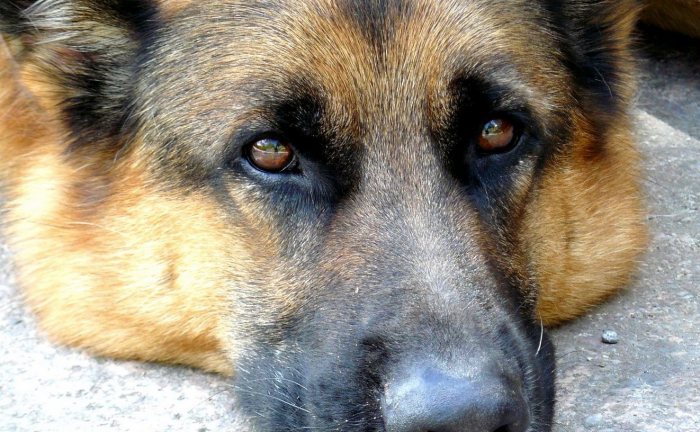
This is not my dog but it brings out the same feelings in me as if I was looking at my German Shepherd.
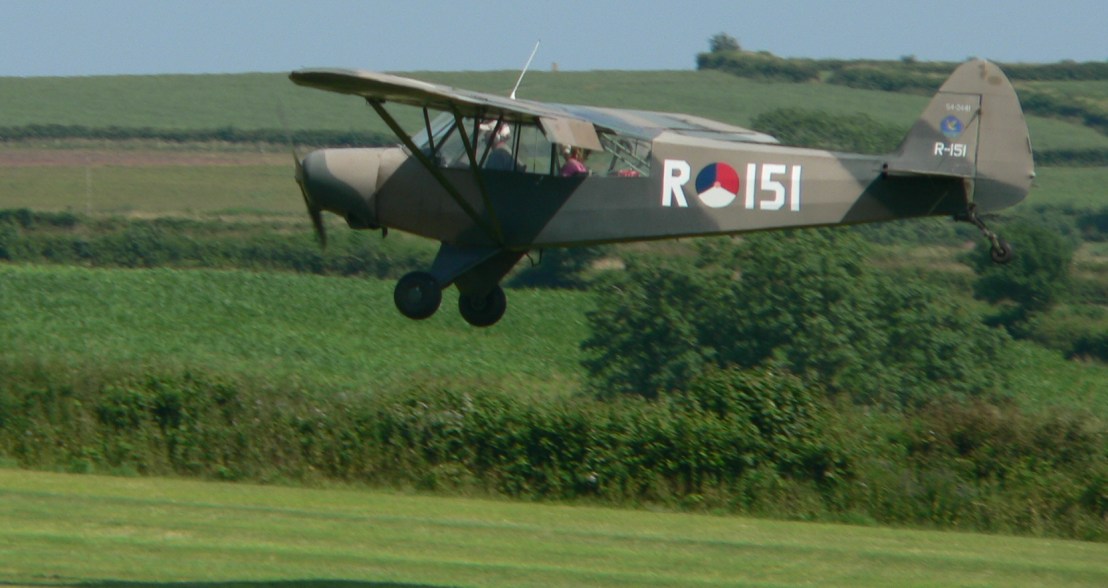
And this is my German Shepherd! The photograph was taken in 2006 when Pharaoh was 3 years old. The aircraft, by the way, is an L21B, the military variant of the Piper Super Cub. The aircraft was originally delivered to the Dutch Air Force in 1954 and has dispensation from the UK CAA to retain the original registration and callsign of R151.
oooOOOooo
More on the aircraft.
Originally when the first half of today’s Post was published separately readers asked for more information on the aircraft.
So here it is.
Piper Super Cub, L-21B, R-151
A/C Construction No. 18-3841, Frame No. 18-3843
Original Engine, Lycoming 135 Type 0-290-D2, 54/2441
Romeo 151 was one of a batch of 298 L-21’s delivered in 1954. There were 584 L-21B’s produced by Piper for military use, the ‘L’ standing for Liaison. The L-21B’s were PA-18-135’s with civil Lycoming 0-290-D2 engines, glasswork as most L-21A’s and L-18’s and a gross weight of 1760 lbs.
This aircraft was delivered to Koninklijke Luchtmacht, Dutch Air Force, on the 1st July, 1954 and registered R-151. After various homes R-151 transferred to the Dutch civil register as PH-GER, 1st April 1976 with 4,458 hours and shortly thereafter was registered to Vlieclub Hoogeveen, Certificate Number 2380.
On the 27th March, 1981 the aircraft was delivered to the UK with a total time of 5,043 hours and in September, 1981 became G-BIYR. In April, 1983 YR was the first of type to be given a Public Transport CofA and was used for training at Tollaton. YR reverted to a Private CofA in January, 1984 when purchased by Mike and Barbara Fairclough at 5,120 hours.
In 1992 YR was re-engined with a Lycoming 150HP, 0320-A2B No. L49809-27A (zero hours). Finally on the 2nd June, 1995 the a/c was repainted in original Dutch insignia and given CAA (UK Civil Aviation Authority) permission to use the original call-sign, Romeo 151.
The aircraft is based in South Devon, England and owned by the five members of the Delta Foxtrot Flying Group.
A few photos of the aircraft.
Approaching home airfield in South Devon, EnglandFlying in the French Alps, Mt Blanc in sight9,300 ft up in the French Alps
Such a beautiful and mutually-important relationship.
I didn’t plan to write more about this subject thinking that my last two posts, Woof at the Door and Prof. Pat Shipman, more than covered the theme; indeed much more.
But then a flurry of other articles conspired to pass my desk.
In no particular order there was an article on the Big Think website, Do Dogs Speak Human? As the article opened,
What’s the Big Idea?
Perhaps the better question is, do humans speak dog? Either way, the debate over whether language is unique to humans, or a faculty also possessed by wild and domestic animals from dogs to apes to dolphins, is an interesting one. The answer depends on exactly how we define “language,” and who’s doing the talking, says David Bellos, the Booker prize-winning translator.
The article includes this three-minute video,
and concludes,
Broadly, a language is a mode of expression. “The argument that only human language is language and that animal communication systems, however sophisticated they are — and some of them are quite sophisticated — are not languages because they consist of discrete signals is a circular argument,” he argues. “It’s a self-fulfilling thing. And I think we should be a little bit more interested in the complexity and the variability of animal communication systems and less rigid about this distinction between what is a language and what is not a language.”
For now, we’re happy with this:
The June 30th edition of The Economist had an article entitled, Can dogs really show empathy towards humans? (You may have to register (free) to view this.) That report ends, as follows,
As they report in Animal Cognition, “person-oriented behaviour” did sometimes take place when either the stranger or the owner hummed, but it was more than twice as likely to occur if someone was crying. This indicated that dogs were differentiating between odd behaviour and crying. And of the 15 dogs in the experiment that showed person-oriented responses when the stranger cried, all of them directed their attention towards the stranger rather than their owner.
These discoveries suggest that dogs do have the ability to express empathetic concern. But although the results are clear enough, Dr Custance argues that more work needs to be done to be sure that such behaviour is true empathy. It is possible, she points out, that the dogs were drawing on previous experiences in which they were rewarded for approaching distressed human companions. Dog-owners, however, are unlikely to need any more convincing.
It was then an easy follow-up to that Animal Cognition article which is available online here; here’s the abstract,
Empathy covers a range of phenomena from cognitive empathy involving metarepresentation to emotional contagion stemming from automatically triggered reflexes.
An experimental protocol first used with human infants was adapted to investigate empathy in domestic dogs. Dogs oriented toward their owner or a stranger more often when the person was pretending to cry than when they were talking or humming. Observers, unaware of experimental hypotheses and the condition under which dogs were responding, more often categorized dogs’ approaches as submissive as opposed to alert, playful or calm during the crying condition. When the stranger pretended to cry, rather than approaching their usual source of comfort, their owner, dogs sniffed, nuzzled and licked the stranger instead.
The dogs’ pattern of response was behaviorally consistent with an expression of empathic concern, but is most parsimoniously interpreted as emotional contagion coupled with a previous learning history in which they have been rewarded for approaching distressed human companions.
Pat Shipman showing how animals were intimately involved in the development of early humans.
Yesterday’s fascinating post was predominately taken up by a long and deeply interesting essay by Prof. Pat Shipman, The Woof at the Door.
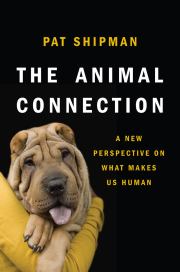
Today, I want to report further on Pat Shipman primarily by looking at her book The Animal Connection.
What makes us human?
Let me do no more than quote from page 259,
Domesticating animals provided a new sort of benefit. They were living tools first and meat sources later, only when their useful lives were over or circumstances required. The crucial importance of animal domestication in modern life shows that our relationship with animals selected for a set of communication skills and abilities to observe, draw conclusions and make connections among different observations that had been increasingly important since at least 2.6 million years ago. The relationship between such skills and modern behaviors that characterize humanity is clear.
Prof. Shipman also confirms that the first domestication was of the dog at 32,000 years ago and goes on to say,
Other types of domestic animals provide enhanced protection for people, dwellings, stored crops, and other livestock. Dogs and cats are the obvious examples, but herders have recently started touting llamas as guardians for flocks of sheep.
The domesticated carnivores also provide important assistance in hunting. Dogs are better trackers than humans; they are faster runners, take larger prey, and will hunt with humans. Cats hunt solitarily and are far superior to humans at catching rodents that can decimate crops or carry disease. Dogs hunt with you; cats hunt for you; but both offer an advantage. (p.254)
As I said, it’s a fascinating book and one that is already reshaping my knowledge about the early evolution of man. And in terms of reshaping knowledge about early man, do go across to Pat Shipman’s Blog, The Animal Connection.
You can read a full review with links to a number of book sellers here. Let me close by using this praise for the book by Jeffrey Moussaieff Masson. (Masson’s book Dogs Never Lie About Love is just a few feet from me as I write this, a deeply moving book for all dog lovers.)
This is what Jeffrey Masson wrote about The Animal Connection,
Pat Shipman has written one of the most important books on the human-animal connection ever. One might even say it is the single most important book, possibly the only one, to look at our deep connection to animals over the entire evolutionary history of our species.
The grandeur of the ancient relationship between dog and man.
A couple of weeks ago, I came across a fascinating article that had been published in American Scientist magazine (online version) written by Professor Pat Shipman. The article provided the background and evidence to support the proposition that dogs may have been man’s best friend for thousands of years longer than we realized.
Very quickly I came across Pat Shipman’s website and learnt that this is one clever lady. As her About page explains,
CAREER SUMMARY
Prof. Shipman
I am internationally known as a paleoanthropologist and conducted research for many years in Africa on human evolution and the animal communities in which humans evolved.
I have conducted research on material from sites in France, Spain, the United States, Java, Ethiopia, Kenya, Tanzania, and South Africa. I have written more than 50 scholarly articles, appearing in journals such as Nature, Science, Journal of Archaeological Science, Paleobiology, Journal of Human Evolution, and Current Anthropology.
I have written more than 100 articles in popular science magazines or newspapers, including The Guardian, The New York Times, The Times Literary Supplement, American Scientist, Discover, and Natural History. Two of my books were featured on the cover of The New York Times Book Review: The Neadertals and Taking Wing. Taking Wing won the Phi Beta Kappa prize for science book of the year and was a runner-up for the LA Times Science Book prize.
My book on Homo erectus, Wisdom of the Bones, was co-authored by Alan Walker and won the Rhone-Poulenc Prize in science writing.
My books have been widely praised as compelling, accessible, and highly readable, with a strong narrative thread. Reviewers frequently comment upon the meticulous research that underpins my books, a feature I consider to be my trademark.
My most recent popular science book, The Ape in the Tree, written with Alan Walker, was called by The Vancouver Sun “part adventure story, part cutting-edge science.” In a Science magazine review, the book was praised as “a fine account of new ways to puzzle out the behaviors of fossilized animals from odd scraps of bone.” Another reviewer raved, “Wonderfully engaging and insightful, The Ape in the Tree, is sure to become a classic in the literature on human origins.” MacArthur fellow John Fleagle wrote in the Quarterly Review of Biology, “Science writing doesn’t get any better than this.” In 2009, this book was awarded the W.W. Howells Book Prize by the American Anthropological Association.
In Britain, my new biography of Mata Hari, Femme Fatale, was selected as The Book of the Week by BBC radio. Each day during the week, an actress gave dramatic readings from the book on the air for fifteen minutes.
With The Animal Connection, I return to paleoanthropology and consider the influence of our connection with animals on human evolution and the origin of modern human behavior.
See what I mean!
Anyway, as you can readily understand, as the author of a blog that writes about what we can learn from this ancient relationship between the dog and man, it struck me as wonderful if I might be permitted to republish in full that article. Prof. Shipman promptly gave me such permission.
So today, I am doing just that and tomorrow I want to write more about Pat Shipman’s latest book, The Animal Connection.
oooOOOooo
The Woof at the Door
Dogs may have been man’s best friend for thousands of years longer than we realized
It’s funny how much difference a single letter makes. A “woof” at the door is a very different thing from a wolf at the door. One is familiar, domestic, reassuring; the other is a frightening apparition of imminent danger. The distinction between our fond companions and the ferocious predator of northern climes goes back a long way.
Dogs are descended from wolves, probably the gray wolf. Some scientists argue that, because dogs and wolves can and do interbreed, they shouldn’t be considered to be separate species at all. They believe that domestic dogs are only a subspecies or variant of the gray wolf, Canis lupus, and ought to be called Canis lupus familiaris (the familiar or domestic wolf) instead of Canis familiaris (the familiar or domestic dog). Although the ability to interbreed and produce fertile offspring is a tried-and-true criterion for recognizing that two populations are really variants of a single species, the reality is more nuanced. We cannot know whether dog-wolf hybrids will thrive and survive, or die out, in the long run.
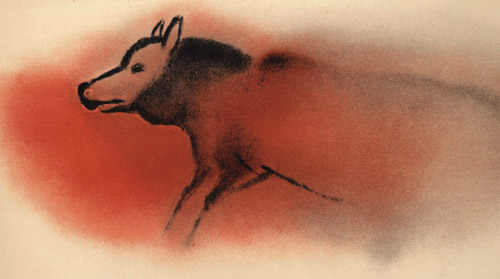
Prehistoric cave paintings rarely depict wolves or other carnivores. This watercolor tracing of a cave painting was made by the archaeologist Abbé Henri Breuil in the early 1900s from the Grotte de Font-de-Gaume in France. The 17,000-year-old cave paintings number about 250 and mostly show bison and mammoths—only one is thought to be a wolf. Canids may have been domesticated by this point; it is possible that portraying wolves and humans was taboo. Paul Bahn
Certainly we expect to be able to distinguish a dog from a wolf if we see one. Of course, domestic dogs are wildly variable in size and shape, thanks to several hundred years of selective breeding. Some have long, fluffy coats; others have tightly curled, nearly waterproof coats and webbed feet. Some are leggy and swift, whereas others are solid, stoutly built guard dogs. Some fit neatly into a pocketbook, but others barely fit into a compact car. As Robert K. Wayne of the University of California at Los Angeles declares, “Dogs show more diversity in appearance than any other mammal.”
What is it that tells us this animal is “dog” and that one is “wolf?”
Modern wolves and dogs can be distinguished reasonably easily by their appearance. The most telling feature of dogs is the snout, which is significantly shorter and wider than wolves’ snouts. Only a few dog breeds with extremely elongated, slender snouts, such as Irish wolfhounds, surpass wolves in “snoutiness.”
But a crucial part of the difference we perceive is in the animals’ manner and attitude towards humans. Domesticated dogs are just that: canids that live in the house or domicile of humans. They are genetically disposed to seek out human attention and approval and to accept human leadership. Wolves are not.
How did this important change come about? Probably in the distant past, humans took in a wolf cub, or even a whole litter of cubs, and provided shelter, food and protection. As the adopted cubs matured, some were aggressive, ferocious and difficult to handle; those probably ended up in the pot or were cast out. The ones that were more accepting of and more agreeable to humans were kept around longer and fed more. In time, humans might have co-opted the natural abilities of canids, using the dogs’ keen noses and swift running skills, for example, to assist in hunting game. If only the most desirable dogs were permitted to breed, the genes encoding for “better” dogs would continue to be concentrated until the new domesticated species (or subspecies) was formed.
Time to Tame
The creation of a domestic, useful, familiar canid by years of selectively breeding wild and terrifying wolves was almost certainly unplanned. The wolf at the beginning of the process of domestication was tamed—made individually docile—but the essential fact is that, over time, the offspring of those initial wolves were genetically inclined to be more tractable.
Domestication was one of the most brilliant accidents in the entire history of humankind. What’s more, we got it right the first time: Dogs were the original trial animal, and successful product, of such an accident—the happy outcome of years of unwitting experiments and dumb luck.
How long does domestication take? Nobody knows. In an experiment, Russian biologists kept a breeding colony of silver foxes and intentionally selected for breeding those with the least fear and the least aggression toward humans. After 10 generations, 18 percent of the foxes sought human contact and showed little fear. After 30 or so generations, a “domesticated fox” had been created.
The catch is that this experiment was deliberate and strictly controlled. The foxes could not breed with wild foxes and dilute the changing gene pool. Human contact was minimized so animals could not be tamed by their handlers. And because of the experiment’s scientific intent, no one could say, “Oh this one is so cute, let’s let it breed even if it is a little aggressive.” So in the case of dogs, without all these controls, the process could have taken much longer.
Another way of estimating the time at which domestic dogs originated is to consider their genetic differences from wolves. One prominent group of researchers, including Robert Wayne, along with Carles Vilà of the Uppsala University in Sweden and their collaborators, initially estimated in 1997 that dogs diverged from gray wolves 100,000 to 135,000 years ago. After more study, they revised their divergence date to between 40,000 and 100,000 years ago. Another group, led by Peter Savolainen of the Royal Institute of Technology in Sweden, favored the Chinese wolf, a subspecies of the gray wolf, as the probable ancestor and estimated in 2002 that it was domesticated between 15,000 and 40,000 years ago.
How do these genetic estimates stack up against the fossil record? Until 2009, the oldest known remains of domestic dogs were two adult skulls dated to between 13,000 and 17,000 years ago, from Eliseevichi, a region in Russia. Both had the relatively broad, short snout typical of dogs, and both were large, heavy animals, nearly the size of great Danes.
Then a team led by Mietje Germonpré of the Royal Belgian Institute of Natural Sciences reported a stunning new finding in the February 2009 issue of Journal of Archaeological Science: a nearly complete fossil dog skull dated to 31,680 + 250 years ago.
Another Look
Germonpré and her colleagues thought that researchers might have overlooked early prehistoric dogs in the fossil record of the Upper Paleolithic, so they analyzed skulls of large canids (wolves or dogs) from various European sites. The Upper Paleolithic time period spanned 40,000 to 10,000 years ago and is divided into sections based on the artifacts from those times. By convention, each span is named for a culture of people who made the artifacts, and the people, in turn, are usually named for the geographical location where the artifacts were found. The Epigravettian culture existed from 14,000 to 10,000 years ago; before that, the Magdalenian culture thrived from 18,000 to 10,000 years ago; and skipping back a few sections, the Aurignacian culture occurred from 32,000 to 26,000 years ago.
In order to identify the fossil skulls accurately, Germonpré’s team first analyzed a large reference sample of 48 wild, modern wolves and 53 dogs belonging to 11 different breeds. They also examined five skulls (including the ones found in Eliseevichi) that were firmly established as prehistoric domesticated dogs.
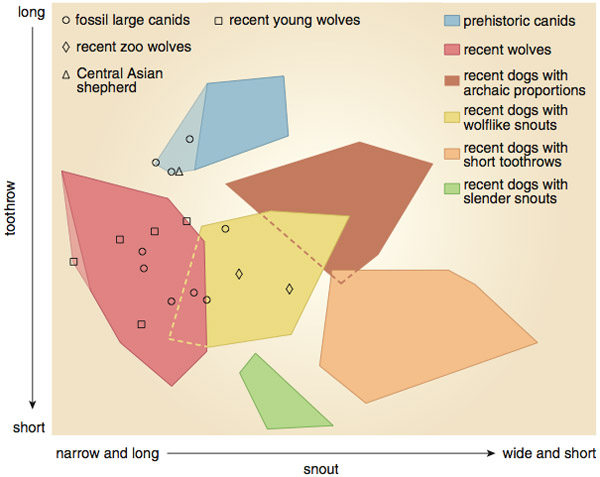
In order to establish the morphological differences between wolves and dogs, a group of researchers led by Mietje Germonpré statistically analyzed skulls from 48 modern, wild wolves and 53 modern dogs from 11 breeds, as well as five skulls that were previously established to be from prehistoric dogs. Recent wolves (pink) and prehistoric dogs (blue) clustered into their own groups, based on the length of their toothrows and the shape of their snouts. Modern dogs clustered into four groups, with some overlap in their areas. Recent dogs with archaic proportions included huskies (brown), recent dogs with wolflike snouts included German shepherds (yellow), recent dogs with short toothrows included great Danes (orange), and recent dogs with slender snouts included doberman pinscers (green). One modern dog, a Central Asian shepherd, clustered with the prehistoric dogs. The group then classified new skulls into the established groupings; examples that fell slightly outside of the ranges but that are statistically likely to be within the group are shown as lighter-shaded areas. Recent young wolves fell into the recent-wolf group, whereas wolves kept in captivity were classifed as recent dogs with wolflike snouts. Fossil canid skulls divided between the recent-wolf group and the prehistoric-dog group, with one falling in the group of recent dogs with wolflike snouts. Stephanie Freese, data courtesy of Mietje Germonpré.
The team used statistical analysis of cranial and dental measurements on the skulls to sort the reference sample into six natural clusters. One cluster contained modern wolves. Another consisted of recent dogs of archaic proportions (such as chow-chows and huskies); a single specimen of a Central Asian shepherd was closer to this group than any other but fell outside it. A third cluster included dogs, such as German shepherds and malinois, which have wolflike proportions. These three groups overlapped each other in their cranial proportions. A fourth group of modern dogs has short toothrows—the length of the jaw that contains teeth—and includes such breeds as great Danes, mastiffs and rottweilers. This group overlapped slightly with the archaic-proportioned dog group but not with the others.
The fifth and sixth clusters were completely separate from all others. One consisted of dogs with extremely long, slender snouts, such as Doberman pinschers. The final group, which had long toothrows and short, broad snouts, was made up of the prehistoric dogs. Statistically, the team’s ability to identify any individual specimen as belonging to the correct group was highly significant and accurate.
Using these clusters as reference categories, Germonpré and colleagues used a statistical technique (called discriminant function analysis ) to assign 17 unknown fossil canid skulls to the established categories. Not all of the “unknowns” were truly unknown, however. Five were immature modern wolves that might have had different proportions because of their age, two were wolves that had been kept in captivity, and one was the Central Asian shepherd that didn’t cluster into any of the groups. Additional unknowns were 11 fossil skulls from sites in Belgium, the Ukraine and Russia, although two of these fossil skulls proved to be too incomplete to classify.
The technique correctly classified all of the immature wolves as wolves, but the two zoo wolves were classified as recent dogs with wolflike snouts. Five of the fossil skulls also fell easily into the modern wolf group; although two of these specimens fell into the region of measurements that overlapped with the group of recent dogs with wolflike snouts, they had a higher statistical probability of being wolves. One fossil skull fit directly into the group of recent dogs with wolflike snouts, even though this specimen was clearly ancient.
The remaining three fossil skulls—one from Goyet Cave in Belgium and one each from Mezin and Mezhirich in the Ukraine—resembled each other closely. All three were classified as prehistoric dogs with probabilities of 99 percent, 73 percent and 57 percent, respectively, as was the (modern) Central Asian shepherd, with a 64 percent probability. In addition, the Mezin skull was odd enough in appearance (for a wolf) that another researcher has suggested it might have been a captive wolf. Germonpré and her team were delighted with these results.
The group also successfully extracted mitochondrial DNA (mtDNA) from seven ancient canid bones from Goyet Cave and Trou des Nutons in Belgium. Rather than damage precious skulls, they sampled only bones in which wolves and dogs differ little, so they presumed all of those they sampled for mtDNA were wolves. From each sample, they sequenced a segment of the mtDNA that is highly variable in living wolves and dogs. Each fossil had a unique mtDNA sequence, or haplotype , in this region, which could not be matched with any known sequences for modern wolves (of which there are about 160) or modern dogs (of which more than 1,000 exist) stored in GenBank, a database of all publicly available nucleotide sequences.
“I was not so surprised at the rich genetic diversity of the fossil wolves,” says Germonpré, because there have been other studies with similar findings. Foxes and wolves underwent a severe bottleneck in population size at the end of the last Ice Age, and many genetic lineages went extinct at this time.
“But we were surprised at the antiquity of the Goyet dog,” Germonpré adds. “We expected it would probably be Magdalenian,” perhaps 18,000 to 10,000 years old. This outcome would fit with their results for the Mezin and Mezhirich skulls, which were found with Epigravettian artifacts roughly 14,000 to 10,000 years old. When the age of this specimen from Goyet was directly dated using accelerated mass spectroscopy radiocarbon-dating techniques, the team found that it was not 18,000 years old, but almost twice as old as the next oldest dog, placing the Goyet dog in the Aurignacian period.
A Time of Change
The Goyet dog fossil shows that the domestication of the first animal was roughly contemporaneous with two fascinating developments in Europe.
Around this time, Europeans began producing objects that are recognizable as art. Some of the earliest known art objects from Europe include the remarkable cave paintings of Chauvet Cave in France, the oldest of which were made 32,900 ± 490 years ago. None of the hundreds of glorious Chauvet paintings show wolves. However, the cave preserves something even more haunting: the footprints of a human child about four-and-a-half feet tall, as well as many footprints of large canids and bears.
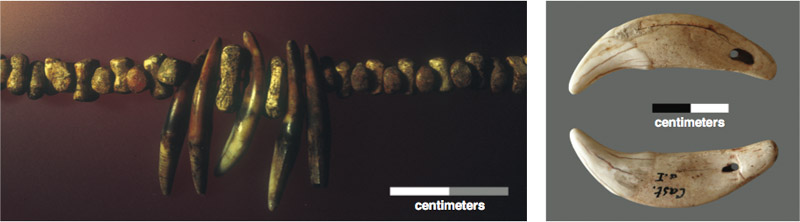
Around 33,000 years ago, humans began perforating teeth for use in decoration. Although canid teeth made up a very small percentage of the total fauna teeth available, they were used in a majority of the ornaments. Fangs from foxes and wolves appear to have been favorites. One example of a perforated wolf tooth (shown in two views at right) is from Abri Castanet in France and has been dated to 33,000 years ago. A strand of beads interspersed with fox teeth came from the Russian site of Sungir and has been dated to 24,000 years ago (left). There is no specific evidence that canid teeth were used in necklaces; the fox-teeth strand may have been a belt. Randall White
Michel-Alain Garcia of the Centre National de la Recherche Scientifique in Nanterre noticed in 1999 that one track of canid prints appears to accompany the child’s prints. These canid prints, unlike the others, have a shortened middle digit on the front paw: a characteristic of dogs. Garcia suggested that the child and dog might have explored the cave together. Charcoal from a torch the child carried is 26,000 years old.
The Upper Paleolithic cultures of Europe are famous for the flowering of all kinds of exquisite art: sculptures, carvings, paintings and engravings. Animals are common and readily recognizable subjects. Prehistoric art expert Paul Bahn notes that depictions of carnivores, including wolves or dogs, and of humans are rare. Bahn conjectures that portraying wolves and humans might have been taboo.
Anne Pike-Tay of Vassar College offers another perspective. She observes that the scarcity of artistic depictions of carnivores parallels their scarcity in the fossil faunas of the Upper Paleolithic. If domesticated dogs were helping humans hunt, she speculates that they might have been placed in a completely different symbolic category from other animals.
“What if dogs were put in the ‘human family’ category as an extension of the hunter, and like humans, warranted no (or very few) painted or engraved depictions?” she wonders.
The second development of the Aurignacian period is the appearance of objects of personal adornment: jewelry. Although beads and perforated objects occurred much earlier in Africa, the earliest such objects in Europe appeared about 40,000 years ago. At 33,000 years ago, early Aurignacian people began perforating animal teeth (and occasionally human teeth) to wear as pendants or other ornaments, such as belts.
Which teeth did they choose? Among their favorite sources are what have been identified as fangs of foxes and wolves. These identifications might better be termed “small or large canids,” because until now no one has considered the possibility that dogs might have been domesticated so long ago. Besides, identifying a single canid tooth specifically as dog or wolf would be difficult, if not impossible.
Randall White of New York University argues that Aurignacian and later people chose to wear objects that displayed their identity or membership in a certain group or clan. Like gang colors or a t-shirt that proclaims its wearer to be a fan of a particular band, ancient people wore things that made their allegiances clear.
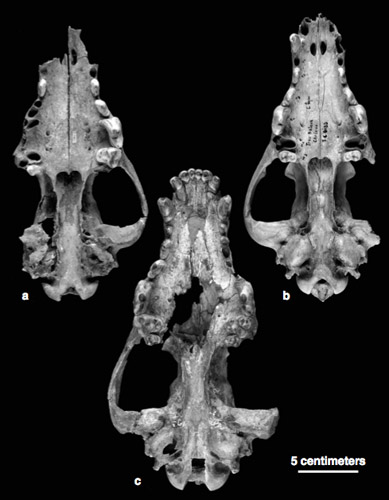
Fossils have helped to establish a far earlier timeframe for dog domestication. A paleolithic canid skull from Goyet in Belgium, about 31,000 years old, has traits characteristic of a dog rather than a wolf (a). When compared to wolves from a similar era, one from Trou Ballu (b) and one from Trou des Nutons (c) in France, the Goyet dog has a relatively wider snout and larger carnassial teeth, and it also has a wider braincase. Elsevier Ltd.
White observes that the teeth Aurignacian people chose to wear were obviously not a random sample of the animals in the fauna. For example, the fauna from the Grotte des Hyènes (Cave of Hyenas) at Brassempouy, France, is dominated by horses, aurochs (a type of cattle) and reindeer—mostly as food remains that often show cutmarks or charring—as well as hyenas, which probably lived in the cave when humans did not. Wolves are rare, making up less than 3 percent of the total fauna. Of approximately 1,600 animal teeth at Brassempouy, only about 2 percent were modified for use as ornaments. However, nearly two-thirds of the ornaments are teeth of wolves or foxes. The rest of the perforated teeth are from other rare species: bear, humans and red deer. None of the teeth of the most common species were used as ornaments at Brassempouy.
Did someone who wore a perforated canid tooth 33,000 years ago proclaim him- or herself to be one of the group that domesticated dogs?
Possibly. Domesticating dogs was a remarkable human achievement that doubtless provided a definite selective advantage to those who accomplished it successfully. They might well have had reason to brag about their accomplishment by wearing canid teeth.
Bibliography
Germonpré, M., et al. 2009. Fossil dogs and wolves from Paleolithic sites in Belgium, the Ukraine and Russia: Osteometry, ancient DNA and stable isotopes. Journal of Archaeological Science 36:473–490.
Morey, D. F. 1994. The early evolution of the domestic dog. American Scientist 82:336–347.
Ostrander, E. A. 2007. Genetics and the shape of dogs. American Scientist 95:406–413.
Savolainen, P., et al. 2002. Genetic evidence for an East Asian origin of domestic dogs. Science 298:1610–1613.
Trut, L. N. 1999. Early canid domestication: The farm-fox experiment. American Scientist 87:160–169.
Vilà, C., et al. 1997. Multiple and ancient origins of the domestic dog. Science 276:1687–1689.












 Learning from Dogs