While I follow a number of Blogs, there are few that I read avidly. One of them in that latter category is Baseline Scenario. I wish I understood more of the technical issues presented by the Blog authors and the dozens of brilliant commentors. But the essence of what is being discussed is clear. I thoroughly recommend subscribing.
Here’s a recent Post from James Kwak (see end of Post for bio details). It was called Free Books and Board Seats. James very kindly has given Learning from Dogs written permission to reproduce the article in full.
Here in the blogging world, some of us are very sensitive to the potential appearance of impropriety. A year ago, the FTC published new rules requiring bloggers to disclose cash and in-kind payments they receive for reviewing products. The upshot, for most of us, is simply that now, when we discuss a book, we say if we got a free copy of the book from the publisher. (Although it’s not clear that that disclosure is required, since getting a free copy is something that readers should expect; I don’t think the New York Times Book Review bothers pointing out that, for every book they review, they got a free copy, although they almost certainly did.)
All the more relevant, then, is Gerald Epstein’s post about conflicts of interest in the economics profession.
“Jessica Carrick-Hagenbarth and I did a study of 19 prominent academic financial economists who were members of two influential groups that have played a key role in the financial reform and regulation debate in the U.S. Of the 19 academic economists in these groups, 70% advised, owned significant stock in or were on the board of private financial institutions. But you wouldn’t know by looking at their self-identification in media appearances, policy work or academic papers.”
There are certainly economists who were talking up the housing market in the summer of 2008 without disclosing their financial ties to banks–who were desperately hoping that housing prices would not collapse.
C’mon, guys. I don’t even get very many free books (maybe one per month on average–I decline most of them), and I always disclose that. I know it’s not feasible to list every company that ever paid you to give a speech. But really, if you’re a paid director of a bank and you write about the banking industry, can’t you at least point that out?
Well put James.
—————————— James Kwak is a former McKinsey consultant, a co-founder of a successful software company, and currently a student at the Yale Law School. He is not, never has been, and never will be a member of the Yale Law Journal. He is a co-founder of The Baseline Scenario.
Pure luck in discovering things you were not looking for.
But the Buddhist belief is that there is no such thing as luck. See here:
The dictionary defines luck as ‘believing that whatever happens, either good or bad, to a person in the course of events is due to chance, fate or fortune.’ The Buddha denied this belief completely. Everything that happens has a specific cause or causes and there must be some relationships between the cause and the effect. (My italics.)
So you takes your choice! The Free Dictionary goes on to provide a fascinating account of the word history of serendipity:
Word History: We are indebted to the English author Horace Walpole for the word serendipity, which he coined in one of the 3,000 or more letters on which his literary reputation primarily rests. In a letter of January 28, 1754, Walpole says that “this discovery, indeed, is almost of that kind which I call Serendipity, a very expressive word.” Walpole formed the word on an old name for Sri Lanka, Serendip.He explained that this name was part of the title of “a silly fairy tale, called The Three Princes of Serendip:as their highnesses traveled, they were always making discoveries, by accidents and sagacity, of things which they were not in quest of….”
The work that the dedicated folks at WITNESS do is both humbling and uplifting and puts into perspective the value of what we do everyday.
Take 10 minutes from your busy day to view this video and then look at the WITNESS website to see what real change looks like. It will inspire you and enrich your life. It is important.
That reference to the charity WITNESS impressed me. Especially the fact that
Peter Gabriel
it was founded by that great musician Peter Gabriel.
Here’s the video mentioned in the extract above:
So how to close this particular post? Not sure, to be honest. But whether one believes in luck or not, there’s no doubt that we attract the world around us that we ‘deserve’.
As has been said before on this Blog, we get more of what we think about most. So really the Buddhist approach that there “must be some relationships between the cause and the effect” is more than sufficient reason to be a good and integrous member of this planet.
Your task is not to seek for love, but merely to seek and find all the barriers within yourself that you have built against it.Jala ad-Din Rumi 1207 – 1273
One would suspect that readers of this Post title would have many different responses to the word ‘love’. Perhaps in this harsh, economically challenged world, it seems a little quaint to think about love in anything other than a romantic sense.
But, trust me, there’s nothing quaint or ‘away with the fairies’ about reminding us all of both the power of love and the urgent need to bring that power further up the scale of human consciousness. Let’s even try and aim for where dogs are. Dogs intuitively demonstrate unconditional love to those around them that they trust.
Dog love!
Before we look at the effects of love, let’s remind ourselves of some of the outcomes from the stress and trauma generated by present times. A news item from the London School of Hygiene and Tropical Medicine published in July, 2009, said this:
Researchers at London School of Hygiene & Tropical Medicine and Oxford University estimated that soaring stress brought on by job losses could prompt a 2.4% rise in suicide rates in people under-64 years of age, a 2.7% rise in heart attack deaths in men between 30 and 44 years, and a 2.4% rise in homicides rates, corresponding to thousands of deaths in European Union countries, such as the UK.
Nor is the impact just economic. The sudden flipping from the wild optimism of the boom to the personal gloom and self-doubt of recession and system-wide financial crisis is bad for health and well-being.
So it appears as if there’s no shortage of reasons why engaging the power of love offers infinite possibilities for us all.
The BBC recently reported on research that shows that people in love can lower their levels of pain.
Love hurts, at least according to many a romantic songwriter, but it may also help ease pain, US scientists suggest.
Brain scans suggest many of the areas normally involved in pain response are also activated by amorous thoughts.
Stanford University researchers gave 15 students mild doses of pain, while checking if they were distracted by gazing at photos of their beloved.
He said: “One example is a footballer who has suffered quite a painful injury, but who is able to continue playing because of his emotionally charged state.”
He added that while the effect noticed by the Stanford researchers might only be short-lived in the early stages of a love affair, it may well be replaced by something similar later in a relationship, with a sense of comfort and wellbeing generating the release of endorphins.
“It’s important to recognise that people who feel alone and depressed may have very low pain thresholds, whereas the reverse can be true for people who feel secure and cared for.
Prof Gilbert states on his web page that “After years of exploring the processes underpinning shame and its role in a variety of psychopathologies,
Prof. Gilbert
my current research is exploring the neurophysiology and therapeutic effectiveness of compassion focused therapy.” (My italics.)
The old adage that you can’t love another if you don’t love yourself is based on very high levels of awareness. So the starting point to gaining the power of love is self-awareness. Here’s something from MIND:
Good mental health isn’t something you have, but something you do. To be mentally healthy you must value and accept yourself. This means that:
You care about yourself and you care for yourself. You love yourself, not hate yourself. You look after your physical health – eat well, sleep well, exercise and enjoy yourself.
You see yourself as being a valuable person in your own right. You don’t have to earn the right to exist. You exist, so you have the right to exist.
You judge yourself on reasonable standards. You don’t set yourself impossible goals, such as ‘I have to be perfect in everything I do’, and then punish yourself when you don’t reach those goals.
Finally, back to romantic love. The most glorious feeling in the world.
Again expressed so beautifully by Rumi: “The minute I heard my first love story I started looking for you, not knowing how blind that was. Lovers don’t finally meet somewhere. They’re in each other all along.”
A large reflection about truth, love and some form of meaning of what it is all about!
Funny how things happen!
I wrote the other post published today about an hour before this one. I have the CD Weave A Prayer from Glorious Chorus playing in the background and was idly reading the notes on the CD cover. The third track is Earth Blessing and the notes include the Sanskrit chant Prayer for Enlightment.
There are many strands that may be easily woven together to demonstrate, again and again, that love, integrity and grace are the only things that matter.
It’s so much about living in the present, appreciating the moment, just being. The wonderful example set by dogs – it really is about enlightment.
OM
ASATOMA SADGAMAYA
TAMASOMA JYOTHIRGAMAYA
MRITHYORMA AMRUTANGAMAYA
OM SHANTI, SHANTI, SHANTI
Lead us from darkness to light
From ignorance to truth
And from death to eternity
Let peace prevail everywhere
And your feedback to this musing would be really appreciated.
The number of daily readers of Learning from Dogs is now steadily in the range of 250-350 and gently increasing. Writing posts for publication on a daily basis can be hard at times, hence the insertion of articles at times that don’t adhere closely to the vision behind the Blog: This world needs integrity, honesty and grace more than even before. My judgement is that having something to read every day is better for you, dear Blog reader, but having your feedback to this point would be valuable.
Then there are moments when a number of ideas come together and having the freedom to ‘talk’ to others across the digital ether seems like a precious privilege.
You may (or may not) have noticed that I have been fairly absent from Learning From Dogs for the past few months. While numerous factors play into this, the primary reason is that in August I began my classes at the University of Georgia School of Law, and have since ceased to exist outside of Athens, GA.
Okay, so that is an exaggeration. The only unfortunate part of law school, though, is that it has hindered my ability to keep up with currents events, and thus has made it difficult for me comment on such.
In trying to think of something I could write about, I realized — why not just write about law school? I have been surprised (usually pleasantly) by my experiences here, and think that many readers would be equally surprised about many facets of legal education in the USA.
In the coming weeks I’ll be writing blog posts now and again about my experiences, how they do or do not conform to stereotypes about law school and lawyers, and what direction I think the American legal education system is heading in.
That being said, it’s time for the Legal Research and Writing class, so farewell for now!
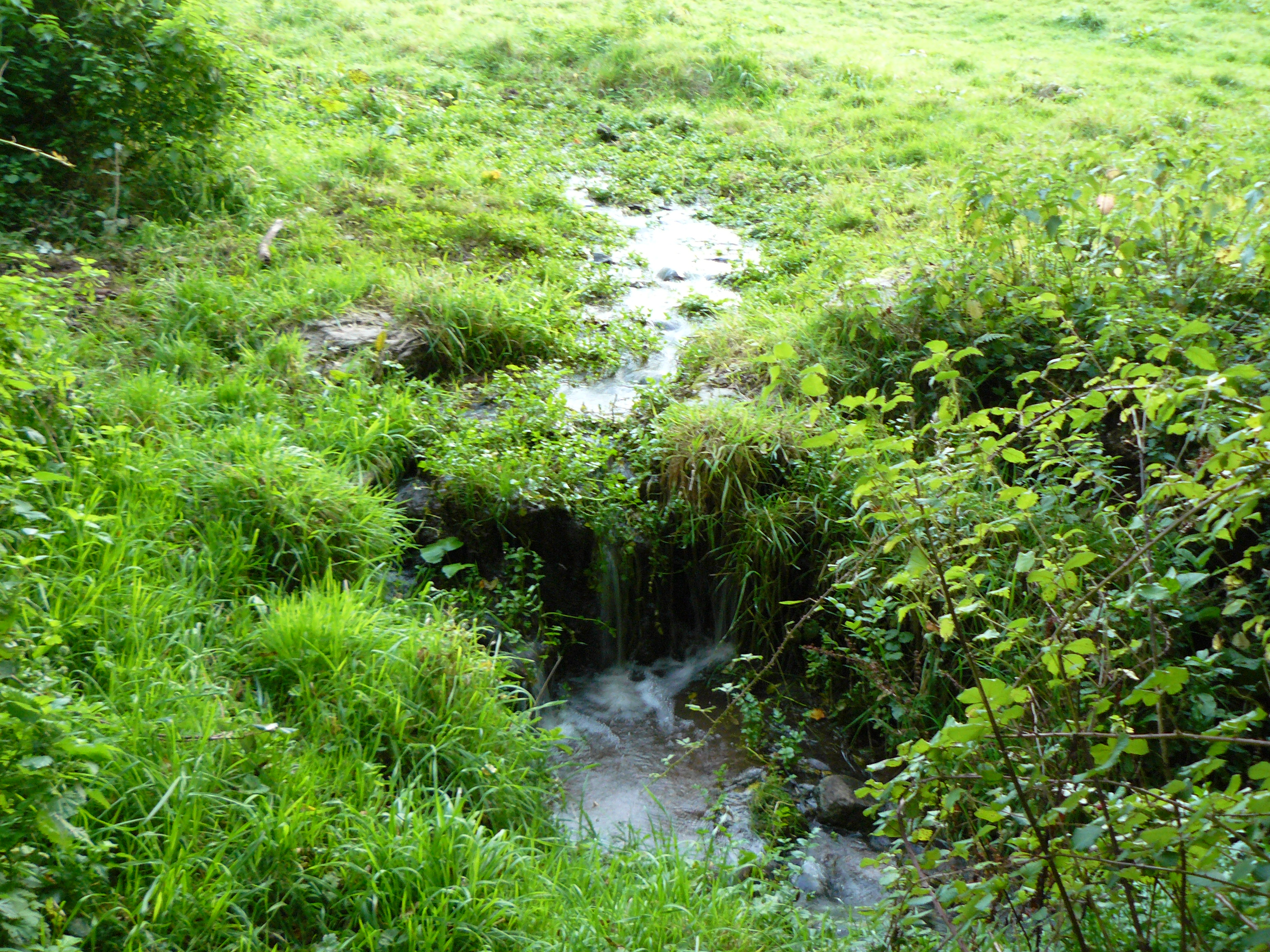
Celebrating the beautiful Planet Earth and a stream running through a field
Evening peace
Today is Blog Action Day and the theme is water. It seemed a worthwhile cause so Learning from Dogs has joined the many thousands of Bloggers ‘speaking’ to millions of combined readers.
I have no idea what aspects of water will be covered by all those many authors but Blog Action Day sets the theme thus:
Why Water?
Right now, almost a billion people on the planet don’t have access to clean, safe drinking water. That’s one in eight of us who are subject to preventable disease and even death because of something that many of us take for granted.
Access to clean water is not just a human rights issue. It’s an environmental issue. An animal welfare issue. A sustainability issue. Water is a global issue, and it affects all of us.
I’m staying over in SW England at present with friends who live in a beautiful part of the County of Devon and that means plenty of lovely walks. Just a few days ago, the setting sun was glorious across the green rolling hills that are so typical of South Devon.
But this day is about water. That bountiful gift from a wonderful planet perfectly positioned from our Sun.
Hopefully, by the time this Post is published (it’s being written on the 12th) the steel rescue chamber above the trapped Chilean miners will be in action, carefully and steadily bringing the men to the surface, one by one. The event will be mainstream news so Learning from Dogs will simply watch from the side.
(And to the huge joy of millions, we now all know the miners are safe! Jon)
But there was something that caught my eye from the BBC News website on the 12th. Here’s the extract:
Meanwhile, Alejandro Pino, a journalist who has been in daily contact with the miners and advising them on handling interviews, revealed that he had been helping them prepare a speech.
“I asked them to give me just one word and with that word I would show them how to create a speech,” he said.
“It was just a try, so I can repeat to you what happened because I was touched by it and they were touched by it too, not because I made the speech but because the word they chose to start with was extraordinary: it was ‘comradeship’.”
Comradeship!
It doesn’t take very long to realise that mining is one of those crafts that relies on comradeship.
Here’s a quote from Antoine de Saint-Exupery, “The greatness of a craft consists firstly in how it brings comradeship to men.”
From the word ‘comradeship’ it seems a small step to the word ‘community’ and all that is implied for the health and welfare of mankind.
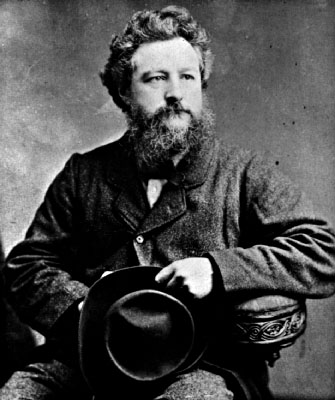
Fellowship is heaven, and lack of fellowship is hell; fellowship is life, and lack of fellowship is death; and the deeds that ye do upon the earth, it is for fellowship’s sake ye do them. (A Dream of John Ball, Ch. 4; first published inThe Commonweal 1886/7)
Fellowship, community, comradeship – call it what you will, it will have to be the essence of mankind’s future.
By Jon Lavin
(Full citation is: Smith, M. K. (2001) ‘Community’ in the encyclopedia of informal education




 Learning from Dogs