Year: 2010

Celibacy in the Church

Is this a need for change that will become unstoppable for the Catholic Church?

St Peters

I approach this subject with some hesitation. It’s a free world, and how people choose to organise themselves is basically their affair; freedom of association and all that. However, all freedoms are both a personal matter and an absolute right as long as they do not impinge on the rights and freedoms of others. So, in for a penny ……

The Catholic Church’s insistence on celibacy for their priests’  is obviously absurd. It is all very well in theory – “they can then concentrate on serving God” – if you (somewhat bizarrely in my opinion) choose to make that argument. The problem is that Man is NOT a theoretical animal. Sexual abstinence is alien to most models of Homo Sapiens that roll off the production line. It may be the preferred CHOICE that works for some, or even many, but forcing it on priests just DOES NOT WORK.

In recent years, there have been endless scandals in the Catholic Church about the abuse of children by priests, to the point where their policy in fact makes a total mockery of the vast edifice and bureaucracy that their Church is.

There was (or rather is) the dreadful case of the abuse in Ireland going on for decades and involving the most appalling abuse covered up at the highest levels. Now there is an on-going crisis in Germany, with churches and priests all over the country suspected of child-abuse. There are plenty of other examples we know about, and no doubt many we don’t.

And the word “cover-up” is deadly, of course. As soon as an organism evolves – and I find an amoeba, the Church, a company, a political party all alike in this respect – its first instinct is to survive and multiply.  And so we have today the grisly spectacle of a Bishop apologising for covering up a priest’s paedophilia. The (usually wrongly) perceived needs of the organism almost ALWAYS take precedence over the law, humanity and decency. Rather than deal effectively and openly (and THAT is what this Blog is all about) with a real problem, the Church very often sweeps the problem under the carpet in the hope that it will go away.

Safe, or in harm's way?

Only of course (like the toxic effects of sub-prime insanity) a serious problem does NOT usually self-heal. Would the Bishop try out this policy with a toothache? I doubt it; he’s know it would only get worse and whack him in the midriff at some stage. So WHY do they do it with abuse cases in their own Church?

No, as long as you have this absurd dogma in the Catholic Church, you will have abuse. And the point is, as soon as you get abuse, it concerns us ALL. We then DO have a right to stick our nose into the Catholic Church’s affairs, or so I maintain. No man is an island ……

Unfortunately, the larger the institution and especially where it concerns beliefs, creeds or whatever (and companies are often similar) the more difficult it is to give up a long-held shibboleth even in the face of the most overwhelming evidence that it is time to “move on”.

If the Pope thinks that all this is helping his particular organism to survive, he is – I believe – sorely mistaken. Celibacy is unnatural – period. Man is HUMAN (sorry to state the obvious). Sex is an integral part of humanity (for the vast majority). But all that is theory and opinion; the point is, the policy JUST DOES NOT WORK, thus leading to multiple and repeated cases of abuse. There may be hand-wrenching, apologies, investigations and promises to put the house in order, but as long as the Pope insists on celibacy, there will be abuse.

And what for? It is all so POINTLESS! Is the Catholic Church maintaining that , for example, the Church of England (CofE) is in some way heretical? If marriage for priests works OK for the CofE, then why not for Catholics? In reality, this dogmatism is only the dead-weight of centuries of tradition, but we should cast off dead weights in the interests of innocent children – and of course (they are human, too) of priests themselves.

Though not a believer, I also sometimes wonder what God would think. In fact, trying to empathize with God is one of my favourite pastimes. Looking down on all this, wouldn’t he be inclined to think the Catholic Church is barmy? How could he POSSIBLY (if he is the God I think he must be) want his humanly-frail priests to be celibate if it means (AS IT DOES) the regular and repeated abuse of children?

By Chris Snuggs

Man on the moon

How many remember this?

Very early on in the life of this Blog, indeed on the second day, I wrote a short article about the NASA mission to the moon, some 40 years after the event.  You see, for me that has been the historic event of my lifetime.

I believe that this nation should commit itself to achieving the goal, before this decade is out, of landing a man on the Moon and returning him safely to the Earth. No single space project in this period will be more impressive to mankind, or more important in the long-range exploration of space; and none will be so difficult or expensive to accomplish.
Apollo 11 badge

That speech before Congress by President Kennedy was on the 25th May, 1961.  I was 16 and was enthralled by the idea of being alive when man first set foot on another planetary body.  That came about on July 20th, 1969 at which time I was living and working in Sydney, Australia.  I took three days off work, rented a TV and watched every minute of the event.

Exploration is a core need of man.  By pushing out the boundaries of our knowledge we continue to offer hope to mankind.

So it is with great disappointment that it has been announced by President Obama that the manned mission programs to the moon are to be severely curtailed – that sounds terribly like political speak for cancelled!

As Eugene Cernan (last astronaut to set foot on the moon) said:

I’m quite disappointed that I’m still the last man on the Moon. I thought we’d have gone back long before now.
I think America has a responsibility to maintain its leadership in technology and its moral leadership… to seek knowledge. Curiosity’s the essence of human existence.

Curiosity is indeed the essence of human existence.

That curiosity and the investment in space exploration by NASA on behalf of the whole world has shown us some remarkable findings about Saturn and it’s majestic rings.  Just watch the video segments in this piece from the BBC.

The one-time cost of Cassini-Huygens mission was $3.26 billion. Just 0.3% of the cost of one year’s expenditure on U.S. defense spending.

Science missions like Cassini enhance cooperation between nations, and greatly contribute to scientific progress which benefits everyone.

Perhaps the big Banks would like to pick up the cost of further manned missions to the Moon?

By Paul Handover

Alan Peters

What is it about wood?

The smell of wood shavings!

When I was a very young boy at Grammar School (aka High School) in Wembley, North West London, one of the subjects taught was wood-working.  I loved the feel of wood, still do, and the smell of a wood shaving fresh off the wood plane is still remembered.  But, for whatever reason, wood and I never got on.

Later on, my first yacht was a pretty little East Coast gaff cutter, built in 1898, with a hull of pitch pine laid on grown oak frames.  Her original name was Mimms but this had been changed to Esterel by the time she was purchased by me. Despite needing a lot of remedial work, the over-riding memory was how the hull ‘spoke’ when she was being sailed.

It’s almost as though wood doesn’t die when the tree is felled, it just passes into another phase depending on the use made of it.

So where’s this all leading?

Alan Peters who died October 11th, 2009

In the issue of The Economist dated November 7th, 2009, there was an obituary about Alan Peters, furniture maker, who died on October 11th, 2009, aged 76.  Like all obits. that appear in The Economist this was well published but something about this particular obituary really stuck in my mind.  I tore out the page so it could be re-read over the coming weeks.

It’s still on my desk even 6 months later and it prompted me to write about Alan Peters on Learning from Dogs.

Here’s an extract of the obituary of Alan Peters as published in the The Times.

In contrast to many of today’s school-leavers, who look for instant success and celebrity, the furniture designer Alan Peters served seven years’ apprenticeship in the workshop of Edward Barnsley, which then operated without power tools. When interviewed last year Peters was still proud that he swept the workshop floor quicker and better than anyone else. His eagerness to share his passion and knowledge of furniture design and furniture making was a theme of his life.

And here’s another reflection from David Savage who studied under Alan Peters:

Damn, Damn, Damn, I am getting fed up writing obituries on dead furniture makers. Why can’t they just go on for ever.

I knew Alan quite well. He was a role model and a mentor when I really needed one. This would be way back in the late 1970s when there were very few people making modern furniture in a barn in Devon which is what I wanted to do. Even fewer making a living doing it. I had all the questions and Alan as far as I could see had all the answers. I spent a short time working with him. I was first in the workshop in the morning and last out in the evening. I’m sure he got fed up with my questions but he patiently answered. He gave and gave and gave. When I was set up he helped me get into the Devon Guild of Craftsmen and much later he would come to my workshop in Bideford to give Saturday seminars showing slides of his work and trips to Japan and Korea. He was an inspiration I know not just to me but to a generation of makers. I miss him.

Question: How many furniture makers does it take to change a light bulb?

Answer: Ten, one to change the bulb and nine to discuss at length how Alan would do it.

By Paul Handover

Sport – UAE style

A relaxing contrast to high profile events in the UK

During March I was working in the UAE, and there in the hotel where I was staying in Sharjah were the Pakistan cricket first team, and the English Lions representing England and Wales.

Pakistani cricket team

The weather was lovely with temperatures in the mid 70`s during the day. It was interesting to watch the players of each team, relaxing, but really using this time to prepare for the season, running round the lagoon, and getting fit. There were no raised voices, or bad behaviour, in fact quite the opposite, and each team came into the eating area well dressed, quietly enjoying the week.

There were several matches starting in Sharjah at the old cricket ground. No posters, no large crowds, just a few people like myself who had heard about the games and who had wandered along to find a bench  and sit and watch a 20/20 match without the big coverage and hullabaloo which will come later in the year.

One lovely six went flying over the stands and later a young boy came proudly back with the ball which he had found the other side of a main road, stuck in the sand.

The teams later moved on to Abu Dhabi some 70 miles along the coast to play in the new stadium and ground. This, like the new world-class Formula 1 racing circuit is brand new, and full of bright lights and modern style.

Venus Williams

Dubai in between Sharjah and Abu Dhabi likes to host sport during this time of the year, and just as with the cricket, tennis has a big following, with all the big names appearing in the small stadium near the airport in Dubai.

One evening I was watching Venus Williams play, and in the quiet of the late evening, and the general quiet of the match it was interesting to hear the chanting from the minaret as prayer time came.

If you want a winter break, and enjoy cricket motor racing, tennis, or golf you could do worse than stop off in the UAE to relax and enjoy your time.

By Bob Derham

The Fed’s Exit Strategy

The Federal Reserve finally addresses how it plans to unwind trillions in toxic assets

Finally, we hear from the Federal Reserve about how they plan to unwind the billions of dollars of toxic assets they purchased over the last 18 months or so without creating further distortions in the U.S. and world financial markets (Fed lays out exit detail). This after the Fed barely acknowledged one of the most dramatic runups in the money supply in U.S. history.

Brian Sack, EVP Markets Group, Federal Reserve
The announcement came in a speech by Brian P. Sack, the executive Vice President of the Markets Group at the Fed.  I am impressed by this guy. He seems to know what he’s talking about and seems to understand how markets and fed policy interact.

In earlier posts I wondered aloud how the Fed might accomplish this tricky task. It is a very delicate balance between reducing the money supply too quickly, which would spike short term rates, and too slowly, which would increase long-term rates due to worries about inflation (which occurs when money growth is higher than the economy’s real growth, even if money growth is falling).

The Fed, the article explains, apparently intends to let $200 billion of the estimated $1.25 trillion in new money supply simply “mature” by the end of 2011 without replacing it. This represents largely toxic assets. The Fed might let another $140 billion of Treasuries it purchased during normal open market operations mature at the end of 2011, but they aren’t committing to that.  So that’s about $340/$1,250 or about 35% of the historic increase in money supply that may be vaporized over the next 21 months. What about the rest?  It would be nice to know but….

The Fed is doing the right thing by explaining its policy intentions — ANY of its policy intentions — to the markets.  Markets want, need, and deserve information from our officials, something that has been sorely lacking of late. With information, lenders and borrowers can plan, they can optimize. Without information, guessing, withdrawing from the market, and fear rule the day. Not a good environment for economic recovery.

by Sherry Jarrell

Let there be markets

Here’s a novel idea – make markets be markets!

I apologise for the rather trite sub-heading but it was a bit of attention grabbing to promote the results of a recent conference called Let Markets Be Markets.  It was published by the Roosevelt Institute and had one very impressive line of speakers.

One of the speakers was Simon Johnson of Baseline Scenario fame, a Blog that Learning from Dogs has followed since our inception.

Here’s 8 minutes of Simon pulling no punches.

If you want to read and watch other presentations, then Mike Konczal’s Blog Rortybomb is the place to go.

As this Blog has repeated from time to time, this present crisis is a long way from being over.

By Paul Handover

Less is more!

Less complexity is more simplicity and fun!

There seems to be an upsurge of interest in the philosophy of “less is more”. A couple of recent articles about product design, in general and in a specific case, address relevant aspects of this phenomenon.

What do we know?

On one level, we tend to question: how can “less” be “more”? We know it makes no sense! This is true: it really does not make any sense, if all that we focus on is measurable, countable, sequenced information – the kind of information understood by the “left side” of our brains.

On a different level, we know that “less” really is “more”. Less complexity is more simplicity and fun; less distraction is more concentration; and so on. This makes sense when we are thinking about the whole picture – the kind of information which is handled by the “right side” of our brains.

At the moment and on this topic, there is a specific product which is exercising the minds of people who follow these things. Continue reading “Less is more!”

Celebrity Eclipse

Can this form of holidaying still remain popular?

The Celebrity Eclipse has recently left her construction dockyard at Papenburg, Germany bound for her home base.  This enormous  new ship attracted some news simply because the exercise of getting her from the dockyard to the open sea required some ‘shoe-horning’!  This YouTube video shows why (amateur filming but a great soundtrack!):

The Celebrity Solstice leaving the dockyard at Papenburg
The Celebrity Solstice leaving the dockyard (backwards!) at Papenburg

All would wish any ship that sets out to sea safe travel.  But one wonders whether this huge ship, that must require such huge sums of money just to stay afloat, and that must have been conceived and ordered when times were much rosier, will ever be a commercial success?

By Paul Handover

Should you invest in U.S. bonds? Part 2

Sources and types of risk in U.S. and other bonds.

This is part 2 of a multipart [Part One is here, Ed.] series on the factors that drive U.S. and foreign bond prices and yields.

Recall that a bond’s price is the present value of its coupons (if any) and face value (or principal or par value).  Let’s keep things simple for now and assume a zero-coupon or “discount” bond.

One thing of interest to note first: As we move forward in time from the issue date toward the maturity date, and the number of periods between now and the maturity date falls, the price of a discount bond rises toward the face value of the bond, even with no changes in the interest rate.  At maturity, the price of the bond equals the face value. Only unexpected changes in the effective return on a bond can change the natural upward progression of its price toward face value between the issue and maturity dates.

This example makes clear that the (annual) yield on a bond, simply put, is driven by the difference between the price paid for the bond and the cash flows it generates, that is, the difference between “dollars out” today and “dollars in” later.

The “dollars out” are known because we pay a given price for the bond today.  The “dollars in,” consisting of coupons (if any) and the face value of the bond, are also “known” in that they are specified in a contract at the time the bond is issued.  The realized value of these dollar returns is, however, subject to many different sources of uncertainty or risk. A short list includes:

Interest rate risk: how sensitive the price of the bond is to changes in interest rates over the life of the bond.  Interest rate risk is higher for bonds with a longer maturity (more time for the unexpected to happen), a lower coupon (more of the value of the bond is tied up in the principal), and a lower initial yield (a 1 percentage point change in interest rates represents a higher relative change in low yields).  Floating-rate notes and bonds have much lower, though not zero, interest rate risk.

Reinvestment rate risk.  Bondholders may reinvest their coupons at the then-prevailing rate of interest. As those market rates of interest change, the return on reinvested coupons becomes more uncertain. The higher the coupons, the more frequently they are paid, and the longer the maturity of the bond, the higher reinvestment rate risk.

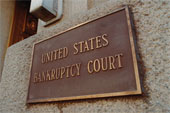
Bankruptcy Court: Destination for issuers in default

Credit or default risk:  the risk that the issuer will default on the payments of the bond, which reduces the amount and value of “dollars in” relative to price paid, lowering the earned yield on the bond.   Credit risk is frequently measured as the credit spread over like Treasuries, which are assumed to have zero credit risk.  Credit risk includes downgrade risk, where a credit rating agency lowers the rating on an issuer as their ability to repay the debt is brought into question.

Call risk:  the risk that a callable bond will be called by the issuer. Since a bond is typically called only when it’s in the best interest of the issuer, the call feature is systematically harmful to the bondholder.  Prepayment risk reverses these risks:  prepayment is good for the bondholder, and bad for the issuer.

Exchange rate risk (that the value of the repaid currency will be lower), inflation risk (that the value of the repaid dollar will be lower), and event risk (natural disasters, corporate restructurings, regulatory changes, sovereign or political changes) round out the list of broad types of risks that drive bond yields.

Next time: why the types and level of risks are so difficult to measure and predict.

by Sherry Jarrell