Day One for the new Prime Minister and his team has been good!
Less than 24 hours ago, I mused that maybe David Cameron and Nick Clegg represented something that the UK badly needs – a real positive change in Governing the country.
Spring shoot 1
Matthew Parris
Matthew Parris is an experienced reporter, columnist and a one-time Conservative Member of Parliament. Here’s what he said to the BBC a short while ago (at the time of writing this Post).
“I ought to be cynical, I ought to be saying it’s all going to end in tears, but I just sense something good and genuine in the air and it just might work,”
“You almost have a sense of two men staging a coup against the British political system,”
Spring shoot 2
It’s almost unknown for the Governor of the Bank of England to comment on political matters. The current Governor, Mervyn King, was recorded saying this today.
Guest author, Per Kurowski, on a rather sobering topic!
I do not know what worse, the arrogance of the regulators thinking they can squeeze out the risk in banking by imposing different and completely arbitrary capital requirements based on the opinions of some few human fallible credit rating agencies, or their childish innocence not knowing this creates systemic risks of gigantic proportions.
What I do know is that an amazing number of intelligent people have fallen for this absurd and extremely dangerous regulatory paradigm. Honestly… I am truly scared!
How could I not be with regulators who can authorize banks to leverage up 62.5 to 1 on public debts like Greece’s while at the same time placing a 12.5 to 1 ceiling on the lending to the small businesses and entrepreneurs whom we depend so much on for our jobs.
Better hope they don't need funding!
All those financial and regulatory experts who kept mum when they should have spoken out on the financial crisis about to happen are now, quite effectively, circling their wagons in order to promote the myth that no one knew. False many did! In order to benefit from the lessons we must learn, they should not be allowed to succeed.
On October 19, 2004, as an Executive Director of the World Bank (2002-2004) I presented a written formal statement at the Board and that included the following:
We [I] believe that much of the world’s financial markets are currently being dangerously overstretched through an exaggerated reliance on intrinsically weak financial models that are based on very short series of statistical evidence and very doubtful volatility assumptions.
And I was no investment banker, nor a regulator, nor an investor, and so to me it is clear that all of them, had they done their job right, should have known… and that this crisis should have been nipped in the bud much earlier, as
Per Kurowski
the real explosion in truly bad mortgages took off in 2004, when the SEC in April delegated the setting of the capital requirements for the investment banks to the Basel Committee, and the G10 in June approved Basel II.
In order to understand it all don’t follow the money… follow the AAAs. In case you missed “The Financial Crisis explained to dummies, non-experts and financial regulators” you can read it here.
By Per Kurowski
PS. I have put up a document that resumes most of what I said before and during my term as an Executive Director.
… David Cameron and Nick Clegg represent real positive change for the UK.
Another amazing day for British politics as Gordon Brown tendered his resignation to Her Majesty Queen Elizabeth II and in less than an hour the Queen asked David Cameron if he would form a Government.
That wonderful unwritten constitution dealing with a change of Prime Minister in such a beautiful and dignified manner.
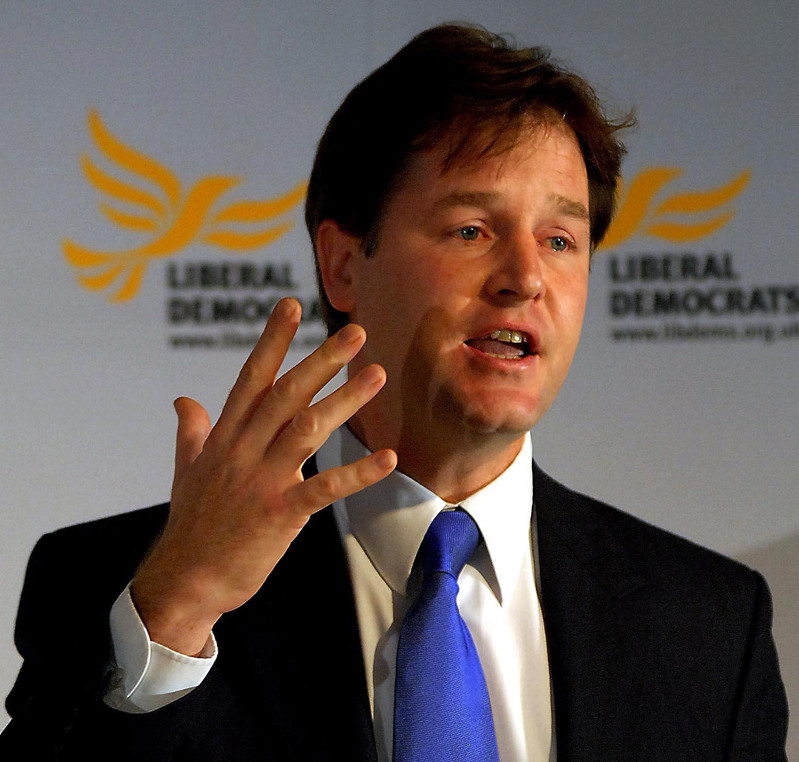
Nick Clegg
All I want to say is that these two men have my prayers and best wishes for delivering what so many millions want – a better and fairer way of running a modern democracy.
Just to try to help put stock market swings into perspective,consider this:
the 347.8 point fall in the Dow Jones Industrial Average last week, from 10868.12 at the start of the trading day on Thursday, May 6, 2010 to 10520.32 at the close of trading, can be COMPLETELY explained by an increase in the perceived cost of capital from 12% to 12.23%.
do the math. Using the constant dividend growth model, a very simplified model of the market value of equity, or Market Value = Current Dividend/(cost of equity capital – dividend growth rate), and assuming a long-term average cost of U.S. equity capital of 12% and average growth rate of 5%, we find that the opening level of 10868.12 = 760.77/(.12 -.05), and the closing level of 10520.32= 760.77/(.1223 -.05).
I think it is entirely possible that the chaos in Greece and surrounding nations, and the interconnections between worldwide supplies of liquidity and financial capital, that an increase in the perceived risk and uncertainty of the returns to equity from 12% per year to 12.23% per year makes perfect sense.
The market’s are working. Market participants, from the individual investor using on-line trading at 2:00 in the morning from their living room to the most sophisticated computerized large-scale institutional trader, understands that a borrower’s ability to pay back its investors depends on the real productivity and growth of private industry, whether the borrower is a company or a country.
Learning from Dogs published its first Post on July 15th last year. Since then we have published another 549!
As you will know our standard pattern is to publish two Posts each working day and one per day over the week-ends, some 50 Posts each month.
Since the start of 2010 we have been running at over a 1,000 readers each week, and now regularly have over 2,000 readers a week. It’s a great vote of thanks for all the hard work put in by the authors. Thank you, dear reader!
Now this week I have to return to the UK until early June and that is going to make it much more difficult for me to spend time every day being Chief Cook & Bottlewasher for the Blog.
Thus, during this period, we will have to relax the target to publish two Posts every working day. Hopefully, we will be able to maintain a single Post each day.
However, what would be valuable is to hear just how your own interest in Learning from Dogs would be influenced, if at all, if we were to continue the lower number of Posts (i.e. one a day) after my return in June.
Any feedback, good or bad, will be welcome and much appreciated. Either by leaving a comment or by emailing the Blog at learningfromdogs (at) gmail (dot) com
Came across a relatively new Blog with the title The Fourteenth Banker. Caught my eye because of the similarity to the book written by Simon Johnson and James Kwak of Baseline Scenario fame. Here’s an extract from the ‘About’ piece of this new Blog.
In response to the comments of folks in the Congress and oversight regimes, I have created this blog as a home for bankers who need to speak out and do not have a central clearinghouse or a safe place to do so. Big banks now treat their employees like property, bought and owned. Typically employees must subject themselves to all sorts of potential sanctions, forfeitures of compensation, clawbacks and even lawsuits if they speak in ways we often have thought were protected speech. I am not talking about revealing confidential customer or proprietary information, I am talking about simply commenting on a company, management philosophy, making general observations or raising concerns. It makes one appreciate unions even if not historically supportive of unions. At least management and labor can have a debate. Not so in today’s large banks. Gag orders are written in the most intimidating way, included in Codes of Ethics, attached to incentive plans, posted on the company home pages. We should ask ourselves, what is the big secret?
Do support the Blog by calling by. Here’s a taste of what they are writing about:
This can only be called what it is. Delusion. Delusion about self, society, morality, values and anything else you can name. These are symptoms of a grave illness which is too common among those in power. In fact, the illness may be the requisite to power.
Some videos are just fun to watch. Whether you are interested in aviation or not, this blast through the making of an aircraft by Boeing makes it all look quite easy really:
Here’s a novel idea, let the Public Sector live within its means!
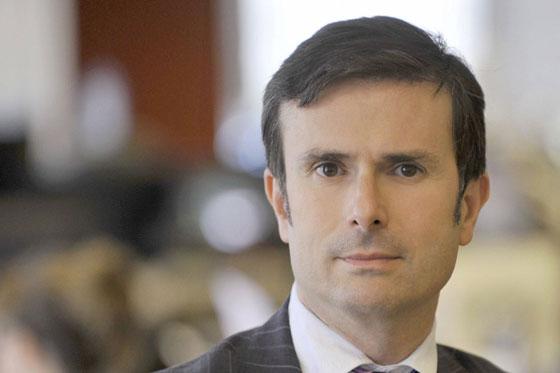
BBC Business Editor, Robert Peston
Robert Peston is the BBC’s Business Editor. I’ve read his Blog and listened to him on the Beeb for many years now. His latest Blog article hits the bulls-eye.
The smart solution would be to somehow depoliticise what’s known as fiscal consolidation, or the process of cutting spending and raising taxes such that the public sector can again live within its means.
Precisely!
A public sector that seeks not to burden society but to benefit it should not be an issue of party politics.
I’m not sure exactly what the political leanings are of the Learning From Dogs readership — I would hope that a variety of viewpoints are represented — but I know that often communitarian philosophies are held in contempt in libertarian or free market circles because of their association with historical attempts at socialism and communism.
Regardless, I’d love to hear your thoughts, as it’s a philosophy I’ve been thinking about a lot recently. I write:
…I have to admit that one of the key flaws I see in communitarian political philosophies is not so much the non-cohesive nature of the doctrines themselves, but rather the level at which they are prescribed. If communitarianism was only applied at the local level, could it really survive without an element of voluntarism? I feel that capitalist leaning nation-states are begging the question in saying that ideologies like socialism don’t work, because they are assuming that they must be applied at the nation-state level.
This involves the idea that the strictness of economic laws tends to lessen as they move further away from large-scale application, so anti-communitarian claims like the lack of an adequate price mechanism and lack of adequate information tends to become less of a problem for local communities because the nature of economic communication changes as the distance between actors closes. It also involves the idea put forth by such philosophers as David Hume that human beings are naturally sociable creatures, and a communitarian system at the local level would be able to use this sociability to its advantage.
[As a newcomer to Arizona with only a couple of months experience of living in Payson, North-East of Phoenix, I have no right to pass comment on what has been big news both inside and outside the State. I have observed that feelings run strong about illegal immigrants, with many reacting to the complicated process that I am going through applying for US residency by saying “It’s not fair”. Not fair in the sense that they see so many Mexicans just walking over the long border that Arizona has with it’s neighbour to the south.
Thus this thoughtful Post from Gordon Coons is a chance for Learning from Dogs to air a point of view from someone who does have a right to an opinion. Ed.]
My fellow Americans, friends and relatives:
I am writing you to express my concerns over the recently passed law regarding immigration in my former state of Arizona.
As most (if not all) of you know, I lived in Arizona for 10 years, my children still live there and Linda and I have been living in Mexico. I mention this only in that it gives me a certain perspective on the events that have transpired recently.
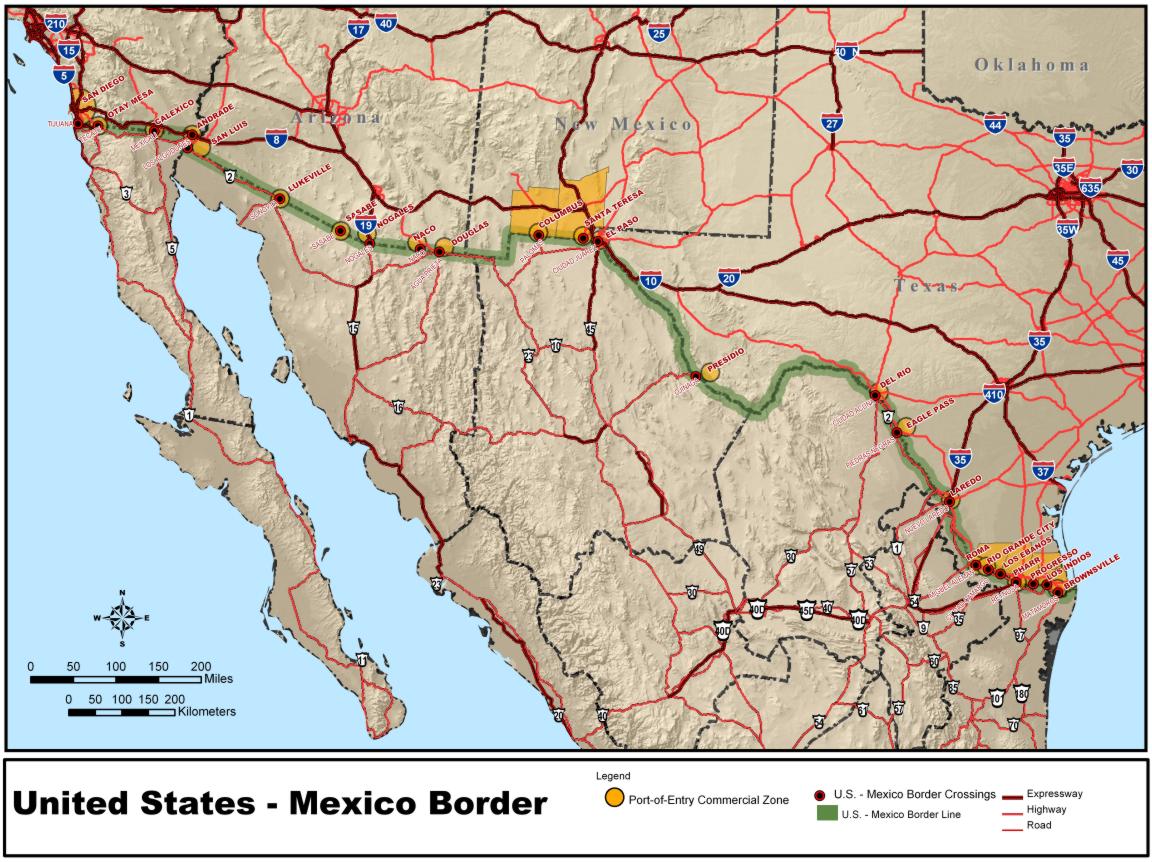
The Border
The spate of marches and protests around the country would lead us to believe that the state of Arizona has completely lost its collective and legislative mind. The feeling is that enforcing such a law would lead to rampant profiling of Mexicans (and other Chicanos) who DO live in this country legally.
First of all, let’s examine WHY all of those Latinos want to come here. There are 2 basic, and yet profound, reasons:
they want jobs and
they want their children to be born here so that they become naturalized citizens and are the beneficiaries of all of our rights.
Do I blame them? Of course not….if I were in their shoes, I would want to come here as well.
I do take exception to the growing group of “banditos Mexicano” who are bent on illegal activities on both sides of the border.






 Learning from Dogs