What, You Think The Savings Rate Can’t Go Higher?
This Post is entirely indebted to others. It is too important a message not to warrant dissemination on this Blog. (But read to the end to see a valuable tutorial from our own Dr.Jarrell.)
So thanks: First to Naked Capitalism for providing the link (Yves does such an amazing job). Then to Business Insider for the actual article, which is the bulk of this Post, as follows. Finally to David Goldman who provides the data behind the chart.
The article starts thus:
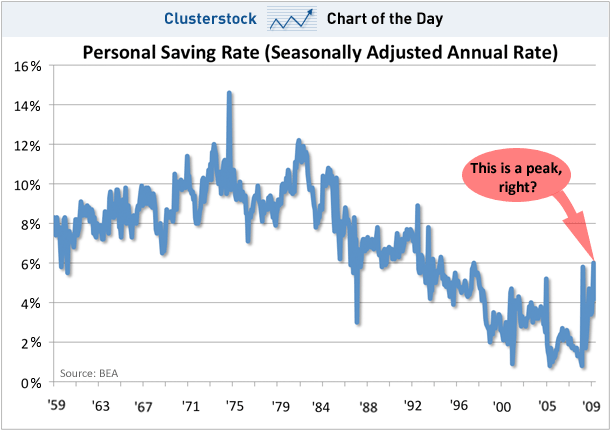
This chart should give chills to anyone hoping that Americans will stop saving and start spending again.
For one thing, we’re way below the personal savings rate we saw in the early 70s, let alone the savings rate in the pre-Greenspan era. Plus, as David Goldman points out, demographics isn’t on our side. With the recent wealth shock and the ageing population, there are a lot of folks eager to hold on to every last dollar they’ve got.
H’mmmm
Sherry Jarrell has added her thoughts, below.
By Paul Handover
Thanks, Paul. I’ve got to add my two cents on the savings rate issue (pun intended!) One, the reported U.S. savings rate is essentially an income statement or “flow” variable and, as such, ignores the cumulated value of savings from earlier periods. If you save a dollar — which equals “disposable income not consumed” — and invest it in the stock market, next year’s change in the value of your stock market holdings is not included in the savings rate. There is but one example of the many forms of savings in the U.S. economy that is not included in the reported savings rate.
Two, the savings rate is less sensitive to changes in interest rates than one might think at first blush. That is because changes in the interest rate cause two essentially offsetting changes in the savings rate. As interest rates rise, for example, we tend to save more because the return on savings is higher but we tend to save less because the present value of our lifetime income falls. The net impact of a change in interest rates on the savings rate is insignificantly positive.
This is not to say that savings is not important. Personal savings is an important source of loanable funds to industry, who use it to fund capital expansion and real growth. But there are other sources. And savings lives in the shadow of our consumption decisions; once disposable income and taxes have been determined the only thing we can do is consume or save, and I think that the consumption decision is really in the driver’s seat.
Sherry
 Learning from Dogs