Archive for May 2011
Just amazing dog power!
Watch this video – any chit-chat from me is superfluous.
Smithfield, Alabama
If a tornado picked you up, threw you across the sky, and set you down in an unfamiliar place far away from home, and you broke two legs in the process, could you find your way back? That’s exactly the incredible story of Mason, a terrier mix in Alabama.
Credits.
I first saw the item as a link in the daily digest from Naked Capitalism. As ever, I am indebted to the fantastic work that Yves and her team does in scouring the world for interesting news items.
The link went to a website that was just loaded with ads but in the article was another link to Fox 6. There was the story as well, as this extract explains,
BIRMINGHAM, AL (WBRC) -
Update**:As of Wednesday night, Mason has been x-rayed and put on an IV. His vets at the Vulcan Park Animal Clinic plan to operate on his two broken legs Friday. They will use plates and maybe pins to help realign his bones. Doctors think it will be a long, but ultimately successful recovery.
Amazing stories of survival from the April 27th tornadoes don’t just include people. There are some amazing 4-legged tales of endurance being told including the story of one dog who just returned home yesterday. He is clearly battered, but alive.
Mason, a terrier mix, now rests inside the Vulcan Park Animal Care Clinic where he’s waiting to find out what kind of surgery he will need to repair 2 badly broken legs. This is only the 2nd night he’s spent under any kind of roof in the last 2 weeks and the story of how he got there is almost too amazing to believe.
On April 27th, Mason was hiding in his garage in North Smithfield when the storm picked him up and blew him away. His owners couldn’t find him and had about given up when they came back Monday to sift through the debris, and found Mason waiting for them on the porch.
Do support the Fox 6 website by reading the story in full.
Finally, the original link, as mentioned above, did contain this great news update,
Because of the generosity of Vulcan Park Animal Care in Birmingham, a center that volunteered their services to help the ailing pup, Mason is now on the mend — and needless to say, being showered with affection. Last Friday, Mason underwent surgery to fix metal plates to both his broken limbs, which will keep them stabilized as they heal. Mason will remain at Vulcan Park for about six more weeks, as his family works to restore some sense of order to their shattered home.
Just another account of how remarkable man’s best friend truly is.
Anthropocene era gaining legs
We really may be on the verge of a new geological period.
Just a couple of weeks ago, on the 16th May, I wrote an article called The Anthropocene period. It was based on both a BBC radio programme and a conference called “The Anthropocene: A New Epoch of Geological Time?”
So imagine my surprise when I collected this week’s copy of The Economist from my mail-box last Saturday. The cover page boldly illustrated a lead article within, as this picture shows.
The leader is headlined, ‘Humans have changed the way the world works. Now they have to change the way they think about it, too.’ The first two paragraphs of that leader explain,
THE Earth is a big thing; if you divided it up evenly among its 7 billion inhabitants, they would get almost 1 trillion tonnes each. To think that the workings of so vast an entity could be lastingly changed by a species that has been scampering across its surface for less than 1% of 1% of its history seems, on the face of it, absurd. But it is not. Humans have become a force of nature reshaping the planet on a geological scale—but at a far-faster-than-geological speed.
A single engineering project, the Syncrude mine in the Athabasca tar sands, involves moving 30 billion tonnes of earth—twice the amount of sediment that flows down all the rivers in the world in a year. That sediment flow itself, meanwhile, is shrinking; almost 50,000 large dams have over the past half- century cut the flow by nearly a fifth. That is one reason why the Earth’s deltas, home to hundreds of millions of people, are eroding away faster than they can be replenished.
There’s also a video on The Economist website of an interview with Dr. Erle Ellis, associate professor of geography and environmental systems at the University of Maryland. That video link is here.
That Economist lead article concludes,
Recycling the planet
How frightened should people be about this? It would be odd not to be worried. The planet’s history contains many less stable and clement eras than the Holocene. Who is to say that human action might not tip the planet into new instability?
Some will want simply to put the clock back. But returning to the way things were is neither realistic nor morally tenable. A planet that could soon be supporting as many as 10 billion human beings has to work differently from the one that held 1 billion people, mostly peasants, 200 years ago. The challenge of the Anthropocene is to use human ingenuity to set things up so that the planet can accomplish its 21st-century task.
Increasing the planet’s resilience will probably involve a few dramatic changes and a lot of fiddling. An example of the former could be geoengineering. Today the copious carbon dioxide emitted to the atmosphere is left for nature to pick up, which it cannot do fast enough. Although the technologies are still nascent, the idea that humans might help remove carbon from the skies as well as put it there is a reasonable Anthropocene expectation; it wouldn’t stop climate change any time soon, but it might shorten its lease, and reduce the changes in ocean chemistry that excess carbon brings about.
More often the answer will be fiddling—finding ways to apply human muscle with the grain of nature, rather than against it, and help it in its inbuilt tendency to recycle things. Human interference in the nitrogen cycle has made far more nitrogen available to plants and animals; it has done much less to help the planet deal with all that nitrogen when they have finished with it. Instead we suffer ever more coastal “dead zones” overrun by nitrogen-fed algal blooms. Quite small things, such as smarter farming and better sewage treatment, could help a lot.
For humans to be intimately involved in many interconnected processes at a planetary scale carries huge risks. But it is possible to add to the planet’s resilience, often through simple and piecemeal actions, if they are well thought through. And one of the messages of the Anthropocene is that piecemeal actions can quickly add up to planetary change.
We are living in interesting times!
Finally, more of Dr. Ellis may be watched on the following YouTube video.
The ballad of a burnt biscuit
Striving to be better is a key lesson of life!
I’m normally pretty cautious about promoting the sorts of emails that circulate around the virtual globe carrying universal lessons for all and sundry but this one is an exception. It was sent to me last Monday by my dear friend, Dan G. from Southern California, with whom I have had the great honour and pleasure to be close friends for forty years. Here it is.
Burned Biscuits-author unknown
When I was a kid, my Mom liked to make breakfast food for dinner every now and then. And I remember one night in particular when she had made breakfast after a long, hard day at work. On that evening so long ago, my Mom placed a plate of eggs, sausage and extremely burned biscuits in front of my dad. I remember waiting to see if anyone noticed! Yet all
my dad did was reach for his biscuit, smile at my Mom and ask me how my day was at school. I don’t remember what I told him that night, but I do remember watching him smear butter and jelly on that biscuit and eat every bite!When I got up from the table that evening, I remember hearing my Mom apologize to my dad for burning the biscuits. And I’ll never forget what he said: “Honey, I love burned biscuits.” Later that night, I went to kiss Daddy good night and I asked him if he really liked his biscuits burned. He wrapped me in his arms and said, ”Your Momma put in a hard day at work today and she’s real tired. And besides – a little burned biscuit never hurt anyone!”
Life is full of imperfect things and imperfect people. I’m not the best at hardly anything, and I forget birthdays and anniversaries just like everyone else. But what I’ve learned over the years is that learning to accept each others faults – and choosing to celebrate each others differences – is one of the most important keys to creating a healthy, growing, and lasting relationship.
And that’s my prayer for you today. That you will learn to take the good, the bad, and the ugly parts of your life and lay them at the feet of God. Because in the end, He’s the only One who will be able to give you a relationship where a burnt biscuit isn’t a deal-breaker!
We could extend this to any relationship. In fact, understanding is the base of any relationship, be it a husband-wife or parent-child or friendship!
“Don’t put the key to your happiness in someone else’s pocket – keep it in your own.“
So, please pass me a biscuit, and yes, the burned one will do just fine. Be kinder than necessary because everyone you meet is fighting some kind of battle.
Thanks Dan for sharing that.
The ballad of cheap flights
Just wonderful! Forwarded to me by dear friend, Richard M.
Enjoy your week-end.
Solar Impulse
Just enjoy this.
From Wired Magazine,
“In a world dependent on fossil energies, Solar Impulse is a paradox, almost a provocation.”
Press release gobbledygook? Absolutely. But you’ve got to give it up for any company with the guts to try designing and building a true solar airplane.
We’ve written about Solar Impulse — it’s a consortium of European financial and technology parters led by the Federal Institute of Technology in Lausanne, Switzerland. The group is working on a solar-powered plane that can take off under its own power without generating any emissions at all. The general idea is that sunlight would not only power the plane during the day but would also charge its lithium batteries, allowing it to fly around the clock pollution free.
That was written May 12th, 2008. This is now! Landing at Brussels International Airport, May 2011.
And here’s the Solar Impulse website.
50 years; just like that!
A memorable event fifty years ago, this day!
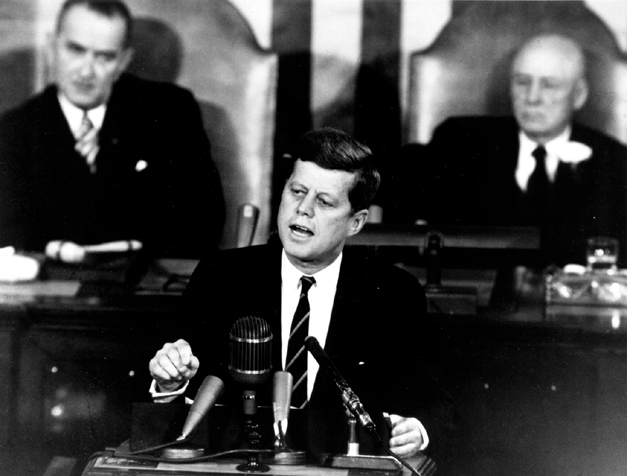
On the 25th May, 1961, President John Kennedy summoned a joint session of Congress and asked America to commit itself to a goal – that of landing a man on the moon and returning him safely to Earth before the decade was out.
There’s a good link on the NASA site to the speech.
Plus a very good analysis of these 50 years in the Lexington column in last week’s The Economist. As Lexington’s Notebook blog puts it,
That Kennedy speech plus 50
May 19th 2011, 15:47 by Lexington
MY print column this week notes that it is half a century next week since John Kennedy called for sending a man to the moon and returning him safely to Earth. The bottom line, I think:
If we can send a man to the moon, people ask, why can’t we [fill in the blank]? Lyndon Johnson tried to build a “great society”, but America is better at aeronautical engineering than social engineering. Mr Obama, pointing to competition from China, invokes a new “Sputnik moment” to justify bigger public investment in technology and infrastructure. It should not be a surprise that his appeals have gone unheeded. Putting a man on the moon was a brilliant achievement. But in some ways it was peculiarly un-American—almost, you might say, an aberration born out of the unique circumstances of the cold war. It is a reason to look back with pride, but not a pointer to the future.
A fascinating period!
Mandelbrot and fractals
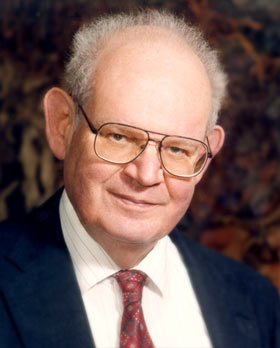
Concluding article on the great Benoit Mandelbrot.
Yesterday, I wrote about Benoit Mandelbrot but wanted to save some additional information for today.
There’s a very comprehensive review of Benoit’s life on a website called NNDB. In that review, it mentions his association with the IBM Thomas J. Watson Research Center where he worked for 32 years. It was while working for IBM that he published the paper that established his credentials world-wide. Taken from the IBM website is this extract,
The father of fractals, Dr. Benoit Mandelbrot, passed away from pancreatic cancer on October 16, 2010. He was 85.
Benoit, IBM Fellow Emeritus, joined the IBM Thomas J. Watson Research Center in 1958 where he worked for 32 years. His 1967 article published in Science, How Long Is the Coast of Britain? Statistical Self-Similarity and Fractional Dimension, introduced the concept that a geometric shape can be split into pieces that are smaller copies of the whole. It wasn’t until 1975 that he defined the mathematical shapes as fractals.
Here is another website that has fractal images taken from the Mandelbrot set. An example.
Finally, if you go to this website there is a slideshow of stunning images of fractals in honour of the great man.
Benoit Mandelbrot and the roughness of life.
There is so much about the lives of humans that is astoundingly beautiful.
Before I get started on this article, a few words about the Blog in general. In recent times, the readership of Learning from Dogs has increased, frankly, to quite amazing levels. Not really sure why but grateful, nonetheless.
Readers will recognize that articles written specifically about dogs are in the minority. Even using dogs as a metaphor would still limit what could be published. But as is written elsewhere on the Blog, ‘The underlying theme of Learning from Dogs is about truth, integrity, honesty and trust in every way.’ Dogs are integrous creatures; that’s all the example required.
We are at a point in the history of man where truth, integrity, honesty and trust are critically important (they have always been important but the economic and ecological pressures bearing down on us all make these values critical to mankind’s survival). Thus the aspiration of Learning from Dogs is to offer insights on truth from as many perspectives as possible – and to make your experience as a reader sufficiently enjoyable that you will wish to return!
OK! On to the topic for today!
There are many aspects of the world in which we live that are mysterious beyond our imagination. Take the circle. Practically everyone is aware that to calculate either the area or the circumference of a circle one needs to use a mathematical constant π or ’pi’. As a mathematician would put it, π (sometimes written pi) is a mathematical constant whose value is the ratio of any circle’s circumference to its diameter; this is the same value as the ratio of a circle’s area to the square of its radius. π is approximately equal to 3.14159.
Note the word ‘approximately’! Now read this,
(PhysOrg.com) — A computer scientist in France has broken all previous records for calculating Pi, using only a personal computer. The previous record was approximately 2.6 trillion digits, but the new record, set by Fabrice Bellard, now stands at almost 2.7 trillion decimal places.
Bellard, of Paris Telecom Tech, made and checked the calculation by running his own software algorithms for 131 days. The previous record calculation, set by Daisuke Takahashi at the University of Tsukuba in Japan in August 2009, took only 29 hours to complete, but used a super-computer costing millions of dollars, and running 2000 times faster than Bellard’s PC.
Full article is here.
Apart from the wonderful aspect of the need of a human being to go on determining the n’th value of π there is a deeper and more beautiful aspect (well to me there is!) and that is the acknowledgement that something as simple as, say, that round coin in your hand is an expression of the infinite.
Now to Benoit Mandelbrot, who died a little over six months ago, but in his lifetime also explored the wonder and magic of the infinite.
Here’s a video of Mandelbrot recorded in February 2010 in what would be his last year of his life on earth.
If you found that video fascinating then try this series of six videos presented by the one and only Arthur C. Clarke.
Benoit Mandelbrot died on the 14th October, 2010, a little over a month before his eighty-sixth birthday (born 20th November, 1924). Here’s a nice tribute from the The New York Times.
Tomorrow, some more insights into the mysterious beauty of fractals.
Amazing man!
Believe nothing but …
Just a snippet for this Sunday.

Believe nothing just because a so-called wise person said it. Believe nothing just because a belief is generally held. Believe nothing just because it is said in ancient books. Believe nothing just because it is said to be of divine origin. Believe nothing just because someone else believes it. Believe only what you yourself test and judge to be true. From the sayings of the Buddha.
You all have a great week ahead.
More on Bill McKibben’s book, eaarth.
Some very telling points.
I first mentioned this book on the 13th May when I was about a third of the way in. Because I thought there might be material useful to the course that has been running here in Payson, I did skip around the book looking for ‘attention-grabbing’ points. It wasn’t difficult to find numerous extracts.
Try this on page 214 from the Chapter Afterword.
As it turns out, however, the BP spill was not the most dangerous thing that happened in the months after this book was first published. In fact, in the spring and summer of 2101, the list of startling events in the natural world included:
- Nineteen nations setting new all-time high temperature records, which in itself is a record. Some of those records were for entire regions – [then some of the details]
- Scientists reported that the earth had just come through the warmest six months, the warmest year, and the warmest decade for which we have records; it appears 2010 will be the warmest calendar year on record.
- The most protracted and extreme heat wave in a thousand years of Russian history (it had never before topped 100 degrees in Moscow) led to a siege of peat fires that shrouded the capital in ghostly, deadly smoke. [Then goes on to mention the effect of this heat on global grain prices.]
- Since warm air holds more water vapour that cold air, scientists were not surprised to see steady increases in flooding. Still, the spring and summer of 2010 were off the charts. We saw “thousand-year storms” across the globe [goes into details]
- Meanwhile, in the far north, the Petermann Glacier on Greenland calved an iceberg four times the size of Manhattan.
- And the most ominous news of all might have come from the pages of the eminent scientific journal Nature, which published an enormous study of the productivity of the earth’s seas. [More details follow - not good news!]
But the greatest danger we face, climate change, is no accident. It’s what happens when everything goes the way it’s supposed to go. It’s not a function of bad technology, it’s a function of a bad business model: of the fact that Exxon Mobil and BP and Peabody Coal are allowed to use the atmosphere, free of charge, as an open sewer for the inevitable waste from their products. They’ll fight to the end to defend that business model, for it produces greater profits that any industry has ever known. We won’t match them dollar for dollar: To fight back, we need a different currency, our bodies and our spirit and our creativity. That’s what a movement looks like; let’s hope we can rally one in time to make a difference.