Tag: United Nations

Reaching out across nations.

An unanticipated reward from Blogging.

When I started writing Learning from Dogs, way back on July 15th 2009, I didn’t have a clue as to the world I was entering, figuratively speaking.  But there have been many unanticipated rewards including the great pleasure of the way that this strange virtual world of the Internet brings people together.  One connection recently made was with a young Bangladeshi living in the city of Dhaka, more of his background here.

Nakib recently published a powerful and moving Post and has been gracious in allowing me to republish it, as follows:

The vulture that waited for the child to die

Given below is the 1994 Pulitzer price-winning photograph taken by Kevin Carter during the Sudan famine of 1994.

The photo shows a famine-stricken child crawling towards a United Nations food camp, which was located at least one kilometer away from the place shown. The vulture on the other hand is waiting eagerly for the child to die so that it can devour it.

I do not know what message the photograph revokes on your head but every time I look at it I feel blessed that I have been provided enough at least to satisfy my hungry stomach and keep me energetic enough to write blogs. I feel small and humble when I think of all the people suffering out there— homeless and starved— yet trying their best to make some sense of the complex notion known as life. It tells me that I have been blessed for a reason, for a purpose, and whatever I have been provided with should not go in vain. I can infer that my powers should be used well, at least for that little kid on the above photograph for whom Fate had sealed a quicksand of reality too hard to acknowledge for many of us hedonists out here.

Most importantly, to me the photograph conveys an emotion; a reality that many of us are too blind to grasp. I think of how people throughout the world are suffering to no ends yet amidst everything trying again and again to find the silver lining associated with the black cloud. I realize that there is a lot happening outside my comfortable apartment and Biology textbook that needs looking after, that there is a lot of people who strive hard yet achieve nothing in return. It amazes me when I try to ponder God’s sense of justice and egalitarianism.

So is it okay for the blessed 25% of the population in this world to waste everything that life has given them while the the rest 75% live amidst severe poverty, oppression and inequality?  Is it okay to go overboard with New Year parties while exactly at the same hour millions of people across the globe are suffering from the fangs of social deprivation? Is it okay to let things be as they are and forget about everything so as to harmoniously embrace useless ambitions and lustful desires?

Have we all truly forgotten to share our wealth and about the latent human being that exists inside everyone of us? Have we truly gottten rid of all those emotions that make us human beings? Is this what the world is for: for some to live lavishly while for the rest to suffer endlessly?

Three months after he took the photograph Kevin Carter, after suffering from several periods of depression, committed suicide.

Dated on the day the photo was taken, the following note was found from his diary:

Dear God, I promise I will never waste my food no matter how bad it can taste and how full I may be. I pray that He will protect this little boy, guide and deliver him away from his misery. I pray that we will be more sensitive towards the world around us and not be blinded by our own selfish nature and interests. I hope this picture will always serve as a reminder to us that how fortunate we are and that we must never ever take things for granted.

As for the child, no one really knows what happened to him; not even the South African photographer who had left the place immediately after the photo was taken. I try to appease myself by saying that the child never existed in the first place. God simply intended to provide us with a glimpse of the truth of life, to remind us how blessed we are. I hope this is true.

oooOOOooo

Very, very moving and beautifully expressed.

Sceptical voices, part one

Musings about the importance of challenging accepted wisdoms

Life is full of traps.  In that sense our lives are little different to our ancient days of cavemen.  But the traps are very different.  They have changed from pits embedded with sharp sticks, covered with vegetation, to an avalanche of information, news and media output from which determining truth is challenging.  The modern equivalent of the ancient pit trap.

My sense is that one way we embrace what we perceive as truthful is through pattern matching, a powerful aspect of the human brain.  By pattern matching, I mean the tendency to place greater emphasis on information that matches our view of the world, that accords with our core beliefs, than that which doesn’t.

Thus if one is a liberal with leanings towards social engineering as a means of improving society then news and information that supports that philosophy will be accepted as validation of that view.  Then again, if one is strong on the need for the individual to be independent and responsible for their own lives then the validation of that philosophy will be supported by a completely different stream of information.

A prologue to what follows.

Regular readers of Learning from Dogs will be clear that my view is that mankind is responsible for a range of issues that, if not resolved, will threaten the very ecology of Planet Earth that allows mankind to survive.  My dear Californian friend of over 40 years, Dan, thinks otherwise.  Let me add, Dan is not a mental slouch.

I wanted to share some articles that Dan recently sent me, not to prove who is right or wrong, but to underline the critical importance of never ceasing to question the truth of everything that is fundamental to our knowledge of the world, in the broadest sense, upon which we live.

Dan sent me a link to this item,

New NASA Data Blow Gaping Hole In Global Warming Alarmism

NASA satellite data from the years 2000 through 2011 show the Earth’s atmosphere is allowing far more heat to be released into space than alarmist computer models have predicted, reports a new study in the peer-reviewed science journal Remote Sensing. The study indicates far less future global warming will occur than United Nations computer models have predicted, and supports prior studies indicating increases in atmospheric carbon dioxidetrap far less heat than alarmists have claimed.

Study co-author Dr. Roy Spencer, a principal research scientist at the University of Alabama in Huntsville and U.S. Science Team Leader for the Advanced Microwave Scanning Radiometer flying on NASA’s Aqua satellite, reports that real-world data from NASA’s Terra satellite contradict multiple assumptions fed into alarmist computer models.

 “The satellite observations suggest there is much more energy lost to space during and after warming than the climate models show,” Spencer said in a July 26 University of Alabama press release. “There is a huge discrepancy between the data and the forecasts that is especially big over the oceans.”

In addition to finding that far less heat is being trapped than alarmist computer models have predicted, the NASA satellite data show the atmosphere begins shedding heat into space long before United Nations computer models predicted.

The new findings are extremely important and should dramatically alter the global warming debate.

This is not the full article, which may be read here.

I was interested in what had been published by Yahoo News and sought to verify it directly on NASA’s web site.  I was unable to do so, and replied with links to two findings by NASA that man, indeed, was affecting global climate.  One of those NASA links was here,

A new NASA-led study shows that human-caused climate change has impacted a wide range of Earth’s natural systems, from permafrost thawing to plants blooming earlier across Europe to lakes declining in productivity in Africa.

Cynthia Rosenzweig of NASA’s Goddard Institute for Space Science in New York and scientists at 10 other institutions have linked physical and biological impacts since 1970 with rises in temperatures during that period. The study, published May 15 in the journal Nature, concludes that human-caused warming is resulting in a broad range of impacts across the globe.

adding my own view that “There isn’t a serious scientist in the world who has published a peer-reviewed paper that disagrees with the core notion that man has affected the planet. ”

Dan responded thus,

Paul – This will be a good one.

The point I always try to make is that good science is always subject to change as new evidence is discovered. I believe that science is by nature, controversial; plus ça change and all that….

To state as a “Hard-Core Ideological Truth” that Anthropogenic Global Warming (now known as more PC “Climate Change”) is a fact is self-serving.  To deny the disputative work of many highly regarded scientists and climatologists who challenge this construct, can only result in a politically charged and alarmist position serving, in the end, special-interests.

Being skeptical is a healthy process. This process should be followed in the “Climate Change” debate. Especially in the face of today’s political reality and the funding that special interest groups need to survive. Regarding the proclamations of “Man-Induced Global Warming/Climate Change Proponents” that Man is and will be single-handedly responsible for the global flooding of most of the world’s coastal cities, is arrogant, absurd and unprovable.

Moreover, to ask world governments to take billions and billions of dollars out of their economies to fund nutty programs like “Cap and Trade” in order to ostensibly “contradict” something that has been happening on its own for millions of years, is pretty much over the top.

For the last 2 million years, Earth cycles in and out of ice ages.  It happens whether the planet supports 20 million people or 20 million dinosaurs. Glaciers grow and recede. Polar ice increases and decreases. The planet shifts its axis a few degrees and it gets cold.  It shifts back, it gets hotter. Ocean currents change based on God’s unpredictable timetable causing local droughts and floods. A few volcanoes erupt and we get instant cloud cover drifting over the planet changing climatology drastically. The Sun, its relative position to Earth and its sunspot cycles adds a little flavor. How about putting the Earth’s wobble in the mix?  Or, for that matter, without the Moon we would have no seasons?

Greenhouse gases are mostly water vapor. After that, CO2 and methane. All together, very small components of the Earth’s atmosphere.  That should tell us something.

If you go to NASA scientist, Dr. Spencer’s website – http://www.drroyspencer.com -, you may find some interesting data from his studies that suggest that man-made caused CO2 entering the atmosphere is not all that important.  At the very least, this is a controversial subject that should be treated that way and not as fact.  And please, don’t tax me more to pay for unsubstantiated programs to make it snow more in the Arctic.  What if it snows too much or get’s too cold and Hudson and the Thames freeze again.  Rather be warm than cold.

And by “peel-back-the-onion”, I mean that any ardent, independent researcher should publish both sides of the story as a matter of course.  Especially in regards to global warming.

For what it is worth, I personally believe that the “Anthropogenic Global Warming Crisis” is an attempt by “Political Man” to assign full blame to the “Global Industrial Sector” for increased CO2 emissions which, in turn, will rapidly create an atmospheric, hydrospheric and lithospheric catastrophe beyond anything Man has every seen (Love that one!).  Once that blame can become an incontrovertible truth and that Man is proven Responsible, then the Industrial Enterprises of the Advanced Nations (they have all the money, or they used to) will pay billions to Create Government Managed Programs to Decrease CO2 Emissions and Prevent this World-Ending Catastrophe from ever taking place. Wow.

Instead, what we should really be focused on is something a little more banal like Jobs, freeing up Global Enterprises from regulations and taxes, adjusting our Social Entitlement Programs to fit revenues and paying back Debt.  That’s the Red Meat of this era, in my humble opinion.

Paul, I gotta say, this is fun!  See more below…..

Dan then included more background articles that will be the subject of Sceptical Voices, Part Two.  Hope you can stay with it.

Nature, big business and the future

Just maybe, economic activity and financial capital could align itself with the planetary demands!

A collection of items crossed my screen in the last few days that reinforced the interconnectedness of all life on Planet Earth.

First I saw an item on the BBC News website that demonstrated that climate change, global warming, or however one wants to describe man’s relationship with the planet, is not some crazy, fuzzy idea of a few liberal environmentalists.  This was a report of the significant drop in global wheat yields.

The report was entitled, Climate shifts ‘hit global wheat yields’ and was written by Mark Kinver, Science and environment reporter, BBC News.  Here’s a taste of what was written.

Shifts in the climate over the past three decades have been linked to a 5.5% decline in global wheat production, a study has suggested.

A team of US scientists assessed the impact of changes to rainfall and temperature on four major food crops: wheat, rice, corn and soybeans.

Climate trends in some countries were big enough to wipe out gains from other factors, such as technology, they said.

Professor David Lobell from Stanford University went on to say,

“In particular, you have to assume how non-linear the response will be and how different the crops of tomorrow will be from the crops of today,” he said.

He added that the study focused on historical data in order to strengthen confidence in the existing projections.

“I think it is very clear that climate is not the predominant driver of change over long periods of time in crop production.

“Across the board, you see crop yields going up over the past 30 years, but the question is how much is climate modified (and) what would have happened if the climate was not changing.

“In some countries, we see that climate has only affected things by a few percent. In other countries, we see that yields would have been rising twice as fast.

“On a global average, we see that wheat production would be about 5% higher if we had not seen the warming since 1980. We see about the same for maize or corn.

“Yet for rice and soybean, we actually find that production is about the same as if climate had not been trending.”

The report may be accessed here.

Sort of moving on, most people, when they stop and think about it, must realise that 6.9 billion people living (i.e. depending) on Planet Earth have to be causing changes.  The Inside Science News Service published a reminder from last December of a calculation that,

By Mary Caperton Morton, ISNS Contributor
Inside Science News Service

STRASBURG, Pa. — Next month, representatives from more than 190 nations will gather in Japan at the Nagoya Biodiversity Summit to develop a global strategy for staunching habitat and biodiversity loss around the world.

The statistics are sobering: Every 20 minutes a species goes extinct. At that rate — estimated to be a thousand times faster than pre-human impact background levels – in 300 years, half of all living species of mammals, birds, fish, reptiles and plants will be gone. [My italics]

This alarming decline has not gone unnoticed. In 1992, the United Nations Convention on Biological Diversity — or CBD — one of the most widely ratified treaties in the world, established lofty conservation goals to be met by 2010. But since then the decline in biodiversity has not slowed. Nearly 16,000 species are still listed as threatened, with more than 200 of them described as “possibly extinct.”

What we need, some might ask, is for big business to get behind and push!  Perhaps not so far fetched.

Last October, the British Guardian newspaper, published a very telling reminder that nothing ever in life stays the same.

The article was presented thus,

Biodiversity loss seen as greater financial risk than terrorism, says UN

Loss of ecosystems perceived by banks and insurance companies to be a greater economic risk than terrorism, finds UN report.

Written by Jonathan Watts in Nagoya.

A controlled burn of oil from the Deepwater Horizon well in the Gulf of Mexico. The report cites the Gulf of Mexico oil spill as an extreme example of the potential impact of inadequate environmental controls. Photograph: Ann Heisenfelt/EPA

The financial risks posed by the loss of species and ecosystems have risen sharply and are becoming a greater concern for businesses than international terrorism, according to a United Nations report released today.

From over-depletion of fish stocks and soil degradation caused by agricultural chemicals to water shortages and mining pollution, the paper – commissioned by the UN Environment Programme and partners – said the likelihood has climbed sharply that declines in biodiversity would have a “severe” $10bn (£6bn) to $50bn impact on business.

With the European Union and other regions increasingly holding companies liable for impacts on ecosystem services, it suggests banks, investors and insurance companies are starting to calculate the losses that could arise from diminishing supplies, tightened conservationcontrols and the reputational damage caused by involvement in an unsound project.

Achim Steiner, UN under-secretary general and Unep executive director, said: “The kinds of emerging concerns and rising perception of risks underlines a fundamental sea change in the way some financial institutions, alongside natural resource-dependent companies, are now starting to glimpse and to factor in the economic importance of biodiversity and ecosystems”.

The briefing paper cites the 55% crash of BP’s share price and the decline of its credit rating in the wake of the Gulf of Mexico oil spill as an extreme example of the potential impact of inadequate environmental controls.

Read the full article in the Guardian here.

The United Nations Environment Programme report may be found here.  The cover page says this,

“ As the global financial sector recovers and moves into the post financial crisis era,
there is one notion that crystallises before our eyes more acutely than ever: we need
to understand systemic risk in a much more holistic way. This CEO Briefing underscores
the critical natural capital that underpins our economic activity and financial capital.”
Richard Burrett, Partner in Earth Capital Partners
Co-Chair, UNEP Finance Initiative

Well put!

As I wrote at the very start, just maybe, economic activity and financial capital could align itself with the planetary demands!

North Korea hails UN Report as “victory”

Politics, as she is played!

Grieving relatives of murdered Cheonan sailors

Well, as predicted, North Korea has totally got away with the murder of 40 odd South Korean sailors. The UN has issued a totally anaemic comment  that does not blame North Korea for the sinking of the Cheonan, even though a multi-national investigation concluded beyond reasonable doubt that NK was guilty. This has enabled the gruesome NK regime to crow “victory”.

It seems that China insisted on no blame being attached to North Korea as a condition of the UN statement being issued.

One can only conclude that A) China is ignoring and/or condoning this murder, and is therefore complicit in it and B), the free world doesn’t really give a damn because their business with China overrides all else, in particular morality.

They – and Obama in particular – seem not to understand that A) you never cower before bullies and B) China needs us as much as if not more than we need them.

The North Korea regime is an obscene and tyrannical scar on the planet and has brought unimaginable suffering to its people for long decades. Many of its citizens have been born and died without ever knowing freedom, either of travel or of the mind. If the free world cannot make a firm and principled stand over this then it shames all of us.

Obama is a major disappointment. Here, as in US relations with Israel, I see no intention of standing up for what is right, i.e. freedom, democracy, self-determination and justice. How long must we wait for real statesmanship in the free world?

By Chris Snuggs

Copenhagen – the unspoken issue

It’s getting crowded down here!

For those readers who are not regular BBC television viewers, the Beeb has for many years run an excellent factual/science & nature series under the name of Horizon.  Just recently there was a programme with the title of How Many People Can Live on Planet Earth?

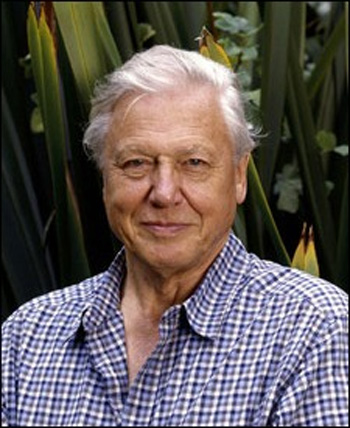
Sir David Attenborough

It was presented by that familiar face on the BBC in terms of the natural world, Sir David Attenborough.  It was an appropriate and worthy person to present the information.

But before getting into some of the details underpinning the programme, there seems to been an enormous and unspoken omission at Copenhagen – why no debate about global population trends?

Luckily the media noticed the rather obvious exclusion.  Here’s the UK Daily Telegraph newspaper (online version) of the 8th December, 2009. An extract:

Population growth is the one issue accused of causing driving climate change that no one at the Copenhagen climate summit dares to talk about.

The argument is that more people consume more resources, therefore producing more greenhouse gases that cause global warming.

The global population is currently at 6 billion and could rise to 11 billion by 2050 if fertility rates continue, not only threatening the climate, but food shortages and conflict as well.

Organisations like the Optimum Population Trust, that is backed by Sir Jonathan Porritt, Dame Jane Goodall and Sir David Attenborough, advocate birth control as a way of slowing climate change.

As Sir David has said: “I’ve never seen a problem that wouldn’t be easier to solve with fewer people, or harder, and ultimately impossible, with more.”

A study by the London School of Economics found contraception is almost five times cheaper as a means of preventing climate change than conventional green solutions such as investing in green technology.

Read more of this Post