Tag: Totnes

The story of transition, part three

Final four short films about Transition.

PLEASE read the closing comment by Rob Hopkins!

A series of 10 delightful short films, courtesy of Transition Culture – For the introduction and the first three films, click here, for the next three click here.

Film Seven – Transition Town Totnes’s Transition Streets Origin: Transition Town Totnes

In December 2009, Transition Town Totnes, the UK’s first Transition initiative, was chosen as one of 20 community  groups in England and Wales to win the ‘Low Carbon Communities Challenge’. Its project, ‘Transition Streets’, was awarded £625,000. In the last 18 months, nearly 500 households have participated in Transition Streets, each, on average, cutting their carbon emissions by 1.5 tonnes.

About a third of those have gone on to install solar photovoltaic systems. However, the main benefits that people who have participated talk about are the social connections they have made and how they now feel so much more a part of their community. It has also acted as a platform for all kinds of other initiatives as neighbours start to get a taste for working together.

Film Eight – A Small Pennant Flag Origin: Transition Town Monteveglio (Bologna, Italy)

Transition Town Monteveglio (TTM) was the first Italian Transition initiative. In 2009 its local Comune (local Council) passed an amazing resolution that offers a stateof-the-art taste of what it looks like when a council really ‘gets’ peak oil and climate change, stating: “… a view of the future (the depletion of energy resources and the significance of a limit to economic development), methods (bottom-up community participation), objectives (to make our community more resilient, i.e. better prepared to face a low energy future) and the optimistic approach (although the times are hard, changes to come will include great opportunities to improve the whole community’s quality of life)”.

It has led to all kinds of initiatives and projects, including a local currency and renewable energy installations. Our object here is the Comune’s official pennant.

Film Nine – A Small Bag of Topsoil Origin: Transition Norwich’s food initiatives

It is one thing to start local food projects, but quite another to think strategically about how those projects sit in the larger context of the intentional relocalisation of the area. Transition Norwich, together with East Anglia Food Link, produced a study called ‘Can Norwich Feed Itself?’ which worked out that it could, albeit with a simpler diet, but that it would need certain new infrastructures put in place. This included a new mill to enable locally produced grains to be milled, two CSA farms (hence our object, a soil sample from their first CSA site), community gardens and research into varieties of beans and oats that will grow well in the area.

A successful application to the Local Food Fund enabled these to become a reality. It is a fascinating example of why we need to think strategically about the localisation of food. As Tully Wakeman, one of the co-ordinators, told me: “A trap a lot of NGOs fall into is over-thinking about vegetables (yet) only one tenth of what we consume, in calorific terms, comes from fruit and vegetables… where is the other 90% going to come from? Growing vegetables in gardens, allotments, community gardens and so on offers a degree of food security and can happen relatively rapidly.

However the other 90% requires the rebuilding of the infrastructure required for growing, processing, cleaning, storing, milling and distributing grains and cereals, and that takes longer and requires more planning”.

Film Ten – Beer, A Bottle of Sunshine Ale Origin: The Lewes Community Power Station

The Ouse Valley Energy Service Company (OVESCO) is one of the offshoots of Transition Lewes focused on the installation of renewables in and around the town as well as promoting energy conservation and local economic resilience. In 2011 it took on its most exciting and ambitious project to date installing a 98kW solar photovoltaic array on the roof of local brewery, Harveys. This will turn the building into one of the first community-owned solar power stations in the country.

The 544 photovoltaic (PV) panels will generate 93,000kWh of green electricity each year – enough to save more than 40 tonnes of CO2 annually.

A community share launch event took place in April 2011 attended by 300 people. Within five weeks the target of £307,000 had been reached. Money invested will be repaid in full at the end of the 25 year scheme, or earlier at the request of the investor and subject to conditions. While the investment is held a dividend will be paid after the first year which is expected to be around 4%.

Our object is a bottle of ‘Sunshine Ale’, a special commemorative beer brewed to celebrate the launch of the scheme. Very nice it is too.

A final few words from Rob Hopkins.

Whittling down to these 10 objects has been very difficult but I hope what you have gained is a sense of something infectious, reaching beyond the idea of small individual initiatives, and arguing that localisation is the best way for the places in which we live to return to health. Various learned writers and academics have tried to encapsulate what Transition is, but I still think the best description of its spirit comes from Tove Jansson in Comet in Moominland in 1946, who wrote: “It was a funny little path, winding here and there, dashing off  in different directions, and sometimes even tying a knot in itself from sheer joy. (You don’t get tired of a path like that, and I’m not sure that it doesn’t get you home quicker in the end).”

Rob Hopkins is the co-founder of Transition Town Totnes and Transition Network and blogs at www.transitionculture.org

Amusing characters!

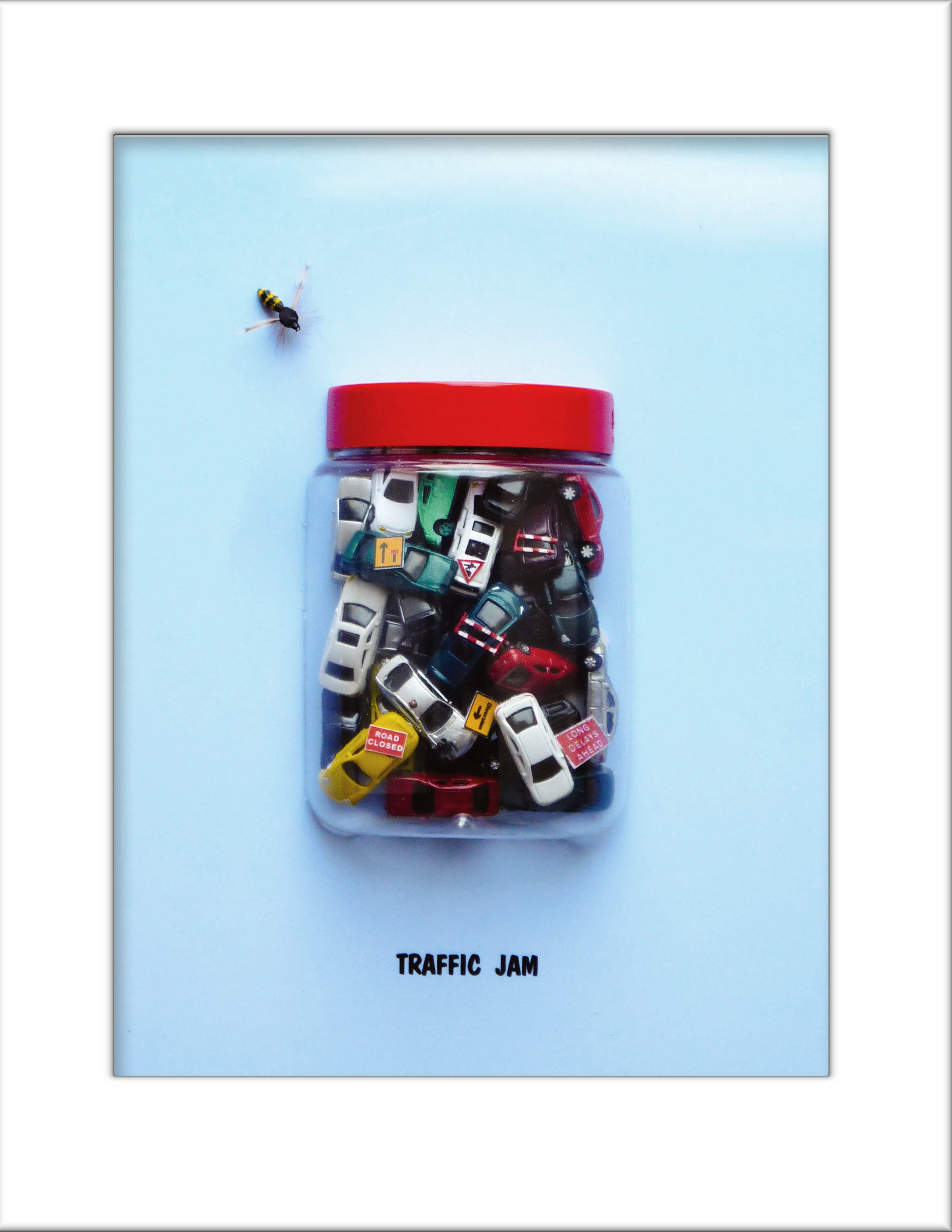
Chance to spotlight the very creative work of Neil Kelly

I have had the pleasure of knowing Neil for a good number of years.  I can’t recollect how and when we met but, these days, that applies to so much that slips away from the memory cells!  Neil has been a great friend of my sister, Corinne, and brother-in-law, John, who like Neil, have lived in South Devon for many years.  Pretty sure that it was through John and Corinne that I first met Neil.

Anyway, Neil’s wonderful, slightly askew sense of humour comes out in his art.  Rest is obvious.  Enjoy!

Finally, if you are within reach of Totnes and want to see Neil’s work, details of Rumour’s Wine Bar are here.

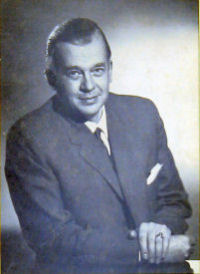
Ernst Friedrich “Fritz” Schumacher

Ernst Friedrich “Fritz” Schumacher (16 August 1911 – 4 September 1977)

Ernst Friedrich "Fritz" Schumacher

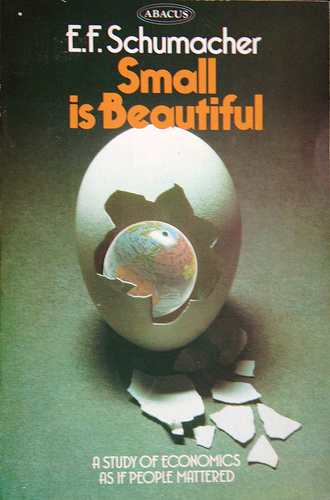
It seems amazing to realise both that this far-sighted man was born a century ago this day and that his incredibly influential book, Small is Beautiful, was published 38 years ago.

The book has been hugely influential.  Indeed, my gut sense is that it probably started the whole ‘green’ movement.  The Times Literary Supplement of October 6, 1995 regarded E.F. Schumacher’s 1973 book Small Is Beautiful: a study of economics as if people mattered as among the 100 most influential books published since the end of the Second World War.

Just a personal note that for many years I lived just a few miles from Dartington in Devon (UK) where Schumacher College was founded in 1991.  Named after the great man, it provided, and still does, learning for sustainable living.  Perhaps no surprise at all that nearby Totnes became the world’s first ‘transition town’.

Want to find out more?  Then go to the New Economics Institute website here and discover,

The New Economics Institute is a US organization that uniquely combines vision, theory, action, and communication to effect a transition to a new economy — an economy that gives priority to supporting human well-being and Earth’s natural systems. Our multidisciplinary approach employs research, applied theory, public campaigns, and educational events to describe an alternative socio-economic system that is capable of addressing the enormous challenges of our times.  Our premise is that a fair and sustainable economy is possible and that ways must be found to realize it.

The Institute, formerly the E. F. Schumacher Society, is working in close partnership with the New Economics Foundation from London to add the programs and experience developed in the UK to its own work in the US.

Finally, to get a flavour of this wonderful man and the amazing legacy that he has left the planet, watch this short video of E.F. Schumacher answering a question from the moderator about whether or not Buddhist Economics can work in the West. (Question & Answer Panel at Great Circle Center, 3/19/77.  Peter Gillingham Collection, E. F. Schumacher Library Archives.)

Sanity out of insanity

Dogs are such a great metaphor!

There’s no question that when one stays very still and closely watches a dog’s behaviour you see an amazing level of awareness.  Even when they appear to be deeply asleep anything sensed by their ‘being’ is registered immediately.  A small tale, by way of example.  Many years ago when Pharaoh and I lived in the Devon village of Harberton, we  frequently shopped in the town of Totnes, just 3 miles away.  Many times, I would be walking up the High Street with Pharaoh nicely to heel being passed by many people walking the opposite way on the same pavement.

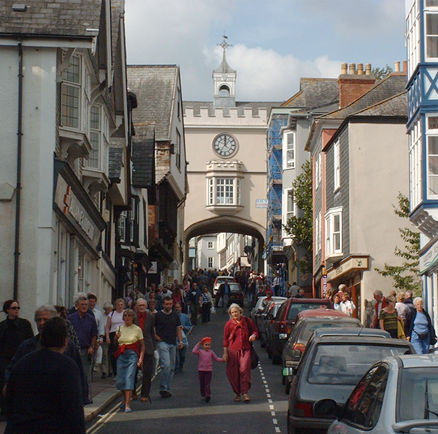
Totnes High Street

Every once in a while, during the fraction of time that it took for someone to pass us by, Pharaoh would utter a low, throatal growl without even slowing his pace.  I always presumed that something, way beyond my level of consciousness, had disturbed Pharaoh during that instant of time.

Real awareness, or if you prefer, consciousness is not some touchy/feely concept but a true understanding about just what the heck is going on.

So do watch the following video of Peter Russell discussing Rediscovering Ourselves; it’s very relevant.

Then have a read of a couple of items on Peter’s website.  The first is about runaway climate change, and here’s an extract,

Runaway Climate Change

The most dangerous aspect of global warming.

Global Warming is bad enough. Over the last hundred years, average global temperatures have increased by 0.75°C, one third of that rise occurring in the last twenty years. The 2007 report by The Intergovernmental Panel of Climate Change (IPCC) forecast that, by 2090, temperatures will have risen between 2 and 6 degrees.

Even a two degree rise in temperature would be disastrous. Changes in climate will lead to more intense storms, longer periods of drought, crop failures in many developing countries, the destruction of nearly all the coral reefs, the melting of much of the polar ice, the flooding of many low-lying urban areas, the possible collapse of the Amazonian rain forest, and the extinction of 20-30% of the planet’s species. The IPCC projects that this could happen by 2050.

If the temperature were to rise by six degrees, the prognosis is extremely bleak. At this temperature, the entire planet will be ice-free. Sea levels will rise by 70 meters. Many species of tiny plankton will cease to exist, and the problem would echo up the food chain, bringing the extinction of many fish, sea mammals, and the largest whales. Much of the land will now be desert. Hurricanes of unimaginable ferocity will bring widespread ecological devastation. If, as is possible, the ozone layer were destroyed, the burning ultraviolet light could make life on land impossible. Evolution would have been set back a billion years. It would be a planetary catastrophe.

Read the rest of that essay here.  Now on to the next extract, from here,

The Under-rated Approach to Carbon Reduction

As critical as it is to reduce future carbon emissions, it is equally critical, perhaps even more critical, to get much of the CO2 that as already been released—and which is responsible for the current warming—out of the atmosphere and back into the ground where it belongs.

This approach, known as carbon capture and sequestration, has until now been largely ignored, and for several reasons. The atmosphere is so huge, it would seem to be an impossible task. There are possible technologies, but they are not nearly so well-developed as alternative energy sources. Many are still only ideas on paper. Where technologies of carbon capture have been developed they are mostly for capturing CO2 from smokestacks. Valuable as this may be, it is still dealing with the problem of future carbon emissions. What we need are technologies that will remove from the atmosphere the carbon that we already emitted, and then sequestrate it (put it away) in a stable form.

It is to this end that Sir Richard Branson announced his $25 million prize (Virgin Earth Challenge) for technologies that could capture a billion tons of carbon a year from the atmosphere (about one tenth of what we now release each year). Nor is it just Richard Branson who believes we must make this an equally important approach to the problem. His team includes Al Gore, James Lovelock, Sir Crispin Tickell (former UK ambassador to the UN), and James Hansen, the head climate scientist at NASA).

Again, the full article, a ‘must-read, in my opinion, is here.

It is really about awareness!  Dogs have so much to teach us!