Tag: Tax Research UK

Pitchforks or Pens.

The extreme importance of engaging in the fight for better societies.

I must warn you that today’s post is nothing about dogs. Unless, as with me, you see dogs as well as being the most gorgeous of creatures as being critically important metaphors for what societies need now! Or as I present elsewhere in this place:

Because of this closeness between dogs and man, we (as in man!) have the ability to observe the way they live.  Now I’m sure that scientists would cringe with the idea that the way that a dog lives his life sets an example for us humans, well cringe in the scientific sense.  But man seems to be at one of those defining stages in mankind’s evolution where the forces bearing down on the species homo sapiens have the potential to cause very great harm.  If the example of dogs can provide a beacon of hope, an incentive to change at a deep cultural level, then the quicker we ‘get the message’, the better it will be.

Dogs:

  • are integrous ( a score of 210) according to Dr David Hawkins
  • don’t cheat or lie
  • don’t have hidden agendas
  • are loyal and faithful
  • forgive
  • love unconditionally
  • value and cherish the ‘present’ in a way that humans can only dream of achieving
  • are, by eons of time, a more successful species than man.

richard-murphySo what’s this all leading up to!

Regular followers of this place (and you are always appreciated – never forget that) will know that previously I have mentioned Professor Richard Murphy. I have been following and reading his blog Tax Research UK for some time.

Many of the good Professor’s posts are specific to what is going on in the UK and, inevitably, Europe and the EU referendum.

But on the wider horizon these seem to be such terrible times. Here’s a comment I left to another of Richard’s posts that opened with the sentence, I am so bored by the EU referendum campaign.

My comment being:

It’s coming up to 5:30 am here in Southern Oregon and, as per usual, I have dipped into the latest postings from Tax Research. Part of me, a large part of me, is sickened by what seems to be going on in this world with the EU referendum and the US Presidential election being the two most glaringly terrible examples. But this old Brit (London-born in 1944) has this sense that the way that Richard and so many of his supporters can now ‘shout’ out the truth will, in the end, deliver a better future. Indeed, my own blog post today is called The Power of Open Opinions.

So keep on banging your truthful drum, Richard!

However, last Tuesday Richard published a post that seemed to speak to me, and presumably countless others, about the dilemma as to whether to be active in speaking up about what is right or wrong, or to just huddle up with one of your dogs on a nice (oversized) dog bed!

In my estimation that post from Richard should be widely circulated and it is republished in full now with Richard’s kind permission.

ooOOoo

To engage or not; that is the question

Posted on7:57 am May 31 2016

It would seem I have touched a raw nerve for some regular commentators by suggesting that I welcome the IMF article, recently published, that appeared to recognise the failure of neoliberalism to tackle inequality and the inappropriateness of much of the austerity agenda.

It now seems that this article has attracted a vicious backlash from the FT, which clearly sees it as touching on neoliberal heresy. In that case to suggest, as some do, that this article is inconsequential is, in my opinion, wrong.  If nothing else, it has revealed the true opinion of the FT, and the sharp divide between its editorial stance and the opinion of its lead economic  columnist, Martin Wolf.

It is also safe to assume that if this has been the response outside the organisation then the debate within it has been at least as heated,  and all this on an article which says it can find merit in some parts of the neoliberal agenda.

Why come back to the issue then?  I think there are three good reasons for doing so.

First, how to respond to such an article from such an organisation opens up one of the more difficult questions in campaigning, which is whether to engage or not with those organisations that you criticise?  It is not possible to be a tax justice campaigner and to not have been critical of the IMF and its approach over the last few decades.  I have been of the IMF, the World Bank and, of course, of the Washington Consensus  that they have promoted.  But, a long time ago I decided that the only viable way  in which I could help deliver tax justice was by engaging with those people and organisations whose opinions I wished to change.

Over the years I’ve been criticised for this, and  been told that the policy would undermine my chances of success.  So, variously,  I was told that it was a mistake to serve on George Osborne’s General Anti-Abuse Rule  committee.  Likewise, engaging with the  OECD BEPS  process was described as a mistake by some because the terms of engagement were clearly biased against developing countries.  Others have also suggested that it was a mistake not to object to Jeremy Corbyn  using some of my policy ideas.   I suspect some would also criticise the fact that I went to the World Bank last week  and there were definitely those who suggested that I should not accept an appointment at City University, precisely because it has got links to the City of London. As for the Fair Tax Mark; some say that is a sell out.

In all cases I disagree.  It is my job to  create ideas  that might effect change.  My purpose for doing so is, I hope clear:  my aim is to create a more  genuinely prosperous, more equal, more democratic, more accountable, more sustainable,  more tolerant  and so more enjoyable world in which we might live.  More is an important word in that sentence:  it could be prefaced with ‘much’  in many cases but I do not think we will ever create  utopia.  I want better because I doubt that the best I believe possible is actually achievable within the necessary compromises that human society requires, not just now but ever.

That, then, brings me to my second point.  I am not seeking a revolution, but an evolution.  I respect those who wish to be perpetual outsiders because they believe that the only way forward is to sweep away all that is in their path to create an entirely new society, but their’s is not a path I would ever choose.  There is good reason for that: I believe that the cost of such change is too high, and the uncertainty of the outcome too great for any such risk to be taken.  The chance  that what we have will be replaced by tyranny is also too significant to justify this approach, in my opinion.

But, perhaps, most of all,  and thirdly, I believe that the power of an idea at the right time is sufficiently strong to ensure that such a revolutionary approach is wholly unnecessary.  I stress, I am not claiming that my ideas are in this category;  I am suggesting that ideas can be.  Neoliberalism arose because it was an idea in the right place at the right time, even if I fundamentally disagree with the prescription that it offered.  The post-war consensus was similarly created in this way.

I regret that as yet we have not reached a point where a similar replacement idea has been sufficiently developed to capture, unambiguously, the common political narrative.  Discussion of sustainability is become mainstream, but not in reality commonplace.  Disquiet with austerity is deep-rooted, but has not yet displaced the obsession with balanced budgets.  Debate on inequality  in its many egregious forms is taking place, but is not yet reversing trends. Some  political developments  now arising are deeply  antagonistic to democracy. But, and I stress the point,  the fact that all these things are happening is, in itself, indication that something really important is going on and that we may, in my opinion, be reaching a point where real change is possible.

I stress, in the context the IMF article is, in my opinion  important even though it is not  as radical as that  which many people would wish to read.  But that is how change takes place: very few of us are really capable of embracing giant leaps. Most of us have to, inevitably, partake in incremental steps on the way to a bigger goal.

I accept, and embrace that fact,  which I perceive to be a reality.  That is not to say there is no place for the campaigner who demands, with reason, more radical change.  Whilst I see many of the attractions of being a ‘no compromiser’  that is not the path I have chosen to follow, even with tax havens (as my Plan B for Jersey made clear).  If the choice is between a pitchfork and a pen, then I choose the pen,  believing that at the end of the day this is the way to  create real change. But as a result I also choose to engage, without apology.

ooOOoo

We must never forget that the pen is mightier than the sword! And we must never stop engaging!

Mature, healthy trees.

Continuing the metaphor that our trees offer us.

In yesterday’s post I offered up the idea that:

The analogy with planting trees is very apt. For any clown can plant the tree but parenting that young tree into a mature forty-foot high beauty takes professional management.

That post had been inspired by a recent essay over at Patrice Ayme’s Thoughts regarding the observation by Andy Grove, the founder of Intel, that promoting start-ups without the commensurate focus on growing those start-ups into viable commercial concerns was strategically and politically incorrect. Back to that essay for a further extract:

However, American-based manufacturing is not on the agenda of Silicon Valley or the political agenda of the United States. Venture capitalists actually told me it was obsolete (before stepping in their private jets). That omission, according to Mr. Grove, is a result of anotherunquestioned truism”: “that the free market is the best of all economic systems — the freer the better.” To Mr. Grove, or Mr. Trump, or yours truly, that belief is flawed.

Andy Grove: “Scaling used to work well in Silicon Valley. Entrepreneurs came up with an invention. Investors gave them money to build their business. If the founders and their investors were lucky, the company grew and had an initial public offering, which brought in money that financed further growth.” 

The triumph of free-market principles over planned economies in the 20th century, Mr. Grove said, did not make those principles infallible or immutable. There was room for improvement, he argued, for what he called “job-centric” economics and politics. In a job-centric system, job creation would be the nation’s No. 1 objective, with the government setting priorities and arraying the forces necessary to achieve the goal, and with businesses operating not only in their immediate profit interest but also in the interests of “employees, and employees yet to be hired.”

As even the New York Times now admits, the situation has degenerated since 2010. Although the employment rate halved, in a slave state, everybody is employed. But neither the economy, nor the society, let alone progress and civilization are doing better.

“Insecure, low-paying, part-time and dead-end jobs are prevalent. On the campaign trail, large groups of Americans are motivated and manipulated on the basis of real and perceived social and economic inequities.

Conditions have worsened in other ways. In 2010, one of the arguments against Mr. Grove’s critique was that exporting jobs did not matter as long as much of the corporate profits stayed in the United States. But just as American companies have bolstered their profits by exporting jobs, many now do so by shifting profits overseas through tax-avoidance maneuvers.

The result is a high-profit, low-prosperity nation. “All of us in business,” Mr. Grove wrote, “have a responsibility to maintain the industrial base on which we depend and the society whose adaptability — and stability — we may have taken for granted.” Silicon Valley and much of corporate America have yet to live up to that principle.”

If we return to that analogy of the tree, think how long and how much attention must be put into the conditions that will promote not only sustained growth of that young tree but growth to the point where it can propogate its own saplings.

As it is for young companies. The skills that company managers require to nurture that company to the point of self-sustaining maturity are many and varied. But they are underpinned by the need to be truthful and trustworthy, to be devoted to the employees of the company and to instill in all who work, and finance, that company to “love the customer”. Not just those customers that are the big spenders but also, and especially so, the many, many smaller clients that can make or break a company’s reputation.

So with that in mind let’s take a peek at USA LLC and UK Ltd.

Here are the closing paragraphs from Patrice’s essay:

Our corruption is not just an economic and social problem, a political problem, and a civilizational problem, as it was under Aristotle.  It is a problem for the entire planet.

We empowered a demagogue“, laments Mr. Kristof. His true calling, and that of the Main Stream Media, was to empower plutocrats, and their obsequious servants. How sad they are.

Patrice Ayme’

Then there is Richard Murphy in the UK who writes the blog Tax Research UK. In a recent post, entitled The Party Political Problem he opened, thus:

I like being outside the fray of party politics. I wasn’t born with a sufficient capacity for compromise to believe that any political party has all the answers to all questions. And yet, equally, I can admire those who can make the sacrifice to take part in this process. It is, for better or worse, at the heart of democratic politics.

That demands that it be done well. This requirement is predicated on three things. The first is a willingness to pretend you have the answer to all things. The second is a leadership that knows this is not true and which as a result respects its opponents. The third is an acute appreciation of the fact that compromise in pursuit of a higher goal, whilst saving face, is the ultimate political aim: nothing really happens without the accommodation of others.

He then closes his post:

Passion, dogma and steadfastness, come what may, are not what makes party politics.

Conviction based on wisdom, understanding and compassion does.

But these qualities remain in far too short supply, even if they’re not quite out of stock, yet.

And that’s the party political problem.

Many people both ‘sides of the pond’ would nod heads in agreement with that.

My final peek is into an essay that was recently published by the quarterly journal The Baffler. The essay was from David Graeber under the heading of Despair Fatigue. Opening:

Is it possible to become bored with hopelessness?

There is reason to believe something like that is beginning to happen in Great Britain. Call it despair fatigue.

For nearly half a century, British culture, particularly on the left, has made an art out of despair. This is the land where “No Future for You” became the motto of a generation, and then another generation, and then another. From the crumbling of its empire, to the crumbling of its industrial cities, to the current crumbling of its welfare state, the country seemed to be exploring every possible permutation of despair: despair as rage, despair as resignation, despair as humor, despair as pride or secret pleasure. It’s almost as if it’s finally run out.

and closing, thus:

Twenty-first century problems are likely to be entirely different: How, in a world of potentially skyrocketing productivity and decreasing demand for labor, will it be possible to maintain equitable distribution without at the same time destroying the earth? Might the United Kingdom become a pioneer for such a new economic dispensation? The new Labour leadership is making the initial moves: calling for new economic models (“socialism with an iPad”) and seeking potential allies in high-tech industry. If we really are moving toward a future of decentralized, small, high-tech, robotized production, it’s quite possible that the United Kingdom’s peculiar traditions of small-scale enterprise and amateur science—which never made it particularly amenable to the giant bureaucratized conglomerates that did so well in the United States and Germany, in either their capitalist or socialist manifestations—might prove unusually apt. It’s all a colossal gamble. But then, that’s what historical change is like.

In other words, it’s this!

One of the age-old maxims from professional company managers is:

It’s always a case of putting people before profits!

Putting people before profits should be in the front of the minds of all our leaders and masters; both sides of the ‘pond’.

Or in tree language investing in this:

Clown work! (This is a Red Maple, by the way!)
An American Red Maple sapling.

to achieve this:

A mature American Red Maple tree.

Come on good people, we really do need healthy, mature trees in our 21st C. societies.

Where to for democracy?

Good people must resist what is going on!

My sub-heading was prompted by that very well-known saying, “All that evil requires to succeed is for good people to do nothing.”

That saying came to me when I was reading a recent essay published by Professor Richard Murphy over in the UK. I am referring to his article entitled: Nature reckons science is watching as democracy rides over a cliff.

Here’s the extent of Richard’s short post:

This comes from Colin Macilwain in the latest edition of the massively influential journal ‘Nature’, and I quote in the public interest and as it reinforces the arguments I have made today:

But at the top [of science] there is paralysis: leading scientific organizations do little except chase money and reinforce the ruling nexus of politics and finance — even since the financial crisis of 2008, which discredited the free-market philosophy that underpins that nexus. I argued years ago (see Nature479, 447; 2011) that scientific leaders had failed to respond in any meaningful way to that collapse, and I’m still waiting.

The political structure of the West is in deep trouble, and should it fall apart, there will be plenty of blame to go around. Most will go to political and financial elites, or to rowdy mobs. But some will belong to people in the middle who have taken public funds, defended elites and then stood back and watched as democracy got ridden over a cliff.

I think that fair comment and recommend the rest.

If one now goes across to that post from Colin here’s what one would read in the opening paragraphs:

The elephant in the room we can’t ignore

16 March 2016

The annual meeting of the American Association for the Advancement of Science (AAAS) in Washington DC last month was one of the best I’ve witnessed in more than 20 years of regular attendance. The policy sessions were packed and genuinely stimulating. I met tons of smart, influential people I hadn’t seen for ages, and we all enjoyed a good chinwag about how better to engage with the public — the meeting’s theme for 2016.

The only trouble was what was going on outside the hotel — in the United States and the world at large.

Colin then makes the point that is neatly articulated in the extract that was published by Professor Murphy and is republished above.

I don’t have any answers other than wanting to share this with you, dear reader. For decent, ordinary folk must be aware of the multiple threats to our Western democracy that are taking place.

Just as I want to share with you an example of what a good honest person and his adorable Labrador get up to. An example from my old country (and Richard Murphy’s home country).

ooOOoo

Dog Refuses to Leave the Side of Near-Death Man Trapped in Mud

3171690.large

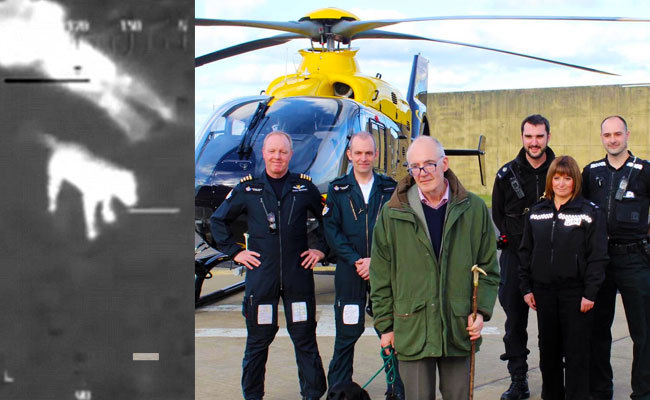
When one false step left Martin Kay literally drowning in ice-cold mud in the English countryside, he quickly found out who his two best friends are. Turns out one of them is a dog.

Holly Blue is a typical Labrador who has never met a tree trunk or a blade of grass that doesn’t smell good. So when Martin took out her leash one recent afternoon, his dog was over-the-moon with expectation of the crisp afternoon air and a landscape of wintery fields. Neither of them had any inkling that this simple walk would soon turn catastrophic.

This day, the two set out along a different route through England’s historic Thornham Parva village. Though it was a very cold day, the skies were clear and there was no reason for concern, or so it seemed.

“I hadn’t walked that route for about two years,” Martin said. “When I came across the mud, I tested the ground at the side and it felt firm, but as I walked into the middle the ground began to sink. I called for help but nobody heard me.”

Minutes turned into hours and Martin simply couldn’t extricate himself from the mud. Holly Blue circled anxiously, but there was nothing the dog could do except to stand guard beside her friend. She never left his side.

“I eventually drifted off,” Martin said. “I wasn’t optimistic about being found, but I wasn’t panicking – it was too cold for that!”

Fortunately, Martin’s good friend was scheduled to pick him up that day and when Martin didn’t return home, his friend grew concerned enough to call the police. Martin was reported missing to the police at 7:30 in the evening. Other friends and neighbors had already begun searching for Martin themselves, but they were all focused on his usual route, not realizing that he’d gone in a different direction.

Police used a thermal imaging camera during helicopter sweeps from above. After some time they came across a heat signature that appeared to be the warm body of dog curled up at the edge of the bog. According to police, indeed Holly Blue was found first, and sighting her led them to Martin. Watch a portion of the rescue below.

Police Constables Luke Allard and Clare Wayman were the first on the ground.

“The field was in the middle of nowhere and we were relying on the light from the helicopter and torch light,” Allard said. “When I got to Mr Kay I took hold of his hand and he wouldn’t let go – I told him he would have to let go or I wouldn’t be able to help him.”

Unfortunately Allard and Wayman began getting stuck themselves while trying to extricate Martin, so they covered him with their own jackets to keep him warm while waiting for reinforcements.

Martin was in and out of consciousness as he was taken to West Suffolk Hospital. When he awoke, he was told how Holly Blue had helped save his life.

“It was the first and the last time she had been called into action,” Martin said in an interview with Global News. “She’s a very loyal dog.”

ooOOoo

Now compare the behaviourial values of Martin Kay, Holly Blue and everyone else who ensured this had a happy ending with those being demonstrated in the first part of this post!

It’s no sinecure to say, once again, how urgent it is for humankind to learn from our fabulous dogs!

Maggie the teaching dog.

Two views of teaching in the United Kingdom.

The title to today’s post may be a tad misleading, for it doesn’t offer a guide to both aspects of the post.

But first to what prompted the title.

Earlier yesterday, Neil Kelly, friend from my days when I was living in South Devon, sent me a link to a recent BBC News item. Here’s the story:

Maggie the dog made honorary primary school teacher

28 December 2015 Last updated at 04:31 GMT

A dog has become so successful in helping children to read, that she’ has become an honorary member of staff at a school in the West Midlands.

The idea of getting pupils to read to dogs in order to improve their literacy was first tried out in the UK five years ago, but Maggie, a 10-year-old Shih Tzu, has become so successful that she now has her own staff badge at Earls High school in Halesowen.

Phil Mackie went along to meet Maggie, and Grace, another Shih Tzu, who’ is training to take over when Maggie retires.

Teaching Assistant Toni Gregory spoke on behalf of the two literary pups.

Unfortunately, the short video of Toni Gregory speaking hasn’t yet made it to YouTube so I can’t include that in the post. But do go across to here and watch the short interview with Toni. Here’s a picture of Maggie.

_87347683_87347682Moving on!

It’s difficult not to see the connection between Maggie offering teaching services in a UK school and this recent essay from Richard Murphy of the Tax Research UK blog. It is republished in full with Richard’s very kind permission.

ooOOoo

The parents of primary school kids need to get very angry for their children

Posted on

Ninety three per cent of all children in the UK are taught in state schools. The parents of the other seven per cent may wish to pretend otherwise but the truth is that the prosperity, well being and future of the UK is dependent upon the ability of state schools to deliver the education our young people need. But, as the Guardian has reported, that is in jeopardy:

Britain’s leading expert on school recruitment has warned that a shortage of trainee teachers is reaching crisis levels in some of the most important subjects in the curriculum.

In evidence submitted to the parliamentary education select committee, TeachVac, an independent vacancy-matching and monitoring service for education professionals, said that it had identified a “woeful” lack of new teachers in several key secondary school subjects.

This is not a minor issue. As they note:

[TeachVac] has identified an 85% shortfall in the number of trainee teachers needed to fill vacancies in both business studies and social sciences. The number of new teachers for design and technology is also more than a third below what it needs to be and there is a 10% shortfall in the number of IT teachers required.

These are core subjects at the heart of the skill base the UK needs. And we may not be able to teach them.

There are three reasons for that. First, when the government portrays any job in the state sector as parasitical – and large parts of the media join in – any recruitment programme is going to be hard.

Second, student debt is crippling for those on what is thought to be middle pay, which is what many teachers can, at best, hope to earn.

And third, pay is just not good enough.

All of those are the direct result of policy. The first is ideological. The second is born of the desire to economically enslave people though debt which underpins neoliberalism. The third is the austerity mantra.

Put them together and this country will be crippled by denying an education to those who need and deserve it.

We need a new narrative.

The need to supply high quality education has to be at the core of that narrative.

I hope parents of those ten and younger realise what is going to happen to their children. It is not good, and they need to get angry, now.

ooOOoo

It strikes me that we need new narratives on so many issues ‘both sides of the pond’. Maybe, just maybe, 2016 kicks some of these new narratives into play.