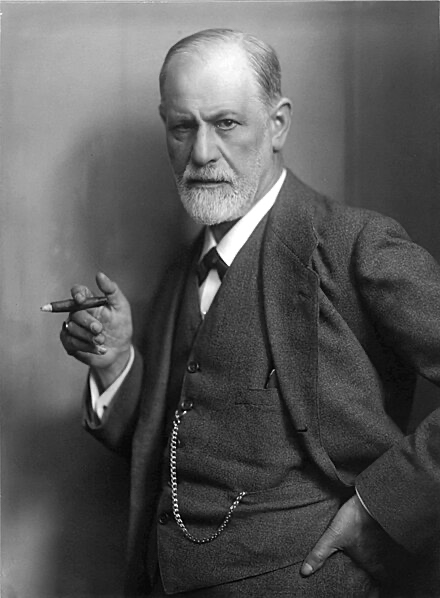
Tag: Sigmund Freud

More on our existence.

The Einstein-Freud Letters

I was born in London in November, 1944. Exactly six months before the Second World War ended in April, 1945.

Thus it was of great interest to me that yesterday Jean and I listened to a BBC Radio 4 programme about the letters that were exchanged between two great Jewish men: Einstein and Freud, in 1932. The programme was called Why War? The Einstein-Freud Letters.

The programme ends with offering the listener a fundamental choice, which I won’t spoil for you now. But to me it is an extension of my post (or Patrice’s post) that I published recently on March 19th.

I believe, and hope, you can listen to it by clicking on this link. Here also is the text that is at that link:

In 1932 the world-famous physicist Albert Einstein wrote a public letter to the founder of psychoanalysis, Sigmund Freud. Einstein, a keen advocate of the League of Nations and peace campaigner, asked Freud if he thought war and aggression was forever tied to human psychology and the course of international relations: could we ever secure a lasting world peace? 

Einstein’s letter is deeply prescient, as is Freud’s extraordinary response. The exchange was titled ‘Why War?’. The two thinkers explore the nature of war and peace in politics and in all human life; they think about human nature, the history of warfare and human aggression and the hope represented by the foundation of the League of Nations (precursor to the UN) and its promise of global security and a new architecture of international law. 

At the time of their exchange, Freud is in the last great phase of his career and has already introduced psychoanalysis into the field of politics and society. Einstein, the younger of the two, is using his huge international profile as a physicist for political and pacifist intervention.

For Einstein, future world security means a shared moral understanding across the global order – that humankind rise above the ‘state of nature’ never to devolve into total war again. He wrote to Freud, as ‘a citizen of the world…immune to nationalist bias…I greatly admire your passion to ascertain the truth. You have shown how the aggressive and destructive instincts are bound up in the human psyche with those of love and the lust for life. At the same time, you make manifest your devotion to the goal of liberation from the evils of war…’ Is it possible, Einstein asks Freud, to make us ‘proof against the psychoses of hate and destructiveness?’. Freud’s answer is fascinating and quite unexpected. 

The exchange of letters was sponsored by the International Institute of Intellectual Cooperation, an organisation promoting global security by using prominent thinkers, drawing on multiple fields of knowledge (from science to psychology, politics and law) to achieve a new language for international peace, following the lessons learned from the Great War of 1914-18. 

But even as Einstein wrote to Freud in the summer of 1932, the Nazi party became the largest political party in the German Reichstag. Both men felt a sense of apprehension about what was coming; both were pacifist, both Jewish, both would be driven into exile (both Einsteinian physics and Freudian psychoanalysis were denounced by the new regime). The letters were finally published in 1933 when Hitler came to power, suppressed in Germany, and as a result never achieved the circulation intended for them. 

Featuring readings from the Einstein–Freud letters and contributions from historians of warfare and psychoanalysis, war journalism and global security, this feature showcases the little-known exchange between two of the 20th century’s greatest thinkers, ‘Why War?’ – a question just as relevant in today’s world.

Contributors include historian of war and peace Margaret MacMillan, BBC chief international correspondent Lyse Doucet, defence and security expert Mark Galeotti, historian of international relations Patrick O Cohrs, author Lisa Appignanesi, who has written on Freud and the history of psychoanalysis, and Faisal Devji, historian of conflict and political violence in India and the Middle East. 

Readings are by Elliot Levey (Einstein) and Henry Goodman (Freud) 

Produced by Simon Hollis

A Brook Lapping production for BBC Radio 4

Albert Einstein
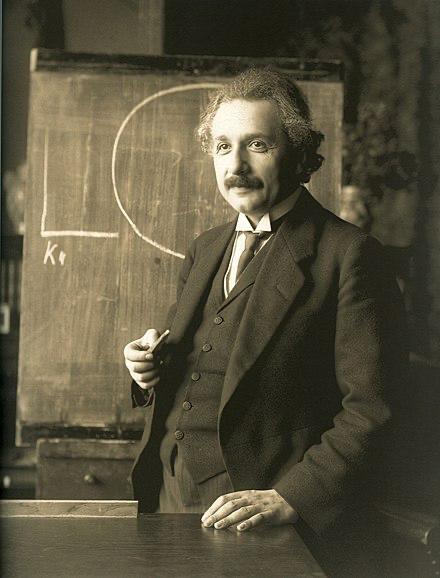
Portrait by Ferdinand Schmutzer, 1921

Sigmund Freud

Freud, 1921

Two very great men.

Lessons in contentment.

Welcome to July!

A young Pharaoh already embracing contentment. September, 2003.

Sidney Bloch, who is Emeritus Professor in Psychiatry at the University of Melbourne, recently published an essay over on the blogsite The Conversation. (Greatly recommended, by the way.)

His essay was about happiness versus contentment and certainly touched a few spots in this old Englishman’s psyche, contented as I am in this rural part of Oregon. However, until now I had never stopped to think about the difference between being happy and being contented.

So, I think you are going to enjoy Professor Bloch’s views, that now follow. His essay is republished, with permission, just as it was presented on The Conversation.

ooOOoo

Happiness is an illusion, here’s why you should seek contentment instead.

June 29, 2015 4.07pm EDT

Feeling content means having a deep-seated, abiding acceptance of oneself and one’s worth, together with a sense of self-fulfilment, meaning and purpose. James Theophane/Flickr, CC BY-SA

I want to share a personal view of what it is to be happy and how it differs from feeling content. Let me begin with a clinical story.

They met at a party; it was love at first sight just like one reads about in romantic novels. They married following an exhilarating courtship, and since they shared an eagerness to raise a family, Jennifer soon announced the joyful news of her pregnancy. They called their baby Annie after Adam’s late mother.

They felt blessed; every moment since their first encounter had been nothing but pleasurable. Everyone who knew them concurred that their lives as a couple had been replete with happiness.

Tragically, it was not to endure. Their first setback occurred only days after Annie’s birth. She was sleeping fitfully and her colic stubbornly persisted. Jennifer felt utterly demoralised as a new mother. Her mounting sense of guilt and melancholy led to her admission to a psychiatric ward (her first ever encounter with psychiatry); the fear of her harming Annie or herself spread through the family and circle of friends.

And then, quite shockingly, despite the most diligent medical and nursing care, Jennifer met her death after jumping off a second floor balcony. Her family and friends plunged into deep grief; the medical professionals who had looked after her were similarly bereft.

An elusive goal

Having worked as a psychiatrist for over four decades and got to know dozens of men, women, and children of diverse backgrounds and with unique life stories, I have witnessed many a sad narrative, although suicide has mercifully been a rare event.

These experiences, in tandem with a lifelong fascination with what makes people tick, have led me most reluctantly to the judgement that while we may savour happiness episodically, it will invariably be disrupted by unwelcome negative feelings. Still, most of humankind will continue to harbour the expectation of living happily and remain oblivious that this wishful fantasy is an unconscious way of warding off the threat of psychic pain.

Rather than confront and demoralise those who have sought my help, I have gently but honestly responded to their plaintive yearning (“all I want is just to be happy”), by highlighting an inherent human sentiment. Namely that clinging to the fiction of being able to avoid suffering and enjoying a continuing state of pleasure is tantamount to self-deception.

I have offered them the hope – but not a guarantee – that they have the potential to lead a more fulfilling life than hitherto by participating in a challenging, and at times even distressing process of self-exploration whose purpose is to enhance self understanding and acceptance of the reality-bound emotional state I call contentment.

You may retort: “But you treat people who are miserable, pessimistic and self-deprecating, surely you must be hopelessly biased.” I would readily understand your reaction but suggest that all of us, not just those in treatment, crave happiness and are repeatedly frustrated by its elusiveness.

Most of humankind continues to harbour the expectation of living happily and remains oblivious that this wishful fantasy is an unconscious way of warding off the threat of psychic pain.  Kate Ter Haar/Flickr, CC BY-SA
Most of humankind continues to harbour the expectation of living happily and remains oblivious that this wishful fantasy is an unconscious way of warding off the threat of psychic pain. Kate Ter Haar/Flickr, CC BY-SA

As the father of psychoanalysis Sigmund Freud emphasised in his 1930 essay, Civilization and Its Discontents, we are much more vulnerable to unhappiness than its opposite. That’s because we are constantly threatened by three forces: the fragility of our physical self, “doomed” by ageing and disease; the external world, with its potential to destroy us (through floods, fires, storms and earthquakes, for example); and our unpredictably complicated relationships with other people (regarded by Freud as the most painful source of unhappiness).

So, am I simply a misanthrope? I hope not but I am inclined to agree with Elbert Hubbard, the American artist and philosopher, who said, “Life is just one damn thing after another“.

We only have to think about the 50 million people who are currently displaced and unlikely to find a secure haven anytime soon, or the 2.2 billion people – including millions of children – who live on less than US$2 a day to appreciate the validity of that remark.

A better option

Given the formidable obstacles to chasing after happiness or promoting its sustainability if we are lucky enough to come by it, what options do human beings have? I have not come across any meaningful approach to this question, even from the unswervingly confident proponents of the contemporary school of positive psychology.

So, I espouse the following: given that we have the means to distinguish between happiness and contentment, we can examine how they differ and, in so doing, identify an alternative to the futile pursuit of happiness.

Happiness, derived from the Norse word hap, means luck or chance; the phrase happy-go-lucky illustrates the association. Many Indo-European languages similarly conflate the feeling of happiness and luck. Glück in German, for instance, can be translated as either happiness or chance, while eftihia, the Greek word for happiness, is derived from ef, meaning good, and tixi, luck or chance.

Thus, a mother may have the good fortune to feel ecstatic when responding to her infant’s playfulness, only to see it evaporate a couple of years later and be replaced by the initial features of autism. In the story we started this article with, Jennifer may have persevered had her baby slept peacefully and not been assailed by colicky pain in her first few weeks of life.

Contentment is derived from the Latin contentus and usually translated as satisfied. No multiple meanings here to confuse us. In my view, feeling content refers to a deep-seated, abiding acceptance of one’s self and one’s worth together with a sense of self-fulfilment, meaning and purpose.

And, most critically, these assets are valued and nurtured whatever the circumstances, or even especially when they are distressing or depressing.I have had the privilege of knowing men and women who suffered grievously as children in the ghettoes and concentration camps of Nazi Europe but emerged from their nightmare to face the challenge of seeking strengths, emotional and spiritual, within themselves. With the passage of time, many succeeded in achieving a sense of deep-seated contentment.

What these survivors have clearly demonstrated is that accepting and respecting oneself, coupled with determining what is personally meaningful, stand a greater chance of accomplishment, even if never completed, than a relentless and ultimately futile pursuit of happiness. What’s more, contentment has the potential to serve as a robust foundation upon which episodes of joy and pleasure can be experienced and cherished.

ooOOoo

I read the essay on The Conversation out aloud to Jeannie yesterday morning and we both found it a very wise and insightful reflection.

Seems to me that there’s another aspect of life that we could learn from our wonderful dogs!

Hazle and Cleo demonstrating mutual contentment!

The modern internet – a perspective.

A very thoughtful article from an interesting website.

By definition, everyone reading this article will be doing it as a result of the incredible advances in digital communications.  Thus it was that from today’s issue of Naked Capitalism there was reference to an article on a website called The Scholarly Kitchen, a site that I hadn’t come across before.  I won’t reproduce the article in full – that doesn’t seem right.  But I will present extracts to give you an idea of the thrust of the article.

The article is called The Battle for Control – What People who worry about the Internet are really worried about. Here’s how it starts:

Over the past few years, we’ve been witness to a parade of partisans in the debate over whether the Internet is making us smarter and more capable or turning us into shallow and superficial information parasites.

Nicholas Carr carries the most water for this argument, but others have joined in. Usually, their arguments that we’re going too far, becoming too fragmented, or becoming distracted are positioned to seem as if they have our best interests at heart — concern for our minds, our families, our communities, our culture.

Adam Gopnik, writing recently in theNew Yorker, breaks down the more typical partisans in the following manner:

. . . the Never-Betters, the Better-Nevers, and the Ever-Wasers. The Never-Betters believe that we’re on the brink of a new utopia, where information will be free and democratic. . . . The Better-Nevers think that we would have been better off if the whole thing had never happened, that . . . books and magazines create private space for minds in ways that twenty-second bursts of information don’t. The Ever-Wasers insist that at any moment in modernity something like this is going on, and that a new way of organizing data and connecting users is always thrilling to some and chilling to others.

A recent post by Jeff Jarvis puts what he calls “the distraction trope” into perspective. Instead of worrying about whether our brains, families, or communities are changing, Jarvis strips away that sophistry and lays bare something more primal that seems to be at stake:

And isn’t really their fear . . . that they are being replaced? Control in culture is shifting. We triumphalists — I don’t think I am one but, what the hell, I’ll don the uniform — argue that these tools unlock some potential in us, help us do what we want to do and better. The catastrophists are saying that we can be easily led astray to do stupid things and become stupid. One is an argument of enablement. One is an argument of enslavement. Which reveals more respect for humanity? That is the real dividing line. I start with faith in my fellow man and woman. The catastrophists start with little or none.

Throughout history, this fear of losing control has been consistently masked as concerns for higher, even altruistic interests. Jarvis quotes Erasmus (via Elizabeth Eisenstein’s new book, “Divine Art, Infernal Machine“), who said during the proliferation of books:

To what corner of the world do they not fly, these swarms of new books? . . . the very multitude of them is hurting scholarship, because it creates a glut, and even in good things satiety is most harmful. [The minds of men,] flighty and curious of anything new [are lured] away from the study of old authors.

Erasmus was worried about losing control over a world he’d mastered through his knowledge of old authors and stable cultural touchstones, and Carr is worried about losing control over a way of studying and thinking and processing information he’s become adept with. These are not the political leaders of the Middle East who are concerned about destabilization at an entirely different level (but for some of the same basic reasons, and from some of the same fundamental causes). Control has a softer side than anything we’d associate with authoritarianism.

Control can be channeled from competence and tradition. Change threatens both of these.

Do cut across and read the full article – it really is worth reading. It concludes thus:

It’s not that one is all good and one is all bad. There is a trade-off, an elusive balance, a mix of benefits and traits. In writing that seems prescient to both the pros and cons of humanity’s continuing exploration of its boundaries, Sigmund Freud once wrote:

Man has, as it were, become a kind of prosthetic god. When he puts on all his auxiliary organs he is truly magnificent; but those organs have not grown on to him and they still give him much trouble at times.

We may argue again and again whether the Internet is changing our brains, elevating us, lowering us, making us smarter, or making us stupid. But at the end of the day, it seems the real argument is about control — who has it, who shares it, and who wants it.

So, despite all the partisans, sophistry, and essays about our brains, our culture, our souls, it’s important to remember that what we’re really arguing about is control.

Sometimes, a cigar is just a cigar.