Tag: Rachel Nuwer

Labelling and form over substance.

A providential sequel to yesterday’s post.

It was after 3pm yesterday when I turned on my computer and wondered what today’s post was going to be; I wasn’t feeling especially creative!

But sitting in my ‘in-box’ was a link to the latest newsletter from The Smithsonian and within that newsletter was a perfect sequel to yesterday’s post What’s In A Name?

I’ll go straight to that article. (Apologies if you notice that there is a fair degree of overlap between the two articles.)

ooOOoo

Call a Dog a Pit Bull and He May Have Trouble Finding a Home

Dogs labeled as pit bulls at shelters may wait three times longer to be adopted—even when they aren’t actually pit bulls
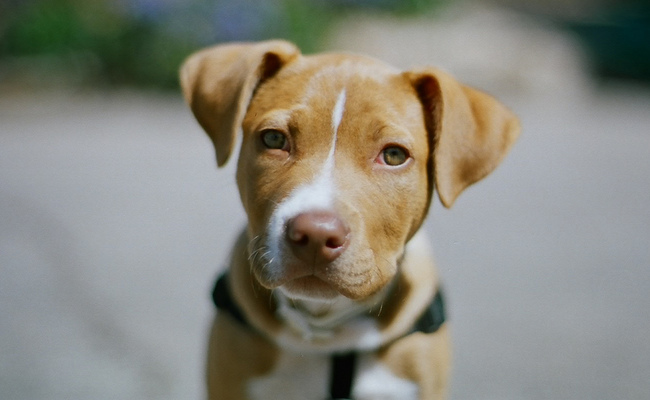
An adorable shelter dog shouldn’t have a difficult time finding a home—but it might if it comes with the label “pit bull.” (LeticiaRose / iStock)

By Rachel Nuwer, March 23, 2016

Regardless of a canine’s actual breed, simply labeling a dog a “pit bull” can condemn it to a significantly longer stay in a shelter and make it less attractive to potential adopters, concludes a new study in PLOS One.

Pit bulls are often stereotyped as aggressive and dangerous toward humans, though there is little evidence that those characteristics are inherent to the breed. The breed is popular among the dog fighting crowd, however, which contributes to its reputation for aggressiveness. To complicate matters, when attacks do occur, dogs may be labeled as pit bulls even when they are not. Indeed, in the United States, “pit bull” often serves as a catchall for a handful of breeds ranging from English bulldogs to American Staffordshire terriers; one person’s pit bull is another’s American bulldog mix.

This reputation follows the canines when they land in shelters. When potential adopters look at available dogs, they “don’t rate pit bulls any differently than look-alike dogs,” says the study’s lead author, Lisa Gunter, a graduate student in psychology at Arizona State University. “It’s only when we start attaching labels that people begin to perceive them more negatively.”

Most shelter dogs are of unknown origin, so employees often have to guess at an animal’s breed. Over a 10-year career working in shelters, Gunter noticed that she and her co-workers frequently arrived at different conclusions about a dog’s breed. And genetic studies have found significant discrepancies between descriptions of shelter dogs and their actual breed. One study found, for example, that half of the dogs that had been labeled as pit bulls at four Florida shelters had no pit bull ancestry in their DNA.

Gunter and her colleagues undertook a series of studies to find out how those potentially flawed labels might impact an animal’s chance of finding a home. They started by showing college students in California and users of the website Reddit photos of three dogs—a Labrador retriever, a pit bull-like dog and a border collie—without attached breed labels and asked questions about each, such as whether the dog looked smart or if the person would feel comfortable approaching it. The team found that participants ranked the pit bull-type dog as lowest on intelligence, friendliness, approachability and adoptability, and highest on aggressiveness and difficulty to train. When the pit bull appeared in a photo with an elderly woman or a child, however, it was rated more favorably.

Next, the researchers asked potential adopters at an Arizona shelter to rank dogs that appeared in photos and short videos on the animals’ approachability, intelligence, aggressiveness, friendliness, difficulty to train and adoptability. These scores were then summed to create an “attractiveness” composite for each pooch. To get around possible biases, such as apartment rules about animal sizes or bans on certain breeds, the team used phrases such as, “If circumstances allowed, I would consider adopting this dog,” to assess willingness to take a canine home.
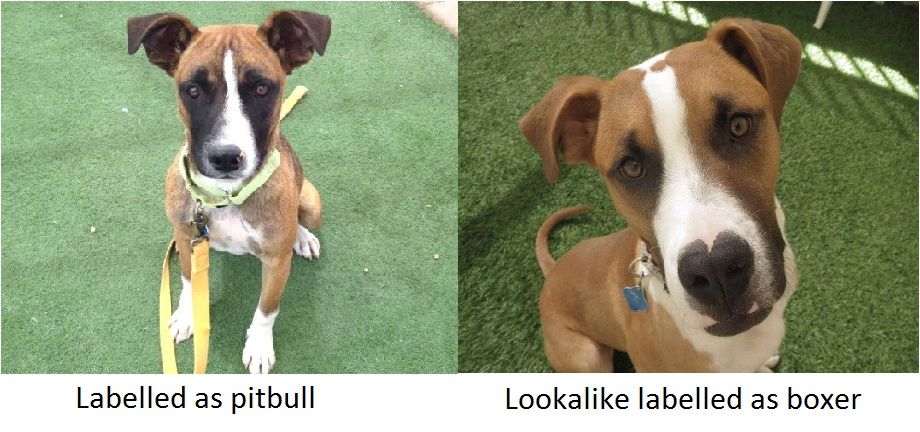
These two dogs may look similar, but the pit bull label could mean that the one on the left may wait a lot longer to find a home. (Arizona Animal Welfare League)

When the dogs were not labeled as any particular breed, participants ranked pit bulls and look-alikes (dogs that were the same size and color as the pit bulls) as equally attractive. Potential adopters even ranked the pit bulls in video recordings as more attractive than the non-pit bull matches. When the researchers introduced breed labels, however, that trend reversed, with participants ranking the same dog as significantly less attractive than similar dogs without the label.

The researchers also found that pit bulls at that shelter waited over three times as long to find a home as their matched counterparts.

Finally, the team analyzed a set of data from an animal shelter in Florida that recently removed breed descriptions altogether. When freed from the loaded label, pit bull-like dogs were much more likely to find a home. Adoptions of these dogs increased by more than 70 percent, compared with the prior year, and the shelter’s euthanasia rate for the same group dropped by 12 percent, probably because more of them were finding homes.

Taken together, these results “are very convincing that breed labels negatively impact any dog that is labeled as ‘pit bull,’” says Erica Feuerbacher, who studies dogs at Carroll College in Montana and was not involved in the study. “Furthermore, we know from other studies that humans are quite bad at correctly labeling breeds, so many dogs could be erroneously labeled pit bull—even though they are not—and by that label they become less adoptable.”

Eliminating breed labels, which people seem to be using as poor proxies for stereotyped traits, may be the key to banishing a significant amount of dog discrimination—and getting more dogs into homes, Feuerbacher and the other researchers argue. There is also a need to devise better means of measuring dogs’ true personalities, including their potential for aggression, and of ensuring those assessments are valid not just in the shelter environment but also in homes, Gunter notes.

“We want to drive the adoption conversation toward evaluating whether an individual dog, regardless of the breed, is a suitable candidate for adoption,” she says. “Then we can match-make between the personality of the dog and that of the person, instead of just relying on labels.”

ooOOoo

You can see why it so perfectly followed on from yesterday!

Not just my post but yesterday’s comments. Such as this from Tony:

Another example of form over substance. When will we learn?

So I know you will all cheer Erica Feuerbacher who is quoted towards the end of that Smithsonian essay and I will close with her words, in part: “We want to drive the adoption conversation toward evaluating whether an individual dog, regardless of the breed, is a suitable candidate for adoption. Then we can match-make between the personality of the dog and that of the person, instead of just relying on labels.

Oh, and a very Happy April Fool’s Day!
A scientific view of domestication.

Of our dogs, of course!

You may recall that back on the 15th of this month, I posted a Note to Readers that spoke about my need to be focused on the editing of my manuscript. Here’s part of that note:

Dear readers, we are talking hours of revisions that I need, and want, to make.

All of which is my way of saying that if my posts over the next couple of weeks more strongly lean on the republishing of other material then you will understand why. In all cases I will endeavour to republish articles that are likely to interest you, of course!

Late yesterday, I completed the many revisions to the manuscript recommended by Joni Wilson but still have more days of formatting changes ahead.

Thus another republication of an item, this time an article that appeared on the Smithsonian website.

ooOOoo

Domestication Seems to Have Made Dogs a Bit Dim

Thanks to their relationship with us, dogs are less adept at solving tricky puzzles than their wolf relatives

It's OK, buddy. We're here to help. (stelo/iStock)
It’s OK, buddy. We’re here to help. (stelo/iStock)

By Rachel Nuwer, smithsonian.com, September 15, 2015

Dogs are considered some of the most intelligent animals on the planet. Thanks to a relationship with humans that dates back tens of thousands of years, dogs can respond to emotions, recognize numerous words and be trained to follow commands.

Notably, these seemingly smart accomplishments all hinge on the partnership between our two species. Now, however, tests of canine problem-solving skills indicate that dogs rely on humans so much that we actually seem to be dumbing them down.

Most studies that investigate dog intelligence assume that certain interactions with humans are indicative of higher cognitive function. In one experiment, for example, dogs and human-socialized wolves were presented with a canine version of the Kobayashi Maru — an unopenable box that contained food.

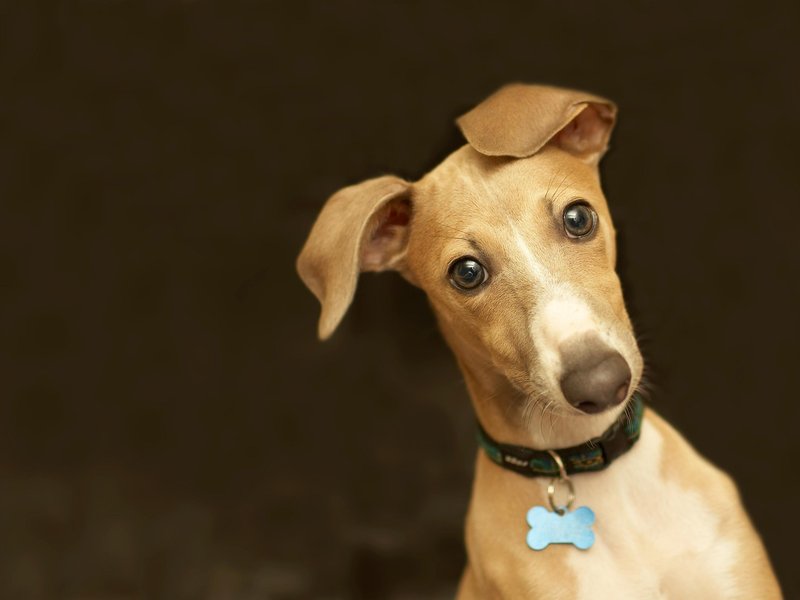
When confronted with a difficult task, dogs often turn to us—their human masters—for guidance, indicating their puzzlement with a cock of the head and eyes that seem to implore for help. Indeed, the dogs in the study quickly gave up and simply stared at the nearest human. The wolves, on the other hand, sought out no such help and persisted at trying to solve the impossible puzzle on their own.

Researchers usually interpret such findings as a sign of dogs’ intelligence; the wolves kept trying to win the no-win scenario, while the dogs knew that humans could help out with tasks they themselves could not solve.

But depending on humans for help is not necessarily a cognitive asset, points out Monique Udell, an assistant professor of animal and rangeland sciences at Oregon State University.

If dogs only turn to humans when presented with an impossible task—not a solvable one—then their “look back” behavior would indeed be advantageous. On the other hand, if they simply throw their paws up at the slightest hint of cognitive challenge, then that could indicate “a conditioned inhibition of problem-solving behavior,” as Udell puts it. Like a child whose parents always give away the answers to homework, dogs may be overly reliant on us, she surmised.

To test this hypothesis, Udell presented ten pet dogs and ten human-socialized wolves with a solvable puzzle. Sausage was placed inside a sealed plastic tub with a lid that included a bit of rope. With some paw and mouth finagling, the lid could be opened.

She also included ten shelter dogs in the study, because past research shows that shelter dogs are initially less responsive to humans compared to established pets. These animals acted as a sort of intermediary between hyper-socialized dogs and wolves.

Crazy smart, like a wolf. (Kaphoto/iStock)

Udell presented the canines with the puzzle box both in the presence of humans—an owner, caretaker or familiar person—and without any person nearby. Each time, the animals had two minutes to figure out how to get at the sausage. Subjects that failed in both trials were given a third and final try in which they also received verbal encouragement from their human friend.

Udell’s findings, reported today in the journal Biology Letters, were telling. In the presence of humans, just one pet dog and none of the shelter dogs managed to open the box. Eight out of ten of the wolves, however, succeeded in enjoying the sausage treat inside.

Wolves also spent more time chipping away at the problem and more time staring at the box, as if working out how to open it. Both pet and shelter dogs, on the other hand, did the opposite—they gave up more quickly and stared at humans instead of the box, seemingly asking for help.

When humans were not around, the findings were similar—nearly all of the wolves figured out how to open the box, while just one shelter dog and no pet dogs succeeded. In the third and final trial, dogs that had failed in both of the prior tests performed a bit better when humans encouraged them.

With some human cheerleading, four of nine shelter animals and one of eight pet dogs opened the box, and all spent more time trying to open the box and looking at the box than they did when they were either alone or when their human friends remained silent.

Udell’s results indicate that dogs do seem to be overly dependent on us compared to their wild relatives, although the cause of this—whether biological, environmental or both—still needs to be worked out.

Lucky for pet pooches, however, we humans will no doubt always be there to help them navigate all of life’s tricky plastic containers.

ooOOoo

Read more here.

Picking up on that last sentence, luckily for us humans our dogs will always be there to help us in innumerable ways, especially giving us unconditional love.


Nowhere to hide now!

Have a dog or two in the house? Hide your feelings then!

I have previously remarked on how quickly our dogs pick up on key words and phrases spoken by either Jean or me.  In my case, long before I met Jean when I was living in Devon with Pharaoh, I quickly learnt that voicing the word ‘walk’ caused an eruption of interest from his nibs. Then I foiled his intelligence by spelling the word out: w-a-l-k.  That lasted all of a fortnight (or two weeks in American speak) before Pharaoh knitted the letters into that walk word.

Here in Oregon our living-room/bedroom group of dogs (Pharaoh, Hazel, Cleo, Sweeney and Oliver) pick up on so many human comments, sayings, and behaviours that at times it feels as though Jean and I need to go somewhere private in order to discuss anything that affects our lovely dogs.

All of which is a preamble to a fascinating article recently seen on the Smithsonian Magazine website.

Our furry friends might be able to infer our mood based on our facial expressions - just like human buddies do. (Photo: JLPH/cultura/Corbis

Our furry friends might be able to infer our mood based on our facial expressions – just like human buddies do. (Photo: JLPH/cultura/Corbis)

Dogs Can Tell Whether You’re Making a Happy or Mad Face

For the first time, science shows that a non-human animal can recognize the emotional state of another species

By Rachel Nuwer
smithsonian.com
February 12, 2015

Facial expressions are a key asset in our arsenal of communication methods. Without saying a word, we can alert those around us to our emotional state—ranging from elation to sorrow—simply by flexing a few muscles. Such expressions have evolved to help us connect with one another, avoid danger and work together.

Fellow humans, however, are not the only ones potentially tuning in to the information our expressions convey. According to the results of a study published today in Current Biology, dogs have hacked this silent method of communication, at least enough to distinguish between angry and happy facial expressions.

Dogs and humans share a tight evolutionary bond, which is why veterinarian researchers from the University of Vienna decided to focus on these two species for their study. Dogs are already known to be whizzes at reading us. For instance, they can discriminate between familiar and unfamiliar faces even if just part of the face is shown in a photograph. Whether they actually recognize emotions, however, had not been conclusively investigated before.

It would be wrong to republish the full article without permission but I do want to share another photograph from the article and the closing paragraphs.

aa
A canine research subject differentiates between angry and happy eyes. Photo: Anjuli Barber, Messerli Research Institute

Before the authors delve into the greater animal kingdom, though, they plan to further explore their canine findings. Experiments with puppies could lend insight into whether facial expression recognition is something dogs learn over their lives or if it’s something more innate. And trials with wolves could indicate whether human breeders bestowed emotion recognition in their canine companions via artificial selection, or whether that trait was something dogs’ ancient relatives developed on their own simply by living in the vicinity of humans.

While the initial controlled laboratory findings don’t prove that your dog is watching your every facial move for clues about how you are feeling, they do open up the possibility that dogs are even more empathetic best friends than we thought.

Many of you who have dogs in your lives will intuitively know this to be true. But having the scientific underpinning is wonderful confirmation of that truth.

I’m sure I am not alone in having a dog come up to me and lick the tears off my face.

What incredible loving and trusting relationships we have with our dogs.

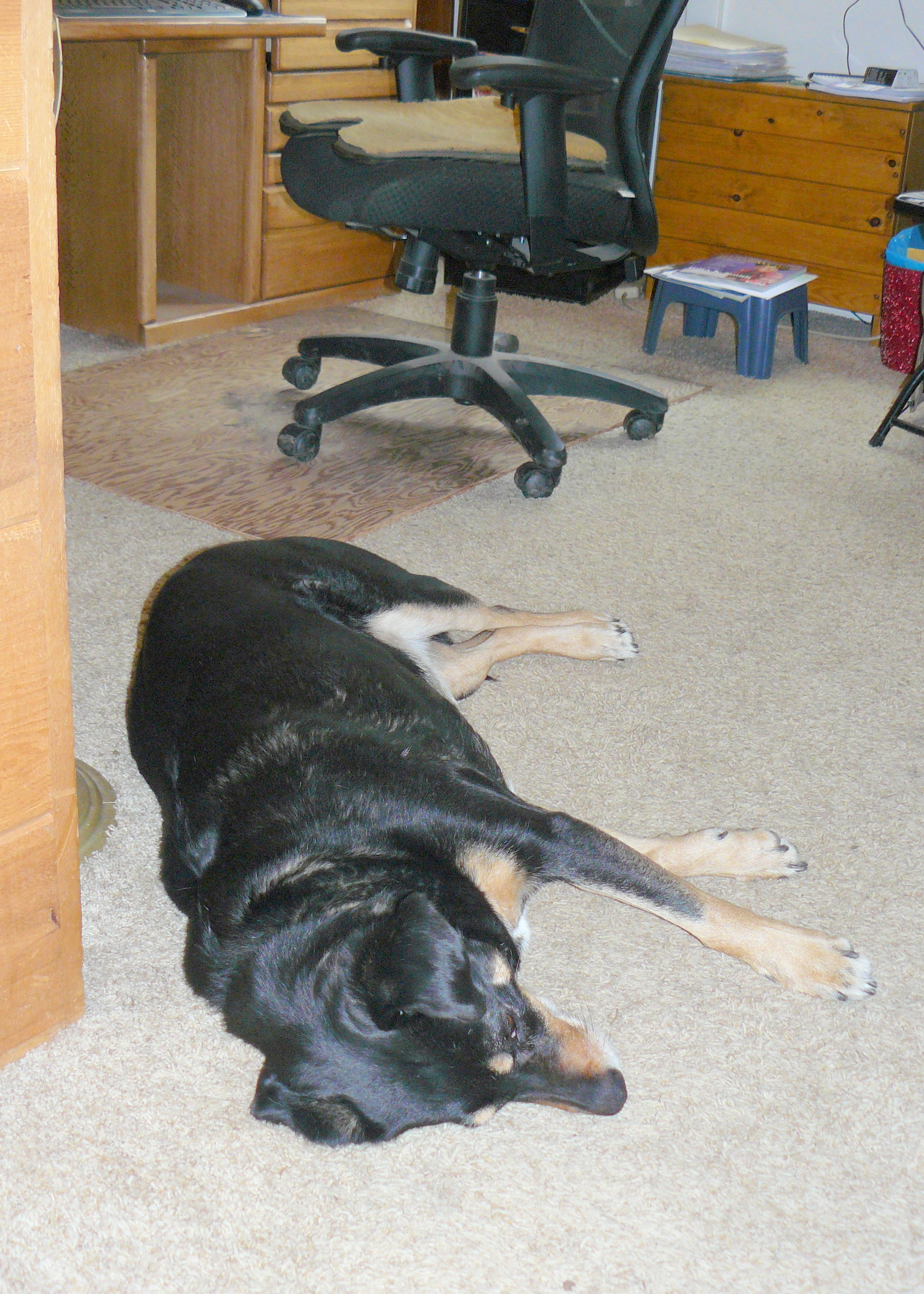
To underline my last sentence, on a whim I just took the following photograph of Hazel who very rarely isn’t by my side.

Picture taken at 10:35 yesterday morning in my 'home office' when I had finished writing today's post.
Picture taken at 10:35 yesterday morning in my ‘home office’ when I had just finished writing today’s post.