Tag: Planet Earth

Setting the lead – for whooping cranes!

This makes me proud to be human!

Operation Migration

Index_8990

As their website explains:

Operation Migration has played a leading role in the reintroduction of endangered Whooping cranes into eastern North America since 2001. In the 1940s the species was reduced to just 15 birds.

Operation Migration is a founding partner of the Whooping Crane Eastern Partnership (WCEP), the coalition of non-profit organizations and government agencies behind the project to safeguard the endangered Whooping crane from extinction.

Want to get involved? Here’s how.

Remember the film ET? Just look at this next picture …

Continue reading “Setting the lead – for whooping cranes!”

Climate warming – the argument continues

Alan Carlin’s response to Patrice Ayme.

Learning from Dogs is very grateful for having Alan and Patrice argue this very important issue through the medium of this Blog.  Because if there is one thing that has the power to overturn our way of life over the last 50 years, it is climate warming (as a result of man’s activities).

On the 26th October there was a Post published that contained Patrice’s reply to an earlier article containing Alan Carlin’s hypothesis.  Learning from Dogs invited Alan to reply to Patrice and this is his contribution.

With one exception the recent comments by Patrice Ayme are typical of what climate alarmists/warmists so often say when presented with serious climate science by skeptics.  They presumably do this in order to try to distract attention from their inability or unwillingness to respond to the scientific issues raised by skeptics or a desire to hide the weakness of their science.  They appeal to alleged authority; they attack the opposition, often personally–anything to avoid discussion of the science.

In this case, the only exception is Ayme’s weird contention that there should not be a tropospheric hotspot in the tropics IF the UN GHG hypothesis should be correct.  This is weird because there is actually rare agreement between most informed alarmists/warmists and skeptics that such a hot spot should be present IF the UN hypothesis is correct.  So his contention that it is an “absurdity” puts him at odds with his much favored UN reports and with his views on the science of warming.  For further information see Evans here (which is a link from the link I originally gave–but perhaps Ayme did not bother to read it before responding??)

As Evans points out this alleged hotspot predicted by the UN climate hypothesis is actually crucial to the UN hypothesis “because the same water vapor feedback that produces the hotspot in IPCC climate theory also doubles or triples the temperature increases predicted by the IPCC climate models.  If the IPCC climate modellers just turn down the water vapor feedback in their models enough so their theoretical signatures match the observed warming patterns, then the predicted temperature increases due to projected carbon emissions are greatly reduced and are no longer of much concern.”  So Ayme apparently did not realize that his statement that there should be no hotspot means that he believes that one of the crucial features of the UN climate hypothesis is wrong and hence that his views of the science are wrong.

I note that except for his weird statement on the hotspot, he makes no serious attempt to respond to or analyze my four fundamental scientific tests of the UN GHG hypothesis.

For a different view as to the objectivity (or lack thereof) of the IPCC see here.

Most of the remainder of Ayme’s comments are best ignored as attempts to distract readers from the fundamental (and telling) scientific tests discussed in my post.

Alan Carlin

By Paul Handover

Sunrise

Here in San Carlos, Mexico, we have good sunrises most mornings.  But this one made me grab my camera. The picture is unedited. Very simple things can provide a huge amount of pleasure.

Sunrise

Taken at 06:15 local time (GMT -7hrs)  Camera is a Panasonic Lumix DMC-FZ8

By Paul Handover

Remarkable people update

Another quick look at Riverford Organics and a lesson for all.

Further to my post on Guy Watson of Riverford Organics, in the mini-series on remarkable people:

A couple of Saturdays ago (October 24), we had a great time out at Wash Farm, the home of Riverford Organics.

Our five year old son enjoys eating sweetcorn. Recently, having carried the weekly veg box from our doorstep to the sweetcornkitchen calling “Riverford coming through!”, he was then delighted to report: “there are three sweetcorns”, there having been two in previous weeks!

riverford 008On Saturday, he marched into a field of sweetcorn and, as if he had done it for years, went straight to a plant and, explaining what he was doing, tested the crop for size and ripeness and picked it by breaking it off like an expert. He then handed it to me and proceeded to pick many more of them. When I asked him how he knew what to do, all was revealed: “I saw it on the telly!”.

As luck would have it, I encountered Guy Watson at the event and it was great to shake his hand and offer a few words of congratulation on what he has done. Of course, he has no idea who I am!

Their customer service is great; and now they are embarking on more market research to understand better how their customers use their products! [See the relevant edition of their newsletter here!] [The subject of a Post on Market Research coming out soon. Ed.]

Although I am not an expert, I know enough to know that this is remarkable. To think about how customers are using the product, to measure it, to go into customers homes and find out what they are really doing with your products: this is at the pinnacle of good customer research!

No doubt there are others, but I have only ever heard of one other company who paid so much attention to customers in their homes. It was Intuit, the highly regarded US software vendor which, for decades, has consistently beaten Microsoft at providing accounting software. Their representatives would wait in a shop for a customer to buy their product and then request permission to travel with them to their home to record exactly what experience they had with installing and using it!

Final report from the day at Riverford: the event on Saturday was “Pumpkin Day”, its primary purpose being to buy (and have carved) your pumpkin for Hallowe’en. There was a competition to guess the weight of a (largish) pumpkin; I guessed by comparative lifting of the pumpkin and of said five-year-old son, and based my estimate on information from his mother about his most recent weight! Guess what? I have just heard that I won! So a case of (organic, of course) red wine is now expected to materialise alongside this weeks box of vegetables!

By John Lewis

P.S. The Riverford Blog is a good read

Against “Daylight Saving”!

An ancient idea may have run it’s course?

What is the purpose of “Daylight Saving”? [Interesting history of Daylight Saving on Wikipedia. Ed.]

clock faceThis week we are in a particularly interesting situation as we are in the middle of a one week separation between the dates when Europe and US change their clocks back to “normal” winter time. I.e. Europe changed their clocks back at 2am last Sunday and most, but not all, US States change their clocks back at 2am this coming Sunday.

This is even more confusing than normal. But why are we doing this at all?

Is it to save fuel, to save lives, to save time or to save something else?

In my humble opinion it is all nonsense!

“Time management” is a myth

Time is time! People say that they do not have enough time to do this or that, as if they have ways to make some more; and, of course, there is much talk about “time management”. Yet we all have the same amount of time and no amount of management will change that!

We are certainly able to manage the things that we try to fit into the available time.  That is, we can manage tasks, effort and so on. But, in everyday (Newtonian rather than Einsteinian) regimes, time is an inelastic independent variable. Fiddling about with the clocks and trying to “manage time” have no effect on the stuff whatsoever. Let it be!

There must be a better way!

Yes, I know! Some people make claims of wasted daylight or of the dangers to schoolchildren walking to or from school in the dark. These are valid areas of concern. If adjusting the times of business operations or schooling helps to deal with them, then by all means do so. But, for goodness, let’s not pretend the time is different.

By John Lewis

The Swine Flu “Pandemic”

When is a Pandemic a Pandemic?

[I owe Chris an apology as this Post was prepared for publication on the 20th August and somehow got lost in the works.  I believe it is still a relevant and important topic and has not lost any impact from this unintentional delay. Ed.]

The swine flu “pandemic” is to me a very interesting phenomenon. Sadly, it seems typical of the sort of combination of marketing hype and hysteria that is all too common.

I am principally interested in seeing beyond all the media lies and spin to know the TRUTH about what is going on. From what I have so far read the following seems to be true, but if anyone is able to correct me on some issues I would be most grateful.

Read more about this so-called pandemic

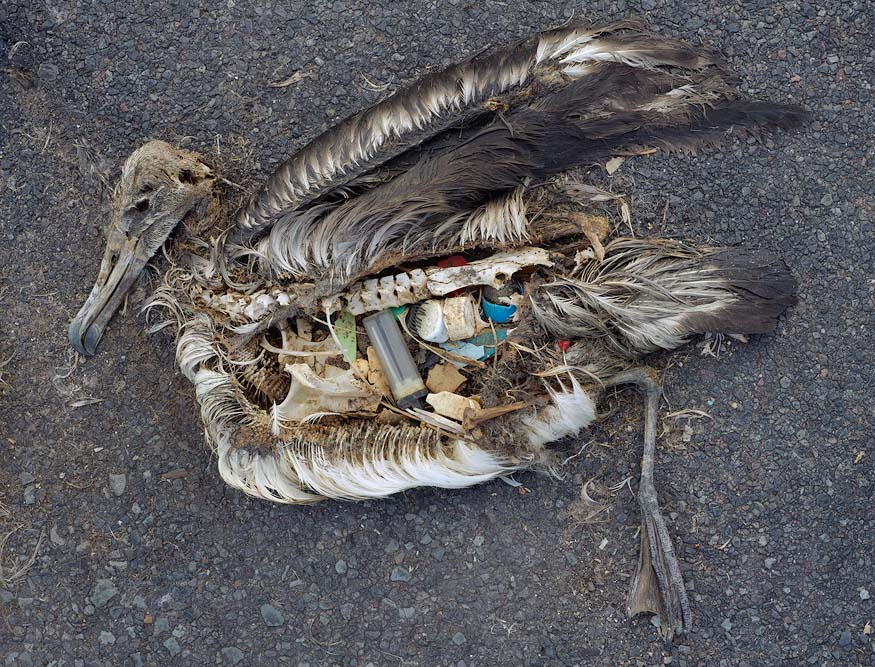
Unintended consequences – for the albatross!

Using our Planet as a dustbin!

Once again, a piece in Naked Capitalism caught my eye this time courtesy on one of Yves’ readers who came across this:

These photographs of albatross chicks were made just a few weeks ago on Midway Atoll, a tiny stretch of sand and coral near the middle of the North Pacific. The nesting babies are fed bellies-full of plastic by their parents, who soar out over the vast polluted ocean collecting what looks to them like food to bring back to their young. On this diet of human trash, every year tens of thousands of albatross chicks die on Midway from starvation, toxicity, and choking.

To document this phenomenon as faithfully as possible, not a single piece of plastic in any of these photographs was moved, placed, manipulated, arranged, or altered in any way. These images depict the actual stomach contents of baby birds in one of the world’s most remote marine sanctuaries, more than 2000 miles from the nearest continent.

Midway chick

More pictures of this terrible way to treat a magnificent bird are here.

By Paul Handover

Climate warming – two very different views!

Thank goodness for two so very different opinions.

The problem for lay persons, such as me, is that it is very difficult to read in the popular media well-reasoned arguments for each side of important issues, such as climate.  You can see my confusion being expressed in the opening paragraphs of an earlier Post on Climate Change.

It might not be rhetoric to say that the issue of man-made climate change could be one of the most pressing issues of all for mankind.  Thus having two very clearly opposing views is incredibly useful.  Learning from Dogs is grateful to both guest authors.

On the 16th October, we published a general Post about the subject that tended to lean towards the view that mankind was not affecting the climate in such a direct way as had previously been thought.

That was then followed by a Post largely consisting of an article by Patrice Ayme arguing, scientifically, that there was a direct link between mankind and global warming.

Then a Post that contained the full article by Alan Carlin arguing, again on scientific grounds, that there was not a direct link.

Patrice commented on the Alan Carlin article.  But to give greater visibility to this debate, this Post carries Patrice’s comment.  We hope to have a response from Alan Carlin soon.

Read Patrice’s comment on Alan’s article

Climate warming: the debate continues

Alan Carlin believes that rising greenhouse gases are not the cause of warming, on scientific grounds.

Yesterday we published a long guest Post from Patrice Ayme who argued that climate warming is a very serious risk to this planet, as we know it.

Alan Carlin has gracefully given Learning from Dogs permission to reproduce his article that argues, on a scientific basis, that man-made greenhouse gases are not the cause of warming.

Again, this is an article that needs to be read.  Alan’s Blog is here.

Read Alan Carlin’s article

A view of England – from France.

A work trip to Brittany, France and a chance to reflect on the differences.

I’m sat writing this in my hotel room on the outskirts of Quimper in Brittany. Usual overcast and drizzle but considering I’m only a couple of hundred miles south of home, that’s the only similarity with the Devon weather.

Quimper
Quimper

They simply seem to have no comprehension about the recession. There are small signs of some new office building being empty but more buildings seem to have appeared and business appears to be booming. The super market where I have lunch is even busier than last year and the shops are full of people buying things.

What’s the difference?

I’m sure my friend Chris [Chris Snuggs, another author on this Blog] who I used to work for here will be able to say, but I can’t believe it’s all about the main business of food and agriculture, which predominates in this part of the country.

Back home in Devon, the same set of circumstance ought to hold true as it’s mainly agriculture and tourism, just like in Brittany.  However there is a vibrancy in Quimper that I find refreshing.  And a lack of charity shops!

What can we learn from this?

I was bought up in an environment that did not trust the French and it wasn’t until I got an opportunity to work here 10 years ago I realised that it wasn’t all that I’d been told.

I really like Brittany and its people who are friendly and very welcoming. There is definitely something to learn from this.

By Jon Lavin