In fact the heading was taken from an email that came in from Bill McKibben’s 350.org yesterday. But before reproducing that email in full, let me take you back to the 6th January this year when I published a piece simply called Keystone XL pipeline. This is how that Post opened up,
Yesterday, I had published a lecture given in Melbourne by Britain’s eminent Astronomer Royal, Lord Martin Rees. Lord Rees concluded his lecture with the call for us to take better care of our own planet. He, like many others, recognises the unique place in history that we occupy. For the first time a single species is capable of exerting profound changes on the Earth’s natural and physical environments.
Over and over again, scientists are reporting the rise in climate temperature of Planet Earth and the implications thereof if we do not wakeup soon to changing our ways. The Keystone pipeline is a huge potential mistake!
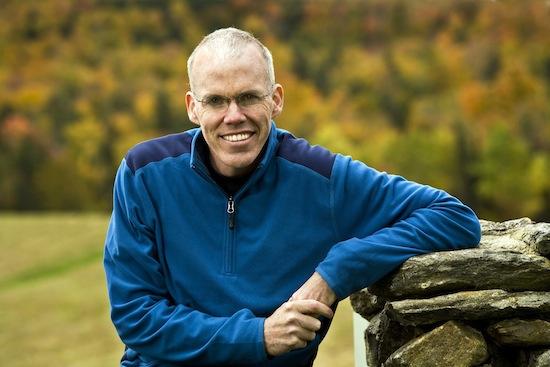
Bill McKibben of 350.org
Not easy to focus on a single sentence from Lord Rees but this one’s pretty direct, “For the first time a single species is capable of exerting profound changes on the Earth’s natural and physical environments.”
God only knows what money, power and influence is going on behind the scenes because no leader in their right mind ought to be supporting any major investment in the continuation of carbon-based energy. So it was with deep dismay that around 2pm US Mountain Time yesterday afternoon the following email arrived in my in-box. (Feel free to republish this Post, indeed please do so!)
Dear friends,
Earlier today, Barack Obama wrapped up his first trip to Oklahoma as President. He arrived just after a week of floods, capping off a winter that never came, which followed the hottest and driest summer Oklahoma had seen in thousands of years, perhaps ever.
But he wasn’t in Oklahoma to talk about these climate disasters. He was there to laud his administration’s fast-tracking of the southern leg of the Keystone XL tar sands pipeline. In his speech today, President Obama didn’t connect the dots between fossil fuel extraction, climate change, and the extreme weather that has reshaped so much of the American landscape this past year.
It’s a painful reminder that sometimes we must be leaders ourselves, before we can expect our elected officials to follow. It’s clearly up to us to connect the dots.
Today 350.org is launching a global day of action to call attention to these and other climate disasters, here on the same day as the President’s annoucement. Across the planet now we see ever more flooding, ever more drought, ever more storms. People are dying, communities are being wrecked — the impacts we’re already witnessing from climate change are unlike anything we have seen before.
If we’re going to do these communities justice, we need to connect the dots between these disasters and show how all of them are linked to fossil fuels. We’re setting aside May 5th for a global day of action to do just that: Connect the Dots between extreme weather and climate change.
Anyone and everyone can participate in this day. Many of us do not live in Oklahoma, the Philippines, or Ethiopia — places deeply affected by climate impacts. For those of us not in directly-impacted communities, there are countless ways to stand in solidarity with those on the front-lines of the climate crisis: some people will be giving presentations in their communities about how to connect the dots. Others will do projects to demonstrate what sorts of climate impacts we can expect if the crisis is left unchecked. And here in the US, it’s particularly important that we make the connections clear to our elected officials — beginning with President Obama.
However you choose to participate, your voice is needed in this fight — and you can sign up to host a local event here: www.climatedots.org/start
(For more general info about the day, check out our new website here: www.climatedots.org)
350.org has done giant global days of action before (over the last three years we’ve helped coordinate over 15,000 events in 188 countries) and they’re always beautiful moments when our movement stands together. This year we’ll use that same captivating tactic to draw attention to the struggles of our friends around the world — the communities already feeling the harsh impacts of climate change.
These will also be beautiful events, we’re sure. But they will also have an edge. It’s right that we get a little angry at those forces causing this problem. The fossil fuel industry is at fault, and we have to make that clear. Our crew at 350.org will work hard to connect all these dots — literally — and weave them together to create a potent call to action, and we will channel that call directly to the people who need to hear it most.
May 5 is coming soon; we need to work rapidly. Because climate change is bearing down on us, and we simply can’t wait. The world needs to understand what’s happening, and you’re the people who can tell them.
Please join us — we need you to send the most important alarm humanity has ever heard.
As I implied when I introduced Part 2 last Thursday, Why Are We Here?, these are deeply interesting films. Do find time to watch them both (Part 1 Are We Aloneis here ) if you can. So here is the concluding part, Are We Real? You can either go to it via this link, or watch the YouTube elements below.
There is a fundamental chasm in our understanding of ourselves, the universe, and everything. To solve this, Sir Martin takes us on a mind-boggling journey through multiple universes to post-biological life.
On the way we learn of the disturbing possibility that we could be the product of someone else’s experiment.
I do hope you all found these three films as stimulating and thought-provoking as Jean and I did.
Towards the end of the lecture that Lord Martin Rees gave at University of Melbourne’s Medical School in 2010, he spoke of the way that Planet Earth has warmed up these last 100 years, warmed up uniquely. Why the word ‘uniquely’? Because, for the first time in the ancient life of our planet, that warming is the result of the activity of a life species living on that planet; mankind. It’s difficult to comprehend how special, how fragile and, therefore, how vulnerable is mankind’s ability to survive on Planet Earth. That’s why a recent item on Martin Lack’s excellent blogsite Lack of Environment is published on Learning from Dogs with Martin’s kind permission. But first let me quote a little from WikiPedia about the ‘goldilocks principle’,
In astronomy and astrobiology, the habitable zone is the region around a star where a planet with sufficient atmospheric pressure can maintain liquid water on its surface.[1]1 Since liquid water is essential for all known forms of life, planets in this zone are considered the most promising sites to host extraterrestrial life. The terms “ecosphere” and “Liquid Water Belt” were introduced by Hubertus Strughold and Harlow Shapley respectively in 1953.[2] Contemporary alternatives include “HZ”, “life zone”, and “Goldilocks Zone.”[3]
“Habitable zone” is sometimes used more generally to denote various regions that are considered favorable to life in some way. One prominent example is the Galactic habitable zone’ (the distance from the galactic centre). Such concepts areinferred from the empirical study of conditions favorable for life on Earth. If different kinds of habitable zones are considered, their intersection is the region considered most likely to contain life.
The location of planets and natural satellites (moons) within its parent’s star’s habitable zone (and a near circular orbit) is but one of many criteria for planetary habitability and it is theoretically possible for habitable planets to exist outside the habitable zone. The term “Goldilocks planet” is used for any planet that is located within the CHZ[4][5] although when used in the context of planetary habitability the term implies terrestrial planets with conditions roughly comparable to those of the Earth(i.e. an Earth analog). The name originates from the story of Goldilocks and the Three Bears, in which a little girl chooses from sets of three items, ignoring the ones that are too extreme (large or small, hot or cold, etc.), and settling on the one in the middle, which is “just right”. Likewise, a planet following this Goldilocks Principle is one that is neither too close nor too far from a star to rule out liquid water on its surface. While only about a dozen planets have been confirmed in the habitable zone, the Kepler spacecraft has identified a further 54 candidates and current estimates indicate that there are “at least 500 million” such planets in the Milky Way.[6]
Is it time to say goodbye to the Goldilocks Planet?
I hope not, because the next-nearest one yet discovered is 600 light years away! However, if we are indeed now passing a tipping point (i.e. as the widespread rapid thawing of Siberian permafrost suggests) both mitigation and adaptation will be almost impossible. Therefore, if we cannot reverse the damage already done (i.e. how can we make permafrost re-freeze or reverse the retreat of mountain glaciers?), we may have to accept that temperatures will eventually rise to a level at which the Antarctic first became glaciated 35 million years ago; and that sea levels will now rise continuously for several centuries – making any permanent settlement anywhere near the coast impossible (seeJames Hansen in Storms of my Grandchildren).
If your response to all this is to accuse me of being alarmist, all I can say is that I am afraid denial is definitely not a good evolutionary survival mechanism. Furthermore, as American high school science teacher – and now climate change activist – Greg Craven has said,“Unfortunately, the experiment is already running; and we are all in the test-tube!” I believe we must therefore hope that humanity will not repeat the folly of the former inhabitants of Easter Island; who chopped down all their trees for firewood and allowed all the decent soil to be washed away so they could not grow anything.
I think it is fair to say that 2011 was a difficult year for humanity and the planet; and 2012 could be worse. We now seem to be facing both a financial and an environmental crisis: Even at the tender age of 46, I can appreciate that the prospect of 6 years of austerity measures (here in the UK) is completely without precedent; worse even than the great depression of the 1920s. In the UK, public sector workers have been demanding a better pension! What about a better economic system, or even a better planet? If necessary, please forgive my impertinence but, how can people demand justice for themselves whilst ignoring all the injustices we are inflicting on those least able to adapt; and/or bequeathing to our descendants?
This is almost as pessimistic as my recent answer on ClimateSight to the question “Why are people who want to reduce – and possibly eliminate pollution – and create a safer world, considered obstructionist naysayers?“, which is… “If everyone lived as we do in ‘the West’, the planet’s ecological carrying capacity would only be about 3 billion [Paul and Anne Ehrlich (1996)]. Therefore we cannot solve poverty without allowing a lot of people to die or by wealthy people agreeing to moderate their over-consumption of the Earth’s resources. Sorry to be so blunt but, this is the simple answer to the question.” …Despite what detractors say this is not misanthropic eco-Socialism, it is reality. There is not enough decent farmland and/or resources of every kind for 7 billion people or more to live like we currently do in ‘the West’. If we are not going to deny the legitimate aspirations of poorer peoples to attain a better standard of living, we will have to moderate our over-consumption and/or pollution of the Earth’s resources. We cannot have it both ways.
Conclusion
If we continue to burn all the Earth’s fossil fuels – just because they are there and because we can – we will most certainly have to say good bye to our Goldilocks Planet. However, now that we know that what we are doing is causing the problem, would it not be a good idea to stop doing it? You know: When in a hole, stop digging, etc… As the Good Book says, “As a dog returns to its vomit, so a fool repeats his folly” (Proverbs 26:11).
Suggested New Year’s Resolution:
If we want things to change, I believe we must acknowledge that Clive Hamilton is right: climate change is a failure of modern politics – representative democracy is not working! Therefore, we must all take a much more active role in the process of government – this is called participatory democracy – and we must start by demanding that our politicians dismantle (or at least stop being misled by) the fossil fuel lobby who do not want their business as usual programme interrupted.
Having said all that, I would still like to sincerely wish you all the best for 2012 (although I hope the Mayan Calendar is wrong).
 Learning from Dogs