Tag: Learning

Dogs really are smarter!

Fascinating research coming out of Duke University

This Post was stimulated by a link sent to me by Chris Snuggs, who will be joining the author’s team at Learning from Dogs in due course.

The link was to an article published in Time Magazine on September 21st and is available in their online version.

Brian Hare of Duke
Brian Hare of Duke

The article is about the extraordinary social skills that have been developed by dogs over the millennia that they have been associated with man.  It featured Brain Hare (sort of seems an appropriate name!) Assistant Professor, Evolutionary Anthropology at Duke.

The article is also rather timely as only a few days ago, there was a Post on this Blog about the befriending of a man with a wild wolf, or was it the other way around!

Back to the Time magazine article,

“Understanding a pointed finger may seem easy, but consider this: while humans and canines can do it naturally, no other known species in the animal kingdom can. Consider too all the mental work that goes into figuring out what a pointed finger means: paying close attention to a person, recognizing that a gesture reflects a thought, that another animal can even have a thought.”

Read more about Dogs

Starting a business

Looks like a nice series from USA Today newspaper.

Just happened to be staying in a hotel last week that offered free copies of USA Today.  Too mean to buy my own copies!

Anyway, that Monday was the start of a small business entrepreneur’s series running for 6 weeks.

Don’t worry if you missed the paper version, all available online.  Week One is here, Week Two here.  Bookmark it if you want to follow all 6 weeks – seems well thought out and mostly relevant to both sides of the Pond.

By Paul Handover

Unemployment, Part Three

How much is “too much” Unemployment?

How much unemployment “should” our economy have?  How much unemployment is too much, and how much is just right?  How high does the unemployment rate have to go before significant changes are made in government policy and approaches?

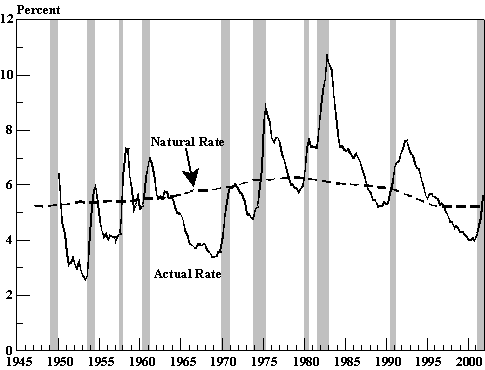
The question of the optimal level of unemployment has generally been answered by reference to the so-called “natural rate” of unemployment.  The natural rate of unemployment is measured as the long-run average rate of actual unemployment in an economy over time; it is a “trend line,” as seen in this graph below:

unemployment3

Read more of this Essay

Understanding unemployment, Part Two

Examining unemployment in more depth.

In an earlier post, I explained how the reported U.S. unemployment rate, which was 9.6% in August of 2009, is unemployedmeasured. This post will explore the reported unemployment rate in more depth, distinguishing between the short-term, temporary sources of unemployment and the long-term, more structural, and troubling aspects of the unemployment rate.

The 9.6% U.S. unemployment rate remains the same next month if no one changes their employment status.  But the rate also remains unchanged if the same number of people hired get fired.  In truth, the U.S. unemployment rate nets out enormous flows of people into and out of the labor force and, for those in the labor force, between being employed and unemployed.

A representative month in the unemployment statistic tells the story.

Read more about unemployment

Barnstorming

As the film says, Friends can really drop out of the sky.

Copyright 2009, Barnstorming Productions, LLC
Paul Glenshaw, Copyright 2009, Barnstorming Productions, LLC

Read about the film Barnstorming

Positive mindsets.

Can a positive mindset achieve results? Yes, but only with positive actions.

On the 14th September I started this idea of thinking your way to success with this Post, Success is an Attitude.

I want to follow that up with a few words on positive thinking or mindset.

All you have to do is a Google search about ‘a positive mindset’ and you will be flooded with free information.

Although this seems great at first, you have the unfortunate task of working out which information you can trust.  I don’t mean to say that you will be supplied with incorrect information, I do however have my concerns about complete information.

I have spoken to numerous people who cannot understand why failure hits them when they have tried to be so positive.  I have also spoken to successful people who have a very positive outlook on life.

I am firmly of the opinion that a positive mind is essential.  If your mind is burdened, the likelihood is that you will worry and all your mental energy will be consumed.  You will fail then to pick up from your surroundings what you should and will not see the opportunities that are everywhere.

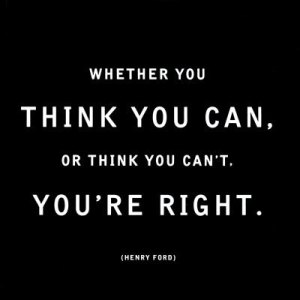
However, if you have a positive mindset, you will be more likely to ‘see’ and appreciate your surroundings.  Further, think_you_canyou will be able to identify and appreciate opportunities.


In reality, all a positive mindset does therefore is allow you to see opportunities.  But seeing is not enough.  If you do nothing but see, you must accept failure.  You must examine carefully the opportunities that present themselves and act upon those that merit action.  It is the action that will lead you to success.

In conclusion it is positive thought and positive action will lead you to fulfil your goals and ambitions.

By Dapinder Bains

What not to say

John Lewis joins Learning from Dogs

On September 3rd, a Post was published about John.  Anyone who read that Post will understand the pleasure that both John and I got from being re-connected.  Subsequent chats since that Post have shown that there are many parallels in the way that we think, see the world, and speculate as to what, really, is going on!  It was inevitable that I would ask John to join Learning from Dogs and, when I did, John’s immediate ‘yes’ was proof indeed that this was the right thing for us.  A strong desire to do something is always important.

John’s first Post shows that he will be welcomed by all who read this Blog.

Paul

Read John’s first Post

Success is an attitude.

You are, or become, what you think!

On the 12th August I published a Post about the Law of Attraction.

Let me turn to succeeding – from a entrepreneurial point of view, but equally applicable for  whatever is important to you.

In business, simply knowing about the basics in a little detail is not enough to achieve any degree of success.

Actually you need to have a deep understanding of what you are about to embark upon to ensure that you place yourself correctly in the market and sell to people who actually want your product.

The success therefore is in the detail.  As is said, the devil is in the detail.

It will take you time to gain this understanding and, in most instances, will cost you money, but if you lack the belief that you will achieve your goals, you will not have the enthusiasm to learn and we learn most from our mistakes.  To use a cliché again, you can’t make an omelette without breaking some eggs.

Perversely, if you have a very positive attitude without any desire to learn, you have even less chance of success.

The answer therefore has to be somewhere in-between.  It’s a fine balance and reaching it can be a challenge in itself.

It would be safe to say that most don’t ever achieve it.

A clear goal is critical in the process.  Having a clear goal helps you plan what you need to do to achieve that goal and lets you know when you have achieved it!

As is said, the only benefit of not planning is that failure comes as a complete surprise!

Success therefore is a Mindset, but what exactly should your Mindset be?

By Dapinder Bains

Lend an Ear!

Taking stuff for granted.

Speaking to Paul on the phone and reading his comments about Hurricane Jimena, it’s clear that we all take basic things

Georgia Horsley - see text

in life very much for granted.  The following was passed to me by a fellow commercial pilot who, like me, as you will probably appreciate, requires regular medicals to be passed fit to fly.  It serves as a reminder to all of us that we should value frequently our health.

Here’s the tale.

Read more of this Post

Understanding unemployment, Part One

The Unemployment Rate: how it’s measured; what it means.

The unemployment rate is often used as a signal of how well an economy uses its resources.

The social costs of involuntary unemployment are evidence of a poorly functioning economy. The unemployment rate

(c) AP Photo
(c) AP Photo

in the U.S. currently stands at about 9.7%, causing deep concern about the overall health and viability of our economy.

Let’s first make sure we know how this reported unemployment statistic is measured.

Read more of this Post