Tag: Integrity

Time Flies!

Family echoes.

Today is my 54th birthday.  I am now the age that my mother was when she died, on January 8th, 1985.  I knew then that she died too young, that she had so much more living to do.

Two weeks before her death, I visited her in the convalescent hospital where she had been for months.  She was going home!  The doctors had given her a clean bill of health.   She ordered a new skirt to celebrate and had it shipped to her home.  We got out maps of London and made plans to take a trip there together, as adults, as friends, the following summer.  I went back to school, happy to have had such a nice visit, happy she would soon be going home.

About ten days later, on January 5th, 1985, I got a call from my brother, telling me that mother had septic shock, that she might not make it, and that I needed to get there, fast.  I bought a one-way ticket and packed a dark suit.   She was still alert when I finally arrived.  The nurses remembered me, and let me stay with her, even when visiting hours were over.  I got to talk to her, and ask her what she wanted me to do for her, what she wanted the doctors to do for her, what measures she wanted taken.  She wanted to live.  She was getting weak, working to breath, waiting for the antibiotics to work. Or not. The doctors recommended a ventilator, to help her conserve her strength.  Before they put it in, she had one last thing to say:  “I love my children.”   She died that night.

Lillian Harris, Sherry's mother, at age 20 with her first child Brenda

I remember thinking at the time how sad it was that she had never gone to college, never had a career, never fulfilled her dreams.  That she had fallen in love at 18, gotten married, and devoted her entire adult life to her children.    That her last thought was of her children. I was single and doing odd jobs while earning a doctorate.  I had a cat and helped take care of my 90-year-old neighbor, but having children was the furthest thing from my mind.

Fast forward to today, January 12, 2010.   I am now the age my mother was when she died.  I did go to college, I do have a career, and I have chipped away at those dreams.    But those are the side bars of my life.  Like every parent out there, the moment my first child was born, I understood what my mother meant.  I understood how much you could love someone, how you could put their interests ahead of your own,  and how you could not be happy unless they were okay.  And, as the years go by and I get older, I understand what a precious gift my mother gave me when she said those last words.  She taught me that time flies, and you never know what day might be your last.  She taught me to treasure every second with your children because, before you know it, they have grown up and are out the door. Just yesterday, they were toddlers; blink, and they are turning 30.

Time passes so fast.   Make it worth it.

By Sherry Jarrell
[Readers may find that an earlier Post by Sherry fits very beautifully with this moving account published today. Ed.]

Criminals or enemies of the State?

A reflection on what ought not to be a legal difficulty

Yesterday, Dr Sherry Jarrell strayed outside her normal field of economics and voiced the feelings of an ordinary US citizen.  That is that the “underwear” bomber should be seen as a combatant, not as a common criminal.

It’s easy to share the frustration of others that someone who allegedly was committed to blowing up an American airliner was clearly behaving as an enemy of the State and, therefore, should be treated and tried in a military manner.

What is the history of such definitions as combatants?  WikiPedia provided an answer.  (NB.  Good reporting should cross-check a source with another source.  I spoke with a Barrister friend of mine and he confirmed that the entry under WikiPedia appeared to be legally correct and reliable.  Readers are asked to make up their own minds on this issue.)

Read more of this Post

Blogging and jail!

Is blogging the same as journalism?

There is a very interesting Post on the Blog TechCrunch.  Let me quote a little from that Post:

Last week two bloggers, Steven Frischling and Chris Elliot, were visited by TSA agents and threatened with jail time if they did not reveal their source of the TSA Travel Directive that they each published shortly after the attempted terrorist attack on Christmas day. Frischling caved immediately and handed over his computer. Elliot did not. Since then the Department of Homeland Security has dropped the subpoenas, but there is a bigger issue here. The protection of sources is a cornerstone of our freedom of speech.As bloggers, we have a duty of confidentiality to our sources. And that means keeping information confidential even if threatened with the tyranny of government. And even if the legislatures and courts haven’t decided that as bloggers we have real rights protecting us from that tyranny.

I’ll never be surprised by a tyrannical government. In a sense, it’s their job. It’s our job as bloggers to stand up to that tyranny, even if our liberty has been threatened. Journalists have gone to jail rather than disclose their sources. If bloggers want the same level of respect, and protection from government by the courts, they need to stand up for what’s right.

Read more of this Post

A Perfect Neighborhood

The best place to live?  It’s all down to your neighbors!

No offense to anyone else, but I live in the perfect neighborhood.

My neighborhood is not big; it consists of only one street, a circle; where you enter the street is the same place you exit.  There are only about 30 homes on my street.  None of them are very fancy or very big. Most of the houses are older.  Some need repair.  One or two are empty now.  No, it isn’t the size of the neighborhood or the grandeur of the houses.

I live close to the University where I work.  I could walk to work if I needed to.  But I haven’t needed to, except for the one time, when the Presidential debate was held on campus and security closed it down to all but pedestrian traffic.  Although it is certainly convenient, proximity to work is not the reason my neighborhood is perfect.

My girls are unlikely to agree just yet with my assessment of our neighborhood.  But they are still young, and there are no kids their age on our street.  One neighbor does have grandchildren their age who visit sometimes, but that doesn’t really count, they tell me.  Off and on, they complain and say they want to move.  My 15-year-old wants to live in a city, the bigger the better, the more people the better; my 13-year-old wants to live on a horse farm, the bigger the better, the more horses the better.

But I tell them that some day, when they are married and have children and are busy with life, they will look back on this time in our neighborhood, and will understand what I meant when I told them how very lucky we are to live here.

Because we have neighbors; real neighbors!

They welcome new families with home-baked bread; take in your mail when you are away; call to check on you when you are sick; give you a ride to get your car out of the shop; lend you their extra tall ladder.  All without hesitation and without expecting anything in return.  And they let me do what I can for them.  There’s genuine warmth and support between neighbors on my street. It’s like an extended family.

Maybe even a little better!  Why? Because they do all of this without pushing, without invading your privacy, without crossing into your personal space.  They are supportive without being nosy.  How totally wonderful:  to have support when you need it but, as important, perhaps more important, you also have your privacy.  I can’t imagine a better combination.  I can’t imagine feeling safer.   I can’t imagine a more wonderful neighborhood.   I can’t imagine a better home. My neighbors are the best.

By Sherry Jarrell

Remarkable people: Kevin Richardson

Trust is both taught and learnt!

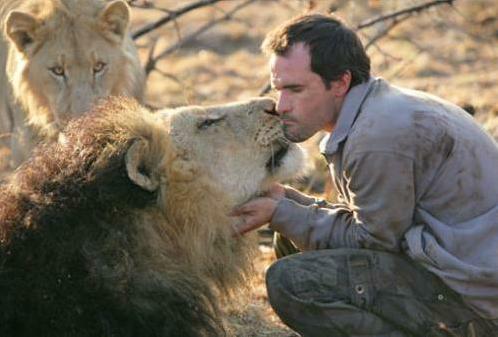
Thanks to Naked Capitalism, we posted an item on the 19th December about an unknown wild-life ranger working in the wildlife refuge area of Lanseria, South Africa.  Here was one of the pictures included in that Post:

The Post finished with an appeal to anyone that knew the name of this Ranger.  Many of you did and responded; thank you!

Read who this Ranger is

The Singular Importance of Good Writing

“The time to begin writing an article is when you have finished it to your satisfaction.  By that time you begin to clearly and logically perceive what it is you really want to say.” ~Mark Twain

It is a bit intimidating to try to write a piece on the importance of good writing.  I feel self-conscious about my writing as I write about good writing.  After all, a post on good writing should be written especially well. Then again, maybe a poorly written post will do even more to illustrate the importance of good writing. I will have to leave that up to you, the reader.

I have been teaching graduate and undergraduate students for over twenty years now. I have read and graded thousands of papers and essays during that time. I can count on two hands the number that were exceptionally well written.  In each case, I sought out the students to compliment their writing, and to encourage them to keep honing their writing skills.

I doubt my words of encouragement had much effect.  This, I know from personal experience.

Years ago, in my third year of graduate school, I got a paper back from a professor with the words “You write well” written in the margin.  I was crushed.  I had worked so hard on that paper: reviewing the existing literature, developing the research design, and trying to make a substantive contribution to my field.  I yearned to hear something tangible about the quality of the research, the cleverness of the method, or the importance of the findings.  Instead, I got “you write well.” I honestly thought that the professor had said that because he couldn’t think of anything positive to say about the content of the paper.

Years later, something happened that made me realize how wrong I was.  I had taken a teaching job at Southern Methodist University in Dallas, Texas, even though I had yet to defend my doctoral thesis; it’s called “ABD,” or “all but

Merton Miller

dissertation.”  I had traveled to Chicago to meet with Merton Miller, my thesis chairman, about polishing up my dissertation and scheduling the defense.  As I waited outside his office door, I couldn’t help but notice how distracted Professor Miller seemed. He had always stood at a tall wooden lectern to write, but this day he paced to and from that lectern, rubbing his head, adjusting his shirt sleeves, writing, erasing, then erasing some more.

He was at the lectern when I entered his office for our meeting. I congratulated him again for winning the first Nobel Prize in financial economics and asked him about the upcoming trip to Stockholm.  He was taking his wife and daughters on the trip, who were very excited. He, on the other hand, was not ready for the trip.  He was worried, he said, because he was not going to have sufficient time to revise his acceptance speech.   He had only edited it seven times thus far, and his magic number was eight.  Not six, not seven, but eight rewrites were what he needed to be satisfied with his writing.

Professor Miller was known as one of the most gifted writers in all of economics.  His writing was disarmingly simple and clear. It flowed like a piece of music. It seemed effortless.  Everyone, myself included, assumed that he was just a naturally talented writer, lucky to have been blessed with that skill. Everyone was wrong.  I learned that day that Professor Miller worked hard at writing well.  He was well into his 60’s, had written hundreds of articles and had won the Nobel Prize, but he was still working at writing well.

Then I remembered the comment that a teacher had written in the margin of my paper years earlier. The teacher was Merton Miller.  And now I knew how much it really meant, coming from him.   So now when I see the rare student who writes really well, I make it a point to tell them.  Not that it means as much coming from me as it did coming from Professor Miller.  But it still means something, because good writing is very important, and it’s worth working for.

By Sherry Jarrell

“Don’t worry, it’s only an old man!”

A passer by invokes a lesson for us all.

.

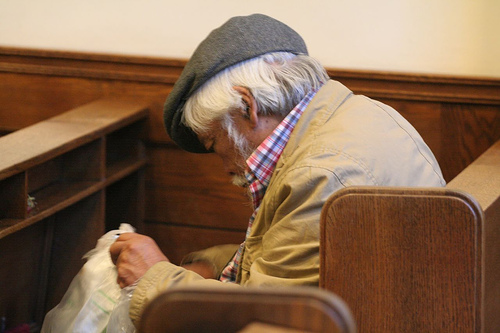
Recently while busy in the garden our two dogs started barking. This in itself is not unusual because they sit at the front gate waiting for passers by to stop and talk to them. It can be a horse, or cyclist that sometimes causes them to bark, and our children have grown to show the same awareness as the dogs in who is passing.  I didn’t see the cause this time but our young daughter did.

Don’t worry, Daddy, it’s only an old man!

Stephanie is only 8 years old, but without meaning any harm had given sufficient information to explain the risk to us and paint a quick picture in a few words as to why the dogs were barking.

Of late for some reason I have been more aware of people who are ageing. This generation do not normally stand around telling stories, this is left to the young who always seem to have something to shout about.

However all older people will have many interesting tales, often almost unbelievable, yet true. They have lived through war, happy, sad, interesting, and hard times. Each has learnt about life through experience that we can not buy.

Recently my ex Mother-in-law passed away. I thought I knew her very well, but it wasn’t until family stories started coming out that we all found out there had been much more in the life of this modest lady.

How it should be.

Christmas is coming and probably there will be family gatherings. This year I am going to try and turn the attention to the older generation, and see if they will open up and give us an insight into their childhood days and memories so that we can give them the respect they deserve, ask them to read stories to the children, ask them to tell their own tales.

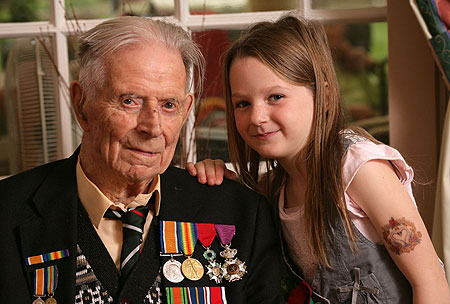
Oh and the old man? Yes I did see him again, in church at a Remembrance service, and he had some medals under his coat, so did have a story to tell!

By Bob Derham

Crimes and accidents: the extent of responsibility

How bad can a car accident be?

On 28 February 2001 a vehicle came off the M62 motorway at Great Heck, near Selby, [North Yorkshire, England. Ed] ran down the railway embankment and onto the East Coast Main Line, where it was struck by a passenger train. The passenger train was derailed and then struck by a freight train travelling in the opposite direction. 6 passengers and 4 staff on the trains were killed. The driver of the vehicle was found guilty of causing the deaths of 10 people by dangerous driving.

So begins the report “Managing the accidental obstruction of the railway by road vehicles” from the UK Department for Transport (DfT).

If you were aware of this incident at the time, you might remember that it attracted considerable discussion and press coverage, here are  some examples.

At the time,  a variety of causes were cited for the accident and for the failure of various mechanisms to prevent the accident.

“Whose fault was it?”

Most of the discussion seemed to be based on trying to find someone to blame for everything that happened and the main target was the driver of the vehicle who was alleged to have been driving while unfit to drive due to lack of sleep, and to have fallen asleep at the wheel.

However, I thought that the public response to the incident was a matter of considerable concern; and I continue to think so.

Clearly people can expect to be held responsible for their actions. When their action or lack of action causes damage, they can expect to be held responsible for that damage. However, there are surely limits to that responsibility.

Also, it is interesting that this incident was described at the beginning of the DfT report which was otherwise entirely about ways of reducing incursion of road vehicles onto railways. So, if it is accepted that insufficient fences, banks, ditches or other obstructions had been provided, the implication is that the motorist could expect some protection to exist and is therefore not wholly responsible for the consequences of it not existing.

Level of responsibility

If, as alleged, the driver was unfit to drive then he can expect to be held responsible for his actions. But, in much of the discussion about this incident, there was very little importance attached to the issue that the probability was infinitesimally small that he would fall asleep at exactly the location which resulted in his vehicle entering a railway line, and at the time when not one but two trains were about to pass that point. I would hazard a guess that he could not have planned it so accurately if he had intended to cause the incident!

Having, by extremely bad lack, ended up on a railway line and before the railway collision occurred, he was aware of the danger of collision and was already using this mobile phone to attempt to warn the authorities of the situation. But even if he had been injured and unable to warn anyone, to what extent was he responsible for the full range of consequences of this extremely unlikely incident?

According to one of the press reports:

The HSE report described the accident as ‘wholly exceptional’ and concluded: ‘There was nothing the railway industry could reasonably have done to prevent the collisions.’

Chief Inspector of Railways Vic Coleman said: ‘It’s clear that the chain of events that led to this catastrophe were determined by sheer chance.’

The DfT report, and the fact that the work to generate it was instigated, suggests that the Department for Transport did not agree with the Health and Safety Executive (HSE) that there ‘There was nothing the railway industry could reasonably have done to prevent the collisions.’

Distinguishing the criminal from the accident elements

How do we distinguish crimes from accidents? In particular, in complex incidents such as this, how do we distinguish the criminal elements from the accidental elements of an incident?

In my opinion, there is no benefit in penalising, or even reprimanding, people for actions which led to consequences which either they were completely unable to foresee or which were so improbable as to be bordering on fantasy. On the contrary, it is an opportunity to learn more about the consequences of one’s actions; this can be a positive process of extending one’s understanding, rather than a negative process of “not doing that again”.

In particular, in cases like the Selby incident, clearly someone should be penalised if it is determined that they were driving dangerously; but it seems to me that the severity of the penalty should be based on the severity of crime, which relates to the severity of the likely consequences of their actions and, presumably, whether this is a recurrence of this or other offences.

It also seems to me that the severity of crime is largely independent of the actual consequences of the incident. In other words, someone should expect to be penalised just as severely when there were no consequences as when there were.

I understand that many people would like to find someone to blame for all damage which occurs. But is this reasonable? There are, after all, such things as accidents!

Our blame culture

My view is not that held by the authorities, at least not in the UK. The sentencing guidelines of the Crown Prosecution Service in cases of dangerous driving take the view that the consequences are relevant.

As is probably apparent, I respectfully disagree. This blame culture does not, in my view, serve any purpose and may even reduce safety. Safety experts in the aviation industry seem to take a completely different view from that in the motoring world and reap the long term benefits of improved safety as a consequence.

You may take a different view!

By John Lewis

News on a Sunday

A round up of this strange world that we all live in.

[In fact Chris wrote this on Sunday, 13th but due to the backlog of LfD posts to be published, it has been held until today, the 20th. The points are still as valid. Ed.]

BRITISH LABOUR PARTY WASTE ON FRIPPERY:

From the UK newspaper, The Daily Mail.

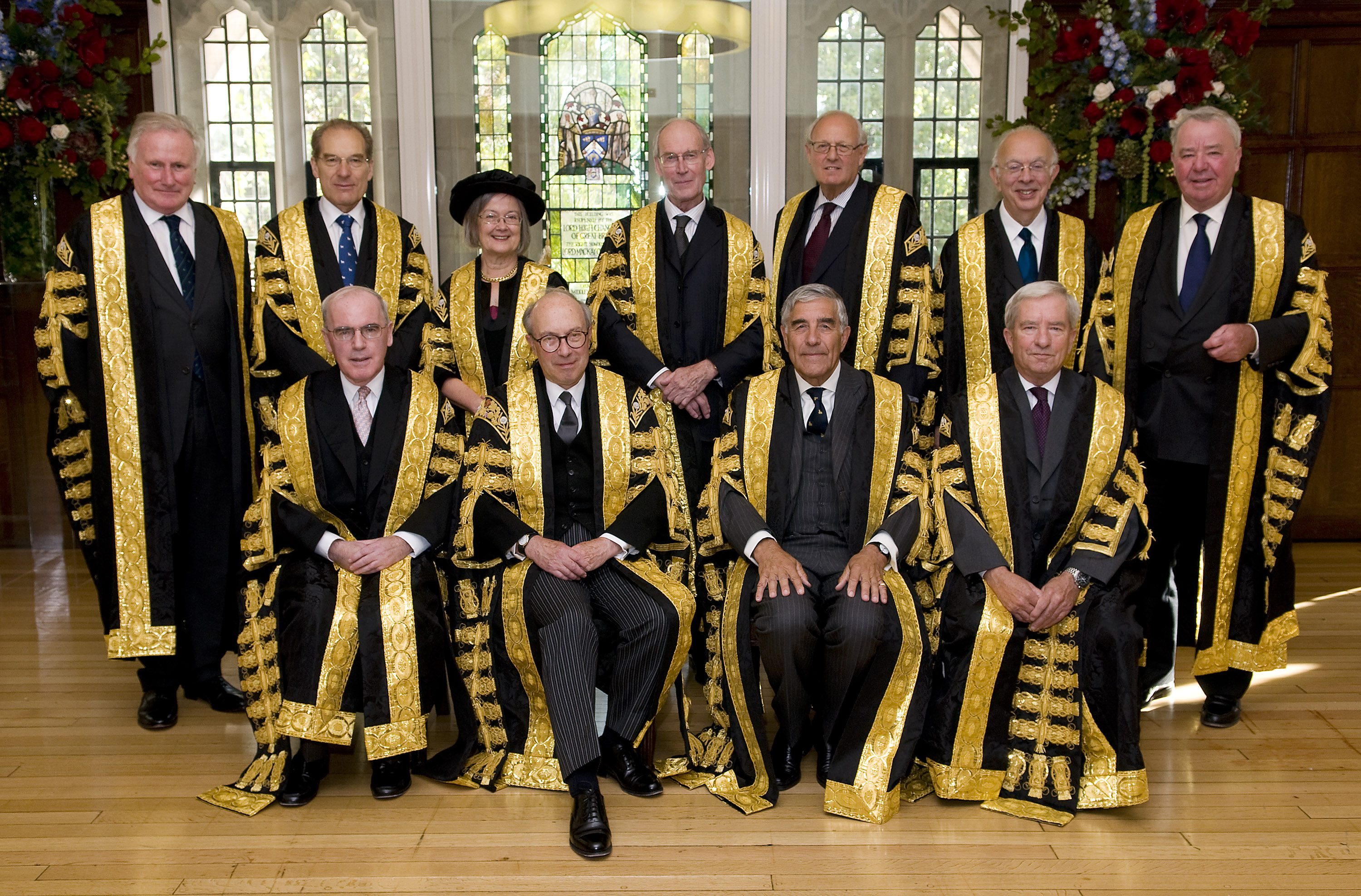
Judges in charge of Britain’s controversial new Supreme Court have been provided with robes they will hardly ever wear at a cost of £137,956 to the taxpayer.

The hand-crafted black brocade robes – embroidered with real gold thread – will not be worn by the 12 Supreme Court Justices in normal session.

They will be donned only perhaps twice a year for ceremonies such as the State Opening of Parliament or the beginning of the legal year. The rest of the time, the judges will wear everyday suits.

A snip at £140,000 ($224,000) Photographer – Ron Coello

It’s only money …. plenty more where that came from…

BRITISH POLITICS: Few things are more pathetic than the Liberals‘ current poll rating of 17%, with Labour on 26% That the worst government in the history of the world is still way ahead of the Liberals is of course a tribute to the lunacy of Labour voters, who seem not to understand the terrible damage this govt has done. Still, some of them have done very well under Labour: doctors, judges, high-ranking civil servants, consultants …. all more or less bribed with the people’s money.

Lib-Dems must be very depressed; if you can’t get a decent poll-rating when up against this motley bunch of venal, pompous, pretentious and incompetent misfits then you wonder really what the point of their party is.

Democracy?

Still, you get the government you deserve, so they say. Except that the British voting system is hopelessly undemocratic. In the next election a vote for the Lib-Dems is probably going to be wasted, risking the danger of letting Brown sneak in despite everything.

As for UKIP, it is a perfectly tenable position to want to get out of the EU. I’d guess that 30% of the electorate would want this, and that’s a very conservative estimate. Yet they have NO CHANCE WHATSOEVER of getting ANY representation in parliament.

This is not democracy, but of course it suits the two dinosaur parties very well indeed.

TIGER WOODS: what a pathetic, sordid saga this is. Not his bedroom antics, but the media obsession with it. People are dying all over the world of treatable diseases, of inhuman treatment at the hands of the North Koreans or others. Democracy is destroyed by religious nutters in Iran, millions more tons of ice melt, while politicians bleat uselessly (and expensively) in Copenhagen (I note they didn’t choose Scunthorpe! Might not have got such a good turnout!)

OIL: Oh, and on the climate front and the importance of reducing emissions I note that the Iraqi government is predicting oil output to rise to 12 million barrels a day within a few years – the same as Saudi Arabia.

That IS good news!!!!! … the British Labour government will hit us with every stealth and non-stealth tax you can imagine “to save carbon” and pay for yet more consultants and managers while the rest of the world greedily sups up billions more tons of oil.

Apparently, this has been a bumper year for oil discoveries …. you couldn’t make it up! An extra-terrestrial observer must be scratching his head wondering how the universe could have spawned up such a bizarre species.

Yet the press is full of Woods ….. and because he is good at golf … hitting a ball into a hole, a skill of such nanoscopically-sized irrelevance to the world’s problems. What sort of mentality is it that is even interested in yet another, crass, boring superstar who has failed to resist the temptations that money brings?

JFK was the great hero who would save the world but turned out to be just another, faithless, lying philanderer. Who can have any illusions since the days of Marilyn Monroe and the extinguished candle?

OBAMA PEACE PRIZE: The surreality of this obsession with over-sexed but hyper-boring celebrities is matched only by that involved in the award of the Nobel Peace Prize to Obama. What exactly has Obama actually DONE?

Nobel prize winner

Crucially, there is practically NO change in the Middle East (except the major change for the good brought by the reviled George Bush and Tony Blair! the world is nothing if not full of irony); the USA still cravenly supports Israel, which CONTINUES to build and/or enlarge settlements, which denies any possibility of ever putting right some of the wrongs of the past (Palestinian exiles, appropriation of their land, stealing of their capital and so on – even the West Bank roadblocks are mostly still in place.)

Yet even in the pathetic there can be humour, as when he said that to bring peace the USA had to make war, or words to that effect.

Yes, he is of course right, but it was still funny. I wonder what Mother Theresa would have said? And Nelson Mandela? He had to sweat out decades in prison preaching non-violence to earn his NPP, while Obama only had to get elected to get his. Truly the triumph of hope over reality.

Perhaps hope is all there is left. I nearly said “we have left”, but then I realized that I haven’t actually got much myself.

By Chris Snuggs

A hero

Another example of the power of social media.

I subscribe to Naked Capitalism, as much for the Antidote du Jour, as for the fine economic commentaries.  In my inbox of the 16th December was this wonderful antidote.  A quick Google search shows that these pictures are spreading like wildfire around the world’s email servers.  Not without reason.

Maybe these pictures resonate in all of us when we long for some simpler way of life …..

This Ranger is assigned to prevent poaching around the wildlife refuge area of Lanseria, South Africa. The way these animals interact with him is absolutely stunning! The lions seem to know he’s there to protect them. His charm works with hyenas and cougars too. Hyenas are usually vicious. Check out the pictures taken in the river – amazing because lions hate water.

As they say, don’t try this at home!

View the rest of these stunning photos