Recently, the children from our small school in Breamore started their day with a Harvest Festival service in the old Saxon village church which is over 1,000 years old.
Rural life has not changed much for generations.
The Breamore Estate, set in beautiful Hampshire countryside has some 300 inhabitants, many of them living in old thatched cottages. The main Breamore House is where General Patton stayed in the run up to the D-Day landings.
A personal reflection on the emotions stirred by the PBS series on the USS Nimitz
The last three days have seen Posts on the USS Nimitz. On the 2nd there was the first part of air carrier operations specifically looking at the challenges of a pitching deck. On the 3rd came the second part as the pilots and crew operated into night, still with the deck of the USS Nimitz pitching significantly. Yesterday, the Post carried links to background information including the excellent web site that PBS have on the USS Nimitz series.
Keynes, macro economics and other terms need to be more widely understood.
Macroeconomics as a field is not very impressive, frankly.
In my view, it is more glorified accounting and policy than anything remotely related to testable economic theory!
Keynesian economics — the stuff that most macro courses are made of — smacks of a model created to justify a pre-conceived belief that government can run businesses better than private industry can. Keynes spoke strictly of demand-side policies, namely fiscal and monetary policies, which create a large role for government intervention, as opposed to supply side policies, which basically get government out of the way by lowering taxes, fees, paperwork, and restrictions, and allow private industry to take risks and create value and manifest economic freedom.
Have you ever noticed how the most ardent supporters of capitalism and free markets are those who’ve experienced a world without them?
How those who speak out most poignantly against health care reform in the U.S. are those who’ve experienced nationalized health care? No?
Angela Merkel
If you can, then, take a moment and think back to the coverage, the news, the sound bites. Take a look, perhaps a second look, behind the headlines and I venture that you will find endless examples of this phenomenon. It is those who have done without freedom of choice, free markets, and self-determination who treasure it most, who most understand its value, who’ve lived with the consequences of its absence.
Chancellor Merkel grew up in communist East Germany and is now leading Germany out of recession with tax cuts and reduced government spending.
We should be listening to what the world is telling us. Very hard, and very quickly. We don’t want to have to lose it before we appreciate what we have.
I was born in London some 6 months before the end of World War II. The echoes of that tragic event in human history rang around the torn roadways and ripped buildings of London for many years, certainly for sufficiently long that I was able to remember as a young boy, away on his bicycle, the bomb sites and and the gaps where once buildings had stood.
Sometimes, when the September weather is as it was during the Battle of Britain, it’s almost as though those echoes can still be faintly heard. Maybe all Londoners over a certain age hear them?
Patrice published a Post on his Blog last September 11th. Not being an American it felt wrong to echo that publication by linking to the Post on the 11th as well. No logic, just the way it felt!
But it is so deeply interesting, that not to highlight the Post would be wrong. This Blog, after all, is about integrity. In that process, if the truth is uncomfortable, so be it. And if others think that Patrice doesn’t speak truthfully then they must speak otherwise. You see, integrity is really the pursuit of truth.
Patrice’s subject title is: Why France Is Bad: Profits Define Goodness.
Thanks to Dan for passing me the link to a fascinating graphic that was recently published in USA Today showing the
As seen by STS 128
time-line of the International Space Station. It has been orbiting above our heads for over a decade! Do click on the link because you will be surprised, unless you work for NASA, how large and complex the ISS now is.
It’s an interesting to consider what has happened since the launch of the first module, Zanya, on the 20th November, 1998. Bill Clinton was then President of the USA; Tony Blair had been British Prime Minister since May, 1997. How times change!
But steadily a group of Nations has worked together to keep this project going and now the end of this magnificent enterprise is within sight. As the NASA web site summarises:
The International Space Station is a partnership of the US, Russian, European, Japanese, and Canadian Space Agencies. The station has been continuously human occupied since Nov 2, 2000. Orbiting 16 times per day at 17,500 miles per hour 250 miles above the ground, it passes over 90% of the world’s surface. When complete in 2010, it will weigh over 800,000 pounds and have a crew of 6 conducting research and preparing the way for future exploration to the moon and beyond.
Where the capital city is called Edinburgh of the Seven Seas
My great buddy of 30 years, Dan, Californian born and bred, recently emailed me saying that he had spent a fascinating hour reading the website of Tristan da Cunha. Most British people will have some odd recollection about this very remote community living in the South Atlantic because the islands are part of the United Kingdom. TDCU 1ZZ is, in fact, the UK postcode for Tristan da Cunha.
The settlement on Tristan
This is not a place which has a habit of making main-stream news! Indeed, one could not imagine a more distant part of the planet. Well you won’t imagine a more distant place. Tristan da Cunha is the most remotely inhabited archipelago on Planet Earth. Indeed, only one island, Tristan, is inhabited and, according to the website there are just 264 British citizens there today.
Earlier it was mentioned that most British will have some vague recollection of Tristan. More likely, that will be those British who were born before, say, 1950.
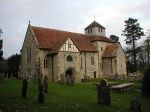 Saxon village church which is over 1,000 years old.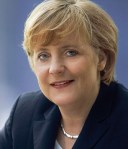


 Learning from Dogs