July 20th was my last post. Here are some of my own photographs taken while Maija, my daughter, Marius, her husband, and Morten, their son were with us. That was after Alex, my son, had come to see us in June.
Here is Morten, who spent hours caressing and fondling Brandy, our largest dog.
oooo
His other passion was exploring for gold. We have Bummer Creek flowing through the property. It is called ‘Bummer’ because as the locals would have it there is no gold to be found. But that didn’t stop Morten spending time looking for gold!
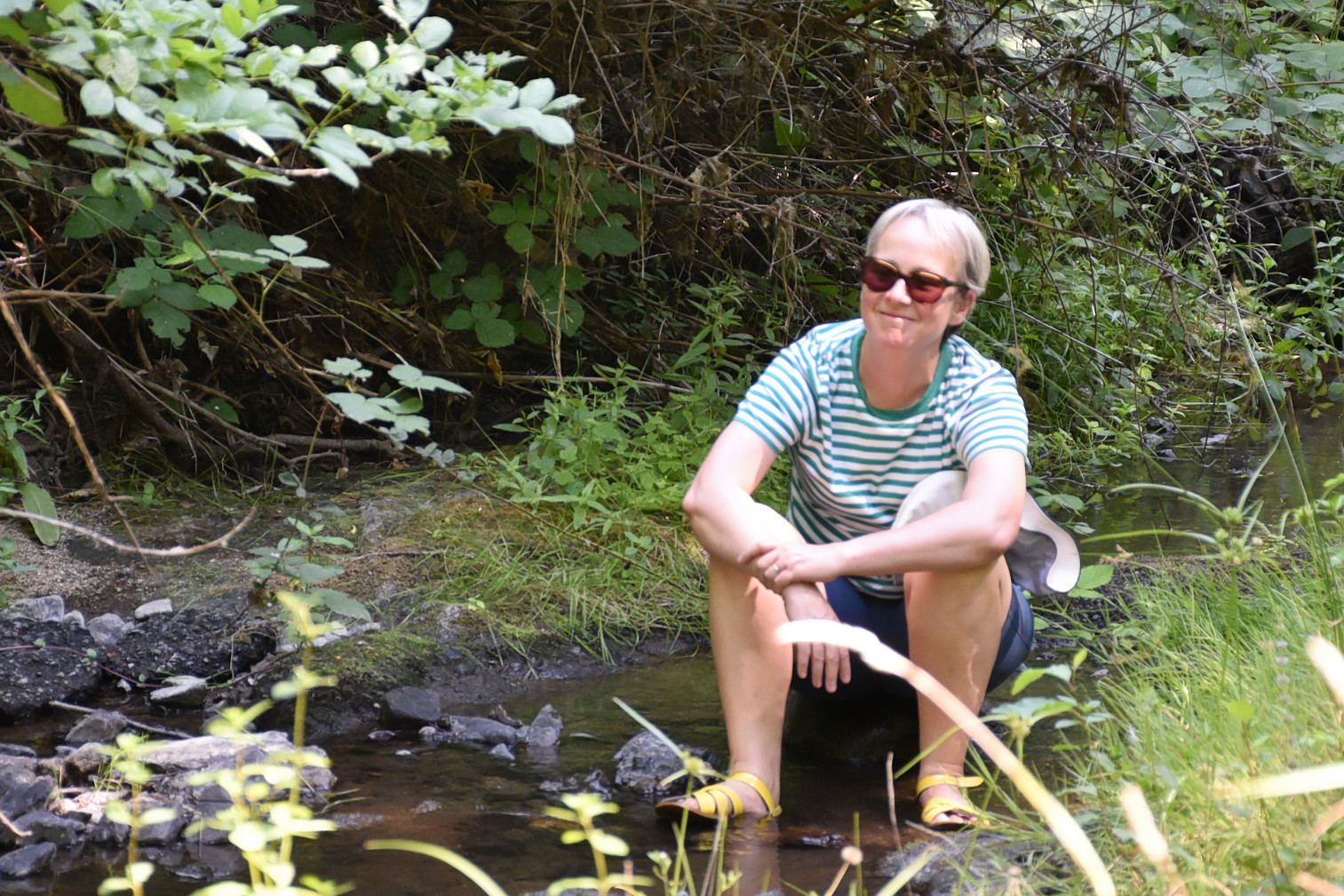
And this is Maija (photo slightly out of focus).
The next photo shows Maija and Morten strolling along the creek.
oooo
Above a shot showing Marius and Morten looking for the illusive metal!
I close with the Morten and Marius hoping to see a trace of gold in the gold-pan, and Maija looking on.
I’m sure you’ve heard about the steady rise in gold prices over the last several months. You may have also seen the advertisements from gold investment companies pushing the purchase of gold, or heard predictions about even higher gold prices as world currencies struggle.
We have to take a step back and ask ourselves about the true underlying value of gold.
Why is it valuable? Because people demand it, and there is a relatively limited world supply. Why do people demand gold?
It’s not like gold will sustain you: you can’t eat or drink it, nor does it have utility in and of itself.
No, the reason gold has value is because it can be exchanged for money which, in turn, can be exchanged for goods or services. So the value of gold is derived from the very same place as is the value of money: access to underlying goods and services.
The actual value of gold, however, is entirely dependent on other people’s demand for gold, given limited supply, much like fine art. Unlike money, you cannot actually use gold for transactions: have you tried to use a bar of gold at your local restaurant or car dealer, for example?
Think about it: if for some reason gold fell out of favor — let’s say someone discovered it was toxic — then gold would no longer be desired as an indirect means of exchange — having to first be exchanged for currency — and its price would drop to nothing, quite independently of the value of money itself.
The value of money it also dependent on its demand, which in turn depends on the acceptability of the currency on the world stage as a unit of exchange.
Dollars are accepted as currency and retain their value as long as the underlying real U.S. economy continues to be productive, and as long as the world supply of dollars does not outstrip the world demand for dollars.
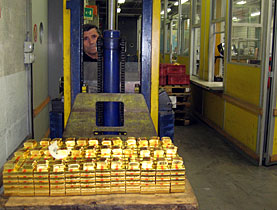
Gold bars
Dollars are suffering at the moment for two primary reasons: the attack on private industry by Obama’s policies, and the excessive world supply of dollars. Both of these factors drive down the value of a dollar, and drive up the number of dollars that a bar of gold commands.
There is currently a merry old ding-dong spat going on between the German and Swiss governments. Basically, someone has got hold of information about German citizens with bank accounts in Switzerland where they are hiding large sums on which they should pay German taxes.
This or these enterprising whistleblower(s) are offering to sell this data to the German government for a hefty fee. The German government is on the point of accepting to buy this “illegally-obtained” information from the (from the Swiss point of view) criminals who have stolen their secret bank data.
This story raises a large number of fascinating questions. It has long been common knowledge that Switzerland offers banking facilities with few questions asked. Any self-respecting criminal or tax evader has or had a secret, numbered Swiss account.
What has always amazed me is how they have got away with this for so long, stuck as they are in the centre of Europe. How is it possible that other countries have allowed Switzerland to become a haven for money obtained illegally in other countries?
For it is clearly immoral to profit from the illegal activities of foreign nationals, isn’t it? What exactly is the difference between this behaviour and “receiving stolen goods”? Worse, we have to remember that the largest sums come from drugs. Anyone willing to look after (or launder) drug money is complicit in the misery and deaths of millions of drug addicts worldwide. Yet the Swiss have pulled off this trick for decades. The Swiss banking (and government) fraternity has never shied away from shady dealings, being until the end of WWII covert supporters of the Nazis.
Well, Angela Merkel is going to do a deal with presumably Swiss “criminals” (according to the Swiss government) in order to recoup money it is owed by German criminals (according to Germany). What a merry old moral maze we have here. But in truth, the world is now too small and inter-connected to allow either tax evasion on a vast scale or the safeguarding of criminal funds.
Switzerland has to decide whether to remain as a supporter of tax evaders and gangsters (including of course African Presidents who have ripped their countries off in a big way) OR to join the real, civil, honest and inter-connected world.
The rest of us should stop tolerating this connivance with crime. “Client secrecy” is no excuse for condoning and profiting from crime.
More on the whole Nazi gold in Switzerland story is here.






 Learning from Dogs