Tag: Global warming

Night shining clouds

Better known as Noctilucent Clouds

(Hoping this link is still available on the BBC web site)

Just watch this and be inspired!

From that BBC link:

Each summer, high in the night skies of the far northern and southern hemispheres a unique phenonmenon occurs – noctilucent clouds. Little is known about them, but now an amateur astronomer from north Wales is trying to predict when they are likely to appear.

Here, John Rowlands, one of four finalists in the BBC’s search for the Amateur Scientist of the Year So You Want To Be A Scientist? – and his mentor, Professor Nick Mitchell from the University of Bath – take a closer look at these mysterious silver and blue waves at the edge of space.

John has his own Facebook page here with plenty more information.

And a quick Google images search found this:

Noctilucent clouds

And there’s still more. This delightful video on YouTube, courtesy of NASA.

Described thus:

The Aeronomy of Ice in the Mesosphere (AIM) mission will provide the first detailed exploration of Earth’s unique and elusive noctilucent or night shining clouds that are found literally on the “edge of space.” Located near the top of the Earth’s mesosphere (the region just above the stratosphere), very little is known about how these polar mesospheric clouds form or why they vary. They are being seen at lower latitudes than ever before and have been growing brighter and more frequent, leading some scientists to suggest that this recent increase may be the direct result of human-induced climate change. The mission is led by Dr. James Russell of the Center for Atmospheric Sciences at Hampton University.

By Paul Handover

(with thanks to the UK Flyer List for bringing this to my attention.)

Fear and the alternative

“Fear paralyzes; curiosity empowers. Be more interested than afraid.” — Patricia Alexander, American educational psychologist.

This dropped into my email in-box the other day so I grabbed it to set this Post off on the right theme.

There is much around that can generate fear, touched on in my Post a couple of days ago where I quoted Richard Branson.

Prof. Lovelock

For an example of fear, many will have listened to the recent interview of Professor James Lovelock on the BBC Today programme and wondered just where we are all heading.  ( The interview may be listened to here.  – it’s 7 minutes long but listen to it!)

Here’s a YouTube video of Lovelock being interviewed in 2009. (Also worthy of watching for the full 13 minutes and note the connection between Lovelock and Branson.)

So if you listened and watched these two interviews then one could argue that there is more than enough to be fearful of our future.

Now go back to the opening quotation: “Fear paralyzes; curiosity empowers. Be more interested than afraid.”

Being fearful is not the answer – even if no alternative appears to be a rational way of mentally processing something.

Here’s a piece from Wayne Dyer’s book, There’s a Spiritual Solution to every Problem.

We are subjected to many illusions in our daily life.  The greatest one is the one that keeps us trapped in giving our energy to what always has been.

The past is behind us.  Predicting the future accurately, even by eminent scientists such as James Lovelock, is very, very unreliable.  Thus all we have is today.  So do not be afraid, be curious.

By Paul Handover

That oil spill

Visualisation of data

I can’t recall how but I came across a web site that focuses on ‘translating’ data into pictures.  As they say, a picture is worth a thousand words.  The web site is called Information is Beautiful.

Anyhow, they have attempted to graphically portray the scale of the BP oil spill. (A thumbnail is below but please click on the link, or here, to see this as it was meant to be shown.)

Ouch!

But this image is an update of an earlier one here that is really powerful.  Because it attempts to put the scale of the oil spill into context with global oil consumption.

If the Purdue University estimate of the oil spill is correct at 48,500 barrels a day (a barrel is approximately the equivalent of two car tankfuls of gas/petrol) and the spill is contained in 90 days then the total oil spilled will be:

90 x 48,500 = 4,365,000 barrels

That is an enormous quantity.

But have a guess as to how much that would represent in terms of hourly global oil consumption?

Any idea?

Well global oil consumption is 3,500,000 barrels an hour.

So 90 days at 48,500 barrels a day represents just 1 hour 15 minutes worth of global consumption!

If there was ever an argument for the world to wean itself off oil then this would appear to be it.

What has happened so far is tragic – tragic beyond measure.  But if it turns out to be a ‘tipping point’ for nations to reconsider how we find and use energy then, perhaps, it will have been a horrible lesson that we all had to take.

And if the USA puts all it’s collective back into leading the world out of our addiction to oil then the damage and hardship will not have been in vain.

By Paul Handover

Watch, and learn! Concluding parts

Growth is good?  Good for what?

[Apologies to our readers but a consistent error in all the links to previous posts within this and earlier posts has now been corrected.  You can view all the previous sections of his lecture by clicking the links in this Post. Ed.]

We live on a finite Earth.  But really understanding what that means is difficult.  I guess because most of us think that in our own little way we can’t really be doing any harm to the planet – I mean what’s another few grams of CO2?

Al Bartlet, University of Colorado

Well here’s Dr Albert Bartlett of the Department of Physics at the University of Colorado chatting about arithmetic!  And if you go to his website, you will come across this quote on the home page:

“Can you think of any problem in any area of human endeavor on any scale, from microscopic to global, whose long-term solution is in any demonstrable way aided, assisted, or advanced by further increases in population, locally, nationally, or globally?”

Want to sit in on his famous lecture, “Arithmetic, Population and Energy: Sustainability 101”?  Well you can.

The lecture is broken down into 8 10-minute videos, each of them on YouTube.  The first two instalments are here , Part Three and Four here

Parts Five and Six were in this post. These are the concluding two parts.

Part Seven

Part Eight

By Paul Handover

Watch, and learn, Part Three

Growth is good?  Good for what?

We live on a finite Earth.  But really understanding what that means is difficult.  I guess because most of us think that in our own little way we can’t really be doing any harm to the planet – I mean what’s another few grams of CO2?

Al Bartlet, University of Colorado

Well here’s Dr Albert Bartlett of the Department of Physics at the University of Colorado chatting about arithmetic!  And if you go to his website, you will come across this quote on the home page:

“Can you think of any problem in any area of human endeavor on any scale, from microscopic to global, whose long-term solution is in any demonstrable way aided, assisted, or advanced by further increases in population, locally, nationally, or globally?”

Want to sit in on his famous lecture, “Arithmetic, Population and Energy: Sustainability 101”?  Well you can.

The lecture is broken down into 8 10-minute videos, each of them on YouTube.  The first two instalments are here , Part Three and Four here and Parts Five and Six in this post. The concluding two parts are tomorrow.
Part Five

Part Six

By Paul Handover

Watch, and learn, Part Two

Growth is good?  Good for what?

We live on a finite Earth.  But really understanding what that means is difficult.  I guess because most of us think that in our own little way we can’t really be doing any harm to the planet – I mean what’s another few grams of CO2?

Al Bartlet, University of Colorado

Well here’s Dr Albert Bartlett of the Department of Physics at the University of Colorado chatting about arithmetic!  And if you go to his website, you will come across this quote on the home page:

“Can you think of any problem in any area of human endeavor on any scale, from microscopic to global, whose long-term solution is in any demonstrable way aided, assisted, or advanced by further increases in population, locally, nationally, or globally?”

Want to sit in on his famous lecture, “Arithmetic, Population and Energy: Sustainability 101”?  Well you can.

The lecture is broken down into 8 10-minute videos, each of them on YouTube.  The first two instalments are here with Part Three and Four in this post. The remaining four parts over the next two days.

Part Three

Part Four

By Paul Handover

Watch, and learn about growth!

Growth is good?  Good for what?

We live on a finite Earth.  But really understanding what that means is difficult.  I guess because most of us think that in our own little way we can’t really be doing any harm to the planet – I mean what’s another few grams of CO2?

Al Bartlet, University of Colorado

Well here’s Dr Albert Bartlett of the Department of Physics at the University of Colorado chatting about arithmetic!  And if you go to his website, you will come across this quote on the home page:

“Can you think of any problem in any area of human endeavor on any scale, from microscopic to global, whose long-term solution is in any demonstrable way aided, assisted, or advanced by further increases in population, locally, nationally, or globally?”

Want to sit in on his famous lecture, “Arithmetic, Population and Energy: Sustainability 101”?  Well you can.

The lecture is broken down into 8 10-minute videos, each of them on YouTube.  The first two instalments are in this post with each of the following three days having the next two.

Part One

Part Two

By Paul Handover

Remarkable people: Prof James Lovelock

The father of Gaia

A week or so ago, the BBC under their Beautiful Minds series, screened a programme about James Ephraim Lovelock, more popularly known as Professor Jim Lovelock.

Prof. James Lovelock

(Picture taken from this article – in itself well worth reading.)

The programme demonstrated that Lovelock’s mind is more than beautiful, it is still capable, at 90 years of age, of thinking in ways that are very rare in today’s societies where conformity is such a powerful force.

As always, WikiPedia has an excellent reference on Prof. Lovelock and I encourage you to read it plus Lovelock’s own website which makes up in content what it may lack for presentation!

Luckily there is an extract from the BBC programme on YouTube – please watch this and reflect on exactly what Lovelock is saying.

And if you are up for more, then settle down for thirteen minutes and watch this next video.

James Lovelock is the Darwin of our times.

Now to put this into some context (this is me speaking as a layman!).

Please read the rest of this post

Greg Craven and his message

How to approach the global warming dilemma.

Yesterday, a Post was published a Post about Greg Craven.  It made the point that social media was becoming a very real force in influencing opinions and how that threatened traditional politics.  Here’s an extract:

I was doing some research for an earlier Post about Copenhagen and came across a YouTube video created by Greg.  More details and links later after making a more fundamental point.

This video of Greg’s has had 2,704,000 viewings! The information on that YouTube ‘page’ has had over 7,500,000 viewings. Greg has now written a book and so on, and so on.

Now I want to return to the core subject of how we deal with very complex issues that have the power to decimate humanity, e.g. global warming.

The fact is that the majority of people who think about such issues as global warming don’t have the skills and knowledge to determine what to do for the best.  It comes down to determining risks, which was the theme of an earlier Post acknowledging the work of Peter L Bernstein.

That’s also the theme of Greg Craven’s video on YouTube.  It’s a noble effort by a concerned citizen of Planet Earth.  Watch it.

By Paul Handover

Copenhagen – the unspoken issue

It’s getting crowded down here!

For those readers who are not regular BBC television viewers, the Beeb has for many years run an excellent factual/science & nature series under the name of Horizon.  Just recently there was a programme with the title of How Many People Can Live on Planet Earth?

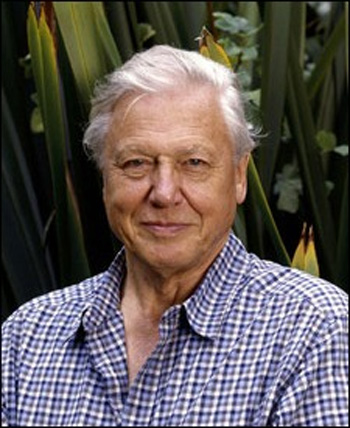
Sir David Attenborough

It was presented by that familiar face on the BBC in terms of the natural world, Sir David Attenborough.  It was an appropriate and worthy person to present the information.

But before getting into some of the details underpinning the programme, there seems to been an enormous and unspoken omission at Copenhagen – why no debate about global population trends?

Luckily the media noticed the rather obvious exclusion.  Here’s the UK Daily Telegraph newspaper (online version) of the 8th December, 2009. An extract:

Population growth is the one issue accused of causing driving climate change that no one at the Copenhagen climate summit dares to talk about.

The argument is that more people consume more resources, therefore producing more greenhouse gases that cause global warming.

The global population is currently at 6 billion and could rise to 11 billion by 2050 if fertility rates continue, not only threatening the climate, but food shortages and conflict as well.

Organisations like the Optimum Population Trust, that is backed by Sir Jonathan Porritt, Dame Jane Goodall and Sir David Attenborough, advocate birth control as a way of slowing climate change.

As Sir David has said: “I’ve never seen a problem that wouldn’t be easier to solve with fewer people, or harder, and ultimately impossible, with more.”

A study by the London School of Economics found contraception is almost five times cheaper as a means of preventing climate change than conventional green solutions such as investing in green technology.

Read more of this Post