Tag: Global warming

From Environmentalism to Ecologism, Part Two

Part Two of the three-part guest essay by Martin Lack.

The background to this major essay was covered yesterday, in the introduction to Part One.

ooOOoo

Can ecologism be regarded as an ideology in its own right? (Part 2)

A question of values

According to Carter (2007: 14-15), there is no consistent use of terminology regarding the value ascribed to different entities, so it would seem sensible to use that which he outlines:

  • Instrumental value: The value which something has for someone as a means to an end (also known as utility value).

  • Inherent value: The value which something has because it is considered desirable (e.g. precious metals such as silver, gold and platinum).

  • Intrinsic value: The value which something has because of what it is – typically essential for the existence of life (e.g. sunlight, clean air, and clean water).

As Carter points out (2007: 15), as well as being inconsistently applied to individual entities by those doing the valuing, these terms are not mutually exclusive (i.e. “being valuable in one way does not preclude being valuable in another way”). However, what is clear is that the value judgements that any individual makes will determine their attitude towards consumption and/or pollution of the Earth’s natural resources.

In setting out his “Green Theory of Value”, Robert Goodin boldly acknowledged that, ideally, it should “tell us both what is to be valued and why” (Goodin 1992:19). However, before explaining his own theory of value, Goodin identifies the two main alternatives as capitalist (consumer-based) value; and Marxist (producer-based) value (Goodin 1992: 23-4). Goodin’s green theory of value is thus distinct from both of these because the value-imparting properties are neither those of the consumer nor producer; they are (or at least should be) “natural resource based”; although he specifically does not claim that his theory “is correct utterly to the exclusion of all others” (Goodin 1992: 25-6).

Applying Carter’s typology of value (above) to Goodin’s argument, capitalists would appear to be focussed upon the inherent value of things they consume; and Marxists upon the instrumental value of the things they produce. In contrast to both of these, Goodin seeks to justify the assertion that nature itself should always be considered, independent of the presence or activity of humans, to have inherent – if not intrinsic – value. However, he seems to shy away from the logical conclusion of his argument; that all nature has intrinsic value that does not require the presence of valuers (Goodin 1992: 42-45). This is presumably part of an appeal to reason, which such an extreme view would probably not have.

A question of perspective

If anthropocentrism is a way of thinking “…that regards humans as the source of all value and is predominantly concerned with human interests”, then, in simplistic terms, ecocentrism is one “…that regards humans as subject to… ethical, political and social prescriptions… equally concerned with both humans and non-humans” (Carter 2007: 14). However, as with most things in life, it is not as simple as these definitions imply. For example, from an anthropocentric perspective, it is possible to be concerned about the welfare of individual domesticated animals; and yet not be concerned about the survival of entire endangered species.

Equally, one of the biggest debates in ecological politics may revolve around how one defines “moral persons” (Rawls, 1972: 504-5); or legitimate “recipients of justice” (Garner 2003: 11), although many would probably agree with what Jeremy Bentham (1748-1832) said: “The question is not, can they reason? Not, can they talk? But, can they suffer?” (cited in Dobson 2006: 220-1). However, the contentious and unresolved nature of this debate has led to the appearance of terms such as “shallow” and “deep”; which may be applied to anthropocentrism and ecocentrism alike (with “deep” denoting a more extreme position in either case). Therefore:

Rather than define different perspectives according to which side of the ecocentric/anthropocentric divide they lie, they can be located along a continuum, which moves from ecocentrism through various gradations of anthropocentrism to ‘strong anthropocentrism’ (Carter 2007: 36).

Once it is recognised that there is a range of possible positions that may be adopted (rather than a choice that has to be made), it is possible – as Eckersley has done – to characterise at least five different positions, which are as follows:

  1. Resource conservation – the wise use of natural resources for human benefit: Eckersley suggests that the conservation movement was founded upon the Judeao-Christian notion of humans having “dominion” over the Earth; rather than any duty of “stewardship”, as exemplified by Gifford Pinchot (the first chief of the US Forest Service) (Eckersley 1992: 35).

  2. Human welfare ecology – an appeal to enlightened self-interest: Eckersley cites Barry Commoner’s “four laws of ecologyas (1) everything is connected to everything else; (2) everything must go somewhere; (3) nature knows best; and (4) there’s no such thing as a free lunch (Eckersley 1992: 37-8).

  3. Preservationism – seeking the aesthetic preservation of wilderness areas: Whereas Gifford Pinchot wanted to preserve nature for development (i.e. maximise the utility of natural resources for human benefit), John Muir (of the Sierra Club) wanted to preserve nature from development (i.e. minimise the human impact on the natural environment) (Eckersley 1992: 39).

  4. Animal liberationism – the prevention of cruelty to certain animals: A comparatively modern, radical, development; which can trace its heritage back to “humane” societies formed in the eighteenth and nineteenth centuries, such as the RSPCA (Eckersley 1992: 42).

  5. Ecocentrism – seeking the preservation of nature for its own sake (Eckersley, 1992: 46).

With regard to the latter, given that Eckersley recognised the fact that these positions lie upon a “wide spectrum of differing orientations towards nature”, whose end-points are anthropocentrism and ecocentrism (1992: 33), this could be better defined as deep ecocentrism. However, even using these five labels, it is not hard to see why it is difficult to categorise people: For example, the human welfare ecologists could be regarded as quite ecocentric (if they recognise the validity and/or importance of each and every one of Barry Commoner’s “four laws of ecology”); whereas animal liberationists could be regarded as quite anthropocentric (if they are only concerned about domesticated pets and/or individual animals).

The ecocentric end of the spectrum has also been described as that of “deep ecology” (Devall and Sessions 1985: 70), and “biospherical egalitarianism” (Naess 1989: 170). However, whilst preferring the term “biocentric egalitarianism” for the latter, Carter points out that – as indeed was conceded by Naess (1989: 28) – food is an essential requirement for life and, therefore, an entirely egalitarian position is untenable:

Certainly, any principle along the lines of biocentric egalitarianism would be impossible to implement. Taking it to the extreme, how could a human justify killing any animal or fish, or consuming a vegetable, bean or berry? All involve some restraint on another entity’s capacity to live and flourish (Carter 2007: 36).

So, it would seem that an entirely ecocentric position is hard to maintain, but can the same be said for an entirely anthropocentric position? This, as we shall now see, has been the subject of much debate.

A question of justice

When someone says, “I want justice!” it is normally because they feel they have been wronged in some way; and want what they feel they deserve (i.e. fairness). Hence, Paul Sterba opens his chapter in “Political Theory and the Ecological Challenge” on this subject by saying, “Justice requires giving what is deserved” (Sterba 2006: 148). However, within the sphere of environmental politics, when faced with difficult choices, human beings tend to ‘circle the wagons’ and protect their own kind.

In the introduction to his book “Theory of Ecological Justice”, Brian Baxter uses the example of Sir David Attenborough’s response to the prospect of humans causing species extinctions (i.e. “Surely, it is sad indeed that our descendants should inherit a natural world that is more impoverished than the one we inherited?”) to suggest that all humans are almost incapable of being anything other than anthropocentric (Baxter 2005: 1). However, Attenborough was probably deliberately making the question rhetorical; just as Baxter was probably being provocative in order to retain the interest of readers. Nevertheless, in a wide-ranging consideration of the subject, Baxter discusses the work of numerous authors, to advocate the case for “moral consideration” to be given to sentient non-humans (Baxter 2005: 45).

This would appear to be in accordance with Bentham’s conclusion that it is the ability to suffer that should confer the right to fair treatment. Indeed, one such author Baxter considered, David DeGrazia, proposed the principle of “equal consideration” for all sentient non-humans but pointed out that this could not guarantee justice; merely a fair hearing. He also pointed out that granting equal consideration would not automatically confer upon them the right to moral consideration, but it would be revolutionary; because much animal experimentation (he uses the term “exploitation”) would then seem to be unjustifiable (DeGrazia 1996: 37-38).

Dobson has written a great deal on the subject of justice. In a characteristically thought-provoking contribution to a recent collection of essays on the subject (regarding the difficulties of combining social justice and environmental sustainability; in effect asking “What is to be sustained and for whose benefit?”), he discusses who should be the legitimate “recipients of justice”; and what should be the consequential scope of the “community of justice” thus determined (Dobson 2003: 87-94).

Baxter sees the three main principled objections to the notion of ecological justice as being that justice need only be distributed to (1) those able to voluntarily co-operate to produce and/or preserve environmental benefits; (2) those with property rights; and (3) those capable of reciprocity (Baxter 2005: 77). Baxter deals with the first and last of these reasonably easily, as follows: (1) bacteria are beneficial and slaves were not volunteers (2005: 78-9); and (3) mentally-incapacitated people do not cease to be human because they cannot interact with their surroundings or respond to stimuli (2005: 77-8). However, objection (2) seems a little more intractable (2005: 86). Finally, Baxter concludes that if these objections can indeed be rejected, ecological justice represents a fundamental challenge to the laissez-faire attitude of liberalism (2005: 94).

However, for now, the final word on the question of justice will be given to Dobson, who almost seemed to be responding to Baxter, by saying: “Just who is throwing down the gauntlet here? Is political ecology a challenge for citizenship, or is citizenship a challenge for political ecology?” (Dobson 2006: 216). Whilst acknowledging the historical existence of at least two types of citizenship; namely liberal and civic republican (stressing right-claiming and responsibility-taking respectively), Dobson highlights at least two fundamental challenges to any notion of citizenship (i.e. feminism and cosmopolitanism) (2006: 217-8). However, much more space is given to the ways in which the notion of citizenship is a challenge to ecological politics. Again, this is indicative of the fact that ecologism should be regarded as a distinctive political ideology in its own right.

References

Baxter, B. (2005), A Theory of Ecological Justice. London: Routledge.

DeGrazia, D. (1996), Taking Animals Seriously: Mental Life and Moral Status. Cambridge: Cambridge University Press.

Devall, B. and Sessions, G. (1985), Living as if Nature Mattered. Layton UT: Peregrine and Smith.

Dobson, A. (2003), ‘Social justice and environmental sustainability: ne’er the twain shall meet?’, in Agyeman, J., Bullard, R., and Evans, B. (eds.), Just Sustainabilities: Development in an Unequal World. London: Earthscan, pp.83-95.

Dobson, A. (2006), ‘Citizenship’, in Dobson, A. and Eckersley, R., Political Theory and the Ecological Challenge. Cambridge: Cambridge University Press, pp.216-231.

Garner, R. (2003) ‘Animals, politics and justice: Rawlsian liberalism and the plight of non-humans’, Environmental Politics, 12 (2), pp.3-22.

Goodin, R. (1992), Green Political Theory. Cambridge: Polity Press.

Naess, A. (1989), Ecology, Community and Lifestyle. Cambridge: Cambridge University Press

Rawls, J. (1972), A Theory of Justice. Oxford: Oxford University Press.

Sterba, P. (2006), ‘Justice’, in Dobson, A. and Eckersley, R., Political Theory and the Ecological Challenge. Cambridge: Cambridge University Press, pp.148-64.

ooOOoo

The final part, Part Three, will be published tomorrow.
From Environmentalism to Ecologism, Part One.

A guest essay for today and the next two days.

A few days ago, I remarked that for the time being posts on Learning from Dogs were frequently going to be based on the material of others.  It was the only way that I could keep this blog going yet at the same time edit (code for re-write!) a 60,000-word novel that was completed, as a first pass, last November.

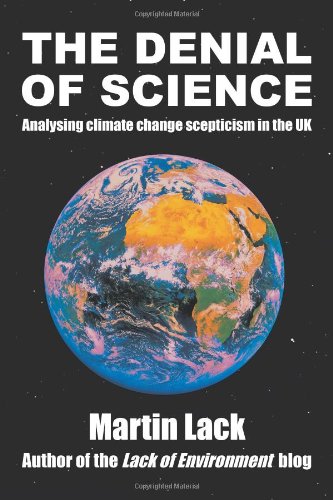
Martin Lack is one major step ahead of yours truly.  Not because he, too, writes a blog but because, unlike yours truly, he is a published author!  His book is called The Denial of Sciencehe blogs under the name of Lack of Environment.

DenialofScience

Thus I was extremely grateful when a short while ago, Martin offered a major essay of his as a guest post for Learning from Dogs.  Better than that, Martin happily accepted my recommendation to send me his essay in three parts.

It may not be the easiest read out in the ‘blogosphere’ but, trust me, Martin’s essay is profoundly important.

ooOOoo

Can ecologism be regarded as an ideology in its own right? (Part 1)

Introduction

Although it might well be assumed that one does not have to define what is meant by ‘socialists’ or – in UK terms at least – ‘conservatives’, it is certainly necessary to define ‘ecologism’: For the purposes of answering the above question, therefore, the latter should be understood as including thinking, behaviour, and the pursuit of policies that are concerned with the environment; but which are not merely or predominantly anthropocentric (i.e. those concerned with human needs and interests).

In a way, the question is nonsensical because use of the term ‘ecologism’, as coined by Andrew Dobson, appears to pre-suppose that ecological politics is indeed a “new political ideology” (2000: 163). If so, to respond to the above question by saying, in effect, ‘just because both socialists and conservatives (can) lay claim to ecological politics does not change the fact that ecologism is a distinctive political ideology in its own right’, would clearly be tautological. Therefore, to provide a defensible answer “Yes” to the above question – as is the intent herein – it is necessary to explain how and why:

  1. both socialists and conservatives can lay claim to ecological politics;
  2. the majority of both socialists and conservatives do not do so; and
  3. the ‘ecologism’ that both find so challenging must therefore be considered as a distinctive political ideology in its own right.

The Socialist claim

One does not have to be an eco-socialist in order to believe or appreciate that there is a great deal of common ground shared by socialist and environmental politics. Socialism is a broad left-of-centre church that, it could be argued, includes everything from social democrats to communists. However, if socialism can be summed-up in the tripartite “Liberté, égalité, fraternité” motto of France (with its origins in the French Revolution of 1789-99), whose English translation would be “Freedom, equality, and brotherhood”, then it is not hard to see why socialists would find common cause with those whose goal is, in effect, to seek equal rights for the environment.

The “four pillars” of ecological politics are – as cited by Neil Carter – those devised by the German Green Party in 1983: ecological responsibility, grassroots democracy, social justice, and non-violence (Carter 2007: 48). Clearly, grassroots democracy and social justice are part of the socialist agenda. Therefore, despite the global dominance of free-market economics, Mary Mellor has asserted that far from being a challenge to socialism, “ecology greatly enhances the case for a redefined and refocused socialism” (Mellor 2006: 35).

The Conservative claim

Although by no means a monolithic entity, environmental politics is usually seen as being a predominantly left-of-centre entity (e.g. Carter 2007: 78); and it is often seen as being easier to define what it opposes than to define what it seeks. If so, ecological politics is essentially a reaction against anthropocentric thinking and the selfish pursuit of individual gain without regard for others or the environment. However, some philosophers such as Roger Scruton have therefore tried to distinguish between such selfish, libertarian, goals and those of traditional conservatives who, as their name suggests, seek the preservation of the status quo for the benefit of both the current generation and those that will follow (Scruton 2006: 7-8). Indeed, as early as 1993, in the wake of the Rio Earth Summit, Scruton was advocating the need for a radical re-think of right-wing politics:

Conservatives need to explore, with greens and others, as yet unthought-of dilemmas of life in societies which are no longer buoyed up by the prospect of incessant economic growth or by modernist pseudo-religions of endless world improvement” (Scruton 1993: 173).

However, in 1993, the idea that there might be limits to growth was hardly new; being based on Garrett Hardin’s Tragedy of the Commons article (1968); the Massachusetts Institute of Technology (MIT) Limits to Growth report for the Club of Rome (Meadows et al., 1972); E. F. Schumacher’s highly influential book Small is Beautiful (1973). For example:

The illusion of [mankind’s] unlimited powers, nourished by astonishing scientific and technological achievements, has produced the concurrent illusion of having solved the problem of production… based on the failure to distinguish between income and capital where this distinction matters most… A businessman would not consider a firm to have solved its problems of production and to have achieved viability if he saw that it was rapidly consuming its capital… (Schumacher 1974: 11).

Therefore, although the dilemmas were not “as yet unthought-of”, Scruton had, nevertheless, identified the source of the challenge that does indeed, it is here argued, begin to transform ecological politics into the distinctive political ideology that is ecologism.

Limits to Growth – a political and economic challenge

Although much disputed (by those that point to the fact that commodity prices have generally fallen over time, or that dire predictions have not yet come true), the Limits to Growth argument is based on the reality of the physical constraints of the planet on which we live.

For example: “Infinite growth is impossible in a closed system. With continued growth in production, the economic subsystem must eventually overwhelm the capacity of the global ecosystem to sustain it” (Daly & Farley 2004: 64). However, this is merely a comparatively recent re-statement of (former World Bank economist) Herman E Daly’s longstanding belief in the need for steady-state growth.

Furthermore, Daly and Farley cite Rudolf Clausius has having “coined the term ‘entropy’ for the Second Law [of Thermodynamics], derived from the Greek word for transformation, in recognition of the fact that entropy was a one-way street of irreversible change; a continual increase in the disorder of the universe” (Daly & Farley 2004: 65).

This is a fundamental tenet of modern physics; one that Daly has been repeating (like a “voice in the wilderness” proclaiming a message that nobody wants to hear) for a long time: It was over 35 years ago that he began an article entitled ‘The Economics of the Steady State’ with a quote from the famous scientist Sir Arthur Eddington, who once said, “But if your theory is found to be against the Second Law of Thermodynamics, I can give you no hope; there is nothing for it but to collapse in deepest humiliation” (as cited in Daly 1974: 15).

With this in mind, perhaps, the Union of Concerned Scientists (UCS) issued the “World Scientists’ Warning to Humanity” on 18 November 1992, from which the following excerpt is taken:

The earth is finite. Its ability to absorb wastes and destructive effluent is finite. Its ability to provide food and energy is finite. Its ability to provide for growing numbers of people is finite. And we are fast approaching many of the earth’s limits. Current economic practices which damage the environment, in both developed and underdeveloped nations, cannot be continued without the risk that vital global systems will be damaged beyond repair (UCS 1992).

Today, we are now well beyond these limits. According to the Global Footprint Network (GFN), humanity is now using the resources of at least 1.5 Earth’s (GFN, 2010). The most recent update to the Limits to Growth report was produced in 2005 and, in a section entitled “why technology and markets alone can’t avoid overshoot”, the authors suggested that:

…the more successfully society puts off its limits through economic and technical adaptations, the more likely it is in the future to run into several of them at the same time… the [model] does not run out of land or food or resources or pollution absorption capacity, it runs out of the “ability to cope” [i.e. too much industrial output has to be diverted to solving problems]… Given enough time, we believe humanity possesses nearly limitless problem solving abilities. [However] exponential growth… shortens the time for effective action. It loads stress on a system faster and faster, until coping mechanisms that have been adequate with slower rates of change finally begin to fail (Meadows et al 2005: 223).

Arguably, it could be said that the evidence for this is already becoming clear in the form of widespread social unrest around the globe, as a result of the increasing cost of – or difficulty in gaining access to – food, water, and energy.

For Robyn Eckersley, the reality of limits to growth and the magnitude of the ecological challenge is something from which we need to be emancipated; and it is also the raison d’être for environmentalism:

The environmental crisis and popular environmental concern have prompted a transformation of Western politics… Whatever the outcome of this realignment… the intractable nature of the environmental problems will ensure that environmental politics… is here to stay (Eckersley 1992: 7).

The latest UN projections for global population (published on 3 May 2011) suggests that stabilisation at about 10 billion by 2100AD is still most likely; but use probabilistic methods to account for the uncertainty in future fertility trends. Therefore, depending on changes in fertility rates in differing countries, the press release also indicates that global population could also peak at 8 billion in 2050 and then fall to 6 billion in 2100, or reach 10 billion by 2050 and continue to rise to 15 billion by 2100 (UN 2011: 1).

The key question the UN press release does not address is, “How many humans is too many?” Furthermore, although it depends on average rates of resource consumption, it is quite probable that there are already too many. However, this raises philosophical and/or ethical issues that form the other main aspect of ecological politics, which ensures that ecologism is a distinct political ideology in its own right.

From Environmentalism to Ecologism – the philosophical and ethical challenge

What’s in a name?

In the introduction above, ‘ecological politics’ was, in effect, defined as being environmentally-friendly and ecocentric (i.e. ecologism). For the avoidance of any doubt, therefore, it should be noted that this implies that it is possible to be concerned for the environment but be anthropocentric (i.e. environmentalism). It is precisely because the two things are not the same that Dobson has asserted that “…environmentalism and liberalism are compatible, but ecologism and liberalism are not” (2000: 165). The reason for this is examined below. (Ed. As in tomorrow!)

References

Carter, N. (2007), The Politics of the Environment (2nd edition). Cambridge: Cambridge University Press.

Daly, H. & Farley, J. (2004), Ecological Economics: Principles and Applications. Washington DC: Island Press.

Daly, H. (1974), ‘The Economics of the Steady State’, The American Economic Review, 64(2), pp.15-21.

Dobson, A. (2000), Green Political Thought, (3rd edition). London, Routledge.

Eckersley, R. (1992), Environmentalism and Political Theory. London: UCL Press.

GFN (2010), Living Planet Report 2010: Biodiversity, Biocapacity, and Development. [Online] GFN. Available at http://www.footprintnetwork.org/en/index.php/GFN/page/2010_living_planet_report/> [accessed 18 April 201].

Hardin, G. (1968), ‘The tragedy of the commons’, Science, 168, pp.1243-8.

Meadows D, et al (1972), The Limits to Growth. New York: Universe Books.

Meadows D, et al (2005), Limits to Growth: the 30-Year Update, London: Earthscan.

Mellor, M. (2006), ‘Socialism’, in Dobson, A. and Eckersley, R., Political Theory and the Ecological Challenge. Cambridge: Cambridge University Press, pp.35-50.

Schumacher, E.F. (1974), Small is Beautiful: A study of Economics as if Small People Mattered, London: Abacus.

Scruton, R. (1993), Beyond the New Right. London: Routledge.

Scruton, R. (2006), ‘Conservatism’, in Dobson, A. and Eckersley, R., Political Theory and the Ecological Challenge. Cambridge: Cambridge University Press, pp.7-19.

UCS, (1992), World Scientists’ Warning to Humanity. [Online] UCS. Available at <http://www.ucsusa.org/about/1992-world-scientists.html> [accessed 14/04/2011].

UN (2011), World Population Prospects: The 2010 Revision – Press Release. [Online] UN. Available at <http://esa.un.org/wpp/index.htm> [accessed 11/05/2011].

You don’t have to be mad …

… to live here, but it helps!

This was a guest post sent to me by regular contributor, Chris Snuggs, back in May.  It somehow slipped between the cracks, so to speak, and only came to light when I was trawling through a pile of draft posts.

Despite, or even because of, Madam Merkel’s re-election it still seemed a valuable post to publish.  Chris lives in Germany and has a very good perspective on things.

It may also serve as an interesting reflection on the IPCC’s report when it is published later this week.

Over to Chris.

oooOOOooo

“Angela Merkel would seem to want it both ways.” (“Der Spiegel”)

The above comment caught my eye as I browsed through “Der Spiegel” this morning. Frau Merkel is delaying difficult decisions on energy production and “carbon backloading” until after the September elections in Germany.

Nothing earth-shattering in itself, of course. It is human nature to want it both ways, and examples do not lack.

One does somehow feel, however, that it has got worse in recent years. Kids want a highly-paid job without working their way up through the company hierarchy. Spain et al want to enjoy German prosperity by using EU “structural funds” without actually doing the boring hard work over decades. And politicians of course want growth and prosperity and a vast state apparatus plus a voter-bribing welfare system but without debt – or indeed troublesome whinging from the voters. However, as the proverb goes: “You can’t have your cake AND eat it.”

However, this article quoted is about something more serious than mere short-term greed, which is not exactly new in the history of Mankind. No, we are now applying the illusion that we can have it both ways in an area that threatens life on the planet – Global Warming of course.

As a concerned member of the “We don’t want to die from Global Warming Brigade”, I am more worried than ever about what is going on, and Germany is a symbol. Whatever the Germans do, they tend to do thoroughly and efficiently. They have a fairly large Green Party, a large investment in solar power and until recently seemed to be setting an example to Europe and the world. However, …..

•    Germany will this year start up more coal-fired power stations than at any time in the past 20 years as the country advances a plan to exit nuclear energy by 2022. Two coal-fired plants opened in 2012 and six more will open this year, adding up to 7 percent of Germany’s capacity. A dozen more are on track to open before 2020.  Greenhouse gas emissions in Germany, Europe’s biggest economy, rose 1.6 percent last year as more coal was burned to generate power, the Environment Ministry said two days ago.

•    With the current carbon price, utility companies that have invested in low-carbon electricity generation such as wind and nuclear are losing market share to companies that produce energy using coal. Some companies are already acting on the low price of carbon in Europe. E.ON, for example, one of Germany’s largest utilities, announced recently that clean-energy investments will be cut to less than €1 billion in 2015 from €1.79 billion last year.

The thing is, if serious and efficient Germany is backsliding on emissions what are the chances for the rest of the world, with standards of living far below Germany and desperate to catch up?

An understanding of the problem of CO2 emissions is hardly new, yet it seems to me true to say that nothing serious is being done about it. There is lots of talk, noble efforts by Al Gore et al, international conferences, carbon-trading schemes and so on, but all the time CO2 emissions are increasing. Last week we learned that atmospheric CO2 has now reached 400 parts per million, a level not seen for 4 million years.

Despite this (and the consequences predicted seem to range from merely uncomfortable to threatening to life on Earth), the search for, exploitation and use of fossil fuels are all increasing. A student of logic would surely say that this is irrational; we are lowering ourselves to the level of lemmings, except that they can’t help it but we could.

We are completely hooked on fossil fuels; that is the problem. We have one minister ranting on about “saving the planet” and another proudly announcing new oil-wells, new areas earmarked for shale-fracking, developing countries opening new coal-fired power-stations. Industry in the west is making some efforts to clean up its act but these are being predictably swamped by growth in the developing economies.

It would be funny if it weren’t so serious. A few years ago “experts” talked about the end of oil as resources ran out but as we get cleverer at extracting it from more and more difficult places the availability of fossil fuels is actually going up! On top of this the melting poles (and Greenland) are opening up new areas for exploitation by the oil companies.

“Oil companies”. Yes, the Big, Bad and Ugly Culprits … and yet the last time I checked oil companies do not actually run the country they are based in. (Conspiracy and “Plutocrats run the World” theorists will certainly disagree with this, but that is another story!)

No, governments rule their countries, and while some are dictatorships and plenty of others are totally corrupt, there are a good number of democracies involved in this headlong rush to disaster. Worse, we are in a massive generalised recession and yet emissions are still creeping up. What will happen once “growth” takes off once more – as it will, these things going in cycles.

Living in Germany, I have personally been horrified by the decision to phase-out nuclear power. The Green movement is politically significant here and the government reacted rapidly and negatively to the Fukushima incident. This was indeed terrible, but does not change the facts:

– Nuclear is totally free of CO2 emissions.
– There has never been a serious accident in Western Europe.
– France still today derives over 70% of its electricity from nuclear.
– Nuclear designs are far safer than they were years ago.
– Nobody in their right mind would build a nuclear power station in an earthquake zone as the Japanese did – though if they want nuclear (and they have few natural resources) they don’t have a lot of choice
– Europe of course is an earthquake-free zone, except for Southern Italy.
– Nobody either would build one where the cooling pumps could be flooded by a tsunami – as the Japanese (usually so clever) ALSO did.

There are nonetheless dangers in nuclear of course, but:

– ONLY nuclear can currently provide enough power to satisfy our needs without CO2 emissions. Solar and wind are feeble pinpricks in comparison.
– There is no sign of a Deux ex Machina on the horizon that will solve the emission problems associated with fossil fuels.

My personal conclusion is that without nuclear we are doomed, since we seem totally incapable of reducing CO2 without it. On the contrary, now that shale-fracking has come on stream the emissions seem likely to rocket, with a presumable corresponding increase in Global Warming. And as far as that is concerned, it does seem to me – as a layman, like most of us – that we are involved in a vicious circle: the more the poles and Greenland melt, the more radiation is absorbed by the oceans and the more CO2 is released. People have talked about a “tipping point”, but it could just as easily be an “explosion point” – after which a geometrically increasing temperature in an unstoppable feedback cycle takes us to a Venusian scenario.

Not wishing to be to gloomy, but Frau Merkel’s procrastination is worrying. Politicians do things with such short-term considerations. She seems to be waiting till after the elections, but excuse me Frau Merkel, saving the planet can’t be put on hold.

Yes, whatever Europe does is pointless if India, China and South America are going to steam ahead, but someone has to set an example, and at the moment, Germany is burning much more coal AND opening new coal-fired power stations just as we should be cuttting back.

What is the solution? Nobody seems to know. If they do, they aren’t acting up on it. It is rather depressing. All Europe’s politicians are talking about at the moment is increasing growth = burning more fossil fuels. Even France is cutting back on nuclear ….

WHO WILL SAVE US?????

Finally, a few facts about emissions:

•    The world emitted 31.8bn tonnes of carbon dioxide from the consumption of energy in 2010 – up 6.7% on the year before.
•     The world emits 48% more carbon dioxide from the consumption of energy now than it did in 1992 when the first Rio summit took place.
•    China and India together are building four new coal-fired power stations per week
•    China – which only went into first place in 2006 – is racing ahead of the US, too. It emitted 8.3bn tonnes of CO2 in 2010 – up 240% on 1992, 15.5% on the previous year.
•    China now emits 48% more CO2 than the USA – and is responsible for a quarter of the world’s emissions. Chinese per capita emissions, however, are still around 60% lower than in the USA (now involved in extensive shale-fracking)
•    Global coal consumption grew by over 5% in 2010; gas by over 2%.
•    Renewable energy accounted for only 2.2% of global energy output in 2011, despite all the fanfare over wind turbines and solar panels.

See:

http://www.carbonbrief.org/blog/2012/08/fossil-fuel-consumption-still-rising-globally
http://www.thegwpf.org/china-india-building-4-coal-power-plants-week/

I tried to get a handle on some of these statistics. 31.8 billion tons of CO2! I went into the garden yesterday and tried to imagine the volume of gas that would weigh one ton. Impossible of course, so I looked it up: it is apparently 556.2m3 or a cube with sides of 8.3m.

Another amazing stat from this site (http://www.icbe.com/carbondatabase/CO2volumecalculation.asp) is that every year the United States emits a 33.14cm high blanket of carbon dioxide over its entire land area.

HAVE A GOOD DAY!!!!!

Chris

oooOOOooo

AGW – summing up.

“If there’s any doubt, there’s no doubt!”

I opened the first post on Monday with the sub-heading: “Certainty is perfect knowledge secure from error or doubt.” going on to write that, “Whatever your views on the effect of man’s behaviours on our planet’s climate, it’s a long way from the logical idea of ‘2 + 2‘!”

Within that very strict definition, I remain unmoved.  The argument that mankind is the cause of the present change in the climate of Planet Earth is not certain!

However, if only life was that simple! The change in our planet’s atmosphere is possibly the most emotionally-laden topic of all time.  For some reason that quotation attributed to Hiram Johnson comes to mind, “The first casualty when war comes is truth.” because the supporters and deniers of AGW are engaged in what amounts to a verbal war.

Each side can draw on much information.

For example, a very recent article in The New York Times by their Justin Gillis offered this:

The rise in the surface temperature of earth has been markedly slower over the last 15 years than in the 20 years before that. And that lull in warming has occurred even as greenhouse gases have accumulated in the atmosphere at a record pace.

The slowdown is a bit of a mystery to climate scientists. True, the basic theory that predicts a warming of the planet in response to human emissions does not suggest that warming should be smooth and continuous. To the contrary, in a climate system still dominated by natural variability, there is every reason to think the warming will proceed in fits and starts.

But given how much is riding on the scientific forecast, the practitioners of climate science would like to understand exactly what is going on. They admit that they do not, even though some potential mechanisms of the slowdown have been suggested. The situation highlights important gaps in our knowledge of the climate system, some of which cannot be closed until we get better measurements from high in space and from deep in the ocean.

As you might imagine, those dismissive of climate-change concerns have made much of this warming plateau. They typically argue that “global warming stopped 15 years ago” or some similar statement, and then assert that this disproves the whole notion that greenhouse gases are causing warming.

Rarely do they mention that most of the warmest years in the historical record have occurred recently. Moreover, their claim depends on careful selection of the starting and ending points. The starting point is almost always 1998, a particularly warm year because of a strong El Niño weather pattern.

Dan Gomez, a long-time friend of over 40 years and a regular contributor to items on Learning from Dogs, wrote in a recent email,

I’m not sure what is meant by “believer”, Paul.  The Universe unfolds as it should.  Because many have been led to “believe” that AGW is inevitable and that all the facts are the ‘Truth”, we’ve created a religious substitute, almost a new “industry” with significant “tithing” obligations, etc. (e.g. Cap and Trade). Presumptions and facts are being manipulated to fulfill the prophecy.

Interesting to note in our daily lives, that weather prediction is very good 24-36 hrs out.  This drops precipitously just a few days out.  More than 7-10 days is nearly impossible. Even though both Europe and the USA have decreased CO2 levels by multiple percentage points over the last 20 years, the rest of the world does not care and the impact is very problematic.  Recently, CO2 gas has increased overall but heat has not. In the past, warming has occurred followed by CO2 levels increasing. Global politics and redistribution of wealth schemes continue to interfere with common sense.

Let’s just deal with the facts as Science reveals its secrets. New information is discovered every day about the interaction of the  Earth/Sun/Atmosphere/Lithosphere/Hydrosphere. New information is learned every day about the Universe.  These are not closed subjects. Climatology, meteorology, geology and solar system dynamics will continue to shape the Earth’s future for millennia to come whether Man is involved or not.

There is much in what Dan writes that has me nodding my head; stimulates my recollection of what Luther Haave and Derek Alker wrote in 2009:

With the explosion of knowledge, particularly in the past 100 years, each of us has found it a requirement for being successful, and to being able to earn a living, to concentrate our knowledge in an ever increasingly narrow field. Just as we have come to expect others to defer to our expertise in our narrow area, we have come to assume that we need to defer to others who have a deeper comprehension of seemingly complex topics such as the science related to climate change. [Apologies, can’t find the web link for this.]

However, if we broaden the perspective from that tight definition of certainty to an analysis of probabilities, then it all changes for me and I can embrace the views so strongly put forward by Martin Lack.

For example, Martin left a comment on Monday, “ACD is not a matter of opinion or belief; it is a matter of probability. As such, all that matters now is the extremely high probability that the scientific consensus is real, reasonable and reliable.”  That comment included a link to a discussion on the website Skeptical Science, Is the science settled? Let me quote from that:

Some aspects of the science of AGW are known with near 100% certainty. The greenhouse effect itself is as established a phenomenon as any: it was discovered in the 1820s and the basic physics was essentially understood by the 1950s. There is no reasonable doubt that the global climate is warming. And there is also a clear trail of evidence leading to the conclusion that it’s caused by our greenhouse gas emissions. Some aspects are less certain; for example, the net effect of aerosol pollution is known to be negative, but the exact value needs to be better constrained.

What about the remaining uncertainties? Shouldn’t we wait for 100% certainty before taking action? Outside of logic and mathematics, we do not live in a world of certainties. Science comes to tentative conclusions based on the balance of evidence. The more independent lines of evidence are found to support a scientific theory, the closer it is likely to be to the truth. Just because some details are still not well understood should not cast into doubt our understanding of the big picture: humans are causing global warming.

In most aspects of our lives, we think it rational to make decisions based on incomplete information. We will take out insurance when there is even a slight probability that we will need it. Why should our planet’s climate be any different?

That, ultimately, delivers for me what truly counts.

I am not a scientist; just a Brit living in Southern Oregon trying to make sense of the world while I still have a functioning head and body – time is not on my side! 😉  The powerful common-sense in the sentence, “Outside of logic and mathematics, we do not live in a world of certainties.” is beyond argument.

In the year 2012, the total number of passengers carried by US Airlines and other carriers in and out of the USA was a staggering 815 million people. 815,000,000 people!

Remember the sub-heading from the start of this post!  “If there’s any doubt, there’s no doubt!” Years ago I heard that from Bob Derham, a long-time friend and a commercial airline Captain since the time God was a boy!  It’s that cautious, safety-focused attitude that has made airline transport such an amazing mode of transport for all those millions of passengers.

Should we not travel with the same cautious, safety-focused attitude on the ‘vehicle’ that carries every man, woman and child; every animal, plant and living thing: Planet Earth!

The answer is obvious – more than obvious!

AGW certainty, Part Two

Continuing the examination of two views on AGW.

Readers will recall that this post opened yesterday.  That Part One closed with Martin writing this:

Martin Lack

Much of what Oakwood writes is an attack upon the Hockey Stick graph of palaeoclimatic temperature reconstructions first produced in 1998 (MBH98).

However, the fatal flaws in Oakwood’s scepticism regarding MBH98 are as follows:

  1. MBH98 has been validated by at least 14 other reconstructions (as cited in IPCC AR4 in 2007) using a wide variety of other proxy data(see Wikipedia for relevant links)
  2. Hockey Stick-shaped graphs turn up in reconstructions of CO2 levels and temperature – now going back over thousands of years – because they are not ‘statistical noise’ –
  3. Arguments about splicing instrumental data onto proxy data only serve to challenge the extent to which the speed of late 20th Century warming is unprecedented.
  4. Such arguments do not invalidate the conclusion that it is now almost certainly warmer than it has been at any time since the last Ice Age (i.e. a period of relative climate and sea level stability that has made agriculture, urbanisation and civilisation possible).

However, this is no reason for us to be complacent because, as Oakwood must know, the 50 to 100 metres of sea level rise that will be caused by the melting of terrestrial ice sheets will necessitate the mass migration of millions of people. This makes his concerns about current poverty and starvation (i.e. the main reason he eventually cites for not believing action is yet necessary) look very trivial indeed.

So continuing ….

Oakwood

The argument that the ‘divergence problem’ does not bring into question proxy studies is just one example of supposed ‘settled’ evidence in the case for AGW. There are others which collectively bring down the case to one of opinion.

Martin Lack

After a lengthy attempt to assert that the “hide the decline” controversy was or is significant, Oakwood eventually moves onto attack the significance of MBH98; and to claim that ACD is no more than a matter of opinion. It is only possible to reach this conclusion by dismissing the majority of climate scientists as being stupid, sloppy, or sinister.

Oakwood

Here are a few others:

  • Mann et al’s original hockey stick (1998) (as well as a number of other studies) shows an unprecedented temperature rise in the first half of the 20th century, a temperature change that most climate scientists believe can be explained by natural phenomena, such as the Sun (while failing to reproduce the man-made rise in the 2nd half of the century, due to the divergence problem explained above).

Martin Lack

However, Climategate and, more especially Climategate 2.0 merely served to demonstrate how deliberate and organised are the attempts to discredit climate science and derail international attempts to tackle the ACD problem.

Oakwood

Thus, we are expected to believe there was both an unprecedented NATURAL temperature rise and unprecedented MAN-MADE rise in the same century. Not impossible, but statistically highly unlikely.

Martin Lack

Oakwood suggests that assertions about early 20th Century warming are statistically highly unlikely (i.e. that climate scientists are stupid to make them). However, the real statistically highly unlikely suggestion is that 30 years of monthly average temperatures exceeding their long-term average values could be a consequence of natural variation. Unlike early 20th Century warming, this is definitely not capable of being explained by natural causes (such as cyclical solar activity or random volcanic eruptions).

Oakwood

  • The ‘record’ (in just 35 years) of minimum summer ice in the Arctic is repeatedly presented as evidence for impending doom. However, the record MAXIMUM ice cover in the ANTarctic, at the same time, is dismissed with ‘we have another explanation for that’.

Martin Lack

Trying to shift the focus away from the accelerating rate of ice loss in the Arctic is very lame indeed. The Arctic is surrounded by land and (now) increasing amounts of warming water. The reasons for the ice loss are well understood and it is happening faster than was predicted even 5 years ago. The Antarctic is surrounded by a huge expanse of cold ocean and is also being kept cold by the human caused hole in the ozone layer. The reasons why its ice is not melting so fast are therefore also well understood. In addition, it should be noted that the Antarctic Peninsula is the fastest warming place in the southern hemisphere.

Oakwood

  • Whatever the weather, blame global warming. A few years ago, milder winters and earlier springs in the UK were hailed as evidence of AGW. But now we get lots of snow, and appalling spring, cooler summers, etc, and guess what, its due to global warming.
  • Hot/dry weather and floods around the world are routinely highlighted as ‘more evidence’ whereas as cold weather extremes and records are dismissed as ‘just natural variation’ – again, and again and again.

Martin Lack

Oakwood‘s remarks about extreme events are also very misleading. The number of records being broken for hot and/or dry events is many times greater than the number of records being broken for cold and/or wet events. As Hansen et al explained last year, in their review of historical data for the last five decades, natural variability does not explain the steady shift in average temperatures and the broadening of the range of conditions experienced in any one place.

I really can’t believe that Oakwood is so parochial in his outlook that he dares to mention the cold weather the UK has experienced recently. We may have had the coldest Spring for 50 years, but, that does not change the fact that global average temperatures are still the highest ever in recorded history. Furthermore, it does not change the fact that the analysis of Hansen et al (2012) continues to be validated by events such as those in Central Europe at the moment – where 1 in 100 year flood events have recurred after only 10 years. Not impossible – just statistically highly unlikely.

Oakwood

Those who highlight the lack of rising temperature for the past 10-15 years are routinely dismissed as deniers and liars. We’re told, ‘but the last decade is the warmest in a 100 years’. No-one disputes that. Given the world warmed by 0.8 degC in 100 years, that’s perfectly reasonable, and is not a defence against the fact that warming has at least paused.

  • We’re told: ‘but the heat is going into the ice caps and the deep oceans and atmospheric heat is just a small percentage of the total’, How convenient. In the 1980s and 1990s, atmospheric temperature was enough for ‘proof’ of serious AGW. We didn’t hear anything about ocean heat then. No-one suggested that perhaps the warming was due to a release of previously ‘hidden’ ocean heat. Or that we shouldn’t read too much into a small atmospheric temperature rise.
  • We see again and again, whatever happens, whatever the data show, the theory is revised to ‘show’ that nothing has changed. This is simply not plausible science.
  • We’re told, the physics of CO2-induced global warming is just that, ‘physics’, and we can’t change that however much we dispute it. No-one disputes the physics. But, the atmosphere (believe it or not) is very complicated. We have the physics that says aerosols reflect the Sun’s heat, that clouds may increase and also reflect more heat. We now hear the relationships with the oceans is very important (which we didn’t hear before). Thus the debate is not about the reality of the CO2-global warming physics. Its about the sensitivity of the system and which physical phenomena will dominate.

Martin Lack

Given the massive inertia in the climate system (which guarantees decades of future temperature rise even if CO2 emissions were completely halted today), there is no reason for us to be complacent about the fact that we have only seen a rise of 0.8C since the Industrial Revolution. The scientific consensus remains that equilibrium climate sensitivity is somewhere in excess of 2C and that such a rise in temperature will not be good for the vast majority of life on Earth. On the evidence of the ACD that we are already experiencing, I think there is very good reason to agree with that conclusion.

Again, I am astonished that Oakwood even dares to mention the ‘global warming has stopped’ canard. This misconception has been debunked so many times; there are even debates about who has written written the best rebuttals.  Here is a summary: Whilst surface warming may have paused, the warming of the ocean (which is driving the increased frequency of extreme weather events of all kinds) has continued. Given that oceans cover two thirds of the Earth’s surface, is this something really worth arguing about?

Climate scientists are therefore not changing their story to accommodate inconvenient new data. Only climate change sceptics do that. The only implausible science on offer today is that which seeks to explain all the data without acknowledging that CO2 is the main driver. Sure, CO2 does not explain everything but, you cannot explain all the data unless the primacy of CO2 is accepted.

Oakwood

Some will respond: ‘but all of these arguments have been debunked many times’. All they really mean is another opinion or speculation has been given by an AGW believer. Nothing wrong with these, but don’t claim they represent settled science.

Martin Lack

However, I should like to re-iterate the importance of the recently-published results of investigations at a lake in the NE of Arctic Russia. What this new 3.6 million year continuous palaeoclimatic record tells us is that current warmth is not unprecedented (if you go back to an era in which humans did not exist – 400 or 1,100 thousand years ago). This demonstrates that good scientists do not change their story when they get unexpected results.

Oakwood

I have no problem with scientists believing in AGW and believing it a serious threat. But when so much of their case is based on weak arguments, I do have a problem with claiming the case is ‘settled’ and that anyone who questions or challenges it is a liar, denier, conspiracy theorist, etc.

Both sides of the debate have their extremists and nutters. My interest is in the rational middle ground. To suggest an ‘eccentric’ like Christopher Monckton is ‘typical’ of all AGW-sceptics is just like claiming all Conservative voters are fascist and all Labour voters communist. It has no place in informed and educated debate.

Martin Lack

Oakwood claims arguments for concern over ACD are “weak” but, in making this assertion, the only information he has referred to is very much out-of-date (such as IPCC AR4 in 2007). Oakwood moves on to discuss unhelpful labels such as “liar” and “denier”.

I do not think I have ever suggested that anyone who professes to be ‘sceptical’ is lying. However, I do think that, just like the tobacco executives whose ‘modus operandi’ they are copying, the executives of fossil fuel companies know more than they care to admit. There is also a great deal of evidence to indicate that climate change ‘scepticism’ is in fact being driven by unscientific economists aided in their anti-science cause by a handful of friendly scientists who tell them what they want to hear. This is not scepticism, it is ideological prejudice.

Oakwood

The term “denier” was introduced with the intention of associating AGW-sceptics with Holocaust Deniers. That is to say, AGW-sceptics are putting millions of lives at risk through their lies and ignorance. Given the weakness of the AGW case, the use of the labels ‘denier’, ‘deny’, denial’ seems to represent an insult to every victim of the Holocaust.

Martin Lack

I agree that use of the term ‘denier’ is generally not helpful, but, given all the evidence that conflicts with their position, I do think that those who remain ‘sceptical’ about the primary cause of ongoing climate change are being irrational. If your beliefs require you to dismiss any and all evidence that conflicts with them, that is not scepticism, it is wilful blindness; it is what Young Earth Creationists have to do in order to protect themselves from wicked and ungodly scientific ideas.

Therefore, even if Oakwood does not do it, many who are ‘sceptical’ do rely upon conspiracy theories to dismiss all the evidence that conflicts with their beliefs. This includes dismissing most scientists as stupid, sloppy or sinister.

Oakwood

And why is it not time to act now? I am an environmentalist and see many environmental and social problems that need addressing. In particular, the need for ‘sustainability’ in all we do. There remain millions dying each year from such things as malnutrition, lack of safe drinking water, malaria, etc.

These are hard facts with zero room for any doubt. Given the weakness in the AGW-case, it is not a priority. I see some benefits in acting. For example, in many cases a reduction in CO2 emissions leads to much improved energy-efficiency, and less pollution. However, the case is not made for diverting money and effort from the more immediate priorities, covering pristine countryside in wind farms to satisfy urban energy demands, or using more biofuels at the expense of more hunger.

Martin Lack

Having wasted so much time trying to falsify MBH98, Oakwood finally gets round to the important bit of my question: Why does he think the time to act has not yet arrived?

Failing to address the point that a wide range of industrial, political and economic organisations now agree that it is time to act, Oakwood opts instead to simply re-state his belief that attempts to mitigate the ACD problem will do more harm than good. All the evidence I have seen suggests that he is mistaken. To-date, I think the most compelling evidence is that contained in the IIED’s 2009 report , ‘Assessing the costs of Adaptation to Climate Change: A review of UNFCCC and other recent estimates’ (PDF available here), which begins with the following very sobering executive summary:

Several recent studies have reported adaptation costs for climate change, including for developing countries. They have similar-sized estimates and have been influential in discussions on this issue.

However, the studies have a number of deficiencies which need to be transparent and addressed more systematically in the future. A re-assessment of the UNFCCC estimates for 2030 suggests that they are likely to be substantial under-estimates. The purpose of this report is to illustrate the uncertainties in these estimates rather than to develop new cost estimates, which is a much larger task than can be accomplished here.

The main reasons for under-estimation are that: (i) some sectors have not been included in an assessment of cost (e.g. ecosystems, energy, manufacturing, retailing, and tourism); (ii) some of those sectors which have been included have been only partially covered; and (iii) the additional costs of adaptation have sometimes been calculated as ‘climate mark-ups’ against low levels of assumed investment. In some parts of the world low levels of investment have led to a current adaptation deficit, and this deficit will need to be made good by full funding of development, without which the funding for adaptation will be insufficient. Residual damages also need to be evaluated and reported because not all damages can be avoided due to technical and economic constraints.

There is an urgent need for more detailed assessments of these costs, including case studies of costs of adaptation in specific places and sectors.

Oakwood

Thus, belief in AGW is not a simple moral argument which some would want to believe – good vs evil, or capitalist vs environmentalist, etc.

Martin Lack

Oakwood says he does not think this is a good-vs- evil or a capitalist-vs- environmentalist issue. I would agree. However:

  • I am not the one who is allowing my political beliefs to prejudice my approach to the science;
  • I am not the one who is accusing most scientists of being stupid, sloppy or sinister in order to dismiss what they are telling me; and
  • I am not the one changing my story or my preferred argument whenever something I have formerly relied upon is shown to be unreasonable.

Although it is a shame that he is part of a minority within the UK’s current Coalition Government, I will conclude by quoting from a recent speech by the Secretary of State for Energy and Climate Change, Edward Davey:

Of course there will always be uncertainties within climate science and the need for research to continue… We make progress by building on what we know, and questioning what we don’t. But some sections of the press are giving an uncritical campaigning platform to individuals and lobby groups who reject outright the fact that climate change is a result of human activity. Some who even deny the reality of climate change itself… By selectively misreading the evidence, they seek to suggest that climate change has stopped so we can all relax and burn all the dirty fuel we want without a care…

Oakwood says he opposes action to curb ACD because there are bigger problems we need to solve. If this were likely to be true, it would be an admirable position to take. Unfortunately, the bulk of the evidence suggests that ACD is a problem unlike any other and, unless we make serious attempts to minimise it, its consequences will dwarf all other problems we face.

This is because basic physics tells us that allowing the Earth to warm up will cause terrestrial ice to melt and sea levels to rise. It was predicted and it is now happening. The time to act to stop it is now. Millions of people cannot and will not adapt to having their land and their cities submerged under water.

oooOOOooo

Well I think that the agreement of Oakwood and Martin to set out their positions is fabulous and very worthy.

If readers will forgive me, tomorrow I will offer my own personal reflections on what has been offered by Martin and Oakwood today and yesterday.

Exploring the certainty of AGW!

“Certainty is perfect knowledge secure from error or doubt.”

You may wonder what this post is all about opening, as it does, with a definition of ‘certainty’.

What that definition might imply is that ‘certainty’ is a tantalising ‘will of the wisp’ creature.  Excepting for pure mathematics, of course! “Pure mathematics is, in its way, the poetry of logical ideas.” – Einstein quotation.

Whatever your views on the effect of man’s behaviours on our planet’s climate, it’s a long way from the logical idea of ‘2 + 2‘!  So when Oakwood, a reader of Learning from Dogs, submitted a long, carefully written comment rejecting Anthropogenic Global Warming (AGW), the idea came to me that perhaps this comment should stand on its own two feet, so to speak, as a separate post.  I asked Martin Lack, a passionate believer in AGW, to counter the points set out by Oakwood.  Both Martin and Oakwood are scientists; both hydrogeologists.

Now please take a moment to read and assimilate the next few sentences.  The length of the ‘dialogue’ runs to two posts.  Making it without question the longest post that has ever been published on Learning from Dogs.  It is also the most important!  If there is one question above all others for these times, it is the question of whether or not mankind is changing the climate of this planet; the only one we have.

These posts are not an easy read.  They can’t be skim read. They don’t have pictures! But I hope with all my heart that you will settle down today and tomorrow and read each post carefully to the end.

Now to some background information on the two gentlemen.  ‘Oakwood’ is a nom-de-plume.  However, he and I have exchanged emails and I support his need for anonymity. This is how Oakwood describes himself:

  • I am an Earth systems scientist
  • I have followed the AGW scientific arguments on both sides for many years
  • Hydrogeology (my field) and climate science have quite a lot in common, the main one being they require some knowledge and expertise in a wide range of disciplines. It’s not a simple case of saying ‘you are an expert or not’.
  • For example, I need to know quite a bit about chemistry, although I am not an ‘expert chemist’.
  • I am experienced in studying long-time period data, and judging its credibility (this also in common with climate science). Many of the key AGW arguments are based on data and statistics.
  • There are many reasons for being an AGW-sceptic, needing many pages. I give one main example: The ‘divergence problem’ applies to tree ring proxy temperature graphs. Most (perhaps all), proxy graphs cannot reproduce modern temperature data from about the 1980s onwards (in fact the very period of detectable man-made global warming). Because of this, we cannot rely on proxy graphs to conclude now is warmer than the past. Although climate scientists claim the divergence problem is only a modern thing, and does not affect historic data, this is purely a statement or belief. There is no convincing science to back that view.
  • For that reason, I am sceptical of the value of proxy graphs to show current temperatures are unprecedented.
  • I list a number of other brief examples.
  • I do not believe in conspiracy theories and have no problem with climate scientists believing in AGW. But in view of the examples I give, I do have a problem in them saying ‘the science is settled’.
  • There are some benefits from acting on the AGW scare now, such as improved energy efficiency and reduced pollution. There are also negatives, such as wind-farms on pristine countryside and biofuels causing increased hunger.
  • Too much focus on the AGW threat (based on relatively weak scientific arguments) diverts effort and money from more immediate and certain problems.
  • I am an environmentalist who cares about the future of our planet and sustainability. My views on AGW are based purely on the science.

Martin‘s background is encapsulated on his Blog, from which I extract:

I have 25 years of professional work experience, as a geologist and hydrogeologist, in both public and private sectors.

Education:
St Albans School, Hertfordshire, 1976-1983.
BSc (Hons) in Geology (Portsmouth), 1983-1986.
MSc in Hydrogeology (Birmingham), 1989-1990.
Postgrad. Cert. in Education (Keele), 1998-1999.
MA in Environmental Politics (Keele), 2010-2011.

Professional Qualifications:
Fellow of the Geological Society (FGS) since 1992.
Chartered Geologist (CGeol) since 1998.
Member of Chartered Institution of Water and Environmental Management (MCIWEM) since 2000.

Martin’s MA dissertation topic was “A Discourse Analysis of Climate Change Scepticism in the UK“  An abstract of that dissertation may be read here.

So two highly professional persons with diametrically different views.  Here’s the ‘debate’.

oooOOOooo

Oakwood

I have been posed a couple of questions [by Martin Lack, Ed.] which Paul has invited me to respond to.

  1. Why do you think the vast majority of relevantly-qualified and active researchers in earth systems science have reached the conclusion that we need to stop pumping CO2 into the atmosphere as fast as we possibly can because it will get harder to avoid excessive climate change the longer we take to do so?
  2.  Explain why you think the time to act has not yet arrived?

If I may, I’m going to treat those questions more like this:

  1. Why do the majority of climate scientists claim to believe man-made climate change (AGW)  is significant and serious?
  2. Why am I an AGW-sceptic?

Martin Lack

I am grateful to Paul for inviting me to respond to Oakwood’s thesis.

My carefully constructed question was:

Why do you think the vast majority of relevantly-qualified and active researchers in earth systems science have reached the conclusion that we need to stop pumping CO2 into the atmosphere as fast as we possibly can because it will get harder to avoid excessive climate change the longer we take to do so?

I am very pleased to see that Oakwood does not dispute the reality of a scientific consensus regarding AGW although I prefer – because it is more accurate – to call it anthropogenic climate disruption (ACD). Sadly, however, he does not appear to accept its validity. Although I asked Oakwood not to deconstruct the question, he clearly felt it necessary to both deconstruct it and re-word it (emphasis here is mine):

  1. Why do the majority of climate scientists claim to believe man-made climate change is significant and serious?
  2. Why am I an AGW-sceptic?

Right from the start, therefore, Oakwood appears to suggest that the majority of climate scientists are either being stupid, unprofessional, or deceitful. I say this because, by replacing my “have reached the conclusion” with his “claim to believe”, Oakwood would appear to think that the majority of climate scientists have reached a conclusion that is:

  1. Reasonable when it is in fact unreasonable; or
  2. Highly-probable when it is highly-improbable; or
  3. Near-certain when they know it is very uncertain.

Bearing this in mind, let us look at the arguments Oakwood then uses to justify his ‘scepticism’.

Oakwood

I am an ‘earth-systems’ scientist with degrees in Geophysics and Hydrogeology and around 25 years working experience in both those fields, but mostly hydrogeology.

Note: working scientists are every bit as important to our advancement as academics and researchers. Academia is a career choice available to the better scientists. (Though a few ‘duds’ manage to survive by playing the right games.) But many excellent scientists and engineers choose to work in the ‘real world’ where science is applied which often includes active research, written up in reports, but not necessarily in peer-reviewed journals. Those scientists and engineers often have a far more immediate level of responsibility in terms of the quality and implications of their work.

If an academic ‘gets it wrong’, the worst things that may happen are embarrassment, loss of research grant or even loss of job. If a working scientist or engineer gets it wrong, then bridges may collapse, planes may crash, people may be poisoned, etc. Also ‘peer review’ doesn’t mean its right, but just that it adds to the debate.

I have followed the scientific debate for many years, reading much that is written on both sides, including a big proportion of the IPCC reports.

Martin Lack

Oakwood starts by attacking academics for being detached from the real world and suggesting that some  may be “duds” that are just playing games, (although he does not say whom exactly)!

He then attacks the peer review process but fails to provide any reasonable explanation as to why only 24 out of nearly 14 thousand articles about ongoing climate change do not consider human activity to be its primary cause (unless the science is of course near certain).

Oakwood claims to have read a big proportion of IPCC reports (more than me I suspect) but, even so, fails to address the reality that IPCC reports have consistently under-reported the scale and urgency of the problems we face. The AR5 report due out later this year will also do this because it still does not include positive feedback mechanisms causing current rates of change to accelerate.

Oakwood

Very much like hydrogeology, climate science is a multi-disciplinary science dependent on a level of knowledge and expertise in a whole range of disciplines. For example, I need to understand quite a lot about chemistry, although I don’t have a degree in chemistry.

I have to keep learning; by reading, researching, learning from expert colleagues, etc. I also need to know something of maths, statistics, fluid mechanics, weather patterns, computer modelling, microbiology, water treatment, etc.

There are better experts in each one of those subject areas, but that’s their focus and they would not normally be able to pull things together to develop a ‘conceptual model’ of a hydrogeological system.

Martin Lack

Oakwood highlights the similarities between hydrogeology and climate science but fails to mention that both make extensive use of probabilistic computer models (of the kind used by climate scientists). These are models that deal with uncertainty in modelled parameters by being run hundreds if not thousands of times using parameter values picked at random from within user-defined ranges. This produces a range of modelled outcomes with accompanying probabilities of being realised.

Oakwood

There is much overlap between scientific disciplines, especially in ‘Earth systems’. Therefore, to suggest you must be a ‘climate scientist’ to understand all of the scientific and statistical arguments, is incorrect. For example, the hockey stick tree ring studies are principally statistical exercises rather than ‘climate science’, and require an understanding of how the Earth’s climate has changed in the past, which geologists are only too aware of.

As a hydrogeologist, I am very experienced in studying time-series data, and judging whether conclusions drawn from them are plausible and reliable. Of course, my conclusions may not always be correct. Others may disagree with me. But that’s how science develops.

It would take me pages to explain all my reasons for being an AGW-sceptic, so instead I will focus on one key example of where I find a key conclusion unreliable.

THE DIVERGENCE PROBLEM IN TREE-RING TEMPERATURE PROXY STUDIES

I will refer to a ‘typical’ paper by Michael Mann et al, 2008, Proxy-based reconstructions of hemispheric and global surface temperature variations over the past two millennia, Proceedings of the National Academy of Sciences of the United States of America – PNAS.

Its main conclusions are:

Recent warmth appears anomalous for at least the past 1,300 years whether or not tree-ring data are used. If tree-ring data are used, the conclusion can be extended to at least the past 1,700 years, but with additional strong caveats. The reconstructed amplitude of change over past centuries is greater than hitherto reported, with somewhat greater Medieval warmth in the Northern Hemisphere, albeit still not reaching recent levels.

Thus, they claim their work shows current temperatures are unprecedented in at least the past 1,300 years, including the Medieval Warm Period (MWP). This is extremely important. If current temperatures are not warmer than the MWP, then there is far less reason for alarm about the current climate. For example, we don’t have records of such things as droughts, hurricanes, tornadoes, etc.,  being noticeably worse or more common during the MWP. (I know, some will respond: ‘regardless of whether its warmer now, predictions are it will get much worse’. But that is a separate argument). Thus, it seems to be very important to the AGW-case that current temperatures are unprecedented, and changing more quickly than in the past 1,000 to 2,000 years.

Despite, their stated conclusions, their work does not show that now is warmer than the MWP. On their graphs in their Figure 3, current temperatures show as warmer. But the proxy data themselves do not show this. The only data that do are the instrumental data. So if proxy data do not align with instrumental data since the 1980’s onwards, how can we rely on them to show us the MWP was cooler than now? We can’t.

They try to address this with the following statement:

The observed warming rises above the error bounds [ie., the highest possible temperature indicated by proxy data – my words] of the estimates during the 1980s decade, consistent with the known ‘‘divergence problem’’, wherein the temperature sensitivity of some temperature-sensitive tree-ring data appears to have declined in the most recent decades. Interestingly, although the elimination of all tree-ring data from the proxy dataset yields a substantially smaller divergence bias, it does not eliminate the problem altogether. This latter finding suggests that the divergence problem is not limited purely to tree-ring data, but instead may extend to other proxy records.

If you look around at other literature, despite what we hear about ‘settled science’ nobody knows the cause of the ‘divergence’ problem. There is only speculation that it might be something to do with modern air pollution or perhaps CO2 itself.

Here’s what SkepticalScience says:

The divergence problem is a physical phenomenon – tree growth has slowed or declined in the last few decades, mostly in high northern latitudes. The divergence problem is unprecedented, unique to the last few decades, indicating its cause may be anthropogenic. The cause is likely to be a combination of local and global factors such as warming-induced drought and global dimming. Tree-ring proxy reconstructions are reliable before 1960, tracking closely with the instrumental record and other independent proxies.

So, the proxies are “reliable before 1960’s”. But back until when? Around 1880, when temperatures were cooler. There is no evidence whatsoever that the proxies were reliable at other periods of higher temperatures. And we are expected to accept this as ‘settled science’.

In fact, it is possible the divergence problem happens every time it’s warmer. They certainly don’t know this is not the case. The real answer is from very basic statistics:

If the proxy data cannot reproduce the higher temperatures of today, we cannot rely on them to compare with other warmer periods in the past. I don’t care if 99.9% of climate scientists tell me this is acceptable science, I will not agree with them, unless they can produce convincing scientific evidence (not just speculation) to back it up.

(I’ve seen one very comical response more than once: ‘We don’t need recent proxy data to be accurate because we have instrumental data to tell us the temperature.’ For example, a John Havery Samuel says: “A technical concern with one proxy since 1960, when we have perfectly good temperature records already, is an irrelevance.” This COMPLETELY misses the point (and I don’t know whether through ignorance or deliberate distortion). Accurate proxy data today are needed, not to tell us the temperature, but to demonstrate that proxy data are reliable for understanding historical temperatures. That’s simple, basic science. )

Martin Lack

Much of what Oakwood writes is an attack upon the Hockey Stick graph of palaeoclimatic temperature reconstructions first produced in 1998 (MBH98).

However, the fatal flaws in Oakwood’s scepticism regarding MBH98 are as follows:

  1. MBH98 has been validated by at least 14 other reconstructions (as cited in IPCC AR4 in 2007) using a wide variety of other proxy data(see Wikipedia for relevant links)
  2. Hockey Stick-shaped graphs turn up in reconstructions of CO2 levels and temperature – now going back over thousands of years – because they are not ‘statistical noise’ –
  3. Arguments about splicing instrumental data onto proxy data only serve to challenge the extent to which the speed of late 20th Century warming is unprecedented.
  4. Such arguments do not invalidate the conclusion that it is now almost certainly warmer than it has been at any time since the last Ice Age (i.e. a period of relative climate and sea level stability that has made agriculture, urbanisation and civilisation possible).

However, this is no reason for us to be complacent because, as Oakwood must know, the 50 to 100 metres of sea level rise that will be caused by the melting of terrestrial ice sheets will necessitate the mass migration of millions of people. This makes his concerns about current poverty and starvation (i.e. the main reason he eventually cites for not believing action is yet necessary) look very trivial indeed.

oooOOOooo

Part two continues tomorrow.

The story of carbon, part one.

Looking back enables us to look clearly ahead.

I struggled for a while to decide what to call this post, the first of three.  Explain why in just a moment.

The post is predominantly from the hand of a professional writer who goes under the name of Gaius Publius.  He is described as contributing editor on AMERICAblog from where one also learns that:

Gaius Publius
Gaius Publius

Gaius Publius is a professional writer living on the West Coast of the United States. Gaius has written in a variety of genres and styles. He’s published short stories and poetry, books on education & technology, and is currently working on two book-length projects, including one novel.

In addition to writing, Gaius has been a professional educator and currently manages a small publishing consultancy. He holds a Bachelors degree in Great Books with a side concentration in physics and math, and a Masters in English and Communication.

A web search soon comes across a blog where there is a collection of the gentleman’s works.

OK, back to the theme.

Five days ago I read an essay on Yves Smith’s Naked Capitalism blog that struck me as a fabulously bold and clear presentation of the climate crisis.  The essay, written by Gaius, also derived a positive message from the boldness and clarity of the argument.  I dropped Yves an email asking for permission to republish on Learning from Dogs and not only did I get a quick reply from Yves, that reply included approval for the reposting from Mr. Publius.  Thank you both.

The essay was called: The climate crisis in three easy charts. However, I was uncomfortable that the word ‘crisis’ might be a turn-off in a blog post title, so opted for The story of carbon.  So with that off my chest, let me go straight to the essay as it appeared on Naked Capitalism.

oooOOOooo

 The Climate Crisis in Three Easy Charts

Yves here. This post is the first in a series by Gaius. It starts by looking at the larger climate picture over larger swathes of time and showing what level of temperature changes led to mass extinction events.

By Gaius Publius, who you can follow at Twitter @Gaius_Publius. Cross posted from AmericaBlog

I’m preparing to pivot back to climate crisis, starting with some reformatting of the earlier Climate Series posts — the transition to WordPress wasn’t kind to them — and the organization of this material into book form. (There’s also a climate-themed novel in the works; thriller fans, stay tuned.)

As a result, I’m doing serious study to refine both the concepts (or rather, the explanation of them) and the dating of coming events (the crisis in its various stages).

The first part of that pivot includes two media appearances this week. I’ll be on Virtually Speaking With Jay Ackroyd this Thursday (May 2) at 9 pm ET to discuss climate crisis for a full hour, followed by a Sunday appearance with Avedon Carol as part of the Virtually Speaking Sundays weekly media panel.

It’s the climate discussion I want to focus on here, and I’d like to do it by focusing on three diagrams and a few references back to my earlier climate pieces.

Climate catastrophe will usher in a new geologic era

Long-scale earth history is divided into Eons, then Eras, then Periods. But in fact, prior to the Cambrian Period, when life on earth exploded in number and variety, earth history is the story of non-life or small single- or multi-celled life. And starting with the Cambrian period, there’s just one “eon” anyway. It’s eras and periods we care about.

So let’s start there, with the Cambrian Period and the flourishing of life on earth. Consider the chart below:

Mass_Extinction_500px-Extinction_intensity.svg_2

The divisions across the top are geologic periods, starting with the Cambrian (“Cm”), the period of “visible life”‘ — meaning a proliferation of hardshelled species. It’s the big explosion of life on earth. The numbers across the bottom are millions of years ago. The spikes show extinction events, with the percentage of marine species going extinct expressed on the vertical or Y axis.

The chart doesn’t call them out, but starting with the Cambrian period, we’ve had three geologic eras (the larger divisions):

Paleozoic Era — “old life”
Mesozoic Era — “middle life” or the Age of Reptiles (dino days)
Cenozoic Era — “new life” or the Age of Mammals (including us)

The Paleozoic Era runs from the start of the graph to the big spike at 250 million years ago on the X axis. It encompasses six geologic periods and ended in the greatest mass extinction event on the planet — geologists call it the “Great Dying”.

The Mesozoic Era runs from the Great Dying at 250 million years ago to the big spike at 65 million years ago, the event that wiped out the dinosaurs — and every other large species. That cleared the way for mammals to grow big and thrive.

We’re now in the Cenozoic Era. Keep those transitions in mind — when mass extinctions change which groups of species can evolve and rule, it’s the end of an era and the start of another. Now look at the chart again. The whole chart shows 540 million years, and just three geologic eras. The next extinction event on the scale of the one at 250 million years ago, or the one at 65 million years ago, will change the shape of life on earth and usher in a new era. Ready for that?

[Update: For a chart that shows geologic eras, periods and their subdivisions in one place, click here. Opens in a new tab.]

Where does man fit in?

Great question — where does man fit in? Answer: We come in very late.

First, notice the last three geologic “periods” at the top-right in the chart above. The period marked “K” is the Cretaceous, the period at the end of the Mesozoic Era. The next period (“Pg”) is the Paleogene, the one that marks the start of the Cenozoic (new life) Era. The period after that (“N”) is the Neogene, which ended just 2 million years ago. The period after that, not shown, is the Quarternary Period, our current one.

The Neogene-Quarternary boundary is the start of the time of great glaciers, and the best way to show that is with the chart below, showing earth temperatures mapped across the geologic periods (at the left end) and geologic epochs (the rest of the chart).

Earth_tem_All_palaeotemps_700px

Click here to open the full version in another tab. It’s a big, interesting chart. (Source here.)

First, get oriented. On the Y axis is global temperature using change — in °C — from global temperature in the year 1800 as the norm or zero mark. (The global pre–Industrial Revolution temperature is generally the mark from which other global temperatures are measured, unless otherwise noted. To convert from °C to °F, just double the number; you’ll be pretty close.)

On the X axis, the first big division — from 542 million years ago to 65 million years ago — represents the first two geologic eras, the Paleozoic and Mezozoic (which unfortunately aren’t called out on this chart). “K” at the top and bottom is still the Cretaceous Period, and the end of the Cretaceous Period is also the end of the dinos and the end of the Mesozoic Era.

In this respect, both charts are the same. Man hasn’t showed up yet — our mammal ancestors were the equivalent of field mice in that world, small prey with soft shells and hiding skills.

But before we look at the rest of the X axis, notice that in the left-most part of the chart, the Y axis shows a huge change in global temperature relative to pre-Industrial norms. Looks like a monster spike, especially the first one, doesn’t it?

The Cambrian temperature spike is 6–8°C (about 11–14°F) higher than pre-Industrial levels.

It’s also the temperature we’re headed for by 2100.

But let’s not get distracted. Let’s set some markers in this chart in the horizontal (time) dimension. The whole rest of the chart — the part after the period called “K” — shows the Cenozoic Era (“new life” or Age of Mammals). From here to the right, the chart’s subdivisions show Epochs, which are sub-parts of Periods.

[Update: For a chart that shows the relationship between eras, periods and epochs, click here. it will help you stay oriented.]

Jump through the next five divisions — the epochs marked “Pal” through “Pliocene”. That takes you through the Neogene Period (“N” in the first chart) and to the start of the modern Quarternary Period, the one we’re in, and the one we’re interested in.

The epoch of the Pleistocene, which starts the Quarternary Period (again, see the chart), is the great age of glaciers. Homo habilis evolves at this time, a little over 2 million years ago. Homo erectus evolves shortly afterward. Each starts in Africa — now you can probably guess why — and each leaves Africa and spreads across the globe. (Homo erectus, by the way, lasts a long time on this earth. Longer than us by a lot.)

Homo sapiens evolved much later, in the Pleistocene — the age of glaciers, remember — just 250 thousand years ago, almost died out in Africa, but rebuilt our numbers, then spread out of Africa like our cousins. Because that was the glacier age, we’re still hunter-gatherers like the the rest of our cousins. The big beasts of the earth are creatures like woolly mammoths and sabre-tooth tigers, and we’re all alive on a fairly frozen planet with glaciers coming and going.

At the end of the Pleistocene is another extinction event. At the same time that the last glaciers recede (see chart), the big mammoths and tigers (et al) die off. Simultaneous with a noticeable change in climate, what we call “human civilization” begins. You can see that above, around 12–10 thousand years ago as the planetary temperature stabilizes. From then until almost now, planetary temperature is pretty stable. Notice it doesn’t take much of a wobble to mark the “Little Ice Age”.

Just two more points to make in this piece and I’m done.

First the bad news

Folks, that little climb in temperature you see near the right end of the graph above is just the beginning. Remember the Cambrian spike at the left end of the graph? Take another look and note the increase — about 7°C. Now here’s Figure 21 from the Copenhagen Diagnosis, a report prepared by … oh … every single one of the world’s top climate scientists for the benefit of our world’s “leaders,” who met in 2009 to discuss how to pass the climate buck one more time:

Copenhagen_Diagnosis_Fig_21_LARGE

What you see is temperatures from 500 AD to about 2000, with a number of prediction scenarios going forward. See the scenario called “A1FI”? It’s the one in red. That’s the one we’re on if we don’t stop spewing carbon. I call it the “do nothing” scenario — otherwise known as the “Keep David Koch Happy” scenario.

All you need to know? We’re on track for about +7°C — the peak temperature in the big Cambrian spike — by the year 2100.

Now the good news

Despite all this doom-and-gloom, it’s not over yet. Truly. By my calculation, we have a 5–10 year window to avoid the catastrophe. It won’t be easy — we’re past the point where any transition will be smooth — but we can make the transition and survive as a civilized species, humans in a recognizable world.

But two things are needed:

  1. This has to be our top priority, which means you and everyone you know has to be fully aware and in full battle gear. (For reference, it’s called “hugging the monster.”)
  2. It’s us vs. David Koch and all of his friends and enablers. Tackling any other enemy is tackling a dummy while the game is being played.

Educate your friends, and put a wrench into the Koch machine. How’s that not a plus?

If the Koch Bros keep getting rich, we move backward. If Barack “Hope & Change” Obama approves Keystone, we move backward. If the U.S. develops “domestic oil” resources, we move backward. For every new car (“carbon-delivery system”) sold, we move backward. People need to know this and think like this. We can stop the crisis, but only if we stop carbon. It’s that simple; and that stark.

But it’s also doable, and we’re the species that’s most equiped for “doable.” It’s what our big brains are for.

I’ll have more in the weeks and months ahead. I haven’t given up, not by a long shot. But you can’t pull out of a tail spin if you don’t admit you’re in one. Me, I think we can pull out.

oooOOOooo

So presumably if you are reading this, you have read the essay above.  I hope so because while at first sight there appears to be much to take in, the story is clear, informed and powerful.  You are unlikely to change the mind of a committed ‘denier’ but if there’s a little part of you that isn’t utterly clear about the risks ahead, then this essay is a fabulous opportunity to embrace clarity – and not to give up hope! Remember those words in the essay:

“By my calculation, we have a 5–10 year window to avoid the catastrophe. It won’t be easy — we’re past the point where any transition will be smooth — but we can make the transition and survive as a civilized species, humans in a recognizable world.”

Shoulder to the wheel.

Today’s post is devoted entirely to a recent email received from Bill McKibben of 350.org

oooOOOooo

Dear friends,

Once a year or so, I write a piece that I really want people to read.

Last year it was an article called “The Terrifying New Math of Global Warming,” which helped fuel the divestment campaign that is now blanketing the country and even spreading overseas. Now I have a new long piece, also in Rolling Stone, called “The Fossil Fuel Resistance” that I was hoping you would read.

Here’s a quick summary from the article:

After decades of scant organized response to climate change, a truly powerful movement is quickly emerging, around the country and around the world. It has no great charismatic leader, and no central organization; it battles on a thousand fronts, many of them very local and small. But taken together, it’s now big enough to matter, and it’s growing fast.

So you could call it by many names. But for me it’s the Fossil Fuel Resistance.

I hope you’ll spread it around, because I think it will help people understand a few things about the climate movement.

First, it shows that we’re in a much bigger struggle than the fight against Keystone, crucial as that is. Across the country and around the world people are taking on the fossil fuel industry in remarkable ways that are starting to add up.

Second, it’s shows that we’re becoming a much broader movement tactically and organizationally than we’re used to thinking about.

The old-line environmental groups are playing their part, but powerful leadership is coming from all kinds of communities. There are a bunch of profiles that accompany the piece, and they focus on heroes from Indigenous nations, environmental justice organizations, and the clean tech industry, each of people doing amazing work.

What I hoped to do with this article is move past restating the problem, which I think most people understand, and show how we are working together towards solutions.

Those solutions take many forms, and I hope you’ll read about them and share the article around so that we can start to bring more people into this resistance movement.

It’s not all good news, of course. We’re still losing this fight, as the temperature rises. But I want everyone to know that it is going to be a real fight. This piece, I hope will help spread the word, and build our movement even bigger. Click here to read and share: 350.org/Resistance

We can’t outspend the fossil fuel barons, but we can out organize them, if we get to work.

Bill McKibben

P.S. Just a heads up that we’re planning a big push on sending comments to the State Dept. over the next few days. I wanted to make sure you knew that was coming, after these emails about new articles and films.

What part of the argument are you missing?

Sometimes one just scratches the head and wonders!

In yesterday’s post, I wrote, “strongly resonated with a recent item on Peter Sinclair’s excellent blog Climate Denial Crock of the Week …”

Here is that item, republished with Peter’s kind permission:

oooOOOooo

Global Warming Continues to Accelerate

March 25, 2013

slide12

Skeptical Science:

A new study of ocean warming has just been published in Geophysical Research Letters by Balmaseda, Trenberth, and Källén (2013).  There are several important conclusions which can be drawn from this paper.

  • Completely contrary to the popular contrarian myth, global warming has accelerated, with more overall global warming in the past 15 years than the prior 15 years.  This is because about 90% of overall global warming goes into heating the oceans, and the oceans have been warming dramatically.
  • Some recent studies have concluded based on the slowed global surface warming over the past decade that the sensitivity of the climate to the increased greenhouse effect is somewhat lower than the IPCC best estimate.  Those studies are fundamentally flawed because they do not account for the warming of the deep oceans.
  • The slowed surface air warming over the past decade has lulled many people into a false and unwarranted sense of security.

The main results of the study are illustrated in its Figure 1.

Figure 1: Ocean Heat Content from 0 to 300 meters (grey), 700 m (blue), and total depth (violet) from ORAS4, as represented by its 5 ensemble members. The time series show monthly anomalies smoothed with a 12-month running mean, with respect to the 1958–1965 base period. Hatching extends over the range of the ensemble members and hence the spread gives a measure of the uncertainty as represented by ORAS4 (which does not cover all sources of uncertainty). The vertical colored bars indicate a two year interval following the volcanic eruptions with a 6 month lead (owing to the 12-month running mean), and the 1997–98 El Niño event again with 6 months on either side. On lower right, the linear slope for a set of global heating rates (W/m2) is given.

The Data

In this paper, the authors used ocean heat content data from the European Centre for Medium-Range Weather Forecasts’ Ocean Reanalysis System 4 (ORAS4).  A ‘reanalysis’ is a climate or weather model simulation of the past that incorporates data from historical observations.  In the case of ORAS4, this includes ocean temperature measurements from bathythermographs and the Argo buoys, and other types of data like sea level andsurface temperatures.  The ORAS4 data span from 1958 to the present, and have a high 1°x1° horizontal resolution, as well as 42 vertical layers.  As the authors describe the data set,

“ORAS4 has been produced by combining, every 10 days, the output of an ocean model forced by atmospheric reanalysis fluxes and quality controlled ocean observations.”

Accelerated Global Warming

As illustrated in Figure 1 above, the study divides ocean warming into three layers for comparison – the uppermost 300 meters (grey), 700 meters (blue), and the full ocean depth (violet).  After each of the Mt. Agung, Chichón, and Pinatubo volcanic eruptions (which cause short-term cooling by blocking sunlight), a distinct ocean cooling event is observed in the data.  Additionally, after the very strong El Niño event of 1998, a cooling of the upper 300 and 700 meters of oceans is visible as a result of heat being transfered from the surface ocean to the atmosphere.

One of the clearest features in Figure 1 is the rapid warming of the oceans over the past decade.  As we have previously discussed, the warming of the shallower oceans has slowed since around 2003, which certain climate contrarians have cherrypicked to try and argue that global warming has slowed.  However, more heat accumulated in the deeper oceans below 700 meters during this period.  The authors describe the ocean warming since 1999 as,

“the most sustained warming trend in this record of OHC.  Indeed, recent warming rates of the waters below 700m appear to be unprecedented.”

Their results in this respect are very similar the main conclusion of Nuccitelli et al. (2012), in which we noted that recently, warming of the oceans below 700 meters accounts for about 30% of overall ocean and global warming.  Likewise, this new study concludes,

“In the last decade, about 30% of the warming has occurred below 700 m, contributing significantly to an acceleration of the warming trend.”

The warming of the oceans below 700 meters has also been identified by Levitus et al. (2012) and Von Schuckmann & Le Traon (2011), for example.

Some ‘Missing Heat’ Found

Kevin Trenberth past comments about ‘missing heat’ drew considerable attention.  The phrase refers to the fact that the heat accumulation on Earth since about 2004 (e.g. from warming oceans, air, and land, and melting ice) that instruments were able to measure could not account for the amount of global heat accumulation we expected to see, based on the energy imbalance caused by the increased greenhouse effect, as measured by satellites at the top of the Earth’s atmosphere.

These new estimates of deeper ocean heat content go a long way towards resolving that ‘missing heat’ mystery.  There is still some discrepancy remaining, which could be due to errors in the satellite measurements, the ocean heat content measurements, or both.  But the discrepancy is now significantly smaller, and will be addressed in further detail in a follow-up paper by these scientists.

So what’s causing this transfer of heat to the deeper ocean layers?  The authors suggest that it is a result of changes in winds related to the negative phase of the Pacific Decadal Oscillation and more frequent La Niña events.

Good News for Climate Sensitivity?  Probably Not

Recently there have been some studies and comments by a few climate scientists that based on the slowed global surface warming over the past decade, estimates of the Earth’s overall equilibrium climate sensitivity may be a bit too high.  However, as we previously discussed, these studies and comments tend to neglect the warming of the deep oceans below 700 meters.

Does the warming of the deep ocean support these arguments for lower equilibrium climate sensitivity?  Probably not, as Trenberth explained (via personal communication),

“it contributes to the overall warming of the deep ocean that has to occur for the system to equilibrate.  It speeds that process up.  It means less short term warming at the surface but at the expense of a greater earlier long-term warming, and faster sea level rise.”

So the slowed warming at the surface is only temporary, and consistent with the ‘hiatus decades’ described by Meehl et al. (2011).  The global warming end result will be the same, but the pattern of surface warming over time may be different than we expect.

The real problem is that in the meantime, we have allowed the temporarily slowed surface warming to lull us into a false sense of security, with many people wrongly believing global warming has paused when in reality it has accelerated.

Global Warming Wake Up Call

Perhaps the most important result of this paper is the confirmation that while many people wrongly believe global warming has stalled over the past 10–15 years, in reality that period is “the most sustained warming trend” in the past half century.  Global warming has not paused, it has accelerated.

The paper is also a significant step in resolving the ‘missing heat’ issue, and is a good illustration why arguments for somewhat lower climate sensitivity are fundamentally flawed if they fail to account for the warming of the oceans below 700 meters.

Most importantly, everybody (climate scientists and contrarians included) must learn to stop equating surface and shallow ocean warming with global warming.  In fact, as Roger Pielke Sr. has pointed out, “ocean heat content change [is] the most appropriate metric to diagnose global warming.”  While he has focused on the shallow oceans, actually we need to measure global warming by accounting for all changes in global heat content, including the deeper oceans.  Otherwise we can easily fool ourselves into underestimating the danger of the climate problem we face.

oooOOOooo

“Global warming has not paused, it has accelerated.”

Now I should end it there.  But I can’t!

American readers worried about the drought? Do watch this short video from Paul Douglas. (Apologies for the ad. at the start.)

For worldwide readers who have seen the massive changes in ‘normal’ weather this winter, take a look at this, first published on the NASA Earth Observatory website:

arctic_oscillation_nasa_march_2013

arcticoscillation_2013

While a high-pressure weather system brought warmer than normal temperatures to Greenland and northern Canada in March 2013, much of North America, Europe, and Asia shivered through weeks of unseasonably cool temperatures. The contrasting temperatures are no coincidence: the same unusual pressure pattern in the upper atmosphere caused both events.

Atmospheric pressure patterns are constantly in flux, as air masses of differing temperatures and densities move around the skies. One key measure of pressure that meteorologists track closely is known as the Arctic Oscillation (AO) index, the difference in relative pressure between the Arctic and the mid-latitudes. Changes in the AO have can major impacts on weather patterns around the world.

When the AO index is in its “positive” phase, air pressure over the Arctic is low, pressure over the mid-latitudes is high, and prevailing winds confine extremely cold air to the Arctic. But when the AO is in its ”negative“ phase, the pressure gradient weakens. The pressure over the Arctic is not as low and pressure at mid-latitudes is not as high. In this negative phase, the AO enables Arctic air to flow to the south and warm air to move north.

In late March, the AO dropped as low as -5.6. (See this chart published by the Washington Post’s Capital Weather Gang to see how this compares with other periods when AO values reached record-low levels).

The temperature anomaly map above, based on data from the Moderate Resolution Imaging Spectroradiometer (MODIS) on NASA’s Aqua satellite, shows how this affected temperatures in the Northern Hemisphere. The map displays land surface temperature anomalies between March 14–20, 2013, compared to the same dates from 2005 to 2012. Areas with above-average temperatures appear in red and orange, and areas with below-average temperatures appear in shades of blue. Much of Europe, Russia, and the eastern United States saw unusually cool temperatures, while Greenland and Nunavut Territory were surprisingly warm for the time of year.

Many parts of the Northern Hemisphere saw near record-breaking cool temperatures as the value of the AO fell. The United Kingdom experienced its 4th coldest March since 1962. In late-March, two-thirds of weather stations in the Czech Republic broke records. Germany saw its coldest March since 1883. And Moscow had its coldest March since the 1950s.

NASA Earth Observatory image by Jesse Allen and Robert Simmon, using MODIS data from the Land Processes Distributed Active Archive Center (LPDAAC). Arctic Oscillation data from the NOAA National Weather Service Climate Prediction Center. Caption by Adam Voiland.

oooOOOooo

Sorry, I know I went on a bit!

A letter to Dan.

But first Happy Valentine’s Day to you and Cynthia.

sunset

(Image courtesy of UK’s Met Office blog post: Top ten romantic weather phenomena.)

My dear Dan,

In a way this stunningly beautiful photograph is a reflection of our long relationship.  Over the 33 years that we have been friends you and I have enjoyed many calm moments and tried to make sense of this crazy world.  Yes, we have often disagreed about many things but never fallen out; not even come close to it.  No better illustrated than me wanting you as my Best Man when Jean and I were married November 20th, 2010.

IMG_4040ps
Payson, Arizona, November 20th 2010
Bridesmaid Dianne and Best Man Dan with the happy couple!

Your email to me of the 4th February was a difficult one to embrace; the Controversy Continues one.  The last thing I wanted to do was to react impulsively because I knew you would disregard such a thoughtless response.  After all, we have known each other’s views on the matter of climate change for a very long time.

Thank goodness I did sit on my hands. It allowed a more reflective part of my aged brain to compose a blog post on Learning from Dogs.  The post that came out on the 12th under the title of Doggedly seeking the truth.

That post then led to yesterday’s post Truth never follows a straight line.  Two essays that gave me much joy.  Thank you.

But the plain fact of the matter is that I profoundly disagree with the idea, as expressed in your email heading, that there is any controversy over the question of global warming resulting from man’s behaviours.  I know from our years of friendship that you are open to all sorts of ideas. Meaning you wouldn’t be closed-minded to the biggest issue facing Homo sapiens and all the species on this planet, the one of anthropogenic global warming (AGW).

So let me offer you some links that make it very clear as to the reality of what is happening to this planet.

Start with this one Why Climate Deniers Have No Scientific Credibility – In One Pie Chart. Or this one IPCC Draft Report Leaked, Shows Global Warming is NOT Due to the Sun.

Then there’s this one A Brief Note on the Latest Release of Draft IPCC Documents and this one Global Extinction within one Human Lifetime as a Result of a Spreading Atmospheric Arctic Methane Heat wave and Surface Firestorm.  I could go on and on.

Perhaps the reason that so many intelligent people ‘avoid’ the truth of what we are doing to this planet was voiced in a recent comment by Prof. Guy McPherson on Learning from Dogs, “Perhaps Upton Sinclair had it right, years ago: “It is difficult to get a man to understand something, when his salary depends on his not understanding it.

Even though you and I are well past salary days it doesn’t alter the chilling realisation that comes from embracing the truth of climate change and global warming: The undermining of just about everything that we have embraced over our years.  No wonder it’s so much easier to stay within familiar comfort zones!  To remain hypocrites as Jean and I do!

Let me close with the words uttered by mother Dellarobia to son Preston in Barbara Kingsolver’s book Flight Behavior: “It won’t ever go back to how it was, Preston.

In my heart I know that to be the truth.

Jean and I send you and Cynthia our fondest love,

Paul