A poem by George Crabbe.
I don’t recall who it was who passed this poem to me so apologies for that.
Also a trawl around the Internet can’t find the name of the poem although it is referred to several times as a quote from the late George Crabbe.
Anyway, quote or poem, here it is:
With eye upraised his master’s look to scan,
The joy, the solace, and the aid of man:
The rich man’s guardian and the poor man’s friend,
The only creature faithful to the end.George Crabbe
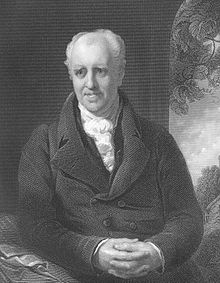
However my trawl for more details about the poem did lead to some interesting background information about this writer.
From the website, Our Civilisation
George Crabbe
(1754-1832)
George Crabbe combined three careers: doctor, minister, and writer. Born in Aldeburgh, a fishing village in Suffolk, he served his apprenticeship to an apothecary, and then set up as a surgeon-apothecary in 1775. He abandoned this career four years later and went to London to earn his living as a writer. In 1782 he was ordained priest and became chaplain to the Duke of Rutland. He held several livings thereafter, and finally in 1814 became rector of Trowbridge, Wiltshire, where he spent the rest of his life.
Crabbe’s long literary career divides into two parts: the poems, — notably ‘The Village‘ (1783), published during or shortly after his early stay in London; and the long series of works beginning with ‘Poems‘ (1807), which includes ‘The Parish Register‘ and ‘Sir Eustace Grey‘;’The Borough‘ (1810), ‘Tales in Verse‘ (1812), ‘Tales of the Hall‘ (1819), and the inferior ‘Posthumous Tales‘ (1834). This series shows Crabbe moving from static description and portrait toward narrative, until he achieves something which approaches a group of linked short stories in verse. His work, in its low-keyed, realistic, unsentimental picture of rural life, represents less the last gasp of eighteenth-century poetry than a reaction to it different in direction from Wordsworth’s. It is indicative of the kind of work Crabbe produced that Thomas Hardy admired and was influenced by him.
Also Wikipedia has an extensive entry for Crabbe that starts,
George Crabbe (24 December 1754 – 3 February 1832) was an English poet and naturalist.
He was born in Aldeburgh, Suffolk, the son of a tax collector, and developed his love of poetry as a child. In 1768, he was apprenticed to a local doctor, who taught him little, and in 1771 he changed masters and moved to Woodbridge. There he met his future wife, Sarah Elmy, who accepted his proposal and had the faith and patience not only to wait for Crabbe but to encourage his verse writing. His first major work, a poem entitled “Inebriety”, was self-published in 1775. By this time he had completed his medical training, and had decided to take up writing seriously. In 1780, he went to London, where he had little success, but eventually made an impression on Edmund Burke, who helped him have his poem, The Library, published in 1781. In the meantime, Crabbe’s religious nature had made itself felt, and he was ordained a clergyman and became chaplain to the Duke of Rutland at Belvoir Castle in Leicestershire.
The two works for which Crabbe became best known were The Village (1783) and The Borough (1810), both lengthy poems dealing with the way of life he had experienced. In 1783, he also married Sarah. In 1814, he became Rector of Trowbridge in Wiltshire, where he remained. By the time of his death, he was well regarded and a friend of William Wordsworth, Sir Walter Scott and other major literary figures of the time.

 Learning from Dogs