Tag: Education

Elliot’s schooling – the negatives

Author Update – the Learning from Dogs author team are delighted to welcome Elliot to their ranks.

On April 1st I set the scene for the essays that I wanted to write for Learning from Dogs as follows:

I often ask myself just how effective the modern US schooling system is as a tool of education, and whether or not its costs outweigh its benefits. I hope to have at least a rough answer to this question in the final post of this series.

I intend to examine three topics:

In what ways does the modern schooling system function as a positive tool for education?

What costs involved in modern schooling hinder its ability as an educative tool, and even make it a negative influence on students?

Considering the analyses put forth in the first two posts, do the costs or benefits or this system outweigh the other? On the whole, are school and education complements or antagonists?

The author

On April 15th, I looked at the positive aspects of the American educational system.  Now I look at the other side of the coin, so to speak.

Intellectual failure

While in my last post I attempted to put a positive spin on the United States education system, I must here admit that I personally tend to view it in a much more negative light.  There are several reasons for this, three of which I will try to elaborate on here.

My first major concern about education in the United States is its lack of critical thinking skills, which produces students who do not know how to question the “system” for what is truly is, but rather constantly take the context of things presented as fact (the two-party political system is a perfect example of this.)

I am not necessarily arguing that the specific curriculum is being chosen to suit this purpose, though I think this argument could be made (it would, however, require quite a bit of research.)

Rather, consider the required courses – very rarely do you see courses on economics or logic.  While some schools offer these as electives, they are almost never required.  This is quite sad, as a sound ability to question the established authorities and the nature of the world as a whole requires a strong background in these two fields in particular.

The history of economics is a history of government policies that have failed because of their disregard for this very topic.

The economist Ludwig von Mises wrote that “the unpopularity of economics is the result of its analysis of the effects of privileges. It is impossible to invalidate the economists’ demonstration that all privileges hurt the interests of the rest of the nation or at least a great part of it.

A second negative aspect of the American education system is what it does to the human mind.  It essentially takes the mind and makes it into a factory that is able to take in information and then spit it back out.  I think there is a direct relationship between the formerly mentioned lack of classes on logic and economics and this production of human beings who are essentially taught to be cogs in a machine.

Economically, the schooling system can, in this light, be seen as a massive subsidy to corporations, who are handed people already trained in how to listen then do and repeat.

Finally, I must admit that I am skeptical as to the true purpose of compulsory education.  I have rarely in history seen it as a tool for true learning, as it seems to tend to rather be a system of control.  I see no reason why our school system would be any different.

J T Gatto's book

John Taylor Gatto, a former school teacher and avid critic of mandatory schooling,  has written that the purpose of modern schooling is a combination of six different functions:

  • The adaptive function – Establish a fixed reaction to authority.
  • The integrating function – People taught to conform are predictable, and are easier to use in a large labor force.
  • The directive function – School determines each student’s social role.The differentiating function – Children are trained as far as they need to go according to their prescribed social role
  • The selective function – Tag the unfit with poor grades and disciplinary actions clearly enough that their peers will see them as unsuitable for reproduction, helping along natural selection.
  • The propaedeutic function – A small fraction is quietly taught how to manage the rest.

I am not sure if I completely agree with Gatto, but he makes some interesting points.  In my final article, I’ll attempt to weight the costs against the benefits, and see which comes out on top.

By Elliot Engstrom

Elliot’s schooling – the positives

Elliot Engstrom – Guest Author

On April 1st I set the scene for the essays that I wanted to write for Learning from Dogs as follows:

I often ask myself just how effective the modern US schooling system is as a tool of education, and whether or not its costs outweigh its benefits. I hope to have at least a rough answer to this question in the

Elliot Engstrom

final post of this series.

In the following posts, I will examine three topics:

In what ways does the modern schooling system function as a positive tool for education?

What costs involved in modern schooling hinder its ability as an educative tool, and even make it a negative influence on students?

Considering the analyses put forth in the first two posts, do the costs or benefits or this system outweigh the other? On the whole, are school and education complements or antagonists?

Here is the first one looking at the positive aspects of the American educational system.

Intellectual exploration

My kindergarten teacher told me to always start with something positive, so I’ll be beginning my analysis of American schooling by looking at how it is a positive tool for education.

One facet of the American education system that I once disapproved of but now find extremely useful and educative is the long period of time that students have before they must commit to a career choice.

I used to view this lag as a waste of resources. However, living in France and being a student at a French university changed my mind. The French system begins to lock children into a career path as early as the closing years of middle school. If a student in France wants to be a doctor, for example, they enter into medical school immediately upon leaving high school. The same is true for professions like pharmacology and law. There is very little opportunity for intellectual exploration in the country’s schools. Rather, one simply must make the best of wherever one ends up.

While the American system is more long-winded, it is a better tool for education in that it allows for a more dynamic range of studies. A liberal arts education forces students to delve into a wide range of subjects, giving students the chance to explore their interests and abilities.

Socrates (or Plato, depending on your interpretation of Plato’s dialogues), believed that a liberal arts education also encouraged the development of critical thinking skills. However, it should be noted that many of the greatest critical

John Stewart Mill, (1806–1873)

thinkers in history did not go through formal schooling. (Socrates himself and John Stewart Mill come to mind.)

This system also allows students to change their mind, pursuing those fields of study that truly interest them the most. It is amazing how many students in the American university system change majors during their tenure as students. This often is because they find that the career path they thought was for them is in fact not their liking – the number of students who abandon the premed track during college is a perfect example of this.

Education also entails socializing with other human beings. The American education system also facilitates this form of education quite well, as a liberal arts form of study at both the high school and university levels mixes together students of different interests.

Whereas in the French model a student studying medicine is constantly surrounded by other students of the same mindset, a premed student in the United States will have classes with students in other fields of study, expanding their social horizons and forcing them to relate to people with whom they may have little in common.

In my next post, I will examine the American schooling system as an antagonist to education, and will then close this series by attempting to weigh the system’s costs and benefits against each other.

By Elliot Engstrom

Science is Us!

A plea for science education.

a science class at Woolverstone Hall School, late 50s - click to see more

Apart from hearing and knowing that many people are suffering terrible hardships in this world, I find few things more depressing than to hear young people say “I’m not interested in science”.

We are part of Nature. Science is the study of Nature.

How can it possibly NOT be the most interesting and endlessly-fascinating of subjects? There is a shortage of well-trained science teachers in Britain. There are too many students doing courses on “Football Management”, “Media Studies” or even “sociology”.

Why is this? I can’t explain it. Can anyone else?

I am not a scientist, having had to abandon the study of physics and biology – two subjects I loved – because I was better at languages.  Too many youngsters have to drop science at the age of 16. What an absolute folly in the technological age, even 50 years ago.

My point is not just that science is important but that it is so interesting. Is the problem that some kids find it “too hard”? That must be poor teaching, surely? You gear your lessons to your students.

One positive point about British schools – at least in my distant experience – was the great use made of practical work. I so looked forward to that in physics: boiling up water in calorimeters, mucking about with levers and pulleys, passing electrical currents through each other …. I looked on physics lessons as a game, not a boring school subject.

Yes, science CAN be hard, especially for those not that good at maths. Some of the most brilliant minds on the planet do science; we cannot hope to understand all they do. But this doesn’t matter, does it?

ISBN: 0-19-511699-2

As for maths, I have recently been reading a most stupendous book, one that I cannot recommend too highly to any layman interested in science. Shown right, this was written by Brian Silver, former Professor of Physical Chemistry at the Technicon Institute of Technology in Israel.

I read and re-read this book every night, each time hoping – somewhat in vain – that I will  eventually understand what quantum mechanics and relativity really are. But I read it, too, with a tinge of sadness, for Brian Silver died in 1997, just prior to the publication of his book, which I personally feel is a masterpiece of its kind.

In this book Professor Silver takes us through the history of science from Antiquity and before right up to the end of the 20th century.  As well as chapters on all the major fields and discoveries of science from Pythagoras to Hawking we have fascinating snippets of biographical information about the science greats: Galileo, Copernicus, Newton, Herschel, Boyle, Hooke, Faraday, Lavoisier, Maxwell, Mendel, Darwin, Planck, Bohr, Heisenberg, Schrödinger, Einstein, Rutherford, Crick and so many more.

Their biographies themselves make fascinating reading, let alone their discoveries.

I read a book some years ago about Joseph Salk and the development of the polio vaccine. This was a hundred times more exciting than the most classy whodunnit, recounting the story of one of the greatest triumphs of medicine. Do you know anyone with polio? Nor do I, though I did when I was a kid in the 50s and of course there are many in “developing” nations still today, as we spend billions on CERN and not enough on medicine for the deprived of this world. Interwoven with the factual accounts of science and scientists considerable attention is given to philosophy and the placing of scientists and their discoveries in their historical context. A dry, purely factual book this isn’t, with the final chapters on cosmology, the origin of the universe and the meaning of life. (But don’t expect any answers to the last two!!)

Maths? Well, Professor Silver puts Michael Faraday right up there among the immortals. An astounding practical scientist/technologist, he made major discoveries in the field of electricity that affect the lives of everyone on the planet today. But his maths wasn’t too good! So much so that he pleaded with James Clerk Maxwell to write his equations in a more understandable way!

So you don’t have to be a great mathematician to do good things in science. If only I’d realized that before, I could have been another Faraday!

This book should be a standard textbook for all 6th formers, not just those doing science. I salute the brilliant and too-soon departed author.

By Chris Snuggs

Europe Uber Alles

Welcome Patrice Ayme

On the 22nd March, Learning from Dogs had the pleasure of a Post from our first Guest Author, Elliot Engstrom.  We were then doubly delighted to have Per Kurowski join us as our second Guest Author with his introductory Post.

Now we have the additional honour of welcoming Patrice Ayme to the growing ranks of Guest Author to Learning from Dogs.

Patrice, like Elliot and Per, also is a prolific blogger.  He describes himself as:

I was born in Europe, raised in Africa, and lived in America. So doing, I learned to compare different cultures, even during my early childhood, and to appreciate superiority of many of their traits, even the most surprising. I consider myself Senegalese, and proudly so. I studied, and know, several languages, not just Latin, and several cultures, deeply, by living through and inside them for years. I have done formal studies in mathematics and physics at three leading Universities receiving the highest degrees, and putting me in a good position to learn to differentiate between hard knowledge and wishful thinking, differently from many a common philosopher. I am a specialist of non commutative geometry, arguably the most abstract field of knowledge in existence (even hard core logic, model theory, is used in my approach).

Here is Patrice’s first Guest Post for Learning from Dogs.

——————————

GREEK TROJAN HORSE TO CONQUER BETTER EUROPEAN UNION

Abstract:

The European currency, the euro, is, foremost, a solution to a problem. War. All other problems, and the euro solves many, pale in significance relative to this one.

Many talk about “problems” with the euro, and, oozing with glee all over, perceive weakness. They are right, there is weakness, but it is not European weakness. Just the opposite.

What those skeptics are seeing with their uncomprehending neurology is the further construction of the European imperium, according to its core principle: fix what needs to be fixed, but with complete consensus of the parties concerned, which means do it just so. It appears messy, because it’s democratic, and before the people (demos) can use its kratos (power), it needs to think right, which means it has to argue thoroughly. It looks like squabbling, but it is thinking aloud. Europe is not built for some parties to gain advantage anymore (as it was with Napoleon, or Hitler), but to solve problems and gain opportunities for all.

The euro is, for the first time, used as a weapon against Europe’s enemies. Hence all the squealing. Far from weakening Franco-German resolve, the recourse to the IMF adds another layer of authority to the European Communities. When the IMF, speaking in the name of Franco-German taxpayers, tell restive exploiters in Greece that they have to pay more taxes (only 6 plutocrats declare more than one million euro income in Greece, and more than 500 professions can retire at 50 years of age, whereas Germany just brought up the retirement age to 67!), they will have to submit under orders (imperare, to use the Roman notion)

The European Union

Read more of Patrice’s fascinating article

Elliot’s schooling

Elliot Engstrom – Guest Author

Elliot was ‘exposed’ to the Learning from Dogs readership on the 22nd March as our first Guest author.  He wrote about the US Government and Poverty.

Elliot has one important distinction with respect to the other authors of this Blog; he is the right side of 30 years old!

He is going to use this perspective to reflect on schooling, something that most of us ‘aged’ peeps take for granted, assuming we can remember our school days! 😉

It promises to be a fascinating reflection.

———————————–

Setting the scene

I’ve had a plethora of experiences over the past 17 years of my life. I’ve made and lost friends, had romantic

Elliot Engstrom

relationships, read, traveled all around the world, lived in France, and done countless other things that I consider myself immeasurably blessed to have experienced.

Despite the fluidity of where these different experiences have taken me, my entire life since the age of four has had one characteristic in common – I have been a school student.

In the spirit of “Learning from Dogs,” I thought it might be interesting to reflect a bit upon the core dynamic between education (not learning, which is a far broader topic) and schooling.

I often ask myself just how effective the modern US schooling system is as a tool of education, and whether or not its costs outweigh its benefits. I hope to have at least a rough answer to this question in the final post of this series.

In the following three posts, I will examine three topics:

In what ways does the modern schooling system function as a positive tool for education?

What costs involved in modern schooling hinder its ability as an educative tool, and even make it a negative influence on students?

Considering the analyses put forth in the first two posts, do the costs or benefits or this system outweigh the other? On the whole, are school and education complements or antagonists?

This series is going to be exciting for me because, to be quite frank, I have no idea what my final answer is going to be. I guess I’ll just have to stay tuned to see where my brain takes me – and so for you!

By Elliot Engstrom

Why do we cheat?

Behavioral Economist concludes that most people cheat.

In a very interesting video on the website TED, Dan Ariely, Professor of Behavioral Economics at Duke University, explains his research into why people think it is okay to cheat and steal.

Here is Ariely’s presentation from YouTube:

From his research, he concludes the following:

  • A lot of people will cheat.
  • When people cheat, however, they cheat by a little, not a lot.
  • The probability of being caught is not a prime motivation for avoiding cheating.
  • If reminded of morality, people cheat less.
  • If distanced from the benefits from cheating, like using “chips” instead of actual money in transactions, people cheat more.
  • If your in-group accepts cheating, you cheat more.
Dan Ariely

I quibble with the interpretation of some of his findings, which may justify a separate post on how people perceive what they do and do not know, but there are always issues of this sort with a given research project.  Where I draw the line is when he expands his conclusions to include all of Wall Street and the stock market, which is totally beyond the scope and nature of his research.

On what basis does he draw this conclusion?  As explained in this short video (as I have not read his book, though I’ve read excerpts and am familiar with the study upon which the book is based), Ariely claims that because stocks and derivatives are not in the form of money, they “distance people from the benefits of cheating,” which leads individuals who engage in the stock market to cheat more.  He alludes to Enron as proof.

This is almost too silly to spend a lot of time on trying to discredit, but I fear that a lot of people who hear his talks or read his book may be lulled into accepting what he says about the stock market as true.  But it is not! Enron is the exception, not the rule.

Companies who issue stocks are raising money to provide a good or service that is valued by society; they are rewarded by profits.  Investors who buy and sell stocks, trade derivatives, and invest in portfolios are trying to make their money go further. They are trying to earn a return on their savings.  Cheaters do not survive in the stock market, unlike the “consequences-free” classroom in Areily’s experiment.

On the other hand, these factors are in glaring abundance in the government:  politicians never “see” the taxes they spend as the hard-earned income of the citizens. And the “benefits” of cheating, including power and privilege, are amorphous and vague, and couched in the so-called morality of “doing the greater good.”  I’m surprised Ariely does not condemn the federal government using the same logic as his does the stock market.

His last take-away from this research project?  That we find it “hard to believe that our own intuition is wrong.”

I think Dr. Ariely ought to apply that caveat to the conclusions he draws about his own research.  Very interesting, very compelling, but his interpretation of the results as they apply to the stock market falls victim to the very same biases that he claims to find in others.

by Sherry Jarrell

Predicting lost decades for Britain

…. and most likely other ‘Western’ nations

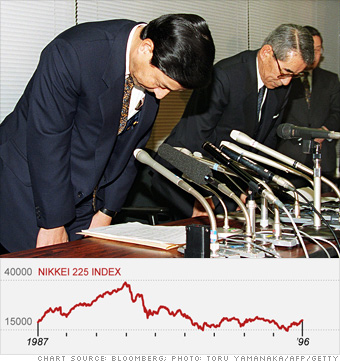
This Post is taken in its entirety from the website Contrary View. Contrary view number 73 has just been published, as follows.  Please see note after signature. [The Japanese Nikkei 225 index was 10352 at the time of writing this Post – 0800 MT, 23rd Feb.]

There is plenty of evidence from Japan about lost decades for investments. Japan has now lost two decades in equity and property investment, during which time only Government Bonds provided any sanctuary. All policy options failed, because none tackled the real problem, which is that there is already too much debt. What lessons can be drawn for Britain?

Lost decades

Shares here [in Britain] have certainly had a lost decade. On the Japanese evidence, they may well suffer another lost decade. Property has only hit minor bumps, so the Japanese experience suggests that property may suffer a long decline for two decades. In the UK, the Bank of England’s support for mortgages will be withdrawn over the next two years, which itself threatens prices. Why, though, the hysteria about Government debt?

It is questionable whether pundits appreciate the extent of the private sector debt problem, which explains why two groups of economists can offer totally contradictory remedies. In a world with no Gold standard and therefore no anchor to the monetary system, Government debt is relatively safe. The global economy is perched on a knife edge, with a permanent loss of output that must cause income loss and therefore restrict the capacity of households to service their debts. Seeing the commercial risks, banks are still restricting lending, which means there can be no sustained recovery.

There is a misconceived demographic argument being touted at present, which completely ignores the real driver of the post-1945 expansion, namely increased credit. That credit growth has simply gone too far and now brings its own problems. For those people who neither saw the credit crunch nor the long fall in interest rates and inflation coming, to now be credible in predicting a lost decade for bonds, is itself unbelievable.

By Paul Handover

Note: Until very recently, the author was a client of Kauders Portfolio Services, the publisher of the Contrary View website.  Please see the warning about these views posted on that site.

Now this IS smart!

A very good idea from the Canadians

Read this quote:

“Time and again we see behaviour by people – we are talking highly educated, high income people – who are making less than ideal financial decisions for themselves and their families,” said one source. “Other countries that have developed a strategy have focused on education in high schools. This task force has come to the early conclusion that, while enhanced financial education is vital over the long term, it is insufficient.”

The first sentence is so important, to my mind, that it is worth repeating, “Time and again we see behaviour by people – we are talking highly educated, high income people – who are making less than ideal financial decisions for themselves and their families,

This comes from a piece published by the Canadian newspaper, The Globe and Mail, about a Canadian taskforce that is

Group will be headed by Sun Life's Don Stewart

looking into ways of making Canadians “more savvy” about their personal finances.

The financial industry is very adept at producing complex financial products that are almost beyond the limits of the understanding of good common people.  We, the people, need to be much smarter and that’s why this initiative from the Canadians seems, on the surface, to be such an excellent idea.

By Paul Handover

Managing in a mad world.

Even in the midst of great pain, we must think through our choices

The last week has been really mad.  I have been working in different companies and organisations and having to be part of redundancies, power struggles and people rebuilding their lives.

For example, I was in a company that had just let its second lot of people go in as many months. It’s gone past losing ‘dead wood’ and now people with valuable skills needed for recovery are going. I’ve noticed previously that good, employable people with key skills start to get concerned and will often take voluntary redundancy rather than hanging around to see how things pan out.

End of job!

It’s the shocking way that it’s done as well that’s unbelievable. No warning, just a phone call to attend a meeting, no hint as to what the meeting is about, then an envelope slid across the table and then a rapid escort off site. All done and dusted in 5 minutes.

Having been through this myself some years ago, it’s not something you forget in a hurry. Lots of feelings of rejection and feeling unvalued and unwanted are what I remember. Perhaps its part of being bought up in a job-for-life culture and then having that illusion shattered.

Working with people in this situation is literally quite shocking and traumatic because it clearly affects them and their lives and the lives of their families, and it affects me because the work we started comes to an abrupt end usually with little or no warning, and so does a source of income to be brutally honest. I don’t even have chance to say good-bye in many cases.

Every Thursday I become a trainee psychotherapist and work with people who mostly struggle to hold down any sort of job. The reasons for this are generally because of upbringings that are awful beyond description. The shock and trauma that is in the air when working with these people is amazing, and so scary for them that the idea of being present in the room with me and is virtually impossible.

So that brings us to managing in a world where lots of mad and non-integrous things happen. I believe that mindfulness can provide a key to these situations; being present for another does more than any instruction manual!

Being present means we make ourselves available at many levels to someone who is suffering. By avoiding the subtle invitation to join someone in their shock and trauma but by being there for them, to the best of our ability and listening to them at depth, we can provide an environment where real reflection can take place. Then options may be chosen which are not born of panic and reaction but come from reflection and response.

I believe that this approach gets us out of the ‘noise machine in our heads‘ (that is forever churning and worrying, in my case) that we have no control over, and creates space for more subtle things to come through the quiet and calm.

Most people I’ve met in my engineering work like to assume that they think their way out of tight situations but I’m not convinced that this process is actually effective. I have heard and practised many times the activity of ‘sleeping on something’ and then being able to decide on a course of action the following morning with relative ease. My psychotherapy clients can’t think their way out the awfulness because thinking about things has got them into a spiral

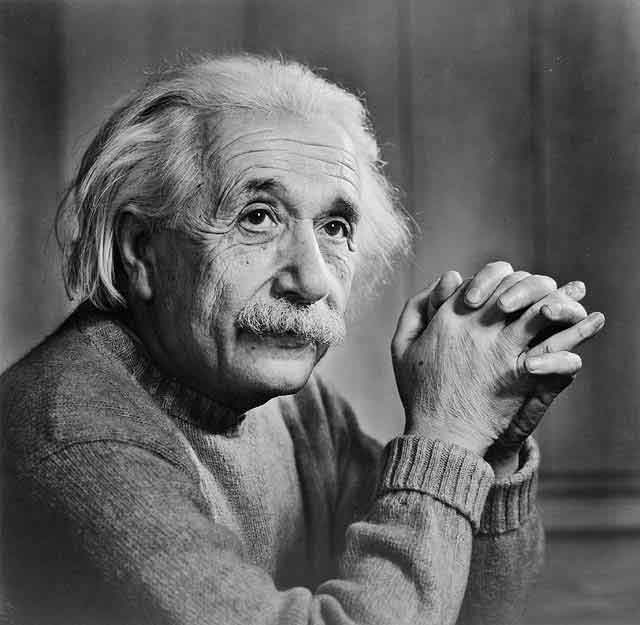
Albert Einstein

process which is highly addictive, predictable and virtually impossible to break without the intervention of a higher level of awareness. I think it was Einstein who said something like, “you can’t use the same intelligence that created a problem to solve it“!  In other words, a different approach or level must be used.

I believe that this different approach or level can be used to solve most problems we have. By bringing a different level of awareness to a challenge, whether it is redundancy or some other sort of deeper problem always gives different results and provides more options. It’s just that initially it needs to be facilitated, until we can do it under our own steam. I am heartened that even in the depths of a recession that there are still companies out there that support this approach and the work I do.

By Jon Lavin [This article from the BBC is worth reading in conjunction with Jon’s excellent Post. Jon may be contacted via learningfromdogs (at) gmail (dot) com]

Free speech!

Hats off to some intrepid commentators

We are going through unprecedented troubled times and the way ahead looks very uncertain.  The whole world could be participating in the ‘lost decade’ that Japan experienced previously.

But this article is not about doom and gloom!  It is about recognising the commitment to open and honest reporting being undertaken by (at least) these three  individuals.  Three commentators that this author follows in admiration and awe.

Learning from Dogs has nothing like the following of James Kwak, Yves Smith and Karl Denninger but the LfD authors do have an inkling of the work involved in writing not one but often several articles each day.  It is a huge commitment.

James Kwak

First James Kwak of Baseline Scenario.  Simon Johnson is, perhaps, the more well-known of this duo that comprise Baseline Scenario but it is James that puts in the leg-work.  Here’s a taste of a recent article from James:

Radio Stories

I spend a lot of time in the car driving to and from school, so I end up listening to a lot of podcasts (mainly This American Life, Radio Lab, Fresh Air, and Planet Money). I was catching up recently and wanted to point out a few highlights.
Last week on Fresh Air, Terry Gross interviewed Scott Patterson, author of The Quants, and Ed Thorp, mathematician,  inventor of blackjack card counting (or, at least, the first person to publish his methods), and, according to the book, also the inventor of the market-neutral hedge fund.

Large chunk snipped ……

I finally got around to listening to Planet Money’s interview with Russ Roberts from December. Russ Roberts and I are pretty sure to disagree on almost any actual policy question. But what I liked about his interview was that he basically admitted that policy questions cannot be settled by looking at the empirical studies. On whether the minimum wage increases or decreases employment for example, he says that he can poke holes in the studies whose conclusions he doesn’t agree with, but other people can poke holes in the studies he agrees with. In Roberts’s view, people’s policy positions are determined by their prior normative commitments.

I don’t completely agree. I don’t think that these questions, like the one about the minimum wage, are inherently unanswerable in the sense that the answer does not exist. But I agree that empirical studies are unlikely to get to the truth, particularly on a politically charged question, because there are so many ways to fudge an empirical study. As one of my professors said, there are a million ways you can screw up a study, and only one way to do it right. But I agree with the general sentiment. We are living in an age of numbers, where people think that statistics can answer any question. Statistics can answer any question, but they can answer it in multiple ways depending on who is sitting at the keyboard.

By James Kwak

Read about Yves Smith & Karl Denninger