Tag: Arctic

It really is about integrity

A reflection on truth.

This is not the first time that I have wandered through this subject.  Indeed, Learning from Dogs would never have seen the light of day if, all those years ago, Jon Lavin hadn’t raised the fascinating idea that dogs are integrous animals.  As the quote says in the sidelink Purpose of Learning from Dogs;

There is nothing to fear except the persistent refusal to find out the truth, the persistent refusal to analyse the causes of happenings. Dorothy Thompson.

So what is it that has rocked my boat again?  A number of things, to be honest.  So much so, please forgive me for running these musings over to tomorrow!

Regular readers may have noticed that both Tuesday’s post Modelling the future and yesterday’s A study of man’s behaviours explored determining truth; frequently a fickle beast to track down!  Then last Monday, I read the latest post from Climate Denial Crock of the Week that was about Sea Ice Slowing to Minimum.  It was yet another reminder that embracing the truth of what is happening to our planet is vital, I mean VITAL, for anyone who has a reasonable expectation to be alive in 20 years time.

Here’s how Peter opened that post (published with Peter’s kind permission):

Not there yet, but in an interview with Dr. Jennifer Francis of Rutgers last week, the message was clear – the ice has retreated so much that at this point, we will already be experiencing the impacts of a low or no-ice arctic minimum, including “very interesting” weather in the northern hemisphere this fall and winter. Wow. I can’t wait.

Peter then included an update in that post, a reference to a report published in the Australian newspaper The Sydney Morning Herald.  I requested permission to republish the SMH article but that wasn’t granted, well to be factual it was offered at a fee of $420.75 – say no more.  Here is how that report from on board the Greenpeace ice-breaker Arctic Sunrise opened,

We are a few hundred miles from the north pole. The air temperature is -3C, the sea freezing. All around us in these foggy Arctic waters at the top of the world are floes – large and small chunks of sea ice that melt and freeze again with the seasons.

Arne Sorensen, our Danish ice pilot, is 18 metres up in the crow’s nest of the Arctic Sunrise vessel. Visibility is just 200 metres and he inches the 1,000-tonne Greenpeace ice-breaker forward at two knots through narrow passages of clear water.

A few paragraphs later come this:

More than 600,000 sq km more ice has melted in 2012 than ever recorded by satellites. Now the minimum extent has nearly been reached and the sea is starting to refreeze.

‘‘This is the new minimum extent of the ice cap,’’ [Sorensen] says – the frontline of climate change. ‘‘It is sad. I am not doubting this is related to emitting fossil fuels to a large extent. It’s sad to observe that we are capable of changing the planet to such a degree.’’

British, Italian and American scientists on the Arctic Sunrise say they are shocked at the speed and extent of the ice loss.

Over at the Guardian newspaper, their reporter John Vidal, also aboard the Arctic Sunrise, reports:

One of the world’s leading ice experts has predicted the final collapse of Arctic sea ice in summer months within four years.

In what he calls a “global disaster” now unfolding in northern latitudes as the sea area that freezes and melts each year shrinks to its lowest extent ever recorded, Prof Peter Wadhams of Cambridge University calls for “urgent”   consideration of new ideas to reduce global temperatures.

In an email to the Guardian he says: “Climate change is no longer something we can aim to do something about in a few decades’ time, and that we must not only urgently reduce CO2 emissions but must urgently examine other ways of slowing global warming, such as the various geoengineering ideas that have been put forward.”

Professor Peter Wadhams is head of the Cambridge University Polar Ocean Physics Group, from which one may learn,

Sea ice covers 7% of the surface of our planet. It is one of the most important and variable components of the planetary surface and is the key to understanding many basic questions about the energy balance of the Earth. The ice-covered seas represent the cold end of the enormous heat engine that enables the Earth to have temperatures suitable for human life over most of its surface.

Just go back and re-read, “.. the enormous heat engine that enables the Earth to have temperatures suitable for human life over most of its surface.”

So determining the truth of what is happening to our planet is not some elegant academic exercise, it is about determining the likelihood of human life surviving or not!

Doesn’t that put everything else we are doing into some form of perspective?  Let me rant on tomorrow!

There’s an old saying …

I’m thinking of this one.

There are those that do,

There are those that don’t,

There are those who wondered what happened!

So what prompted me bringing out that old saw?

Simply the ever-increasing rate of the loss of our Arctic sea ice.

Patrice Ayme commented recently on my post, The connection between man and climate.  This is part of what he wrote,

Arctic ice depletion can be tracked at: http://nsidc.org/arcticseaicenews/  It is now lower than the preceding lowest on July 5…

 Over on the Carbon Brief blog, we find a recent post (June 29th) that opens up thus,

The Guardian jumps the gun on record June sea ice melt

29 Jun 2012, 11:15 – Verity Payne

The Guardian this week reports that recent rapid melting of Arctic sea ice has seen levels reach a “record low for June”. But it’s premature to be heralding June 2012 as having record low Arctic sea ice extent before the month is even over, particularly as sea ice extent is not currently tracking at record low levels.

The Guardian article says Arctic sea ice “has melted faster this year than ever recorded before”, under the online headline “Arctic sea-ice levels at record low for June”.

This headline could be read in two ways. The first interpretation is that Arctic sea ice extent for the month of June is at a record low. But can we know that before the month is out? The second is that at some point in June Arctic sea ice was at a record low. But does highlighting a few days of sea ice behaviour best illustrate what’s happening to the sea ice?

The piece also appeared in the print version of the Guardian yesterday with the headline “Arctic sea ice has melted faster than ever, say scientists”.

Melt season

The Arctic sea ice is in long-term decline due to man made climate change, but it’s not a uniform decline – sea ice cover changes with the seasons, and the weather in the region affects how far the sea ice extends, particularly as it melts towards the ice minimum in late September.

During melt season, Arctic sea ice seems to get a lot of media attention, often with rather confusing results. This Guardian article was prompted by analysis from the US National Snow and Ice Data Center (NSIDC), who provide daily updates and regular analysis of Arctic sea ice conditions.

The mention of that Guardian Newspaper article is worth clicking through to, if only to enjoy the fabulous photograph, as below:

Scientists say Arctic sea ice has plummeted to its lowest levels ever this year. Photgraph: Steven J Kazlowski/Alamy

Back to that embedded link in the Carbon Brief posting to the US National Snow and Ice Data Center.  It reveals a wealth of important information.  Try this …

Rapid sea ice retreat in June

Arctic sea ice extent declined quickly in June, setting record daily lows for a brief period in the middle of the month. Strong ice loss in the Kara, Bering, and Beaufort seas, and Hudson and Baffin bays, led the overall retreat. Northern Hemisphere snow extent was unusually low in May and June, continuing a pattern of rapid spring snow melt seen in the past six years.

Overview of conditions

Arctic sea ice extent for June 2012 averaged 10.97 million square kilometers (4.24 million square miles). This was 1.18 million square kilometers (456,000 square miles) below the 1979 to 2000 average extent. The last three Junes (2010-2012) are the three lowest in the satellite record. June 2012 ice extent was 140,000 square kilometers (54,000 square miles) above the 2010 record low. Ice losses were notable in the Kara Sea, and in the Beaufort Sea, where a large polynya has formed. Retreat of ice in the Hudson and Baffin bays also contributed to the low June 2012 extent. The only area of the Arctic where sea ice extent is currently above average is along the eastern Greenland coast.

 Get your mind around this image that comes from the latest NSIDC report.

Arctic sea ice extent for June 2012 was 10.97 million square kilometers (4.24 million square miles). The magenta line shows the 1979 to 2000 median extent for that month. The black cross indicates the geographic North Pole. Sea Ice Index data. About the data

That old saying that I opened with, the one about There are those that do, etc.

No question in my mind that firmly in the camp of those that do is Mother Nature!  Anyone prepared?

Not so common sense!

Sometimes one wonders what happened to common sense!

Today’s Post is motivated by a number of items that have crossed my screen over the last few days which when looked at collectively might remind one of the old saw, “You don’t have to be mad to work here, but it does help!

Sit with me, metaphorically, and allow me to muse.

First was a recent Post on 350 or bust that included the March 2012 TED Conference in Long Beach, California where NASA climate scientist Dr. James Hansen explains why he must speak out about climate change. (See the video later on.)  That Post refers to an item on Martin Lack’s Blog, Lack of Environment, where Martin as well as including the video below also lists the challenges that we on this single, finite planet face.  Here is that list,

  1. The Earth’s current energy imbalance is 0.6 Watts per sq.m.; a rate of energy input 20 times greater than the energy output of all human activity; and equivalent to the detonation of 400,000 Hiroshima-type atomic bombs every day.
  2. Since measurements began in 2003, there has been a noticeable acceleration in the annual rate of mass loss from both the Greenland and Antarctica ice caps.
  3. The last time atmospheric CO2 was 390 ppm, sea levels were 15 m higher than they are today, which implies even if we stopped burning all fossil fuels tomorrow, this is where they would end up several centuries from now because the warming “is already in the pipeline” (i.e. because the Earth must warm-up in order to restore its energy balance).
  4. Unless we stop burning fossil fuels soon, sea level rise will continue to accelerate, which is likely to cause between 1 and 5 metre rise by 2100AD (depending on how quickly we now decide to stop burning them).
  5. Palaeoclimatology tells us that 350 ppm is the safe limit for avoiding significant disruption to the planet’s ecological carrying capacity (i.e. in terms of both populations of individual species and overall biodivesity); and it now seems likely that between 20%-50% of all species will be “ticketed for extinction” by the end of the century.
  6. If we push the Earth beyond it’s “tipping point” (i.e. allow all the emerging positive feedback mechanisms to take hold); ACD will become unstoppable; and the ensuing socio-economic damage will be almost unimaginable. The total global cost of mitigation is already put at somewhere between 35 and 70 Trillion US Dollars depending on how soon we choose to act.
  7. If we had started to get off fossil fuels in 2005, it would have required 3% reduction per year in order to restore energy imbalance by 2100AD. If we start next year, it will require 6% p.a. If we wait 10 years it will require 15% p.a.
  8. Recent droughts in Texas, Oklahoma and New Mexico were 3 Standard Deviations outside the norm. Events such as these cannot therefore be ascribed to natural variability; anthropogenic climate disruption (ACD) is happening just as Hansen said it would 24 years ago (if we did not change course – which we haven’t).
  9. Pursuing emissions limits (i.e. Cap and Trade) will not work because there is no actual incentive to reduce emissions without any self-imposed restraint being to the advantage of others who do not do the same (i.e. the Tragedy of the Commons problem).
  10. Hansen uses the analogy of an approaching asteroid – the longer we wait to prevent it hitting us the harder it becomes to do so.

Do watch that Hansen video,

Second is that yesterday Martin Lack published an item that really does seem to endorse the view that there is no sign of intelligent life living on Planet Earth (not counting dogs!).

Think about it.  The planet is warming up.  The use of carbon-based fuels is a strong suspect, putting it mildly, of the rising levels of CO2 in our atmosphere, 394.45 on April 5th, so rather than change the incentives for using such fuels, we are taking advantage of  this warming planet causing the melt of the Arctic ice cap by allowing Shell to drill for oil in the Arctic.  But even crazier than that, Shell have contracted for a Finnish icebreaker to assist them in breaking up the ice!  (I really do feel a headache coming on!)

Greenpeace in the UK are running a campaign to stop this.

Sign up to save the Arctic

Let Shell know your feelings.

The pristine and beautiful Arctic: Shell wants to exploit it for oil. We want it protected.

Dozens of Greenpeace Nordic activists have boarded and occupied a Shell-contracted icebreaker in Helsinki harbour as it prepares to leave for the Alaskan Arctic.

Drilling in this fragile ecosystem – home to the polar bear, narwhal, Arctic fox and other iconic species – is unacceptable. A spill or accident in these waters would be disastrous and the harsh conditions would make responding to such a disaster almost impossible.

Demand Shell stop their plans to put the fragile Arctic and its biodiversity at risk.  We’ll keep you updated on our campaigns.

Write to Mr. Peter Voser.

Mr Peter Voser, Shell

The Arctic isn’t a place you can exploit, it’s a place we have to protect. Time and time again, experts have expressed serious doubts about the possibility of cleaning up an oil spill in the Arctic. The technical challenges posed by drilling there are obvious and no matter how much you try to convince people that your company can operate safely in such a harsh environment, we know the truth.

Because of this, I demand that you scrap your Arctic plans immediately.

Yours sincerely,

————–

By the end of this week we want 500,000 people shouting at Shell that it must end its campaign of Arctic destruction. Click here now[N.B. This is a time-sensitive campaign response – please visit Greenpeace website and enter your name and email address and they will email Shell on your behalf.]

We can change things! Together we can stop Shell and other oil companies from destroying the Arctic. Not everyone can board a ship to demand that change. But today, you can email Shell and ask them to stop drilling for oil and ask 10 of your friends to do the same. Together, we can save the Arctic!

Rosa Gierens
Greenpeace Nordic activist from Finland.

It’s not just an isolated instance of madness! Just a little over 10 days ago, I reported on President Obama’s support for the oil companies that threatens the polar bears, see “President Obama’s proposal for these magnificent and imperiled animals is a gift to Big Oil

In closing, luckily there are many voices being raised about putting an end to this madness; see the recent item from Patrice Ayme.  Hopefully, all these voices will bring about the changes to the way so many of us are governed.  As Patrice commented recently on Learning from Dogs, “Hope is the breathing of the planet“.  Maybe, just maybe, hope will win through.  No better put than by James Hansen,

Most impressive is the work of the Citizens Climate Lobby, a relatively new, fastgrowing, nonpartisan, nonprofit group with 46 chapters across the United States and Canada. If you want to join the fight to save the planet, to save creation for your grandchildren, there is no more effective step you could take than becoming an active member of this group.”
– Dr. James Hansen, head of Goddard Institute for Space Studies, NASA

Oh, and before I forget, a tornado touched down in Southern France!  Not common and not making sense!

Sceptical voices, reflections

If there’s any doubt, there’s no doubt!

I know that expression from my days as a private pilot.  It makes such obvious sense, especially in a single-engined light aircraft with one pilot on board.  It’s all about risk.

Frederick Herzberg, the famous American psychologist, coined the term ‘hygiene factor’.  It was the second part of a two-factor approach to the management of people.  According to Herzberg’s theory, people are influenced by two sets of factors, motivation factors and hygiene factors.  More background on this aspect here.

To me, as I reflect on the messages offered in the Sceptical Voices article, Part One and Part Two, the concepts of risk and hygiene seem totally appropriate to the topic of AGW, Anthropogenic Global Warming.

Whether or not AGW is a valid theory behind the rapid change in global warming is utterly irrelevant.  It is the risk to humanity that matters.  There is absolutely no harm done from assuming that AGW is happening and that feedback processes run a grave risk of tipping planetary conditions out of control, and getting that wrong.

On the other hand, assume that AGW is such an uncertain concept that it really isn’t wise to adjust our life styles, and getting that wrong would endanger the human species.

Think of being on a commercial airline flight and you become aware that one of the two pilots in the cockpit is incapacitated through food poisoning.  No doubt that you, with all your fellow passengers, would vote for an immediate diversionary landing.  It’s to do with risk.

From the perspective of Herzberg, a co-ordinated program by the world’s leading governments to tackle AGW might also improve the overall motivation of their peoples in a whole manner of ways.

Merci voiced this perfectly in her comment to Sceptical Voices, Part One, thus,

Yes, question all we want, yes, there are other important issues to resolve in the world, but WHAT IF “Climate Change/Global Warming“ is for real, what then?

Dan wrote also in that Part One piece,

And by “peel-back-the-onion”, I mean that any ardent, independent researcher should publish both sides of the story as a matter of course.  Especially in regards to global warming.

But publishing both sides of the story is not the argument.  The argument is the risk to humanity of doing nothing, and getting it wrong.

That well-respected weekly newspaper The Economist had a recent article about the melting of Arctic ice, from which is quoted,

Arctic sea ice is melting far faster than climate models predict. Why?

Sep 24th 2011 - from the print edition

ON SEPTEMBER 9th, at the height of its summertime shrinkage, ice covered 4.33m square km, or 1.67m square miles, of the Arctic Ocean, according to America’s National Snow and Ice Data Centre (NSIDC). That is not a record low—not quite. But the actual record, 4.17m square km in 2007, was the product of an unusual combination of sunny days, cloudless skies and warm currents flowing up from mid-latitudes. This year has seen no such opposite of a perfect storm, yet the summer sea-ice minimum is a mere 4% bigger than that record. Add in the fact that the thickness of the ice, which is much harder to measure, is estimated to have fallen by half since 1979, when satellite records began, and there is probably less ice floating on the Arctic Ocean now than at any time since a particularly warm period 8,000 years ago, soon after the last ice age.

That Arctic sea ice is disappearing has been known for decades. The underlying cause is believed by all but a handful of climatologists to be global warming brought about by greenhouse-gas emissions. Yet the rate the ice is vanishing confounds these climatologists’ models. These predict that if the level of carbon dioxide, methane and so on in the atmosphere continues to rise, then the Arctic Ocean will be free of floating summer ice by the end of the century. At current rates of shrinkage, by contrast, this looks likely to happen some time between 2020 and 2050.

Re-read the sentence, “The underlying cause is believed by all but a handful of climatologists to be global warming brought about by greenhouse-gas emissions.”  In particular, “by all but a handful of climatologists”  Think of risk.

That article, which should be read in full, concludes thus,

A warming Arctic will bring local benefits to some. The rest of the world may pay the cost.

Indeed, the rest of the world may pay the cost!  As I wrote, it’s all about risk.

So whether or not one wants to believe every word of that Economist article is irrelevant.  Or whether one should have believed, or not, the article in New York’s The Sun newspaper back in 2007,

By SETH BORENSTEIN, Associated Press | December 12, 2007

WASHINGTON — An already relentless melting of the Arctic greatly accelerated this summer, a warning sign that some scientists worry could mean global warming has passed an ominous tipping point. One even speculated that summer sea ice would be gone in five years.

Greenland’s ice sheet melted nearly 19 billion tons more than the previous high mark, and the volume of Arctic sea ice at summer’s end was half what it was just four years earlier, according to new NASA satellite data obtained by the Associated Press.

“The Arctic is screaming,” a senior scientist at the government’s snow and ice data center in Boulder, Colo., Mark Serreze, said.

Last year, two scientists surprised their colleagues by projecting that the Arctic sea ice was melting so fast that it could disappear entirely by the summer of 2040. This week, after reviewing his own new data, a NASA climate scientist, Jay Zwally, said: “At this rate, the Arctic Ocean could be nearly ice-free at the end of summer by 2012, much faster than previous predictions.”

So scientists in recent days have been asking themselves these questions: Was the record melt seen all over the Arctic in 2007 a blip amid relentless and steady warming? Or has everything sped up to a new climate cycle that goes beyond the worst case scenarios presented by computer models? “The Arctic is often cited as the canary in the coal mine for climate warming,” Mr. Zwally, who as a teenager hauled coal, said. “Now as a sign of climate warming, the canary has died. It is time to start getting out of the coal mines.” [My emphasis, PH]

So, in conclusion, scepticism is healthy and is an important aspect of open debate within an open society, part of determining truth, however challenging that simple concept might be.

But eventually one needs to take a position, to take a stand on the really important issues in life and in the case of climate change the risk of being too sceptical, too cautious is to put the lives of future generations at stake.  For me, and I guess for tens of thousands of others, that is a risk too far.

Earth Day and The 11th Hour

Some very thought-provoking ideas.

John H, a good friend of us here in Payson, lent us the Leonardo DiCaprio film The 11th Hour.  More information on the film’s website.  Here’s the trailer,

The plot of the film, if plot is the right word, is as follows,

With contributions from over 50 politicians, scientists, and environmental activists, including former Soviet leader Mikhail Gorbachev, physicist Stephen HawkingNobel Prize winner Wangari Maathai, and journalist Paul Hawken, the film documents the grave problems facing the planet’s life systems. Global warming, deforestation, mass species extinction, and depletion of the oceans’ habitats are all addressed. The film’s premise is that the future of humanity is in jeopardy.

The film proposes potential solutions to these problems by calling for restorative action by the reshaping and rethinking of global human activity through technology, social responsibility and conservation.

Whether or not you watch the film, and I strongly suggest you do, the action website that supports making a difference is For the Love of Action.  Drop in and make your own mind up.

Following on from that film is this apt reminder of the world we have created.  I tend to write articles a few days ahead of the publish date, so it wasn’t possible to have this post come out on the 20th April, last Wednesday, which was Earth Day.  Shame.  Because as this email from the Alaska Wilderness League pointed out, it’s also a sad reminder of our love affair with oil.

Dear Paul,

The next Deepwater Horizon could be amid the broken sea ice and polar bear habitat of America’s Arctic: unless we prevent it now. Donate to the League.

It was one year ago today. I remember sitting in my living room after dinner when the news alert flashed across the screen:Deepwater Horizon oil rig explodes in the Gulf of Mexico; 11 workers dead or missing. 

Huddled around the office television the next morning, there was no way we could anticipate the true magnitude of the disaster. Images of ruined lives and tarnished lands poured out of the Gulf formonths on end. As the oil industry’s feeble attempts to contain the destruction grew evermore cartoony – ‘top hat,’ ‘junk shot,’ ‘top kill’ – we learned just how little they had prepared for the eventual catastrophe of an oil spill.

Our government rubber-stamped the faulty plans for this oil rig. They had a chance to prevent this disaster, but didn’t. What’s worse: they continue to approve plans for America’s Arctic that are functionally identical to the plans that caused the Gulf disaster. America’s Arctic could be our next Deepwater Horizon tragedy. The effects of deadly crude oil spilling into the broken sea ice and polar bear habitat of America’s Arctic would be disastrous: unless we stop it.

We are fighting the next horrifying oil spill every step of the way. Help us prevent it – donate now! 

When Deepwater Horizon exploded in the Gulf, the League had just completed a campaign to highlight the incredible annual migration of Arctic birds that begins in the Arctic Refuge and extends through each U.S. state. Some of these birds fly as far as the southern tip of Argentina! Many of them rely on critical nesting grounds around the Gulf of Mexico.

The League moved quickly to save these birds, distributing ‘Arctic Garden Kits’ to help donors across the country to provide sustenance and shelter to Arctic birds in their own backyards. Proceeds from the fundraiser helped us fight faulty plans from moving forward in America’s Arctic for the last two summers.

Shell Oil, the biggest threat for Arctic drilling, remains undaunted by our success. Their drilling plans for 2012 have ballooned from one drill rig to six. This is their big move – their cards are on the table. We need your help and support to go over the top to stop their escalating plans.

Help us stop the next disaster in America’s Arctic. Give today.

The way in which the League responded to the Gulf disaster – stemming the damage to wildlife and preventing the next disaster – was one of the most inspiring experiences of my life. You have a chance to be a part of this continuing work. Help us save America’s Arctic before it suffers the fate of another Deepwater Horizon.

Thank you for all that you do,

Cindy Shogan
Executive Director
Alaska Wilderness League

Finally, let me close rather pointedly, perhaps, by this video of the fires in Texas which are burning out of control and have already scorched 1.6 million acres.; long-term drought being part of the cause.

Total, utter madness, Pt 4

Continuing the review of Lester Brown’s book World on the Edge.

Regular readers will be aware that I have been summarising each chapter of this pivotal book.  Chapters 2, 3 and 4 are part of the section that Lester Brown calls A Deteriorating Foundation.  But I am aware that wall-to-wall gloom is often too much for people to take in so I wanted to let you know that the third section, The Response: Plan B, is very much a realistic and pragmatic approach to the alternative, a planet that will let countless future generations live in harmony and sustainably.

So please take in the dire situation that we are in by reading these summaries or, better still, buy the book!

Chapter Four, Rising Temperatures, Melting Ice, and Food Security.

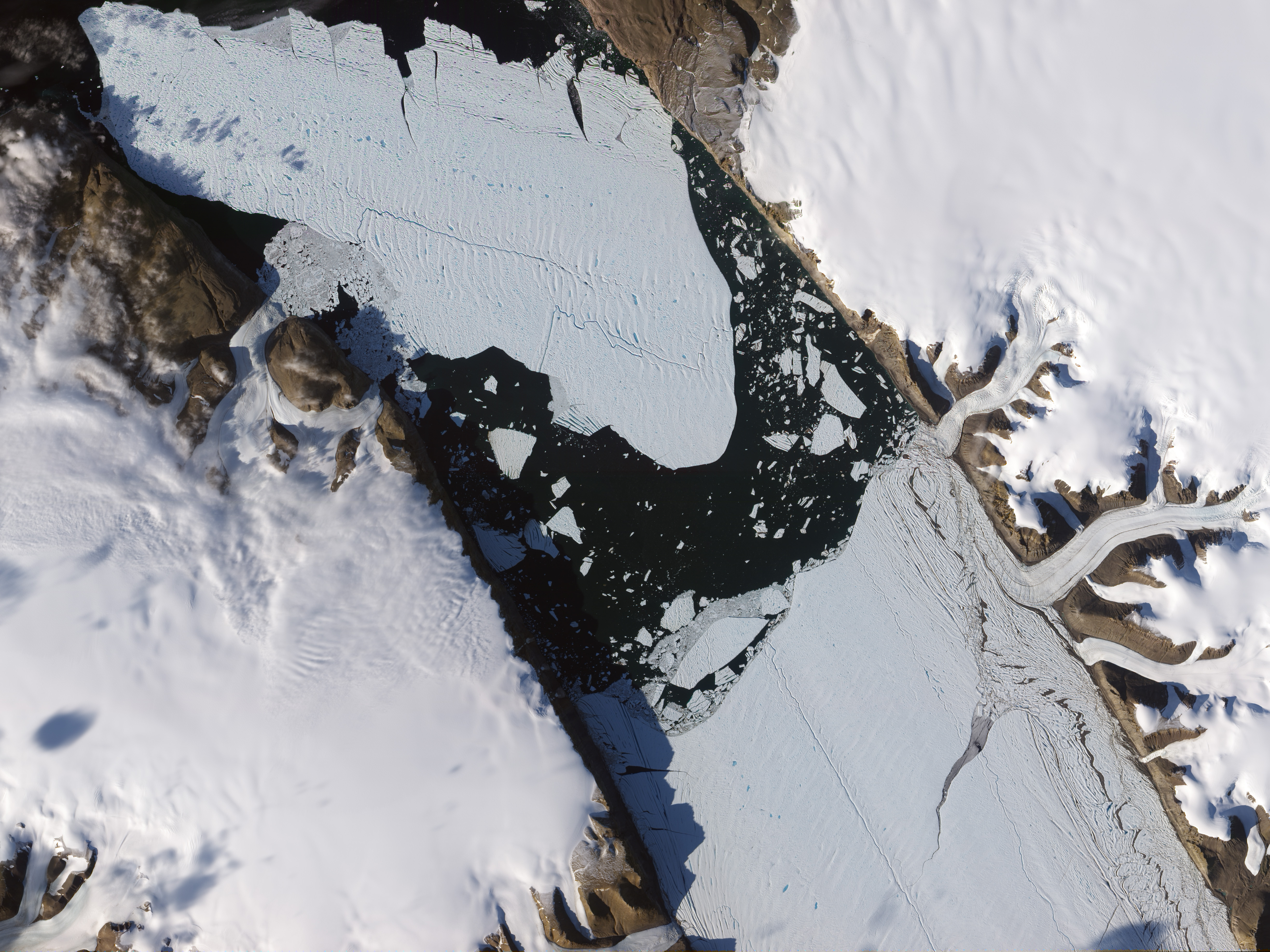
  • The Petermann Glacier calves an iceberg that covered 97 square miles on August 5th, 2010.
  • Scientists for some years have been reporting that the Greenland ice sheet was melting at an accelerating rate.
  • Richard Bates, from the University of St Andrews, part of a team monitoring Greenland ice melt, was reported as saying:

Dr Richard Bates, who is monitoring the ice alongside researchers from America, said the expedition had expected to find evidence of melting this year after “abnormally high” temperatures in the area. Climate change experts say that globally it has been the warmest six months globally since records began.

But he was “amazed to see an area of ice three times the size of Manhattan Island had broken off.

“It is not a freak event and is certainly a manifestation of warming. This year marks yet another record breaking melt year in Greenland; temperatures and melt across the entire ice sheet have exceeded those in 2007 and of historical records.”

  • A temperate rise of between 2C and 7C would cause the entire Greenland ice mass to melt – raising sea-levels world-wide by 23 feet (7 metres)!
  • In the United States last year saw record hot temperatures on the East Coast.
  • On September 27th Los Angeles recorded an all-time high of 113 degrees F, then the official thermometer broke.
  • A nearby thermometer survived to register a temperature of 119 degrees F, a record for the region.
  • Crop ecologists use a rule of thumb that for each 1-degree-Celsius rise in temperature above the optimum during the growing season, we can expect a 10-percent decline in grain yields.
  • Temperatures are rising much faster in the Arctic than elsewhere.  Winter temperatures in the Arctic, including Alaska, western Canada and eastern Russia, have climbed by 4-7 degrees F. over the last half-century.
  • This record rise in temperatures in the Arctic region could lead to changes in climate patterns that will affect the entire planet.
  • Even a 3-foot rise in sea level would sharply reduce the rice harvest in Asia. It would inundate Bangladesh, a country of 164 million people, submerge part of the Mekong Delta ( a region that produces half of Viet Nam’s rice).

That’s enough from me, simply because although this chapter in the book continues with many more frightening facts, I can’t continue to list them in this particular Post.  If the above doesn’t cause you to think and want to change, then a couple of dozen more facts aren’t going to do it either.

Just look at the photograph below and ponder on what we are leaving our children and our grand-children.  Indeed, if you are, say 50 years or younger, ponder on what the next few decades could offer for you.

We have to break our addiction with our modern way of living – or Planet Earth will do it for us.

A mother of an iceberg!

On Aug. 5, 2010, an enormous chunk of ice, roughly 97 square miles (251 square kilometers) in size, broke off the Petermann Glacier, along the northwestern coast of Greenland. The Canadian Ice Service detected the remote event within hours in near real-time data from the Moderate Resolution Imaging Spectroradiometer (MODIS) on NASA’s Aqua satellite. The Petermann Glacier lost about one-quarter of its 70-kilometer (40-mile) long floating ice shelf, said researchers who analyzed the satellite data at the University of Delaware. Taken from here.

Basic geometry

North-West Europe’s Winter weather.

As I write this article, the temperature in London (it’s 5pm on Tuesday 14th.) is 4 deg C/ 38 F heading down to a forecast -2 deg C/28 F overnight.  Similarly cold temperatures are forecast during the rest of the week.

Here’s something that was published in October:

Coldest winter in 1,000 years on its way

04 October, 2010, 22:20

After the record heat wave this summer, Russia’s weather seems to have acquired a taste for the extreme.

Forecasters say this winter could be the coldest Europe has seen in the last 1,000 years.

The change is reportedly connected with the speed of the Gulf Stream, which has shrunk in half in just the last couple of years. Polish scientists say that it means the stream will not be able to compensate for the cold from the Arctic winds. According to them, when the stream is completely stopped, a new Ice Age will begin in Europe.

So far, the results have been lower temperatures: for example, in Central Russia, they are a couple of degrees below the norm.

“Although the forecast for the next month is only 70 percent accurate, I find the cold winter scenario quite likely,” Vadim Zavodchenkov, a leading specialist at the Fobos weather center, told RT. “We will be able to judge with more certainty come November. As for last summer’s heat, the statistical models that meteorologists use to draw up long-term forecasts aren’t able to predict an anomaly like that.”

In order to meet the harsh winter head on, Moscow authorities are drawing up measures to help Muscovites survive the extreme cold.

Read the rest of the article here.

So why the heading for this Post, as in Basic Geometry?

Because places on the Globe are measured using Latitude and Longitude.  Let’s look at the Latitude of some places:

London 51°30′N

Calgary, Alberta 51°03′N

Kiev, Ukraine 50°27′N

Krakow, Poland 50°03′N

Now let’s look at those Cities again with the current temperatures (you have to accept the local time differences):

London 51°30′N +4 deg C

Calgary, Alberta 51°03′N -9 deg C

Kiev, Ukraine 50°27′N -6 deg C

Krakow, Poland 50°03′N -12 deg C

In other words, Britain enjoys, or should enjoy, a much warmer Winter than most other places of the same or similar latitudes because of the effect of the Gulf Stream.

Just a muse!

By Paul Handover


Global Warming? Not our problem Comrade ….

The Russians are building a load of nuclear power stations to fuel their expansion and landgrab to the North Pole to extract the 75 billion tons of oil and gas thought to be there.

This is sure to outrage not only those against carbon emissions but others who don’t like nuclear fission, thus scoring a double whammy for the Russians. Putin must be pleased.

I can’t really see the point of trying to reduce emissions on a personal level; on a macro scale countries are not taking it seriously and are still extracting oil and gas as fast as they can. I believe only a dramatic breakthrough will actually achieve anything. Why they are not putting up giant mirrors into space or if you like in slowly desertifying Southern Spain is a mystery to me.

It’s all nothing if not ironic. Global warming caused most probably by emissions is opening up the Northeast passage which makes it much easier for the Russians to send MORE oil and gas to China. A perfect vicious circle indeed …..

And if WWIII doesn’t start in the China Sea maybe it’ll be up in the frozen North as nations squabble over “their” territory.

Look on the bright side; when there is no ice left at all it will be even better; ships will be able to go direct by straight line from any country to another. Mind you, when they arrive they’ll have to deliver the oil by submarine. No doubt they’re already working on that.

What does a (I hope) fairly sane private citizen do about all this nonsense? I’d like to save the planet for my children, but I am feeling rather helpless ……

By Chris Snuggs

P.S. One way to do something is to support those organisations that are doing all they can. See:

And recognise that this is something else we can learn from dogs – not to foul one’s own bed.

P.