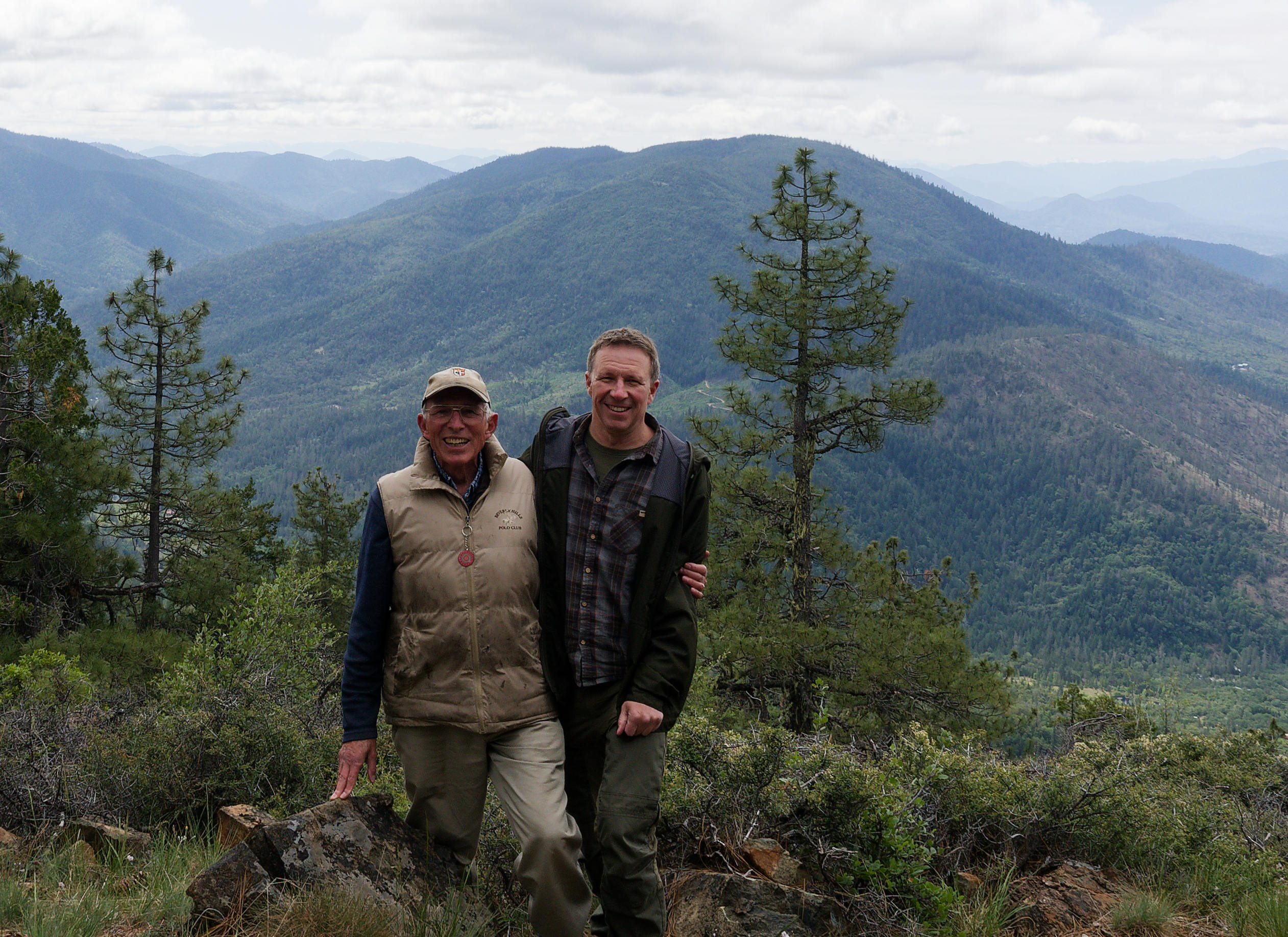
When my son and his partner, Lisa, were with us, just over a week ago, Alex suggested that he and I explored Sexton Mountain; some three miles to the North-East, as the crow flies. Normally the final stretch has to be walked because of a locked gate across the trail. However, that day the last 8/10ths of a mile were driven. It was a beautiful place with that summit 3,833 feet above sea-level (U.S. Geological Survey).
The Summit.
oooo
The original fire lookout.
oooo
Confirmation of the year – 1920.
oooo
We descended 200 feet to be clear of the overhead cables. This is the view looking towards the South; the road being the I-5.
Penny Martin regularly sends me content that I can publish as a post for you kind people.
And so it is with this one.
ooOOoo
Going Green with Fur and Grit: How to Launch an Eco-Friendly Pet Care Business That Actually Work
You’ve been sitting on the idea for a while now. Maybe it started with that pile of single-use plastic baggies after your dog’s walk, or the ingredient list on your cat’s kibble that read more like a chemistry project than actual food. Maybe you just got tired of feeling like you had to choose between loving your pet and loving the planet. Whatever the reason, you’re here now, staring down the reality of launching a business that’s not only built for animals—but built for good. You want to make something that matters. And you can. But you need to know exactly what you’re walking into.
Anchor Yourself in a Real Way
You can’t build this kind of business on good vibes and a cool logo. Before anything else—before the business plan, the branding, or the Instagram account—you’ve got to know exactly why you’re doing this. If your reason isn’t rooted in something deeply personal, something that makes your chest tighten when you think about it, you’ll burn out fast. Maybe it’s watching your senior dog react to over-processed treats, or maybe it’s the garbage island growing in the ocean—whatever it is, let that be your compass.
Streamline the Chaos with the Right Tools
When you’re building a mission-driven business from scratch, the backend can get messy fast. That’s where using an all-in-one business platform becomes a game-changer—it keeps your focus on your values instead of your paperwork. Whether you’re forming an LLC, managing compliance, creating a website, or handling finances, this type of platform can provide comprehensive services and expert support to ensure business success. Platforms like ZenBusiness are built for entrepreneurs like you, giving you the structure to stay organized while you pour your energy into the work that really matters.
Get Ruthlessly Local with Sourcing
If you’re serious about sustainability, you’ve got to look hard at where your products come from. Local sourcing doesn’t just reduce your carbon footprint—it tells your community that you care about it. Reach out to nearby farms, independent makers, and ethical manufacturers who align with your mission. Not only will this lower your shipping emissions, it’ll also create real relationships with partners who have skin in the game—and people can feel that authenticity the moment they walk through your door.
Know That Packaging Will Be a Battle
You’re going to lose sleep over packaging. You’ll try compostable options that fall apart in humid weather. You’ll learn that “recyclable” doesn’t mean the same thing in every city. And somewhere along the way, you’ll realize that the most sustainable solution might be the least convenient one. This is the part where you have to experiment, ask questions, and stay transparent with your customers. No one expects perfection—but they’ll appreciate your effort to figure it out.
Make the Community Your Co-Founders
You’re not building this business for yourself. You’re building it for every person who loves their animal and wants to do better by the planet. So bring them in early. Host small events, set up “ask me anything” nights, partner with local shelters, and turn your customer base into a real community. These people won’t just buy your products—they’ll give you feedback, advocate for your brand, and make you feel less alone when the grind gets real.
Ditch the Guilt, Offer Solutions
You’re not here to shame anyone. The pet parent buying big-box kibble isn’t your enemy—they’re someone who probably hasn’t been offered a better option yet. So don’t lecture. Instead, educate through action. Make eco-friendly choices feel fun, feel doable, and feel worth it. When you center your messaging on empowerment instead of guilt, people are way more likely to stick around—and tell their friends.
Teach Through Curiosity, Not Preaching
People want to learn, but they don’t want to be condescended to. Your job is to become the kind of brand that shares knowledge without turning it into a TED Talk. Drop bite-sized facts on your packaging, start conversations in-store, and use your social platforms to casually open people’s eyes. Think of it like planting seeds—not every customer will bloom overnight, but the ones who do will remember how you made them feel when they were just getting started.
Hire with Heart, Not Just Skill
You can train someone to trim nails or restock shelves, but you can’t teach them to care. The team you build needs to believe in the mission as much as you do. They’re the ones explaining the difference between corn-based and petroleum-based bags to a frazzled pet parent who’s late for pickup. If your staff is just collecting paychecks, your message won’t land. But if they’re aligned with your values? That’s when your business becomes a movement.
Don’t Let Perfect Be the Point
You will mess up. You’ll stock a “sustainable” product that turns out to be greenwashed. You’ll order packaging that gets held up in customs. You’ll have days where you wonder if any of this actually matters. That’s normal. Progress in this space is messy, nonlinear, and full of trade-offs. The key is to keep going, stay honest, and let your customers come along for the ride. They don’t need you to be flawless—they just need to believe you’re trying.
Starting an eco-conscious pet care business means doing things the hard way on purpose. It means waking up early to answer emails from suppliers and staying up late comparing compostable labels. It means showing up for your customers, your team, your animals—and the planet. But if your heart’s in the right place and your feet stay on the ground, you’ll build something that matters. And really, that’s the kind of work worth doing.
Discover the wisdom of our loyal companions and explore the journey of life with Learning from Dogs, where every post is a step towards understanding and fulfillment.
ooOOoo
As a very ex-entrepreneur, I can tell you that there is much in Penny’s article that applies to starting any business.
And as an ex-salesman, everything starts with the customer. The persons who are attracted to what you are selling. It is hard work but pleasing work. Before I started Dataview I worked for IBM UK in their office products division, as a salesman. I loved the job!
NASA hasn’t landed humans on Mars yet. But thanks to robotic missions, scientists now know more about the planet’s surface than they did when the movie, The Martian, was released.
Our human knowledge is constantly growing. In many, many directions. Here is a fascinating (well it is to me!) article from The Conversation.
ooOOoo
A decade after the release of ‘The Martian’ and a decade out from the world it envisions, a planetary scientist checks in on real-life Mars exploration
‘The Martian’ protagonist Mark Watney contemplates his ordeal. 20th Century Fox
Andy Weir’s bestselling story “The Martian” predicts that by 2035 NASA will have landed humans on Mars three times, perfected return-to-Earth flight systems and collaborated with the China National Space Administration. We are now 10 years past the Hollywood adaptation’s 2015 release and 10 years shy of its fictional timeline. At this midpoint, Mars exploration looks a bit different than how it was portrayed in “The Martian,” with both more discoveries and more controversy.
Although concepts for crewed missions to Mars have gained popularity, NASA’s actual plans for landing humans on Mars remain fragile. Notably, over the last 10 years, it has been robotic, rather than crewed, missions that have propelled discovery and the human imagination forward.
NASA’s 2023 Moon to Mars Strategy and Objectives Development document lays out the steps the agency was shooting for at the time, to go first to the Moon, and from there to Mars. NASA
Robotic discoveries
Since 2015, satellites and rovers have reshaped scientists’ understanding of Mars. They have revealed countless insights into how its climate has changed over time.
As Earth’s neighbor, climate shifts on Mars also reflect solar system processes affecting Earth at a time when life was first taking hold. Thus, Mars has become a focal point for investigating the age old questions of “where do we come from?” and “are we alone?”
The Opportunity, Curiosity and Perseverance rovers have driven dozens of miles studying layered rock formations that serve as a record of Mars’ past. By studying sedimentary layers – rock formations stacked like layers of a cake – planetary geologists have pieced together a vivid tale of environmental change that dwarfs what Earth is currently experiencing.
Mars was once a world of erupting volcanoes, glaciers, lakes and flowing rivers – an environment not unlike early Earth. Then its core cooled, its magnetic field faltered and its atmosphere drifted away. The planet’s exposed surface has retained signs of those processes ever since in the form of landscape patterns, sequences of layered sediment and mineral mixtures.
Layered sedimentary rocks exposed within the craters of Arabia Terra, Mars, recording ancient surface processes. Photo from the Mars Reconnaissance Orbiter High Resolution Imaging Science Experiment. NASA/JPL/University of Arizona
Arabia Terra
One focus of scientific investigation over the last 10 years is particularly relevant to the setting of “The Martian” but fails to receive mention in the story. To reach his best chance of survival, protagonist Mark Watney, played by Matt Damon, must cross a vast, dusty and crater-pocked region of Mars known as Arabia Terra.
In 2022 and 2023, I, along with colleagues at Northern Arizona University and Johns Hopkins University, published detailed analyses of the layered materials there using imagery from the Mars Reconnaissance Orbiter and Mars Odyssey satellites.
By using infrared imagery and measuring the dimensions of surface features, we linked multiple layered deposits to the same episodes of formation and learned more about the widespread crumbling nature of the terrain seen there today. Because water tends to cement rock tightly together, that loose material indicates that around 3.5 billion years ago, that area had a drying climate.
To make the discussions about this area easier, we even worked with the International Astronomical Union to name a few previously unnamed craters that were mentioned in the story. For example, one that Watney would have driven right by is now named Kozova Crater, after a town in Ukraine.
More to explore
Despite rapid advances in Mars science, many unknowns remain. Scientists still aren’t sure of the precise ages, atmospheric conditions and possible signatures of life associated with each of the different rock types observed on the surface.
For instance, the Perseverance rover recently drilled into and analyzed a unique set of rocks hosting organic – that is, carbon-based – compounds. Organic compounds serve as the building blocks of life, but more detailed analysis is required to determine whether these specific rocks once hosted microbial life.
The in-development Mars Sample Return mission aims to address these basic outstanding questions by delivering the first-ever unaltered fragments of another world to Earth. The Perseverance rover is already caching rock and soil samples, including ones hosting organic compounds, in sealed tubes. A future lander will then need to pick up and launch the caches back to Earth.
Sampling Mars rocks could tell scientists more about the red planet’s past, and whether it could have hosted life.
Once home, researchers can examine these materials with instruments orders of magnitude more sensitive than anything that could be flown on a spacecraft. Scientists stand to learn far more about the habitability, geologic history and presence of any signs of life on Mars through the sample return campaign than by sending humans to the surface.
This perspective is why NASA, the European Space Agency and others have invested some US$30 billion in robotic Mars exploration since the 1960s. The payoff has been staggering: That work has triggered rapid technological advances in robotics, telecommunications and materials science. For example, Mars mission technology has led to better sutures for heart surgery and cars that can drive themselves.
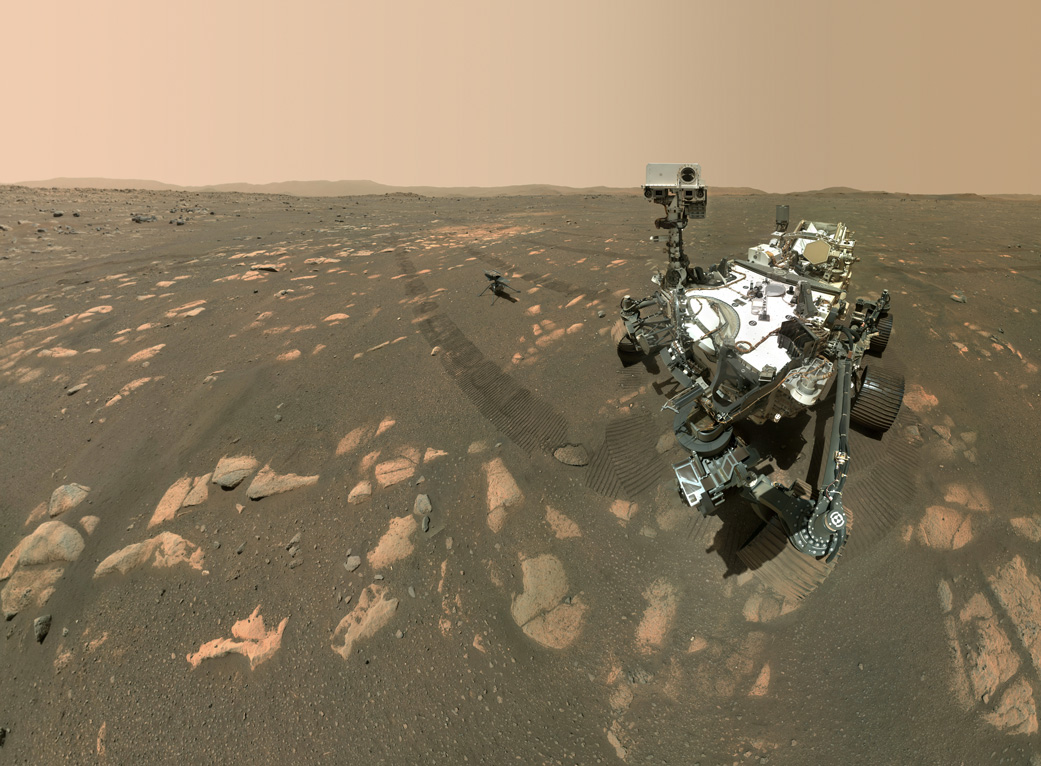
A selfie from NASA’s Perseverance Mars rover with the Ingenuity helicopter, taken with the rover’s extendable arm on April 6, 2021. NASA/JPL-Caltech/MSSS
Calling the red planet home?
Colonizing Mars has a seductive appeal. It’s hard not to cheer for the indomitable human spirit while watching Watney battle dust storms, oxygen shortages and food scarcity over 140 million miles from rescue.
Much of the momentum toward colonizing Mars is now tied to SpaceX and its CEO Elon Musk, whose stated mission to make humanity a “multi-planetary species” has become a sort of rallying cry. But while Mars colonization is romantic on paper, it is extremely difficult to actually carry out, and many critics have questioned the viability of a Mars habitation as a refuge far from Earth.
Now, with NASA potentially facing a nearly 50% reduction to its science budget, the U.S. risks dissolving its planetary science and robotic operations portfolio altogether, including sample return.
Nonetheless, President Donald Trump and Musk have pushed for human space exploration to somehow continue to progress, despite those proposed cuts – effectively sidelining the robotic, science-driven programs that have underpinned all of Mars exploration to date.
Yet, it is these programs that have yielded humanity’s richest insights into the red planet and given both scientists and storytellers like Andy Weir the foundation to imagine what it must be like to stand on Mars’ surface at all.
Nothing to add from yours truly except to say that this quote is highly relevant: “Challenges are what make life interesting and overcoming them is what makes life meaningful.” – Joshua J. Marine
(And this was the result of me looking online for quotes and coming across 50 quotes from USA Today.)
A series on Meditation(not the first but this one seems better)
Listen. The first episode, broadcast on the 10th May, 2022, is about the benefits of Meditating. It is a reminder that a short, daily period of Meditation, just ten minutes a day, is so valuable. Here is the link:
The link to the first of the Ten Minute Meditations comes shortly. Here is the description:
Deepak Chopra leads a guided meditation to help us understand how we can adapt to change and make consciously informed choices. Deepak is a physician, world-renowned speaker and author on integrative wellbeing and spiritual intelligence who encourages us to welcome transformation within us. The music that soundtracks Deepak’s guided meditation was composed by Erland Cooper and recorded by the BBC Scottish Symphony Orchestra and violinist Freya Goldmark.
Check out the full episodes of The Music & Meditation Podcast now, the ultimate therapeutic podcast and your self-care toolkit for modern life. Violinist, writer and mum of three Izzy Judd welcomes expert guests to share simple guided meditations, support and advice, all soundtracked by a beautiful mix of classical music. Whether you’re just starting to meditate or you’re a seasoned meditator, this is the perfect podcast for you.
There is more to this topic that many of us do not know.
Photons are massless. They travel at a speed that 99% of us do not really comprehend. But over to Prof. Jarred Roberts who does comprehend the subject.
ooOOoo
Do photons wear out? An astrophysicist explains light’s ability to travel vast cosmic distances without losing energy
My telescope, set up for astrophotography in my light-polluted San Diego backyard, was pointed at a galaxy unfathomably far from Earth. My wife, Cristina, walked up just as the first space photo streamed to my tablet. It sparkled on the screen in front of us.
“That’s the Pinwheel galaxy,” I said. The name is derived from its shape – albeit this pinwheel contains about a trillion stars.
The light from the Pinwheel traveled for 25 million years across the universe – about 150 quintillion miles – to get to my telescope.
My wife wondered: “Doesn’t light get tired during such a long journey?”
Her curiosity triggered a thought-provoking conversation about light. Ultimately, why doesn’t light wear out and lose energy over time?
Let’s talk about light
I am an astrophysicist, and one of the first things I learned in my studies is how light often behaves in ways that defy our intuitions.
The author’s photo of the Pinwheel galaxy. Jarred Roberts
Light is electromagnetic radiation: basically, an electric wave and a magnetic wave coupled together and traveling through space-time. It has no mass. That point is critical because the mass of an object, whether a speck of dust or a spaceship, limits the top speed it can travel through space.
But because light is massless, it’s able to reach the maximum speed limit in a vacuum – about 186,000 miles (300,000 kilometers) per second, or almost 6 trillion miles per year (9.6 trillion kilometers). Nothing traveling through space is faster. To put that into perspective: In the time it takes you to blink your eyes, a particle of light travels around the circumference of the Earth more than twice.
As incredibly fast as that is, space is incredibly spread out. Light from the Sun, which is 93 million miles (about 150 million kilometers) from Earth, takes just over eight minutes to reach us. In other words, the sunlight you see is eight minutes old.
Alpha Centauri, the nearest star to us after the Sun, is 26 trillion miles away (about 41 trillion kilometers). So by the time you see it in the night sky, its light is just over four years old. Or, as astronomers say, it’s four light years away. Imagine – a trip around the world at the speed of light.
With those enormous distances in mind, consider Cristina’s question: How can light travel across the universe and not slowly lose energy?
Actually, some light does lose energy. This happens when it bounces off something, such as interstellar dust, and is scattered about.
But most light just goes and goes, without colliding with anything. This is almost always the case because space is mostly empty – nothingness. So there’s nothing in the way.
When light travels unimpeded, it loses no energy. It can maintain that 186,000-mile-per-second speed forever.
It’s about time
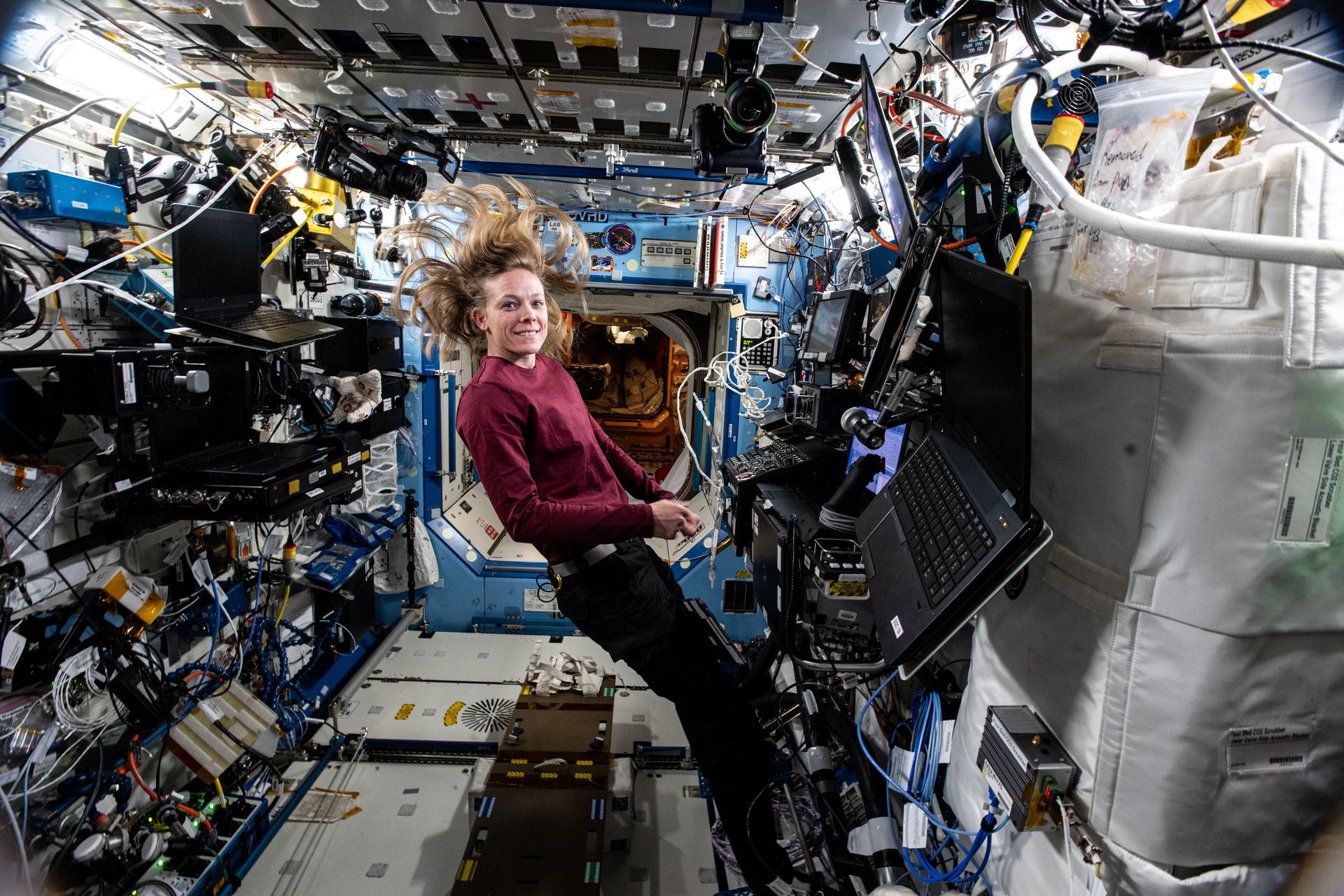
Here’s another concept: Picture yourself as an astronaut on board the International Space Station. You’re orbiting at 17,000 miles (about 27,000 kilometers) per hour. Compared with someone on Earth, your wristwatch will tick 0.01 seconds slower over one year.
That’s an example of time dilation – time moving at different speeds under different conditions. If you’re moving really fast, or close to a large gravitational field, your clock will tick more slowly than someone moving slower than you, or who is further from a large gravitational field. To say it succinctly, time is relative.
Even astronauts aboard the International Space Station experience time dilation, although the effect is extremely small. NASA
Now consider that light is inextricably connected to time. Picture sitting on a photon, a fundamental particle of light; here, you’d experience maximum time dilation. Everyone on Earth would clock you at the speed of light, but from your reference frame, time would completely stop.
That’s because the “clocks” measuring time are in two different places going vastly different speeds: the photon moving at the speed of light, and the comparatively slowpoke speed of Earth going around the Sun.
What’s more, when you’re traveling at or close to the speed of light, the distance between where you are and where you’re going gets shorter. That is, space itself becomes more compact in the direction of motion – so the faster you can go, the shorter your journey has to be. In other words, for the photon, space gets squished.
Which brings us back to my picture of the Pinwheel galaxy. From the photon’s perspective, a star within the galaxy emitted it, and then a single pixel in my backyard camera absorbed it, at exactly the same time. Because space is squished, to the photon the journey was infinitely fast and infinitely short, a tiny fraction of a second.
But from our perspective on Earth, the photon left the galaxy 25 million years ago and traveled 25 million light years across space until it landed on my tablet in my backyard.
And there, on a cool spring night, its stunning image inspired a delightful conversation between a nerdy scientist and his curious wife.
This remark jumped out at me when I first read the article: ‘In the time it takes you to blink your eyes, a particle of light travels around the circumference of the Earth more than twice.’
Alex, my son, and his partner, Lisa, are coming to see us later today. They arrived in Portland on Sunday, 11th but first of all wanted to see Yellowstone.
Vision to Reality: Building a Profitable Vet Clinic
Launching a veterinary clinic is a significant endeavor that requires meticulous planning and strategic decision-making. This venture combines a passion for animal care with the intricacies of managing a successful business. Aspiring clinic owners must navigate several critical steps to lay a strong foundation and ensure operational excellence. Starting your own clinic promises not only to fulfill a dream of helping animals but also to establish a thriving enterprise in the community.
Build a Strong Foundation with an Effective Marketing Strategy
A robust marketing strategy is essential to attract potential clients in the digital era. Establishing a professional online presence through a user-friendly website that details your services, team, and location builds trust among pet owners. Engage actively on social media with regular updates and client testimonials to showcase your expertise and commitment to animal care. Forge partnerships with local pet-related businesses to increase visibility and drive traffic to your clinic, enhancing both your and your partners’ customer bases.
Craft a Clear and Detailed Business Plan
A well-constructed business plan acts as your clinic’s roadmap, detailing your mission, services offered, and the specific target market. Identify your niche early—whether it’s specializing in certain animals or treatments—to attract the appropriate clientele. Include comprehensive financial projections and a marketing budget in your plan to ensure financial preparedness and support your clinic’s promotional activities.
Enhance Your Business Knowledge by Pursuing an MBA
Running a veterinary clinic demands a blend of clinical and business expertise. Pursuing a master’s of business administration online can boost your proficiency in key business areas such as strategy, management, and finance. An MBA not only deepens your understanding of business operations but also enhances leadership skills and self-assessment capabilities. These competencies are essential for balancing the medical and business demands of your clinic, ensuring its long-term success.
Safeguard Your Business with Proper Insurance
Operating a veterinary clinic comes with inherent risks, making comprehensive insurance coverage essential. Essential policies include malpractice insurance to handle legal issues and general liability insurance for accidents on your premises. Property insurance is crucial to protect your clinic’s infrastructure and equipment against unexpected events. Consulting with an insurance expert can ensure that you have thorough coverage to protect against potential financial setbacks.
Invest in High-Quality Veterinary Equipment
Providing top-tier care necessitates investing in high-quality veterinary equipment. Essential tools like X-ray machines, surgical instruments, and lab equipment should be of the highest standard to ensure accurate diagnoses and treatments. Modern technologies, such as digital imaging systems, not only enhance patient care but also improve operational efficiency. While the initial cost may be higher, investing in quality equipment pays off in the long run by boosting efficiency and minimizing errors.
Secure the Necessary Funding for Your Clinic
Securing sufficient funding is critical when starting a veterinary clinic. Estimate your startup costs accurately to understand your financial needs, including equipment, premises, staffing, and marketing. Explore diverse financing options, such as bank loans, private investors, and specialty medical practice loans that might offer favorable terms. Adequate initial funding prevents cash flow problems and supports your clinic’s growth trajectory.
Choose the Right Location for Your Clinic
The location of your clinic is pivotal to its success, necessitating a spot with a high demand for veterinary services. Conduct thorough market research to choose a community rich in pet owners who need your services. Select a location that is accessible, visible, and has ample parking to ensure convenience for your clients. Proximity to complementary services like pet groomers or dog trainers can further enhance client traffic and provide expansion opportunities.
Opening a veterinary clinic is both challenging and rewarding, demanding a careful blend of dedication and strategic foresight. Success in this field not only enhances the well-being of pets but also contributes positively to the local community. It requires ongoing commitment to adapt and grow in a dynamic environment. Ultimately, the fulfillment of running a successful veterinary clinic comes from both the impact on animal health and the achievement of entrepreneurial goals.
Discover the timeless wisdom that dogs offer at Learning from Dogs, where integrity and living in the present are celebrated. Dive into our content and embrace the lessons from our four-legged friends.
Vision to Reality: Building a Profitable Vet Clinic
Launching a veterinary clinic is a significant endeavor that requires meticulous planning and strategic decision-making. This venture combines a passion for animal care with the intricacies of managing a successful business. Aspiring clinic owners must navigate several critical steps to lay a strong foundation and ensure operational excellence. Starting your own clinic promises not only to fulfill a dream of helping animals but also to establish a thriving enterprise in the community.
Build a Strong Foundation with an Effective Marketing Strategy
A robust marketing strategy is essential to attract potential clients in the digital era. Establishing a professional online presence through a user-friendly website that details your services, team, and location builds trust among pet owners. Engage actively on social media with regular updates and client testimonials to showcase your expertise and commitment to animal care. Forge partnerships with local pet-related businesses to increase visibility and drive traffic to your clinic, enhancing both your and your partners’ customer bases.
Craft a Clear and Detailed Business Plan
A well-constructed business plan acts as your clinic’s roadmap, detailing your mission, services offered, and the specific target market. Identify your niche early—whether it’s specializing in certain animals or treatments—to attract the appropriate clientele. Include comprehensive financial projections and a marketing budget in your plan to ensure financial preparedness and support your clinic’s promotional activities.
Enhance Your Business Knowledge by Pursuing an MBA
Running a veterinary clinic demands a blend of clinical and business expertise. Pursuing a master’s of business administration online can boost your proficiency in key business areas such as strategy, management, and finance. An MBA not only deepens your understanding of business operations but also enhances leadership skills and self-assessment capabilities. These competencies are essential for balancing the medical and business demands of your clinic, ensuring its long-term success.
Safeguard Your Business with Proper Insurance
Operating a veterinary clinic comes with inherent risks, making comprehensive insurance coverage essential. Essential policies include malpractice insurance to handle legal issues and general liability insurance for accidents on your premises. Property insurance is crucial to protect your clinic’s infrastructure and equipment against unexpected events. Consulting with an insurance expert can ensure that you have thorough coverage to protect against potential financial setbacks.
Invest in High-Quality Veterinary Equipment
Providing top-tier care necessitates investing in high-quality veterinary equipment. Essential tools like X-ray machines, surgical instruments, and lab equipment should be of the highest standard to ensure accurate diagnoses and treatments. Modern technologies, such as digital imaging systems, not only enhance patient care but also improve operational efficiency. While the initial cost may be higher, investing in quality equipment pays off in the long run by boosting efficiency and minimizing errors.
Secure the Necessary Funding for Your Clinic
Securing sufficient funding is critical when starting a veterinary clinic. Estimate your startup costs accurately to understand your financial needs, including equipment, premises, staffing, and marketing. Explore diverse financing options, such as bank loans, private investors, and specialty medical practice loans that might offer favorable terms. Adequate initial funding prevents cash flow problems and supports your clinic’s growth trajectory.
Choose the Right Location for Your Clinic
The location of your clinic is pivotal to its success, necessitating a spot with a high demand for veterinary services. Conduct thorough market research to choose a community rich in pet owners who need your services. Select a location that is accessible, visible, and has ample parking to ensure convenience for your clients. Proximity to complementary services like pet groomers or dog trainers can further enhance client traffic and provide expansion opportunities.
Opening a veterinary clinic is both challenging and rewarding, demanding a careful blend of dedication and strategic foresight. Success in this field not only enhances the well-being of pets but also contributes positively to the local community. It requires ongoing commitment to adapt and grow in a dynamic environment. Ultimately, the fulfillment of running a successful veterinary clinic comes from both the impact on animal health and the achievement of entrepreneurial goals.
Discover the timeless wisdom that dogs offer at Learning from Dogs, where integrity and living in the present are celebrated. Dive into our content and embrace the lessons from our four-legged friends.
ooOOoo
Opening a vet clinic is well beyond me even though many years ago I was an entrepreneur.
However, one hopes that somewhere a person or two find this very useful.



























 Learning from Dogs