Earlier yesterday I received a letter from a firm of lawyers Higbee & Associates. It was to advise me that, “Unlicensed Use Of Work Copyrighted By Paul Martinka.” and went on to detail how Paul Martinka had quite correctly was seeking compensation for my republishing a photograph without a license.
So, moving on!
It is going to change the blog quite a bit because I frequently republish material from other websites without formal permission.
So while I think through how to continue blogging there’s something you can do for me.
Let me know if I can republish your work. You can leave a comment to this blog or ask me to email you.
And offer me posts that I can use. Please!
Meantime I will ponder what to do!
P.S. That’s why you may have noticed quite a few posts have been taken down!
But then I saw another version of the same story on the BBC News site, from which I republish it in its entirety.
ooOOoo
First ever black hole image released
By Pallab Ghosh
Science correspondent, BBC News
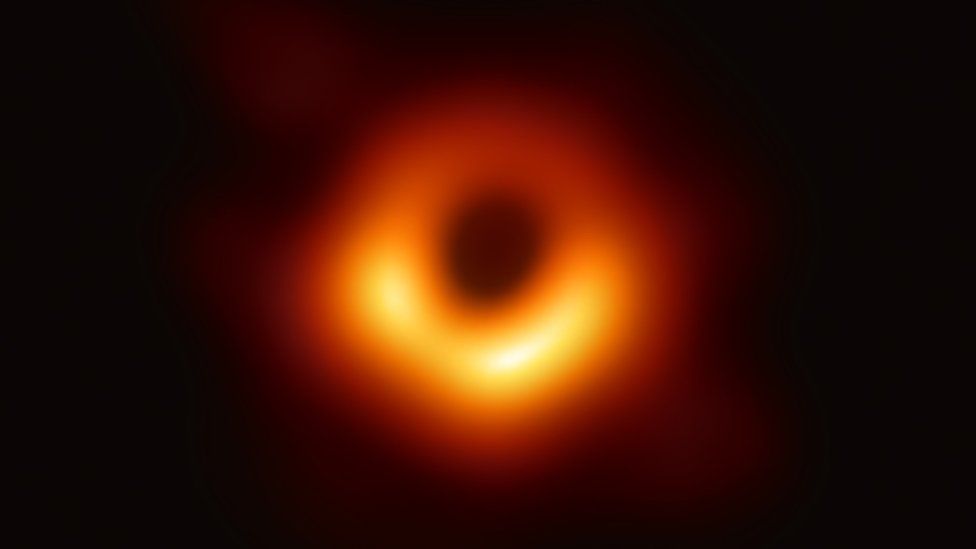
The first ever picture of a black hole: It’s surrounded by a halo of bright gas.
Astronomers have taken the first ever image of a black hole, which is located in a distant galaxy.
It measures 40 billion km across – three million times the size of the Earth – and has been described by scientists as “a monster”.
The black hole is 500 million trillion km away and was photographed by a network of eight telescopes across the world.
Details have been published today in Astrophysical Journal Letters.
Prof Heino Falcke, of Radboud University in the Netherlands, who proposed the experiment, told BBC News that the black hole was found in a galaxy called M87.
“What we see is larger than the size of our entire Solar System,” he said.
“It has a mass 6.5 billion times that of the Sun. And it is one of the heaviest black holes that we think exists. It is an absolute monster, the heavyweight champion of black holes in the Universe.”
The image shows an intensely bright “ring of fire”, as Prof Falcke describes it, surrounding a perfectly circular dark hole. The bright halo is caused by superheated gas falling into the hole. The light is brighter than all the billions of other stars in the galaxy combined – which is why it can be seen at such distance from Earth.
The edge of the dark circle at the centre is the point at which the gas enters the black hole, which is an object that has such a large gravitational pull, not even light can escape.
DR JEAN LORRE/SCIENCE PHOTO LIBRARY I have suspected that the M87 galaxy has a supermassive black hole at its heart from false colour images such as this one. The dark centre is not a black hole but indicates that stars are densely packed and fast moving.
The image matches what theoretical physicists and indeed, Hollywood directors, imagined black holes would look like, according to Dr Ziri Younsi, of University College London – who is part of the collaboration.
“Although they are relatively simple objects, black holes raise some of the most complex questions about the nature of space and time, and ultimately of our existence,” he said.
“It is remarkable that the image we observe is so similar to that which we obtain from our theoretical calculations. So far, it looks like Einstein is correct once again.”
But having the first image will enable researchers to learn more about these mysterious objects. They will be keen to look out for ways in which the black hole departs from what’s expected in physics. No-one really knows how the bright ring around the hole is created. Even more intriguing is the question of what happens when an object falls into a black hole.
What is a black hole?
A black hole is a region of space from which nothing, not even light, can escape
Despite the name, they are not empty but instead consist of a huge amount of matter packed densely into a small area, giving it an immense gravitational pull
There is a region of space beyond the black hole called the event horizon. This is a “point of no return”, beyond which it is impossible to escape the gravitational effects of the black hole
Prof Falcke had the idea for the project when he was a PhD student in 1993. At the time, no-one thought it was possible. But he was the first to realise that a certain type of radio emission would be generated close to and all around the black hole, which would be powerful enough to be detected by telescopes on Earth.
He also recalled reading a scientific paper from 1973 that suggested that because of their enormous gravity, black holes appear 2.5 times larger than they actually are.
These two previously unknown factors suddenly made the seemingly impossible, possible. After arguing his case for 20 years, Prof Falcke persuaded the European Research Council to fund the project. The National Science Foundation and agencies in East Asia then joined in to bankroll the project to the tune of more than £40m.
The eventual EHT array will have 12 widely spaced participating radio facilities
It is an investment that has been vindicated with the publication of the image. Prof Falcke told me that he felt that “it’s mission accomplished”.
He said: “It has been a long journey, but this is what I wanted to see with my own eyes. I wanted to know is this real?”
No single telescope is powerful enough to image the black hole. So, in the biggest experiment of its kind, Prof Sheperd Doeleman of the Harvard-Smithsonian Centre for Astrophysics, led a project to set up a network of eight linked telescopes. Together, they form the Event Horizon Telescope and can be thought of as a planet-sized array of dishes.
KATIE BOUMAN Information gathered is too much to be sent across the internet. Instead the data was stored on hundreds of hard drives which were flown to a central processing centre.JASON GALLICCHIO
Each is located high up at a variety of exotic sites, including on volcanoes in Hawaii and Mexico, mountains in Arizona and the Spanish Sierra Nevada, in the Atacama Desert of Chile, and in Antarctica.
A team of 200 scientists pointed the networked telescopes towards M87 and scanned its heart over a period of 10 days.
The information they gathered was too much to be sent across the internet. Instead, the data was stored on hundreds of hard drives that were flown to a central processing centres in Boston, US, and Bonn, Germany, to assemble the information. Prof Doeleman described the achievement as “an extraordinary scientific feat”.
“We have achieved something presumed to be impossible just a generation ago,” he said.
“Breakthroughs in technology, connections between the world’s best radio observatories, and innovative algorithms all came together to open an entirely new window on black holes.”
The team is also imaging the supermassive black hole at the centre of our own galaxy, the Milky Way.
Odd though it may sound, that is harder than getting an image from a distant galaxy 55 million light-years away. This is because, for some unknown reason, the “ring of fire” around the black hole at the heart of the Milky Way is smaller and dimmer.
One of the most remarkable things about this story is that it continues to validate the theories of Albert Einstein (1879-1955). That is doubly impressive.
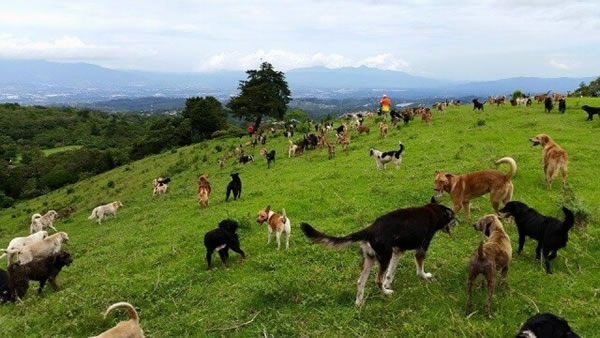
A non profit organization, founded by Lya Battle and Alvaro Saumet. During the last eight years we’ve been promoting well-being and respect for animals.
HOW WE DO IT?
Veterinarian: We take care of our mutts with deworming, sterilization and any other care they need. The cost of maintaining a dog healthy is $5 per month.
Shelter: Territorio is home for hundreds of doggies. We give them here a safe place to live, free of maltreatment, and full of love. The cost of providing a home is $11 per month for each of our unique specimens.
Food: Each mont we consume thousands of kilos of dog food, to keep our pack healthy. Giving a full small plate to each mutt cost us $20 per month.
There is much, much more on their website that I encourage you to go to. Here are some photographs of the dogs that they rescue.
oooo
oooo
oooo
oooo
oooo
oooo
There are a number of videos on YouTube to watch.
Here’s a short one.
And here’s a slightly longer one by National Geographic.
Finally, if you feel so minded here is the donate page. It’s a good cause and, for example, for just $36 you can sponsor one dog. That’s what Jeannie and I did.
Mr Panek, who lost his sight in his early 20s, told CNN that while he appreciated the support of human volunteers, he missed the feeling of independence.
“It never made sense to me to walk out the door and leave my guide dog behind when I love to run and they love to run,” he said. “It was just a matter of bucking conventional wisdom and saying why not.
In 2015, Mr Panek established the Running Guides programme which trains dogs to support runners.
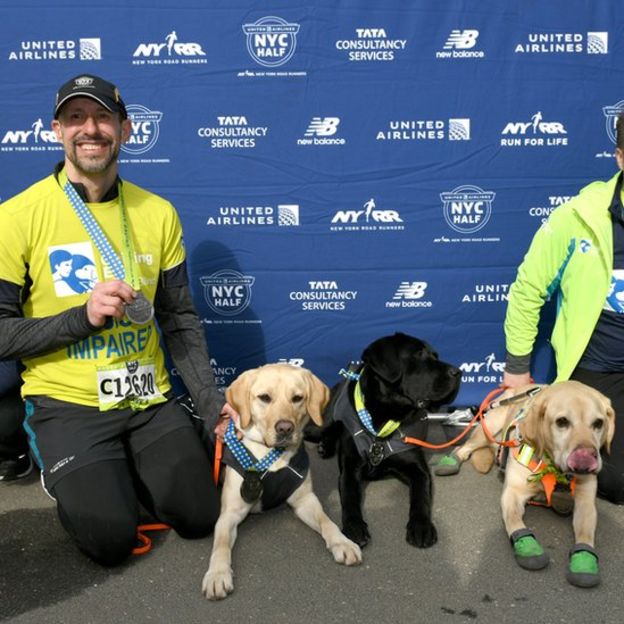
When selecting his canine companions for the New York race, Mr Panek chose siblings Waffle and Westley to join Gus, who is his full-time guide dog.
(L-R) Thomas Panek, Waffle, Westley and Gus show off their medals after the race
“The bond is really important. You can’t just pick up the harness and go for a run with these dogs,” Mr Panek told CNN. “You’re training with a team no matter what kind of athlete you are, and you want to spend time together in that training camp.”
Each dogs sets its own pace – Westley runs an eight minute mile, while his sister Waffle can cover the same distance in six minutes – and helps Mr Panek avoid obstacles such as kerbs and cones.
Each dog wears a special harness and set of running boots, to protect their paws.
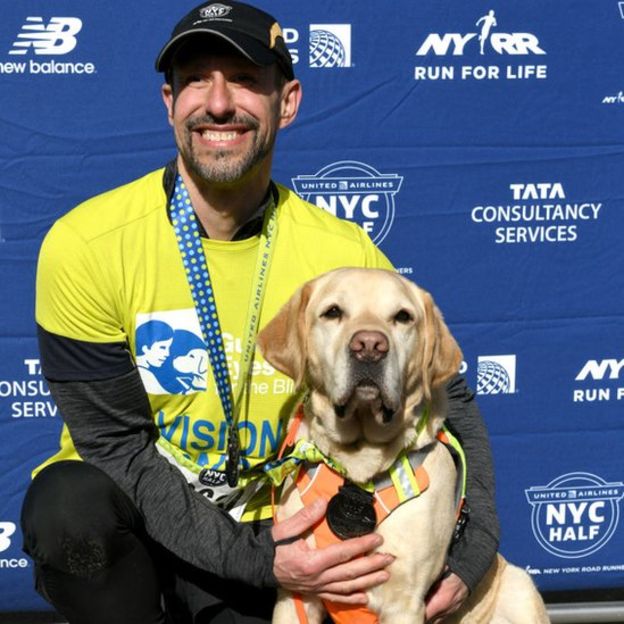
Gus was chosen to run the final leg of the race and cross the finish line with Mr Panek. He retired from his duties as a guide dog at the end of the race.
“It’s a little emotional for me because he’s been there with me the whole time,” Mr Panek said.
Gus, Mr Panek’s personal guide dog, entered retirement after the race
Before the race, Mr Panek told Time magazine that guide dogs give visually impaired people the freedom to “do whatever it is a sighted person does, and sometimes, even run a little faster than them”.
ooOOoo
“It’s a little emotional for me because he’s been there with me the whole time,”
It’s not just Mr. Panek who finds the report a little emotional!
As I have said many times before and undoubtedly will continue to say: Dogs are truly amazing animals.
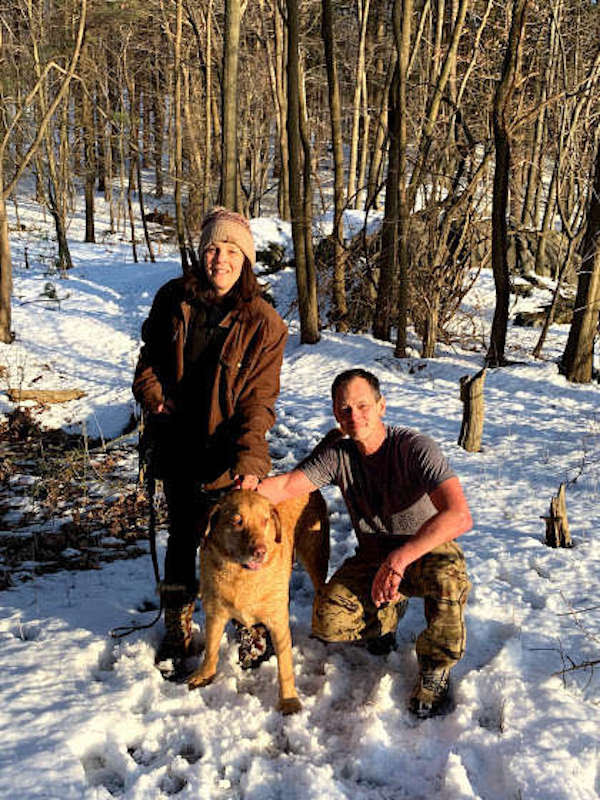
Since meeting one another last year, Timofey Yuriev and his faithful dog Kira have been inseparable companions. Indeed, the happy duo do just about everything together.
And that includes saving lives.
Photo Credit: Timofey Yuriev
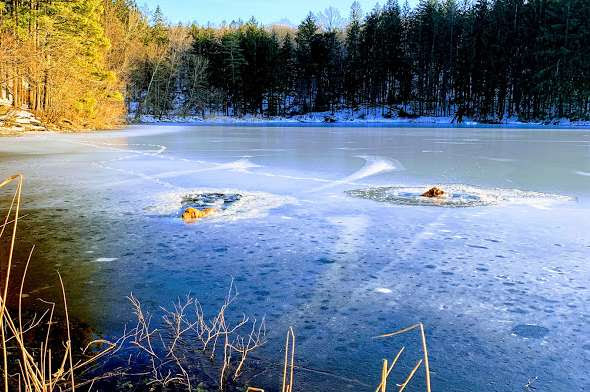
Last Saturday, Yuriev, his wife and Kira headed out for a sunset stroll around an ice-covered lake near their home in New York. It’s a tranquil spot, but on this chilly early evening, the quiet, peaceful air was shattered by the sound of a tragedy unfolding.
“We heard a woman screaming something across the lake, so we went to see what was happening,” Yuriev told The Dodo. “Her two old Labradors were crossing the lake, when they got to a spot where the ice is much thinner. One fell in, then the second. They tried to climb out but they couldn’t.”
Photo Credit: Timofey Yuriev
Yuriev watched as the dogs’ energy was quickly sapped by the freezing water — and he knew time was of the essence.
Having experience swimming in icy waters, Yuriev decided to take the plunge in order to save the two dogs himself — but he was not alone.
After Yuriev undressed and leapt into the freezing lake, he looked and saw Kira by his side entering the water as well to lend him her paw in the rescue effort.
“I knew she was going to follow me,” Yuriev said. “We were going to do it together.”
Here’s video taken by Yuriev’s wife showing him and Kira reaching the nearest dog first:
“She was great moral support; I was not alone,” Yuriev said. “There was my little helper.”
After leading the first dog safely to the shore, Yuriev and Kira headed out for the second:
“She came to each dog and touched them with her nose, then helped guide them back.”
Once back on dry land, both of the rescued dogs were frazzled but in good health.
Yuriev and Kira had saved the day.
“The owner, of course, was in tears,” Yuriev said. “She was so thankful.”
Photo Credit: Timofey Yuriev
Kira has always been a kindhearted and intelligent dog, able to assess situations and sense when she’s needed.
And on this day, it was clear for all to see.
Timofey Yuriev
“We told her that she’s a dog-saving dog. I’m sure she understood that something was happening. She could see the dogs were in distress. I’m positive about it,” Yuriev said, adding that he’s just happy they were able to help.
“It was pure luck that we were at that place at that time. It was like the universe smiled at us.”
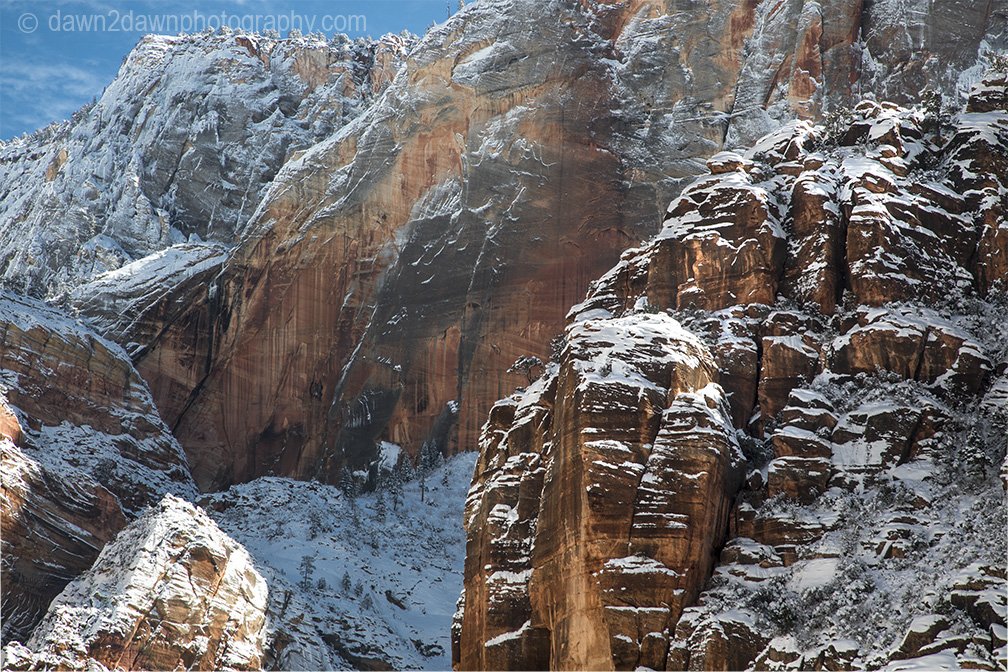
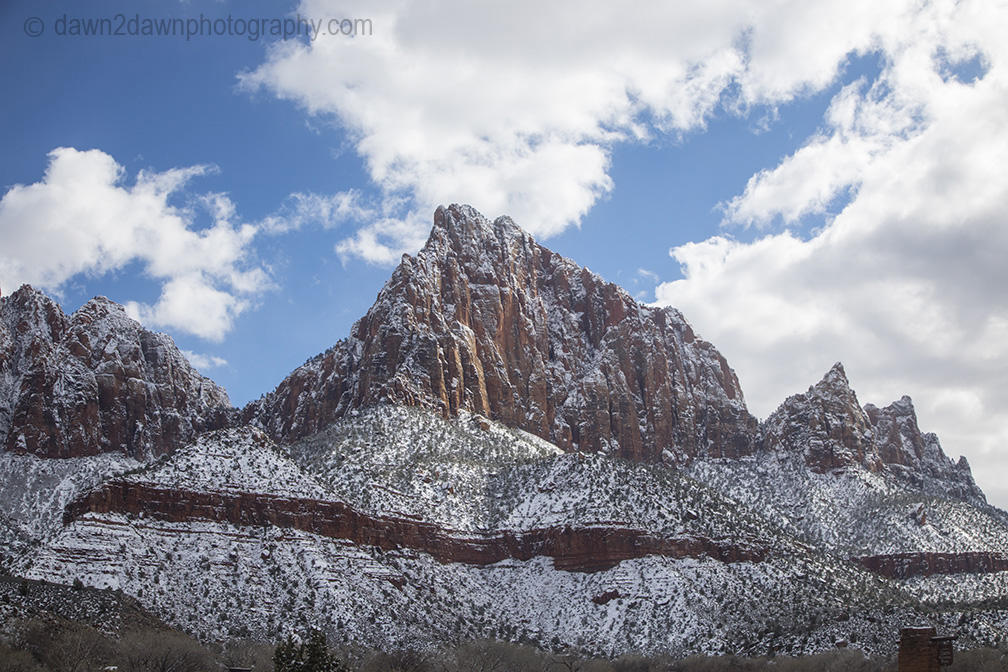
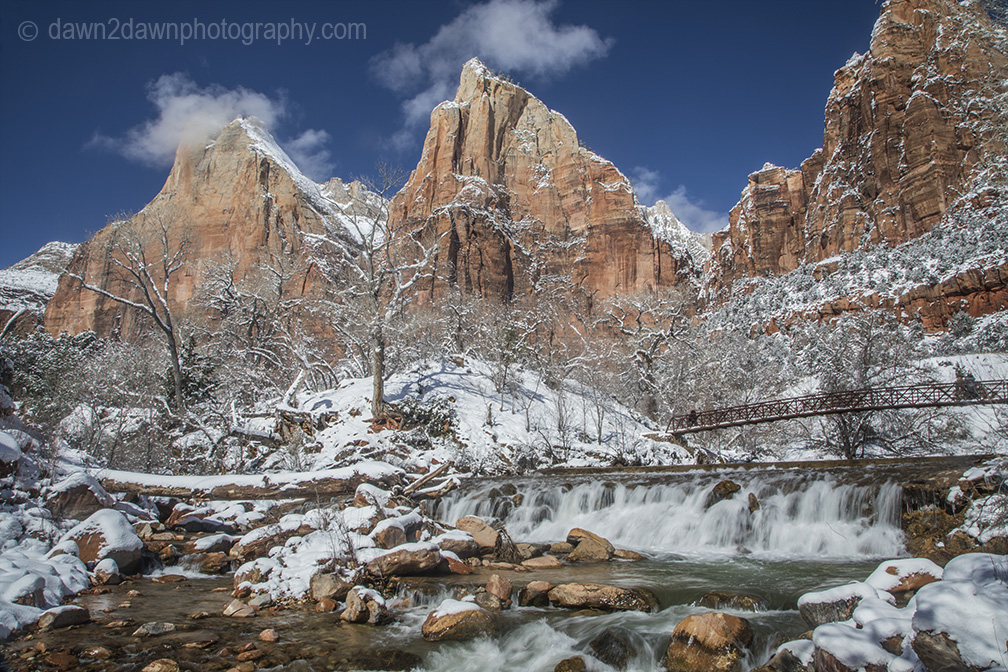
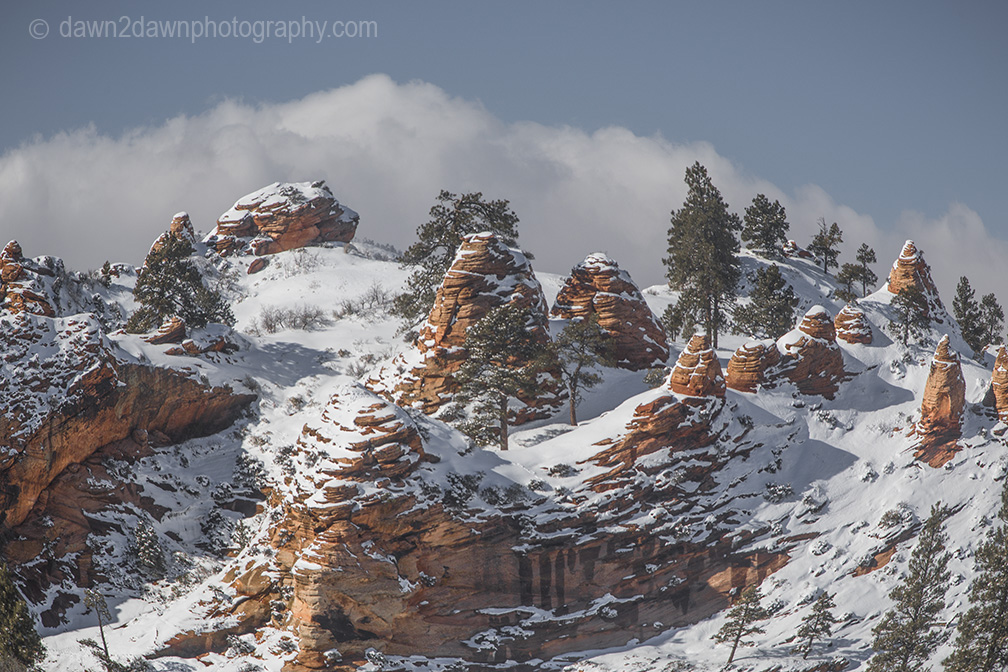
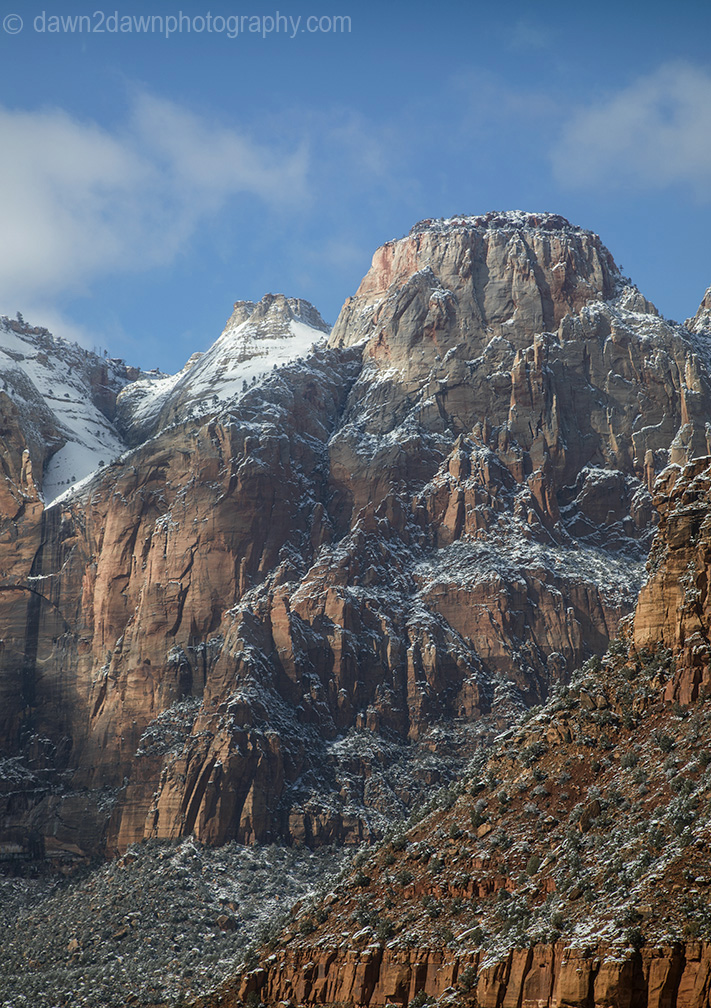
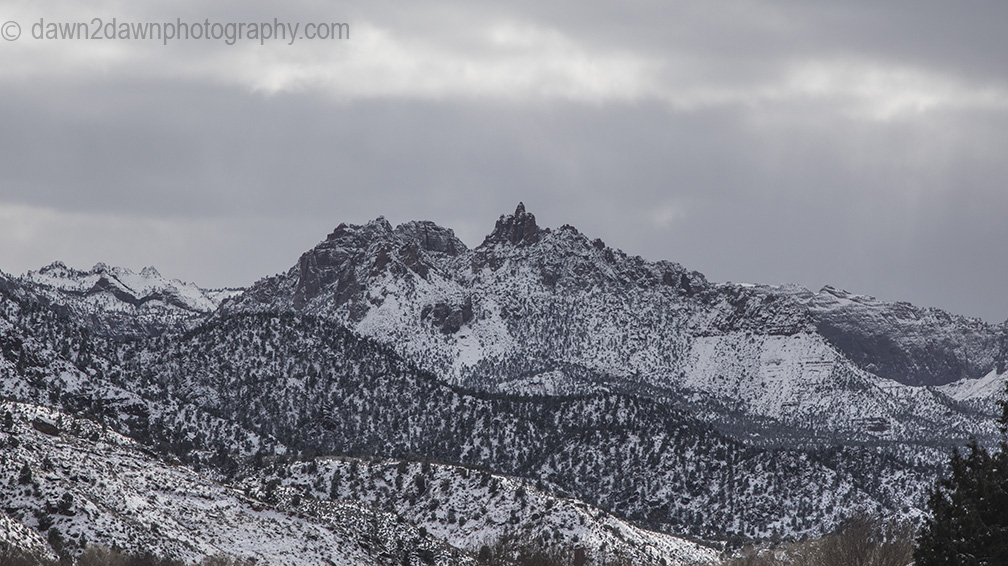
During the week I was browsing the web and I came across Dawn2Dawn Photography. Specifically I came across a series of fantastic photographs under the heading of A Snowy Week At Zion National Week. I rather hesitantly asked if I might republish them here and Michael Just said of course. Thank you Michael.
So here they are.
Fresh winter snow has fallen at Zion National Park, Utah
oooo
Fresh winter snow has fallen at Zion National Park, Utah
oooo
Fresh winter snow has fallen at Zion National Park, Utah
oooo
Fresh winter snow has fallen at Zion National Park, Utah
oooo
Fresh winter snow has fallen at Zion National Park, Utah
oooo
Fresh winter snow has fallen at Zion National Park, Utah
Mera seemed to have little trouble in the snow and ice. (Photo: Don Wargowsky)
When Seattle-based mountain guide Don Wargowsky was leading an expedition to Mera Peak and Baruntse in Nepal’s Himalayas last November, he picked up an extra member on his team. A stray dog noticed the climbers somewhere around 17,500 feet and decided to stick around with the group.
The climbers had just summited Mera Peak, and when they were coming down around Mera La pass, they saw the pup going up.
“What struck me was to get to that pass, there were a few hundred feet of fixed rope which means the terrain was so difficult that most climbers need rope to help themselves up,” Wargowsky tells MNN. “To see a dog up there just running by all these climbers in their $2,000 down suits and crampons was very unusual. When she came up to me, I gave her a bit of beef jerky and she didn’t leave for 3 1/2 weeks.”
The team dubbed their newest four-legged member “Mera” and she tagged along on the way back down the mountain. Wargowsky realized he had seen her in the town of Kare a few days earlier, but she had made no effort then to get close. He thinks that’s because street dogs aren’t treated very well in Nepal due to the fear of rabies.
“Dogs are shooed away pretty aggressively,” he says. “So, she was naturally pretty shy.”
A new climbing partner
Climbing is hard work. (Photo: Don Wargowsky)
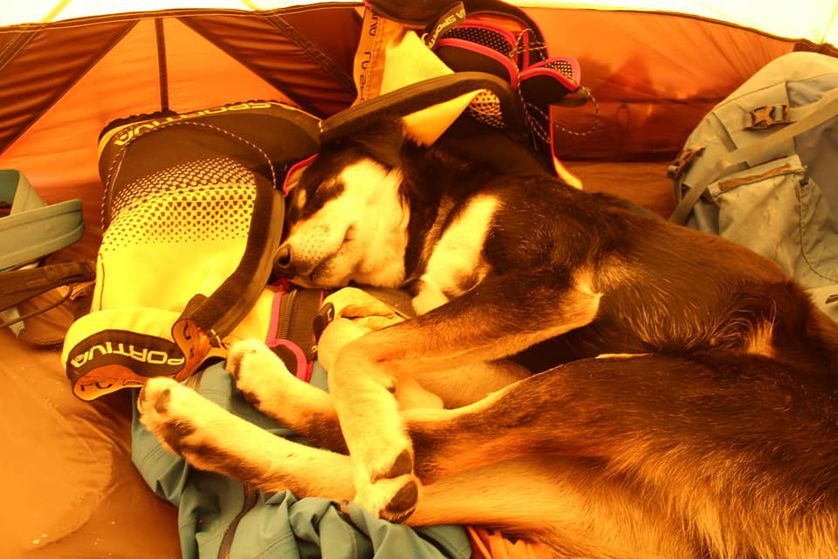
But once Mera decided to join the expedition, she gradually lowered her guard. The first night, Wargowsky tried to encourage her to sleep in his tent, but she wouldn’t come inside. The next morning, he found her curled up outside the flaps covered in a layer of snow. After that, he was able to coax her inside. He gave her one of his sleeping pads and a coat to keep her warm.
Wargowsky was in a difficult position with his uninvited guest. The elements were unforgiving, and he was worried about the dog who had no protection for her paws or her body in conditions that likely reached minus 20 or minus 30 degrees Fahrenheit at times. But he had no luck getting her to leave … and where would she go?
“Obviously my responsibility was to the group, but I was super happy to have her with us. I didn’t encourage her to come along, but I wasn’t going to have her starve, so I would feed her,” he says. “I really tried to persuade her to stay at camp as we got into steeper and more dangerous terrain. Where we were was a more remote part of Nepal. If we didn’t feed her, she was going to starve.”
Mera stuck with the expedition the entire time, never venturing far from Wargowsky’s side. Or technically, his knee.
“She would walk with her nose almost in the back of my knee when we would walk,” he says. “But she wanted to be up front. If I would drop back to hang out with a slower client, she would go up and walk with whoever was up front. She didn’t get out of sight pretty much the entire time we were there.”
‘No clue what her motivation was’
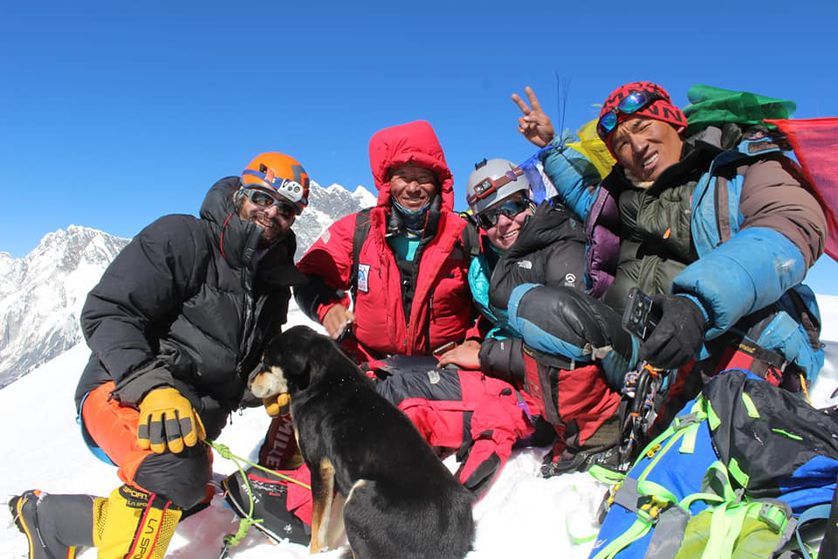
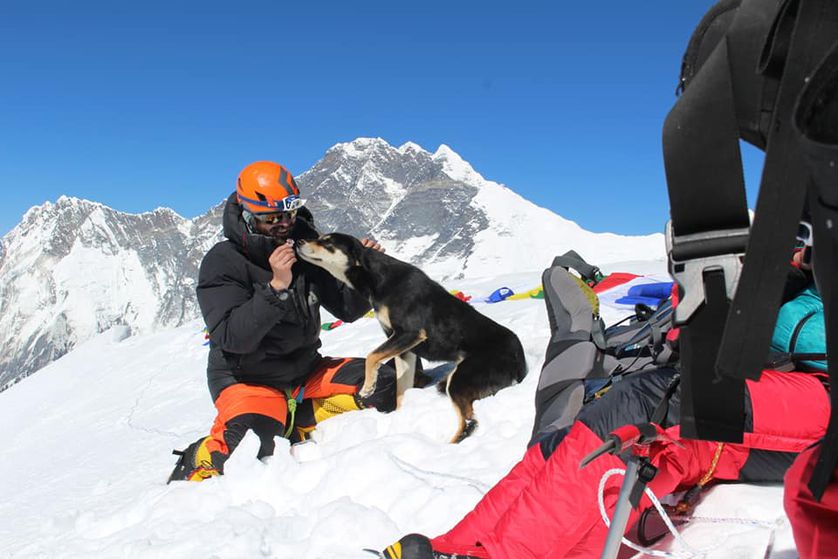
Mera celebrates with her fellow climbers. (Photo: Don Wargowsky)
There was only one time when Mera was gone for several days.
While Wargowsky was working on training with some members of the expedition, showing them how to climb the ice with rope, Mera followed the team’s sherpas instead. They were working to set up ropes to “camp one” at around 20,000 feet. She scrambled up the steep terrain but seemed afraid to go back down and wouldn’t return with them to base camp.
“She ended up spending two nights alone on a glacier at 20,000 feet. I really thought she was going to freeze to death,” Wargowsky says. The sherpas went up to continue working and she was there. But instead of going back down right away, she followed them to 22,000 feet as they continued working before going back to base camp.
The next day when the entire team went to make the climb, Wargowsky tried to keep her at base camp because he didn’t want her to make the steep climb again. He tied her up but she got out of her rope and quickly caught up with them. Wargowsky couldn’t leave his human clients to take her back, so Mera was allowed to stay with the group.
“I have no clue what her motivation was,” he says. “We were feeding her at base camp, so it wasn’t the food. It’s not like there was anything up there for her, but it was amazing to see.”
Tackling the ice and snow
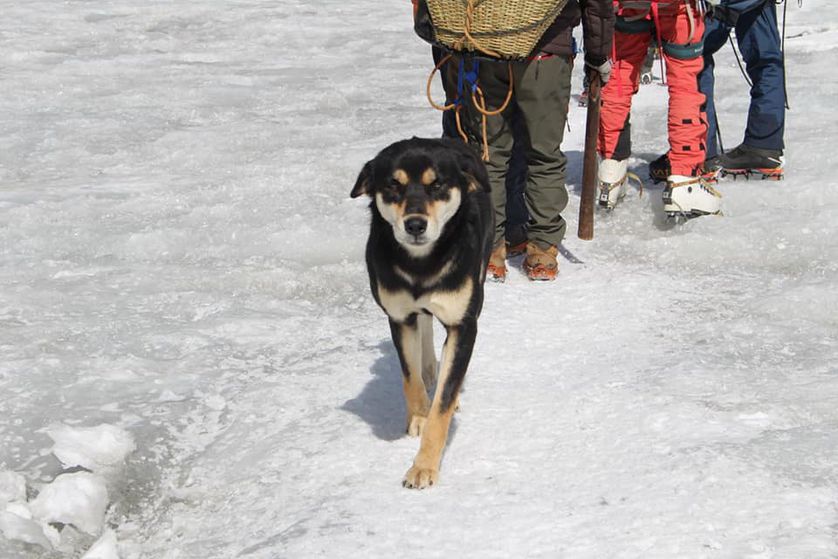
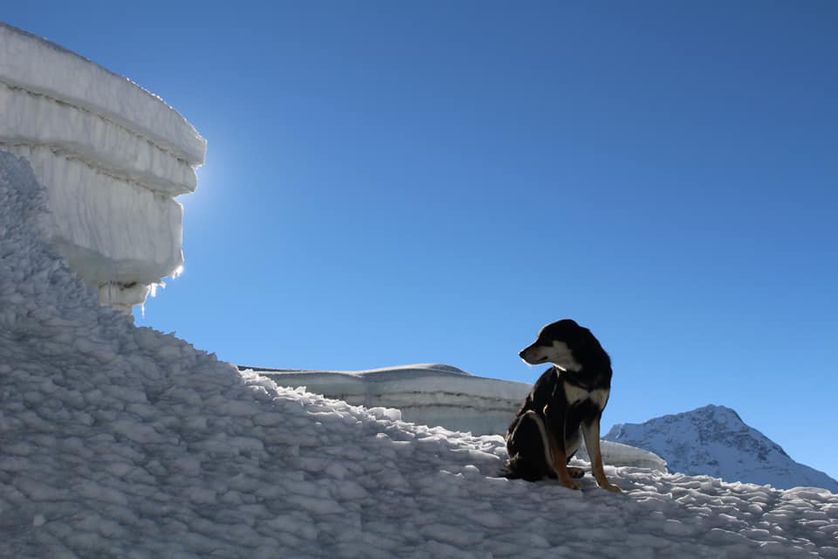
Mera often trotted ahead of the climbers, waiting for them to catch up. The temperatures didn’t seem to faze her. (Photo: Don Wargowsky)
Early on, Mera started to slide and Wargowsky was able to catch her and save her from what could’ve been a dangerous fall. When the team moved to camp two at around 21,000 feet, they were sidelined there for four days because of bad weather. Mera stayed with Wargowsky, who shared his tent and his food with the pup.
“I split all my meals with her 50/50 so we both lost weight,” he says. He guesses the scruffy brown-and-tan stray weighed probably 45 pounds to start with but lost maybe five or 10 pounds during the trip. Wargowsky says Mera looked like a combination of a Tibetan mastiff and a Nepali sheepdog.
Wargowsky was impressed with how well Mera navigated the snow and ice and handled the cold.
“She did very very well like 98 percent of the time. There were certain slopes very early in the morning or late at night when the snow was very crusty and icy when it was very slippery and you could see her kind of struggle with it,” he says. “Her paws got beat up and it was hard to see her paws bleeding a little. But everything healed up that evening and it was all superficial.”
He says it was also hard to believe she didn’t go snow-blind. The humans were all wearing expensive glacier goggles while she trotted along with no protection.
The highest a dog has ever climbed
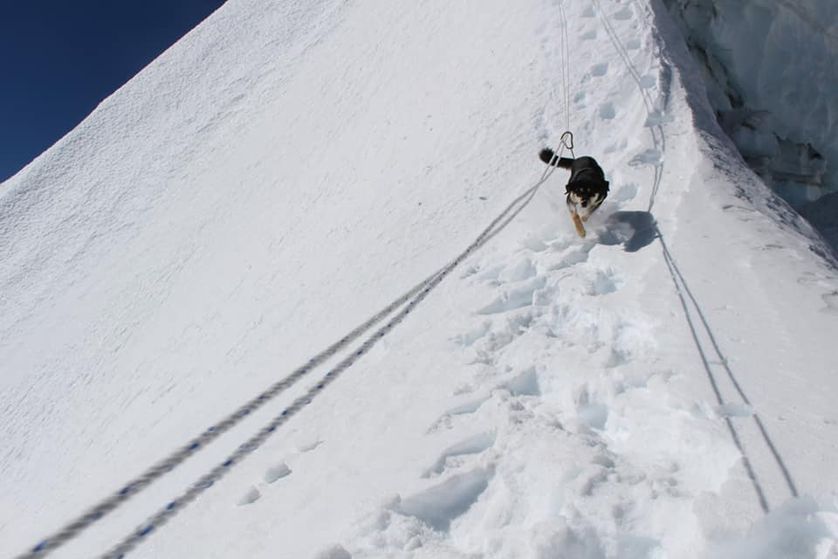
In one particularly harrowing descent, Mera was clipped to a rope to keep her safe. (Photo: Don Wargowsky)
There was only one part of the descent where she was assisted by a rope. Somehow, she had climbed the vertical 15-foot-tall section without incident but when it was time to go back down, she didn’t want to do it. The humans were rappelling, so to coax the dog down safely, they tied a rope harness to her so she could half-run, half tumble. You can see it in the photo above, but Wargowsky points out that the truly harrowing part of the mountain isn’t even visible in the shot.
In the end, when the team — along with their canine mascot — had come down from their completed 23,389-foot climb of Baruntse, Mera was hailed as a bit of a hero. Word had spread about her alleged feat and Wargowsky had to show off photos from his phone to prove she had been with them.
“She was the first dog to ever have climbed that mountain,” he says. “We can’t find anything that says a dog has ever been that high. I believe that is the highest that a dog has ever climbed ever at any point in the world.”
“I am not aware of a dog actually summiting an expedition peak in Nepal,” Billi Bierling of the Himalayan Database, an organization that documents climbing expeditions in Nepal, told Outside. “I just hope that she won’t get into trouble for having climbed Baruntse without a permit.” Bierling told Outside that there have been a few reported cases of dogs at Everest Base Camp (17,600 feet) and some who’ve trailed teams through the Khumbu Icefall up to Camp II (21,300 feet) on Mount Everest, but Mera’s adventure is perhaps the highest-recorded elevation by a dog anywhere in the world.
‘This dog wants to climb mountains’
Wargowsky shares his food with his climbing buddy. (Photo: Don Wargowsky)
After all that climbing and bonding, Wargowsky was tempted to bring his new friend home with him to the U.S.
“I really would’ve loved to adopt her. But I live in a 700-square-foot unit in Seattle and this dog wants to climb mountains. I gave it a lot of consideration. I didn’t care what it cost. Despite how much I loved this dog, I thought it would’ve been a very selfish thing to do to bring her to such a small space.”
But he didn’t want to leave what he calls “this hero of a dog” out on the streets. Fortunately, the expedition’s base camp manager was also smitten with the adventurous dog. Because dogs can’t fly, NirKaji Tamang paid someone $100 to walk three days to pick her up until they could get her on a bus and get her to his home in Kathmandu.
After what she had accomplished on Baruntse, Tamang changed the athletic dog’s name to Baru. He took her to the vet to make sure she was healthy. Her injuries quickly healed, and she gained weight.
Wargowsky, who told his remarkable Mera story online, was thrilled recently to receive photos of her. He will be back in Nepal several times this year for expeditions, and he plans on visiting his canine climbing partner.
“With what we had available, I don’t know what more I could’ve done to prevent her from climbing. She was definitely there of her own free will,” he says. “I truly loved that dog.”
ooOOoo
This is such a wonderful account of a stray dog coming into contact with a group of such loving people. Plus, the photographs are wonderful especially the fourth one; just following the Tackling the Ice and Snow sub-heading. I could look at that photograph for ever!













 Learning from Dogs