Category: Philosophy

The Charles Schulz philosophy

This was sent to me recently.  It has been doing the rounds big time, and rightly so!

oooOOOooo

Before going on to today’s post, I feel the need to explain something.  That is that over the last week or so I have been republishing many more items rather than writing my own creative stuff.  This is an unfortunate consequence of us having our house here in Payson up for sale, which is generating more work than usual.  Plus we are packing.  All this to do with us moving from Arizona to Oregon in the first week of November.

oooOOOooo

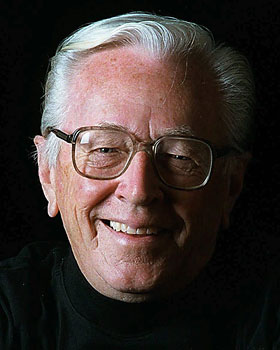
Charles Schulz

The following is the philosophy of Charles Schulz, the creator of the ‘Peanuts’ comic strip.

You don’t have to actually answer the questions. Just ponder on them. It will make very good sense!

Here’s A Little Quiz

You don’t have to actually answer the questions. Just read them straight through, ponder a tad, and you’ll get the point.

  • Name the five wealthiest people in the world.
  • Name the last five Heisman trophy winners.
  • Name the last five winners of the Miss America pageant.
  • Name ten people who have won the Nobel or Pulitzer Prize.
  • Name the last half dozen Academy Award winners for best actor and actress.
  • Name the last decade’s worth of World Series Winners.


How did you do?

The point is, none of us remember the headliners of yesterday. These are no second-rate achievers. They were the best in their fields.

But the applause dies. Awards tarnish over time. Achievements are forgotten and accolades and certificates are buried with their owners.

Here’s another quiz. See how you do on this one:

  • List a few teachers who aided your journey through school.
  • Name three friends who have helped you through a difficult time.
  • Name five people who have taught you something worthwhile.
  • Think of a few people who have made you feel appreciated and special!
  • Think of five people you enjoy spending time with.

Did you find that Easier?  Of course you did!

So here’s the lesson!

The people who make a difference in your life are not the ones with the most credentials, or the most money…or the most awards…they simply are the ones who care the most.

House of cards.

A more philosophical view of recent years.

I admit to being too free with my silly clichés including, “I can predict anything unless it involves the future!”  So now that millions of informed people have the benefit of “20:20 hindsight“, why is it years since the banking crisis first erupted and we are still without a root and branch overhaul of the governance of the industry?

Did you see Per Kurowski’s interview with a leading regulator on Learning from Dogs yesterday?  Aren’t we so slow to learn!

Anyway, I waffle on!  Let me get to the point of today’s post.

Back on the 1st September, there was a post called Understanding Europe. One of the resulting commentators was Pendantry who is author of a blog called Wibble.  He included a link to a poem that he wrote on the 28th February, 2009!  The fact that the poem is still so relevant (and when we see what’s happening in Europe perhaps even more relevant now!) is truly shocking.  I wanted to republish it which I do with the kind permission of Pendantry.  Here it is.

oooOOOooo

House of cards

When the inevitable strikes,
when the house falls down,
do you patch up the walls,
fix the holes in the roof,
shore it all up,
splash it with paint?

No.

You learn from the mistakes.
You start from scratch.
You call in the architects.
You rebuild the foundations.
You use new materials;
replace wattle and daub
with a sounder design.

Unless:

Because you’re lost outside the box,
and your mates demand
to regain their riches (and, now!):
You set up the same as before,
perhaps with a few bells and whistles
(spun to persuade that they’ll work).

And… in the end, we’ll believe
that your clothing is not invisible.

“Who is more foolish?
The fool, or the fool who follows him?”

oooOOOooo

Written over three years and five months ago. Shame on us all!

Two lost souls

Remaining with the theme of love, love lost and new love.

John Hurlburt sent me the following last week and it is so perfect as a sequel to the writings of the last two days.  That was John’s poetry last Saturday on Learning from Dogs, by the way.

oooOOOooo

Two lost souls

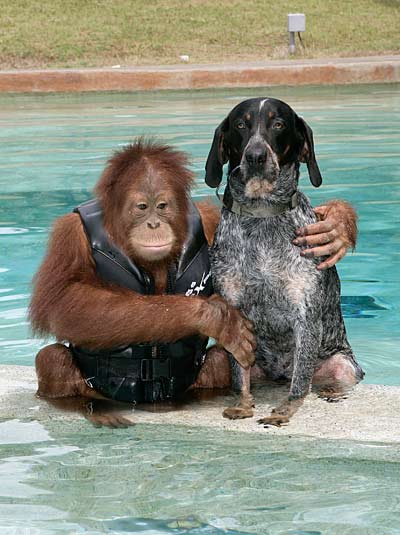
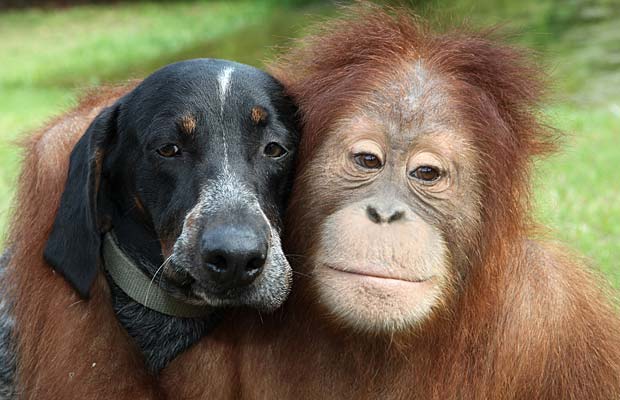
After losing his parents, this three year old orangutan was so depressed he wouldn’t eat and didn’t respond to any medical treatments. The veterinarians thought he would surely die from sadness.

The zoo keepers found an old sick dog on the grounds in the park at the zoo where the orangutan lived and took the dog to the animal treatment center. The dog arrived at the same time the orangutan was there being treated.

The two lost souls met and have been inseparable ever since.  The orangutan found a new reason to live and each always tries his best to be a good companion to his new found friend.  They are together 24 hours a day in all their activities.

They live in Northern California where swimming is their favorite past-time, although Roscoe (the orangutan) is a little afraid of the water and needs his friend’s help to swim.

Together they have discovered the joy and laughter in life and the value of friendship.

They have found more than a friendly shoulder to lean on.

Long Live Friendship!

I don’t know, but some say life is too short, others say it is too long, but I know that nothing that we do makes sense if we don’t touch the hearts of others.  While it lasts!

May you always have love to share, health to spare, and friends who care…..even if they are a little hairy at times.

oooOOOooo

I must say that the generosity of so many of my readers in sending me these beautiful examples of what is really important in this world of ours touches me deeply.  Thank you, John.  Thank you, one and all.

What is love?

How the relationship that we have with domesticated animals taught us the meaning of love.

This exploration into the most fundamental emotion of all, love, was stimulated by me just finishing Pat Shipman’s book The Animal Connection.  Sturdy followers of Learning from Dogs (what a hardy lot you are!) will recall that about 5 weeks ago I wrote a post entitled The Woof at the Door which included an essay from Pat, republished with her permission, that set out how “Dogs may have been man’s best friend for thousands of years longer than we realized“.

The following day, I wrote a further piece introducing the book and then commenced reading it myself.  Please go there and read about the praise that the book has received.

What I want to do is to take a personal journey through love.  I should add immediately that I have no specialist or professional background with regard to ‘love’ just, like millions of others, a collection of experiences that have tapped me on the shoulder these last 67 years.

I would imagine that there are almost as many ideas about the meaning of love as there are people on this planet.  Dictionary.com produces this in answer to the search on the word ‘love’.

love

[luhv]  noun, verb, loved, lov·ing.
noun

  1. a profoundly tender, passionate affection for another person.
  2. a feeling of warm personal attachment or deep affection, as for a parent, child, or friend.
  3. sexual passion or desire.
  4. a person toward whom love is felt; beloved person;sweetheart.
  5. (used in direct address as a term of endearment, affection,or the like): Would you like to see a movie, love?

But, I don’t know about you, those definitions leave something missing for me.  Here’s my take on what love is, and it’s only by having so many dogs in my life that I have found this clarity of thought.

Love is trust, love is pure openness, love is knowing that you offer yourself without any barriers.  Think how you dream of giving yourself outwardly in the total surrender of love.  Reflect on that surrender that you experience when deeply connecting, nay loving, with your dog.

Here’s how Pat Shipman expressed it in her book:

Clearly, part of the basis of our intimacy with tame or domesticated animals involves physical contact.  People who work with animals touch them.  It doesn’t matter if you are a horse breeder, a farmer raising pigs, a pet owner, a zoo keeper, or a veterinarian, we touch them, stroke them, hug them.  Many of us kiss our animals and many allow them to sleep with us.  We touch animals because this is a crucial aspect of the nonverbal communication that we have evolved over millennia.  We touch animals because it raises our oxytocin levels – and the animal’s oxytocin levels.  We touch animals because we and they enjoy it. (p.274)

Pat soon after writes,

From the first stone tool to the origin of language and the most recent living tools, our involvement with animals has directed our course.

Thus it is not beyond reason to presume that tens of thousands of years of physical and emotional closeness between humans and their animals have developed the emotion of love in us humans, so eloquently expressed in art and life.

There’s another aspect of what we may have learned from dogs.  In Alexandra Horowitz’s book Inside of a Dog, she writes of the way that dogs look at us,

Having been folded into the world of humans, dogs no longer needed some of the skills that they would to survive on their own.  As we’ll see, what dogs lack in physical skills, they make up for in people skills.

AND THEN OUR EYES MET ….

There is one final, seemingly minor difference between the two species.  This one small behavioral variation between wolves and dogs has remarkable consequences.  The difference is this: dogs look at our eyes.

Dogs make eye contact and look to us for information – about the location of food, about our emotions, about what is happening.  Wolves avoid eye contact.  In both species, eye contact can be a threat: to stare is to assert authority.  So too is it with humans.  In one of my undergraduate psychology classes, I have my students do a simple field experiment wherein they try to make and hold eye contact with everyone they pass on campus.  Both they and those on the receiving end of their stares behave remarkably consistently: everyone can’t wait to break eye contact.  It’s stressful for the students, a great number of whom suddenly claim to be shy: they report their hearts begin to race and they start sweating when simply holding someone’s gaze for a few seconds.  They concoct elaborate stories on the spot to explain why someone looked away, or held their gaze for a half second longer.  For the most part, their staring is met with deflected gazes from those they eyeball.

Then a few sentences later, Alexandra continues to write,

Dogs look, too.  Though they have inherited some aversion to staring too long at eyes, dogs seem to be predisposed to inspect our faces for information, for reassurance, for guidance.  Not only is this pleasing to us – there is a certain satisfaction in gazing deep into a dog’s eyes gazing back at you – it is also perfectly suited to getting along with humans. (pps 45-46)

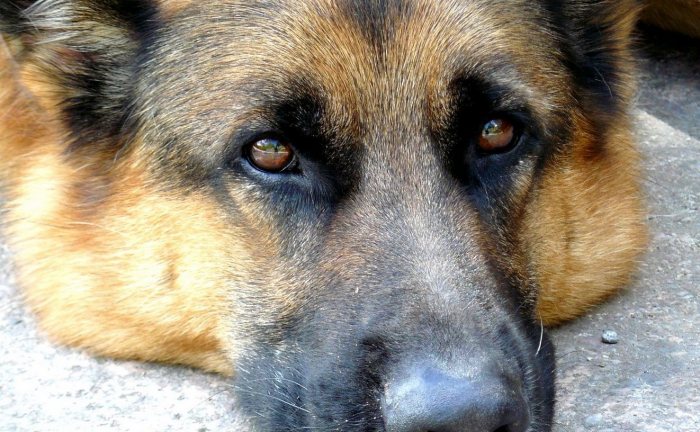
No apologies for now inserting the photograph of Pharaoh that adorns the Welcome page of Learning from Dogs.  Underlines what Alexandra wrote above in spades.

Now that is a gaze!

OK, time to start bringing this to a close.

The Toronto Star ran a great review of Pat Shipman’s book from which I will just take this snippet,

“But understanding animals and empathizing with them also triggered other changes in humanity’s evolution, Shipman said.

All those things allow people to live with people. Once people have domesticated animals, they start to live in stable groups. They have fields, crops and more permanent dwellings.”

In other words, we can see that living with animals took us from nomadic hunter-gatherers to living with other people in stable groups; the birth of farming.  It is my contention that the evolution of communities and the resulting more stable relationships elevated love leading to love becoming a higher order emotion than just associated with the ‘grunt’ of reproduction.

I started by saying that it was Pat Shipman’s book that stimulated me to wander through my own consciousness and realise that when I bury my face in the side of one of the dogs, say on the bed, it resonates with the most ancient memories in my human consciousness.  Indeed, I am of no doubt that my openness and emotional surrender to that dog enables me to be a better, as in more loving, person for Jean.

So let me close this essay by asking you to return here and read the guest post tomorrow from author Eleanore MacDonald, where Eleanore writes of the loss of their dog Djuna.  You will read the most precious and heart-rending words about love.  Thank you.

Home grown!

Further beautiful reflections from John Hurlburt.

By one of those lovely patterns in life, John’s last contribution to Learning from Dogs was exactly a year ago, a Post that was called Definitions, questions and prayers.

oooOOOooo

Synergy

Past, present and future combine

In the natural beauty of a moment


The sigh of the wind in the pines

Is a hymn to ancient growth

The hush of the wind in the willows

Invites peace and well being


 The sparkle of pure water

Assures that tomorrow will include life

                                                                           an old lamplighter

From feeling to doing!

Each of us must understand there is no choice – we have to change. So let’s do it!

This timely video from The Evergreen State College conference, another contribution from David Roberts, was brought to my attention by a recent post on Christine’s excellent blog, 350 or bust.

It so perfectly carries on from yesterday’s Learning from Dogs post, You have to feel it.

So please, promise yourself to watch this video now!  It’s just 15 minutes of very plain speaking by David.  Watch it not just for yourself but for the children and the children’s children across this beautiful world.

David Roberts is staff writer at Grist.org. In “Climate Change is Simple” he describes the causes and effects of climate change in blunt, plain terms.

On April 16, 2012, speakers and attendees gathered at TEDxTheEvergreenStateCollege: Hello Climate Change to reflect on the ability — and responsibility — of formal and informal education to inspire and empower action in this era of climate change.

Watch, be inspired and be empowered as a person that is taking personal responsibility for doing!

As dear old Albert said, (as in Albert Einstein) “You cannot solve a problem from the same consciousness that created it. You must learn to see the world anew.”

You have to feel it!

Fascinating insight into our complex relationship with complex ideas!

There’s a powerful saying in the world of writing: If you can’t feel it you can’t write it!

But our feelings are so, so much a part of what it is to be human.  That’s why I spent some time exploring how our resistance to change is so wrapped up in the emotions that change brings about in an article back on the 2nd August: Changing the person: Me.

So a post on the grist online magazine not so long ago really caught my eye.  It was called Why climate change doesn’t spark moral outrage, and how it could, and was written by David Roberts.  I would dearly love to have sought David’s permission to republish it in full; it’s so relevant to understanding how we humans have to approach turning back from our present course of making the Earth’s biosphere uninhabitable for we humans.

But in a couple of days time, I have a Post coming out that is republished with David’s written permission called Cutting CO2 emissions – who leads the world! It felt greedy to ask David for another full republication.  So I’m going to dip into this one, hopefully to the point where you will go across to grist and read it for yourself.

David opens up as follows:

Perhaps the single biggest barrier to action on climate change is the fact that it doesn’t hit us in the gut. We can identify it as a great moral wrong, through a chain of evidence and reasoning, but we do not instinctively feel it as one. It does not trigger our primal moral intuitions or generate spontaneous outrage, anger, and passion. It’s got no emotional heat. (Ironic!)

David’s article then goes on to refer to a recent paper published on the Nature.com website called Climate change and moral judgement by Ezra M. Markowitz & Azim F. Shariff.  The abstract sets out that:

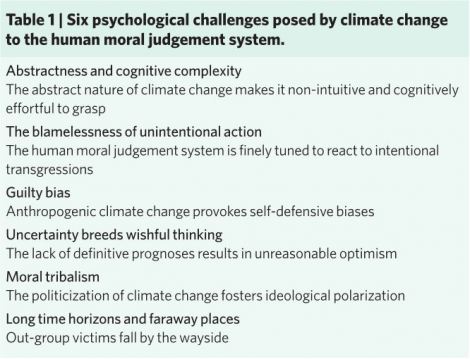
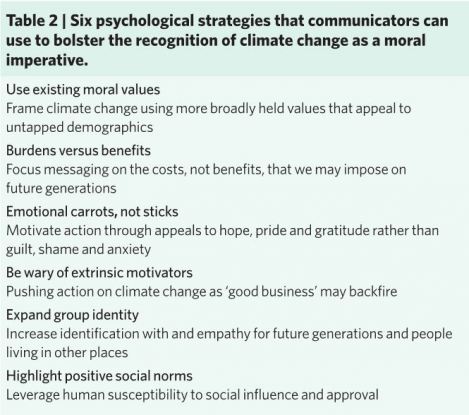
Converging evidence from the behavioural and brain sciences suggests that the human moral judgement system is not well equipped to identify climate change — a complex, large-scale and unintentionally caused phenomenon — as an important moral imperative. As climate change fails to generate strong moral intuitions, it does not motivate an urgent need for action in the way that other moral imperatives do. We review six reasons why climate change poses significant challenges to our moral judgement system and describe six strategies that communicators might use to confront these challenges. Enhancing moral intuitions about climate change may motivate greater support for ameliorative actions and policies.

M’mmm – not sure how that leaves me.  (Which is my way of saying that I don’t really understand that!)  Luckily David goes on to say that the authors “go on to identify six reasons why, “unlike financial fraud or terrorist attacks, climate change does not register, emotionally, as a wrong that demands to be righted.” and refers to an interesting table in the research paper.

Now go to the article on grist to better understand how those challenges are explained.

Then later on in the research paper, there is a second table, as below:

Again, these strategies are expanded upon in David’s article.  What I will do is to copy his final few paragraphs:

6. Highlight positive social norms: This is, to me, the Big Kahuna. As I was reading about all the psychological barriers to climate action, I kept thinking, “one thing can overcome all these: peer pressure!” If people see others that they view as peers or leaders doing something, they will tend to do it too, and retrofit reasons for it after the fact. This is the essence of humans as social creatures.

The recommendation is twofold, though: not just to “highlight pro-environmental, prosocial injunctive norms such as prohibitions against being wasteful,” but also to “be careful not to inadvertently highlight negative, but existent, descriptive norms, which can actually encourage individuals to follow suit in the wrong direction.”

In other words, you want to emphasize that climate hawkery is good, socially desirable, admirable, and that all the cool kids are doing it. You don’t want to give people the impression that “everyone’s doing it” if it is bad. Even if you state clearly that it’s bad, the fact that others are doing it is, in and of itself, a powerful incentive to do it too. It’s the herd instinct. This is good reason not to whine on and on about how everyone drives too much or everyone wastes electricity. The subtext is, “it’s the social norm.”

—-

Aaaanyway, this is a lot of food for thought. But it’s the kind of stuff — not about science but about people — that far too many climate hawks ignore or disregard. Climate change is not only the economic and ecological crisis of our time, it’s also a moral crisis. What we are doing to our descendants is a moral crime. Finding ways to help people get that, feel it in their guts the way they would if someone threatened their own families, is a precondition for serious, sustained action.

Let me repeat David’s closing words, “Climate change is not only the economic and ecological crisis of our time, it’s also a moral crisis. What we are doing to our descendants is a moral crime.

OK, so how strongly do you feel that?  Great, so you do feel it – even feel it deep inside you.

Now that you do, let’s all get stuck into making a difference.  It is all about doing.  As someone of huge stature, and a wonderful person of action no less, said;

I have been impressed with the urgency of doing. Knowing is not enough; we must apply. Being willing is not enough, we must do. Leonardo da Vinci (1452-1519)

We must do!  Start your own ‘doing’, don’t wait upon others, actively look for ideas (there are a few here) and together we can make a positive difference.

Well done, David – great article.

Eric Clapton and change.

A powerful example of grief and repair.

Normally my week-end posts are lighthearted.  But I do hope you will forgive the departure for today.

Regular readers of Learning from Dogs will recall that on the 2nd August I published a piece under the title of Changing the person: Me.  It offered several examples of how personal change or transition is tough but that the rewards that come from understanding the personal and emotional consequences of big life changes are immense.  As I wrote then,

The most important thing to note, and this is why so many ‘change’ ambitions fail, is that change is deeply unsettling at first.  When change happens for the majority of us, often ‘forced’ on us as a result of unplanned life events, we are left deeply unsettled; a strong feeling of being lost, of being in unfamiliar surroundings.  Think divorce or, worse, the death of a partner or child, reflect on how many sign up for bereavement counselling in such circumstances.  Big-time change is big-time tough (apologies for the grammar!).

Then I came across the story of how Eric Clapton coped when his four-year-old son fell from the window of the 53rd-floor window of his mother’s friend’s New York City apartment.  Here’s an extract from the WikiPedia entry:

The years following 1990 were extremely turbulent for Clapton. In August 1990, his manager and two of his roadies (along with fellow musician Stevie Ray Vaughan) were killed in a helicopter accident. Seven months later, on March 20, 1991, Clapton’s four-year-old son Conor died after falling from the 53rd-floor window of his mother’s friend’s New York City apartment. He landed on the roof of an adjacent four-story building.  After isolating himself for a period, Clapton began working again, writing music for a movie about drug addiction called Rush. Clapton dealt with the grief of his son’s death by co-writing “Tears in Heaven” with Will Jennings.

Here’s Tears in Heaven.  Please stop whatever you are doing now and play this video.  In under 5 minutes it demonstrates the power of the saying from Henry David Thoreau, the American author and poet – “Not until we are lost do we begin to understand ourselves”.

And going back to that WikiPedia entry

In an interview with Daphne Barak, Clapton stated, “I almost subconsciously used music for myself as a healing agent, and lo and behold, it worked… I have got a great deal of happiness and a great deal of healing from music“.

Eric Clapton

Let me close with another saying, this time from George Moore, the novelist, “A man travels the world over in search of what he needs and returns home to find it.”

Not even sure what to call this Post?

A futile attempt to explore the concepts of truth, reason, craziness and … (I give up!)

Can’t make sense of this?

Yesterday, I republished an article that Pete Aleshire recently wrote in the Payson Roundup, our local newspaper, on thinking outside the box.  Pete entitled his essay, Strange theory reveals secrets of the universe, the logic of sycamore leaves and why even smart people struggle with new ideas.

And it was part of that title that resonated with a mind-bending (literally) essay that Patrice Ayme presented on his blog on the 27th July.  The part of the title that ‘clicked’ with me was “why even smart people struggle with new ideas.”

You see what Patrice wrote about on the 27th July was about the proposition “that superior intelligence in a species can only come from an ability to engineer (productive) craziness.”

As Patrice explained,

Two of the creators of modern mathematics and metamathematics, Georg Cantor and Kurt Godel, experienced some craziness. Nietzsche produced some of his best work before he went insane. Van Gogh experienced serious mental difficulties. Bolztman killed himself. All these cases were within a generation. Those may all be unrelated accidents, sure.

Immediately leading on to him writing,

 However I will show below that superior intelligence in a species can only come from an ability to engineer (productive) craziness. (Perhaps the reason why chimps and bears are so unpredictable: they are not just clever, but a bit crazy!)

Then after some very detailed reflections on man, Patrice wrote,

Hominids who practiced a bit of craziness were evolutionary advantaged, because they found more readily solutions to logical incompleteness at hand. Craziness allowed to find new, necessary axioms. Thus evolution learned to exploit logical incompleteness.

Typical of Patrice Ayme, the essay is not an easy read but it is brim full of fascinating ideas and well worth the effort.  Patrice concludes,

 If craziness is so useful to augment those mental powers we need so much to survive as a civilization, how do we survive it? Precisely by augmenting the truth. Thus only craziness compatible with the truth will be able to survive. That is why I have not hesitated to tell various truths about Obama (whom I have intensely supported in all sorts of ways), or Hollande, whom I approved of, until he started to say lies about World War Two (details soon to come).

Truth is my religion. A touch of craziness my sanity. (Latest demonstration: It’s not like I did not know of the danger in advance. I was slightly charged by a large bad mood moose with calf today on an Alaskan trail, where I was nonchalantly running with a bad ankle; after a high speed retreat, as a good predator, I circumvented the difficulty, and anxiety switched sides, the calf nearly spraining its own ankle in the process… . )

There is no truth but the full truth, and a touch of craziness is its prophet.

Now go back to Pete Aleshire and see the harmony between his beautiful prose and the fascinating ideas flowing from Patrice’s mind. This is how Pete concluded his essay,

So Drake [Larson] and I spent the day wandering along the banks of Fossil Creek as he kept trying to come up with metaphors so I could grasp math’s secret within the beauty of Fossil Creek’s sycamore leaves. The well-designed sycamore leaves adhere to the Fibonacci sequence, a mysterious progression of numbers that crops up throughout nature — from the spiral of a nautilus shell to the layout of the ruins of Chaco Canyon.
So I figured I’d just write this — and get earth’s 17 PSI cap for dark energy out there in the time/date/ stamped world.

Oh, yeah: And about Kenny Evans. [Mayor of Payson, AZ]

So that night, I took Drake to the Payson council meeting. Turns out, Drake’s family was growing grapes in the Coachella Valley at the same time Evans was farming 10,000 acres in Yuma. They both managed to survive that tempestuous time when the United Farm Workers union organized agriculture workers.

I introduced them and listened as they recalled events and figured out whom they knew in common.

It was then that I decided to blame Drake for my faith in Evans’ ridiculous conviction that a university will build a campus here in this itty bitty tourist town — complete with a research center and convention hotel. No sensible small-town mayor would risk public ridicule while spending thousands of hours on such an outside-the-box notion … unless he’d learned to gamble on dreams and hard work during all those years as a farmer.

Evans’ notion is almost as silly as a farmer who calculates the amount of dark energy emanating from earth, while credentialed experts scratch their collective heads.

Still, I’m thinking maybe I’ll get a nice suit jacket — something I can wear to both the university’s groundbreaking and the ceremonies in Oslo.

Hey, never hurts to be prepared.

So there, I feel much better now!  None the wiser, indeed even more confused, but just grateful there are some out there who have a go at trying to explain ….. whatever it is they are explaining!

Thinking outside the box

Strange theory reveals secrets of the universe, the logic of sycamore leaves and why even smart people struggle with new ideas.

A guest post from Pete Aleshire, Editor, Payson Roundup.

Introduction

The Payson Roundup is our local newspaper here in Payson, AZ.  I first saw this article by Pete a couple of weeks ago and was just utterly engrossed by it.  Not just the tantalising peek into a physics I know so little about but the beautiful prose.  The latter is not surprising because as well as being editor of the paper, Pete also teaches the creative writing course at our local college.  Jean and I had the benefit of attending the course, I guess about a year ago, and therefore can speak from experience.

So settle down and enjoy.

oooOOOooo

I finally got Drake Larson together with both sycamore leaves and Payson Mayor Kenny Evans. Moreover, I have been entrusted with a formula that may win me an invitation to Oslo if Drake gets a Nobel Prize.

But even if that don’t work out, I did get to eavesdrop on Drake and Evans. Quite the event, from my bemused point of view, since it shed light on dangerous delights of outside-the-box thinking and the Nature of the Universe.

But wait. You look confused.

Let me back up — and start somewhere closer to the beginning. Be patient with me — by the time we’re done, you’ll realize why God’s a math nerd, one surprising secret of Dark Energy, why farmers become original thinkers and what sycamore leaves tell us about the universe.

But first, I have to explain about Drake.

We grew up together, getting into (and mostly out of) various varieties of trouble. Very early on, I realized that he was much (much) smarter than me. This initially really irritated me, as I was previously inclined to vanity about my intelligence. Turns out, I love learning stuff other people have discovered, but Drake only gets truly excited when he has hold of a completely new idea that no one else can quite grasp. This prepared me, as it turns out, for meeting Kenny Evans — but that’s getting ahead of the story.

Drake and I grew up doing math homework together, before I wandered off into a career in newspapers. He got his degree in mathematics, turned down a job with the RAND Corporation and took up growing table grapes.

But he never quit picking at the lock of the universe.

Years ago when I was the science writer for the Oakland Tribune, he came to me all excited about a set of formulas he had. I did my best to follow the two pages of calculations, but all I can tell you is that they described instabilities of any sphere with uniform density. He predicted that when the Voyager spacecraft reached Jupiter, it would report inexplicable turbulence at a certain depth in the atmosphere. I ran his numbers past various top-level physicists and mathematicians who couldn’t find a flaw in his formulas — but concluded that it had to be wrong since it led to a violation of the keystone laws of conservation of mass and energy.

But I took note some months later when the Voyager spacecraft reported mysterious levels of turbulence deep within the atmosphere of Jupiter.

The years passed. Drake kept growing grapes, flowers, dates and vegetables — and working on his calculations. He wrote a book, “The Cults of Relativity,” in which he described a few of his theories, delighted in the conundrums of mathematics and pondered the curious resistance of even smart people to unconventional ideas.

We got together again recently. I took him down to Fossil Creek, all overhung with sycamores with the rustle of floppy, five-pointed leaves. Drake was his old self on our Fossil Creek tour as he tried to show me math’s beauty around us, although I was but a blind man clutching the tail of his mathematical elephant.

He had now connected his formulas to dark energy, a still hypothetical form of energy invoked by desperate cosmologists to explain the startling observation that the expansion of the universe is actually accelerating. To explain this seeming impossibility, they invented “dark energy” — which they figure pervades the universe and at certain densities creates a repulsive force stronger than the attractive force of gravity.

Anyhow, here’s the point: Drake was in awe that his mathematical wanderings offered a way to calculate dark energy’s cap within earth — it happened to be an “inside is now outside” inversion of Isaac Newton’s simplest integral. No. Please. Don’t ask me to explain that. But earth’s dark energy cannot exceed 17 pounds per square inch at a depth of about 1,500 miles. He’s been working with University of Southern California computer crunching guru professor Barry Boehm, and the University of California at Riverside geophysics professor Shawn Biehler on its implications. Among other things, it could explain the perplexing observation that major earthquakes increase the earth’s rotation rate.

No one knows how to measure such a quantity at present. Someday they will. If it turns out that 17 pounds per square inch is a relevant benchmark for earth’s dark energy, then this column will maybe win Drake the Nobel — and I’ll get to dress up and attend the ceremony.

So Drake and I spent the day wandering along the banks of Fossil Creek as he kept trying to come up with metaphors so I could grasp math’s secret within the beauty of Fossil Creek’s sycamore leaves. The well-designed sycamore leaves adhere to the Fibonacci sequence, a mysterious progression of numbers that crops up throughout nature — from the spiral of a nautilus shell to the layout of the ruins of Chaco Canyon.

So I figured I’d just write this — and get earth’s 17 PSI cap for dark energy out there in the time/date/ stamped world.

Oh, yeah: And about Kenny Evans.

So that night, I took Drake to the Payson council meeting. Turns out, Drake’s family was growing grapes in the Coachella Valley at the same time Evans was farming 10,000 acres in Yuma. They both managed to survive that tempestuous time when the United Farm Workers union organized agriculture workers.

I introduced them and listened as they recalled events and figured out whom they knew in common.

It was then that I decided to blame Drake for my faith in Evans’ ridiculous conviction that a university will build a campus here in this itty bitty tourist town — complete with a research center and convention hotel. No sensible small-town mayor would risk public ridicule while spending thousands of hours on such an outside-the-box notion … unless he’d learned to gamble on dreams and hard work during all those years as a farmer.

Evans’ notion is almost as silly as a farmer who calculates the amount of dark energy emanating from earth, while credentialed experts scratch their collective heads.

Still, I’m thinking maybe I’ll get a nice suit jacket — something I can wear to both the university’s groundbreaking and the ceremonies in Oslo.

Hey, never hurts to be prepared.

oooOOOooo

A big thank-you for the permission to republish this on Learning from Dogs. I have no doubt that many LfD readers enjoyed it as much as I did!  Stay with me for tomorrow when the theme of thinking, innovation and craziness is explored a touch more.