Category: Philosophy

Maybe home is found in our quietness.

Our truths, our home, our serenity; all flow from stillness.

Soon silence will have passed into legend. Man has turned his back on silence. Day after day he invents machines and devices that increase noise and distract humanity from the essence of life, contemplation, meditation.

Jean Arp (16 September 1886 – 7 June 1966)

As is often the way, a number of disparate items came together for today’s post in a way of lovely connectivity.

A few weeks ago when meeting our local doctor for the first time since we moved to Oregon, I had grumbled about bouts of terrible short-term memory recall and more or less had shrugged my shoulders in resignation that there was nothing one could do: it was just part of getting older, I guessed!

“On the contrary”, responded Dr. Hurd, continuing, “There’s growing evidence that our information-crowded lives: cell phones; email; constant TV; constant news, is pumping too much for our brains to manage.”

Dr. Hurd continued, “Think about it!  Our brains have to process every single sensory stimulus.  The research is suggesting that our brains are being over-loaded and then the brain just dumps the excess data.  If that is the case, and the evidence is pointing in that direction, then try thirty minutes of meditation each day; give your brain a chance to rest.”

So that was the first revelation.

The second was a recent science programme on the BBC under the Horizon series.  The programme was called, The Truth About Personality.

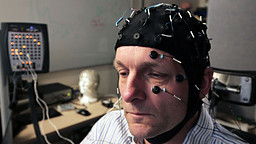
Michael Mosley's brain being measured.
Michael Mosley’s brain being measured.

Michael Mosley explores the latest science about how our personalities are created – and whether they can be changed.

Despite appearances, Mosley is a pessimist who constantly frets about the future. He wants to worry less and become more of an optimist.

He tries out two techniques to change this aspect of his personality – with surprising results.

And he travels to the frontiers of genetics and neuroscience to find out about the forces that shape all our personalities.

Related Links

Within the programme came the astounding fact that even ten minutes a day meditation can help the brain achieve a more balanced personality (balance in terms of not being overly negative in one’s thoughts).

The third revelation came from Jean and me watching a TED Talk last night.  Just 14 minutes long, please watch it – you will be transformed!

Published on Jul 17, 2013

More and more people worldwide are living in countries not considered their own. Writer Pico Iyer — who himself has three or four “origins” — meditates on the meaning of home, the joy of traveling and the serenity of standing still.

Then, just three days ago, John Hurlburt, a long-time supporter and regular contributor to Learning from Dogs, emailed me his reflection on meditation.  John quickly gave permission for it to be published here.

oooOOOooo

evening
The stillness of evening.

Evening Meditation

Our world is increasingly spiritually, morally, mentally, physically and economically bankrupt. Many people would like to change the world one way or another. Most don’t really know why. Some folks simply don’t care. The idea is to leave life a bit better than we found it when we were born.

The fact is we’re all intrinsically sacred in a universe we didn’t create. We tend to prioritize illusion and delusion above reality. Playing God is a precursor of evil.  A supreme faith in Money is self contradictory and ultimately fatal. Arrogance compounds the problem.

We connect in unified awareness through serene meditation. We experience harmony within an emerging celestial symphony. Answers flow from the inside out as we surrender to the eternal energy flow.

Be still and know…

an old lamplighter

oooOOOooo

Finally, after having a real struggle to find the place, both psychologically and physically, where I could start my own relationship with meditation, on Wednesday afternoon, when walking the quarter-mile up to our mail-box, it struck me as obvious.

Embraced by nature.
Embraced by nature.

This quiet place on our creek where the water trickles down from an old flood irrigation dam.  Somewhere to sit under the shade of a tree, somewhere to be still, somewhere as perfect a home as anyone could ever find.

Meditation is the dissolution of thoughts in Eternal awareness or Pure consciousness without objectification, knowing without thinking, merging finitude in infinity.

Voltaire.

Life’s changes.

Sometimes life has a way of offering a new path.

*** If you are not into introspection, then look away and come back tomorrow! 😉 ***

Regular readers will know that quite frequently I write under a topic heading that could be regarded as within the classification of key subjects of our time.  You know, such subjects as big government, big money, big power, and even climate change! 😉

Why has this been the case?

Well, because, a) most of my life I’ve tried to stay abreast of ‘current affairs’ and, b) within the broad label of ‘integrity’ it’s relevant to this blog.  The sub-heading of the blog is after all: “Dogs are integrous animals. We have much to learn from them.”  (Yes, I do know ‘integrous’ isn’t grammatically accurate! – Any suggestions for an alternative word?)

Stay with that while I go elsewhere.

Yesterday (Tuesday) a number of events ended up having a profound effect on me. On the face of it, utterly disconnected events.

The first was a post from Alex Jones on his blog The Liberated Way.  The only common ground between Alex and me is that we both know Colchester in Essex, England.  Alex because he lives there today, me because I used to have a business in Colchester in previous times.  Other than that just a couple of bloggers separated by thousands of miles.

Anyway, the post was this one: Cycle of Life. Alex wrote:

Life seems like a cycle of birth, living and death.

I have the honour of following awesome bloggers on WordPress.  I learn inspirational teachings from their intimate life experiences that they share with their readers.  The cycle, for in my belief everything moves in cycles, of birth, life and death is if we are attentive to living life something we will often be reminded of in our interactions with others and nature.

Then later, adding:

Lijiun is a Buddhist who shares daily experiences from their own life with a Buddhist theme running through their blog.  Lijiun has a cat called Little White who often acts as a teacher to them about the meaning of life and a reminder of Buddhist teachings.  Little White two weeks ago brought home a stray kitten, which it adopted as like a surrogate parent.  Yesterday Adik the kitten died, and a beautiful blog post by Lijiun in memory of Adik reminds us life is impermanent.

Almost absent-mindedly, I clicked on the link about the death of Adik and …… was shaken to my core; shaken by the power of the truth.  I want to give you more than a link to the post – want to share some of the beautiful words.

IN MEMORY OF “ADIK”…

In memory of our little Kitten, “adik”….

Every moment in life is full of changes, this is a law of nature.

However, sometimes we might assume that everything unchanged.

“Adik”- Our stray kitten, so far, she was not showing a sign of sickness. Yesterday, in the evening, I discovered she was laid down under my neighbor car, not moving at all and look severe sick. We checked through her little body, no physical injuries and we tried our best to feed her water and Cat food. She refuse to take.

We need to send her to Veterinarian immediately as her condition was critical, however during Sunday, especially evening time. Most of the Veterinarian clinic is closed. We did our best to check through internet, we were able to locate one of the Vet and we rushed over.

In the journey, we played Mantra Chanting to our little kitten, We reached to the vet clinic, “Adik” was alive but in agony…. she was struggling for life. The only thing we can help was to keep chanting mantra, our only aspiration are for her to relieve from suffering, not to reborn in 3 lower realm, able to follow spiritual practice and attain enlightenment in the coming life.

“Adik” passed away in peace even before the Veterinarian came to treat her.

Then Lijiun went on to write that “This incident gave me a very clear insight on “death”  and offered more of that insight: (These are extracts: Please read the full post.)

1. Impermanence Of life

Nothing is permanence , we need to live at now, not past or future.

When Death approached, no bargain time at all whether you are rich or poor, you are ready or not, you are healthy or sick, …

Do all good deeds when you are still alive, Follow spiritual path whenever you can, don’t give excuses that “I’ve plenty of time, I’ll do it when I am “FREE”? When You are Free, you might not able to do it…

2. Young or old…

Some of us, might assume that people died in old age. As such, we’ve a long journey in life.

Is It true???

I learned from “Adik” Sudden death – that death will happen in any age.

“Coffin is not meant for elderly people….” This is so profound.

Spend time with your family members, be filial piety to your parent, Pursuit your dream, Don’t wait until later day…. We are unsure we can survive until later day!

3. Breathing in & Out

Treasure every breath in & breath out…

Life is just in between Breath in & out.

Be Mindfulness in life!

4. What Can you bring???

What can you bring after death, “NOTHING”.

No matter, how much wealth, how much money, how many cars, how many bungalow, how high is your position, how lovely is your family… you can’t bring anything..

Ask yourself, “What is the purpose of life?”, “What do you want?”

5. Alone..

You, yourself need to face the death moment…

Nobody can help you… Don’t avoid the topic and say, “It’ll not happen to me so soon”..

Just get ready.

6. Love

“Adik” passed away at 8:30 pm.. according to my mom, Little White, Our lovely cat was “Meowing” loudly at home. He can sense that “Adik” was not longer around. Animals are just like us, they are loving. Please treat all beings well, no differentiation on form.

We are so touched that “Adik” came home before her death and spend her last moment with us.

Before we sent “Adik” to Vet, She “Meow” loudly to my mom as a good-bye & gratitude to my mom for taking care of her. It’s so touching!

Thank you to “Adik” for celebrating 16 happy day with us and leave behind a great lesson to us.

May “Adik” be relieved from suffering, not reborn in 3 lower realm and find the lasting happiness!

May all beings be Well and Happy!

Then also yesterday, I was chatting to someone who lives close to us; he and his partner-lady have become good friends.  He was bemoaning the corruption of so much of his fine country and went on to say that the only way that he could function was to turn away from the big stuff, have no TV, ignore the constant news of this and that, the endless trials and tribulations in this world of ours.  I listened in silence, only to find later that the words must have left a mark on me.

My dear friend, Dan Gomez, has known me for over 40 years.  He was my Best Man at my wedding to Jean in November, 2010.  He and I have been exchanging emails about the truth of the role of man in the raising of the temperature of the planet.  I sent Dan the link to the death of Adik, the kitten.  It seemed so much more important than the emails we had been exchanging about the ‘big’ subjects in life.

Then something happened overnight (Tuesday/Wednesday) because not long after I got to my PC this morning, I sent this email to Dan.

Dear Dan,

Yesterday was one of those days, one of those rare days I should have said, where my view of life was radically changed.

Partly because I’m still adjusting to Corinne’s death [my sister], partly because of something I read elsewhere, and other stuff best left for a phone call.

In essence, despite my anger at what is going on around us (big government, big money, big power, even climate change!) I want to retreat from these areas and focus on what is most valuable to me.

Aspects of my life such as love, friendship with ‘old’ travelers, the natural world, being in the present, community, our animals (especially Pharaoh who is over 10), my writings, my book, our small world here at 4000 Hugo; you get my drift!

I’m 70 in November, 2014. Corinne died in her 80th year. Time goes so quickly. No, life goes so quickly. Jean and I met 6 years ago this next December. I must turn away from the things over which I have little or no control and embrace the present. Just what dogs do so well. Live in the present.

It’s all about endeavouring to come to the end of one’s life hearing those immortal words of Edith Piaf, “Je regret rien.”

So dear reader of Learning from Dogs, if you are still ‘on frequency’ – Well done! You have stuck with my very long ramble!

Back to what gets written about in this place.  If integrity means anything, it means I’m going to drop all the ‘big’ topics and focus entirely on what man can learn, nay, has to learn from dogs.  Indeed, will close by republishing the full ‘home’ page below.

Pharaoh – just being a dog!

Dogs live in the present – they just are!  Dogs make the best of each moment uncluttered by the sorts of complex fears and feelings that we humans have. They don’t judge, they simply take the world around them at face value.  Yet they have been part of man’s world for an unimaginable time, at least 30,000 years.  That makes the domesticated dog the longest animal companion to man, by far!

As man’s companion, protector and helper, history suggests that dogs were critically important in man achieving success as a hunter-gatherer.  Dogs ‘teaching’ man to be so successful a hunter enabled evolution, some 20,000 years later, to farming,  thence the long journey to modern man.  But in the last, say 100 years, that farming spirit has become corrupted to the point where we see the planet’s plant and mineral resources as infinite.  Mankind is close to the edge of extinction, literally and spiritually.

Dogs know better, much better!  Time again for man to learn from dogs!

Welcome to Learning from Dogs

Dogs and Man: an eternity of a relationship

New research shows the beauty of the bond between dog and man.

I was doing some research for another writing project and came across this on the NBC News website:

What prehistoric dog burials tell us about owners

By Jennifer Viegas

An analysis of ancient dog burials finds that the typical prehistoric dog owner ate a lot of seafood, had spiritual beliefs, and wore jewelry that sometimes wound up on the dog.

The study, published in PLoS ONE, is one of the first to directly test if there was a clear relationship between the practice of dog burial and human behaviors. The answer is yes.

Photo - Robert Losey. The ancient dog was buried in a resting position. It was part of a study to directly test if there was a clear relationship between the practice of dog burial and human behaviors. The answer is yes.
Photo – Robert Losey.
The ancient dog was buried in a resting position. It was part of a study to directly test if there was a clear relationship between the practice of dog burial and human behaviors. The answer is yes.

That PLOS ONE study, published March 2013, found that “dog domestication predates the beginning of agriculture about 10,000 years ago.”

Dr. Losey and his dog, Guiness

Dr. Robert Losey, Associate Professor in the Department of Anthropology, University of Alberta and the lead author, explained that,

Dog burials appear to be more common in areas where diets were rich in aquatic foods because these same areas also appear to have had the densest human populations and the most cemeteries,

If the practice of burying dogs was solely related to their importance in procuring terrestrial game, we would expect to see them in the Early Holocene (around 9,000 years ago), when human subsistence practices were focused on these animals.

Robert Losey continued.

Further, we would expect to see them in later periods in areas where fish were never really major components of the diet and deer were the primary focus, but they are rare or absent in these regions.

The PLOS ONE paper went on to report that researchers found that most of the dog burials occurred during the Early Neolithic period, some 7,000-8,000 years ago, and that “dogs were only buried when human hunter-gatherers were also being buried.”  Dr. Losey went on to say,

I think the hunter-gatherers here saw some of their dogs as being nearly the same as themselves, even at a spiritual level. At this time, dogs were the only animals living closely with humans, and they were likely known at an individual level, far more so than any other animal people encountered. People came to know them as unique, special individuals.

Those interested in the research paper may find it here, and read the Abstract:

Ancient DNA Analysis Affirms the Canid from Altai as a Primitive Dog

Abstract

The origin of domestic dogs remains controversial, with genetic data indicating a separation between modern dogs and wolves in the Late Pleistocene. However, only a few dog-like fossils are found prior to the Last Glacial Maximum, and it is widely accepted that the dog domestication predates the beginning of agriculture about 10,000 years ago. In order to evaluate the genetic relationship of one of the oldest dogs, we have isolated ancient DNA from the recently described putative 33,000-year old Pleistocene dog from Altai and analysed 413 nucleotides of the mitochondrial control region. Our analyses reveal that the unique haplotype of the Altai dog is more closely related to modern dogs and prehistoric New World canids than it is to contemporary wolves. Further genetic analyses of ancient canids may reveal a more exact date and centre of domestication.

DNA testing indicates that the evolutionary split between dogs and wolves was around 100,000 years ago or more. The value of dogs to early human hunter-gatherers led to them quickly becoming ubiquitous across world cultures.

Thus it is in the order of 90,000 years, possibly a couple of decades longer, from the point where a bond was made between early man and the wolf to the era when man evolved from a tribal hunter-gatherer existence to farming the resources of the planet. Thousands and thousands of years of dogs being the greatest animal relationship we humans have ever experienced.

Back to that NBC news item:

Erik Axelsson, a researcher at Uppsala University’s Science for Life Laboratory, has also studied prehistoric dogs. He too found that human and dog diets, burial practices and more often paralleled each other, revealing how close the dog-human bond has been for thousands of years.

Axelsson said, “Dogs and humans share the same environment, we eat similar food and we get similar diseases.

Based on the number of burials, we also often spend eternity together too.

Eons of time.

A hundred, thousand years of knowing man, and it shows in the eyes.

Entropia, a review.

A review of the new book by Dr. Samuel Alexander.

Back last November, not long after Jean and I had moved up to Oregon, I saw this on the PRI website: The Sufficiency Economy – Envisioning a Prosperous Way Down. Very quickly I realised the importance of the essay and contacted the author requesting permission to republish on Learning from Dogs.  That author was Dr. Samuel Alexander and permission was quickly given, leading to two essays: The simpler life and Where less is so much more.

Now fast forward to nearly a month ago and in came this email:

Samuel Alexander here, from the Simplicity Institute. I’ve recently published a new book, Entropia: Life Beyond Industrial Civilisation. Was wondering whether you were interested in posting either a review or an excerpt on your website?

I was flattered to have been asked and delighted to review the book.

First, some background. samuelalexanderDr. Alexander is a part-time lecturer with the Office for Environmental Programs, University of Melbourne, Australia. He teaches a course called ‘Consumerism and the Growth Paradigm: Interdisciplinary Perspectives’ in the Masters of Environment.

He is also co-director of the Simplicity Institute and co-founder of Transition Coburg. He writes regularly at the Simplicity Collective and posts most of his academic essays at www.TheSufficiencyEconomy.com.

oooOOOooo

Introduction

After the review was completed, I forwarded it to Sam just to check that I hadn’t made any technical errors.  Within Sam’s reply to that email was his acknowledgement that his book fell into a genre that was not easily classified.  Ergo, the book being fiction yet not a novel.  Sam went on to muse that perhaps he should have been clearer about what the reader was going to get.  He wondered if my review should mention that aspect.  I said that I wouldn’t amend my review but would include an introduction to that effect, as now witnessed!

So to the review.  (Note: For some reason, I was unable to prevent the paragraph spacing from being deleted in the published version.  Hence the insertion of a single ‘-‘ after each paragraph.)

oooOOOooo

Entropia-Cover

Entropia – Life Beyond Industrial Civilisation by Samuel Alexander

A review by Paul Handover

The title of the book didn’t offer this reader any clue about what might be coming. Nevertheless, very soon an experience of an ‘ah-ha’ moment arrived. Right on page one of the Acknowledgements when this sentence jumped off the page: “Henry Thoreau has been by far the greatest influence on my worldview, for it was he who awakened me to the insight that ‘superfluous wealth can buy superfluities only’.” [my emphasis] Wow, what an intriguing turn of phrase about wealth.

I plunged into the Prologue:

After the poets were banished from Plato’s Republic it is said that they set sail into unknown horizons in search of a new place to call home.

Shortly later reading:

But life proceeds in twists and turns, not straight lines. After losing consciousness in the midst of this perfect storm, the lost poets found themselves washed ashore on a small,fertile island, which was uninhabited and isolated entirely from the rest of civilisation. The boundless opportunities presented by this merciful twist of fate were immediately clear to all.

Some people believe this simple living community flourishes peacefully to this day, lost to the world in its own harmonious, aesthetic existence. But like Atlantis, the Isle of Furor Poeticus, as it has come to be known, has never been found.

* * *

The Isle of Furor Poeticus is a utopian romance of course – a myth. But we should remember that human existence has always been shaped and guided by myths and stories, so let us not dismiss the story of the lost poets too quickly or proudly. After all, we may not be so free from superstitions of our own. Modernity’s ‘myth of progress’ might itself just be a story we have been telling ourselves in recent centuries, one in fact that could soon be dismissed as a story no longer worth telling. Indeed, perhaps that book is closing before our very eyes – has already closed – leaving us to reflect on its themes from beyond as we step forth into unknown pages. And yet, it seems we have not found a new story by which to live. We are the generation in-between stories, desperately clinging to yesterday’s story but uncertain of tomorrow’s. Adrift in the cosmos, without a narrative in which to lay down new roots, humanity marches on – lost and directionless. But then again, perhaps the new words we need are already with us. Perhaps we just need to live them into existence.

Beautiful, magical writing right up to the closing sentences of the Prologue:

By choosing to do so we could again become the poets of our own lives and of a new generation, instead of merely reading out a pre-written script to an audience that is no longer listening. So open your mind, gentle reader, for the future is but clay in the hands of our imaginations.

We are being called to make things new. [again, my emphasis]

The novel, for it is a work of fiction, opens in substance with the account of Mortimer Flynn, a wealthy Texas oil magnate and son and only child of a Welsh coal industrialist, who having achieved “everything of which he had ever dreamed” comes to the realisation that he has no idea at all as to the purpose of his life. From this life-changing reassessment of his journey, his profound crisis of conscious, comes the purpose of the book. A story of a group of people who settle down in a remote South Pacific island, the island of Entropia. A “story about a community that became isolated on its small island in the wake of industrial civilisation’s collapse, during the third decade of the twenty-first century.”

Now, it’s fair to say that at this point I was truly hooked on the book. This was going to be the read of my life. Because it reflected my own belief that humanity was at the point, perhaps beyond the point, where the growing threats to our natural world threatened our moral obligations to the generations that follow.

However, somewhere during the second chapter, the style of writing started to intrude into my absorption of the story. At first the intrusion was more like a fly buzzing around; a minor irritation. Then it got to the stage where I had to stop reading and ponder on why I felt so uncomfortable with this reading experience. I was by now well into the third chapter.

Still couldn’t put my finger on what the problem was. Returned to the book but noticed that I was skim reading and had forcibly to focus on fully reading each page. After all, I was reading the book for review purposes!

Then it struck me. There were no characters coming to life off the page. Consequently, there was no dialogue. It didn’t read like a novel, much more like a report. That was the key to me re-establishing my relationship with the story; the book. Because despite the unusual style for a work of fiction, the value inherent in the pages was beyond measure. Here was a book that described in great detail the way a community discovered the reality of a sustainable way of life. How this group of a couple of thousand souls reinvented a society, a sustainable society, out of the ashes of a failed industrial civilisation.

I read on.

Later on the book described how the community looked at the way they governed themselves, how they set up representative systems and then, on page 119, came something that really punched me in the face, figuratively speaking. It was introduced, thus:

Eventually a short constitutional document was drafted by the Advisory Council and put to a referendum by the People’s Council, and this document received 94 per cent support. It is reproduced in its entirety below, as it serves as the best summary of our social, economic and political vision.

And proceeded:

Charter of the Deep Future

ENOUGH, FOR EVERYONE, FOREVER

.

We affirm that providing ‘enough, for everyone, forever’ is

the defining objective of our economy, which we seek to

achieve by working together in free association.

.

We affirm that everyone is free to create as an aesthetic

project the meaning of their own lives, while acknowledging

that this freedom legitimately extends only so far as others

can have the same freedom. Freedom thus implies restraint.

.

We affirm that our inclusive democracy does not

discriminate on such grounds as race, ethnicity, gender,

age, sexuality, politics, or faith.

.

We affirm that generations into the deep future are entitled

to the same freedoms as present generations.

.

We affirm that respecting the deep future requires maintaining

a healthy environment.

.

We affirm that technology can help to protect our

environment only if it is governed by an ethics of sufficiency,

not an ethics of growth. Efficiency without sufficiency is lost.

.

We affirm that maintaining a healthy environment requires

creating a stationary state economy that operates within

environmental and energy limits.

.

We affirm that a stationary state means stabilising

consumption and population, transitioning to renewable

sources of energy, and adapting to reduced energy supply.

.

We affirm that strict limits on material accumulation are

required if a stationary state is to maintain a just distribution

of resources and avoid corrosive inequalities.

.

We affirm that property rights are justifiable only to the

extent they serve the common good, including the overriding

interests of humanitarian and ecological justice.

.

We affirm that a stationary state economy depends on a

culture that embraces lifestyles of material sufficiency and

rejects lifestyles of material affluence.

.

We affirm that material sufficiency in a free society provides

the conditions for an infinite variety of meaningful, happy,

and fulfilling lives.

___________________________

Well that had such an impact on this reader. For this reason. The contrast between the reality of our present 21st Century life and the lives of those souls on Entropia was like night versus day. Enough, For everyone, Forever. If ever we needed a new cry from the heart, a new cry of hope and purpose, it was now and those are the words of that cry.

Entropia is a book you should read. It is a book that offers much hope, much guidance and much direction. As Samuel Alexander wrote on page 148, “Tranquillity and angst are both contagious, so it matters which of them we feed.

Time to feed that tranquillity.

oooOOOooo

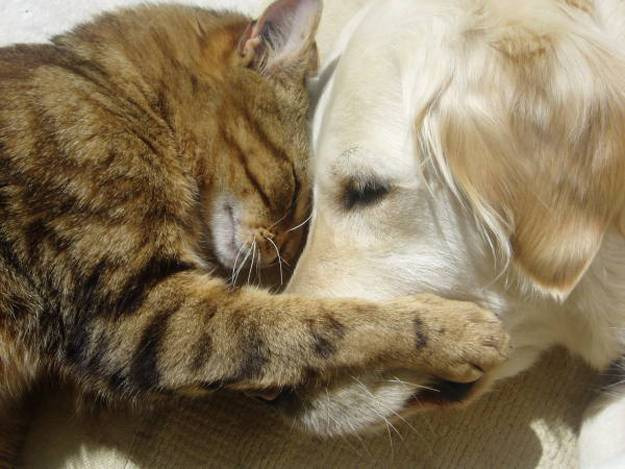
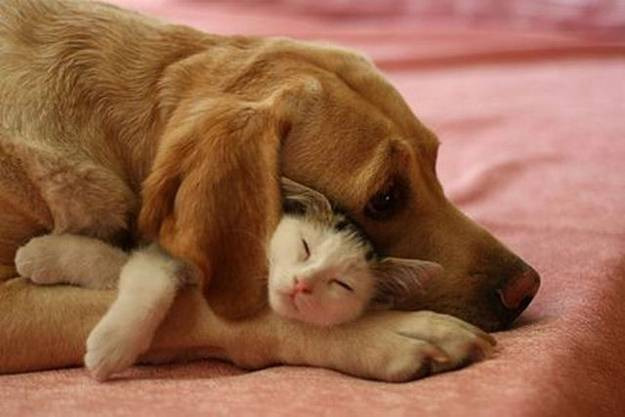
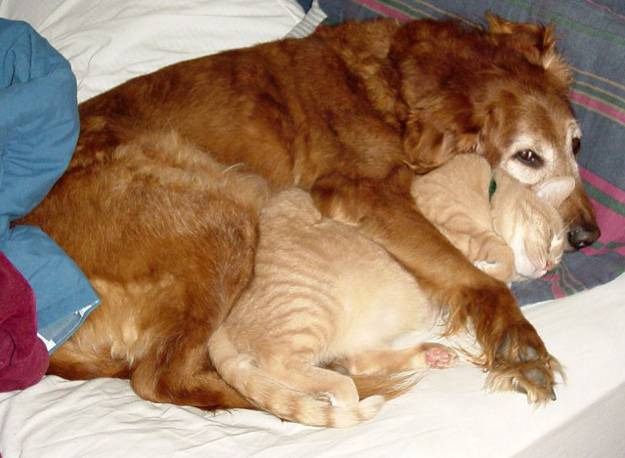
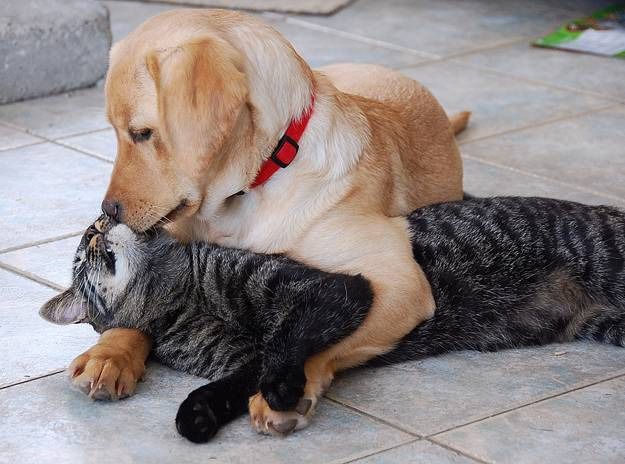
Every dog should have its cat!

Another gem from John Hurlburt.

dogcat1

oooo

dogcat2

oooo

dogcat3

oooo

dogcat4

oooo

dogcat5

oooo

dogcat6

oooo

dogcat7

oooo

dogcat8

oooo

dogcat9

oooo

It came to me that every time I lose a dog,
they take a piece of my heart with them….
And every new dog who comes into my life,
gifts me with a piece of their heart.
If I live long enough, all the components of
my heart will be dog …
and maybe
I will become as generous and loving as they are.

Unknown author.

AGW – summing up.

“If there’s any doubt, there’s no doubt!”

I opened the first post on Monday with the sub-heading: “Certainty is perfect knowledge secure from error or doubt.” going on to write that, “Whatever your views on the effect of man’s behaviours on our planet’s climate, it’s a long way from the logical idea of ‘2 + 2‘!”

Within that very strict definition, I remain unmoved.  The argument that mankind is the cause of the present change in the climate of Planet Earth is not certain!

However, if only life was that simple! The change in our planet’s atmosphere is possibly the most emotionally-laden topic of all time.  For some reason that quotation attributed to Hiram Johnson comes to mind, “The first casualty when war comes is truth.” because the supporters and deniers of AGW are engaged in what amounts to a verbal war.

Each side can draw on much information.

For example, a very recent article in The New York Times by their Justin Gillis offered this:

The rise in the surface temperature of earth has been markedly slower over the last 15 years than in the 20 years before that. And that lull in warming has occurred even as greenhouse gases have accumulated in the atmosphere at a record pace.

The slowdown is a bit of a mystery to climate scientists. True, the basic theory that predicts a warming of the planet in response to human emissions does not suggest that warming should be smooth and continuous. To the contrary, in a climate system still dominated by natural variability, there is every reason to think the warming will proceed in fits and starts.

But given how much is riding on the scientific forecast, the practitioners of climate science would like to understand exactly what is going on. They admit that they do not, even though some potential mechanisms of the slowdown have been suggested. The situation highlights important gaps in our knowledge of the climate system, some of which cannot be closed until we get better measurements from high in space and from deep in the ocean.

As you might imagine, those dismissive of climate-change concerns have made much of this warming plateau. They typically argue that “global warming stopped 15 years ago” or some similar statement, and then assert that this disproves the whole notion that greenhouse gases are causing warming.

Rarely do they mention that most of the warmest years in the historical record have occurred recently. Moreover, their claim depends on careful selection of the starting and ending points. The starting point is almost always 1998, a particularly warm year because of a strong El Niño weather pattern.

Dan Gomez, a long-time friend of over 40 years and a regular contributor to items on Learning from Dogs, wrote in a recent email,

I’m not sure what is meant by “believer”, Paul.  The Universe unfolds as it should.  Because many have been led to “believe” that AGW is inevitable and that all the facts are the ‘Truth”, we’ve created a religious substitute, almost a new “industry” with significant “tithing” obligations, etc. (e.g. Cap and Trade). Presumptions and facts are being manipulated to fulfill the prophecy.

Interesting to note in our daily lives, that weather prediction is very good 24-36 hrs out.  This drops precipitously just a few days out.  More than 7-10 days is nearly impossible. Even though both Europe and the USA have decreased CO2 levels by multiple percentage points over the last 20 years, the rest of the world does not care and the impact is very problematic.  Recently, CO2 gas has increased overall but heat has not. In the past, warming has occurred followed by CO2 levels increasing. Global politics and redistribution of wealth schemes continue to interfere with common sense.

Let’s just deal with the facts as Science reveals its secrets. New information is discovered every day about the interaction of the  Earth/Sun/Atmosphere/Lithosphere/Hydrosphere. New information is learned every day about the Universe.  These are not closed subjects. Climatology, meteorology, geology and solar system dynamics will continue to shape the Earth’s future for millennia to come whether Man is involved or not.

There is much in what Dan writes that has me nodding my head; stimulates my recollection of what Luther Haave and Derek Alker wrote in 2009:

With the explosion of knowledge, particularly in the past 100 years, each of us has found it a requirement for being successful, and to being able to earn a living, to concentrate our knowledge in an ever increasingly narrow field. Just as we have come to expect others to defer to our expertise in our narrow area, we have come to assume that we need to defer to others who have a deeper comprehension of seemingly complex topics such as the science related to climate change. [Apologies, can’t find the web link for this.]

However, if we broaden the perspective from that tight definition of certainty to an analysis of probabilities, then it all changes for me and I can embrace the views so strongly put forward by Martin Lack.

For example, Martin left a comment on Monday, “ACD is not a matter of opinion or belief; it is a matter of probability. As such, all that matters now is the extremely high probability that the scientific consensus is real, reasonable and reliable.”  That comment included a link to a discussion on the website Skeptical Science, Is the science settled? Let me quote from that:

Some aspects of the science of AGW are known with near 100% certainty. The greenhouse effect itself is as established a phenomenon as any: it was discovered in the 1820s and the basic physics was essentially understood by the 1950s. There is no reasonable doubt that the global climate is warming. And there is also a clear trail of evidence leading to the conclusion that it’s caused by our greenhouse gas emissions. Some aspects are less certain; for example, the net effect of aerosol pollution is known to be negative, but the exact value needs to be better constrained.

What about the remaining uncertainties? Shouldn’t we wait for 100% certainty before taking action? Outside of logic and mathematics, we do not live in a world of certainties. Science comes to tentative conclusions based on the balance of evidence. The more independent lines of evidence are found to support a scientific theory, the closer it is likely to be to the truth. Just because some details are still not well understood should not cast into doubt our understanding of the big picture: humans are causing global warming.

In most aspects of our lives, we think it rational to make decisions based on incomplete information. We will take out insurance when there is even a slight probability that we will need it. Why should our planet’s climate be any different?

That, ultimately, delivers for me what truly counts.

I am not a scientist; just a Brit living in Southern Oregon trying to make sense of the world while I still have a functioning head and body – time is not on my side! 😉  The powerful common-sense in the sentence, “Outside of logic and mathematics, we do not live in a world of certainties.” is beyond argument.

In the year 2012, the total number of passengers carried by US Airlines and other carriers in and out of the USA was a staggering 815 million people. 815,000,000 people!

Remember the sub-heading from the start of this post!  “If there’s any doubt, there’s no doubt!” Years ago I heard that from Bob Derham, a long-time friend and a commercial airline Captain since the time God was a boy!  It’s that cautious, safety-focused attitude that has made airline transport such an amazing mode of transport for all those millions of passengers.

Should we not travel with the same cautious, safety-focused attitude on the ‘vehicle’ that carries every man, woman and child; every animal, plant and living thing: Planet Earth!

The answer is obvious – more than obvious!

The power of the present moment.

A reminder of the beauty of the present moment.

Yesterday, I wrote a post I cry for the wolves. A comment from Jeremy Nathan Marks included this:

I have learned slowly that being an adult means learning to face and acknowledge the many horrors of our world. It also means -for me, anyway- recognizing that love is the one saving grace, the one remaining hope, the one promise that might be kept. And I mean love in the hear and now and not in any afterlife. Love is what animates beauty for me -a beauty that is about more than aesthetics.

Some people would perhaps think I am ridiculous for saying that I feel that wolves are my kin. But they are. To be kin doesn’t mean we have to think the same thoughts, speak the same spoken language, or even move through the world in precisely the same way. Being kin to me means that we recognize the life lived in one another. I see that life and its light and love in wolves, just as you have beautifully described. And I know people who have lived and worked with wolves have seen that mutuality in their encounters and interactions with wolves and their packs.

That is such a profound reflection.

Unwittingly, before I read that comment from Jeremy, I had added this comment:

Around 7am I went down to our pond just to enjoy the world Jean and I live in and there was a young deer grazing the field grass near the water. Slowly, I moved towards a bench seat by the edge of the pond and sat down. The deer strolled away, perhaps some 30 feet, and continued to graze. Thanks to Dordie and Bill this young, beautiful creature was perfectly comfortable with my presence.

I sat there and my mind wander back to some far-off time when a curious young wolf might have let curiousity compell it to come a little closer to a human, perhaps nibble at the bone that the human threw in its direction.

There’s a theme here.  “Love in the here and now ..” from Jeremy and me being lost watching that deer; the love of that moment.

A couple of evenings ago, Jean and I watched a truly wonderful and inspiring film.  The film was called What about me? 1 Giant Leap  The embedded link takes you to the website for the film.

Here’s the trailer.

Following the success of their first double Grammy nominated film & album, What About Me? is the latest offering from 1 Giant Leap. This visionary project took Jamie Catto and Duncan Bridgeman to over 50 locations as they explore through music, the complexities of human nature on a global scale, and aims to reveal how we are all connected through our creativity and beliefs, but most of all through our madness.

Through music and film, “1 Giant Leap” explores the universal complexities of human nature. Jamie Catto (Faithless co-founder) and Duncan Bridgeman set out on their journey recording musical jewels and words of wisdom with the cream of the world’s thinkers, writers and entertainers along the way. The duo traveled to the farthest corners of the planet, to ensure immense cultural diversity in this time capsule of humanity at its most inspirational.

Covering universal topics such as God, Sex, Death and Money, What About Me? features an incredibly diverse collection of collaborators from Noam Chomsky to Will Young, Maxi Jazz to Tim Robbins, Billy Connolly to Michael Stipe, Eckhart Tolle to Baaba Mal, among many others.

Encompassing a TV series, film and album, this is a poignant, emotional and entertaining time capsule of humanity at its most inspirational.

I can’t recommend too strongly that you watch the full-length film – I doubt that you will watch it and remain unchanged.

Being tied to that mast!

What an expanse of learning is out there in this modern interconnected world!

I try to limit my following to those organisations and writers who offer me the opportunity of learning.  Whether something I was previously unaware of or a sight of the world from an unfamiliar perspective, it’s a rare day when something doesn’t ‘pass my screen’ that offers an ‘Ah, ha’ moment.

Such as the following essay by Dave Nussbaum that recently appeared on the Big Think website.  Cheekily, I asked permission to republish and promptly and generously both Dave and Daniel Honan, managing editor of Big Think, said yes.  Thank you, gentlemen.

A quick web search finds that Dave Nussbaum is Adjunct Assistant Professor of Behavioral Science, University of Chicago Booth School of Business.  (I couldn’t avoid wondering if the learned Professor requires extra-large business cards! Sorry for that!)  To fill in a little more about the Professor, one can easily read that:

nausbaum

I am currently an Adjunct Assistant Professor of Behavioral Science at the University of Chicago Booth School of Business. I received my PhD in Social Psychology from Stanford in 2008, working primarily with Claude Steele and Carol Dweck. I recently completed a SSHRC Post-Doctoral Fellowship at the University of Waterloo with Steve Spencer. My research is primarily focused on how people manage and defend their self-image in the face of threats, and how this affects their beliefs and behavior. I also explore how social contexts and psychological processes can either exacerbate threats to self-image or attenuate them. I have found that defensively managing self-image threats can often lead to negative consequences, including academic disidentification, missed learning opportunities, the avoidance of important medical tests, and persistence in failing investments. I believe that by identifying contexts and processes that attenuate threat, individuals and organizations can employ strategies to prevent these maladaptive outcomes.

So moving on past my quip about the length of Professor Nussbaum’s title, the summary above shows that this is one smart cookie!  Just go back and reread “My research is primarily focused on how people manage and defend their self-image in the face of threats, and how this affects their beliefs and behavior.” Then reflect on the range and scale of ‘threats’ facing millions of us across the world.  So research into “how social contexts and psychological processes can either exacerbate threats to self-image or attenuate them“, seems particularly appropriate for these times.

OK, without further ramblings from yours truly, here is that essay.

oooOOOooo

Odysseus Nudged: How Limiting Our Choices Can Give Us More Freedom

by Dave Nussbaum – May 27, 2013

Odysseus

According to legend, the Sirens were beautiful women whose voices were so alluring that when sailors heard their song they could not resist approaching and were drowned on the rocky shores of the island where the Sirens sang. No sailor had heard their song and lived until Odysseus, who, on the counsel of the goddess Circe, had his crew tie him to the mast of his ship. When he heard the Sirens’ song he begged to be released, but his crew, their ears plugged with beeswax, would not unbind him and saved him from his own desires. Odysseus was lucky – he knew that he would be unable to resist the Sirens and had himself bound – but people often have difficulty foreseeing their weakness from a distance. Sometimes they need help.

I love watching my not-quite-two-year-old son learn about the world from his mistakes. I look on with sympathy at his falls and bumps and spills and I try to restrain myself from interceding. But when he’s about to tumble down a flight of stairs I step in. It is difficult to balance preserving his freedom to explore and make his own mistakes with the desire to keep him safe. There’s a lot to be said for giving kids autonomy and letting them learn from experience, but sometimes you have to behave paternalistically and tie them to the mast (or at least install safety gates).

When you start treating grown men and women like you’re their father, though, the charge of paternalism becomes a more serious one. There may be cases in which a heavy-handed approach is necessary (particularly when people’s actions harm others), but we should be careful about using it. A more circumspect approach is libertarian paternalism, described by Richard Thaler and Cass Sunstein in Nudge (and re-articulated more recently by Sunstein in his Simpler) as a way of influencing people to make decisions that they themselves would consider beneficial, without restricting their freedom.

Here, we are not tying Odysseus to the mast – the more appropriate analogy would be to the beeswax that Odysseus had his sailors put in their ears. The wax prevented the sailors from hearing the Sirens’ song and saved them from being lured to their deaths, but it also left them free to remove the wax if that is what they wanted to do. This sort of intervention is an acknowledgment that the sailors’ freedom is important, but also that people are not always perfectly rational. As Carnegie Mellon economist (and psychologist) George Loewenstein recently explained to me, “When people have problems exercising self-control, restricting their choices can, in some cases, leave them more freedom to choose.”

On its face, Loewenstein’s claim may seem paradoxical – isn’t a person most free when presented with all her options and allowed to choose among them? But as the mythical Sirens make clear, there are some options that we are not truly free to resist. Without beeswax in their ears Odysseus’ crew would have been doomed; the wax gave them the freedom to choose.

Take the recent attempt by New York City Mayor, Michael Bloomberg, to forbid stores from displaying cigarettes to their customers. Just like the beeswax did not prevent the sailors’ from choosing to hear the Sirens’ song, hiding cigarettes from view doesn’t prevent people from buying them. But, as Loewenstein explains, it makes it easier for those who may be trying to quit to avoid being lured back in.

When we pass laws that forbid the sale of cigarettes to minors we are being paternalistic. We are tying Odysseus to the mast, whether he likes it or not. But when we ban cigarette advertising that targets children – as the FTC did when it banned Joe Camel ads – we’re not tying anyone down. We are merely acknowledging that children are vulnerable to influences that may lead them to act contrary to their own interests and that they may not be in a position to resist these influences. Banning the display of cigarettes in stores is merely acknowledging that children aren’t the only ones who are vulnerable. The cigarettes, like the sirens, draw us in against our will. Putting them out of sight is like putting wax in our ears – we can easily still give in to temptation if we choose to, but we’re less at its mercy.

You can visit Dave Nussbaum’s blog at www.davenussbaum.com and follow Dave on Twitter at @davenuss79

Images courtesy of Wikimedia Commons and Shutterstock.

oooOOOooo

Just nonsense!

More to nonsense than you might imagine.

The following is published with the kind permission of Pendantry who writes the Wibble blog.  It originally appeared on the blogsite that is described:

The Multiphasic Phlyarological University

The most quisquilian educational establishment in cyberspace

So, without further ado, here is Phlyarology: the study of nonsense.

oooOOOooo

Phlyarology: the study of nonsense

‘Twas brillig, and the slithy toves
Did gyre and gimble in the wabe;
All mimsy were the borogoves,
And the mome raths outgrabe. — Lewis Carroll, Jabberwocky.

Phlyarology is the study of nonsense.

To begin to understand nonsense it may help first if one has a good grasp of sense, for comparison between the two.

General education is obviously useful in this regard; after which perhaps the most important trait is critical thinking. One suggestion for a book that gives a good grounding in critical thinking is ‘What’s the Worst That Could Happen’, by Greg Craven.

Craving Understanding

Nonsense can be interpreted as communication that lacks any coherent meaning; it can be considered synonymous with absurdity and the ridiculous. Artists in many realms have long employed nonsense (though ironically, tragically, many suffer unemployment while doing so). Poets, novelists, lyricists and copywriters often seek refuge in it; and there are entire works that depend upon it as a foundation.

Swans Reflecting Elephants — Salvador Dali

When contemplating the antithesis of sense, one promising candidate for non-sense can be found lurking within surrealism.

And then there’s ‘common sense’, which is a thing to which people often appeal, and yet its use all too often can turn out to be oxymoronic. One example of  ‘common sense’ that results in reality inversion is the persistent case of King Cnut.

In Greek mythology a chimaera is a beast composed of the parts of a lion, a snake and a goat.

In the philosophies of language and science, nonsense is distinguished from sense or meaningfulness. An understanding of nonsense is a necessary field of study in cryptography, as it is essential in separating a signal from noise. But attempts to come up with a coherent and consistent method of distinguishing sense from nonsense are troublesome at best; such may be a slippery chimaera, one that can even perhaps be spied on occasion chewing upon its own tail.

When all else is said and done, phlyarology can be a subject of crucial importance — especially when it comes to considering peak everything (to name but a few paltry aspects that, it would seem, appear to be irrelevant to ‘normal’ life).

Which is, of course, why we’re all here. Assuming, of course, that we are…

“Death is not an event in life: we do not live to experience death. If we take eternity to mean not infinite temporal duration but timelessness, then eternal life belongs to those who live in the present. Our life has no end in the way in which our visual field has no limits.” — Ludwig Wittgenstein, Tractatus, 6.431

I do not believe it is possible to ever fully grok nonsense; and so phlyarology is a never-ending pursuit. But I do believe that this doom can be a thoroughly rewarding and worthwhile one.

Or, to put it another way, stupid nonsense is a serious matter!

Any questions to be directed to Pendantry!

oooOOOooo

So how to close off a post about nonsense?

Well being a Brit sufficiently old to remember The Two Ronnies, a YouTube find that so perfectly shows the skill and professionalism of Ronnie Barker now follows.

You have never heard nonsense sound so wonderful!

Looking into self.

Rounding off the week.

Starting with Monday’s video of Carl Sagan reminding us all that Planet Earth is just a grain of sand in the vast cosmos right through to yesterday’s Dealing with madness post, much of the week has been reminding us all of one very fundamental truth.  No better expressed than in a comment from Patrice Ayme [my emphasis]:

… there is no healthy man without a healthy world.

Regulars will have noted the high levels of debate this week.  Thank you all for those comments.

I have also received a couple of emails with feedback and comments, sent to me on a personal basis.  One of those emails had such a powerful message that I begged for permission to publish it on Learning from Dogs.  I was asked to keep the author’s identity private but, trust me, it is from someone I know well who subscribes to ideas of integrity and honesty in spades.

The author also strongly recommended publishing in association with his personal essay an extract from Chris Hedges’ book “Death of the Liberal Class”.  That extract follows straight on from the essay.

oooOOOooo

Reflections from a Vietnam Combat Veteran

War is an unnatural dichotomy.  Both sides are morally and materially diminished.  A future World War would most probably finish us as the self-appointed predominant intelligent species on planet earth.  It seems worth noting that German industrialists coordinated fundamentalist propaganda to foster the bigotry, hatred and fear which fueled their profitable war engines prior to World War II.

United States commercial media today reflects a financially dominated military-industrial culture with liberty and justice for sale.  The results are divisive and lead to both a declared international war against nebulous assailants we have been taught to dislike and an internal political war that has polarized our once fair nation.

We’ve stopped investing in the future in response to radicals who want to destroy government, human rights and what remains of the earth’s surface resources.  There is an emerging police state mentality on display with a variety of candidates for local dictator.

It’s well past time for moderate republicans to ignore their uber-conservative brethren.  It’s well past time for moderate democrats to renounce their corporate ties.  This will only happen when our financial and political leaders awaken to the reality of what is in the best long-term interests for all life on this planet rather than our present unsustainable global economy.

To complicate the problem, our planet is under attack by a swarm of vociferous human locusts seeking profit without regard to the consequences.  Meanwhile, despite human denial, the universe continues to emerge.  Species which do not adapt to change do not survive.

It’s important to remember that we’re in the midst of a battle that’s as old as the conscious awareness of the human species.  We generally have very little idea of the inclusive nature of our being; let alone the nature of our collective being as a species. We have as yet to learn how to surrender to reality.  The battle is with our own species.

Committing collective suicide for quarterly profit is not a sane way of life.  What we’ve created is a neo-feudal global economy without any foundation that feeds on an empire of consumption.  When we combine a neo-feudal economy with neo-fascist politics we arrive at a moral and biological dead end.

The coup d’état of the current Corporate State is the Citizen’s United ruling that makes money a form of free speech.  Money has no DNA.  In case anyone missed how the “occupy” movement was crushed, there’s no question that we’re rapidly criminalizing all forms of dissent.  These actions are being taking under the 1917 Espionage Act and related state secrets acts.  No discernment of moral value is considered and no public hearings are conducted.  People who speak up are locked up.  We’ve become a fearful and secretive population.

Our self-appointed elite power structure is completely irrational in its belief that human reason is our ultimate power and money is its servant.  We are made of the stuff of the stars.  At best, we’re in our adolescence as a species.  We think we know the answers rather than admitting our ignorance.  What little we know is vastly less than what we have as yet to learn.  We are often unaware of being unaware.

The lives we presently lead can not be sustained in ways that we have become accustomed to; ways we take for granted.  What’s going to need to change?  The simple answer is everything.  Our species has systemically corrupted the small part of the cosmos which sustains our being.  Nature has no sense of humor, no patience for human squabbles and no financial interest.

Fortunately, we already know what we need to do to adapt.  We know how nature works through the wisdom of our earth sciences.  The answer is simple.  Love the earth.  Love life.  Share compassion.  Educate, naturally energize, and transform.  The resulting process of change will help re-establish a realistic world economic foundation.

oooOOOooo

‘Death of the Liberal Class’

By Chris Hedges

From the book “Death of the Liberal Class,” by Chris Hedges.  Excerpted by arrangement with Nation Books, a member of the Perseus Books Group.  Copyright © 2010.

The following selection is taken from the first chapter of the book, published in October 201 by Nation Books.

In a traditional democracy, the liberal class functions as a safety valve. It makes piecemeal and incremental reform possible. It offers hope for change and proposes gradual steps toward greater equality. It endows the state and the mechanisms of power with virtue. It also serves as an attack dog that discredits radical social movements, making the liberal class a useful component within the power elite.

But the assault by the corporate state on the democratic state has claimed the liberal class as one of its victims. Corporate power forgot that the liberal class, when it functions, gives legitimacy to the power elite. And reducing the liberal class to courtiers or mandarins, who have nothing to offer but empty rhetoric, shuts off this safety valve and forces discontent to find other outlets that often end in violence. The inability of the liberal class to acknowledge that corporations have wrested power from the hands of citizens, that the Constitution and its guarantees of personal liberty have become irrelevant, and that the phrase consent of the governed is meaningless, has left it speaking and acting in ways that no longer correspond to reality. It has lent its voice to hollow acts of political theater, and the pretense that democratic debate and choice continue to exist.

The liberal class refuses to recognize the obvious because it does not want to lose its comfortable and often well-paid perch. Churches and universities—in elite schools such as Princeton, professors can earn $180,000 a year—enjoy tax-exempt status as long as they refrain from overt political critiques. Labor leaders make lavish salaries and are considered junior partners within corporate capitalism as long as they do not speak in the language of class struggle. Politicians, like generals, are loyal to the demands of the corporate state in power and retire to become millionaires as lobbyists or corporate managers. Artists who use their talents to foster the myths and illusions that bombard our society live comfortably in the Hollywood Hills.

The media, the church, the university, the Democratic Party, the arts, and labor unions—the pillars of the liberal class—have been bought off with corporate money and promises of scraps tossed to them by the narrow circles of power. Journalists, who prize access to the powerful more than they prize truth, report lies and propaganda to propel us into a war in Iraq. Many of these same journalists assured us it was prudent to entrust our life savings to a financial system run by speculators and thieves. Those life savings were gutted. The media, catering to corporate advertisers and sponsors, at the same time renders invisible whole sections of the population whose misery, poverty, and grievances should be the principal focus of journalism.

In the name of tolerance—a word the Rev. Dr. Martin Luther King Jr., never used—the liberal church and the synagogue refuse to denounce Christian heretics who acculturate the Christian religion with the worst aspects of consumerism, nationalism, greed, imperial hubris, violence, and bigotry. These institutions accept globalization and unfettered capitalism as natural law. Liberal religious institutions, which should concern themselves with justice, embrace a cloying personal piety expressed in a how-is-it-with-me kind of spirituality and small, self-righteous acts of publicly conspicuous charity. Years spent in seminary or rabbinical schools, years devoted to the study of ethics, justice, and morality, prove useless when it comes time to stand up to corporate forces that usurp religious and moral language for financial and political gain.

Universities no longer train students to think critically, to examine and critique systems of power and cultural and political assumptions, to ask the broad questions of meaning and morality once sustained by the humanities. These institutions have transformed themselves into vocational schools. They have become breeding grounds for systems managers trained to serve the corporate state. In a Faustian bargain with corporate power, many of these universities have swelled their endowments and the budgets of many of their departments with billions in corporate and government dollars. College presidents, paid enormous salaries as if they were the heads of corporations, are judged almost solely on their ability to raise money. In return, these universities, like the media and religious institutions, not only remain silent about corporate power but also condemn as “political” all within their walls who question corporate malfeasance and the excesses of unfettered capitalism.

Unions, organizations formerly steeped in the doctrine of class struggle and filled with members who sought broad social and political rights for the working class, have been transformed into domesticated negotiators with the capitalist class. Cars rolling off the Ford plants in Michigan were said to be made by UAW Ford. But where unions still exist, they have been reduced to simple bartering tools, if that. The social demands of unions in the early twentieth century that gave the working class weekends off, the right to strike, the eight-hour workday, and Social Security, have been abandoned. Universities, especially in political science and economics departments, parrot the discredited ideology of unregulated capitalism and have no new ideas. The arts, just as hungry as the media or the academy for corporate money and sponsorship, refuse to address the social and economic disparities that create suffering for tens of millions of citizens. Commercial artists peddle the mythical narrative, one propagated by corporations, self-help gurus, Oprah and the Christian Right, that if we dig deep enough within ourselves, focus on happiness, find our inner strength, or believe in miracles, we can have everything we desire.

Such magical thinking, a staple of the entertainment industry, blinds citizens to corporate structures that have made it impossible for families to lift themselves out of poverty or live with dignity. But perhaps the worst offender within the liberal class is the Democratic Party.

The party consciously sold out the working class for corporate money. Bill Clinton, who argued that labor had nowhere else to go, in 1994 passed the North American Free Trade Agreement (NAFTA), which betrayed the working class. He went on to destroy welfare and in 1999 ripped down the firewalls between commercial and investment banks to turn the banking system over to speculators. Barack Obama, who raised more than $600 million to run for president, most of it from corporations, has served corporate interests as assiduously as his party. He has continued the looting of the U.S. Treasury by corporations, refused to help the millions of Americans who have lost their homes because of bank repossessions or foreclosures, and has failed to address the misery of our permanent class of unemployed.

Populations will endure the repression of tyrants, as long as these rulers continue to manage and wield power effectively. But human history has demonstrated that once those in positions of power become redundant and impotent, yet insist on retaining the trappings and privileges of power, their subject populations will brutally discard them. Such a fate awaits the liberal class, which insists on clinging to its positions of privilege while at the same time refusing to play its traditional role within the democratic state. The liberal class has become a useless and despised appendage of corporate power. And as corporate power pollutes and poisons the ecosystem and propels us into a world where there will be only masters and serfs, the liberal class, which serves no purpose in the new configuration, is being abandoned and discarded. The death of the liberal class means there is no check to a corporate apparatus designed to enrich a tiny elite and plunder the nation. An ineffectual liberal class means there is no hope, however remote, of a correction or a reversal. It ensures that the frustration and anger among the working and middle classes will find expression outside the confines of democratic institutions and the civilities of a liberal democracy.