Category: Morality

Moving Together

Just an update to last Saturday’s event.

Readers may recall that John H. and I went to the nearest Moving Planet event in Phoenix, as posted on Monday.  Now 350.org have released a video of the event as seen from a global perspective.

2000+ events. 180+ countries. A single day to Move Beyond Fossil Fuels. 350.org’s 2011 day of action, Moving Planet, brought together Moving Together.

Photos and Videos submitted by thousands of organizers and activists around the world — THANK YOU!

Music by Alex Forster: http://www.alexforster.net

Many thanks to our partner organizations who helped us pull this off.

Special thanks to videographers around the world who captured such amazing moments — please contact videos@350.org if you want credits here.

Very inspiring!


Sceptical voices, reflections

If there’s any doubt, there’s no doubt!

I know that expression from my days as a private pilot.  It makes such obvious sense, especially in a single-engined light aircraft with one pilot on board.  It’s all about risk.

Frederick Herzberg, the famous American psychologist, coined the term ‘hygiene factor’.  It was the second part of a two-factor approach to the management of people.  According to Herzberg’s theory, people are influenced by two sets of factors, motivation factors and hygiene factors.  More background on this aspect here.

To me, as I reflect on the messages offered in the Sceptical Voices article, Part One and Part Two, the concepts of risk and hygiene seem totally appropriate to the topic of AGW, Anthropogenic Global Warming.

Whether or not AGW is a valid theory behind the rapid change in global warming is utterly irrelevant.  It is the risk to humanity that matters.  There is absolutely no harm done from assuming that AGW is happening and that feedback processes run a grave risk of tipping planetary conditions out of control, and getting that wrong.

On the other hand, assume that AGW is such an uncertain concept that it really isn’t wise to adjust our life styles, and getting that wrong would endanger the human species.

Think of being on a commercial airline flight and you become aware that one of the two pilots in the cockpit is incapacitated through food poisoning.  No doubt that you, with all your fellow passengers, would vote for an immediate diversionary landing.  It’s to do with risk.

From the perspective of Herzberg, a co-ordinated program by the world’s leading governments to tackle AGW might also improve the overall motivation of their peoples in a whole manner of ways.

Merci voiced this perfectly in her comment to Sceptical Voices, Part One, thus,

Yes, question all we want, yes, there are other important issues to resolve in the world, but WHAT IF “Climate Change/Global Warming“ is for real, what then?

Dan wrote also in that Part One piece,

And by “peel-back-the-onion”, I mean that any ardent, independent researcher should publish both sides of the story as a matter of course.  Especially in regards to global warming.

But publishing both sides of the story is not the argument.  The argument is the risk to humanity of doing nothing, and getting it wrong.

That well-respected weekly newspaper The Economist had a recent article about the melting of Arctic ice, from which is quoted,

Arctic sea ice is melting far faster than climate models predict. Why?

Sep 24th 2011 - from the print edition

ON SEPTEMBER 9th, at the height of its summertime shrinkage, ice covered 4.33m square km, or 1.67m square miles, of the Arctic Ocean, according to America’s National Snow and Ice Data Centre (NSIDC). That is not a record low—not quite. But the actual record, 4.17m square km in 2007, was the product of an unusual combination of sunny days, cloudless skies and warm currents flowing up from mid-latitudes. This year has seen no such opposite of a perfect storm, yet the summer sea-ice minimum is a mere 4% bigger than that record. Add in the fact that the thickness of the ice, which is much harder to measure, is estimated to have fallen by half since 1979, when satellite records began, and there is probably less ice floating on the Arctic Ocean now than at any time since a particularly warm period 8,000 years ago, soon after the last ice age.

That Arctic sea ice is disappearing has been known for decades. The underlying cause is believed by all but a handful of climatologists to be global warming brought about by greenhouse-gas emissions. Yet the rate the ice is vanishing confounds these climatologists’ models. These predict that if the level of carbon dioxide, methane and so on in the atmosphere continues to rise, then the Arctic Ocean will be free of floating summer ice by the end of the century. At current rates of shrinkage, by contrast, this looks likely to happen some time between 2020 and 2050.

Re-read the sentence, “The underlying cause is believed by all but a handful of climatologists to be global warming brought about by greenhouse-gas emissions.”  In particular, “by all but a handful of climatologists”  Think of risk.

That article, which should be read in full, concludes thus,

A warming Arctic will bring local benefits to some. The rest of the world may pay the cost.

Indeed, the rest of the world may pay the cost!  As I wrote, it’s all about risk.

So whether or not one wants to believe every word of that Economist article is irrelevant.  Or whether one should have believed, or not, the article in New York’s The Sun newspaper back in 2007,

By SETH BORENSTEIN, Associated Press | December 12, 2007

WASHINGTON — An already relentless melting of the Arctic greatly accelerated this summer, a warning sign that some scientists worry could mean global warming has passed an ominous tipping point. One even speculated that summer sea ice would be gone in five years.

Greenland’s ice sheet melted nearly 19 billion tons more than the previous high mark, and the volume of Arctic sea ice at summer’s end was half what it was just four years earlier, according to new NASA satellite data obtained by the Associated Press.

“The Arctic is screaming,” a senior scientist at the government’s snow and ice data center in Boulder, Colo., Mark Serreze, said.

Last year, two scientists surprised their colleagues by projecting that the Arctic sea ice was melting so fast that it could disappear entirely by the summer of 2040. This week, after reviewing his own new data, a NASA climate scientist, Jay Zwally, said: “At this rate, the Arctic Ocean could be nearly ice-free at the end of summer by 2012, much faster than previous predictions.”

So scientists in recent days have been asking themselves these questions: Was the record melt seen all over the Arctic in 2007 a blip amid relentless and steady warming? Or has everything sped up to a new climate cycle that goes beyond the worst case scenarios presented by computer models? “The Arctic is often cited as the canary in the coal mine for climate warming,” Mr. Zwally, who as a teenager hauled coal, said. “Now as a sign of climate warming, the canary has died. It is time to start getting out of the coal mines.” [My emphasis, PH]

So, in conclusion, scepticism is healthy and is an important aspect of open debate within an open society, part of determining truth, however challenging that simple concept might be.

But eventually one needs to take a position, to take a stand on the really important issues in life and in the case of climate change the risk of being too sceptical, too cautious is to put the lives of future generations at stake.  For me, and I guess for tens of thousands of others, that is a risk too far.

Nothing but the truth!

Why should such an obvious concept, that of truth, be so very difficult to define?

Who in the world whose native tongue is English isn’t familiar with the words of the oath, “I swear to tell the truth, the whole truth and nothing but the truth,” often with the phrase, “so help me God.”  It is the fundamental foundation of a working justice system.  Probably the most famous of oaths is the American Presidential oath upon taking up office, “I do solemnly swear (or affirm) that I will faithfully execute the Office of President of the United States, and will to the best of my Ability, preserve, protect and defend the Constitution of the United States.”

Then just the other day I was exploring the blog Lack of Environment written by Martin Lack who made himself known to Learning from Dogs from a comment to the post Sceptical voices, part two, published on the 23rd.  Martin’s blog carried an article about scientific scepticism (outcome being very little) in global warming being caused by man.  There was reference to the book Climate Cover-Up written by James Hoggan and an extract from that book on the Desmogblog website, as follows,

Democracy is utterly dependent upon an electorate that is accurately informed. In promoting climate change denial (and often denying their responsibility for doing so) industry has done more than endanger the environment. It has undermined democracy. There is a vast difference between putting forth a point of view, honestly held, and intentionally sowing the seeds of confusion. Free speech does not include the right to deceive. Deception is not a point of view. And the right to disagree does not include a right to intentionally subvert the public awareness.

The sentence highlighted by me is fundamental to this essay.  Perhaps the crux of why it feels so difficult to determine the truth is that the vast 24-hour output of news and information, the 24-hour fear machine as John H. calls it, carries no means of distinguishing the reliability of the source, no details of any affiliations that the person offering the information to that particular media outlet may have, and so on and so on.  I wrote a piece on the 12th July called What Exactly is the Truth where I concluded that,

Despite my chest-beating on the subject of politicians and leaders deliberately lying in that recent piece about Juncker, there’s something much more fundamental.  What defines lying is really not that important.  It’s whether or not we trust that our leaders are doing their best for their constituents, to the best of their abilities.

Whether you support left-leaning or right-leaning policies is unimportant; indeed political differences and the ability to vote for one’s beliefs is at the heart of an open democracy.

But if we don’t trust that our leaders are doing their best for our country then that causes the destruction of faith.  If we do not have faith in those that lead us then the breakdown of a civilised social order becomes a very real risk.

So examining the essence of the word ‘truth’ creates a conflict, well it does in my mind.  A conflict between the idea that truth is a very simple concept and that peeling back the meaning of the word truth reveals many, many layers.  Let me quote from the Stanford Encyclopaedia of Philosophy,

Truth is one of the central subjects in philosophy. It is also one of the largest. Truth has been a topic of discussion in its own right for thousands of years. Moreover, a huge variety of issues in philosophy relate to truth, either by relying on theses about truth, or implying theses about truth.

It would be impossible to survey all there is to say about truth in any coherent way. Instead, this essay will concentrate on the main themes in the study of truth in the contemporary philosophical literature. It will attempt to survey the key problems and theories of current interest, and show how they relate to one-another. A number of other entries investigate many of these topics in greater depth. Generally, discussion of the principal arguments is left to them. The goal of this essay is only to provide an overview of the current theories.

The problem of truth is in a way easy to state: what truths are, and what (if anything) makes them true. But this simple statement masks a great deal of controversy. Whether there is a metaphysical problem of truth at all, and if there is, what kind of theory might address it, are all standing issues in the theory of truth. We will see a number of distinct ways of answering these questions.

Truth has been a topic of discussion in its own right for thousands of years.”  So I’m not the first and certainly won’t be the last to ponder on how one gets to know the truth.

Do I have any answers?  None!  Except, perhaps, to muse that if truth can be so difficult to pin down then adopting a rigid stance based on assumptions of truth will carry risk.  And, of course, to reflect that dogs don’t lie.

I’ll close with the quote from Oscar Wilde, “Truth is rarely pure and never simple.”  Quite so.

Clarity of thought

The power of clear visions.

Martin Luther King, (January 15, 1929-April 4, 1968)

One of the aspects of modern life that is deeply unsatisfactory is the way that politicians and leaders of democratic societies fudge the truth in the hope that trying to be all things to all men means wider acceptance of their messages.

Think of the quote from Martin Luther King, Jr., “A genuine leader is not a searcher for consensus but a molder of consensus. ”

These words serve as an introduction to some beautiful thoughts from a loyal American living here in Payson.  This is a man who is deeply spiritual, who has fought for his country, and who is soft and gentle to the core.  This is a man who is not afraid to offer a personal vision to the world.  I regard it as a real bonus that Jean and I have his friendship.

Here is the first of two contributions from John H.

The Passion of Enlightenment

Enlightenment includes deep grief and a passion to leave life a bit better than we found it. Enlightenment has little practical value in a growing and constantly consuming cultural demographic. Consumers tend to spiritually disconnect when faced by a need for change or when morality becomes inconvenient.

Is God truth?  What is the opposite of truth?  We’ve lost our way as a species.  Does God tell us to worship money? Does God tell us to ignore our finite earth?  Does God tell us to kill each other?  Does God tell us to ignore human history and the emerging network of scientific understandings?

Human wisdom has been far greater in the past than it is today.  God is not known through empirical knowledge.  Man is as limited as the finite planet which gave life to our species and sustains our existence. Matter and energy are interchangeable as fundamental forces.  God is experienced through our inner being and understood through the wisdom tradition of our species.

Sustainability includes the well-being of our planet and the life it supports.  Sustainability includes serving as caretakers rather than acting as owners.  Sustainability includes surrendering our addictions, our illusions and our delusions. Surrendering includes the courage to speak the truth and walk as we talk.  Surrendering assures our common well-being as a conscious component of God.  We have nothing to fear.

Consider world leadership.  Who are the aggressors?  Who are the oppressed?  Who serves God?  Who serves Mammon?  We each must search our heart, mind and soul to answer these questions honestly.  We need to face our shame and guilt in order to redeem ourselves and make a sustained effort to change.

The roots of wisdom in a constantly changing world are God, nature, history, and science.  We’ve come a long way since we first learned to use tools.  What have we forgotten in the process?  We can’t wait for the truth to become popular.  We each need to help make the truth popular.

an old lamplighter

Powerful words.  Thank you John.

Transitions, pt One

Reflections on these present times.

Want a brilliant idea for tomorrow? Stay in the present!

Dogs do this wonderfully.  I am told that followers of Zen Buddhism discover peace and grace from embracing the present. But is there more to this?  Is there some deeper psychology involved?  Does our species have an intrinsic challenge in terms of staying in the present?

My musings on this arise from a couple of recent conversations.

The first was with Peter McCarthy from the Bristol area of West England.  Peter and I go back a few years (at my age, everything goes back a few years!) and at one stage I did some work for Peter’s company, Telecom Potential.  Just a quick aside, Peter’s company was based in the magnificent Clevedon Hall, a mansion built in 1853 as a family home for Conrad William Finzel, a German-born businessman.  Here’s a picture of one of the rooms,

A room at Clevedon Hall

Peter, like me, is sure that the period in which the world now appears to be, is not some cyclical downturn, not some temporary departure from the national growth and employment ambitions promoted by so many countries.  No! This one is different.

Peter is sure that a major transition is under way, as big as any of the great societal upheavals of the past.  And, for me, a fascinating comment from Peter was his belief that the key attitude required for the next years would be innovation.  Peter reminded me that we tend to think of innovation as applying to things physical, scientific and technical.  But Peter sensed that it would be in the area of social innovation where key changes would arise and, from which, these large societal changes would flow.

Then a day later I was chatting with one of the founders of a brilliant new authentication process, Pin Plus. It is a very smart solution to a major global problem, the weaknesses of traditional password user-authentication systems.

On the face of it, Pin Plus is obviously a better and more secure way of authenticating users, and a number of key test customers have borne this out.  Jonathan C was speaking of the challenges of convincing companies to have faith in this new process.  This is what he said,

More than once, indeed many times, I am told by prospects something along the lines that the IT world has been looking so hard and so long for a password solution that a solution can’t possibly exist.

Let’s ponder that for a moment.  Are we saying that a far-sighted approach to the potential for change is not an easy place for some, probably many, human brains?

Indeed, Jonathan and I mused that here we were, both speaking via Skype, an internet telephony service, both of us looking at different web sites in support of many of the points that we were discussing and totally dependent, in terms of our mentoring relationship, on the technology of the internet, a multi-node packet-switched communications system that was a direct result of the American shock of seeing the Russians launch the world’s first artificial satellite, Sputnik 1, into low earth orbit on the 4th October, 1957.

Launch of Sputnik 1

At that time, it would have seemed impossible for anyone on the planet to see that the American response to Sputnik 1 would eventually lead to the vast packet-switched network that is now the modern Internet.

But why do we regard the ability to look into the future so utterly out of reach of the common man?  Look at this, the Internet Timeline here.  Look how quickly the response to Sputnik1 gathered pace.  See how Leonard Kleinrock of MIT way back in May, 1961, presented a paper on the theory of packet-switching in large communications networks.

So maybe there’s a blindness with humans.  A blindess that creates the following bizarre characteristics,

  • Whatever is going on in our lives at present we assume will go on forever.  I.e. the boom times will never end, or the period of doom and gloom is endless.
  • Our obsession with how things are now prevents us from reflecting on those signs that indicate changes are under way, even when the likely conclusions are unmistakeable.  The ecological and climatic changes being the most obvious example of this strange blindness that mankind possesses.
  • Yet, unlike animals and some spiritual groups of humans, truly living in the present appears incredibly difficult for man.
  • However, the history of mankind shows that our species is capable of huge change, practically living in constant change for the last few millennia, and that a very small proportion of a society, see yesterday’s article, is all that is required to create a ‘tipping point’.

I want to continue with this theme but conscious that there is still much to be written.  So, dear reader, I shall pause and pick this up tomorrow.

Just stay in the present for twenty-four hours!

That day, a decade ago.

Just one thought, one prayer for today.

A prayer for love

And think not you can guide the course of love. For love, if it finds you worthy, shall guide your course.  Khalil Gibran


Not good if detached.

The power of real words

Yesterday, I published a soft little item showing some reflective pictures and rather appropriate words of attachment.  Little did I know that some very powerful word forces were planning same day to really thump me around the head.  Here’s what happened.

The church that Jean and I go to on a regular basis is very inspiring.  Two reasons come to mind.  The first is the love and friendship that the congregation offer, both to regulars and visitors alike.  The second is the spiritual inspiration gifted to the priest and, boy oh boy, does that come out through his sermons.  Indeed, the rest of this article was motivated by yesterday’s sermon.

Take a look at the American railway ticket above.  Turn your head and look at the right-hand part.  What do you read?  ‘This check is not good if detached‘.  Now let me quote a little from the sermon,

It is difficult to care for people in the world when we are not a caring community.  It is totally absurd to speak of peace in a world when we do not have peace in our community.  It is impossible to be an instrument of love in the world if we are not a community of love.

What is true in the Church is of course true in the world as a whole.  We do need to learn to live together.  Railway tickets used to carry the words, “Not good if detached.”  That is true of life in general.  Our survival and progress as people on this planet are dependent on our interrelatedness.

See the beautiful spiritual inspiration that comes from those gifted to draw such powerful word pictures.  Take that last word ‘interrelatedness’.  Jean and I are studying at the local college for a Master Gardener’s Certificate.  For the simple reason that we have to find a way to tame our wild garden, comprised mainly of decomposed granite granules, so that we can grown our own vegetables, have some chickens, that sort of thing.

The last session was about botany.  To a complete non-gardener like me it was, nonetheless, fascinating.  What moved me beyond measure was the detail and complexity of all things botanical; grasses, trees, shrubs, flowering plants, you name it.  It was the interconnectedness of it all.  Here’s an example.

Not a female wasp, just an orchid.

Certain orchids dupe male wasps into trying to mate with them.  Here are a few extracts from a piece in the New Scientist website,

Few can resist the allure of a beautiful rose, but some wasps outdo even the most ardent flower lover. Presented with the right specimen, a male orchid dupe wasp ejaculates right on the petals.

Many insects mistake flowers for femmes, but few go as far as these wasps, says Anne Gaskett, a biologist at Macquarie University in Sydney, Australia, who led a study of the insects’ amorous intentions toward two species of Australian tongue orchids. “It’s just so hard [for the wasps] to resist,” she says.

——

Orchids are known for toying with males. Many species produce female-mimicking perfumes that lure males into spreading pollen. But most insects merely touch down on the flowers.

——

But why might an orchid provoke such misdirected affection? Gaskett thinks that her experiments show an extreme form of sexual deception that helps the flowers spread their own seed.

Think about that the next time you order flowers!

Now have a quick watch of this video extract from the BBC,

OK, let me get back to that botany class.  As our teacher pointed out, lose that particular species of wasp and the planet probably loses that species of orchid.  Think about the interconnectedness of that, and much more in the beautiful planet all around us.  It is such a marvellous, beautiful, complex and interconnected world.  We need constant reminding of that fact.  Which is where yesterday’s sermon hit the mark again.

Inspired by the pictures from a flight to the moon in 1968, American poet Archibald MacLeish spoke these beautiful words:

To see the earth as it truly is, small, blue, beautiful in the eternal silence where it floats, is to see ourselves as riders on the earth together …

That is a wonderful image, riders on the earth together.  It speaks of our togetherness as a human race, brothers and sisters on this fragile island within the vastness of the universe.  Brothers and sisters … that really need to know … that we are brothers and sisters.

We need to do all that we can to build bridges, to mend bridges, to stay together as a true community… because we are:

Not good if detached.  Amen.

What a powerful sermon.  What inspired power in those words.  Real words.

Earthrise, from Apollo 8, 1968

Forgive me for holding your attention just a tad longer.  This is the full Archibald MacLeish’s quotation, referred to in the sermon above.

To see the earth as it truly is, small and blue and beautiful in that eternal silence where it floats, is to see ourselves as riders on the earth together, brothers on that bright loveliness in the eternal cold—brothers who know now they are truly brothers.

Archibald MacLeish, American poet, ‘Riders on earth together, Brothers in eternal cold,’ front page of the New York Times, Christmas Day, 25 December 1968

This is what Frank Borman, who was on Apollo 8, had published in Newsweek, 23 December 1968,

When you’re finally up at the moon looking back on earth, all those differences and nationalistic traits are pretty well going to blend, and you’re going to get a concept that maybe this really is one world and why the hell can’t we learn to live together like decent people.

This is what Frank Borman was reported as saying in the press in early 1969,

I think the one overwhelming emotion that we had was when we saw the earth rising in the distance over the lunar landscape . . . . It makes us realize that we all do exist on one small globe. For from 230,000 miles away it really is a small planet.

and this,

The view of the Earth from the Moon fascinated me—a small disk, 240,000 miles away. It was hard to think that that little thing held so many problems, so many frustrations. Raging nationalistic interests, famines, wars, pestilence don’t show from that distance.

The power in those words. The power of the truth about our interconnectedness and the power of Not good if detached.

Let me leave you with a fragment from another Blogsite that I came across quite by chance while researching for this piece.

A blog is a voice, the inner voice, telling, in this case, what is going on, inside and out. And in me, that means it should also be about my spiritual path. My spiritual life is as important to me as breathing. Without connection with the One, what is life? What is it for?

Not good if detached.  Amen.

Amen indeed.

The meaning of words

With grateful thanks to MaryAnne for forwarding these.

LOVE

Love

RESPECT

Respect

FAITHFULNESS

Faithfulness

COMPASSION

Compassion

COMPANIONSHIP

Companionship

The XL pipeline. What comes next?

Full copy of an email just in from Bill McKibben.

Dear Friends—

I’m writing this from the lawn in front of the White House.

In front of me there’s a sprawling rally underway, with speakers ranging from indigenous elders to the great Canadian writer Naomi Klein. In back of me, another 243 courageous people are being hauled away to jail — it’s the last day of Phase 1 of the tar sands campaign, and 1,252 North Americans have been arrested, the biggest civil disobedience action this century on this continent.

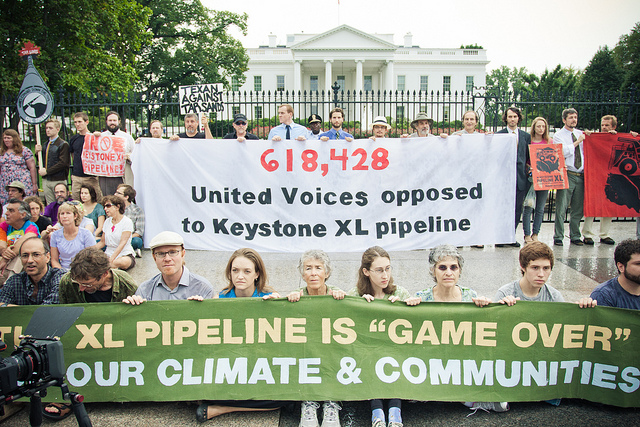
But we’ve been just as cheered by the help that has poured in from around the world — today, activists in front of the White House held a banner with a huge number on it: 618,428. That’s how many people around the world who signed on to the “Stop the Tar Sands” mega-petition to President Obama, including many of you in the 350.org network. Check out this beautiful photo of passion and courage on display:

(Photo Credit: Josh Lopez. If you can’t see the photo above, click here to see it and more inspirational photos from DC.)

But this movement does more than sign petitions: many of you stood strong in front of the White House risking arrest, and protesters on every continent have picketed outside embassies and consulates. That makes sense, for global warming is the one problem that affects everyone everywhere.

And the next moment to prove that is Sept. 24 for Moving Planet — the massive day of climate action that will unite people all over the world. We’ve heard news of amazing actions from every corner of the earth -— from a massive bike rally in the Philippines to an incredible eco-festival in Philadelphia. I truly can’t wait to see the pictures pour in.

But here’s why it’s important: we’re not just a movement that opposes things, we’re also a movement that dreams of what’s coming. And we don’t just dream, we also transform those dreams into reality. On September 24, on bike and on foot and on boards, we’re going to point the way towards that future. By days’ end, we’ll have shown why the bicycle is more glamorous than the car, and why the people have the potential to be more powerful than the polluters.

On some days fighting global warming means swallowing hard, mustering your courage, and making a sacrifice — other days it means getting all your friends up in the saddles of their bikes to have some fun and help move the planet forward.

September 24 is the second kind of day; it’s going to be powerful, it’s going to be beautiful, and I can’t wait to see how it turns out.  Please find or join a local event to get involved. 

Onwards,

Bill McKibben for the whole 350.org team


350.org is building a global grassroots movement to solve the climate crisis. Our online campaigns, grassroots organizing, and mass public actions are led from the bottom up by thousands of volunteer organizers in over 188 countries. You can join 350.org on Facebook by becoming a fan of our page atfacebook.com/350org and follow us on twitter by visiting twitter.com/350. To join our list (maybe a friend forwarded you this e-mail) visitwww.350.org/signup. To support our work, donate securely online at 350.org/donate.

What is 350? 
350 is the number that leading scientists say is the safe upper limit for carbon dioxide in our atmosphere. Scientists measure carbon dioxide in “parts per million” (ppm), so 350ppm is the number humanity needs to get below as soon as possible to avoid runaway climate change. To get there, we need a different kind of PPM–a “people powered movement” that is made of people like you in every corner of the planet.

Feel free to circulate this as far and wide as you wish.  Thanks, Learning from Dogs

Tell President Obama: Stop the Keystone XL Pipeline

This is so important.

Regular readers will know that I wrote about the XL Pipeline on the 29th August setting out the arguments of those who know much more of the detail as to why the tar sands of Canada are just the worst possible way to continue the madness of using oil.  If you didn’t read that then it’s here, and please do so.

The rest of this Post is taken from the Credo Action website.  Please do participate. Sign the petition NOW.

Do something, please!

Tell President Obama: Stop the Keystone XL Pipeline

“Essentially game over” for the climate.

That’s what climate scientist James Hansen calls the proposed Keystone XL pipeline — which would carry oil out of Canada’s vast tar sands oil fields to Texas, where it will be refined, then burned across the globe, dealing a catastrophic blow to our chance of returning earth to a stable climate.

This project requires a presidential permit to start building — and it is President Obama’s decision alone to grant or deny that permit. He will make the decision as soon as September.

Tell President Obama: Stop the Keystone XL pipeline.

The Alberta tar sands are a carbon bomb. The 3rd largest oil field in the world, the difficult extraction and transportation of the tar sands oil ultimately produces up to three times the carbon emissions of traditional oil. (And extreme environmental devastation along the way.)1

The Keystone XL pipeline is the fuse to this bomb – a highway to swift consumption of this dirty, dangerous crude. As if that wasn’t enough, it poses a massive spill risk in the six states along the pipeline route, including over the Ogallala Aquifer which provides up to 30% of our nation’s agricultural water.

We. Must. Stop. This.

Tell President Obama: Stop the Keystone XL pipeline.

Twenty leading climate scientists have just sent a letter to President Obama urging him to deny the permit.

And from August 20th to September 3rd, there will be a massive, historic, daily sit-in outside the White House where more than 1500 people, including CREDO staff, have already signed up to risk arrest in peaceful protest. (For more about the sit in, see below.)

The administration’s previous decisions on climate do not inspire confidence that they will deny the permit. Recently the administration has opened new areas to offshore drilling and coal mining, and late last year, Secretary of State Hillary Clinton even said she was “inclined” to approve Keystone XL.

But President Obama still has the final word. He does not have to negotiate with Congress or industry. As his State Department reviews the permit, the decision — which could have a devastating impact on the livability of our nation, and our world — is entirely in his hands.

We’ve lost too many climate fights already. We need a massive, historic show of pressure to make sure we don’t lose this one. Please sign the petition and read below for other ways to get involved.

Tell President Obama: Stop the Keystone XL pipeline.

1. “Keystone XL Pipeline,” Friends of the Earth

————————————————————-

Because this fight is so important, leading climate activists including Bill McKibben, Naomi Klein and climate scientist James Hansen are organizing a historic, daily series of peaceful protests between August 20th and Sept. 3rd. The CEO’s and Directors of nearly 30 leading Environmental Organizations, including CREDO’s Michael Kieschnick and Laura Scher, are urging people to participate.

More than 1500 people from across the country, including CREDO staff, have already signed up to join the sit-in outside the White House and risk arrest.

Please read the invitation letter below for more information. If you would like to sign up to join the protest, and possibly be arrested, click here.

Dear Friends,

This will be a slightly longer letter than common for the internet age–it’s serious stuff.

The short version is we want you to consider doing something hard: coming to Washington in the hottest and stickiest weeks of the summer and engaging in civil disobedience that will quite possibly get you arrested.

The full version goes like this:

As you know, the planet is steadily warming: 2010 was the warmest year on record, and we’ve seen the resulting chaos in almost every corner of the earth.

And as you also know, our democracy is increasingly controlled by special interests interested only in their short-term profit.

These two trends collide this summer in Washington, where the State Department and the White House have to decide whether to grant a certificate of ‘national interest’ to some of the biggest fossil fuel players on earth. These corporations want to build the so-called ‘Keystone XL Pipeline’ from Canada’s tar sands to Texas refineries.

To call this project a horror is serious understatement. The tar sands have wrecked huge parts of Alberta, disrupting ways of life in indigenous communities–First Nations communities in Canada, and tribes along the pipeline route in the U.S. have demanded the destruction cease. The pipeline crosses crucial areas like the Oglalla Aquifer where a spill would be disastrous–and though the pipeline companies insist they are using ‘state of the art’ technologies that should leak only once every 7 years, the precursor pipeline and its pumping stations have leaked a dozen times in the past year. These local impacts alone would be cause enough to block such a plan. But the Keystone Pipeline would also be a fifteen hundred mile fuse to the biggest carbon bomb on the continent, a way to make it easier and faster to trigger the final overheating of our planet, the one place to which we are all indigenous.

As the climatologist Jim Hansen (one of the signatories to this letter) explained, if we have any chance of getting back to a stable climate “the principal requirement is that coal emissions must be phased out by 2030 and unconventional fossil fuels, such as tar sands, must be left in the ground.” In other words, he added, “if the tar sands are thrown into the mix it is essentially game over.” The Keystone pipeline is an essential part of the game. “Unless we get increased market access, like with Keystone XL, we’re going to be stuck,” said Ralph Glass, an economist and vice-president at AJM Petroleum Consultants in Calgary, told a Canadian newspaper last week.

Given all that, you’d suspect that there’s no way the Obama administration would ever permit this pipeline. But in the last few months the administration has signed pieces of paper opening much of Alaska to oil drilling, and permitting coal-mining on federal land in Wyoming that will produce as much CO2 as 300 powerplants operating at full bore.

And Secretary of State Clinton has already said she’s ‘inclined’ to recommend the pipeline go forward. Partly it’s because of the political commotion over high gas prices, though more tar sands oil would do nothing to change that picture. But it’s also because of intense pressure from industry. The US Chamber of Commerce–a bigger funder of political campaigns than the RNC and DNC combined–has demanded that the administration “move quickly to approve the Keystone XL pipeline,” which is not so surprising–they’ve also told the U.S. EPA that if the planet warms that will be okay because humans can ‘adapt their physiology’ to cope. The Koch Brothers, needless to say, are also backing the plan, and may reap huge profits from it.

So we’re pretty sure that without serious pressure the Keystone Pipeline will get its permit from Washington. A wonderful coalition of environmental groups has built a strong campaign across the continent–from Cree and Dene indigenous leaders to Nebraska farmers, they’ve spoken out strongly against the destruction of their land. We need to join them, and to say even if our own homes won’t be crossed by this pipeline, our joint home–the earth–will be wrecked by the carbon that pours down it.

And we need to say something else, too: it’s time to stop letting corporate power make the most important decisions our planet faces. We don’t have the money to compete with those corporations, but we do have our bodies, and beginning in mid August many of us will use them. We will, each day, march on the White House, risking arrest with our trespass. We will do it in dignified fashion, demonstrating that in this case we are the conservatives, and that our foes–who would change the composition of the atmosphere are dangerous radicals. Come dressed as if for a business meeting–this is, in fact, serious business.

And another sartorial tip–if you wore an Obama button during the 2008 campaign, why not wear it again? We very much still want to believe in the promise of that young Senator who told us that with his election the ‘rise of the oceans would begin to slow and the planet start to heal.’ We don’t understand what combination of bureaucratic obstinacy and insider dealing has derailed those efforts, but we remember his request that his supporters continue on after the election to pressure his government for change. We’ll do what we can.

And one more thing: we don’t just want college kids to be the participants in this fight. They’ve led the way so far on climate change–10,000 came to DC for the Powershift gathering earlier this spring. They’ve marched this month in West Virginia to protest mountaintop removal; a young man named Tim DeChristopher faces sentencing this summer in Utah for his creative protest.

Now it’s time for people who’ve spent their lives pouring carbon into the atmosphere to step up too, just as many of us did in earlier battles for civil rights or for peace. Most of us signing this letter are veterans of this work, and we think it’s past time for elders to behave like elders. One thing we don’t want is a smash up: if you can’t control your passions, this action is not for you.

This won’t be a one-shot day of action. We plan for it to continue for several weeks, till the administration understands we won’t go away. Not all of us can actually get arrested–half the signatories to this letter live in Canada, and might well find our entry into the U.S. barred. But we will be making plans for sympathy demonstrations outside Canadian consulates in the U.S., and U.S. consulates in Canada–the decision-makers need to know they’re being watched.

Twenty years of patiently explaining the climate crisis to our leaders hasn’t worked. Maybe moral witness will help. You have to start somewhere, and we choose here and now.

If you think you might want to be a part of this action, we need you to sign up here.

As plans solidify in the next few weeks we’ll be in touch with you to arrange nonviolence training; our colleagues at a variety of environmental and democracy campaigns will be coordinating the actual arrangements.

We know we’re asking a lot. You should think long and hard on it, and pray if you’re the praying type. But to us, it’s as much privilege as burden to get to join this fight in the most serious possible way. We hope you’ll join us.

Maude Barlow — Chair, Council of Canadians
Wendell Berry — Author and Farmer
Tom Goldtooth — Director, Indigenous Environmental Network
Danny Glover — Actor
James Hansen — Climate Scientist
Wes Jackson — Agronomist, President of the Land Insitute
Naomi Klein — Author and Journalist
Bill McKibben — Writer and Environmentalist
George Poitras — Mikisew Cree Indigenous First Nation
Gus Speth — Environmental Lawyer and Activist
David Suzuki — Scientist, Environmentalist and Broadcaster
Joseph B. Uehlein — Labor organizer and environmentalist