Category: Morality

The most important alarm ever heard.

The heading says it all.

In fact the heading was taken from an email that came in from Bill McKibben’s 350.org yesterday.  But before reproducing that email in full, let me take you back to the 6th January this year when I published a piece simply called Keystone XL pipeline.  This is how that Post opened up,

Yesterday, I had published a lecture given in Melbourne by Britain’s eminent Astronomer Royal, Lord Martin Rees.  Lord Rees concluded his lecture with the call for us to take better care of our own planet. He, like many others, recognises the unique place in history that we occupy. For the first time a single species is capable of exerting profound changes on the Earth’s natural and physical environments.

Over and over again, scientists are reporting the rise in climate temperature of Planet Earth and the implications thereof if we do not wakeup soon to changing our ways.  The Keystone pipeline is a huge potential mistake!

Bill McKibben of 350.org

Not easy to focus on a single sentence from Lord Rees but this one’s pretty direct, “For the first time a single species is capable of exerting profound changes on the Earth’s natural and physical environments.”

God only knows what money, power and influence is going on behind the scenes because no leader in their right mind ought to be supporting any major investment in the continuation of carbon-based energy.  So it was with deep dismay that around 2pm US Mountain Time yesterday afternoon the following email arrived in my in-box.  (Feel free to republish this Post, indeed please do so!)

Dear friends,

Earlier today, Barack Obama wrapped up his first trip to Oklahoma as President. He arrived just after a week of floods, capping off a winter that never came, which followed the hottest and driest summer Oklahoma had seen in thousands of years, perhaps ever.

But he wasn’t in Oklahoma to talk about these climate disasters. He was there to laud his administration’s fast-tracking of the southern leg of the Keystone XL tar sands pipeline. In his speech today, President Obama didn’t connect the dots between fossil fuel extraction, climate change, and the extreme weather that has reshaped so much of the American landscape this past year.

It’s a painful reminder that sometimes we must be leaders ourselves, before we can expect our elected officials to follow. It’s clearly up to us to connect the dots.

Today 350.org is launching a global day of action to call attention to these and other climate disasters, here on the same day as the President’s annoucement. Across the planet now we see ever more flooding, ever more drought, ever more storms. People are dying, communities are being wrecked — the impacts we’re already witnessing from climate change are unlike anything we have seen before.

If we’re going to do these communities justice, we need to connect the dots between these disasters and show how all of them are linked to fossil fuels. We’re setting aside May 5th for a global day of action to do just that: Connect the Dots between extreme weather and climate change.

Anyone and everyone can participate in this day. Many of us do not live in Oklahoma, the Philippines, or Ethiopia — places deeply affected by climate impacts. For those of us not in directly-impacted communities, there are countless ways to stand in solidarity with those on the front-lines of the climate crisis: some people will be giving presentations in their communities about how to connect the dots. Others will do projects to demonstrate what sorts of climate impacts we can expect if the crisis is left unchecked. And here in the US, it’s particularly important that we make the connections clear to our elected officials — beginning with President Obama.

However you choose to participate, your voice is needed in this fight — and you can sign up to host a local event here: www.climatedots.org/start

(For more general info about the day, check out our new website here: www.climatedots.org)

350.org has done giant global days of action before (over the last three years we’ve helped coordinate over 15,000 events in 188 countries) and they’re always beautiful moments when our movement stands together. This year we’ll use that same captivating tactic to draw attention to the struggles of our friends around the world  — the communities already feeling the harsh impacts of climate change.

These will also be beautiful events, we’re sure. But they will also have an edge. It’s right that we get a little angry at those forces causing this problem. The fossil fuel industry is at fault, and we have to make that clear. Our crew at 350.org will work hard to connect all these dots — literally — and weave them together to create a potent call to action, and we will channel that call directly to the people who need to hear it most.

May 5 is coming soon; we need to work rapidly. Because climate change is bearing down on us, and we simply can’t wait. The world needs to understand what’s happening, and you’re the people who can tell them.

Please join us — we need you to send the most important alarm humanity has ever heard.

Onwards,

–Bill McKibben for the whole 350.org team

P.S. This is news worth spreading — and it only takes a moment to share it. Click here to share it on Facebook, or click here to post it on Twitter.

Change out of hope.

Making a difference is the only way forward!

Don’t worry, this is not going to be some chest-banging Post!  I leave those for Monday to Friday. 😉  No, I just wanted to offer a couple of examples of the power of goodness and how making a positive difference is no more than wanting it.  As Perfect Stranger commented last Tuesday, “A single candle may light a thousand others and they in turn many thousands more” – Buddha

The first example is about how a group of upstanding citizens rescue a school of dolphins that became stuck on a beach in Brazil.

The second example comes from closer to home.  Ginger I. is a Board Member of the Humane Society of Central Arizona and is based at Payson.  Jean has been a volunteer at the Society’s Thrift Store for some time and has got to know Ginger well.

Ginger recently emailed me this; it has already done the rounds of the WWW, and quite rightly so.  It reminds me of the book Dogs Never Lie About Love, written by Jeffrey Masson, from which comes the following,

This ambiguity, which includes a certain ambivalence as well, has been memorialized in our speech, in our sayings, and in our tributes to and about dogs. Sir John Davies, in his epigram In Cineam (written in 1594), observed:

Thou sayest thou art as weary as a dog,
As angry, sick, and hungry as a dog,
As dull and melancholy as a dog,
As lazy, sleepy, idle as a dog.
But why dost thou compare thee to a dog?
In that for which all men despise a dog,
I will compare thee better to a dog.
Thou art as fair and comely as a dog,
Thou art as true and honest as a dog,
Thou art as kind and liberal as a dog,
Thou art as wise and valiant as a dog.

Ever since Madame Roland said in the eighteenth century “Plus je vois les hommes, plus j’admire les chiens” (The more I see of men, the more I admire dogs), generally what has been written about dogs tends to be positive. Sometimes it is even wonderful, as in William James’s statement “Marvelous as may be the power of my dog to understand my moods, deathless as is his affection and fidelity, his mental state is as unsolved a mystery to me as it was to my remotest ancestor.” Or it may be delicious, like Ambrose Bierce’s definition in his Devil’s Dictionary, “Dog, n. A kind of additional or subsidiary Deity designed to catch the overflow and surplus of the world’s worship.” Samuel Coleridge, in Table-Talk (May 2, 1830), was one of the first to note that “the best friend a man has in the world may turn against him and become his enemy. His son or daughter … may prove ungrateful. Those who are nearest and dearest to him … may become traitors to their faith…. The one absolutely unselfish friend that man can have in this selfish world, the one that never deserts him, the one that never proves ungrateful or treacherous, is his dog.”

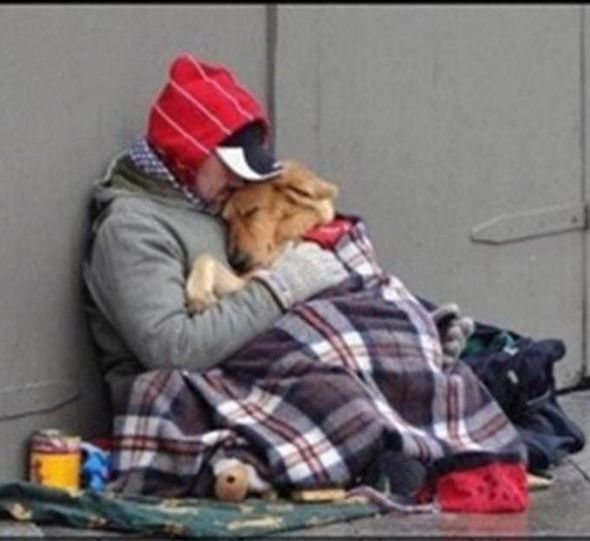
Just read that last sentence again from Samual Coleridge as you look at the photograph below, “The one absolutely unselfish friend that man can have in this selfish world, the one that never deserts him, the one that never proves ungrateful or treacherous, is his dog.


The joys of a cup of hot tea!

Taking a bit of a breather.

A'hhh!

All my life, well all the years that I have appreciated a ‘tea-break’, stopping for a cup of hot tea has been laden with symbolism.  A chance to let the brain catch up with whatever one is doing.  When working with others an opportunity to stand back and evaluate how the particular project is going.  When sharing a project with a loved one, an opportunity to lay down memories for future years, and so forth. (Jean and I were building a chicken coop yesterday afternoon.)  Sure there are millions of people that share these feelings.

Anyway, as many of you have been aware, the last 10 days or so on Learning from Dogs have been pretty ‘full-on’ in terms of man and Planet Earth.  It started with me publishing on the 27th February a Post called Please help! – A plea to those who understand climate science so much better than I do!.  Then on the 2nd March, I republished a Post from Patrice Ayme called The collapse of the biosphere.

Then on the 5th March, with a big thanks to Dan Gomez, I published A skeptic’s view and then responded to that Post with Reply to a skeptic on the 8th March.  Finally, last Friday, I republished a Post first seen on Naked Capitalism which I called I must go down to the sea again, spelt H2CO3!

That there were a total of 6,313 viewings of those Posts and 69 comments (OK, that doesn’t mean different individuals) was incredibly gratifying – a very big ‘thank you’ to all of you that read the Posts, and likewise to those that commented.

But one of the most wonderful aspects for me was the incredible sharing of ideas and resources.  So the point of today’s Post is to bring all those links and contacts onto one ‘page’, so to speak.

Martin Lack was the first to point me in the direction of the book, Merchants of Doubt.  There are a number of videos on YouTube but the one below is a good introduction to Naomi Oreskes.

On October 28, 2010 historian of science Naomi Oreskes gave a presentation at Forum Lectures (US Embassy Brussels), based on her new book, Merchants of Doubt: How a Handful of Scientists Obscured the Truth on Issues from Tobacco Smoke to Global Warming, about how right wing scientists founded the George Marshall Institute which has become a key hub for successfully spreading fear, uncertainty and doubt about climate change, along with other environmental issues, and how myths about science enable these political strategies to work.

An in-depth video of over an hour from the University of Rhode Island’s Spring 2010 Vetlesen Lecture Series, hugely worth watching, is here.

Then there is the powerful blog site, De Smog Blog.  As the site explains, “The DeSmogBlog Project began in January 2006 and quickly became the world’s number one source for accurate, fact based information regarding global warming misinformation campaigns.  TIME Magazine named DeSmogBlog in its “25 Best Blogs of 2011” list.

Moving on.  One of the challenges is knowing how to look up some reasonably reliable information about a person who is claiming this or that.  That’s where SourceWatch is invaluable.  The website describes itself, “The Center for Media and Democracy publishes SourceWatch, this collaborative resource for citizens and journalists looking for documented information about the corporations, industries, and people trying to influence public policy and public opinion. We believe in telling the truth about the most powerful interests in society—not just relating their self-serving press releases or letting real facts be bleached away by spin.

Let me give you an example of how SourceWatch works.  In my Post A skeptic’s view, Dan offered extensive comment about U.S. Senator James Inhofe’s book The Greatest Hoax.  A quick search on SourceWatch revealed (a) (my emboldening)

Arthur B. Robinson is one of the three co-founders of the Oregon Institute of Science and Medicine, a group best known for organising a petition disputing the scientific evidence for human-induced global warming.

On January 7, 2009, the Willamette Week reported that Robinson is “in the vanguard of a small but vocal and persistent collection of scientists, industry advocates and commentators who dismiss human culpability for climate change. … Robinson’s critics say his analysis is simplistic, but it remains persuasive a decade later with powerful policymakers like U.S. Senator James Inhofe (R-Okla.), a visible and effective player in blocking a bill to limit greenhouse-gas emissions last fall.

and then very quickly revealed (b),

James Mountain Inhofe, usually known as Jim Inhofe, has been a Republican Senator for Oklahoma since winning a special election in 1994.

Oil
James M. Inhofe has voted in favor of big oil companies on 100% of important oil-related bills from 2005-2007, according to Oil Change International. These bills include Iraq war funding, climate change studies, clean energy, and emissions.

On to another book.  I forget who recommended the book by James Hansen, Storms of my Grandchildren but it’s another ‘must-read’ for all those wanting to better understand the risks that lay ahead.  As the book’s website explains,

IStorms of My Grandchildren, Dr. James Hansen—the nation’s leading scientist on climate issues—speaks out for the first time with the full truth about global warming: The planet is hurtling even more rapidly than previously acknowledged to a climatic point of no return.

On that website there is a section Hansen On The Issues that includes this 2-minute YouTube video of Dr. Hansen talking about his book.

I can’t close without mentioning some other wonderful websites.  There is Skeptical Science, described thus,

Explaining climate change science & rebutting global warming misinformation

Scientific skepticism is healthy. Scientists should always challenge themselves to improve their understanding. Yet this isn’t what happens with climate change denial. Skeptics vigorously criticise any evidence that supports man-made global warming and yet embrace any argument, op-ed, blog or study that refutes global warming. This website gets skeptical about global warming skepticism. Do their arguments have any scientific basis? What does the peer reviewed scientific literature say?

Then there’s ClimateSight, a wonderful effort by Kate, “Kate is a B.Sc. student and aspiring climatologist from the Canadian prairies. She started writing this blog when she was sixteen, simply to keep herself sane, but hopes that she’ll be able to spread accurate information about climate change far and wide while she does so.”  Kate’s interest and passion in the subject is unmissable and it’s a real pleasure to subscribe to her postings.

Bill McKibben’s famous site, 350.org, is a must for the thousands of people that are working for a better future.  As the mission statement opens up,

350.org is building a global grassroots movement to solve the climate crisis. Our online campaigns, grassroots organizing, and mass public actions are led from the bottom up by thousands of volunteer organizers in over 188 countries.

350 means climate safety. To preserve our planet, scientists tell us we must reduce the amount of CO2 in the atmosphere from its current level of 392 parts per million to below 350 ppm. But 350 is more than a number—it’s a symbol of where we need to head as a planet.

350.org works hard to organize in a new way—everywhere at once, using online tools to facilitate strategic offline action. We want to be a laboratory for the best ways to strengthen the climate movement and catalyze transformation around the world.

Read the full statement here.

Plus you should stay close to RealClimate, which describes itself as,

RealClimate is a commentary site on climate science by working climate scientists for the interested public and journalists. We aim to provide a quick response to developing stories and provide the context sometimes missing in mainstream commentary. The discussion here is restricted to scientific topics and will not get involved in any political or economic implications of the science. All posts are signed by the author(s), except ‘group’ posts which are collective efforts from the whole team. This is a moderated forum.

There are so many more fabulous sources of real caring about the society we are and, more importantly, the society we hope to be.  In this category comes Wibble.  Then there’s Dogs of Doubt, that I shall be referring to tomorrow on Learning from Dogs, and The Green Word and so on and so on.  It shows the power of ‘hands across the ether’ that the modern world of web sites now offers.  I put great faith in this power becoming the power of truth and the power of change.  (If you have a blog or a website that resonates with the ones mentioned here, please do drop me an email giving me details.)

Finally, I’m closing with this.  If it all sometimes feels too much for you and you want to drift away into the world of the inner consciousness, into the world of dreamtime, then you can do no worse than to call by Sue Dreamwalker‘s wonderful website.  Try this, for example.  Dan and I had no idea what we were getting into. 😉

Oh blast, my tea’s gone cold!

Pebble Bay in Alaska

The challenge of what to ‘farm’ from our planet.

Last Sunday, after the mid-morning service, one of the congregation passed me a letter she had received from the Natural Resources Defense Council.  It was all about the proposed mine in Alaska known as the Pebble Mine.  She asked if I might write about it on Learning from Dogs.  WikiPedia introduces the project thus,

Pebble Mine is the common name of an advanced mineral exploration project investigating a very large porphyry copper, gold, and molybdenum mineral deposit in the Bristol Bay region of Southwest Alaska, near Lake Iliamna and Lake Clark. The proposal to mine the ore deposit, using large-scale operations and infrastructure, is controversial. Proponents argue that the mine will create jobs, provide tax revenue to the state of Alaska, and reduce American dependence on foreign sources of raw materials. Opponents argue that the mine would adversely affect the entire Bristol Bay watershed; and that the possible consequences to fish populations, when mining effluents escape planned containments, are simply too great to risk. Much of this debate concerns the tentative plan to impound large amounts of water, waste rock, and mine tailings behind several earthen dams at the mine site.

Proposed mine location

My instinct is to join the side of those protesting because, once again, it seems like another example of mankind working hard to exhaust every natural jewel in the planet’s crown.

Yet, I was also conscious that I’m sitting in front of a computer that will have it’s fair share of copper inside it and that we, as in Jean and me, use a whole range of sophisticated materials in our daily lives, ergo leading a life that genuinely reduces our footprint on Planet Earth is easier said than done.

Here’s one ‘protest’ website that sets out the reasons for not proceeding with this mine,

1. Bristol Bay is home to the world’s largest sockeye salmon run.
2. Pebble mine would generate toxic waste in a seismically active region.
3. A majority of the people of Bristol Bay do not want the mine.
4. Native people live in Bristol Bay, and they subsist off the land.
5. Bristol Bay is home to an abundance of animals that need pristine habitat.
6. Bristol Bay has thousands of rivers and streams that would be degraded.
7. Commercial and sport fishing jobs would be jeopardized.
8. Wild salmon provide us with omega-3 fatty acids.
9. The Pebble Limited Partnership is untrustworthy.
10. Future generations depend on us to protect their most important and lasting legacy–the land.

There is a website that supports the project, where you will read their ‘core value’ expressed as, “Responsible mining technologies that actively support a healthy, respectful and sustainable co-existence with the environment and Southwest Alaska culture.

Ultimately, it all comes down to there being too many people competing for too few resources.  Nay, worse than that.  It comes down to too many people living on this small planet, over-consuming what the planet can deliver and running out of time.  There are millions who instinctively feel very uncomfortable about the future but, as yet, no global movement with real political power to make a difference.

That, I regret, is the core issue for humanity.

Rob Hopkins and ‘engaged optimism’.

A wonderful enlightened approach to the challenges facing our beautiful planet.

Rob Hopkins is a remarkable fellow.  In so many ways he is the most unlikely person to have kicked off almost single-handedly, a gathering world-wide revolution.

Rob Hopkins

There’s a very good description of the man on his Transition Culture website, from which I have republished this segment,

He is the co-founder of Transition Town Totnes and of the Transition Network. This grew out of many years experience in education, teaching permaculture and natural building, and setting up the first 2 year full-time permaculture course in the world, at Kinsale Further Education College in Ireland, as well as co-ordinating the first eco-village development in Ireland to be granted planning permission.

He is author of ‘The Transition Handbook: from oil dependence to local resilience’, which has been published in a number of languages, and which was voted the 5th most popular book taken on holiday by MPs during the summer of 2008, and more recently of ‘The Transition Companion: making your community more resilient in uncertain times’, published in October 2011.  He publishes the blog www.transitionculture.org, recently voted ‘the 4th best green blog in the UK’(!).  He tweets as @robintransition, and and recently came 11th in the PeerIndex-driven Sustainability Drivers List.

I am as guilty as the next person in promoting ‘doom and gloom’ when it comes to what mankind is doing to this planet.  I devoted a couple of thousand words to that theme in a guest sermon that appeared on Learning from Dogs a week ago.  That’s not to say that unless mankind, in the millions, changes in significant ways then avoiding a catastrophy to our species, and many others, is going to be hugely difficult.

But motivating us all to change is far better undertaken from a position of positive guidance and inspiration, than out of fear!

So when Jean and I listened to a recent BBC radio broadcast by Rob as part of the BBC Radio 4 Four Thought series we were blown away by the guidance and inspiration that Rob presented.

It’s 15 minutes of hope, and you too can listen to it from anywhere in the world by going here or by going here.

This is how the BBC introduces the programme,

Rob Hopkins, co-founder of the Transition Culture movement, believes that “engaged optimism” is the best way to face the global challenges of the future, be it climate change, oil supplies running out or the economic downturn. He believes initiatives enabling people to produce their own goods and services locally – from solar powered bottled beer to micro currencies like the Brixton pound – are the best way to build community resilience. Four Thought is a series of talks in which speakers give a personal viewpoint recorded in front of an audience at the RSA in London.
Producer: Sheila Cook.

So do listen to the programme and then click across to the Transition Culture website where Rob has posted a transcript of his talk.  Please, whatever your plans today find time to listen to the programme and read the transcript.  Here’s how Rob closes his talk,

I often end talks I give with Arundhati Roy’s quote “another world is not only possible, she is on her way.  On a quiet day I can hear her breathing”.  I think we might adapt her quote, so that, in the context of this bottom-up drive for more resilient communities, communities better prepared for uncertain times, it is not only a case of hearing another world breathing, but being able to see her around us, already setting up local businesses, reviving her local economy, setting up bakeries, breweries, food hubs, mentoring scores of young people with business ideas, attracting inward social investment finance, creating the models whereby people can invest in their communities and see them being strengthened and supported.

That’s why I get out of bed in the morning, because I feel that the potential in our getting this right is so exquisite that it’s all I can do, and because the grim predictability of what will happen if we do nothing is just unthinkable, especially in relation to the challenge of climate change.  If we are able to turn things around on the scale we need to turn them around on, to replace vulnerability, carbon intensity and fragility with resilience, it will be an achievement our children will tell tales about, sing songs about.  I hope I am there to hear them.  Thank you.

Another world is on her way!

Another beautiful world is on her way!

Mr Carter’s amazing photo.

A poetic response from reader Marcia G.

This is in response to the item that I republished last Thursday, originally on Nakib’s blogsite, Freedom to Survive.  Do visit it.  Marcia in response sent in the following poem.

The Onlooker

He stood across the street and sadly saw
The little match girl standing in the rain;
She looked as if she didn’t have a prayer.
He wondered why there wasn’t yet a law
To spare her from unnecessary pain,
And how could people just walk by her there?

He raised his head toward Heav’n in awe and fear
And let the raindrops hit his youthful face,
While speaking toward the softly weeping sky,
“Dear God, why haven’t you done something here?
“I have the faith that You’re nearby some place,
“But there’s no sign that you’ve been helping; why?”

Then God replied, “I have…it’s nothing new;
“For such a purpose I created you.”

Thank you, Marcia.

When I see how this new, virtual world connects us across the world with so many others that know what is truly important, I do have hope for the future.

Reaching out across nations.

An unanticipated reward from Blogging.

When I started writing Learning from Dogs, way back on July 15th 2009, I didn’t have a clue as to the world I was entering, figuratively speaking.  But there have been many unanticipated rewards including the great pleasure of the way that this strange virtual world of the Internet brings people together.  One connection recently made was with a young Bangladeshi living in the city of Dhaka, more of his background here.

Nakib recently published a powerful and moving Post and has been gracious in allowing me to republish it, as follows:

The vulture that waited for the child to die

Given below is the 1994 Pulitzer price-winning photograph taken by Kevin Carter during the Sudan famine of 1994.

The photo shows a famine-stricken child crawling towards a United Nations food camp, which was located at least one kilometer away from the place shown. The vulture on the other hand is waiting eagerly for the child to die so that it can devour it.

I do not know what message the photograph revokes on your head but every time I look at it I feel blessed that I have been provided enough at least to satisfy my hungry stomach and keep me energetic enough to write blogs. I feel small and humble when I think of all the people suffering out there— homeless and starved— yet trying their best to make some sense of the complex notion known as life. It tells me that I have been blessed for a reason, for a purpose, and whatever I have been provided with should not go in vain. I can infer that my powers should be used well, at least for that little kid on the above photograph for whom Fate had sealed a quicksand of reality too hard to acknowledge for many of us hedonists out here.

Most importantly, to me the photograph conveys an emotion; a reality that many of us are too blind to grasp. I think of how people throughout the world are suffering to no ends yet amidst everything trying again and again to find the silver lining associated with the black cloud. I realize that there is a lot happening outside my comfortable apartment and Biology textbook that needs looking after, that there is a lot of people who strive hard yet achieve nothing in return. It amazes me when I try to ponder God’s sense of justice and egalitarianism.

So is it okay for the blessed 25% of the population in this world to waste everything that life has given them while the the rest 75% live amidst severe poverty, oppression and inequality?  Is it okay to go overboard with New Year parties while exactly at the same hour millions of people across the globe are suffering from the fangs of social deprivation? Is it okay to let things be as they are and forget about everything so as to harmoniously embrace useless ambitions and lustful desires?

Have we all truly forgotten to share our wealth and about the latent human being that exists inside everyone of us? Have we truly gottten rid of all those emotions that make us human beings? Is this what the world is for: for some to live lavishly while for the rest to suffer endlessly?

Three months after he took the photograph Kevin Carter, after suffering from several periods of depression, committed suicide.

Dated on the day the photo was taken, the following note was found from his diary:

Dear God, I promise I will never waste my food no matter how bad it can taste and how full I may be. I pray that He will protect this little boy, guide and deliver him away from his misery. I pray that we will be more sensitive towards the world around us and not be blinded by our own selfish nature and interests. I hope this picture will always serve as a reminder to us that how fortunate we are and that we must never ever take things for granted.

As for the child, no one really knows what happened to him; not even the South African photographer who had left the place immediately after the photo was taken. I try to appease myself by saying that the child never existed in the first place. God simply intended to provide us with a glimpse of the truth of life, to remind us how blessed we are. I hope this is true.

oooOOOooo

Very, very moving and beautifully expressed.

Ecology and faith

The National Preach-In held the week-end of February 11th/12th.

Some while ago, I signed up for a week-end organised by the Arizona Interfaith Power & Light.  It was part of a national programme inviting faith leaders from across the country to give sermons and reflections on climate change over the weekend of February 10-12, 2012.  My interest was simply to learn more about the week-end.

Then I quickly discovered that Father Dan from our church, St. Paul’s, had also signed up.  In my innocence I offered to help in any way which was quickly met by a response that bowled me over, “Well, you can be the homilist and give the sermon!”  Thus it came about that at yesterday’s 8am and 10am services yours truly rather uncertainly delivered the sermon.  John H., who with my dear wife Jeannie, did so much to turn my rambling thoughts into a coherent theme, encouraged me to publish the sermon as today’s Post on Learning from Dogs.  It now follows.

oooOOOooo

St. Paul’s Episcopal Church, Payson, Arizona

The 6th Sunday after the Epiphany

Year B

February 12th, 2012

2 Kings 5:1-14 X Psalm 30 1:13 X 1 Corinthians 9:24-27 X Mark 1:40-45

It was just a photograph. OK, one taken 43 years ago but, so what! Well, the late Galen Rowell, the famous Californian wilderness photographer called it, “the most influential environmental photograph ever taken.”

We are talking about the photograph called ‘Earthrise’ taken from Apollo 8 on December 24th, 1968 during the first manned mission to the Moon. Each of you should have a copy of that picture close by. Look at it now and let your imagination be carried back to that Apollo 8 capsule and that momentous experience.

As the Earth rose above the horizon of the moon, NASA astronaut Frank Borman uttered the words, “Oh my God! Look at that picture over there! Here’s the Earth coming up. Wow, is that pretty.” Bill Anders then took the ‘unscheduled’ photograph.

Then recall that evening, Christmas Eve 1968, when the three NASA crew members took turns reading from the book of Genesis to what was probably the biggest audience ever in the history of television, Frank Borman finishing with the words, “God called the dry land earth, and the gathering of the waters He called seas; and God saw that it was good.

Our planet is good, and so beautiful, and so precious to life. Life that arose in just a fraction of time after the Solar System formed 3.7 billion years ago; the oldest traces of life have been found in fossils dating back 3.4 billion years. That miracle of life.

Who hasn’t gazed into a clear, Arizonan, night sky and been lost in the beauty above our heads. Or felt the wind, flowing across ancient lands, kiss our face. We stand so mite-like, so insignificant in all this immensity of creation; God’s creation.

Our dreams, our hopes and failures, everything we are, have ever been and ever will be, nothing more than a swirl of dust across a desert track.

Jeremiah was called to be a prophet in 626 BC, some 2,638 years ago. In Jeremiah 12:4 he wrote, “How long will the land mourn, and the grass of every field wither? For the wickedness of those who live in it, the animals and the birds are swept away…

Words from so long ago! But Jeremiah would, surely, have gasped with disbelief had he realised how, some 2,600 years later, ‘the land now mourns and the grasses so wither’.

Jeremiah reveals much that we all could learn about ourselves. The other prophets couldn’t be accused of hiding behind their work but Jeremiah, out of all of them, allowed us to see the evidence of his own spiritual condition. He was a man of deep feelings and sensibilities and in his book there are five laments over the serious spiritual and moral condition of God’s people. That’s us, by the way!

In that time of Jeremiah, the world population was 100 million persons; slightly less than the population of Mexico today.

Some 1,350 years later, 1,000 A.D., the global population was 265 million.

But by the year 2,000 A.D., our population had increased to 6,000 millions! Put another way, that’s an increase of 5.7 million people every year for a 1,000 years !

Any guesses on the increase in the last 12 years, since 2,000? Well, the global population has increased by 990 million. About 90 million every year!

It is utterly unsustainable at present levels of Western consumption, let alone with poorer nations trying to ‘catch up’.

Last September, our House of Bishops issued A Pastoral Teaching. Our Bishops believe those ancient words of Jeremiah describe these present times. They call us to repentance, to change.

That Pastoral Teaching, in part, says, “Christians cannot be indifferent to global warming, pollution, natural resource depletion, species extinctions, and habitat destruction, all of which threaten life on our planet. Because so many of these threats are driven by greed, we must also actively seek to create more compassionate and sustainable economies that support the well-being of all God’s creation.

Our bishops refer to The Anglican Communion Environmental Network that calls to mind the dire consequences that our environment faces, again I quote: “We know that we are now demanding more than the earth is able to provide. Science confirms what we already know: our human footprint is changing the face of the earth and because we come from the earth, it is changing us too. We are engaged in the process of destroying our very being. If we cannot live in harmony with the earth, we will not live in harmony with one another.

Let those words enter our souls: “If we cannot live in harmony with the earth, we will not live in harmony with one another.” Planet Earth mirrors our souls! Nothing new about that. In 1975, Berkeley physicist Fritjof Capra wrote in his book The Tao of Physics, “we can never speak of nature without, at the same time, speaking about ourselves”.

Fr. Dan reflected in his January 22nd sermon on the questions, “Am I really free? Can I really change?” ….. and continued with the words from Jesus, “The time is fulfilled, the Kingdom of God has come near, Repent.” Fr. Dan reminded us that the word ‘repent’ indicates that we can change. We can change, we must, and we will.

Otherwise we will learn the truth of that Cree prophecy, “When all the trees have been cut down, when all the animals have been hunted, when all the waters are polluted, when all the air is unsafe to breathe, only then will you discover you cannot eat money.

OK, from out of the mouths of North American Braves to out of the mouths of English babes.

The ‘eat money’ phrase reminds me of a story I heard years ago, back in England. You need to imagine a dilapidated, rural Anglican church with a dwindling congregation. A young boy was given a five pound note to put in the collection plate. When the offering came around, he didn’t put it in. However, after the end of the service, he went up to the vicar, shook his hand and gave him the five pound note. The vicar asked him, “Why are you giving me this money? Why didn’t you put it in the collection plate?”

The young boy answered, “Because my Mummy told me you’re the poorest vicar we’ve ever had!”

Let me stay in Britain. Martin Rees is a British cosmologist and astrophysicist and has been Britain’s Astronomer Royal since 1995.

Sir Martin Rees, indeed Lord Rees as he is now, has been Master of Trinity College, Cambridge since 2004 and was President of the Royal Society between 2005 and 2010.

In a presentation in 2005, he said this, “We can trace things back to the earlier stages of the Big Bang, but we still don’t know what banged and why it banged.

Lord Rees continued, “But the unfinished business for 21st-century science is to link together cosmos and micro-world with a unified theory. And until we have that synthesis, we won’t be able to understand the very beginning of our universe. You want to not only synthesise the very large and the very small, but we want to understand the very complex. And the most complex things are ourselves, midway between atoms and stars.”

Hang on to that word ‘midway’ as I continue reading from Rees’ presentation.

We depend on stars to make the atoms we’re made of. We depend on chemistry to determine our complex structure. We clearly have to be large, compared to atoms, to have layer upon layer of complex structure. We clearly have to be small, compared to stars and planets — otherwise we’d be crushed by gravity.

And in fact, we are midway. It would take as many human bodies to make up the sun as there are atoms in each of us. The geometric mean of the mass of a proton and the mass of the sun is 50 kilogrammes (110 lbs), within a factor of two of the mass of each person here. Well, most of you anyway!

Back to me! Just reflect on the magnificence of that fact! Science and poetry so beautifully woven together. We, as in humankind, the poetic manifestations of God’s unbelievable creation. Our relationship with the atoms perfectly balanced with our relationship with the sun. Brings a whole new meaning to seeing starlight in the eyes of the one you love!

It is all so beautiful, so magical, so spiritual, so God-like. It is also so fragile and vulnerable.

There is a copy of that Pastoral Teaching available for you on your way out of Church. I implore you to read it, nay more than read it, hold it close to your heart. Within that teaching all of us are invited to join our Bishops in a 5-point commitment for the good of our souls and the life of the world, our beautiful planet; the essence of those 5 points being:

That we, as brothers and sisters in Christ, commit ourselves:

  • To repent all acts of greed, over-consumption, and waste;
  • To pray for environmental justice, for sustainable development;
  • To practice environmental stewardship and justice, energy conservation, the use of clean, renewable sources of energy; and wherever we can to reduce, reuse, and recycle;
  • To uproot the political, social, and economic causes of environmental destruction and abuse;
  • To advocate for a “fair, ambitious, and binding” climate treaty, and to work toward climate justice through reducing our own carbon footprint and advocating for those most negatively affected by climate change.

As our Bishops wrote, “May God give us the grace to heed the warnings of Jeremiah and to accept the gracious invitation of the incarnate Word to live, in, with, and through him, a life of grace for the whole world, that thereby all the earth may be restored and humanity filled with hope.”

I started with the taking of a photograph 43 years ago that forever changed our view of our planet. Now is the time to change our relationship with our planet, to love it and cherish it; it’s the only one we have. Otherwise, we may not have another 43 years left.

Or in the words from today’s Psalm, “O LORD my God, I cried out to you, and you restored me to health.

Amen.

The three amigos

Big thanks to Suzann for forwarding this to me.

Despite the fact that this has been widely circulated on the Web, I hadn’t come across it and it makes a lovely week-end item.

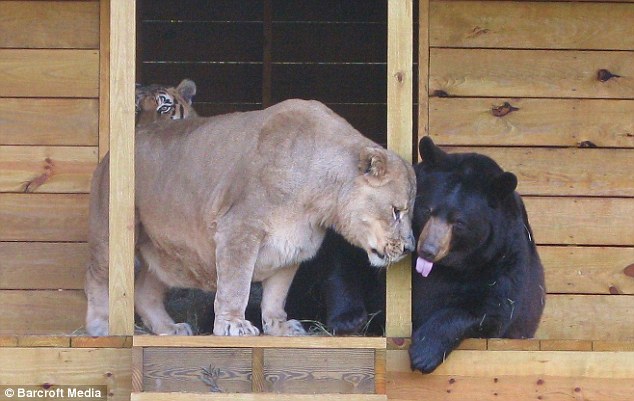
They make an unlikely trio but Baloo the bear, Leo the lion and Shere Khan the tiger have forged an unusually strong bond.

Considering that they would be mortal enemies if they ever were to meet in the wild, it is stunning to see their unique and genuine friendship in these intimate pictures.

Rescued eight years ago during a police drugs raid in Atlanta , Georgia , the three friends were only cubs at the time at barely two months old.  They had been kept as status symbol pets by the drug barons.

Living with the zoo's founders for the past eight years, Shere Khan, Baloo and Leo have now moved to a purpose built habitat Photo: BARCROFT

Delivered to the Noah’s Ark Animal Rescue Centre in Locust Grove, Georgia, the decision was made to keep the youngsters together, because of their budding rapport. ‘We could have separated them, but since they came as a kind of family, the zoo decided to keep them together,’ said Diane Smith, assistant director of Noah’s Ark. ‘To our knowledge, this is the only place where you’ll find this combination of animals together.’

Living with the zoo’s founders for the past eight years, Shere Khan, Baloo and Leo have now moved to a purpose-built habitat where the US public can now witness first hand their touching relationships.

We didn’t have the money to move them at first,’ said Diane.  ‘Now their habitat is sorted and they have been moved away from the children’s zoo areas where the public couldn’t really get a good look.’

It is possible to see Baloo, who is a 1000lb bear, Shere Khan, a 350lb tiger and Leo the Lion, who is also 350lbs, messing around like brothers.  ‘They are totally oblivious to the fact that in any other circumstance they would not be friends.’

Handled by Charles and Jama Hedgecoth, the zoo’s owners and founders, the three friendly giants appear to have no comprehension of their animal differences.

Baloo and Shere Khan are very close,’ says Diane, ‘That is because they rise early, and as Leo is a lion, he likes to spend most of the day sleeping.  It is wonderful and magical to see a giant American Black Bear put his arm around a Bengal and then to see the tiger nuzzle up to the bear like a domestic cat.  When Leo wakes up the three of them mess around for most of the day before they settle down to some food.’

Surprisingly for three apex predators with the power to kill with a single bite or swipe of their paw, they are very relaxed around each other.

They eat, sleep and play together,’ said Jama.  ‘As they treat each other as siblings they will lie on top of each other for heat and simply for affection.  At the moment they are getting used to their new habitat.  Shere Khan is being quite reticent about the move, but Baloo, the bear, is very good at leading him on and making him feel comfortable and safe.’

Explaining that the three ‘brothers’ have always seemed to share a unique bond, Charles said: ‘Noah’s Ark is their home and they could not possibly be separated from each other.  You just have to remember who you’re dealing with when you are with them, though.  It’s when you forget that these fellows are wild animals that you get yourself in trouble.’

The trio’s new habitat had to be constructed carefully, in order to accommodate its occupants.

Jama said: ‘The clubhouse had to be very sturdy for the guys, because they all sleep in it together.’

She added: ‘We had to include a creek, because the tiger and the bear both like to be in water.’

Last word, for now!

Last mutterings for now regarding man’s effect on our Planet!

There’s been a string of items on Learning from Dogs in recent days about mankind’s footprint changing our planet but this Blog is not a single issue Blog unless learning the values of life from dogs is to be seen as a single issue.

So I’m going to include a few more items about climate change/global warming here and leave it for a while.  (But, please, don’t let that stop you sending me interesting stuff, as so many of you lovely readers do!)

So more evidence about how the planet has warmed up in this video released by NASA.

Global temperatures have warmed significantly since 1880, the beginning of what scientists call the “modern record.” At this time, the coverage provided by weather stations allowed for essentially global temperature data. As greenhouse gas emissions from energy production, industry and vehicles have increased, temperatures have climbed, most notably since the late 1970s. In this animation of temperature data from 1880-2011, reds indicate temperatures higher than the average during a baseline period of 1951-1980, while blues indicate lower temperatures than the baseline average. (Data source: NASA Goddard Institute for Space Studies. Visualization credit: NASA Goddard Space Flight Center Scientific Visualization Studio)

NASA Finds 2011 Ninth-Warmest Year on Record

19th January, 2012

The global average surface temperature in 2011 was the ninth warmest since 1880, according to NASA scientists. The finding continues a trend in which nine of the 10 warmest years in the modern meteorological record have occurred since the year 2000.

NASA’s Goddard Institute for Space Studies (GISS) in New York, which monitors global surface temperatures on an ongoing basis, released an updated analysis that shows temperatures around the globe in 2011 compared to the average global temperature from the mid-20th century. The comparison shows how Earth continues to experience warmer temperatures than several decades ago. The average temperature around the globe in 2011 was 0.92 degrees F (0.51 C) warmer than the mid-20th century baseline.

“We know the planet is absorbing more energy than it is emitting,” said GISS Director James E. Hansen. “So we are continuing to see a trend toward higher temperatures. Even with the cooling effects of a strong La Niña influence and low solar activity for the past several years, 2011 was one of the 10 warmest years on record.”

The difference between 2011 and the warmest year in the GISS record (2010) is 0.22 degrees F (0.12 C). This underscores the emphasis scientists put on the long-term trend of global temperature rise. Because of the large natural variability of climate, scientists do not expect temperatures to rise consistently year after year. However, they do expect a continuing temperature rise over decades.

The first 11 years of the 21st century experienced notably higher temperatures compared to the middle and late 20th century, Hansen said. The only year from the 20th century in the top 10 warmest years on record is 1998.

Higher temperatures today are largely sustained by increased atmospheric concentrations of greenhouse gases, especially carbon dioxide. These gases absorb infrared radiation emitted by Earth and release that energy into the atmosphere rather than allowing it to escape to space. As their atmospheric concentration has increased, the amount of energy “trapped” by these gases has led to higher temperatures.

Global temperature difference

The carbon dioxide level in the atmosphere was about 285 parts per million in 1880, when the GISS global temperature record begins. By 1960, the average concentration had risen to about 315 parts per million. Today it exceeds 390 parts per million and continues to rise at an accelerating pace.

The temperature analysis produced at GISS is compiled from weather data from more than 1,000 meteorological stations around the world, satellite observations of sea surface temperature and Antarctic research station measurements. A publicly available computer program is used to calculate the difference between surface temperature in a given month and the average temperature for the same place during 1951 to 1980. This three-decade period functions as a baseline for the analysis.

The resulting temperature record is very close to analyses by the Met Office Hadley Centre in the United Kingdom and the National Oceanic and Atmospheric Administration’s National Climatic Data Center in Asheville, N.C.

Hansen said he expects record-breaking global average temperature in the next two to three years because solar activity is on the upswing and the next El Niño will increase tropical Pacific temperatures. The warmest years on record were 2005 and 2010, in a virtual tie.

“It’s always dangerous to make predictions about El Niño, but it’s safe to say we’ll see one in the next three years,” Hansen said. “It won’t take a very strong El Niño to push temperatures above 2010.”

Finally, the blogsite Skeptical Science have recently published a fascinating graphic that shows how a single set of data can be interpreted in different ways.  That graphic may be seen by clicking here and it comes from a revealing article Still Going Down the Up Escalator.  Go read it!