Category: monetary policy

The day after April 1st!

When it all gets real close and personal.

I have been a great fan of the BBC’s business editor, Robert Peston, and read his Blog as often as I can.  Recently, the focus has been on Ireland.

A few days ago, before the announcement by the Irish premier and finance minister as to their vision for the future of Ireland’s banks, Robert penned a post that started as follows:

The unbelievable truth about Ireland and its banks
Ireland’s central bank and new government will confirm on Thursday that the hole in the country’s banks is even wider, deeper and darker than seemed to be the case last November, when those bust banks forced the country to go with a begging bowl to the eurozone’s rescue funds and the International Monetary Fund (IMF) for 67.5bn euros (£59bn) of rescue loans.

That article then led me to Paul Mason, BBC Newsnight’s economics editor, who also writes a Blog.  He wrote on the 30th March,

A short summary of the Euro snafu that’s about to happen:

1) Tomorrow Ireland publishes the results of bank stress tests. It has to find – or the EU has to find – another E18-25bn to shore up its failing banks.

etc., etc.

Again, while the article is interesting, the whole point of this Post was one comment made to that Paul Mason piece.  Here it is,

At 00:47am on 31st Mar 2011, tawse57 wrote:

I am bored with all these posts about the economy now. Can we go back to cheese and crackers and the mysterious case of Paul Mason’s mobo contacts?

I was just talking with a 35 year old young man who is married and has a young child.

His wife, quite rightly, does not wish to move away from the place where she was born and brought up – Cornwall.

But he tells me that, despite almost saving £100,000 by putting in every hour they could in working and saving, that they stand no chance of ever owning their own home.

He says the house that he rents have asking prices of about £450,000 despite most of them just sitting on the market for years because no one, no one local anyhow, can afford them. What does sell goes to rich Londoners.

He is destined to pay out most of his wages in private landlord rents. He can’t get into a Council house or a Housing Association property because they either no longer exist or the waiting lists are measured in decades.

He is not prepared to have such a millstone of stress, worry and financial drain around his neck. It would kill him. I don’t blame him.

His story is one of hundreds of thousands, perhaps millions, of people in the UK today.

I mention this as the bank stress tests are directly connected with the massive credit bubble, much of it a housing bubble of liar loans, that brought the global economy to its knees, bankrupted banks and still threatens to bankrupt nations.

All of us on here know this. We are an enlightened bunch.

But I think it is worth remembering that the affects of the global credit binge are still directly affecting so many in this country.

The UK is almost alone in the World in not yet seeing a massive housing crash. The Government and the Bank of England have gone out of their way stop it happening in order to protect the banks who so stupidly, but also so greedily, loaned so many liar loans on bricks and mortar not in other countries but here in the UK.

Those UK banks that keep threatening to leave our shores are up to their eyeballs in global liar loans. You name a country in trouble and you can bet your bottom dollar, which might be the only thing most of us have left soon, that British banks are at the heart of it all.

It is long overdue that this giant house of cards came crashing down. It is long over-due that, as a Society, we cut out the cancer of dirty banks and dirty bankers from our lives and from these shores.

They are leeches on the souls of Men. Gosh, I am getting poetic in my anger. It must be that teaspoon of Jack Daniels I put in my midnight cocoa.

So what if the banks fail their stress tests today, next week or next year. It won’t make a squat of difference to that couple in Cornwall. It won’t make a squat of difference to most of us.

The worst thing that can happen is, as Alistair Darling so panicked, that the ATM machines run empty. Well, what would happen then? Would the sky fall in? Would us polite British all sit at home and do nothing.

Or would we take our cue from the Egyptians, the Tunisians and all the rest?

Perhaps what this country needs most of all is for another even bigger banking crisis? If it happens I think I would feel safer being one of the masses instead of one of the banking elite.

I do hope the banks fail the stress tests. I do hope it brings about another crisis. I do hope that, this time, the People say enough is enough and that this rotting cancer within Humanity is lanced with a fiery lancie thingy.

I could murder a bit of cheese on a nice cracker now.

Whoever you are tawse57, I like your style.  Very powerful words.

“It is error alone which needs the support of government.  Truth can stand by itself.”

~Thomas Jefferson (third President of the United States from 1801 to 1809)
But really the Irish are no fools!

Ever wondered how the Irish bailout really works?

I posted a rather tongue-in-cheek item on the Irish situation yesterday.  Anyway, a good friend, Peter M, sent the in following to illustrate both the complexity and, in the end, the delightful simplicity of the Irish bailout.  Read on.

It is a slow day in a damp little Irish town. The rain is beating down and the streets are deserted. Times are tough, everybody is in debt, and everybody lives on credit.

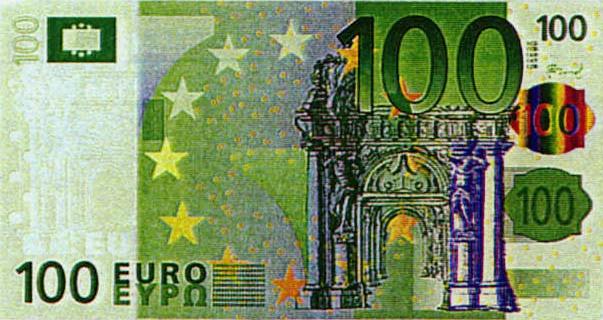
On this particular day a rich German tourist is driving through the town, stops at the local hotel and lays a €100 note on the desk, telling the hotel owner he wants to inspect the rooms upstairs in order to pick one to spend the night.

The owner gives him some keys and, as soon as the visitor has walked upstairs, the hotelier grabs the €100 note and runs next door to pay his debt to the butcher. The butcher takes the €100 note and runs down the street to repay his debt to the pig farmer.

The pig farmer takes the €100 note and heads off to pay his bill at the supplier of feed and fuel. The guy at the Farmers’ Co-op takes the €100 note and runs to pay his drinks bill at the pub. The publican slips the money along to the local prostitute drinking at the bar, who has also been facing hard times and has had to offer him “services” on credit.

The hooker then rushes to the hotel and pays off her room bill to the hotel owner with the €100 note. The hotel proprietor then places the €100 note back on the counter so the rich traveler will not suspect anything.

At that moment the traveler comes down the stairs, picks up the €100 note, states that the rooms are not satisfactory, pockets the money, and leaves town!

No one produced anything. No one earned anything. However, the whole town is now out of debt and looking to the future with a lot more optimism.

And that, Ladies and Gentlemen, is how the bailout package works.

"Money in circulation!"

Thanks Peter – a wonderful tale!

By Paul Handover

A little bit of old Irish!

Sorry, dear readers, a bit squeezed for time today so apologies for republishing a few bits and pieces that have caught my eye about the Irish situation.

First, who would want to be Irish Prime Minister?

The Irish Republic‘s prime minister (taoiseach) is facing parliament for the first time since agreeing to borrow 85bn euros ($113bn; £72bn).

Brian Cowen is answering questions in the Dail as the opposition Labour Party argues that the EU/IMF rescue will ruin the country.

Ireland faces four years of austerity to reduce its deficit from a record 32% of GDP to the eurozone limit of 3%.

Who else thinks that it would make so much more impact on folk if ‘bn’ was replaced with zeros.  If that was the case then the first sentence would read,

The Irish Republic’s prime minister (taoiseach) is facing parliament for the first time since agreeing to borrow 85,000,000,000 euros ($113,000,000,000; £72,000,000,000).

Ouch!

In 2009 the World Bank  estimated the Irish population to be 4,450,000.  So this little borrowing for their country is the equivalent of 19,101 euros for every man, woman and child.

Is there an alternative?  Yes, according to a suggestion from a reader of Yves Smith’s fabulous Blog, Naked Capitalism.

This suggestion on the Irish mess from an irreverent Commonwealth reader:

The UK conquest of Ireland began in 1169.

It’s time to finish the job.

All they have to do is offer the following:

Ireland converts all its public debt to sterling.

The UK Treasury takes over the responsibility for all of Ireland’s existing public debt.

(Ireland gets a clean start with no Irish govt. debt and not interest payments)

Ireland taxes and spends in sterling only and has a balanced budget requirement.

Ireland can borrow only for capital expenditures.

The UK Treasury guarantees all existing insured euro bank deposits in Irish banks.

Only sterling deposits are insured for new deposits.

Ireland runs a mirror tax code to the UK and keeps all of its tax revenues.

The UK agrees to fund Ireland’s with a pro rata/per capita share of any UK deficit spending.

St. Patrick’s Day is declared a UK national holiday and everyone over 21 gets a beer voucher.

No comment from me required!

By Paul Handover


I salute this guy!

Karl Denninger of Market Ticker is brilliant

Karl D

I say that not because I have sufficient financial knowledge to evaluate his writings from a technical point of view but because he puts in huge effort, I mean hundreds of hours a month, to support his perspective.

Anyway, do bookmark his website/blog – it’s here.

An article published on the 10th demonstrates both Denninger’s commitment to his audience and some very specific dangers potentially coming out of Europe.  Called “A Round-Up Of Current Idiocy” it includes this conclusion:

Since we keep drinking more as an economy (debt and deficits) the violence and incidence of these “undesirable outcomes” is going to continue to increase.  We had one nasty in 2000, and then again in 2007.  From the so-called “recovery” (2003) to the onset of the last mess was about four years.  We’re now about two years in from the so-called “bottom” of this latest train wreck (Lehman), and if we keep on-path, and we are as the below chart shows, our fuse should go inside the box for this next mess somewhere between now and the end of 2011.

I hope you’re ready, because this next one, coming with no real recovery having taken place in employment or private economic activity, may be the one that takes us well beyond the misery we suffered in the 1930s.

And if it does, it will be our – that’s right – our – fault, since we simply will not accept that there is no such thing as a free lunch.

Note the copyright please.

Despite it being quite a technical piece with some aspects that weren’t clear to me, no surprise!, it’s still got many important messages for all those concerned about our savings and assets.  Do read it.

Well done, Karl.

By Paul Handover

It’s all Irish!

But this time it’s NOT Irish humour.

Brits will be well aware that the Irish have been the source of many funny stories and ‘Irish’ humour is still a favourite with the English.

But this piece from Baseline Scenario is very troubling, and that’s putting it mildly.

The excellent article, as they all are from Baseline, is here.

I stole a small extract to underline the import of what BS are writing about.

However, let’s be clear: Europe’s headache remains large, and this should concern all of us – just look at Ireland to see how misunderstood and immediate the remaining dangers are. Ireland’s difficulties arose because of a massive property boom financed by cheap credit from Irish banks. Ireland’s three main banks built up loans and investments by 2008 that were three times the size of the national economy; these big banks (relative to the economy) pushed the frontier in terms of reckless lending. The banks got the upside, and then came the global crash in fall 2008: property prices fell more than 50 percent, construction and development stopped, and people stopped repaying loans. Today roughly one-third of the loans on the balance sheets of major banks are nonperforming or “under surveillance”; that’s an astonishing 100 percent of gross national product, in terms of potentially bad debts.

(That’s my italics, by the way.)

Anyway, do read it in full – it’s got important implications.

And then give yourself a proper laugh at the wonderful sense of humour that comes across from the Irish Sea ….

By Paul Handover

Here’s a question on financial regulations, but only for the brave.

Here’s a thought for Basel.

Per Kurowski has been a loyal follower and supporter of this Blog and I’m indebted to him for this.  Per writes the Blog

Per Kurowski

Tea with FT (Financial Times) but his busy life seems to allow sufficient space for the odd comment on Learning from Dogs.

Here’s what Per wrote as a comment to the recent Post entitled, “Is thinking going out of fashion?“.  It seem worthy of being a guest post.

In reference to courage, here is a question on financial regulations, only for the brave.

Currently the financial regulators in the Basel Committee requires the bank to hold 8 percent when lending to unrated small businesses and entrepreneurs but only 1.6 percent when lending to triple A rated clients.

What would have happened if exactly the opposite capital requirements had been imposed? The banks having to hold instead 8 percent in capital when lending to triple-A rated clients and only 1.6 percent when lending to unrated small businesses and entrepreneurs.

It would most surely have created problems, any regulatory discrimination does, but I hold that a crisis as large as the current one would not have happened… since no gigantic financial crisis has ever resulted from excessive lending to those who are perceived as risky, they have always resulted from excessive lending to those who are perceived as not risky.

We could also have had a lot more of jobs, since almost always the next-generation of decent sustainable jobs is to be found among the current small businesses and entrepreneurs.

Our biggest financial systemic risk is without any doubt our financial regulators.

Our economic outlook – where to?

The fundamentals always win, in the end!

Those that know me or have followed Learning from Dogs for the last year (and thank you!) know that I am pretty pessimistic about the economic future for North America and Europe (at least!).  I speak not as an economist, far from it, but as someone sufficiently old to think that many millions of individuals and their countries have been living on borrowed time for decades.

David Kauders

Twenty years ago I didn’t really do anything than feel uncomfortable when friends announced another new house with mortgages far in excess of the old ‘rule’ of 1.5 to 2.0 times one’s annual income.

Then I came across David Kauders of Kauders Portfolio Management who explained in fundamental ways why this was all going to end in tears, so to speak.  Wasn’t he right!

Thanks to David, I am moderately more well-off than I would have been – without a doubt.  Not only did David manage my private pension, he greatly influenced my modest personal investments outside his portfolio.

Where’s this heading?  This Blog is an attempt to show that integrity in all that we all do is not only the best personal strategy, it is the only viable course for mankind in bringing us back from the brink of global disaster.  So a couple of recent items about economic matters from people of great integrity underlined the value of mentioning them in this Blog.

The first is a talk given by Elizabeth Warren two years ago, in January 2008, entitled The Coming Collapse of the Middle Class.  It’s nearly an hour long but very well worth watching especially in the way that Ms. Warren shows how counter-intuitive is our understanding of how family costs have risen over the last 30 years.  Although it applies to the US, it certainly has relevance for British viewers.  Do watch it.

Here’s how the video is described:

Distinguished law scholar Elizabeth Warren teaches contract law, bankruptcy, and commercial law at Harvard Law School. She is an outspoken critic of America’s credit economy, which she has linked to the continuing rise in bankruptcy among the middle-class.

Next is that stalwart Karl Denninger.  How he finds the energy and enthusiasm for publishing his Market Ticker is beyond me.  He’s not subtle but his personal integrity is beyond reproach in my opinion.

Karl was recently interviewed by Bill Still (Bill produced the highly acclaimed film The Money Masters) and despite the videos being heavily edited Karl says “and for the most part accurately captures my views on the topics covered.”

Again these interviews are not short but, again, if you want to understand how dangerous the fundamentals still are – then watch them.

Karl Denninger, author of Market Ticker and winner of the 2008 Reed Irvine Accuracy in Media Award explains the roots of the current crisis and why real economic growth is impossible. He explains why the stock market rebounded in 2009 and why that can’t continue. He explains what needs to be done with the banks and predicts that all the big banks will fail.

Part One:

Part Two:

Finally back to David Kauders.  He also publishes an opinion website Contrary View. Here’s what David wrote in February 2010.

No. 73 22nd February 2010 Predicting lost decades

There is plenty of evidence from Japan about lost decades for investments. Japan has now lost two decades in equity and property investment, during which time only Government Bonds provided any sanctuary. All policy options failed, because none tackled the real problem, which is that there is already too much debt. What lessons can be drawn for Britain?

Shares here have certainly had a lost decade. On the Japanese evidence, they may well suffer another lost decade. Property has only hit minor bumps, so the Japanese experience suggests that property may suffer a long decline for two decades. In the UK, the Bank of England’s support for mortgages will be withdrawn over the next two years, which itself threatens prices. Why, though, the hysteria about Government debt?

It is questionable whether pundits appreciate the extent of the private sector debt problem, which explains why two groups of economists can offer totally contradictory remedies. In a world with no Gold standard and therefore no anchor to the monetary system, Government debt is relatively safe. The global economy is perched on a knife edge, with a permanent loss of output that must cause income loss and therefore restrict the capacity of households to service their debts. Seeing the commercial risks, banks are still restricting lending, which means there can be no sustained recovery.

There is a misconceived demographic argument being touted at present, which completely ignores the real driver of the post-1945 expansion, namely increased credit. That credit growth has simply gone too far and now brings its own problems. For those people who neither saw the credit crunch nor the long fall in interest rates and inflation coming, to now be credible in predicting a lost decade for bonds, is itself unbelievable.

You see how it all makes sense – the fundamentals are in charge, and always will be!

You be safe out there!

By Paul Handover

Greece and America — Similar crises?

Fiddling with gravity!

Financial crises can be very difficult events to understand.  Even for those who have spent a great deal of time studying such areas as finance and economics, comprehension of these disasters can be elusive.  However, analyzing shared elements in the recent American and Greek financial crises can help give even the economic layman insight into their common causes.

One word can be used to sum up the basic concept behind both of these crises – overextension.  Both the American and Greek governments attempted to take on a much heavier economic load than either could handle.  While, in both cases, this has been painted by some as a noble, humanitarian effort to help those in need, methods such as inflationary monetary policy tantamount to theft and the disguising of massive budgetary deficits (in both cases with the help of Goldman Sachs) would not justify the means employed even had these efforts been successful, and certainly should be taken to task considering the disastrous ramifications of these actions.

In both cases, many are citing unrestrained spending as the source of the problem.  For example, CNN wrote of the Greek crisis that “years of unrestrained spending, cheap lending and failure to implement financial reforms…whisked away a curtain of partly fiddled statistics to reveal debt levels and deficits that exceeded limits set by the Eurozone.”

Without suggesting that CNN was attempting to be deceptive in this explanation, as the points made certainly are important, it must be noted that things like unrestrained spending, cheap lending, and fiddled statistics are merely symptoms of the deeper disease.  Instead of asking the government to spend less, tighten lending laws, and implement financial reform, one should instead ask the deeper question – how does the government even have the power to cause such problems in the first place, and why are the results of such government power so often much more hurtful than helpful?

This deeper problem, whose symptoms we are now dealing with, is central banking.  The Federal Reserve System and its Greek counterpart, the Bank of Greece, each had a heavy hand in their respective nations’ financial collapses.  This is due to these banks’ attempts at economic manipulation – the Federal Reserve directly sets interest rates, while the Greek system uses more indirect methods to do nearly the same thing.   Note that it is due to their attempts at economic manipulation, as attempting to set economic law is about as useful as attempting to set gravity.

Consider this metaphor of setting gravity.  A man claims to be able to set the force of gravity on the earth.  He tells a stunt biker that he can set gravity to be half as much as normal.  So, the biker attempts to jump a distance that is much longer than he normally would attempt.  Upon jumping, the biker finds that, obviously, the first man never was able to set the nature of gravity at all, and he falls to the ground long before reaching his destination.

This is exactly what happened due to the actions of central banks in the cases of both the United States and Greece.  Interest rates and other natural economic restrictions were said to be more flexible than they truly were. Thus, individuals who based their actions on this information ended up engaging in activities that were far more risky than usual.  However, once they had “jumped,” so to speak, they found that, in fact, economic law was as strict as ever, and they “fell.”

However, if the answer is so obvious, why are we not hearing more about it?  Each of these financial crises is extremely complicated, and the above described scene is, it must be admitted, an oversimplification.  This is not to say that it is not accurate, but rather that this nature of the crises’ root cause is not immediately apparent to all upon examining the situation.

For example, a person who has been educated their entire life in an economic school that praises central banking, deficit spending, and government action in general would certainly seek to find another cause for the crisis, perhaps by blaming business owners for making risky investments or stating that government controls were not strict enough.  However, a person who has studied and understands the damage done by central banking and government economic controls will be quick to realize what has occurred.

People with such knowledge are becoming more and more common in both the United States and around the world.  “Even today, with an economic crisis raging, the response by our government and the Federal Reserve has been characteristic,” Ron Paul writes in his recent book, End the Fed.  “Interest rates are driven to zero and trillions of dollars are pushed into the economy with no evidence that any problems will be solved.  The authorities remain oblivious to the fact that they are only making our problems worse in the long run.”

While he may be one of the most popular adversaries of central banking, it is not just Ron Paul, or even Austrian economists, who are calling out government for its role in these financial crises.  In an e-mail to supporters, Democratic congressman Dennis Kucinich cited “the 1913 Federal Reserve Act, the banks’ fractional reserve system and our debt-based economic system” as major factors in the American crisis.

Such complex and important issues as economic crises need all the attention we can give them, and it is impossible here to provide the in-depth analysis that these situations merit.  It also must be noted that while both the United States and Greece have to an extent both engaged in central banking to their detriments, each country does have a different system.  Still, the general principles hold, always returning us to that first word – overextension.  As long as nations attempt to manipulate the laws of economics to engage in far grander pursuits than they can sustain, we can expect to see such economic crises as have been seen in the United States and Greece in the future.

By Elliot Engstrom

LIES and the EURO

MERKEL IN TROUBLE

You eventually pay for LIES and STUPIDITY, even if it takes time. Sadly, the euro was born in a lie and now Merkel has compounded the problems by giving in to French pressure and being stupid. But the German people (in contrast to their leaders) have no desire to be the bankers of all Europe.

What Merkel has done is utter folly and, worse, won’t even fix the problem. The ONLY way to fix a problem is to DO THE RIGHT THING, which is not rescue people from their idiocy but allow them to take the consequences of it. This is not wishing to be cruel but just the way people learn difficult lessons.  As J J Rousseau observed,  “The fastest way to teach a child about the danger of fire is to let him burn himself once”… or words to that effect!

J J Rousseau, philosopher

Besides, the euro WITHOUT Greece would be a damned sight more convincing than WITH it. The Germans gave up the Deutschmark on the PROMISE that the euro would be as strong by following strict rules.  The EU even MADE A RULE that no country could have a budget deficit of more than 3%. This was insisted on by Germany PRECISELY in order to avoid this sort of surreal situation where the Greeks, Portuguese, Irish, etc. (and Britain, but we are not in the euro …) would NOT wildly overspend.

These “strict rules” were breached before they had hardly started, first by letting in Greece and then France a year or so later, justifying the decision by saying that the rules didn’t apply to big countries — in other words, the rules didn’t apply to themselves.  Brussels, and the French and German elites, LIED to the people.

The criminal bit is that these countries just IGNORED the rules. And even more criminal, they (Germany included) just IGNORED what was going on in Greece and elsewhere until, surprise, surprise, it all reared up out of the sand and hit them in the face. Now the Germans have to accept even MORE tax increases, despite being already very highly taxed, just like the French and – increasingly – the British. The British finally got fed up with being lied to and dumped their government. Germany may be going the same way. (France swings wildly from left to right anyway, and each time it seems worse than before.)

Besides, Germany can’t AFFORD to bankroll the whole of Europe. France, too, is ludicrously over-spent and top-heavy with her state. The consequence of all this will no doubt be vast political gains for the left in both countries, but the left have even LESS idea about how to run an economy – see Gordon Brown of “I do know how to run an economy”  fame (perhaps he meant “ruin an economy?!”).

Europe is in deep trouble and I really don’t think the politicians even now understand it. Some say that a gradual decline of Europe is already inevitable as Asia rises; the current mentality of  lying, overspending, over-borrowing, bailing out undeserving basket cases and over-centralisation will only accelerate this decline.

But for some, of course – such as Jose Manuel “Boring”oso –  this crisis is manna from Heaven; a big step towards a United States of Europe and vastly increased power for Brussels. For God’s sake call his  bluff. We don’t WANT an “economic union” run from Brussels. It will be a bureaucratic, tax-heavy nightmare, as in France.

Jose Manuel Barroso, EU President

“Let’s be clear,” said the European Commission president, Jose Manuel Barroso, last week. “You can’t have a monetary union without having an economic union. Member states should have the courage to say whether they want an economic union or not. And if they don’t, it’s better to forget monetary union altogether.” EuroActiv May 12, 2010.

These people are really unbelievable. If Barroso is so sure about not being able to have monetary union without economic union (and, of course, ipso facto political union as well) then why didn’t he say this at the beginning? The pro-USE lobby really kept that quiet, didn’t they. It is all a big LIE.

So, to cure indebtedness, you incur FURTHER vast debts? It is surreal.   Niall Ferguson, an economic historian at Harvard University, put it this way: “This bailout wasn’t done to help the Greeks; it was done to help the French and German banks. They’ve poured some water on the fire, but the fire has not gone out.”  NYT May 17, 2010

The European rescue plan, which totals 750 billion euros thus far and was intended to head off the risk of default, will instead greatly increase borrowing.  That could be the end of Europe’s nascent recovery.

by Chris Snuggs

How big bankers became outlaws

[This is another Guest Post from Patrice Ayme which appeared on his Blog on the 28th April.  It has been slightly modified by me. Ed]


Celebrating Goldman Sachs, while acknowledging that it is far from being all their fault.

Point One: We are living in a state of law. Supposedly.

Point Two: That State is democracy, the rule of the demos, the people. It is not the rule of the bankers. Supposedly.

Point Three: Political leaders have recently given PRIVATE unelected individuals, the bankers, the means and the right to create money, the money everybody uses, through debt, ex nihilo, starting from PUBLIC funds  (Called, somewhat misleadingly, the fractional reserve banking system.)

Point Three contradicts the union of Point One and Point Two. Power is supposed to be exerted by the people, but money is power. Big bankers create money at will, with the complicity of the political leadership. So they create power at will.

Thus, the present system incites (big) MONEY CREATING BANKERS TO BECOME GANGSTERS, and then OUTLAWS.

It is as simple as that!

Thus one needs to get rid of the private fractional reserve PUBLICLY funded money creating system.  The situation has been rendered worse in the last decade by the blossoming of synthetic derivatives which are out-of-this-world bets which could not possibly be paid back.

Synthetic derivatives of derivatives transformed a 300 billion dollars loss in real mortgages into a potential exposure of 24,000 billion dollars, thanks to the leverage of the derivatives squared.

Then political leaders, accomplices with the bankers, offered to pay the 24,000 billion dollars, on behalf of taxpayers, leaving the economy in tatters.

Not all is lost: Goldman Sachs got its entire 2008 profit, 13 billion dollars, from taxpayers, through AIG, thanks to US politicians, and the USA loves a winner. Love and dove, there are still many a feather to pluck.

By Patrice Ayme

P.S. Synthetic derivatives are, mathematically and philosophically, a generalization of the license of the privately managed, publicly funded, fractional reserve system, thus proving further, if need be, how erroneous the latter can be.

P.P.S. The fractional reserve system ought to be kept, to provide the capital needed, simply it ought not to be anymore the province of a small private oligarchy gaming it.