Maybe not from a Mayan perspective but, nevertheless, who knows!
For some time now I have subscribed to the online magazine Big Think. Daniel Honan, Managing Editor, has contrived to bring together a group of very interesting authors from a wide range of disciplines, presenting a weekly collection of thought-provoking articles. Despite the volume of emails that seems to assault my in-box each day, it’s very rare for me not to browse the weekly digest from Big Think.
Thus it was that early on the 13th (last Thursday) I read a wonderful item written by Steven V. Mazie, Associate Professor of Political Studies at Bard High School Early College-Manhattan.
A quick telephone call to Dan Honan produced an immediate ‘yes’ to my request for permission to republish the Steven Mazie piece here on Learning from Dogs so settle back and enjoy.
oooOOOooo
Googling the Apocalypse: the Web as Epistemological Vortex
Steven Mazie on December 11, 2012, 2:12 PM
Let’s say you’re just now tuning in to reports that the world will end on December 21 when the Mayan calendar resets to zero. Maybe you’re one of the 35 million Americans who fear it will really happen. Maybe the prospect of solar storms, rogue planets and devastating floods is a welcome distraction from more pedestrian anxieties of everyday life. Or maybe you’re just curious how such a ridiculous idea could persuade “panicked” Russians to buy up all the “matches, kerosene, sugar and candles” in town or spur a Chinese man to spend his life savings building an ark to keep him afloat after the catastrophe.
Where do you turn to learn more? To the epistemic umbrella of the 21st century, of course, and here is what Google will show you.
Do you consult the first hit, billed as the “official website for 122112 information”? Do you settle for the detailed account in the Wikipedia entry, listed second? Or do you flick down to the third, an earnest attempt by NASA to explain “Why the World Won’t End”?
If you go with the first site, you will find a bizarre, colorful bazaar of information, perspectives and advice on the approaching doomsday. There is enough to keep you occupied here for a while: a list of celebrities who believe the hype (finding Mel Gibson on the list isn’t much of a surprise, but Janeane Garofolo? really?), an article listing “37 Things You Should Start Hoarding Now” and one remarkable video summarizing the various ways the world might end and calling on world leaders to tell the “TRUTH” about the devastation awaiting us:
The video is a study in epistemic manipulation. Narrated by a man with a severe British accent, the presentation claims — three times — “we just don’t know what to believe anymore” about “the most anticipated date of our time.” Implying that the media, corporate advertisers, the “government-sponsored scientists” at NASA and “even highly respected major religious organizations” are all either mistaken or willfully fooling us, the video appeals to our “gut instincts that something is wrong — something just doesn’t feel right.” It’s a miracle Stephen Colbert hasn’t picked this up yet. “In the eyes of many,” the video announces with no substantiation, “the prophecies of doom have been written.”
The sad hilarity of NASA’s attempt to calm everyone down takes the form of a staid FAQ. There are no bells and whistles, videos, garish colors or flashing links. Just sober, somewhat condescending, straightforward claims: “Our planet has been getting along just fine for more than 4 billion years, and credible scientists worldwide know of no threat associated with 2012.”
The problem is that credible science often fails to convince the masses. It cannot budge the majority of Americans who continue to deny the reality of evolution. It cannot convince more than 41 percent of Americans that the activities of human beings play a role in global warming. It’s no wonder, then, that so many people worldwide are keeping doomsday supply companies in business, buying up freeze-dried food rations and personal bunkers rather than Christmas presents, or that sites like December212012.com are profiting from these advertisers.
It’s dispiriting to witness the mass delusion of a tenth of humanity. You have to feel sorry for the Chinese ark-builder who will be left penniless on December 22, and you have to empathize with the people who are contemplating killing their pets or committing suicide to avoid the doomsday devastation.
But this unsettling phenomenon is a symptom of a universal human quandary: how to know whom to trust about things we can’t see or don’t understand. In a section on the rationality of belief in his delicious book Cunning(2006), political and legal theorist Don Herzog offers this:
What you believe depends on who you believe. And who you believe depends on what you believe. Your beliefs, your knowledge, your experience, your assignments of what I’ll call epistemic authority, that is, who or what sources are trustworthy on what issues: all are caught up in each other…Whether it’s rational for you to believe something depends on how it fits in with what you already believe, not least about the credibility of those reporting it.
The best argument against the doomsday believers may come on December 22, when, with any luck, most of us will still be around. But as my fellow blogger David Ropeik explained recently, and as Herzog’s analysis indicates, the next epistemological doomsday is just around the corner.
My judgment is that I should leave this post as it is. As a slightly tongue-in-cheek review of this much heralded prediction.
But I can’t.
I’m going to follow Steve’s article with this (thanks Christine):
More footage from Chasing Ice, an astonishing clip of the largest iceberg calving ever recorded. Arctic sea ice levels this summer hit a record low; according to the U.S. National Snow & Ice Data Centre in September, more than 600,000 square kilometres more ice had melted in 2012 than was ever recorded by satellites before. We are indeed melting our children’s future, and apparently many of us are too busy to hold our governments to account for their lack of action.
If we don’t change our ways on this beautiful planet pretty damn soon, then my guess is that we are headed for a massive depopulation and a return to a much more primitive lifestyle, a future that will be brutally obvious by 2020.
What is relevant, to a degree unprecedented in the history of humanity, is how the peoples of this planet respond NOW!
Interesting insights into the American Founding Father.
Big thanks to Bob Derham who sent me this yesterday. I’m sure many Americans know this as they know their own mother. But for this recent resident of the USA I found it fascinating.
Thomas Jefferson
Thomas Jefferson was an American Founding Father, the principal author of the Declaration of Independence and the third President of the United States.
Born: April 13, 1743, Albemarle County
Died: July 4, 1826, Charlottesville
Presidential term: March 4, 1801 – March 4, 1809
Party: Democratic-Republican Party
Education: College of William and Mary (1760–1762), University of Toronto Mississauga
Thomas Jefferson was a remarkable man who started learning very early in life and never stopped.
At 5, began studying under his cousin’s tutor.
At 9, studied Latin, Greek and French.
At 14, studied classical literature and additional languages.
At 16, entered the College of William and Mary.
At 19, studied Law for 5 years starting under George Wythe.
At 23, started his own law practice.
At 25, was elected to the Virginia House of Burgesses.
At 31, wrote the widely circulated Summary View of the Rights of British America and retired from his law practice.
At 32, was a Delegate to the Second Continental Congress.
At 33, wrote the Declaration of Independence .
At 33, took three years to revise Virginia ‘s legal code and wrote a Public Education bill and a statute for Religious Freedom.
At 36, was elected the second Governor of Virginia, succeeding Patrick Henry.
At 40, served in Congress for two years.
At 41, was the American minister to France , and negotiated commercial treaties with European nations along with Ben Franklin and John Adams.
At 46, served as the first Secretary of State under George Washington.
At 53, served as Vice President and was elected president of the American Philosophical Society.
At 55, drafted the Kentucky Resolutions, and became the active head of Republican Party.
At 57, was elected the third president of the United States.
At 60, obtained the Louisiana Purchase , doubling the nation’s size.
At 61, was elected to a second term as President.
At 65, retired to Monticello .
At 80, helped President Monroe shape the Monroe Doctrine.
At 81, almost single-handedly created the University of Virginia , and served as its first president.
At 83, died on the 50th anniversary of the Signing of the Declaration of Independence.
Thomas Jefferson knew because he himself studied the previous failed attempts at government. He understood actual history, the nature of God, his laws and the nature of man. That happens to be way more than what most understand today. Jefferson really knew his stuff.
John F. Kennedy held a dinner in the white House for a group of the brightest minds in the nation at that time. He made this statement:
“This is perhaps the assembly of the most intelligence ever to gather at one time in the White House with the exception of when Thomas Jefferson dined alone.”
Quotations by Thomas Jefferson
“When we get piled upon one another in large cities, as in Europe, we shall become as corrupt as Europe.”
“The democracy will cease to exist when you take away from those who are willing to work and give to those who would not.”
“It is incumbent on every generation to pay its own debts as it goes. A principle which if acted on would save one-half the wars of the world.”
“I predict future happiness for Americans if they can prevent the government from wasting the labors of the people under the pretense of taking care of them.”
“My reading of history convinces me that most bad government results from too much government.”
“No free man shall ever be debarred the use of arms.”
“The strongest reason for the people to retain the right to keep and bear arms is, as a last resort, to protect themselves against tyranny in government.”
“The tree of liberty must be refreshed from time to time with the blood of patriots and tyrants.”
“To compel a man to subsidize with his taxes the propagation of ideas which he disbelieves and abhors is sinful and tyrannical.”
And finally Thomas Jefferson said in 1802: “I believe that banking institutions are more dangerous to our liberties than standing armies. If the American people ever allow private banks to control the issue of their currency, first by inflation, then by deflation, the banks and corporations that will grow up around the banks will deprive the people of all property – until their children wake-up homeless on the continent their fathers conquered.”
Maybe the power of open communications is our only way forward.
A number of disparate ideas have flown into my ‘in-box’ and left me with these thoughts.
The first was the last essay on TomDispatch. This one from the hands of Mr. Engelhardt himself. I’m referring to Tomgram: Engelhardt, The Washington Straitjacket. As many of you know, Tom has been generous in granting me blanket permission to republish his posts and I frequently so do; as yesterday’s post written by Professor Michael Klare demonstrated.
Let me give you a idea of where Tom was coming from with this personal essay,
The Barack Obama Story (Updated) How a Community Organizer and Constitutional Law Professor Became a Robot President
By Tom Engelhardt
President Barack Obama
The White House
1600 Pennsylvania Avenue, NW
Washington, D.C. 20500
Dear President Obama,
Nothing you don’t know, but let me just say it: the world’s a weird place. In my younger years, I might have said “crazy,” but that was back when I thought being crazy was a cool thing and only regretted I wasn’t.
I mean, do you ever think about how you ended up where you are? And I’m not actually talking about the Oval Office, though that’s undoubtedly a weird enough story in its own right.
The next paragraph opens, thus:
After all, you were a community organizer and a constitutional law professor and now, if you stop to think about it, here’s where you’ve ended up: you’re using robots to assassinate people you personally pick as targets.
Then there’s a comprehensive description of all the outcomes that have taken place in the last few years as in this paragraph,
Still, who woulda thunk it? Don’t these “accomplishments” of yours sometimes amaze you? Don’t you ever wake up in the middle of the night wondering just who you are? Don’t you, like me, open your eyes some mornings in a state of amazement about just how you ended up on this particular fast-morphing planet? Are you as stunned as I am by the fact that a tanker carrying liquid natural gas is now making a trip from Norway to Japan across the winter waters of the Arctic? Twenty days at sea lopped off an otherwise endless voyage via the Mediterranean Sea, and the Indian and Pacific Oceans. Did you ever think you’d live to see the opening of the Northeast Passage in winter? Don’t you find it ironic that fossil fuels, which helped burn that oceanic hole in the Arctic ice, were the first commercial products shipped through those open waters? Don’t you find it just a tad odd that you can kill someone in distant Yemen without the slightest obstacle and yet you’ve been able to do next to nothing when it comes to global warming? I mean, isn’t that world-championship weird, believe-it-or-not bizarre, and increasingly our everyday reality?
Tom’s essay comes to this conclusion,
And don’t you ever wonder whether a labyrinth of 17 (yes, 17!) major agencies and outfits in the U.S. “Intelligence Community” (and even more minor ones), spending at least $75 billion annually, really makes us either safe or smart? Mightn’t we be more “intelligent” and less paranoid about the world if we spent so much less and relied instead on readily available open-source material?
I mean, there are so many things to dream about. So many ghostly possibilities to conjure up. So many experimental acts that offer at least a chance at another planet of possibility. It would be such a waste if you only reverted to your community-organizer or constitutional-law self after you left office, once “retirement syndrome” kicked in, once those drones were taking off at the command of another president and it was too late to do a thing. You could still dream then, but what good would those dreams do us or anyone else?
It’s a very powerful analysis that I really encourage you to read.
Then thanks to a mailing from the WordPress team, I was drawn to a recent account of life by Ruth Rutherford. In an essay from the 13th November, Ruth writes about living in the dark, as this sample evocatively describes,
Dating in the dark
Just got back from visiting my ol’ stomping grounds in New Jersey where I spent the weekend with my parents and grandparents, just talking, eating and enjoying good company. And all this was done in the dark. Yep, that’s right. Even nearly two weeks after Hurricane Sandy unleashed her fury, the Garden State is still struggling to recover. And let me tell you: Living without power for that long will quickly make you appreciate the little things.
Like walking into a dark room and then transforming it with just the flip of a switch. Or turning on a faucet and seeing water actually pour out. Or pulling into a gas station on any day you choose, not just the days you’re allowed to based on the numbers on your license plate. Or just using the bathroom without strategically planning your “number twos” based on how much water is in the tank. Or not having to wake up at two o’clock in the morning to wander outside in your pajamas to fill the generator with gas. (Okay, fine. My dad did that part. But still…)
When you’re without electricity for a while, your mind tends to do a lot of thinking. There are no reality shows to turn your brain into mush, no hair dryers to block out the noise of everyday life, and no steaming hot baths to drown your worries in. Basically, it’s you, alone, with a candle, a flashlight and your thoughts. So I spent the time brain blogging.
At the heart of this essay is the concept that ‘dating’ as in finding one’s life partner has become too complex. This is how Ruth concludes her ideas.
Yep, I’m telling you to be shallow.
Forget the deep end, folks. Jump, cannonball style, into the shallow end and let the fun begin!
Shared interests. Favorite movies. Local hot spots. Interesting hobbies. Recent vacations. Current music playlists. Boring work stories. Embarrassing childhood memories. Stupid jokes. Mutual attraction. Sparks. Chemistry.
Because if you can’t relate on these basic levels, then who the heck cares if you both want two boys, one girl and a yellow Labrador named Minnie?
Start small. Start simple. Grab a lantern and meet during a power outage. It’s amazing what you’ll find out about your date in the dark. (With your clotheson, people! Get your minds out of the gutter.)
~Ruth
Finally, closer to home. Patrice Ayme and Martin Lack have been exchanging views in comments to my recent post Unintended Consequences. Patrice ended a comment with this: ” If goodness is to win, it has to be smarter than the enemy.”
So what’s this all coming to? According to WordPress there are over 500,000 people blogging about the world as they see it. The number of others who read all those words must be well into many, many millions. Even humble old Learning from Dogs received over 45,000 viewings in November alone bringing the total viewings to over 785,000!
As the saying goes, “the only thing required for evil to win, is for good people to do nothing.”
The article in The New York Times tells the story of students, faculty and alumni around the country who are demanding divestment from fossil fuels. On a few campuses, like Swarthmore, they’ve been at it for semesters — but all of a sudden, as the article says, they find themselves “at the vanguard of a national movement. In recent weeks, college students on dozens of campuses have demanded that university endowment funds rid themselves of coal, oil and gas stocks. The students see it as a tactic that could force climate change, barely discussed in the presidential campaign, back onto the national political agenda.”
The picture that accompanies the article comes from our Minneapolis roadshow last Friday night, and the article concisely lays out the demands and the strategy of the campaign. It’s precisely the boost we need. So please, go read it here: www.nyti.ms/SESrfr
We’re quickly getting traction, but we can get more if we have your help.
So, first things first: please email the article by clicking the “E-Mail” button on the New York Times website — if we can get it on the newspaper’s “most emailed list”, we can help make sure it goes as far as possible, as fast as possible.
For full instructions on how to email the article, click here: www.350.org/nyt
I sense that we, as in the peoples on this planet, are well into a period of such change that even by the end of 2013, a little over 50 weeks away, the precipice for humanity will be within sight. I hold out zero hope that any time soon our leaders and politicians will stop ‘playing games’ and focus on doing what’s right. The time for truth, for integrity, for sound debate is NOW!
The sharing of ideas, thoughts and emotions that this ‘virtual’ world of blogging offers (despite me regarding the word ‘blogging’ as ugly) is going to be the only tool, the only channel to carry sufficient weight and power for the wishes and desires of the ‘common man’ to live peacefully and safely to the end of this century and beyond!
The concluding part of Ellen Cantarow’s essay recently published on Tom Dispatch.
As I explained yesterday, when I introduced Part One of Ellen’s essay, the reason I split it into two was wanting to add additional material. Today the additional material will be added at the end. So to Ellen’s essay.
oooOOOooo
Frack Fight 2012
New York isn’t just another state. Its largest city isthe world’s financial capital. Six of its former governors have gone on to the presidency and Governor Andrew Cuomo seems to have his sights set on a run for the White House, possibly in 2016. It also has a history of movements, from abolition and women’s suffrage in the nineteenth century to Occupy in the twenty-first. Its environmental campaigns have included the watershed Storm King Mountain case, in which activists defeated Con Edison’s plan to carve a giant facility into the face of that Hudson River landmark. The decision established the right of anyone to litigate on behalf of the environment.
Today, that activist legacy is evident in a grassroots insurgency in upstate New York, a struggle by ordinary Americans to protect what remains of their democracy and the Earth’s fragile environment from giant corporations intent on wrecking both. On one side stands New York’s anti-fracking community; on the other, the natural gas industry, the state’s Department of Environmental Conservation, and New York’s industry-allied Joint Landowners Coalition.
As for Governor Cuomo, he has managed to anger both sides. He seemed to bowto industry this past June by hinting that he would end a 2010 moratorium on fracking introduced by his predecessor David Paterson and open the state to the process; then, in October, he appeared to retreat after furious protests staged in Washington D.C., as well as Albany, Binghamton, and other upstate towns.
“I have never seen [an environmental movement] spread with such wildfire as this,” says Robert Boyle, a legendary environmental activist and journalist who was central in the Storm King case and founded Riverkeeper, the prototype for all later river-guardian organizations. “It took me 13 or 14 years to get the first Riverkeeper going. Fracking isn’t like that. It’s like lighting a train of powder.”
Developed in 2008 and vastly more expansive in its infrastructure than the purely vertical form of fracking invented by Halliburton Corporation in the 1940s, high-volume horizontal hydraulic fracturing is a land-devouring, water-squandering technology with a greenhouse gas footprint greater than that of coal. The process begins by propelling one to nine million gallons of sand-and-chemical-laced water at hyperbaric bomb-like pressures a mile or more beneath Earth’s surface. Most of that fluid stays underground. Of the remainder, next to nothing is ever again available for irrigation or drinking. A recent report by the independent, nonpartisan U.S. Government Accountability Office concluded that fracking poses serious risks to health and the environment.
New York State’s grassroots resistance to fracking began about four years ago around kitchen tables and in living rooms as neighbors started talking about this frightening technology. Shallow drilling for easily obtainable gas had been done for decades in the state, but this gargantuan industrial effort represented something else again.
Anthony Ingraffea of Cornell University’s Department of Engineering, co-author of a study that established the global warming footprint of the industry, calls this new form of fracking an unparalleled danger to the environment and human health. “There’s much more land clearing, much more devastation of forests and fields. . . thousands of miles of pipelines. . . many compressor stations [that] require burning enormous quantities of diesel. . . [emitting] hydrocarbons into the atmosphere.” He adds that it’s a case of “the health of many versus the wealth of a few.”
Against that wealth stands a movement of the 99% — farmers, physicists, journalists, teachers, librarians, innkeepers, brewery owners, and engineers. “In Middlefield we’re nothing special,” says Kelly Branigan, a realtor who last year founded a group called Middlefield Neighbors. “We’re just regular people who got together and learned, and reached in our pockets to go to work on this. It’s inspiring, it’s awesome, and it’s America — its own little revolution.”
Last year, Middlefield became one of New York’s first towns to use the humblest of tools, zoning ordinances, to beat back fracking. Previously, that had seemed like an impossible task for ordinary people. In 1981, the state had exempted gas corporations from New York’s constitutionally guaranteed home rule under which town ordinances trump state law. In 2011, however, Ithaca-based lawyers Helen and David Slottje overturned that gas-cozy law by establishing that, while the state regulates industry, towns can use their zoning powers to keep it out. Since then, a cascade of bans and moratoria — more than 140 in all — have protected towns all over New York from high-volume frack drilling.
This Is What Democracy Looks Like
Caroline, a small hamlet in Tompkins County (population 3,282), is the second town in the state to get 100% of its electricity through wind power and one of the most recent to pass a fracking ban. Its residents typify the grassroots resistance of upstate New York.
“I’m very skeptical that multinational corporations have the best interests of communities at heart,” Don Barber, Caroline’s Supervisor, told me recently. “The federal government sold [Americans] out when they exempted fracking from the Clean Water and Air Acts,” he added. “Federal and state governments are not advocating for the civil society. There’s only one level left. That’s the local government, and it puts a tremendous load on our shoulders.”
Caroline’s Deputy Supervisor, Dominic Frongillo, sees local resistance in global terms. “We’re unexpectedly finding ourselves in the ground zero for climate change,” he says. “It used to be somewhere else, mountaintop removal in West Virginia, deep-sea drilling in the Gulf of Mexico, tar sands in Alberta, Canada. But now…it’s right here under our feet in upstate New York. The line is drawn here. We can’t keep escaping the fossil fuel industry. You can’t move other places, you just have to dig in where you are.”
Two years of pre-ban work in Caroline included an election that replaced pro-drilling members of the town board with fracking opponents, public education forums, and a six-month petition drive. “We knocked on every single door two or three times,” recalls Bill Podulka, a retired physicist who co-founded the town’s resistance organization, ROUSE (Residents Opposed to Unsafe Shale Gas Extraction). “Many people were opposed to gas-drilling but were afraid to speak out, not realizing that the folks concerned were a silent majority.” In the end, 71% of those approached signed the petition, which requested a ban.
On September 11th, a final debate between drilling opponents and proponents took place, after which Barber called for the vote. A ban was overwhelmingly endorsed. “For the first time,” he told the crowd gathered in Caroline’s white clapboard town hall, “I will be voting to change the balance of rights between individuals and civil society. This is because of the impacts of fracking on health and the environment. And the majority of our citizens have voted to pass the ban.” The board then ruled 4 to 1 in favor.
Stealth Invasion
About a year and a half ago, as Caroline and other towns were moving to protect their land from the industry, XTO, a subsidiary of Exxon-Mobil Corporation, began preparing for a possible fracking future in the state. It eyed tree-shaded, Oquaga Creek, a trout-laden Delaware tributary in upper New York State’s Sanford County, leased the land, and applied to the Delaware River Basin Commission (DRBC) for a water-withdrawal permit. XTO required, it said, a quarter of a million gallons of water from the creek every day for its hydraulic fracturing operations.
Delaware Riverkeeper, an environmental organization, found out about the XTO application and spread the word. Within days, the DRBC received 7,900 letters of outrage. On June 1, 2011, hundreds of citizens, organized by grassroots anti-frackers, packed a hearing in Deposit, a village in Sanford Township that lies at the confluence of the creek and the western branch of the Delaware River. Only two people spoke at the meeting in favor of XTO. One was the Supervisor (mayor) of Sanford, Dewey Decker. He applauded the XTO application and denounced protestors as “outsiders.” He is among a group of landowners who have leased land to XTO for hundreds of millions of dollars. (Decker refused to be interviewed for this article.) The rest of the crowd spoke up for the creek, its fish, and its wildlife. The Delaware River Basin Commission indefinitely tabled the XTO application.
While a grassroots victory, the episode also served as a warning about how determined the industry is to move forward with fracking plans despite the state-enforced moratorium still in place. As a result, Caroline and other towns are continuing to develop local anti-fracking measures, since they know that the 2010 ban on the process will end whenever Governor Cuomo okays rules currently being written by the Department of Environmental Conservation (DEC).
When it comes to those rules and fracking more generally, the DEC has a conflict of interest. While it is supposed to protect the environment, it is also tasked with regulating the very industries that exploit it through the agency’s Mineral Resources Division. Last year, the DEC received over 80,000 written comments on the latest draft of its guidelines for the industry, the 1,500-page “SGEIS” (which stands for “Supplemental Generic Environmental Impact Statement”). Drilling opponents outnumbered proponents 10 to 1. The deluge was a record in the agency’s history.
Activists weren’t the only ones with a keen interest in the SGEIS, however. Documents obtained through New York’s Freedom of Information Law indicate that, in mid-August 2011, six weeks before the DEC made its statement public, the agency shared detailed summaries of it with gas corporation representatives, giving the industry a chance to influence the final document before it went public.
Two days before the SGEIS was opened to public scrutiny, an attorney for the Oklahoma-based Chesapeake Energy Corporation and other companies asked regulators to “reduce or eliminate” a requirement for the sophisticated testing of fracking fluids. Such fluids are laden with toxins, including carcinogens, which storms could wash away from drilling sites — an especially grim prospect given the catastrophic flooding experienced in the state over the last three years.
At the same time, two upstate New York journalists revealed that Bradley Field, the head of the DEC’s Mineral Resources Division, had signed a petition that denied the existence of climate change. Formerly of Getty Oil and Marathon Oil, Field also serves as the state’s representative to the Interstate Oil and Gas Compact Commission and the Ground Water Protection Council, both industry fronts which maintain that fracking is benign. As this was coming to light, state officialsanonymously leaked word of a plan to open five counties on New York’s border with Pennsylvania to fracking as long as communities there supported the technology.
This is What Autocracy Looks Like
In May 2012, Dewey Decker and his board passed a resolution pledging thatthe town of Sanford would take no action against fracking, while awaiting the decision of the DEC. There was no prior notice. Citizens were left to read about it in their local papers. “You wake up the next morning and say, ‘What happened?’” commented Doug Vitarious, a retired Sanford elementary school teacher.
In June, a headline in the Deposit Courier, a Sanford paper, read “Local Officials in Eligible Communities Approve Pro-Drilling Resolutions.” Accompanying the piece was a map of towns that had passed such resolutions. The subscript under the map read: “Joint Landowners Coalition of N.Y.” The JLCNY is the state’s grassroots gas industry ally, whose stated mission is to “foster… the common interest… as it pertains to natural gas development.” Decker represents the organization in Sanford.
During the summer, Vitarious and other citizens asked their town board where the resolution had originated, but were met with silence. They requested that the board rescind the resolution and conduct a referendum. Decker refused.
By the end of August, 43 towns in the region had passed resolutions modeled on one appearing at the JLCNY website. It stipulates that at the local level “no moratorium on hydraulic fracturing will be put in place before the state of New York has made it’s [sic] decision.” Under New York’s Freedom of Information Law, Catskill Citizens for Safe Energy and the Natural Resources Defense Council obtained records from Sanford and two other towns about howthey achieved their objectives. The records, says Bruce Ferguson of Catskill Citizens for Safe Energy, “detail contacts between gas industry operatives and officials.”
Two months before superstorm Sandy swamped parts of the state, Sue Rapp, a psychotherapist fromthetown of Vestal, told me that flooding worries her as much as anything else about fracking. Upper New York State suffered flooding in 2010 and 2011. And then came Sandy. Floods turn millions of gallons of fracking waste-water for which there is no safe storage into streams of poisons that wash into waterways.
Unlike Sanford’s board, Vestal’s has not formally blocked debate. It has heard arguments for a moratorium by Rapp and an organization she co-founded, Vestal Residents for Safe Energy (VERSE), as well as pleas for a moratorium by physicians and academics. Its reaction, however, has simply been to sit on its hands, waiting for the DEC and Cuomo to make a final decision. This amounts to adopting the JLCNY position in all but formal vote. “What is happening?” asked Rapp rhetorically at a demonstration in Binghamton this past September. “They are trying to shut us down. But we do vote and we will vote. We do not constitute [what pro-drillers call] the tyranny of the majority, but simply the majority. That is called democracy.”
Demonstrations against Cuomo’s frack plan, which drew thousands to Washington D.C., Albany, and elsewhere in New York, included pledges to commit sustained acts of civil disobedience should the governor carry out plans to open the Pennsylvania border area of the state to fracking. At the end of September, theNew York Times announced that Cuomo had retreated from his June stance. The report credited the state’s grassroots movement for his change of mind. Legendary for his toughness and political smarts, the governor will confront a political challenge in the coming months. Either he will please gas-industry supporters or his Democratic base. Whichever way he goes, it could affect his chances for the White House.
The stakes, however, are far larger than Cuomo’s presidential aspirations. Opening any part of the state to fracking will certainly damage the local environment. More importantly, a grassroots win in New York State could open the door to a nationwide anti-fracking surge. A loss might, in the long run, result in a cascade of environmental degradation beyond the planet’s ability to cope. As unlikely as it sounds, the fate of the Earth may rest with the residents of Middlefield, Caroline, Vestal, and scores of tiny villages and small towns you’ve never heard of.
“All eyes are on New York,” says Chris Burger, a former Broome County legislator and one of a small group who persuaded New York’s last governor, David Paterson, to pass the state’s moratorium on fracking. “This is the biggest environmental issue New York has ever faced [and not just] New York, the nation, and the world. If it’s going to be stopped, it will be stopped here.”
Ellen Cantarow first wrote from Israel and the West Bank in 1979. A TomDispatch regular, her writing has been published in The Village Voice, Grand Street, Mother Jones, Alternet, Counterpunch, and ZNet, and anthologized by the South End Press. She is also lead author and general editor of an oral-history trilogy, Moving the Mountain: Women Working for Social Change, published in 1981 by The Feminist Press/McGraw-Hill, widely anthologized, and still in print.
A report by the UN says global attempts to curb emissions of CO2 are falling well short of what is needed to stem dangerous climate change.
The UN’s Environment Programme says greenhouse gases are 14% above where they need to be in 2020 for temperature rises this century to remain below 2C.
The authors say this target is still technically achievable.
But the opportunity is likely to be lost without swift action by governments, they argue.
Negotiators will meet in Doha, Qatar for the UN Climate Change Conference (COP18) next week to resume talks aimed at securing a global deal on climate by 2015.
The Emissions Gap Report 2012 has been compiled by 55 scientists from 20 countries. It says that without action greenhouse gases in the atmosphere will be the equivalent 58 gigatonnes of carbon dioxide per year by 2020.
That’s around 14 gigatonnes above the level that scientists have saidis needed to keep temperature rises this century below the targeted level of 2C.
Even if the most ambitious pledges from countries to cut emissions are honoured, the gap is likely to be eight gigatonnes, an increase of two gigatonnes on last year’s estimates.
“Eight is a big number,” says Dr Joseph Alcamo, chief scientist of the United Nations Environment Programme (UNEP), “that’s about the total greenhouse gas emissions of the entire industrial sector in the whole world right now.”
The United Nations Environment Programme (Unep) says the increase in the levels of emissions in this year’s report is due to projected economic growth in some developing countries and the removal of some emissions cuts that were counted twice.
“The report provides a sobering assessment of the gulf between ambition and reality,” says Achim Steiner, the executive director of Unep.
The WMO and Noaa operate monitoring stations around the world
Greenhouse gases in the atmosphere hit a new record high in 2011, the World Meteorological Organization has said.
In its annual Greenhouse Gas Bulletin released on Tuesday, the organisation said that carbon dioxide levels reached 391 parts per million in 2011.
The report estimates that carbon dioxide accounts for 85% of the “radiative forcing” that leads to global temperature rises.
Other potent greenhouse gases such as methane also reached record highs.
The carbon dioxide levels appear to have been rising at a level of two parts per million each year for the last 10 years – with the latest measure being 40% higher than those at the start of the industrial revolution.
The WMO estimates that 375 billion tonnes of carbon have been released into the atmosphere since 1750, and that about half of that amount is still present in the atmosphere.
“These billions of tonnes of additional carbon dioxide in our atmosphere will remain there for centuries, causing our planet to warm further and impacting on all aspects of life on Earth,” said WMO Secretary-General Michel Jarraud.
“Future emissions will only compound the situation.”
US weather agency the National Oceanographic and Atmospheric Administration (NOAA) contributed to the bulletin with their Annual Greenhouse Gas Index, which indicated that between 1990 and 2011, carbon dioxide’s role in the radiative forcing that leads to warming had increased by 30%.
Levels of methane, a more potent greenhouse gas, hit a new record at 1,813 parts per billion – more than two-and-a-half times the pre-industrial level.
Concentrations of nitrous oxide, estimated to be nearly 300 times more potent than carbon dioxide, rose slightly to a record 324 parts per billion.
Mr Jarraud pointed out that until now, “carbon sinks” such as the oceans had reclaimed half of all atmospheric carbon dioxide, but that pattern would not necessarily continue.
“We have already seen that the oceans are becoming more acidic as a result of the carbon dioxide uptake, with potential repercussions for the underwater food chain and coral reefs,” he said.
“There are many additional interactions between greenhouse gases, Earth’s biosphere and oceans, and we need to boost our monitoring capability and scientific knowledge in order to better understand these.”
In 2010 New York City added 54 million metric tons of carbon dioxide (equivalent) to the atmosphere, but that number means little to most people because few of us have a sense of scale for atmospheric pollution.
Carbon Visuals and Environmental Defense Fund wanted to make those emissions feel a bit more real – the total emissions and the rate of emission. Designed to engage the ‘person on the street’, this version is exploratory and still work in progress. Mayor Bloomberg’s office has not been involved in the creation or dissemination of this video.
NYC carbon footprint:
54,349,650 tons a year = 148,903 tons a day = 6,204 tons an hour = 1.72 tons a second
At standard pressure and 59 °F a metric ton of carbon dioxide gas would fill a sphere 33 feet across (density of CO₂ = 1.87 kg/m³: http://bit.ly/CO2_datasheet). If this is how New York’s emissions actually emerged we would see one of these spheres emerge every 0.58 seconds.
Emissions in 2010 were 12% less than 2005 emissions. The City of New York is on track to reduce emissions by 30% by 2017 – an ambitious target.
So long overdue to saying ‘no’ to more drilling for oil and gas!
Just five days ago, I republished an essay from Tom Engelhardt of TomDispatch fame called The more it changes, the more it’s the same thing. Despite Tom’s permission for me to republish any of the essays that appear on TomDispatch, I do try to be very selective and not republish too often.
However, what was published by Tom on the 18th, just three days ago, is so powerful that it requires the widest readership possible. That’s why Tomgram: Ellen Cantarow, “Little Revolution,” Big Fracking Consequences is being republished on Learning from Dogs today and tomorrow. The reason I have split the essay into two parts is because I want to add some other material. Tom’s publication is in one part so if you can’t wait for my sequel tomorrow, then click here.
Here’s something that I want to draw your attention to:
If you’re 27 or younger, you’ve never experienced a colder-than-average month
By Philip BumpThis image sums up 2012, temperature-wise.
Nowhere on the surface of the planet have we seen any record cold temperatures over the course of the year so far. Every land surface in the world saw warmer-than-average temperatures except Alaska and the eastern tip of Russia. The continental United States has been blanketed with record warmth — and the seas just off the East Coast have been much warmer than average, for which Sandy sends her thanks.
I saw this on the Grist website yesterday. Here are the next couple of paragraphs from that Grist article:
The average temperature across land and ocean surfaces during October was 14.63°C (58.23°F). This is 0.63°C (1.13°F) above the 20th century average and ties with 2008 as the fifth warmest October on record. The record warmest October occurred in 2003 and the record coldest October occurred in 1912. This is the 332nd consecutive month with an above-average temperature.
If you were born in or after April 1985, (i.e. now 27 years old or younger), you have never lived through a month that was colder than average. That’s beyond astonishing.
You might want to go to the NOAA State of the Climate report just issued to read more. Indeed, go to read this: (my emboldening)
The average temperature across land and ocean surfaces during October was 14.63°C (58.23°F). This is 0.63°C (1.13°F) above the 20th century average and ties with 2008 as the fifth warmest October on record. The record warmest October occurred in 2003 and the record coldest October occurred in 1912. This is the 332nd consecutive month with an above-average temperature. The last below-average month was February 1985. The last October with a below-average temperature was 1976. The Northern Hemisphere ranked as the seventh warmest October on record, while the Southern Hemisphere ranked as second warmest, behind 1997.
So with all that in mind, here’s the first half of Ellen Cantarow‘s essay including the ‘must-read’ introduction from Nick Turse.
oooOOOooo
Tomgram: Ellen Cantarow, “Little Revolution,” Big Fracking Consequences
[Note for TomDispatch Readers:Back in May 2005, this site posted “Against Discouragement,” a graduation speech by the late, great Howard Zinn. Though it hardly needs be said, it was, of course, inspiring. I also interviewed him for TomDispatch and hewrote for the site. A last book of his has just been published, Howard Zinn Speaks: Collected Speeches (1963-2009). How could I not recommend it? After all, he still speaks to us all.
Also a reminder for TD readers: we don’t encourage you to become Amazon customers, but if you already are, and you go to that site via a TomDispatch book link like the one in the previous paragraph (or any book cover image link on the site), we get a modest cut of anything you buy, book or otherwise. It’s a way to support this site at absolutely no cost to you! Tom]
To say the Central Intelligence Agency has had an uneven record over its 65 years would be kind. It found early “success” in plotting to overthrow the legitimate governments of Iran and Guatemala (even if it did fail to foresee the Soviet Union going nuclear in 1949). Then, it had a troubled adolescence. The Bay of Pigs. Vietnam. Laos. Spying on Americans. As the Agency matured, it managed to miss all signs of the oncoming Iranian revolution — the natural endpoint of its glorious 1953 coup that brought the Shah to power — and the Soviet invasion of Afghanistan. (It did, however, manage to arm America’s future enemies there, sowing the seeds of 9/11.) Then there was the Reagan era Iran-Contra affair, the failure to notice the fall of the Berlin Wall until it was on CNN, the WMD “intelligence” of the Iraqi leaker codenamed “Curveball,” the Iraq debacle that followed, and…
Well, you get the picture. Recently, however, things seemed to be looking up. The most popular general in a generation or two, a soldier-scholar-superman who could do no wrong, became its director. Just before that, the Agency helped take out America’s public enemy number one in a daring night raid about which Hollywood is soon to release a celebratory movie.
But just as things were looking up, the rock star general was caught with his pants down, resigning in disgrace after an extramarital affair became public. That titillating development overshadowed another more serious one: a cry for help about a looming threat from the Agency and its brethren in the American intelligence community (IC). In late October, the National Research Council was toissue a report commissioned by the CIA and the IC. Superstorm Sandy intervened and so it was only recently released, aptly titled “Climate and Social Stress: Implications for Security Analysis.” And what a dire picture it painted: security analysts should, it explained “expect climate surprises in the coming decade… and for them to become progressively more serious and more frequent thereafter, most likely at an accelerating rate… It is prudent to expect that over the course of a decade some climate events… will produce consequences that exceed the capacity of the affected societies or global systems to manage and that have global security implications serious enough to compel international response.”
Think failed states, water wars, forced mass migrations, famine, drought, and epidemics that will spill across borders, overwhelm national and international mitigation efforts, and leave the United States scrambling to provide disaster response, humanitarian relief, or being drawn into new conflicts. That’s bad news for everyone, including the intelligence community. Even worse, the 206-page report calls for more study, more analysis, and more action — and yet none of that is likely to happen without the assent of Congress.
Keep in mind that Republican members of Congress opposed even the creation of a CIA climate change center and tried starve it of funding while, as Kate Sheppard of Mother Jonesnoted last year, “Republican lawmakers — including the chairman and ranking member of the House and Senate intelligence committees, respectively — have also expressed skepticism about the CIA’s climate work.”
In other words, add Republicans to the list of those who, like Cuban and Laotian communists of yore, have worked to thwart the Agency. And cross the CIA off any list of potential environmental saviors. In fact, when it comes to the health of this planet, saviors seem distinctly in short supply. As TomDispatch regular Ellen Cantarow reports from the frontlines of a full-scale climate conflict, the only hope for the environment may come from unlikely groups of people in the unlikeliest of places fighting a shadow war more important than any ever waged by the CIA. Nick Turse
Frack Fight A Secret War of Activists — With the World in the Balance
By Ellen Cantarow
There’s a war going on that you know nothing about between a coalition of great powers and a small insurgent movement. It’s a secret war being waged in the shadows while you go about your everyday life.
In the end, this conflict may matter more than those in Iraq and Afghanistan ever did. And yet it’s taking place far from newspaper front pages and with hardly a notice on the nightly news. Nor is it being fought in Yemen or Pakistan or Somalia, but in small hamlets in upstate New York. There, a loose network of activists is waging a guerrilla campaign not with improvised explosive devices or rocket-propelled grenades, but with zoning ordinances and petitions.
The weaponry may be humdrum, but the stakes couldn’t be higher. Ultimately, the fate of the planet may hang in the balance.
All summer long, the climate-change nightmares came on fast and furious. Once-fertile swathes of American heartland baked into an aridity reminiscent of sub-Saharan Africa. Hundreds of thousands of fish dead in overheated streams. Six million acres in the West consumed by wildfires. In September, a report commissioned by 20 governments predictedthat as many as 100 million people across the world could die by 2030 if fossil-fuel consumption isn’t reduced. And all of this was before superstorm Sandy wreaked havoc on the New York metropolitan area and the Jersey shore.
Washington’s leadership, when it comes to climate change, is already mired in failure. President Obama permitted oil giant BP to resume drilling in the Gulf of Mexico, while Shell was allowed to begin drilling tests in the Chukchi Sea off Alaska. At the moment, the best hope for placing restraints on climate change lies with grassroots movements.
In January, I chronicled upstate New York’s homegrown resistance to high-volume horizontal hydraulic fracturing, an extreme-energy technology that extracts methane (“natural gas”) from the Earth’s deepest regions. Since then, local opposition has continued to face off against the energy industry and state government in a way that may set the tone for the rest of the country in the decades ahead. In small hamlets and tiny towns you’ve never heard of, grassroots activists are making a stand in what could be the beginning of a final showdown for Earth’s future.
oooOOOooo
The second part of Ellen’s essay will be published tomorrow.
Ellen Cantarow first wrote from Israel and the West Bank in 1979. A TomDispatch regular, her writing has been published in The Village Voice, Grand Street, Mother Jones, Alternet, Counterpunch, and ZNet, and anthologized by the South End Press. She is also lead author and general editor of an oral-history trilogy, Moving the Mountain: Women Working for Social Change, published in 1981 by The Feminist Press/McGraw-Hill, widely anthologized, and still in print.
Tom Engelhardt’s essay on the recent US Presidential election.
Introduction
Regular readers will be aware that republishing essay’s from Tom Engelhardt’s superb blog site TomDispatch has been a regular event on Learning from Dogs. Again, readers will surely be aware that shortly after this blog got under way and I requested permission to republish a TomDispatch essay, Tom not only promptly gave me permission but added that I was free to republish any others that caught my fancy. That was very generous and, by way of example, here are links to the last three that have appeared here. There was the essay on Ernest Callenbach in May, Magic and the Machine in June, and The West in flames at the end of July.
So on to this essay that was recently published by Tom and is called The Meaning of a Do-Nothing Election. As someone who is not entitled to vote in American elections and is far from understanding local cultures let alone American politics, reading an essay like this is deeply educational and I trust is for you as well. The full essay including the introduction now follows:
oooOOOooo
[Note for TomDispatch Readers:Recently, I went back to a piece I wrote just days after the 2008 election titled “Don’t Let Barack Obama Break Your Heart.” It reminded me that sometimes a good deal about our American future can be mined from the post-election moment. So today, I’ve tried my hand at it again. I’ll have to check it out in November 2016. In the meantime, if you want to read more of my writings about the years in between, pick up a copy of The United States of Fear — or for $75 that will help this website stay afloat, you can get a signed, personalized copy (with my appreciation) via our donation page. Tom]
The Mandate of Hell How Not to Change the World
By Tom Engelhardt
In the fall of 1948, Harry Truman barnstormed the country by train, repeatedly bashing a “do-nothing Congress,” and so snatched victory from the jaws of defeat in that year’s presidential campaign. This year, neither presidential candidate focused on blasting a do-nothing Congress or, in Obama’s case, “Republican obstructionism,” demanding that the voters give them a legislative body that would mean an actual mandate for change.
We now know the results of such a campaign and, after all the tumult and the nation’s first $6 billion election, they couldn’t be more familiar. Only days later, you can watch a remarkably recognizable cast of characters from the reelected president and Speaker of the House John Boehner to the massed pundits of the mainstream media picking up the pages of a well-thumbed script.
Will it be bipartisanship or the fiscal cliff? Are we going to raise new revenues via tax reform or raise tax rates for the wealthiest Americans? Will the president make up with Israeli Prime Minister Benjamin Netanyahu or not? Will it be war or something less with Iran? And so on and so forth. It’s the moment the phrase déjà vu all over again was made for.
A Hell of Our Own Making
When a new Chinese dynasty came to power, it was said that it had received “the mandate of heaven.” We’ve just passed through an election campaign that, while the noisiest in memory, was enveloped in the deepest of silences on issues that truly matter for the American future. Out of it, a “mandate” has indeed been bestowed not just on Barack Obama, but on Washington, where a Republican House of Representatives, far less triumphant but no less fully in the saddle than the president, faces media reports that its moment is past, that its members are part of “the biggest loser demographic of the election,” and that its party — lacking the support of young people, single women, those with no religious affiliation, Hispanics, African Americans, and Asian Americans — is heading for the trash barrel of history.
If true, that does sound like a mandate for something, sooner or later — assuming you happen to have years of demographic patience. In the meantime, there will be a lot more talk about how the Republicans need to reorient their party and about a possible “civil war” over its future. And while we’re at it, bet on one thing: we’re also going to hear a ton more talk about how much deeply unhappy Americans — the very ones who just reinstalled a government that’s a senatorial blinkaway from the previous version of the same — really, really want everyone to make nice and work together.
But isn’t it time to cut the b.s., turn off those talking heads, and ask ourselves: What does election 2012 really mean for us and for this country?
Let’s start with one basic reality: we’ve just experienced a do-nothing election that represents a mandate from a special American kind of hell. (Admittedly, Mitt Romney’s election, which would have put the House of Representatives and Big Energy in the Oval Office, undoubtedly represented a more venal circle of that fiery establishment.)
That, in turn, ensures two different but related outcomes, both little discussed during the campaign: continuing gridlock on almost any issue that truly matters at home and a continuing damn-the-Hellfire-missiles, full-speed-ahead permanent state of war abroad (along with yet more militarization of the “homeland”). The only winners — and don’t believe the outcries you’re hearing about sequestration “doom” for the military — are likely to be the national security complex, the Pentagon, and in a country where income inequality has long been on the rise, the wealthy. Yes, in the particular circle of hell to which we’re consigned, it’s likely to remain springtime for billionaires and giant weapons manufacturers from 2012 to 2016.
How do we know that gridlock and a permanent state of war are the only two paths open to the people’s representatives, that Washington is quite so constrained? Because we’ve just voted in a near-rerun of the years 2009-2012, which means that the power to make domestic policy (except at the edges) will continue to slowly seep out of the White House, while the power of the president and the national security state to further abridge evaporating liberties at home and make war abroad will only be enhanced. The result is likely to be stasis for the globe’s last superpower at a moment when much of the world — and the planet itself — is in the process of tumultuous transformation.
Here are things not to expect: a major move to rebuild the country’s tattered infrastructure; the genuine downsizing of the American global military mission; any significant attempt to come to grips with a changing planet and global warming; and the mobilization of a younger generation that, as Hurricane Sandy showed, is ready to give much and do much to help others in need, but in the next four years will never be called to the colors.
In other words, this country is stuck in a hell of its own making that passes for everyday life at a moment when the world, for better and/or worse, is coming unstuck in all sorts of ways.
Fiddling While the Planet Burns
The United States remains a big, powerful, wealthy country that is slowly hollowing out, breaking down. Meanwhile, on planet Earth, the global economy is up for grabs. Another meltdown is possible, as the European, Chinese, Japanese, and Indian economies all continue to take hits. Power relations have been changing rapidly, from the rise of Brazil in what was once Washington’s “backyard” to the Chinese miracle (and the military muscle that goes with it). A largely American system that long helped keep the Greater Middle East, the energy heartlands of the globe, under grim, autocratic control is unraveling with unknown consequences. Above all, from increasingly iceless Arctic waters to ever more extreme weather, rising sea levels, and the acidification of the oceans, this planet is undergoing a remarkably rapid transformation based largely on the release into the atmosphere of carbon dioxide from the burning of fossil fuels.
Other than a few curious Republican comparisons of an American economy under the Democrats to “Greece,” a near obsessive focus on the death of Ambassador J. Christopher Stephens and three other Americans in Libya, and various denunciations of China as a currency manipulator, not a single one of these matters came up in any meaningful way in the election campaign. In other words, election 2012 boiled down to little more than a massive case of Washington-style denial. And don’t for a second think that that’s just an artifact of election year artifice.
Take climate change, which like the Arab Spring blasted its way into our unprepared midst in 2011-2012. There was the wildfire season of all seasons in a parching Southwest and West, a devastating drought that still hasn’t fully lifted in the Midwestern breadbasket (or corncob) of the country, and a seemingly endless summer that may make this the hottest year on record for the continental United States. It was staggering and, if opinion polls are to be believed, noted by increasing numbers of concerned Americans who could literally feel the world changing around them.
And yet none of this made global warming an election issue. Month after month, it was The Great Unmentionable. The silence of emboldened Republicans plugging their drill-baby-drill and lay-those-pipelines policies and of cowed Democrats who convinced themselves that the issue was a no-win zone for the president proved deafening — until the campaign’s last days. It was then, of course, that Hurricane Sandy, the “Frankenstorm,” swept through my town and devastated New Jersey. It provided the extreme weather coup de grâce of 2012. (And yes, there’s little doubt that climate-change-induced rising sea levels contributed to its fury.) Superstorm Sandy also revealed just how unprepared the U.S. infrastructure is for predicted climate-change events.
The extremity of Sandy and its 14-foot storm surge was stunning enough that global warming was suddenly forced out of the closet. It made magazine covers and gubernatorial press conferences. There was even a last-minute Romney vs. Sandy web ad (“Tell Mitt Romney: Climate Change Isn’t a Joke”), and in his victory statement on election night, President Obama did manage to briefly acknowledge the changed post-Sandy moment, saying, “We want our children to live in an America that isn’t… threatened by the destructive power of a warming planet.”
Still, in just about every sense that matters in Washington, real planning for climate change is likely to remain off that table on which all “options” always sit. Expect the president to offer Shell further support for drilling in Arctic waters, expect a new push for the Keystone XL pipeline which will transport some of the “dirtiest” energy from Canada to the Gulf of Mexico, and so on.
Don’t count on anyone doing the obvious: launching the sort of Apollo-style R&D program that once got us to the moon and might speed the U.S. and the planet toward an alternative energy economy, or investing real money in the sort of mitigation projects for the new weather paradigm that might prevent a coastal city like New York — or even Washington — from turning into an uninhabitable disaster zone in some not so distant future.
Climate science is certainly complex and filled with unknowns. As it happens, many of those unknowns increasingly seem focused on two questions: How extreme and how quickly? It’s suggested that sea levels are already rising faster than predicted and some recent scientific studies indicate that, by century’s end, the planet’s average temperature could rise by up to eight degrees Fahrenheit, an almost unimaginable disaster for humanity.
Whatever the unknowns, certain things are obvious enough. Here, for instance, is a simple reality: any set of attempts, already ongoing, to make North America the “Saudi Arabia” of the twenty-first century in energy production are guaranteed to be a climate-change disaster. Unfortunately, this election ensures once again that, no matter what the planetary realities or the actual needs of this country, no significant money will flow into alteration or mitigation projects.
Among the truly bizarre aspects of this situation, one stands out: thanks in part to a long-term climate-change-denial campaign, well-funded by the giant energy companies, the subject has become “political.” The idea that it is a liberal or left-wing “issue,” rather than a global reality that must be dealt with, is now deeply embedded. And yet there may never have been a more basic conservative issue (at least in the older sense of the term): the preserving, above all else, of what is already most valuable in our lives. And what qualifies more for that than the health of the planet on which humanity “grew up”?
The phrase “fiddling while Rome burns” seems to catch something of the essence of this post-election moment — and it has special meaning when the fiddlers turn out to be slipping matches to the arsonists.
Mobilize Yourself
Just a week after the election, the Republican Party is already gearing up to produce a new, better-looking, more “diverse,” better-marketed version of itself for the 2014 and 2016 Hispanic and Asian American “markets.” The Democratic Party is no doubt following suit. In American politics these days, presidential elections last at least four years. The first poll for Iowa 2016 is already out. (Hillary’s way ahead). Elections are the big business, sometimes just about the only significant political business Washington focuses on with any success, aided and abetted by the media. So look forward to the $7 billion or $8 billion or $9 billion elections to come and the ever-greater hoopla surrounding them.
But stop waiting for change, “big” or otherwise, to come from Washington. It won’t. Don’t misunderstand me: as the residents of the Midwestern drought zone and the Jersey shore now know all too well, change is coming, like it or not. If, however, you want this country to be something other than its instigator and its victim, if you want the U.S. to engage a world of danger (and also of opportunity), you’d better call yourself and your friends and neighbors to the colors. Don’t wait for a Washington focused on its own well-being in 2014 or 2016. Mobilize yourself. It’s time to occupy this country before it’s blown away in a storm.
So what made me select the heading? Well, it’s the English translation of the well-known French saying, “plus ça change, plus c’est la même chose” that translates to “The more things change, the more they stay the same.” As Wikipedia tells us, “An epigram by Jean-Baptiste Alphonse Karr in the January 1849 issue of his journal Les Guêpes (“The Wasps”). Literally “The more it changes, the more it’s the same thing.” Seems to pick up Tom’s theme very nicely.
That unwritten law of the power of unintended consequences strikes again.
Before moving on to today’s post, just wanted to say that our recent move to Merlin, Oregon continues to take up huge (and enjoyable) demands on our time so the opportunity to write lengthy posts on Learning from Dogs is still some way off. Having said that with the quality of analysis that is available from others, some readers may prefer it as it currently is!
There is no better example of this than the post that follows. It is from the blog site of Peter Sinclair ‘Climate Crocks‘. As the ‘About‘ page says,
Peter Sinclair is a long time advocate of environmental awareness and energy alternatives. An award winning graphic artist, illustrator, and animator, Mr. Sinclair runs Greenman Studio from his home in Midland, MI.
Mr. Sinclair’s syndicated cartoons have appeared worldwide, and his work has been profiled in numerous publications, including the New York Times. He is the producer of the YouTube series, “Climate Denial Crock of the Week”.
A couple of days ago, Peter published a post called, ““La La La I Can’t Hear You” Comes Home to Haunt GOP, in the Election, and on Climate”. I read it with interest and asked Peter if I might republish it. In a matter of moments, I received a reply giving me such permission; here it is.
oooOOOooo
When Al Jazeera and The American Conservative are in agreement that you have a problem, you probably have a problem.
But the problem wasn’t just that conservative media gave Romney supporters bad information. The people in conservative media also seem to have been fully taken in by the idea that Romney would win and would do so in decisive fashion, and the campaign came to believe its own propaganda, too. As York notes, Romney didn’t have a prepared concession speech. It apparently never occurred to his campaign that he would lose. That’s not so remarkable by itself, but it is just one part of the overall pattern of the Romney campaign and the conservative movement’s reaction to Obama. Romney spent years running against a fantasy record and campaigning on a series of gross distortions and falsehoods, and so it shouldn’t be too surprising that his campaign and his conservative media boosters didn’t have the firmest grip on political reality.
After the election, a number of different people tweeted about a rather obvious connection – how the same people who didn’t believe the polls don’t believe global warming, either. There’s a further correlation here: On the polling side, the supposedly most liberally-biased pollsters actually came closest to hitting the mark, both in the Fordham analysis of national polls and a more sophisticated analysis of state polls by Emory political scientist Drew Linzer at his Votamatic website.
On the global warming side, a new study comparing climate models finds that those predicting the largest climate impacts by 2100 are the most accurate in modelling climate change that’s already occurred – specifically, humidity levels related to cloud formation. In short, the reality being denied in both cases is even worse than it first appears, so attempts to “compromise” or give conservatives “the benefit of the doubt” actually lead us further astray (since I first wrote this, David Roberts of Grist has written an excellent comparison of the twin delusions).
But there is more than just a correlation here. There is a common causal factor involved: Conservatives, trusting their guts, have created their own separate reality, with their own authorities, and their reasoning dominated by ideology, where certain sorts of facts simply cannot intrude. Election day was one of those rare moments in which the bubble they live inside collapsed.
In the face of model projections like Silver’s, Jonah Goldberg said that “the soul … is not so easily number-crunched.” David Brooks warnedthat “experts with fancy computer models are terrible at predicting human behavior.” Joe Scarborough said “anybody that thinks that this race is anything but a tossup right now is such an ideologue.” Peggy Noonan said that “the vibrations are right” for a Romney win. All sorts of conservative pundits were convinced the Romney campaign just felt like a winner.
–
Empiricism won. It didn’t win because it’s a truer faith or a superior ideology. It won because it works. It is the best way humans have figured out to set aside their perceptual limitations and cognitive shortcomings, to get a clear view of what’s happening and what’s to come.
As it happens, there’s another issue in American politics where empiricists are forecasting the future and being ignored. Here’s what the Nate Silvers of climate science are up to:
Looking back at 10 years of atmospheric humidity data from NASA satellites, [John Fasullo and Kevin Trenberth of the National Center for Atmospheric Research] examined two dozen of the world’s most sophisticated climate simulations. They found the simulations that most closely matched actual humidity measurements were also the ones that predicted the most extreme global warming.
In other words, by using real data, the scientists picked simulation winners and losers.
“The models at the higher end of temperature predictions uniformly did a better job,” Fasullo said. The simulations that fared worse — the ones predicting smaller temperature rises — “should be outright discounted,” he added.
That means the world could be in for a devastating increase of about eight degrees Fahrenheit by 2100, resulting in drastically higher seas, disappearing coastlines and more severe droughts, floods and other destructive weather.
Just reread that last paragraph a couple of times – and make a promise to yourself, and those loved ones around you, to make a positive difference starting now. And subscribe to Peter’s blogsite!
1. A conversation with Charles Taylor – THE 2008 KYOTO PRIZE
Video Messages from Dr. Charles MargraveTaylor, the Laureate of 2008 KYOTO PRIZE, Arts and Philosophy. “Feelings on receiving the Kyoto Prize” “What philosophers can do for society” “Future interest and theme”(2008/11/11)
Charles Margrave Taylor, CC GOQ FRSC (born November 5, 1931) is a Canadian philosopher from Montreal, Quebec best known for his contributions to political philosophy, the philosophy of social science, and intellectual history. This work has earned him the prestigious Kyoto Prize and the Templeton Prize, in addition to widespread esteem among philosophers. In 2007, Taylor served with Gérard Bouchard on the Bouchard-Taylor Commission on Reasonable Accommodation with regard to cultural differences in the province of Quebec. Taylor currently teaches at McGill University in the Department of Religious Studies. He is a practicing Roman Catholic.
2. How we see circumstances is so much more important – Rory Sutherland on Perspectives.
The circumstances of our lives may matter less than how we see them, says Rory Sutherland. At TEDxAthens, he makes a compelling case for how reframing is the key to happiness.
From unlikely beginnings as a classics teacher to his current job as Vice Chairman of Ogilvy Group, Rory Sutherland has created his own brand of the Cinderella story. He joined Ogilvy & Mather’s planning department in 1988, and became a junior copywriter, working on Microsoft’s account in its pre-Windows days. An early fan of the Internet, he was among the first in the traditional ad world to see the potential in these relatively unknown technologies.
Dogs’ evolution shows why they ‘love’ gnawing on bones.
This is the second article on the BBC Nature website following yesterday’s item about why dogs enjoy a healthy breakfast.
oooOOOooo
Dogs’ evolution shows why they ‘love’ gnawing on bones
By Victoria Gill
Science reporter, BBC Nature, Ottawa, Canada
Social living drove dogs to evolve the “tools” for chewing bones, scientists say
Scientists say they have discovered why dogs love to eat meat and bones.
Ancient canines adopted pack-living about eight million years ago, to hunt larger prey, according to researchers.
The resulting evolution of their jaws gradually turned the ancestors of modern wolves, and ultimately our own pets, into “hypercarnivores”.
Dr Joao Munoz-Doran presented the findings at the First Joint Congress for Evolutionary Biology in Ottawa, Canada.
He and his colleagues from the National University of Colombia have created a canine “family tree”, piecing together the relationships between each of the more than 300 dog species.
“We compared species that have very different diets,” Dr Munoz-Doran explained to BBC Nature. “So we classified them as carnivores, hypercarnivores [animals that eat more than 70% meat] and omnivores [animals that eat meat and vegetation].”
The ancestors of modern wolves belong to this hypercarnivorous group.
The team’s analysis showed that the skull features that now distinguish a wolf – strong jaw muscles and enlarged canine teeth – first started to develop when their ancestors first began hunting in groups.
“We found a common evolutionary history for these traits,” Dr Munoz-Doran explained. “Eight million years ago was when [less forested, more] open habitats were spreading through Asia, Europe and North America. And when there are open habitats, the big prey group together. So there will be more eyes watching for a predator.”
The only way that dogs roaming the open plains could snatch very large prey from a herd was to work together.
“And after many generations of this grouping behaviour, there are new selective pressures on their [skull shape],” said the researcher.
This pressure meant that animals with larger teeth and stronger jaws were more likely to succeed in hunting, and to survive to pass on their large-toothed, strong-jawed genes to the next generation.
Animals with stronger jaws and larger canine teeth would have been more successful hunters
“They developed strength in their muscles – especially the muscles that close their mouth,” said Dr Munoz-Doran. “And bones that are more resistant to bending, so they could support the mechanical strains of biting the prey. “Over time, they became adapted to be ‘hypercarnivorous’.”
The researcher pointed out that domestic dogs had “very good evolutionary reasons to enjoy chewing a bone”.
“They have the tools to do that,” he told BBC Nature, “and they want to use their tools.”
oooOOOooo
Finally, to the side of that BBC Nature webpage were a few canine facts, as follows:
Common canines: Foxes, wolves, jackals, coyotes and dingoes are all members of this well-known group
Familiar faces: Wild canids are found on every continent except Antarctica
Communication is key: Previous studies of dog evolution have revealed that calls were essential for forming social groups and hunting larger prey
Pets’ past: All domestic dogs are descendants of the grey wolf
And don’t close without going here and listening to Steve Backshall howling with a wolf pack – (it’s a video as well – unmissable).
How a good breakfast is as relevant to dogs as it is to humans.
A little over three weeks ago, on the 10th October to be precise, there was a fascinating article on Nature news from the BBC. This was how it opened,
Dogs’ breakfasts boost search performance, says study
By Jeremy Coles
Reporter, BBC Nature
How important is breakfast for a wild dog?
Eating a morning meal increases search accuracy in dogs, a new study suggests.
Researchers at the University of Kentucky tested the search performance of trained dogs after either consuming breakfast or fasting.
The study found the canines searched more accurately 30 minutes after a meal than those that searched when hungry.
Findings from the research by Dr Holly Miller and colleague Charlotte Bender were recently published in the journal Behavioural Processes.
Studies demonstrating that children do better in cognitive exercises when they have eaten breakfast led Dr Miller to “wonder if a breakfast would also improve performance by dogs”.
So how on earth does one ‘study’ such a behaviour in a scientific manner?
So Dr Miller and Ms Bender tested trained domestic dogs’ (Canis familiaris) accuracy when finding hidden food, after either eating a morning meal or completing the task without eating.
To ensure that all dogs had depleted energy levels before the search test began, the dogs were required to exhibit self-control for 10 minutes in a ‘sit and stay’ exercise.
A previous study by Dr Miller demonstrated that the exertion of self-control depletes dogs’ energy levels as well as their ability to perform certain tasks.
The dogs were shown a treat that was subsequently hidden in one of six containers. Dogs that had eaten breakfast 30 minutes beforehand navigated to the treat more accurately than those that hadn’t eaten for 12 hours.
“The key finding here is rather simple: breakfast can aid performance by dogs,” Dr Miller told BBC Nature.
But is the same true for their wild relatives – the closely related wolves, coyotes and jackals?
“Here is where it gets a bit complicated,” she said.
A well-balanced diet
When “dogs eat a diet that is rich with carbohydrates [such as commercial dog food], their brains are more dependent on glucose and more affected by fluctuations in glucose levels,” explained Dr Miller.
But with a diet of hunted meat, where the carbohydrate level is low but fat content is high, the brain switches to its secondary fuel source of ketone bodies instead of the preferential glucose.
“If these animals are consuming a natural diet, that is not scavenged from the dump, they are probably in a state of ketosis where energy for neural processes does not fluctuate much,” Dr Miller explained.
This means that a single small meal may not have a big effect on problem-solving and may make “wolves and coyotes less impulsive and more cautious”.
But Dr Miller continued, “When hungry they become less able to control their behaviour and this might be why, when hungry, they are so much more dangerous and unpredictable.”


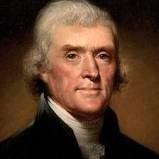


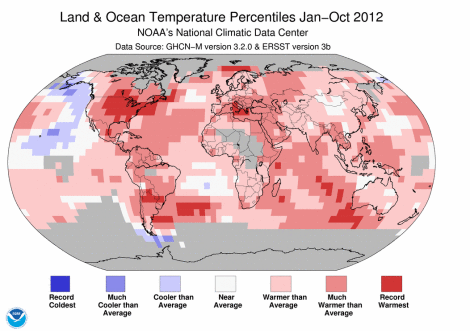



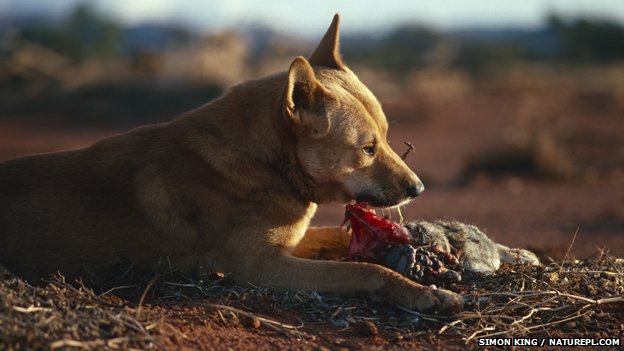
 Learning from Dogs