I was doing some research for another writing project about the history of the domestication of the dog and came across a peer-reviewed article on The National Center for Biotechnology Information website, here in the USA. The article was entitled: Genome-wide SNP and haplotype analyses reveal a rich history underlying dog domestication. The website link is here. (As an aside, if you drop in here and look at the NCBI sitemap it may well serve as an excellent resource.)
Anyway, the dog domestication article is, of necessity, highly scientific but nonetheless worth the read. Here’s a taste from the Abstract.
Advances in genome technology have facilitated a new understanding of the historical and genetic processes crucial to rapid phenotypic evolution under domestication 1,2. To understand the process of dog diversification better, we conducted an extensive genome-wide survey of more than 48,000 single nucleotide polymorphisms in dogs and their wild progenitor, the grey wolf. Here we show that dog breeds share a higher proportion of multi-locus haplotypes unique to grey wolves from the Middle East, indicating that they are a dominant source of genetic diversity for dogs rather than wolves from east Asia, as suggested by mitochondrial DNA sequence data 3
But what really caught my eye was Figure 1, a wonderful illustration of the links between all the breeds of dogs and the grey wolf.
Neighbour-joining trees of domestic dogs and grey wolves.
Branch colour indicates the phenotypic/functional designation used by dog breeders 8,9. A dot indicates ≥95% bootstrap support from 1,000 replicates. a, Haplotype-sharing cladogram for 10-SNP windows (n = 6 for each breed and wolf population). b, Allele-sharing cladogram of individuals based on individual SNP loci. c, Haplotype-sharing phylogram based on 10-SNP windows of breeds and wolf populations. d, Allele-sharing phylogram of individual SNPs for breeds and wolf populations. For c and d, we note breeds where genetic assignments conflict with phenotypic/functional designations as follows: 1, Brussels griffon; 2, Pekingese; 3, pug; 4, Shih-tzu; 5, miniature pinscher; 6, Doberman pinscher; 7, Kuvasz; 8, Ibizian hound; 9, chihuahua; 10, Pomeranian; 11, papillon; 12, Glen of Imaal; 13, German shepherd; 14, Briard; 15, Jack Russell; 16, dachshund; 17, great schnauzer; and 18, standard schnauzer. Gt, great; mtn, mountain; PBGV, petit basset griffon vendeen; pin., pinscher; ptr, pointer; ret., retriever; shep., shepherd; sp., spaniel; Staf., Staffordshire; std, standard; terr., terrier. Canine images not drawn to scale. Wolf image adapted from ref. 31; dog images from the American Kennel Club (http://www.akc.org).
The diagram on its own was a bit of a struggle but looked at in conjunction with the research paper was much better understood. Another reason for going to the original article on the NCBI website is the interesting range of links to other scientific papers that may be seen to the right-hand side of the screen. For example:
The mean sequence distance to ancestral haplotypes indicates an origin 5,400-16,300 years ago (ya) from at least 51 female wolf founders. These results indicate that the domestic dog originated in southern China less than 16,300 ya, from several hundred wolves. The place and time coincide approximately with the origin of rice agriculture, suggesting that the dogs may have originated among sedentary hunter-gatherers or early farmers, and the numerous founders indicate that wolf taming was an important culture trait.
Mitochondrial DNA sequences isolated from ancient dog remains from Latin America and Alaska showed that native American dogs originated from multiple Old World lineages of dogs that accompanied late Pleistocene humans across the Bering Strait. One clade of dog sequences was unique to the New World, which is consistent with a period of geographic isolation. This unique clade was absent from a large sample of modern dogs, which implies that European colonists systematically discouraged the breeding of native American dogs.
If you needed a reminder of the Pleistocene period, as I did, there’s a helpful Wikipedia entry here.
The final link that I wanted to highlight was this one, for all dog owners who worry about the health of our dogs.
Dogs exhibit more phenotypic variation than any other mammal and are affected by a wide variety of genetic diseases. However, the origin and genetic basis of this variation is still poorly understood. We examined the effect of domestication on the dog genome by comparison with its wild ancestor, the gray wolf. We compared variation in dog and wolf genes using whole-genome single nucleotide polymorphism (SNP) data. The d(N)/d(S) ratio (omega) was around 50% greater for SNPs found in dogs than in wolves, indicating that a higher proportion of nonsynonymous alleles segregate in dogs compared with nonfunctional genetic variation. We suggest that the majority of these alleles are slightly deleterious and that two main factors may have contributed to their increase. The first is a relaxation of selective constraint due to a population bottleneck and altered breeding patterns accompanying domestication. The second is a reduction of effective population size at loci linked to those under positive selection due to Hill-Robertson interference. An increase in slightly deleterious genetic variation could contribute to the prevalence of disease in modern dog breeds.
Have to say that there are some fabulous learning opportunities from the enormous range of websites available nowadays.
“Reality is merely an illusion, albeit a very persistent one.”
So said Albert Einstein.
The reason I went searching for a quotation on reality was that our, as in humans, ability to see the world in grossly distorted ways jumped ‘off the page’ at me when I was reading a recent essay from George Monbiot. Followers of Learning from Dogs will know that Mr. Monbiot has featured before; most recently just under a month ago in a post Returning to Nature. Before then in April when George gave permission for the full republishing of his essay The Great Unmentionable.
“Comfort the afflicted, afflict the comfortable.”
Why the notion of humans seeing reality in grossly distorted ways? Simply because in George Monbiot‘s following essay he challenges what we mean by the word ‘wildness’ and I immediately realised that my own idea of wildness was badly corrupted.
See if you react the same way as you read The Naturalists Who Are Terrified of Nature by George Monbiot, republished in full with the kind permission of George.
oooOOOooo
The Naturalists Who Are Terrified of Nature
July 16, 2013
A radical challenge to British conservation and its bizarre priorities.
I’m writing this on the train home, after visiting two places in the north of England celebrated for their “wildness”. One of them is Ennerdale in the Lake District, now officially known as Wild Ennerdale, a valley in which the river has been allowed to move freely once more, and in which native trees are succeeding naturally up the hillsides(1).
The other is the Sheffield Moors (in the Peak District), from which most of the sheep have been removed and where the structure of the vegetation has been allowed to change a little. I found both visits fascinating, not least because of the eruditon and enthusiasm of the people who walked me through these places.
But sitting on the train, watching the chemical deserts of the English lowlands flash past, I’m struck by how pathetically grateful I feel. For what? For the fact that, in two small conservation areas, located in national parks, a few natural processes have been allowed to resume.
Were I to explain to a foreigner that these places are now celebrated by conservationists in Britain for their radical approach, he or she would think I had gone mad. “What?,” they would say, “you are telling me that this is the cutting edge of nature conservation in your country? Where have you been for the past 50 years?”
I don’t know if there is any other country in which people – including conservationists – are as afraid of nature as they are in Britain. I don’t know if there is anywhere else in which conservationists are so convinced that if they relax their intensive management of the natural world, something dreadful will happen.
Nowhere else do conservationists subscribe more enthusiastically to the biblical doctrine of dominion: that we have a holy duty to control and corral nature, in case it gets out of hand. Nowhere else does conservation look more like a slightly modified version of the farming which trashed the land in the first place.
In my view most of our conservation areas aren’t nature reserves at all. They are museums of former farming practices, weeded and tended to prevent the wilds from encroaching. The ecosystem’s dynamic interactions are banned. Animals and plants are preserved as if they were a jar of pickles, kept in a state of arrested development, in which little is allowed to change.
But nature is not just a fixed assemblage of species, maintained as if it were a collection in a museum. It is also the ever-changing relationships between them, the successional processes, the shifting communities: all of which, in many of our reserves, are prohibited.
The problem begins with designation. The “interest features” of a site of special scientific interest – its species and habitats – must be kept in “favourable condition”. Often this means the condition in which they happened to be when the reserve was created. In most cases that’s a condition of dire impoverishment and depletion: ecosystems missing almost their entire trophic structure, most of their large herbivores, all their large predators, in many cases even the trees. They have to be kept like this by extreme and intrusive management, in order to sustain the impacts which reduced them to this woeful state.
In Wild-ish Ennerdale and on the Sheffield Moors, there has been a partial relaxation of this draconian regime. But even in these places, there is much that I question.
On the Sheffield Moors, for example, cattle are kept: at much higher densities and for far longer periods than large herbivores would exist in a self-willed ecosystem. In many parts of the moors, trees, if they have the temerity to return, are cleared. The effort, even here, is to ensure that the landscape remains farmed, open and bare.
This is done partly to favour breeding populations of wading birds(2). It’s likely that these species are being maintained at artificially high populations(3). A tendency I’ve noticed among some groups is to try to make all their target species common, even if they were naturally rare. Perhaps some species ought to be rare. Those which lived in open habitats – which would have been small and occasional before people started cutting and burning the forests – are likely to have been rarest of all.
Think of the varying fortunes of grouse populations in Britain. The palaeontological evidence is extremely sparse, so this is guesswork, but during the Boreal and Atlantic phases, 9,000-5,000 years ago, when closed-canopy forest covered most of Britain, the commonent grouse species in this country might have been hazel hen. Perhaps the second commonest would have been capercaillie, followed by black grouse, followed by red grouse, which are likely to have been very scarce.
That likely sequence has now been reversed. Hazel hen is extinct, capercaillie extremely rare, black grouse are sparse and in severe decline and red grouse are bloody everywhere. The red grouse is the magpie of the uplands: it benefits from human intervention, which in this case means the clearing of land.
Arbitrarily, conservation groups in the uplands of England and Wales have decided that their priorities are, for example, dunlin and curlew, rather than capercaillie and pine martens. I’m not insisting that this is always the wrong decision. But it’s a decision that should be rigorously questioned, especially if this intensive management means the destruction of habitats which would have sheltered a much wider range of species.
Spend a couple of hours in an open upland nature reserve, and count the diversity and abundance of the birds you see. Then spend a couple of hours in a bushy suburban garden and do the same thing. In my experience you’re likely to see more birds of more species in the garden. That’s hardly surprising: most birds – indeed most wildlife – require cover to survive. Am I the only one who thinks that something has gone badly wrong here?
It’s not just common species I’m talking about. Many of those excluded by our brutal upland management are not just rare in Britain; they are extinct.
Whenever I meet a conservation manager, I find myself acting like a 3-year old: I keep asking “why?”. Why are you preserving this and not that? Why is this site designated for moorland flea beetle and pearl-bordered fritillary, rather than blue stag beetle and lynx? Why are you protecting the wretched scrapings of life that remain here, rather than reintroducing the species which would once have lived here, but have been excluded by the kind of interventions that you – the conservationists – have sustained?
When I worked in the Amazon, the conservationists I met were fighting to defend the rainforest against cattle ranching. In Britain the conservationists are – literally – defending cattle ranching against the rainforest. Britain was once covered by rainforest: woodland wet enough for epiphytes to grow. (Epiphytes are plants which root in the bark of trees). Our closed-canopy rainforest was likely to have been richer in species than any of our remaining habitats. Given half a chance, it would return. But it isn’t given half a chance, even in conservation sites, because conservationists keep clearing the land and running cattle on it, in case the wayward and irresponsible ecosystem does something that isn’t listed in the rules. In doing so, they preserve a burnt, blasted and largely empty land with the delightful ambience of a nuclear winter.
Conservation groups in this country are obsessed by heather. Heather is typical of the vegetation that colonises land which has been repeatedly deforested. You can see similar vegetation – low, scrubby, tough, thriving on burnt ground and depleted soils – covering deforested land all over the tropics. There, the dominance of these plants is lamented by ecologists, for it is rightly seen as a symptom of ecological destruction. Here it is fetishised and preserved.
Even in the Eastern Sheffield Moors management plan, published by the RSPB and the National Trust, “cutting and burning” are listed as the requisite tasks for managing heather(4). Imagine what a tropical ecologist would say if she saw that. “You people have been telling us for decades that we should stop cutting and burning. You’ve been sending us money and lobbying our governments to discourage us from doing it. And all the while you’ve been telling yourselves that cutting and burning are necessary for the protection of wildlife.” If she concluded that we are hypocrites, that we are unambitious, irrational, anally retentive and ecologically illiterate, she would not be far wrong.
The same plan reveals that these two august conservation bodies will maintain cattle on the moors at their current level, but keep them there for longer. “Their grazing and trampling will manage the vegetation in a way which should improve the condition of the habitats and benefit wildlife.”(5) What does this mean? Yes, it might benefit some wildlife, but only at the expense of other species. Yes, it might “improve the condition” of a habitat, if by improvement you mean a better representation of the state of arrested development you’ve chosen. It sounds uncomfortably close to the 19th Century agricultural meaning of “improvement”: which means draining and clearing land to make it more suitable for farming.
It astonishes me to see statements like this left unpacked. Asserted without qualification, they create the impression that all wildlife benefits from management of this kind. Of course, all interventions (including a complete cessation of management), are better for some species than for others. But in my view, the losses inflicted by cattle ranching – here, as in the Amazon – outweigh any gains.
An even starker example is provided by a report commissioned by the RSPB on changing livestock numbers. It contends that “undergrazing and loss of vegetation structure is now occurring in some areas, with adverse impacts for some species such as golden plover and other waders.”(6)
“Undergrazing” is an interesting concept. The report seems to be referring to “undergrazing” by sheep. How can a native ecosystem be undergrazed by an invasive ruminant from Mesopotamia? Is our wildlife underhunted by American mink? Are our verges underinfested by Japanese knotweed?
I would question what undergrazing by any domestic animal means. “Not farmed enough” is what the term appears to signify, “or not sufficiently damaged”. Sure, the golden plover is among a small group of species that benefit from scorched-earth policies, but a far greater number are harmed by them. So why is the golden plover the priority? And how can a report for a conservation organisation blithely use the term undergrazing without qualification or explanation?
Another RSPB report advocates “the eradication of invasive tree species” from the bare uplands of Wales and claims, without citing any evidence or explaining what this means, that “extensive grazing, ideally mixed grazing, is important in maintaining upland pastures in a state that benefits upland birds and other wildlife.”(7)
A document published by the Welsh government revealed something I have never seen in the RSPB’s literature: that the society advises farmers “to cut down trees to discourage buzzards which kill other birds.”(8)
I checked with the RSPB in Wales and it confirmed that it does “at times provide advice to landowners on the management of trees to reduce available vantage points and nest sites for some avian predators.”(9)
Isn’t that more or less what the British government wanted to do to protect pheasant shoots? And didn’t the society contest those efforts?(10)
I wonder whether, in their arbitrary choice of target species and target habitats, British conservationists are influenced by the legacy of hunting. Many of the birds on behalf of which this extreme and brutal simplification of the ecosystem takes place are those which, in the 19th Century, were pursued by gentlemen with guns. Perhaps we should see conservation efforts in Britain as a form of gamekeeping, which regards some of our native species as good and worthy of preservation, and others (such as trees and buzzards) as bad and in need of control.
Sometimes I receive coherent answers from the conservation managers I speak to, which are debatable but at least consistent. Sometimes the only answer I receive is “that’s what the rules say.” But isn’t it time we began to challenge the rules? Isn’t it time we began to question the way sites are designated, and to challenge the ecological blitzkreig required to maintain them in what is laughably called “favourable condition”? Isn’t it time we began asking why we have decided to privilege certain species over others? Isn’t it time we started wondering whether the collateral damage required to support them is worth it?
After all, how did nature cope before we came along? To judge by the actions of British conservation groups, it must have been in a pretty dismal state for the three billion years before humans arrived to look after it.
2. National Trust and RSPB, 2012. The Eastern Moors Management Plan summary, page 15. Eastern Moors Partnership, Curbar.
3. This, of course, is speculative, as palaeontology gives us few indications of numbers. But the circumstantial evidence seems powerful: the habitat required for breeding populations of these birds, many of which need to nest several hundred metres from the nearest woodland edge to avoid predation, was in short supply. See for example:
NJ Whitehouse and D Smith, 2010. How fragmented was the British Holocene wildwood? Perspectives on the ‘‘Vera’’ grazing debate from the fossil beetle record. Quaternary Science Reviews Vol. 29, nos. 3-4, pp539–553. doi.org/10.1016/j.quascirev.2009.10.010
FJG Mitchell, 2005. How open were European primeval forests? Hypothesis testing using palaeoecological data. Journal of Ecology Vol. 93, 168–177
JHB Birks, 2005. Mind the gap: how open were European primeval forests? Trends in Ecology & Evolution Vol. 20, pp154-156.
R Fyfe, 2007. The importance of local-scale openness within regions dominated by closed woodland. Journal of Quaternary Science, Vol.22, no. 6, pp571–578. doi: 10.1002/jqs.1078
JC Svenning, 2002. A review of natural vegetation openness in northwestern Europe. Biological Conservation Vol 104: 133-148.
RHW Bradshaw, GE Hannon, AM Lister, 2003. A long-term perspective on ungulate-vegetation interactions. Forest Ecology and Management, Vol. 181: 267–280.
8. Welsh Government, 2010. Glastir: frequently asked questions, Section 13. This document is no longer available on the government site, but you can read it here: http://www.fuw.org.uk/glastir-faq-miscellaneous.html
9. Emma Roberts, RSPB Wales, 10th August 2011. By email.
It is our routine at home here in Oregon to let the kitchen group of dogs out first (Lily, Ruby, Casey & Paloma, with Sweeny tagging along) while Jean puts together our small breakfast. The time is around 6am to 6:30am and both Jean and I are usually wearing dressing gowns. Once this first group has been outside, then I let the ‘bedroom’ group out (Pharaoh, Cleo, Hazel and Dhalia).
Such as I did this morning, unusually a day starting dull with overcast cloud.
Suddenly, I heard the most awful squealing of an animal in pain over in the dense wooded area to the South-West of the property.
The wooded area in question.
In plastic slippers and dressing-gown only, I dashed into the woods and to my horror saw that Cleo, Hazel and Dhalia had cornered a young deer, and at least Hazel was nipping at a rear leg.
A not uncommon sight at home.
I screamed at the dogs, to no avail. They took not the slightest notice of me.
Then the young deer wriggled free and fled into the trees. The dogs recornered it and plunged in again. The deer broke free again, and so it went on. Eventually, after some ten minutes of the most dreadful hollering and chasing by me, the young deer jumped a fence and ran off with its mother who had been shadowing the terrible event. I prayed that it wasn’t badly hurt.
Gracious, I was so angry with the dogs! What disgusting behaviour towards this young, beautiful creature.
When I was back in the house trying to regain my breath, still so angry at the dogs, a thought came to my mind. Tens of thousands of years ago, this behaviour of the dogs was held in great esteem.
Early man evolved from a tribal hunter-gatherer existence to the pastoral life of farming about 10,000 years ago. If the DNA evidence shows, as it does, that the dog evolved from the wolf as a separate species around 100,000 years ago, then dogs were part of the life of hunter-gatherer man for something of the order of 90,000 years, possibly a couple of decades longer!
In fairness, the present lineage of dogs was domesticated from grey wolves only about 15,000 years ago. Despite fossil remains of domesticated dogs having been found in Siberia and Belgium from about 33,000 years ago, none of those lineages survived the Last Glacial Maximum. No fossil specimens prior to 33,000 years ago have indicated that they are clearly from the morphologically domesticated dog.
Even if, and it’s a very big ‘if’, the relationship between man and dog is only about 15,000 years old, one can only speculate how each species came to know the other, in every imaginable way.
Actually, we can go beyond speculation because in a study published by the PLOS ONE scientific journal in March 2013, Dr. Robert Losey, Associate Professor in the Department of Anthropology, University of Alberta and the lead author, explained that:
Dog burials appear to be more common in areas where diets were rich in aquatic foods because these same areas also appear to have had the densest human populations and the most cemeteries,
If the practice of burying dogs was solely related to their importance in procuring terrestrial game, we would expect to see them in the Early Holocene (around 9,000 years ago), when human subsistence practices were focused on these animals. Further, we would expect to see them in later periods in areas where fish were never really major components of the diet and deer were the primary focus, but they are rare or absent in these regions.
The PLOS ONE paper went on to report that researchers found that most of the dog burials occurred during the Early Neolithic period, some 7,000-8,000 years ago, and that “dogs were only buried when human hunter-gatherers were also being buried.”
So back to the morning’s drama between the dogs and the young deer.
The efficiency of the way the dogs cornered the deer was breath-taking. Had I not been coming at them in such a state of anger and agitation, and especially if I was one of a group of say, 2 or 3 humans, the odds are that the deer could have been grabbed and dispatched. In other words, those three dogs had demonstrated that 20,000, 40,000, 80,000 or more years ago, they were critically useful at helping early hunter-gatherer man feed himself.
Back to Dr. Losey’s view, “I think the hunter-gatherers here saw some of their dogs as being nearly the same as themselves, even at a spiritual level. At this time, dogs were the only animals living closely with humans, and they were likely known at an individual level, far more so than any other animal people encountered. People came to know them as unique, special individuals.”
Does make sense, doesn’t it.
“Oh look! We could have turkey for dinner tonight!”
A reflection on the history of the German Shepherd dog.
Yesterday’s account of getting to know GSD Duke a little better caused me to find a post that had been sitting in my Drafts folder for a couple of years. It was about a piece published in The New York Times, Sunday Review, October 8th, 2011 under the heading of Why German Shepherds Have Had Their Day.
Why German Shepherds Have Had Their Day
By SUSAN ORLEAN
SUCCESS can be a drag. You yearn for it, strive for it, and then, when it finally arrives, it sets off repercussions you never anticipated that sometimes undo that success.
Take the German shepherd. Originally bred to the exacting standards of a German cavalry officer, it became one of the 20th century’s most popular working breeds. But in recent years that popularity, and the overbreeding that came with it, has driven the German shepherd into eclipse: even the police in the German state of North Rhine-Westphalia, who had relied on the dogs for years, recently announced they were replacing them with Belgian Malinois, because the less-popular Malinois were hardier and more reliable.
But there is good news about this bad news, if you are a lover of the breed, because less visibility, especially in inspiring roles as public servants, is likely to mean less demand for the dogs. That means less reason to produce too many puppies, which is the best thing that can happen to any purebred dogs.
The article continued with the history of the breed. But rather than stay with the NYT piece, for more about the breed history I’m going to cross over to the website of the British charity, German Shepherd Dog Rescue (GSDR). They have a comprehensive account of the History and Origins of the Breed.
History and Origins of the German Shepherd Dog
A brief insight into the development of the breed
The German Shepherd breed appeared late at the end of the 19th century in Germany and they were first exhibited at a show in Hanover in 1882. They were not like German Shepherds as we know them today though being rough coated, short tailed and rather resembling mongrels. The German Shepherd Dog as we now know it didn’t really appear until after the Second World War.
The breed was actually created by the cross breeding of working sheep dogs from rural Germany by an ex cavalry officer called Max von Stephanitz whose aim was to create a working dog for herding which could trot for long periods.
A breed standard was drawn up and the first breed show took place in 1899 following which the GSD became firmly established across Germany. In 1906 the first dogs were exported to the USA .
Since then, the breed has grown enormously in popularity and is now one of the most popular pedigree breeds in the UK as a pet as well as being the favourite working breed for many forces, especially the police. They are widely used for security purposes because of their strong protective instincts.
Many people in the UK still call these dogs Alsatians which may partly be due to the fact that when they were first bred, the Alsace region of France, where these dogs were very popular, was part of Germany . I still get people who think that Alsatians are the traditional short coat black and tan dogs and that German Shepherds are the long coated dogs that have become popular.
GSD’s make wonderful family pets and will protect family and home.
These dogs are highly intelligent and will show undying devotion to their master but they are dogs that need company and stimulation to be at their best. It is however, important to remember that this is a working breed and that they do have certain characteristics that some people might find difficult to live with. The German Shepherd should be steady, loyal, self assured, courageous and willing and should not be nervous over aggressive or shy. Nervous aggression is something that we are now seeing more often as a result of bad breeding. It is sad but there has always been indiscriminate breeding of German Shepherds right from the start, which has lead to problems with temperament and health.
Before leaving the GSDR website, please read more about this important charity, “We are one of the longest standing and largest German Shepherd rescues in the UK.” and if there is any way at all that you can help, please, please, please! (And fellow bloggers, consider a post spreading the word about this wonderful charity and these most magnificent of dogs.)
So a few memories of German Shepherds closer to home.
Young Pharaoh 12th August, 2003 when he was just 10 weeks old.
We are friends for life! Each for the other.
Pharaoh, ten-years-old, and King of his Castle! Taken on the 3rd June, 2013 at our home in Oregon.
The arrival of young Cleo!
I suspect Pharaoh is explaining to Cleo that there’s only rule of the house – his rule!
Picture taken April 7th, 2012
From puppy to Big Dog! Cleo resting where she shouldn’t be! February, 2013.
*** If you are not into introspection, then look away and come back tomorrow! 😉 ***
Regular readers will know that quite frequently I write under a topic heading that could be regarded as within the classification of key subjects of our time. You know, such subjects as big government, big money, big power, and even climate change! 😉
Why has this been the case?
Well, because, a) most of my life I’ve tried to stay abreast of ‘current affairs’ and, b) within the broad label of ‘integrity’ it’s relevant to this blog. The sub-heading of the blog is after all: “Dogs are integrous animals. We have much to learn from them.” (Yes, I do know ‘integrous’ isn’t grammatically accurate! – Any suggestions for an alternative word?)
Stay with that while I go elsewhere.
Yesterday (Tuesday) a number of events ended up having a profound effect on me. On the face of it, utterly disconnected events.
The first was a post from Alex Jones on his blog The Liberated Way. The only common ground between Alex and me is that we both know Colchester in Essex, England. Alex because he lives there today, me because I used to have a business in Colchester in previous times. Other than that just a couple of bloggers separated by thousands of miles.
Anyway, the post was this one: Cycle of Life. Alex wrote:
Life seems like a cycle of birth, living and death.
I have the honour of following awesome bloggers on WordPress. I learn inspirational teachings from their intimate life experiences that they share with their readers. The cycle, for in my belief everything moves in cycles, of birth, life and death is if we are attentive to living life something we will often be reminded of in our interactions with others and nature.
Then later, adding:
Lijiun is a Buddhist who shares daily experiences from their own life with a Buddhist theme running through their blog. Lijiun has a cat called Little White who often acts as a teacher to them about the meaning of life and a reminder of Buddhist teachings. Little White two weeks ago brought home a stray kitten, which it adopted as like a surrogate parent. Yesterday Adik the kitten died, and a beautiful blog post by Lijiun in memory of Adik reminds us life is impermanent.
Almost absent-mindedly, I clicked on the link about the death of Adik and …… was shaken to my core; shaken by the power of the truth. I want to give you more than a link to the post – want to share some of the beautiful words.
IN MEMORY OF “ADIK”…
In memory of our little Kitten, “adik”….
Every moment in life is full of changes, this is a law of nature.
However, sometimes we might assume that everything unchanged.
“Adik”- Our stray kitten, so far, she was not showing a sign of sickness. Yesterday, in the evening, I discovered she was laid down under my neighbor car, not moving at all and look severe sick. We checked through her little body, no physical injuries and we tried our best to feed her water and Cat food. She refuse to take.
We need to send her to Veterinarian immediately as her condition was critical, however during Sunday, especially evening time. Most of the Veterinarian clinic is closed. We did our best to check through internet, we were able to locate one of the Vet and we rushed over.
In the journey, we played Mantra Chanting to our little kitten, We reached to the vet clinic, “Adik” was alive but in agony…. she was struggling for life. The only thing we can help was to keep chanting mantra, our only aspiration are for her to relieve from suffering, not to reborn in 3 lower realm, able to follow spiritual practice and attain enlightenment in the coming life.
“Adik” passed away in peace even before the Veterinarian came to treat her.
Then Lijiun went on to write that “This incident gave me a very clear insight on “death” and offered more of that insight: (These are extracts: Please read the full post.)
1. Impermanence Of life
Nothing is permanence , we need to live at now, not past or future.
When Death approached, no bargain time at all whether you are rich or poor, you are ready or not, you are healthy or sick, …
Do all good deeds when you are still alive, Follow spiritual path whenever you can, don’t give excuses that “I’ve plenty of time, I’ll do it when I am “FREE”? When You are Free, you might not able to do it…
2. Young or old…
Some of us, might assume that people died in old age. As such, we’ve a long journey in life.
Is It true???
I learned from “Adik” Sudden death – that death will happen in any age.
“Coffin is not meant for elderly people….” This is so profound.
Spend time with your family members, be filial piety to your parent, Pursuit your dream, Don’t wait until later day…. We are unsure we can survive until later day!
3. Breathing in & Out
Treasure every breath in & breath out…
Life is just in between Breath in & out.
Be Mindfulness in life!
4. What Can you bring???
What can you bring after death, “NOTHING”.
No matter, how much wealth, how much money, how many cars, how many bungalow, how high is your position, how lovely is your family… you can’t bring anything..
Ask yourself, “What is the purpose of life?”, “What do you want?”
5. Alone..
You, yourself need to face the death moment…
Nobody can help you… Don’t avoid the topic and say, “It’ll not happen to me so soon”..
Just get ready.
6. Love
“Adik” passed away at 8:30 pm.. according to my mom, Little White, Our lovely cat was “Meowing” loudly at home. He can sense that “Adik” was not longer around. Animals are just like us, they are loving. Please treat all beings well, no differentiation on form.
We are so touched that “Adik” came home before her death and spend her last moment with us.
Before we sent “Adik” to Vet, She “Meow” loudly to my mom as a good-bye & gratitude to my mom for taking care of her. It’s so touching!
Thank you to “Adik” for celebrating 16 happy day with us and leave behind a great lesson to us.
May “Adik” be relieved from suffering, not reborn in 3 lower realm and find the lasting happiness!
May all beings be Well and Happy!
Then also yesterday, I was chatting to someone who lives close to us; he and his partner-lady have become good friends. He was bemoaning the corruption of so much of his fine country and went on to say that the only way that he could function was to turn away from the big stuff, have no TV, ignore the constant news of this and that, the endless trials and tribulations in this world of ours. I listened in silence, only to find later that the words must have left a mark on me.
My dear friend, Dan Gomez, has known me for over 40 years. He was my Best Man at my wedding to Jean in November, 2010. He and I have been exchanging emails about the truth of the role of man in the raising of the temperature of the planet. I sent Dan the link to the death of Adik, the kitten. It seemed so much more important than the emails we had been exchanging about the ‘big’ subjects in life.
Then something happened overnight (Tuesday/Wednesday) because not long after I got to my PC this morning, I sent this email to Dan.
Dear Dan,
Yesterday was one of those days, one of those rare days I should have said, where my view of life was radically changed.
Partly because I’m still adjusting to Corinne’s death [my sister], partly because of something I read elsewhere, and other stuff best left for a phone call.
In essence, despite my anger at what is going on around us (big government, big money, big power, even climate change!) I want to retreat from these areas and focus on what is most valuable to me.
Aspects of my life such as love, friendship with ‘old’ travelers, the natural world, being in the present, community, our animals (especially Pharaoh who is over 10), my writings, my book, our small world here at 4000 Hugo; you get my drift!
I’m 70 in November, 2014. Corinne died in her 80th year. Time goes so quickly. No, life goes so quickly. Jean and I met 6 years ago this next December. I must turn away from the things over which I have little or no control and embrace the present. Just what dogs do so well. Live in the present.
It’s all about endeavouring to come to the end of one’s life hearing those immortal words of Edith Piaf, “Je regret rien.”
So dear reader of Learning from Dogs, if you are still ‘on frequency’ – Well done! You have stuck with my very long ramble!
Back to what gets written about in this place. If integrity means anything, it means I’m going to drop all the ‘big’ topics and focus entirely on what man can learn, nay, has to learn from dogs. Indeed, will close by republishing the full ‘home’ page below.
Pharaoh – just being a dog!
Dogs live in the present – they just are! Dogs make the best of each moment uncluttered by the sorts of complex fears and feelings that we humans have. They don’t judge, they simply take the world around them at face value. Yet they have been part of man’s world for an unimaginable time, at least 30,000 years. That makes the domesticated dog the longest animal companion to man, by far!
As man’s companion, protector and helper, history suggests that dogs were critically important in man achieving success as a hunter-gatherer. Dogs ‘teaching’ man to be so successful a hunter enabled evolution, some 20,000 years later, to farming, thence the long journey to modern man. But in the last, say 100 years, that farming spirit has become corrupted to the point where we see the planet’s plant and mineral resources as infinite. Mankind is close to the edge of extinction, literally and spiritually.
Dogs know better, much better! Time again for man to learn from dogs!
New research shows the beauty of the bond between dog and man.
I was doing some research for another writing project and came across this on the NBC News website:
What prehistoric dog burials tell us about owners
By Jennifer Viegas
An analysis of ancient dog burials finds that the typical prehistoric dog owner ate a lot of seafood, had spiritual beliefs, and wore jewelry that sometimes wound up on the dog.
The study, published in PLoS ONE, is one of the first to directly test if there was a clear relationship between the practice of dog burial and human behaviors. The answer is yes.
Photo – Robert Losey. The ancient dog was buried in a resting position. It was part of a study to directly test if there was a clear relationship between the practice of dog burial and human behaviors. The answer is yes.
That PLOS ONE study, published March 2013, found that “dog domestication predates the beginning of agriculture about 10,000 years ago.”
Dr. Losey and his dog, Guiness
Dr. Robert Losey, Associate Professor in the Department of Anthropology, University of Alberta and the lead author, explained that,
Dog burials appear to be more common in areas where diets were rich in aquatic foods because these same areas also appear to have had the densest human populations and the most cemeteries,
If the practice of burying dogs was solely related to their importance in procuring terrestrial game, we would expect to see them in the Early Holocene (around 9,000 years ago), when human subsistence practices were focused on these animals.
Robert Losey continued.
Further, we would expect to see them in later periods in areas where fish were never really major components of the diet and deer were the primary focus, but they are rare or absent in these regions.
The PLOS ONE paper went on to report that researchers found that most of the dog burials occurred during the Early Neolithic period, some 7,000-8,000 years ago, and that “dogs were only buried when human hunter-gatherers were also being buried.” Dr. Losey went on to say,
I think the hunter-gatherers here saw some of their dogs as being nearly the same as themselves, even at a spiritual level. At this time, dogs were the only animals living closely with humans, and they were likely known at an individual level, far more so than any other animal people encountered. People came to know them as unique, special individuals.
Those interested in the research paper may find it here, and read the Abstract:
Ancient DNA Analysis Affirms the Canid from Altai as a Primitive Dog
Abstract
The origin of domestic dogs remains controversial, with genetic data indicating a separation between modern dogs and wolves in the Late Pleistocene. However, only a few dog-like fossils are found prior to the Last Glacial Maximum, and it is widely accepted that the dog domestication predates the beginning of agriculture about 10,000 years ago. In order to evaluate the genetic relationship of one of the oldest dogs, we have isolated ancient DNA from the recently described putative 33,000-year old Pleistocene dog from Altai and analysed 413 nucleotides of the mitochondrial control region. Our analyses reveal that the unique haplotype of the Altai dog is more closely related to modern dogs and prehistoric New World canids than it is to contemporary wolves. Further genetic analyses of ancient canids may reveal a more exact date and centre of domestication.
DNA testing indicates that the evolutionary split between dogs and wolves was around 100,000 years ago or more. The value of dogs to early human hunter-gatherers led to them quickly becoming ubiquitous across world cultures.
Thus it is in the order of 90,000 years, possibly a couple of decades longer, from the point where a bond was made between early man and the wolf to the era when man evolved from a tribal hunter-gatherer existence to farming the resources of the planet. Thousands and thousands of years of dogs being the greatest animal relationship we humans have ever experienced.
Back to that NBC news item:
Erik Axelsson, a researcher at Uppsala University’s Science for Life Laboratory, has also studied prehistoric dogs. He too found that human and dog diets, burial practices and more often paralleled each other, revealing how close the dog-human bond has been for thousands of years.
Axelsson said, “Dogs and humans share the same environment, we eat similar food and we get similar diseases.”
Based on the number of burials, we also often spend eternity together too.
Eons of time.
A hundred, thousand years of knowing man, and it shows in the eyes.
Last year, on this day, I published the transcript of the Declaration of Independence before Congress on July 4, 1776. Part of one of the comments, left by Patrice Ayme, was this:
That the trust is gone is actually a good thing. We cannot trust a system where a few lead hundreds of millions, if not billions. Even if they come from the People, and especially if they come from the People. Because the less power where they come from, the greedier they are, and thus, the more eager to be bought.
Two thousand years ago, any grouping of a few thousands Germans got enraged when someone would proclaim himself a king. Now people venerate those who think they can do all the thinking in place of billions.
Hence we are facing the reality of a vastly incomplete revolution: Athens, at her apex, had direct democracy (OK, no women, no slaves…). We don’t.
Perhaps, what has changed most in the last year is the realisation, the growing realisation, as to where real power lies.
This highly subjective conclusion comes to me as a result of reading, very recently, two essays.
In the wake of renewed interest in the Keystone Pipeline project and the likelihood that Obama will eagerly approve it unless we stop him, there’s a lot of interest in what actually flows through those pipes.
All of which produces a great bottom line. Click any of those links to jump to that section.
The primary source, though not the only source, of this information is a great article and slideshow at the Scientific American website. Feel free to click and read as we walk through this material.
It is a thorough and very disturbing explanation of what Keystone XL is truly about; please don’t hesitate to read it in full.
It includes this video:
However, I will republish the closing paragraphs:
SO WHAT FLOWS THROUGH THE PIPES?
If you thought that diluted bitumen, as produced by the upgrading plants, is now capable of flowing through a pipeline to the cash registers in Texas (or wherever), you’d be wrong. Even in diluted form, bitumen doesn’t flow. To make it flow, it has to be heated — often to 150°–160°F — and then forced through the pipelines under high pressure.
So what flows through the pipeline? Keeping those cash registers in mind, you now have all the pieces. Tar sand pipelines contain:
A carbon-rich colloidal suspension …
Made up of lighter-than-water, easily-evaporated toxic liquids (like diesel) …
And heavier-than-water solids (the tar or bitumen itself) that sink to the bottom of rivers and below the mud in fields …
Which has been heated hot enough to burn your hand — or accelerate the external corrosion of the pipeline itself, including pinhole breaks …
Which has been forced to move under high pressure …
And which contains poisons and toxins like sulphur, arsenic, nickel, lead and mercury …
That’s what flows through the pipelines. Or to put it more simply:
What flows through the pipes is the unmonetized assets of the try-and-stop-me CEO class, which if it spills, will poison everything it touches for decades or centuries, and if it gets into the air, will turn most of our grandchildren — the ones that survive — into hunter-gatherers.
Bill McKibben counts those unmonetized assets (proven reserves) at $27 trillion dollars. Add in reserves that are likely but not proven, plus the ones in the melting Arctic that are yet to be found, and you’re talking real money. The billionaire class won’t walk away from that in a hurry.
And that, kids, is Science Talk for today. We learned a little about a lot, didn’t we — everything from colloidal suspensions and bitumen “froth,” to billionaire psychopathology and cash registers in Texas. To those of you who got to this end of the post, my thanks!
So hold in mind the reference to the billionaire class as I cross the ‘pond’ to the old country for the second essay.
Recently, George Monbiot published an essay under the title of Robber Barons.
It opened, thus:
Why do we ignore the most blatant transfer of money from the poor to the rich?
It’s the silence that puzzles me. Last week, the Chancellor stood up in parliament to announce that benefits for the very poor would be cut yet again. On the same day, in Luxembourg, our government battled to maintain benefits for the very rich. It won. As a result, some of the richest people in Britain will each continue to receive millions of pounds in income support from taxpayers.
There has been not a whimper of protest. The Guardian hasn’t mentioned it. UK Uncut is silent. So – at the other end of the spectrum – is the UK Independence Party.
I’m talking about the most blatant transfer of money from the poor to the rich that has occurred in the era of universal suffrage. Farm subsidies. The main subsidy – the single farm payment – is doled out by the hectare. The more you own or rent, the more money you receive.
Later on mentioning:
The minister responsible for cutting income support for the poor, Iain Duncan Smith, lives on an estate owned by his wife’s family. Over the past ten years, it has received €1.5m in income support from taxpayers.
How much more obvious do these double standards have to be before we begin to notice?
Then Mr. Monbiot examines some of the cultural aspects such as how “A high proportion of the books aimed at very young children are about farm animals.” then closes with this thought.
Whatever the reason may be, it’s time we overcame these inhibitions and confronted this unembarrassed robbery of the poor by the rich. The current structure of farm subsidies epitomises the British government’s defining project: capitalism for the poor, socialism for the rich.
So examples from both sides of The Atlantic that reveal deeply disturbing issues. However …….
I celebrate America this day. I celebrate the power of the common man to achieve justice and fairness for the peoples of all nations. I celebrate the Constitution of the United States of America.
oooOOOooo
Preamble
We the people of the United States, in order to form a more perfect union, establish justice, insure domestic tranquility, provide for the common defense, promote the general welfare, and secure the blessings of liberty to ourselves and our posterity, do ordain and establish this Constitution for the United States of America.
Without doubt, President Obama’s recent speech on climate change was very welcome. I fervently hope this is a genuine commitment to change the course of the biggest and most powerful nation on our planet. Abandoning the Keystone XL pipeline would be the proof to my mind. UPDATE: But read this!
But the runaway, exponential growth in CO2 has a brother; huge growth in the world’s population.
I’m going to ‘smack you in the face‘ with this population chart.
To put that into context from a personal perspective, when I was born in 1944 the global population was 2.5 billion persons. Some 4.7 billion fewer people than today!
But that prediction from the U.S Census Bureau in June, 2011 is already out of date!
13 June 2013 – The current world population of 7.2 billion is projected to increase by 1 billion over the next 12 years and reach 9.6 billion by 2050, according to a United Nations report launched today, which points out that growth will be mainly in developing countries, with more than half in Africa.
Now please humour me for a few moments. If the world population is presently 7.2 billion people and by 2050 the prediction is 9.2 billion people, that is an increase of 2,400,000,000 persons.
The end of 2050 is 438 months away. Now do the maths. That growth in population in that time period is the equivalent of an increase in population of 5,479,000 persons every single month!
Need to find a darkened room – I feel a headache coming on!
Posted by Chip Ward at 4:29pm, June 23, 2013.
Follow TomDispatch on Twitter @TomDispatch.
Rewilding the West
Here’s a nifty trick that’s been on my mind lately. In case you hadn’t noticed, the weather news this season has been pretty grim. Tornados so large and destructive that they would have given Dorothy pause, 500-year European floods, massive rainstorms rolling across the land, record heat in California and Alaska, late snowfalls that boggle the imagination, wildfires that dwarf past ones in the American West. I could go on, but why bother since anyone who has been watching primetime TV news can’t but notice that staggering weather has been the lead or second story much of the time all spring and into the summer.
You’re probably wondering right now: But what’s the trick? I’m surprised you haven’t noticed yourself. All of this weather has a new, made-for-TV label. It’s now regularly called “extreme weather” or “severe weather.” And that’s anything but inaccurate. The weather has been both “severe” and “extreme” this spring. The trick is that, as a label, “extreme weather” has managed (with rare exceptions) to obviate the need even to mention that any of this could have the slightest thing to do with climate change, with our overheating, over-greenhouse-gassed planet. Think of it as a fabulous form of recognition and denial wrapped in the same package.
The TV news gets all the benefits of night-after-night, eyeball-gluing drama in which the weather goes nuts, houses are destroyed, and people weep (or are stoic) about ruined lives. It gets to bring in the tornado watchers and the weather people in their raincoats and waders. (Have you noticed that the TV news can’t report a flood without putting some reporter with a mic knee-deep in water?) It gets to focus nightly on those daunting weather maps with their blazing red danger zones, and offer warnings about what potential disaster tomorrow might have to offer, all the while remaining in official, blissful denial about what’s happening on this planet of ours. Somehow, it has managed to incorporate the possible effects of climate change into the nightly news as a major story, while excluding just about all serious discussion of it. Tell me that isn’t a doubly nifty trick!
Of course, if there’s nothing but “extreme weather” happening and that weather has no extreme context, no extreme meaning, then none of us have to worry our little heads about what’s to be done. Those trying to remedy the degradation of conditions on this planet can also be ignored, which is why we couldn’t be more pleased that TomDispatch regular Chip Ward introduces us to such a person today. Tom
Trek West for the Big Picture Saving the Land One Footfall at a Time
By Chip Ward
My home sits at the gateway to a national park in Utah, a source of envy among tourists who gather along Capitol Reef’s “scenic drive.” But after 40 years of living in one desert or another, I know firsthand that America’s iconic desert landscapes, places like Monument Valley and Arches National Park, are the exceptions, not the rule. The rule is that we dig up, dump on, dam, bomb, drill, over-graze, and otherwise abuse our deserts, most of them public lands owned by you, the taxpaying citizen. Generally, our management of the nation’s public lands is a disgrace and deserts are exhibit A.
But let’s skip the grim survey of how humans are overloading the carrying capacity of our original earthly Eden that usually opens a report like this. The intent of such a recitation of folly is to compel the reader’s attention by underlining the dire importance of the topic at hand. But I assume you understand by now that you woke up this morning on an overheated planet of slums threatened by ecological collapse.
So instead, let’s get right to the point: what do we do about it? How do we begin to heal the wounds?
The crises we face and that our children and grandchildren will endure long after we leave them invite a visionary response. On the other hand, the world is already awash in well-intentioned tinkerers. Yet dysfunction and destruction still reign. Maybe it’s time to leap to a new paradigm.
Enter John Davis and Trek West. At this very moment, Davis is walking, biking, paddling, and horseback riding 6,000 miles through a chain of mountain ranges that stretches like a spine across North America from the Sierra Madres of Mexico through the Rockies of the American West up into Canada. He started this winter in the Sonoran desert we share with our southern neighbor and has been heading northward for months. He will cross many of our most treasured national parks like Yellowstone and Grand Canyon, the ones that tourists love, but his trek is no sightseeing adventure.
Davis and his Trek West partners along the route are advocating for what they call “landscape connectivity” on a continental scale. Two years ago, Davis trekked from Key West to Quebec, 8,000 human-powered miles. Same theme: conserve and connect.
A Conservation Revolution
Gone are the days when conservation was all about bullets, hooks, and cameras. Fishermen and hunters are still an important constituency in the conservation community, but birdwatchers now outnumber them. Ecological criteria increasingly frame any debate about how to heal degraded habitat. What the nineteenth century naturalist and Sierra Club founder John Muir knew intuitively — that everything in the universe is “hitched to everything else” — has been confirmed beyond doubt by hard science.
Davis is one of the founders of a new school of thought called conservation biology. Its proponents argue that it is not faintly enough to preserve scenic rock and ice parks and isolated islands of wildlife. Wild creatures need room to roam so they can find the necessary water, food, and mates. In the long run, many of America’s wild creatures from salamanders to bears will survive only in Disney movies if we box out genetic diversity, block migration routes, destroy nesting grounds, and save only carefully preserved, isolated populations of a species. Connectivity is the keel of an emerging conservation ethic for helping to heal this country.
John Davis envisions an unbroken chain of wild lands spanning North America from Mexico to Canada. When completed, a necklace of “core” areas, including national parks, wildlife reserves, and protected wilderness areas will be linked together and buffered by national forests and private lands. Creatures now boxed into wild islands surrounded by a sea of development will have room to roam.
A connected landscape will be more resilient as climate change puts further stress on creatures and their habitats. Already species from birds to mammals are responding to warming temperatures by moving northward if they can, or to higher ground if they can’t migrate horizontally. The famed scientist and conservationist E.O. Wilson called the project to link together America’s wild lands the most important conservation initiative in the world today.
After trekking through the habitat of the last remaining jaguars on the continent, Davis ran into the new wall designed to keep illegal Mexican migrants out of the United States. It is, he pointed out, a far more effective barrier against wildlife migration than the human version of the same and so is lobotomizing the border ecosystem we share with Mexico. As for Davis, he easily climbed it in less than five minutes and was on his way.
Backpacks Meet Cowboy Hats
Although pushing 50, Davis has the trim, muscular build of a professional athlete — and he’ll need every toned muscle he has to complete his quest. The day before I met him in Escalante, Utah, he had been surprised by a lingering bout of spring weather and found himself pushing his bike through 10 miles of deep snow on top of Utah’s Aquarius Plateau. The next week, he planned to paddle through Desolation Canyon, one of the most spectacular river passages on the planet. But when I encountered him, he was taking a break and making a pitch for connectivity before a gathering of federal land managers, concerned local citizens, and ranchers who share the watershed of the Escalante River.
The Escalante River Watershed Partnership (ERWP) is the unwieldy name for a grassroots coalition whose aim is to restore the river’s degraded ecosystem. The rugged network of high desert canyons that drain into the remote Escalante River have been eroding for years thanks to overgrazing by cattle. They are also choked with tamarisk and Russian olive trees.
Tamarisks are an invasive species that suck up precious ground water, while filling in springs and seeps that are the only water sources for many bird and animal species. The tall, feathery plumes of the tamarisk have taken over hundreds of miles of riverbank in the West. “Tammies” also salt the surrounding soil when they shed their leaves, killing native plants that might otherwise compete. A beetle was imported from Eurasia to eat the tammies and was unbelievably successful. As a result, those thick hedges that still block riverbanks are now dead-dry and ready to ignite. If not cut back, they will burn or regrow. Russian olive trees also crowd stream banks and add needle-like thorns to the unpleasant mix.
The diverse stakeholders in the Escalante River Watershed Partnership may not share John Davis’s grand vision of an ecologically whole and “rewilded” continent, but they are intent on sewing together and rewilding their pieces of the torn fabric of American life. As any effective organizer knows, you start where there is common ground — or where there are common weeds.
Ranchers, rangers, biologists, hikers, and back-country guides are in many ways competing constituencies, but it turns out they all share the goal of clearing riparian (wet) canyons of those suffocating tammies. The scientists survey the ground and identify targets. Grants are written to bring in volunteers to do the fieldwork. Last week, a dozen Great Old Broads for Wilderness, mostly outspoken middle-aged women, spent a week clearing unwanted brush as a service project.
As biologists monitor progress and the group discusses issues that arise, inevitably the damage done by grazing cows comes up. It couldn’t be a more awkward topic. After all, ranchers are in the room. Cattle ranching in these desert landscapes is a marginal activity. Those ranchers depend on federal grants, tax breaks, and access to public land to make it work. But cows erode stream banks and silt the water, short-circuit forest succession by eating seedlings, and contaminate fresh water with their voluminous poop that also spreads cheatgrass and weeds.
The hope is that eventually the EWRP will become a platform for a public airing of difficult issues like where cattle should be allowed to graze on public land and how many and when.
A Roadkill Extravaganza
Those awaiting Davis’s Trek West presentation this particular day in this particular corner of Utah have already found a scale that seems to fit the desperate needs of our landscape, state, country, and planet. Most of us who believe in change are caught between the seeming futility of small-scale actions — like recycling our trash or using more energy-efficient light bulbs — and the impotence we experience when we push for large-scale change like climate legislation in Congress or international treaties to limit atmospheric greenhouse gases.
On the one hand, too little; on the other, too late. There does, however, turn out to be a middle scale between individual action and national or global campaigns that works well and makes sense: the community. That’s the place where people can best embrace their roles as citizens, face off, share, contend, cooperate, create, learn from, and empower one another.
Watershed partnerships harken back to an old ideal. John Wesley Powell, the one-armed general and Civil War hero who later explored the Colorado River and its tributaries, was the first person to grasp and publicize the aridity rather than fecundity of significant parts of the American West. He argued that practices and policies developed for wet Eastern lands were inappropriate for the drier West. He advocated for governance around watersheds where local stakeholders committed to living within the limits they knew firsthand could come together and plan. That’s what I’m observing this morning in Utah. In twenty-first-century terms, think of it as ecological citizenship.
Davis claims he is shy and a poor presenter, but it turns out that he is quietly charismatic. The case he makes for corridors is practical. His listeners know that he is trekking across a landscape that is not your grandfather’s Wild West. The wide-open spaces where the antelope once roamed are now fragmented by a zillion roads featuring SUVs with flattened animals on their bumpers. Davis says that, on his most recent journey, he’s already seen at least 1,000 crushed, dead creatures. It’s been a roadkill extravaganza.
So, what to do? He shows pictures of a landscaped underpass in nearby Kanab, Utah, constructed at a deer crossing where at least 100 deer a year were being hit by cars. Every year about 10% of the local herd was becoming roadkill along with foxes, turkeys, and the occasional bobcat. The underpass cost $2.6 million, which is hardly chump change in this neck of the woods, but each deer-car collision costs, on average, $6,600. Do the math, he tells them. Making the landscape permeable for animals seeking food, mates, and water keeps them healthy and pays for itself soon enough.
The Wolf at the Door
Ranchers and the Bureau of Land Management (BLM) rangers who serve them view John Davis skeptically. For one thing, he’s been frank about the need to reintroduce wolves across Western ecosystems, given the “keystone” role they play in shaping a healthy landscape. In case you’re not a Westerner, you should know that the subject of wolf reintroduction is a political third rail in much of our region. It’s an idea that would stun and appall our grandfathers, who killed wolves on their lands to leave more deer and elk for hunters and make meadows safe for cattle.
Ecologically, the reintroduction of wolves to Yellowstone National Park has been an unqualified success. Since wolves were returned to that landscape, elk are no longer bunching up and munching down in stream-fed valleys until they are silted, eroded, and devoid of other wildlife. The wolves thin the elk herds and move them, which, in turn, allows willows, aspens, beavers, birds, and a more biodiverse landscape to thrive. Their success in Yellowstone has confirmed the insights of conservation biologists, giving them credibility and authority. Cowboys fear that, having pushed aside elk, conservationists will go after their cows next.
Meanwhile, back at the ranch, elk hunters, cowboys, gun-nuts, and tea-hadi politicians have worked themselves into an anti-wolf frenzy. Western state legislators have introduced several bills designed to limit and control wolves even if they haven’t seen one in their area for 100 years. They want to trade the wolves’ endangered status under the law for licenses to hunt them. A few days after Davis met the watershed group, the Obama administration caved in to this eco-political hysteria and agreed to remove endangered species protections from wolves. This backlash against reintroduction has been painful for advocates like Davis.
A Greater Canyonlands National Monument Moment?
The decision to lift wolf protection is consistent with the Obama administration’s disappointing record on Western environmental issues. Nevertheless, conservation advocacy groups like the Southern Utah Wilderness Alliance and the Sierra Club are urging the president to take a cue from Bill Clinton’s example. Back in 1996, he created the Grand Staircase Escalante National Monument under the Antiquities Act that allows presidents to set aside natural and archaeological treasures. Now, the conservation groups want Obama to do something similar on an even grander scale and create a “Greater Canyonlands National Monument” from some of the healthiest wild lands in southern Utah.
A few days later, Davis addressed the need for such a monument at a forum in Moab, Utah. Our state has about nine million acres of quality wilderness land ready to be designated and protected as such. That’s a lot of core area for John Davis’s conservation vision, a lot of possibility for connectivity. But the public debate about wilderness designation has been stalemated for decades. Utah Republicans in particular resist more steps to formally protect wilderness areas even though the public overwhelmingly supports it.
They are wedded to traditional mining and grazing interests and like to portray themselves as victims of a bullying federal government that wants to jam national monuments and formally designated wilderness areas down their throats. But Clinton’s creation of the new monument has proven a boon for Escalante’s economy. In the 12 years since it came into being, the populations of surrounding Kane and Garfield counties have grown by 8%. Jobs rose in those years by 38% and per capita income by 30%. Adjoining counties whose economies are oriented towards gas and oil lagged far behind.
President Obama’s appointment of Sally Jewel, former CEO of REI, a chain of outdoor gear and clothing stores, may signal a shift away from ranching and mining as the dominant voices on the Western political stage. Jewel understands firsthand that recreation and tourism have become powerful economic engines here.
A presidential initiative alone will hardly begin to settle all the questions we face about how to make peace with the land that holds us in its embrace. But designating another monument here could be a catalyst for an ever-expanding idea of grassroots stewardship of America’s wild lands.
The Escalante watershed partnership was formed in the wake of Clinton’s catalytic act. At that time, the Clinton administration took another experimental step. It gave stewardship of Grand Staircase Escalante to the controversial Bureau of Land Management instead of the National Park Service. That was a first and undoubtedly a concession to Utah’s politicians who would rather deal with the traditionally compliant, pro-mining, pro-grazing BLM than the stricter National Park Service. Clinton gambled that the move might instill a missing environmental ethic in that bureau.
The results on that are not yet in, but there is no question about one thing: Clinton’s creation has been a catalyst for grassroots political activity. When monument status was a done deal, the river’s stakeholders decided the time had finally come to practice that awkward dance of mutuality among conservationists who want to save the land, ranchers who want to use it, and federal land managers charged with sorting out what exactly to do. John Davis is clearly on the side of conservation.
Making the Imaginary Real
The Trek West sponsors recognize that there may never be some grand national initiative to accomplish their vision, nothing like the Wilderness Act, the Clean Air Act, or the other signature environmental legislation of the 1960s and 1970s. If our troubled public lands are rescued, it’s likely to happen in a piecemeal fashion, as local and regional groups work to improve their own backyards. The folks who gather in Escalante don’t claim to have all the answers. They are not here to spread the truth and save the world. They belong to no ideology or movement. They’re just working on their piece of the puzzle, experimenting and learning as they go. Rivers being the arteries of the land, it makes sense to start there.
An existing constituency almost always trumps an imaginary one. You can make a case, for example, that a change in land use practices and policies would benefit more people, boost the local economy, and be healthier for wildlife, too, but those imaginary winners can’t compete with cattlemen who are real, well organized, and have been active in the political arena for many years. They have established close relationships with local politicians who depend on their support. Because they were there first, they wrote most of the rules and those favor their uses of public land.
The trick for conservationists who want change is to make that imaginary constituency real, to bring a new set of stakeholders together and find ways to empower them. That may not be the intention of those who gathered in Escalante for the watershed partnership, but it’s what is happening nonetheless — and John Davis is a catalyst.
According to the prevailing belief, growth should always be the bottom line. Trek West expresses an alternate vision that aims instead to translate ecological principles and criteria into actual designs on the ground. That’s not simply a matter of making better maps. Those of us who live within the iconic Western landscapes so treasured by all Americans understand that maps, charts, and spreadsheets do not adequately measure or describe this inspiring and awesome place where we live.
We experience the land sensually. Perhaps that is the ultimate message John Davis is delivering as he treks across the continent’s wild spine. He is making sense of the land one footfall at a time, listening to it, watching it, and feeling it as he goes. So, reconnect landscapes, yes, but also connect head and heart.
Davis’s quest is heroic, but his testimony is simple: when we learn from the land we lean towards wholeness.
Professor Mark Cochrane’s perspective on ‘certainty’!
I’m an avid follower of Mike Stasse’s blog Damn the Matrix. So it was rather fortuitous that two days ago there was a guest post on Mike’s blog from Mark Cochrane. Dr. Mark Cochrane is a Senior Scientist and Professor at South Dakota State University where one can read:
Dr. Mark Cochrane conducts interdisciplinary work combining ecology , remote sensing, and other fields of study to provide a landscape perspective of the dynamic processes involved in land-cover change. He is an expert on wildfire, documenting the characteristics, behavior and severe effects of fire in tropical and temperate forests that are inherent to current systems of human land-use and management. His research focuses on understanding spatial patterns, interactions and synergisms between the multiple physical and biological factors that affect ecosystems. Recently published work has emphasized the climate change, human dimensions of land-cover change and the potential for sustainable development.
Another guest post by Mark Cochrane…… and I hope Guy reads this, I’d like his feedback, no pun intended!
Mark Cochrane
I’ve been asked by several people to address the take of climate ‘doomists’ like McPherson and indicate how my views on what the science indicates differ. First, let me just say that my differences with the doomist views are similar to my differences with the ‘denialist’ views, namely one of actually examining the scientific findings and concluding what they signify versus beginning with a conclusion and looking for evidence to support a pre-concluded viewpoint.
Appropriate use of science (or any information), requires weighing anything being newly reported against the rest of the accumulated evidence on a subject (e.g. climate change) that we have amassed, to date, and using this knowledge to infer the most probable meaning and significance. How credible is the source, how relevant are the results to the larger question, do the new results substantially change our previous understanding? If someone is presenting new ideas that claim to massively shift what we think we know about the world, have they been vetted (e.g. peer-reviewed), do they adequately explain how their new claims better explain observed phenomena than previous studies did and also detail why previous explanations were somehow erroneous? If the results are truly stunning, can they be replicated by others? Although some may find it hard to believe, there is a lot of space between climate denial and climate doom.
I’ve only seen the one talk now by McPherson but where the ‘we are doomed and soon’ meme falls apart is on general logic. You cannot say, there are positive feedbacks A, B and C, therefore life on Earth is suddenly going to end without considering:
what are the current rates of those feedbacks,
what is the rate of change for the feedback,
what is the area affected by the feedback,
what natural limits exist for the feedback,
what negative feedbacks might occur in response?
If you listen to McPherson’s talk, what you get is a litany of disturbing findings, especially feedbacks, and then an expectation that you must reach the same conclusion that we are doomed, and soon. If someone would like to outline the chain of logic used, I’d be happy to discuss it. Even if you accept the chain of logic though, where, in any of it, is there evidence for the timeline being suggested?
Guy McPherson
There is considerable amount of concern about the feedbacks in the Arctic, with good reason, but people do things like linking the large amount of carbon stocks in the Arctic with rapid warming, with increased rates of release, with increased rates of warming……with the obvious end of all life on Earth – near-term extinction!
As anyone who has followed this thread knows, I am usually the one pointing out feedbacks and how most are not even included in current climate projections, in contradiction to those who claim such dire projections are all because of such feedbacks (which ‘skeptics’ claim don’t exist). This does not mean though that the existence of feedbacks means that we can then make the leap to a runaway greenhouse that will soon lead us to having the climate of Venus (atmospheric acid bath at temperatures that would melt lead). Perhaps providing some perspective on the recent material posted about the NASA CARVE project and what it means for all of that carbon in the (not so) permafrost will help.
“Over hundreds of millennia, Arctic permafrost soils have accumulated vast stores of organic carbon – an estimated 1,400 to 1,850 petagrams of it (a petagram is 2.2 trillion pounds, or 1 billion metric tons). That’s about half of all the estimated organic carbon stored in Earth’s soils. In comparison, about 350 petagrams of carbon have been emitted from all fossil-fuel combustion and human activities since 1850. Most of this carbon is located in thaw-vulnerable topsoils within 10 feet (3 meters) of the surface.”
“Permafrost soils are warming even faster than Arctic air temperatures – as much as 2.7 to 4.5 degrees Fahrenheit (1.5 to 2.5 degrees Celsius) in just the past 30 years,” Miller said. “As heat from Earth’s surface penetrates into permafrost, it threatens to mobilize these organic carbon reservoirs and release them into the atmosphere as carbon dioxide and methane, upsetting the Arctic’s carbon balance and greatly exacerbating global warming.”
In other words, there is 4-5 times as much carbon sitting around in those frozen soils as we have already emitted that are becoming increasingly vulnerable to being thawed out for a portion of each year.
Once those soils thaw they become accessible to microorganisms that feed on the incompletely decomposed plant materials that they contain. If there is sufficient oxygen (warm relatively dry Arctic) the process is faster and the product is CO2, if the process is anaerobic (warm relatively wet Arctic), then the product is methane.
So warming leads to thawing, thawing leads to microbial decomposition, and microbial activity leads to carbon emissions. These emissions are a positive feedback that makes the current process of greenhouse gas warming worse since each degree of warming yields more greenhouse gases that speed up the warming process further. This is where the message of doom goes off the tracks and extrapolates erroneously that this somehow means that all of that carbon is going to suddenly find itself in the atmosphere.
Three meters (10ft) of soil carbon doesn’t just suddenly evaporate into the atmosphere in the next few years. Thawing permafrost is not synonymous with melting carbon. Even once permafrost melts, it is still very cold. However, bacteria can start digesting it – until it freezes again. Melted permafrost does not mean permanently melted. The surface layer of the Arctic lands are already in the active layer that temporarily thaws each year and then refreezes. Now, we are making more of the Arctic soil active to greater depths and at higher latitudes. This means that there will be more emissions from those soils.
Taken out of context snippets like this (below) from that NASA press piece can be made to sound catastrophic.
“Some of the methane and carbon dioxide concentrations we’ve measured have been large, and we’re seeing very different patterns from what models suggest,” Miller said. “We saw large, regional-scale episodic bursts of higher-than-normal carbon dioxide and methane in interior Alaska and across the North Slope during the spring thaw, and they lasted until after the fall refreeze. To cite another example, in July 2012 we saw methane levels over swamps in the Innoko Wilderness that were 650 parts per billion higher than normal background levels. That’s similar to what you might find in a large city.”
Parsing the quote, please note that “episodic bursts of higher-than-normal carbon dioxide and methane” in two locations (regions) does not mean the end is nigh. Higher-than-normal is just that, but how much higher and how long did it last? The scientists are saying that the observations do not match existing ‘models’ (models are wrong, a favorite meme), it doesn’t mean that such events haven’t been happening up until now (only that we didn’t know about them). As for the 650ppb increase over a swamp, that equates to being 1/3 higher than the background level. Methane and swamps go together so some higher level is to be expected. The question is if and by how much 650ppb is higher than it would have been back around 1980 or so? If it used to be 10ppb higher than background then you have a big change (640ppb), however, if it used to be 640ppb, then not so much (10ppb difference). Even if that is all new carbon being emitted, the local change becomes very small when diluted globally. The point here is not to poo-poo the findings or the scientist’s work, they are doing very important stuff (!), it is to provide context.
Just how bad could things be? I do not work in the high Arctic but I do work in similar organic soils in the tropics (peat swamps) where, because of intentional draining, the several meter thick peat layer that is ‘active’ is increased in an analogous manner to the effects of melting permafrost. Microbial degradation is occurring, with the difference that the temperature is very warm instead of being very cold. Think of how fast fruit spoils in your refrigerator versus on a hot window sill. In these tropical peat soils we see large amounts of CO2 coming off into the atmosphere each year now, but even with such large rates of loss, this equates to taking about 20-25 years to lose 1 meter of organic soil. In the Arctic the microbial degradation will be much slower due to the relatively low temperatures. This doesn’t mean that it is not important. Slow rates of emissions over a large area is still a lot of extra carbon going into atmosphere but this is a problem that is going to take centuries to play out, not less than a decade. It makes things worse but it doesn’t suddenly end life on Earth.
Incidentally, all of that soil carbon in the Arctic isn’t a uniform petri dish either. Some of that carbon is easier to access by bacteria than other portions. Emissions will rise quickly as the bacteria chew through the cellulose, for example, but things like lignin get left behind. The point being that even for a given mass of carbon in the ‘active’ layer, there will be a dampening of the emissions growth rate as the quality of the bacteria buffet goes down when it gets picked over.
I do not pretend to know what the motivations of ‘doomists’ are, whether it be honest despair or simple misunderstanding but they are conveying the same message of do nothing as those who deny the existence or importance of climate change. Denial = don’t worry be happy, while Doom = don’t worry, you can’t do anything about it anyway. Both viewpoints are wrong in trying to turn climate change into a false dichotomy of either fantasy or inevitability. Both the science and our choices are much more complicated. It’s uncomfortable but your choices do matter now and for generations to come. There is no ‘fixing’ things at this point but you still have the ability to choose how you react to the predicament we have created. Doom and denial are respectively trying to tell you that you either have no choice or no need to choose. But, as Philip K. Dick wrote:
“Reality is that which, when you stop believing in it, doesn’t go away.”
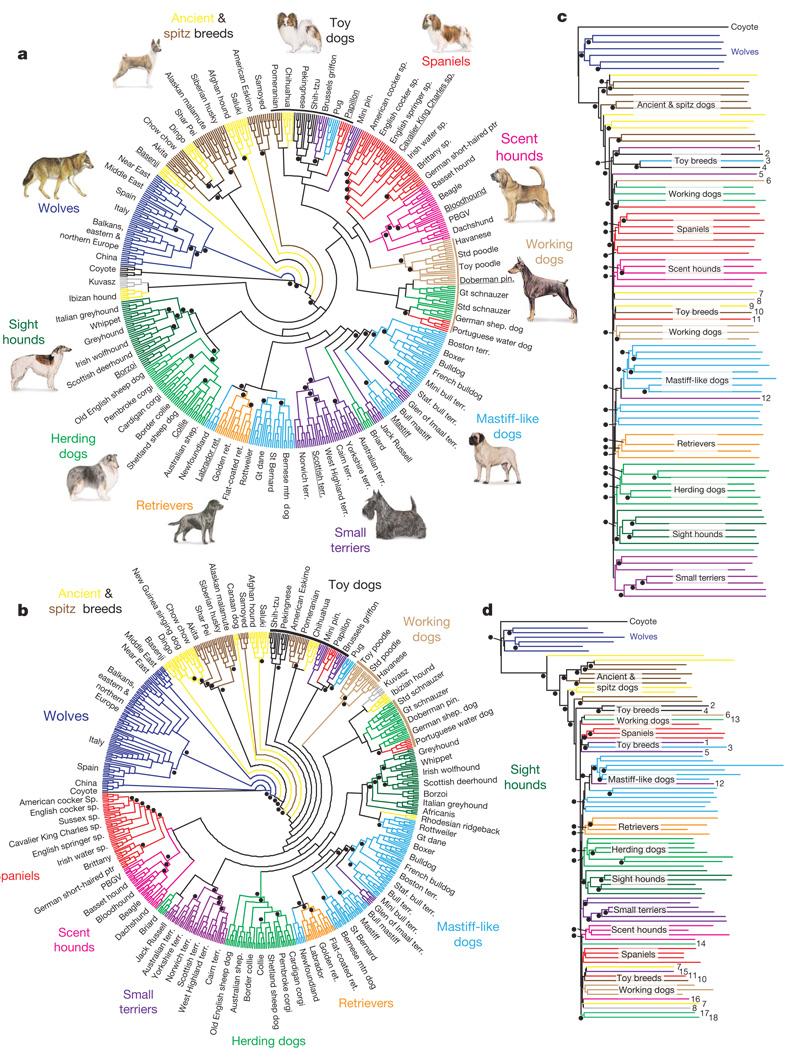


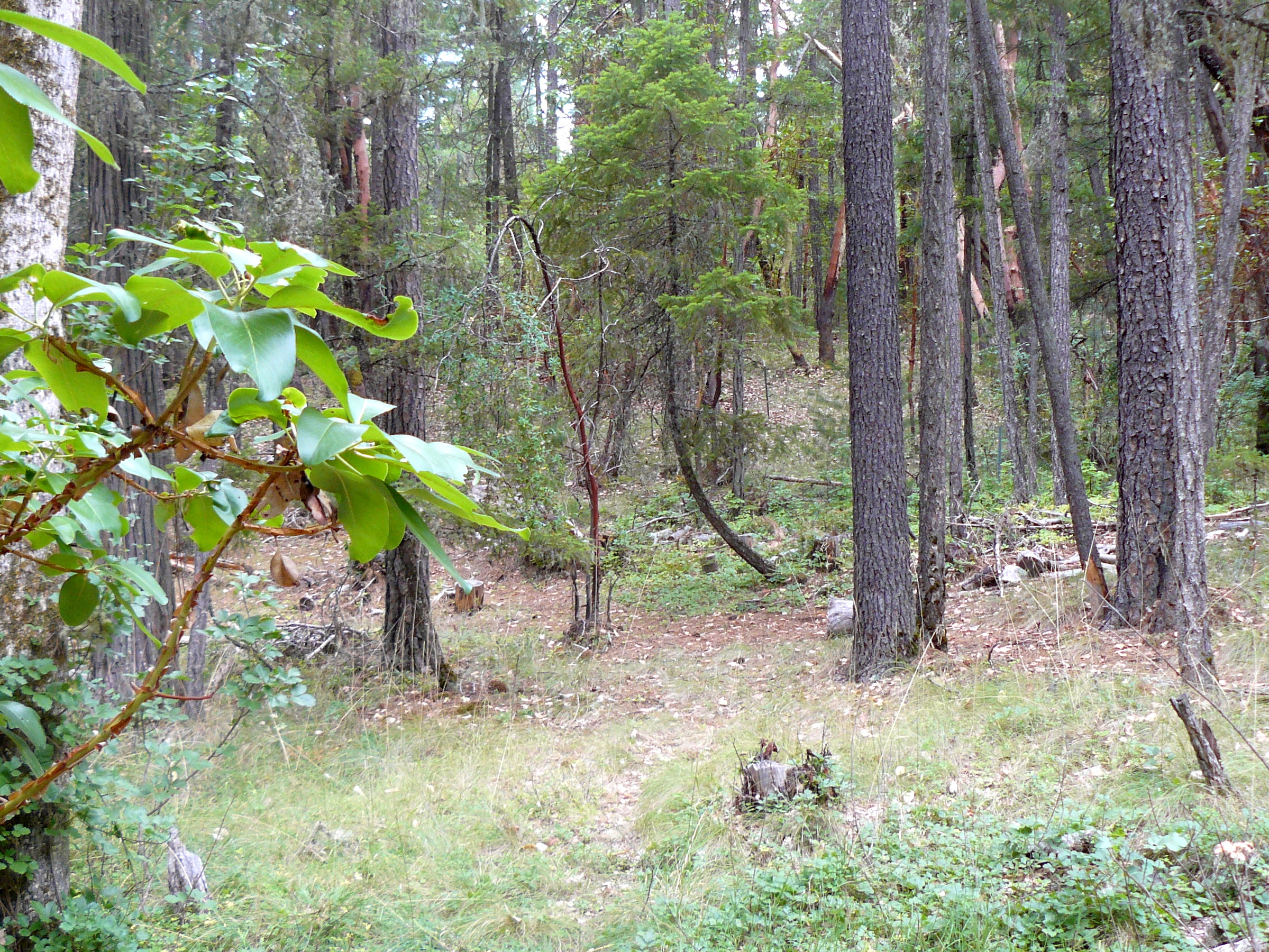

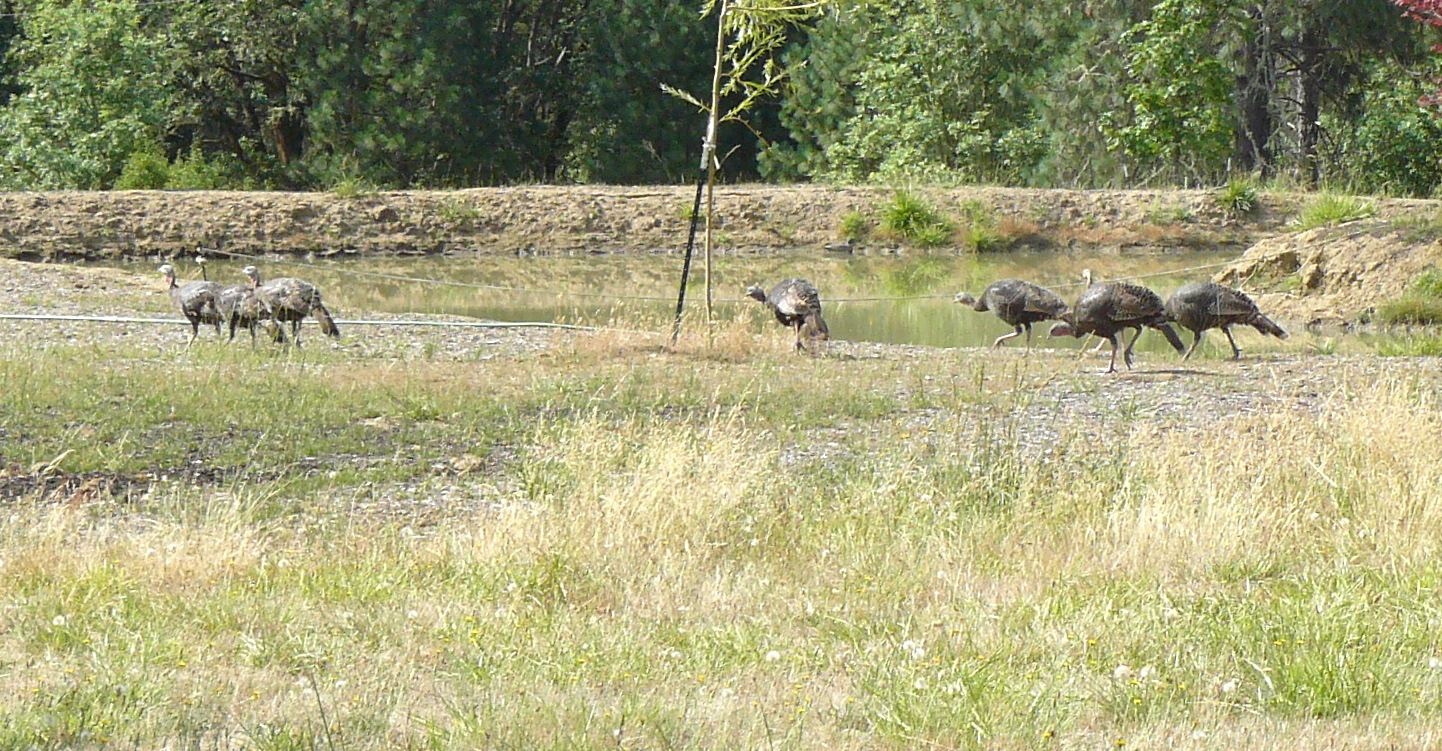


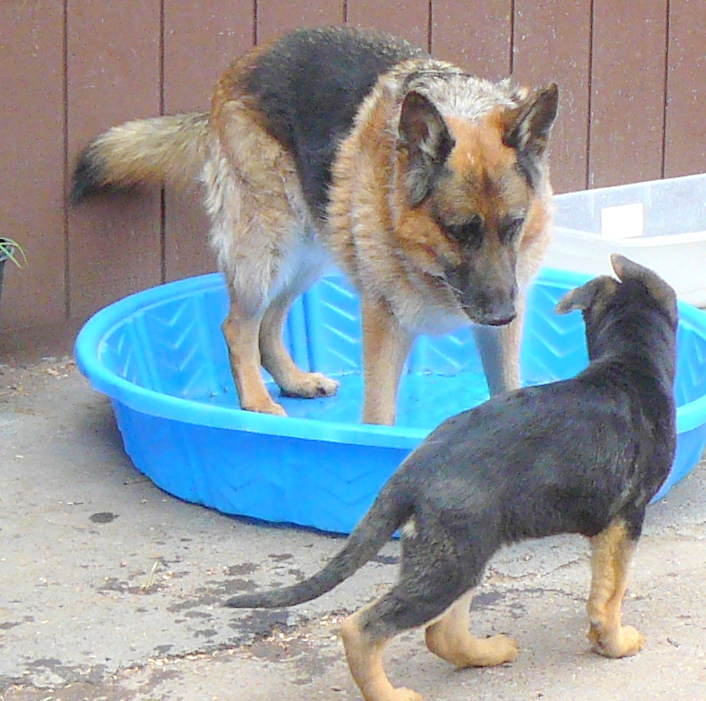


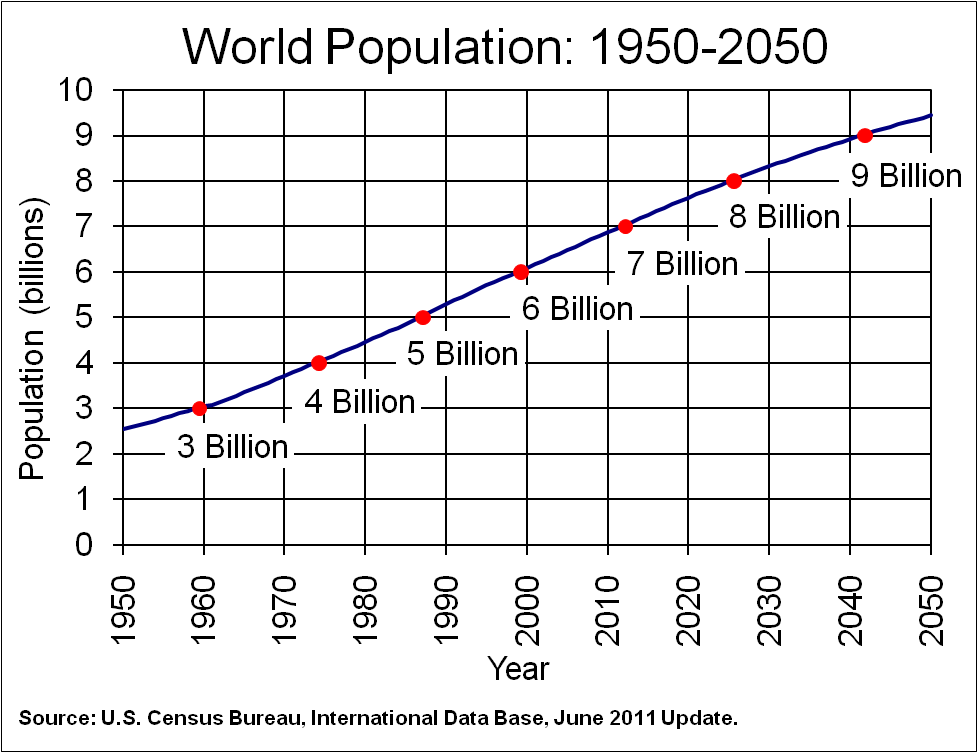

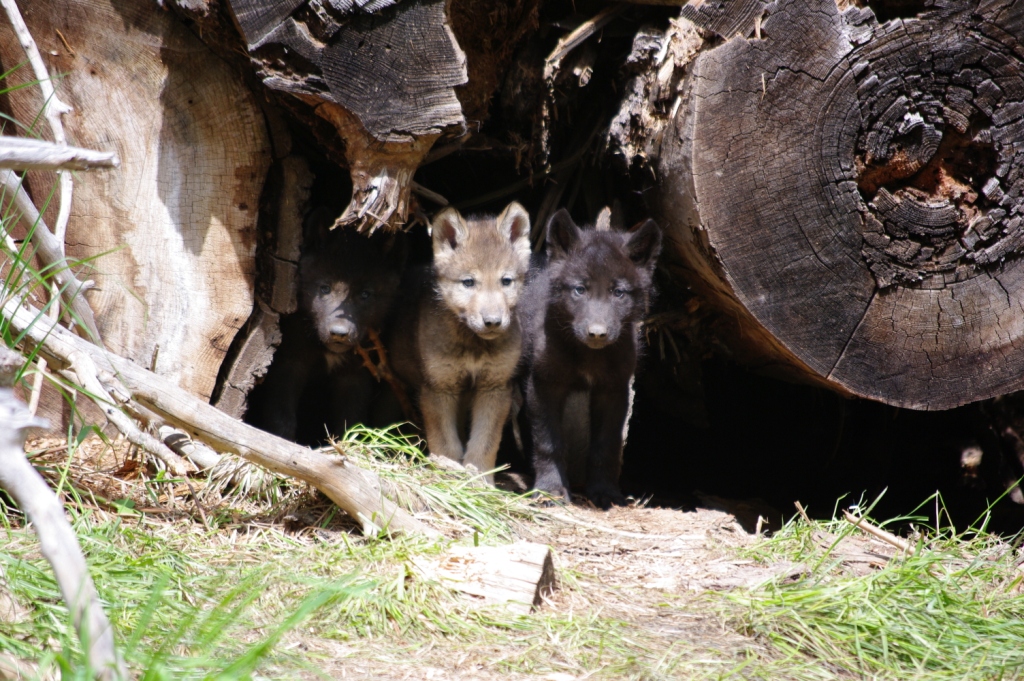


 Learning from Dogs