Category: Health

Well done, Ikea!

That is Ikea in Italy.

This is such a wonderful idea and one that should be seen a lot farther and wider than just Catania, Italy.

ooOOoo

At this Ikea store in Italy, homeless dogs get a meal and a safe place to rest

Mary Jo DiLonardo
MARY JO DILONARDO
November 19, 2018
A dog naps in the Ikea store in Catania, Italy. (Photo: rewintageboudoir/Instagram)

There’s something particularly homey about the living room vignettes and kitchen setups in the Ikea store in Catania, Italy. Sprawled on the occasional braided rug or curled up under the sleek dining tables are sleeping homeless dogs. They’ve been welcomed into the store by employees who offer them comfort when the temperatures drop.

Giovanna Pecorino says she takes a photo of the dogs each time she visits the store.

“I know those dogs well,” says Pecorino, who owns a vintage clothing shop in Catania. “You find them at the entrance sleeping between the racks, or at the exit between the tables of their restaurant, always with their sweet eyes. I love them. They give me a sense of peace.”

[There are two more photographs on Instagram that I am unable to copy into this post.]

Linda Chartier Scala, an American from Rhode Island who now lives in Noto, Italy, also photographed one of the dogs that made a temporary home in a makeshift Ikea living room. She is very familiar with the pups, who are mainstays in the store through the seasons.

“Dogs are there year-round,” says Chartier Scala. “They love the air conditioning during the summer. They are sterilized and looked after by an animal welfare group. Fat and happy, they don’t wander from there.”

Shoppers like Scala often post photos of the resting pets on social media, lauding the store and its employees for feeding the homeless dogs and offering them shelter.

“Yesterday, going to the Ikea of Catania I came across this sweet scene, a stray puppy had found shelter in one of the store’s exhibits, this image was wonderful!” wrote mannilvers. “Giving shelter to a stray dog and making it feel at home is simply amazing!”

According to reports on some posts, the dogs are well cared for and quite popular with visitors, who often stop by the store just to check on their favorite canines. And the dogs, who seem to be very respectful of their surroundings, enjoy the attention.

“This is the best story I’ve read in a long time. Human kindness at it’s best,” writes ihelpanimals12018. “THANK YOU.”

ooOOoo

“Human kindness at it’s best … ”

This is such a wonderful account of people being loving towards dogs that were homeless.

Last, but no means least, Happy Birthday to Jeannie!

And yet more!

More on the elevated vitamin D issue in our dog food.

Here are the details.

ooOOoo

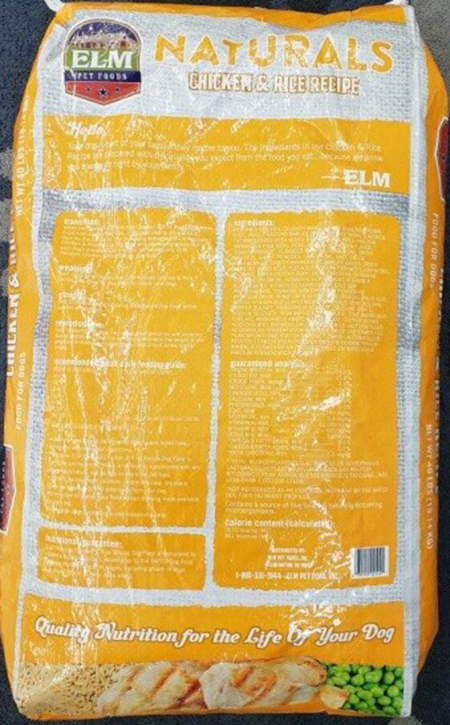
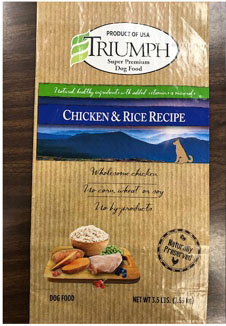
Evolve, Sportsman’s Pride, and Triumph Dog Food Recall

November 27, 2018 — Sunshine Mills, Inc., of Red Bay, Alabama, is voluntarily recalling select products of Evolve, Sportsman’s Pride, and Triumph dog foods due to elevated levels of vitamin D, which can cause serious health issues.

What’s Recalled?

The following products are being recalled:

    • Evolve Chicken & Rice Puppy Dry Dog Food
      Size: 14-pound bag
      UPC: 0-73657-00862-0
    • Evolve Chicken & Rice Puppy Dry Dog Food
      Size: 28-pound bag
      UPC: 0-73657-00863-7
    • Sportsman’s Pride Large Breed Puppy Dry Dog Food
      Size: 40-pound bag
      UPC: 0-70155-10566-0
    • Sportsman’s Pride Large Breed Puppy Dry Dog Food
      Size: 40-pound bag
      UPC: 0-70155-10564-0
    • Triumph Chicken & Rice Recipe Dry Dog Food
      Size: 3.5 pound bag
      UPC: 0-73657-00873-6
    • Triumph Chicken & Rice Recipe Dry Dog Food
      Size: 16-pound bag
      UPC: 0-73657-00874-3
  • Triumph Chicken & Rice Recipe Dry Dog Food
    Size: 30-pound bag
    UPC 0-73657-00875-0

Bags affected have a Best Buy Date Code of November 1, 2018 through November 8, 2019.

The Best Buy Code can be located on the back of each bag.

No other Evolve, Sportsman’s Pride or Triumph products are affected by this recall.

Where Was Product Sold?

The above products were distributed in retail stores within the United States as well as some export distributors in Japan, Puerto Rico, Colombia, Israel, Canada and South Korea.

This recall is being conducted in cooperation with the U.S. Food and Drug Administration.

About High Levels of Vitamin D

Dogs ingesting elevated levels of Vitamin D may exhibit symptoms such as vomiting, loss of appetite, increased thirst, increased urination, excessive drooling, and weight loss.

Vitamin D, when consumed at very high levels can lead to serious health issues in dogs including renal dysfunction.

Consumers with dogs who have consumed any of the products listed above and are exhibiting any of these symptoms, should contact their veterinarian.

What to Do?

Consumers should stop feeding the products listed above.

Consumers who have purchased any of the affected product should dispose of it or return it to the retailer for a full refund.

Consumers may contact Sunshine Mills, Inc. customer service at (800) 705-2111 from 7AM to 4PM Central Time, Monday through Friday.

Or by email at customer.service@sunshinemills.com for additional information.

ooOOoo

Phew!

Maybe that is the last of the recalls with regard to Vitamin D.

Facing up to the end!

It comes to all of us: dogs and humans.

The following article looks deeply into the dog’s life. Or rather the end of the dog’s life.

For the fact of the matter is that we all have this coming to us. Some turn to religion; some know that we are on our own. Every living creature shares the same fate as us humans.

Yet there is something very special about the dog. Something that sets the dog apart. Something that elevates the dog into more than an animal, despite how silly that is to write. But you know what I mean.

Enough from me. Let me turn to the following article that was published on The Conversation website and is republished within the terms of that site.

ooOOoo

Why losing a dog can be harder than losing a relative or friend

By    Cornelia H. Dudley, Professor of Psychology, Knox College

March 9, 2017

Recently, my wife and I went through one of the more excruciating experiences of our lives – the euthanasia of our beloved dog, Murphy. I remember making eye contact with Murphy moments before she took her last breath – she flashed me a look that was an endearing blend of confusion and the reassurance that everyone was ok because we were both by her side.

When people who have never had a dog see their dog-owning friends mourn the loss of a pet, they probably think it’s all a bit of an overreaction; after all, it’s “just a dog.”

However, those who have loved a dog know the truth: Your own pet is never “just a dog.”

Many times, I’ve had friends guiltily confide to me that they grieved more over the loss of a dog than over the loss of friends or relatives. Research has confirmed that for most people, the loss of a dog is, in almost every way, comparable to the loss of a human loved one. Unfortunately, there’s little in our cultural playbook – no grief rituals, no obituary in the local newspaper, no religious service – to help us get through the loss of a pet, which can make us feel more than a bit embarrassed to show too much public grief over our dead dogs.

Perhaps if people realized just how strong and intense the bond is between people and their dogs, such grief would become more widely accepted. This would greatly help dog owners to integrate the death into their lives and help them move forward.

An interspecies bond like no other

What is it about dogs, exactly, that make humans bond so closely with them?

For starters, dogs have had to adapt to living with humans over the past 10,000 years. And they’ve done it very well: They’re the only animal to have evolved specifically to be our companions and friends. Anthropologist Brian Hare has developed the “Domestication Hypothesis” to explain how dogs morphed from their grey wolf ancestors into the socially skilled animals that we now interact with in very much the same way as we interact with other people.

Perhaps one reason our relationships with dogs can be even more satisfying than our human relationships is that dogs provide us with such unconditional, uncritical positive feedback. (As the old saying goes, “May I become the kind of person that my dog thinks I already am.”)

This is no accident. They have been selectively bred through generations to pay attention to people, and MRI scans show that dog brains respond to praise from their owners just as strongly as they do to food (and for some dogs, praise is an even more effective incentive than food). Dogs recognize people and can learn to interpret human emotional states from facial expression alone. Scientific studies also indicate that dogs can understand human intentions, try to help their owners and even avoid people who don’t cooperate with their owners or treat them well.

Not surprisingly, humans respond positively to such unqualified affection, assistance and loyalty. Just looking at dogs can make people smile. Dog owners score higher on measures of well-being and they are happier, on average, than people who own cats or no pets at all.

Like a member of the family

Our strong attachment to dogs was subtly revealed in a recent study of “misnaming.” Misnaming happens when you call someone by the wrong name, like when parents mistakenly calls one of their kids by a sibling’s name. It turns out that the name of the family dog also gets confused with human family members, indicating that the dog’s name is being pulled from the same cognitive pool that contains other members of the family. (Curiously, the same thing rarely happens with cat names.)

It’s no wonder dog owners miss them so much when they’re gone.

Psychologist Julie Axelrod has pointed out that the loss of a dog is so painful because owners aren’t just losing the pet. It could mean the loss of a source of unconditional love, a primary companion who provides security and comfort, and maybe even a protégé that’s been mentored like a child.

The loss of a dog can also seriously disrupt an owner’s daily routine more profoundly than the loss of most friends and relatives. For owners, their daily schedules – even their vacation plans – can revolve around the needs of their pets. Changes in lifestyle and routine are some of the primary sources of stress.

According to a recent survey, many bereaved pet owners will even mistakenly interpret ambiguous sights and sounds as the movements, pants and whimpers of the deceased pet. This is most likely to happen shortly after the death of the pet, especially among owners who had very high levels of attachment to their pets.

While the death of a dog is horrible, dog owners have become so accustomed to the reassuring and nonjudgmental presence of their canine companions that, more often than not, they’ll eventually get a new one.

So yes, I miss my dog. But I’m sure that I’ll be putting myself through this ordeal again in the years to come.

ooOOoo

I don’t want to think of losing any more of our family but it will surely happen. As night follows day!

Going to close with this:

Pharaoh, relaxing in a Devon garden.

And another dog food recall!

This time it’s Harris Teeter of Mathews

ooOOoo

November 19, 2018 — Harris Teeter of Matthews, NC, is recallingAbound Chicken and Rice Dog Food due to elevated levels of vitamin D, which may cause renal failure.

No graphic was supplied with the official bulletin.

The following image was retrieved from the internet and is provided in good faith by The Dog Food Advisor.

The graphic below may or may not be an accurate representation of the actual recalled product.

What’s Recalled?

    The following products are being recalled by Harris Teeter.

  • Abound Chicken & Brown Rice Dog Food
    Size: 4 lb package
    UPC Code: UPC 0001111083556
  • Abound Chicken & Brown Rice Dog Food
    Size: 14 lb package
    UPC Code: 0001111083573

Batch information and Best By dates were not provided by the company in its recall bulletin.

About Elevated Levels of Vitamin D
Dogs ingesting elevated levels of Vitamin D may exhibit symptoms such as vomiting, loss of appetite, increased thirst, increased urination, excessive drooling, and weight loss.

Vitamin D, when consumed at very high levels, can lead to serious health issues in dogs including renal dysfunction.

Customers with dogs who have consumed any of the products listed above and are exhibiting any of these symptoms, should contact their veterinarian.

What to Do?

Harris Teeter has removed the recalled products from its shelves.

If you purchased these items, please do not allow your pet to consume them. Instead, return them to your Harris Teeter store for a full refund.

Customers may contact Sunshine Mills, Inc. customer service (the maker) at 800-705-2111 from 7 am to 4 pm Central Time, Monday through Friday.

Or by email at customer.service@sunshinemills.com for additional information.

U.S. citizens can report complaints about FDA-regulated pet food products by calling the consumer complaint coordinator in your area.

Or go to http://www.fda.gov/petfoodcomplaints.

Canadians can report any health or safety incidents related to the use of this product by filling out the Consumer Product Incident Report Form.

ooOOoo

I don’t know what to make of these. Part of me thinks there are too many dog-food recalls and part of me thinks it is much better that we have this service. Oh well.

Nature’s Promise Dog Food recall

Giant and Martin’s Recall Nature’s Promise Dog Food

November 20, 2018 — Giant Food Stores and Martin’s Food Markets are voluntarily recalling certain lots of Nature’s Promise Dog Food because they may contain excessive amounts of Vitamin D, which may cause renal failure.

No graphic was supplied with the official news wire. The following image was retrieved from the internet and is provided in good faith by The Dog Food Advisor.

What’s Recalled?

The following products are included in this recall event:

  • Nature’s Promise Chicken & Brown Rice Dog Food
    Size: 4 lb package
    Best By Dates: November 1, 2018 to November 8, 2019
  • Nature’s Promise Chicken & Brown Rice Dog Food
    Size: 14 lb package
    Best By Dates: November 1, 2018 to November 8, 2019
  • Nature’s Promise Chicken & Brown Rice Dog Food
    Size: 28 lb package
    Best By Dates: November 1, 2018 to November 8, 2019

Giant/Martin’s has removed all affected product from its shelves and urges customers to return the product to their local store for a full refund.

The companies have received no reports of illnesses to date.

About Elevated Levels of Vitamin D

Dogs ingesting elevated levels of Vitamin D may exhibit symptoms such as vomiting, loss of appetite, increased thirst, increased urination, excessive drooling, and weight loss.

Vitamin D, when consumed at very high levels, can lead to serious health issues in dogs including renal dysfunction.

Customers with dogs who have consumed any of the products listed above and are exhibiting any of these symptoms, should contact their veterinarian.

What to Do?

Customers should stop feeding the products listed above.

Customers may contact Sunshine Mills, Inc. customer service at 800-705-2111 from 7 am to 4 pm Central Time, Monday through Friday.

Or by email at customer.service@sunshinemills.com for additional information.

In addition, customers may call Giant/Martin’s Customer Support Center at 888-814-4268.

U.S. citizens can report complaints about FDA-regulated pet food products by calling the consumer complaint coordinator in your area.

Or go to http://www.fda.gov/petfoodcomplaints.

Canadians can report any health or safety incidents related to the use of this product by filling out the Consumer Product Incident Report Form.

Get Dog Food Recall Alerts by Email

Get free dog food recall alerts sent to you by email. Subscribe to The Dog Food Advisor’s emergency recall notification system.

ooOOoo

It’s not what I had planned for today, that will have to wait until tomorrow, but you will understand that this recall alert had to take priority!

Finally, please accept greetings from Jeannie and me for a wonderful Thanksgiving!

This is the woman I love!

Today is our anniversary.

Yes, November 20th, 2010 was the day we became married.

And in celebration of that day, and more generally in meeting Jean some three years previously, I want to republish the following. For when I met my darling Jeannie she had been vegetarian for many years and in turn we both became vegan.

ooOOoo

Why people become vegans: The history, sex and science of a meatless existence

By    Assistant Professor of Marketing, University of Oregon

November 19, 2018

At the age of 14, a young Donald Watson watched as a terrified pig was slaughtered on his family farm. In the British boy’s eyes, the screaming pig was being murdered. Watson stopped eating meat and eventually gave up dairy as well.

Later, as an adult in 1944, Watson realized that other people shared his interest in a plant-only diet. And thus veganism – a term he coined – was born.

Flash-forward to today, and Watson’s legacy ripples through our culture. Even though only 3 percent of Americans actually identify as vegan, most people seem to have an unusually strong opinion about these fringe foodies – one way or the other.

As a behavioral scientist with a strong interest in consumer food movements, I thought November – World Vegan Month – would be a good time to explore why people become vegans, why they can inspire so much irritation and why many of us meat-eaters may soon join their ranks.

Early childhood experiences can shape how we feel about animals – and lead to veganism, as it did for Donald Watson. HQuality/Shutterstock.com

It’s an ideology not a choice

Like other alternative food movements such as locavorism, veganism arises from a belief structure that guides daily eating decisions.

They aren’t simply moral high-grounders. Vegans do believe it’s moral to avoid animal products, but they also believe it’s healthier and better for the environment.

Also, just like Donald Watson’s story, veganism is rooted in early life experiences.

Psychologists recently discovered that having a larger variety of pets as a child increases tendencies to avoid eating meat as an adult. Growing up with different sorts of pets increases concern for how animals are treated more generally.

Thus, when a friend opts for Tofurky this holiday season, rather than one of the 45 million turkeys consumed for Thanksgiving, his decision isn’t just a high-minded choice. It arises from beliefs that are deeply held and hard to change.

Sutton and Sons is a vegan fish and chip restaurant in London. Reuters/Peter Nicholls

Veganism as a symbolic threat

That doesn’t mean your faux-turkey loving friend won’t seem annoying if you’re a meat-eater.

The late celebrity chef Anthony Bourdain famously quipped that meat avoiders “are the enemy of everything good and decent in the human spirit.”

Why do some people find vegans so irritating? In fact, it might be more about “us” than them.

Most Americans think meat is an important part of a healthy diet. The government recommends eating 2-3 portions (5-6 ounces) per day of everything from bison to sea bass. As tribal humans, we naturally form biases against individuals who challenge our way of life, and because veganism runs counter to how we typically approach food, vegans feel threatening.

Humans respond to feelings of threat by derogating outgroups. Two out of 3 vegans experience discrimination daily, 1 in 4 report losing friends after “coming out” as vegan, and 1 in 10 believe being vegan cost them a job.

Veganism can be hard on a person’s sex life, too. Recent research finds that the more someone enjoys eating meat, the less likely they are to swipe right on a vegan. Also, women find men who are vegan less attractive than those who eat meat, as meat-eating seems masculine.

The fake meat at one Fort Lauderdale restaurant supposedly tastes like real meat. AP Photo/J. Pat Carter

Crossing the vegan divide

It may be no surprise that being a vegan is tough, but meat-eaters and meat-abstainers probably have more in common than they might think.

Vegans are foremost focused on healthy eating. Six out of 10 Americans want their meals to be healthier, and research shows that plant-based diets are associated with reduced risk for heart disease, certain cancers, and Type 2 diabetes.

It may not be surprising, then, that 1 in 10 Americans are pursuing a mostly veggie diet. That number is higher among younger generations, suggesting that the long-term trend might be moving away from meat consumption.

In addition, several factors will make meat more costly in the near future.

Meat production accounts for as much as 15 percent of all greenhouse gas emissions, and clear-cutting for pasture land destroys 6.7 million acres of tropical forest per year. While some debate exists on the actual figures, it is clear that meat emits more than plants, and population growth is increasing demand for quality protein.

Seizing the opportunity, scientists have innovated new forms of plant-based meats that have proven to be appealing even to meat-eaters. The distributor of Beyond Meat’s plant-based patties says 86 percent of its customers are meat-eaters. It is rumored that this California-based vegan company will soon be publicly traded on Wall Street.

Even more astonishing, the science behind lab-grown, “cultured tissue” meat is improving. It used to cost more than $250,000 to produce a single lab-grown hamburger patty. Technological improvements by Dutch company Mosa Meat have reduced the cost to $10 per burger.

Watson’s legacy

Even during the holiday season, when meats like turkey and ham take center stage at family feasts, there’s a growing push to promote meatless eating.

London, for example, will host its first-ever “zero waste” Christmas market this year featuring vegan food vendors. Donald Watson, who was born just four hours north of London, would be proud.

Watson, who died in 2006 at the ripe old age of 95, outlived most of his critics. This may give quiet resolve to vegans as they brave our meat-loving world.

ooOOoo

Well all I can say is that if Donald Watson can do it then so can Jeannie and me.

Lidl Recalls Orlando Brand Dog Food

Yet another dog food recall.

ooOOoo

Lidl Recalls Orlando Brand Dog Food

November 9, 2018

Lidl USA is voluntarily recalling specific lots of Orlando brand Grain Free Chicken & Chickpea Superfood Recipe Dog Food because the products may contain elevated levels of Vitamin D.

What’s Recalled?

The recalled Orlando brand products include the following lot numbers manufactured between March 3, 2018 and May 15, 2018:

  • TI1 3 Mar 2019
  • TB2 21 Mar 2019
  • TB3 21 Mar 2019
  • TA2 19 Apr 2019
  • TB1 15 May 2019
  • TB2 15 May 2019

Elevated Vitamin D Levels

Dogs consuming elevated levels of Vitamin D could exhibit symptoms such as vomiting, loss of appetite, increased thirst, increased urination, excessive drooling, and weight loss.

Customers with dogs who have consumed this product and are exhibiting these symptoms should contact their veterinarian as soon as possible.

No other products sold by Lidl are impacted by the recall.

This is a voluntary recall and is being conducted in cooperation with the U.S. Food and Drug Administration.

What to Do?

Customers who have purchased this product with the affected lot codes should stop feeding it to their dogs and discard the product immediately or return it to their nearest Lidl store for a full refund.

Customers who have questions about this recall should call the Lidl US Customer Care Hotline at 844-747-5435, 8 AM to 9 PM Eastern time, 7 days a week.

U.S. citizens can report complaints about FDA-regulated pet food products by calling the consumer complaint coordinator in your area.

Or go to http://www.fda.gov/petfoodcomplaints.

Canadians can report any health or safety incidents related to the use of this product by filling out the Consumer Product Incident Report Form.

Get Dog Food Recall Alerts by Email

Get free dog food recall alerts sent to you by email. Subscribe to The Dog Food Advisor’s emergency recall notification system.

ooOOoo

Please share this amongst all your friends.

More on worms.

An update to last Saturday’s post.

Earlier yesterday afternoon Jim Goodbrod sent me the following email. I should explain for those that are unfamiliar with Jim that he is a Doctor of Veterinary Medicine (DVM). He is also a friend and neighbour.

Hey Paul,

I read your guest blog yesterday regarding canine helminthiasis (ie. worms) and just wanted to comment that none of Ms. Turner’s so-called home remedies will do anything to rid your dog of worms.

I don’t know where these people get these strange remedies.  Her chamomile tincture actually has a good quantity of ethanol in it, in the form of vodka or rum (?????)  I’d never give that to my dog.

Over the years I’ve heard dozens of clients extol the virtues of these “natural” worming therapies from Tabasco sauce, chewing tobacco, oral diatomaceous earth, habanero peppers, garlic, turpentine, old motor oil etc. etc.   Vinegar was in vogue for a long time as a cure-all for almost any ailment.  Lately coconut oil seems to be the miracle cure.

I don’t know why they persist in giving their dogs ineffective treatments that make their dogs sick, when they could go to the Grange or Mini Pet Mart and get a benign over-the-counter veterinary medication such as pyrantel or praziquantel which is actually specifically labelled for the treatment of certain worms.  Or better yet, many heartworm preventives contain an intestinal wormer, and since all dogs in this area should be on heartworm medication anyway, each month you would be preventing heartworms and treating intestinal worms at the same time.

That’s what I do for Louie.  He loves those Heartgard treats!
Anyway,  just a comment, for what it’s worth.

Regards, Jim

I am very grateful to Jim giving me his permission to publish his advice.

Back to getting rid of worms!

OK, so it’s another guest post but useful nonetheless.

I have published a number of posts over the years on the topic of getting rid of worms.  But this deserves republishing as it uses things around the house.

ooOOoo

How to Get Rid of Worms in Dogs At Home, Without Going to the Vet

By Ashley Turner.

Did you know that there are five different types of worms your dog can get including heartworms, hookworms, roundworms, tapeworms, and whipworms? If you don’t treat them, they can lead to several complications for your dog including poor growth, slowed development, anemia, and possibly death.

However, before you treat the worm infestation, you have to know what to look for. We’ll cover the common signs and how to get rid of worms in dogs, so you know how to safely and effectively treat this parasite before it leads to health complications for your dog.

Common Clues Your Dog Has a Parasite Infection

With some internal parasites, a diagnosis can be tricky because there may not be any obvious signs that something is wrong with your dog. However, there are also several common symptoms or clues that can point to an internal parasite infection, and they include:

  • Bloating – Does your dog look bloated whether or not they’ve eaten? Having continuous bloat or seeming generally uncomfortable can be a sign of worms.
  • Coughing – Your dog naturally coughs from time to time just like a person will. However, if you notice your dog starting to cough more than normal or go on extended coughing fits, this is a sign of worms.
  • Fever – You may notice that your dog is running a fever with this type of infection. It can come and go, and it normally won’t stay constant.
  • Lethargy – Sudden changes in appetite or lethargy is common as the worms advance. This can also come with vomiting that gets worse over time.
  • Scooting – Scooting refers to your dog dragging it’s butt across the floor. It looks like they’re “scooting” across the floor when they do this.
  • Stool Problems – Your dog’s stool may be loose or covered in mucus when they go to the bathroom. Additionally, you may notice worms in their stool or what looks like small grains of rice.

Different Types of Worms

While there are five types of worms, only four types are intestinal worms, but we’re going to cover all five types. We’ll go over what each worm is, how it’s transmitted, and symptoms specific to that type of parasite infection.

Heartworms

Heartworms are almost completely preventable, but they’re also one of the most damaging and scary types of parasitic infection your dog can get. Heartworms live and thrive in your dog’s heart and in the large blood vessels, and they can grow to be over 12 inches long.

Heartworms are transmitted by a mosquito biting your dog and transmitting the heartworm larvae into your dog’s blood where it travels to their heart. These worms can cause coughing, difficulty breathing, and death in more severe cases, so prevention is the key with this parasite.

Hookworms

Hookworms are small worms with hook-like attachments on their mouths that attach to your dog’s intestinal wall. They feed on your dog’s blood, and they eject their eggs out into your dog’s intestines and into their feces.

These parasites can get into your dog’s body through your dog licking and cleaning themselves, ingesting feces or dirt, through milk by nursing puppies, or by the worms burrowing through their pads on the bottom of their feet. Since it feeds on blood, these types of worms can cause anemia, and this is especially dangerous to young puppies or older dogs.

Roundworms

Roundworms live in your dog’s small intestine, and they’re a slightly larger parasite that grows up to seven inches long and look are long and thin like spaghetti noodles. The roundworms attach to your dog’s intestine and feed on your dog’s blood as well as the nutrients from their food.

Roundworms are one of the most common parasite infections your dog can get, and your dog can get roundworm by eating infected rodents or birds, as well as through the mother dog’s milk. Common symptoms of roundworms include a potbellied look, weight loss, dull coat, and abdominal pain.

Tapeworms

Tapeworms are flat and long worms that attach to your dog’s intestines, but you can also see them on your dog’s rear end and in their feces as small, white specs that look like grains of rice. They feed on the nutrients your dog gets from their food, and there may not be any warning signs.

There are 14 different species of tapeworms, but one of the most common ways your dog gets an infection is through flea eggs. Also, if your dog eats meat that is contaminated with these worms, they can transfer from the meat to your dog and cause lethargy and weight loss.

Whipworms

Whipworms thrive in your dog’s cecum, and they’re two to three inches long with a tapered end that resembles a whip. They attach to your dog’s mucus membrane, and they feed on your dog’s blood.

Your dog can get a whipworm infection through eating soil or drinking water that is contaminated with feces containing whipworm eggs. You may notice bloody feces with this infection and a more severe infection can lead to worse complications or even death in otherwise healthy dogs.

Preventing Worms in Dogs

Prevention is the key when it comes to these parasites because it’s much easier to take preventative steps than to treat the resulting infection. There are several things that you can do to prevent these worms, and they include:

  • Make sure that you clean your yard regularly and remove any feces that you can see, and you should plan on doing this at least once a week. Over time, these feces can get infested with worms, and they can transmit to your dog if they eat it or get it on their coat and then ingest it when they clean themselves.
  • Your vet will prescribe deworming medications, and it’s important that you give these medications to your dog as recommended by your veterinarian. It’s especially important that you do this when your dog is young because puppies usually get at least three rounds of dewormer to help prevent infections as they grow.
  • If you can’t prevent your dog from getting worms, you can help to catch it quickly before the infection advances. Make sure that you’re routinely checking your dog’s fur, feces, and rear for the worms themselves, larvae, or any eggs.

How to Get Rid of Worms Naturally

Although you may want to take your dog to the veterinarian to get a professional’s opinion, there are several things that you can do at home to keep your dog healthy, happy, and free of a parasitic infection.

Apple Cider Vinegar

Almost all homes have apple cider vinegar around because it has powerful antibacterial and antimicrobial properties that make it an excellent cleaning agent. It’s natural and safe for your dog to digest, and this makes it a popular remedy for getting rid of worms.

To give this remedy to your dog, start by adding one-fourth of a teaspoon to their food or water each day, and slowly increase this over a week until you get to one teaspoon. Once you get to a teaspoon, you can keep giving them this amount each day to keep the worms away.

Black Cumin and Pumpkin Seeds

Both black cumin and pumpkin seeds along with black cumin oil are safe for your dog, and they work to prevent, expel, and maintain your dog’s worm-free state. You want to give your dog between a half and a whole teaspoon of black cumin seed each day in their food, but remember to heat it first to get rid of the very bitter aftertaste.

Pumpkin seeds work very well if you grind them before you add them to your dog’s food, and you want to add around one-fourth of a teaspoon for every 10 pounds of body weight. For black cumin oil, use half of what you use for black cumin seeds, and it’s always a good idea to start at the lower end of the dosage and work your way up to the full dose.

Chamomile

Chamomile is popular for having anti-inflammatory properties, but it’s a slower acting herb where parasites are concerned that works by reducing any discomfort your dog may have. You can make a chamomile tincture and add it to your dog’s food or water twice a day at 0.25 to 0.50 milliliters per every 20 pounds of body weight.

To make your chamomile tincture by mixing:

  • 1/2 to 1 cup of dried Chamomile flowers
  • 1 1/2 to 1 3/4 cups of boiling water
  • 1 1/2 to 1 3/4 cups rum or vodka
  • Quart glass jar with an airtight lid

Add your flowers to the bottom of the jar and pour the boiling water over the flowers. Next, pour the rum or vodka into the water and flower mixture until the jar is full and seal the lid.

Once it’s sealed, store it in a cool and dry place for four to six weeks and shake it for a few minutes each day. After four to six weeks, open the jar, strain the liquid, and it’s now ready to add to your dog’s water or food once a day.

Dried Coconut

Dried coconut is excellent for getting rid of worms due to its fiber content, and it can help expel up to 90 percent of any parasitic worms that your dog may have in under 24 hours. You do want to start your dog on a lower quantity and slowly work your way up to the regular dose over the span of a week or two to avoid digestive upset.

The maintenance dose you want to eventually end up with is one teaspoon for small dogs, two teaspoons for medium dogs, and one tablespoon for large dogs once a day sprinkled over their food. You may want to start with half of a dose or a quarter of a dose and work your way up to the full dose.

Garlic

As long as your dog isn’t on blood thinners, feeding them garlic can help to rid them of any parasitic worms. Garlic helps to remove mucus from your dog’s stomach lining, and this makes it more difficult for the worms to attach and thrive.

You do want to give your dog fresh cloves of garlic, and let it sit at room temperature for at least 15 to 20 minutes before you chop it and add it to their food because this will allow the garlic to release an amino acid called allicin. The suggested feeding guidelines are as follows:

  • Small Dogs – One-quarter of a clove of garlic twice per day.
  • Medium Dogs – One half of a clove of garlic twice per day.
  • Large Dogs – Three-quarters of a clove of garlic twice per day.
  • Giant Dogs – One clove of garlic twice per day.

Vegetables and Fruits

Anything with high levels of vitamin A is an excellent home remedy to help slow down and eradicate an infection of parasitic worms. You don’t want to feed your dog too much of these fruits and vegetables because it can cause digestive upset, especially when you first introduce it into their diet.

You may want to start feeding your dog a half of a teaspoon of fruits or vegetables for every 10 pounds of body weight once a day for at least a week to get them used to it. After a week, you can increase this dose to a half of a teaspoon for every 10 pounds of body weight twice a day at mealtimes.

Fruits and vegetables that have high levels of vitamin A include:

  • Raw Carrot
  • Squash
  • Watercress
  • Pumpkin
  • Cantaloupe
  • Asparagus
  • Apricots
  • Apples

Getting rid of worms in dogs can be an ongoing process that takes time and effort on your part. But, once you get rid of them, keeping your dog healthy, happy, and worm free is a relatively easy process, especially if you use one or more of our natural worm remedies.

ooOOoo

I don’t know about you but we found it incredibly useful.

Pet-proofing your apartment – a guest post.

A guest post about dogs.

Or rather about protecting an apartment.

I was contacted about three weeks ago by a Jenny Harrison who wondered if I would be interested in posting a guest post. I said that I was and we settled on the following. Enjoy!

ooOOoo

What Is the Best Way to Pet-Proof an Apartment?

By Jenny Harrison.

There isn’t any doubt that pets are great companions to have around. Not only will they encourage you to be more active, but they look forward to seeing you after you have been out all day. Now the thing is if you plan on leaving your pet alone in your apartment, there is always a chance they might harm themselves. Keeping a pet in an apartment is tricky, but it is not something you can’t pull off. 

If you worry about your pet being alone at home, you should definitely look into pet-proofing your apartment. To learn more about pet-proofing your home, and the best ways you can go about doing so, read on. 

Organize your Living Space

You will find it incredibly cute that your pet pulls on anything and everything it comes across, but it is unsafe. You will not want your pet around electrical cords, blind cords, earbud cords and any wire or cord for that matter. Keep everything wrapped up and tidy. Leave no stone unturned to make your living space free from cords or laces of any type. 

For things your pet loves to chew on i.e. cushions, shoes, or even paper, make it a point to keep them away. If your pet is tearing things up, especially your dog, then it is a sign they are restless. Take your pet out as much as you can so they are calm and relaxed at home. 

Pet-Proof your Furniture 

Cats are known for leaving claw marks on couches. All cat owners are familiar with this, but that does not mean you can’t do anything about it. You can cat-proof your couch with the help of cat-deterrent sprays or stick furniture strips, that will make it uncomfortable for your cat to use your couch as a scratching post. 

Dogs aren’t any better when it comes to couches, since they shed their fur, chew and leave their scent. To deal with dogs get a blanket or cover for furniture, but keep it reserved for your pet alone. If the smell gets to you or your guests, then get a furniture spray. 

Another great way to solve this problem is by getting furniture that can’t be chewed and is unattractive to pets; so that is a no to furniture with fluffy cushions and wooden legs. Also, if your pet does not refrain from sitting or sleeping on the couch, then get a couch that matches with your pet’s coat of fur, so it is not visible. 

Install Baby Gates

For pets that are too noisy, it is a good idea to install baby gates. You can install baby gates in areas you want to keep them out from. This is especially useful for those times when you will be out for longer than usual, and can’t exactly keep an eye on them. 

If your pet is too big, and won’t be held back by baby gates, then a crate might just do the trick. If you opt for this option, ask someone to check out your pet in the apartment, and take them out for a walk, more specifically if it is a dog. 

Give your Pets their own Space

One of the biggest reasons your pet will want to sit on your bed, couch or anywhere else they should not be in the first place, is because it looks comfortable. Another reason they will want to do so is that they want to be close to you. 

Enough emphasis cannot be placed on the fact that you need to give your pet their own space. Get a bed for them and don’t be surprised if they snub it at first. Remember, it takes time for pets to get used to change, and if you want them off your bed or couch, then you will have to be consistent about teaching them to sit or sleep in their own cozy little bed. 

Keep away Cleaners

Animals are curious creatures so you need to treat them like children. You cannot expect them to stay clear of stuff, like cleaners for instance, so you might as well remove them from their sight. Since some cleaners consist of harmful chemicals, you can’t let this one slide. 

Cats love licking themselves clean, not excluding their paws, which would come in contact with the floor you just cleaned with chemicals. So the next time you go shopping for cleaning products, take your pet into consideration. You should look into “green alternatives”, or better yet, you can concoct your own with a hot water and vinegar solution.  

Prepare to Clean… A lot!

Living with a pet in an apartment means you should be ready for anything. You will have to deal with expected as well as unexpected cleanups. 

Keep a lint roller within your reach to remove fur stuck to your furniture. As for the carpets, get new ones installed, the kind that comes with a unique stain resistant technology. It may cost you a bit, but it will make cleaning accidents a breeze. 

There are a lot of great ways you can pet-proof your apartment, so it is up to you to decide what will work and what won’t. Since you know your pet better, adapt and overcome challenges as they come your way. But remember, your pet’s safety should be your top priority. 

The aforementioned tips should be part of your apartment move in checklist if you have a pet, or you are getting a pet in the apartment for the first time. No matter the case, make it a point to do a bit of homework on your own to ensure you are not getting in way over your head. 

If you need help, ask your friends or family, especially those who already know how to deal with pets. Pet-proofing your home may seem difficult at first, but it does not require much time or effort to pull off, so don’t get overwhelmed. 

ooOOoo

It is a useful document and one that would find itself valuable in the right situation.

For your reference Jenny included her bio. It is as follow:

Jenny Harrison is a passionate home and lifestyle blogger. She loves to engage with readers who are seeking home and lifestyle-related information on the internet. She is a featured blogger at various high authority blogs and magazines in which she shared her research and experience with the vast online community. Currently, she is associated with New York moving company ‘All Around Moving Services Company Inc.’ Specializes in arranging and assembling services of professional and skilled local movers locally in New York City as well as areas in New Jersey, Connecticut and the Miami Dale area in South Florida. Follow her on twitter @MJennyHarrison for more updates.