Category: Government

Where are we off to?

More musings on how this present civilisation is going to change, as change it must.

I have a sense that this article is going to spread across a number of posts.  Regular readers of Learning from Dogs will be aware that I am summarising Lester Brown’s excellent book, World on the Edge.  If you have missed those summaries, the last one, Part 4, was here. (Part 3 here, Part 2 here, Part 1 here.)

Details of this excellent book are on the Earth Policy Institute website including the opportunity to download the book for free.

OK, back to the theme of this article, very much connected with the mission of the EPI.

Jean and I watched a video last night from the website Top Documentary Films; great site by the way.  It was called 2210: The Collapse.  This was how the film was described on that website.

Imagine if hundreds of years from now, scientists excavated the abandoned ruins of some of our largest cities, what conclusions would they come to?

It happened to the Romans, the Anasazi, and the Mayans and, inevitably, one day our own modern civilization will also fall. In this two hour special discover how a future civilization might be baffled as to why the population of these once-great cities would suddenly abandon their technology and architecture, and turn their homes into ghost towns.

Some experts believe that there is a very real risk this could happen, and the collapse of the world as we know it is closer than we think.

Examining the parallels between cultures separated by hundreds of years, explore whether the key to preventing such a global collapse today could lie in finding renewable alternatives to our dwindling energy supplies and sustainable resources. Can we learn from the mistakes of the past before it’s too late?

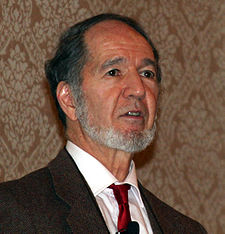
Jared Diamond

In some ways the film didn’t cover any new ground despite it being an interesting way of approaching the subject of the future of our present civilisation.  But what was really worthwhile were the clips from three experts in their various fields.  They were the author Jared Diamond, Daniel Gilbert who is Professor of Psychology at Havard, and Joseph Tainter also an author.  There is much material around from these three gentlemen.

So I am going to start with Jared Diamond.  WikiPedia has Jared’s details.  The following is a video going back to 2003 which is no less relevant in terms of where we are in 2011.  (If you want more of Jared’s ideas, just let me know and they will be included in a future Post.)

“I’ve set myself the modest task of trying to explain the broad pattern of human history, on all the continents, for the last 13,000 years. Why did history take such different evolutionary courses for peoples of different continents? This problem has fascinated me for a long time, but it’s now ripe for a new synthesis because of recent advances in many fields seemingly remote from history, including molecular biology, plant and animal genetics and biogeography, archaeology, and linguistics.”

JARED DIAMOND is Professor of Geography at the University of California, Los Angeles. Until recently he was Professor of Physiology at the UCLA School of Medicine. He is the author of the recently published Collapse: How Societies Choose to Fail or Succeed, and the Pulitzer Prize-winning author of the widely acclaimed Guns, Germs, and Steel: the Fates of Human Societies, which also is the winner of Britain’s 1998 Rhone-Poulenc Science Book Prize.  (From here)

Truth, myth and meaning

A musing on Chief Seattle’s famous speech.

I came across this recently following a bit of a prowl through YouTube.   The YouTube video, although deeply moving, is more myth than factual record; as one finds out if even a small amount of probing is undertaken.

But does it matter?  Maybe those ideas that reach out to us in a spiritual sense are as powerful as myths, perhaps even more so, than as ‘facts’.

Here’s that YouTube video.

Did you watch it all?  I hope so. Did it disturb you to know that this wasn’t a factual rendition?  Probably not.

WikiPedia has a comprehensive account of Chief Seattle and in terms of the speech here’s an extract:

There is a controversy about a speech by Si’ahl concerning the concession of native lands to the settlers.

Even the date and location of the speech has been disputed,[8] but the most common version is that on March 11, 1854, Si’ahl gave a speech at a large outdoor gathering in Seattle. The meeting had been called by Governor Isaac Ingalls Stevens to discuss the surrender or sale of native land to white settlers.Doc Maynard introduced Stevens, who then briefly explained his mission, which was already well understood by all present.[3]

Si’ahl then rose to speak. He rested his hand upon the head of the much smaller Stevens, and declaimed with great dignity for an extended period. No one alive today knows what he said; he spoke in the Lushootseed language, and someone translated his words into Chinook jargon, and a third person translated that into English.

So in terms of looking for the truth, forget it.

But in terms of being inspired to regard the land, and all that depends on it, as sacred then the myth of Chief Seattle’s words is beautiful and powerful, a myth that modern man has just about rejected.

If you want to read the words that are supposed to be the most authentic recording of what the noble Chief said, then these follow.  They are taken from here and the introduction and footnotes are valuable background information.  You may also want to read this account of the speech from the Washington State Library.

The only known photograph of Chief Seattle, taken 1864.


Scraps from a Diary:
Chief SeattleA gentleman by Instinct
His Native Eloquence, etc., etc.

by Henry A. Smith
10th article in the series “Early Reminiscences”
Seattle Sunday Star, October 29, 1887

Yonder sky that has wept tears of compassion upon my people for centuries untold, and which to us appears changeless and eternal, may change. Today is fair. Tomorrow it may be overcast with clouds. My words are like the stars that never change. Whatever Seattle says, the great chief at Washington can rely upon with as much certainty as he can upon the return of the sun or the seasons. The white chief says that Big Chief at Washington sends us greetings of friendship and goodwill. This is kind of him for we know he has little need of our friendship in return. His people are many. They are like the grass that covers vast prairies. My people are few. They resemble the scattering trees of a storm-swept plain. The great, and I presume — good, White Chief sends us word that he wishes to buy our land but is willing to allow us enough to live comfortably. This indeed appears just, even generous, for the Red Man no longer has rights that he need respect, and the offer may be wise, also, as we are no longer in need of an extensive country.  

There was a time when our people covered the land as the waves of a wind-ruffled sea cover its shell-paved floor, but that time long since passed away with the greatness of tribes that are now but a mournful memory. I will not dwell on, nor mourn over, our untimely decay, nor reproach my paleface brothers with hastening it, as we too may have been somewhat to blame.

Youth is impulsive. When our young men grow angry at some real or imaginary wrong, and disfigure their faces with black paint, it denotes that their hearts are black, and that they are often cruel and relentless, and our old men and old women are unable to restrain them. Thus it has ever been. Thus it was when the white man began to push our forefathers ever westward. But let us hope that the hostilities between us may never return. We would have everything to lose and nothing to gain. Revenge by young men is considered gain, even at the cost of their own lives, but old men who stay at home in times of war, and mothers who have sons to lose, know better.

Our good father in Washington—for I presume he is now our father as well as yours, since King George has moved his boundaries further north—our great and good father, I say, sends us word that if we do as he desires he will protect us. His brave warriors will be to us a bristling wall of strength, and his wonderful ships of war will fill our harbors, so that our ancient enemies far to the northward — the Haidas and Tsimshians — will cease to frighten our women, children, and old men. The in reality he will be our father and we his children. But can that ever be? Your God is not our God! Your God loves your people and hates mine! He folds his strong protecting arms lovingly about the paleface and leads him by the hand as a father leads an infant son. But, He has forsaken His Red children, if they really are His. Our God, the Great Spirit, seems also to have forsaken us. Your God makes your people wax stronger every day. Soon they will fill all the land. Our people are ebbing away like a rapidly receding tide that will never return. The white man’s God cannot love our people or He would protect them. They seem to be orphans who can look nowhere for help. How then can we be brothers? How can your God become our God and renew our prosperity and awaken in us dreams of returning greatness? If we have a common Heavenly Father He must be partial, for He came to His paleface children. We never saw Him. He gave you laws but had no word for His red children whose teeming multitudes once filled this vast continent as stars fill the firmament. No; we are two distinct races with separate origins and separate destinies. There is little in common between us.

To us the ashes of our ancestors are sacred and their resting place is hallowed ground. You wander far from the graves of your ancestors and seemingly without regret. Your religion was written upon tablets of stone by the iron finger of your God so that you could not forget. The Red Man could never comprehend or remember it. Our religion is the traditions of our ancestors — the dreams of our old men, given them in solemn hours of the night by the Great Spirit; and the visions of our sachems, and is written in the hearts of our people.

Your dead cease to love you and the land of their nativity as soon as they pass the portals of the tomb and wander away beyond the stars. They are soon forgotten and never return. Our dead never forget this beautiful world that gave them being. They still love its verdant valleys, its murmuring rivers, its magnificent mountains, sequestered vales and verdant lined lakes and bays, and ever yearn in tender fond affection over the lonely hearted living, and often return from the happy hunting ground to visit, guide, console, and comfort them.

Day and night cannot dwell together. The Red Man has ever fled the approach of the White Man, as the morning mist flees before the morning sun. However, your proposition seems fair and I think that my people will accept it and will retire to the reservation you offer them. Then we will dwell apart in peace, for the words of the Great White Chief seem to be the words of nature speaking to my people out of dense darkness.

It matters little where we pass the remnant of our days. They will not be many. The Indian’s night promises to be dark. Not a single star of hope hovers above his horizon. Sad-voiced winds moan in the distance. Grim fate seems to be on the Red Man’s trail, and wherever he will hear the approaching footsteps of his fell destroyer and prepare stolidly to meet his doom, as does the wounded doe that hears the approaching footsteps of the hunter.

A few more moon, a few more winters, and not one of the descendants of the mighty hosts that once moved over this broad land or lived in happy homes, protected by the Great Spirit, will remain to mourn over the graves of a people once more powerful and hopeful than yours. But why should I mourn at the untimely fate of my people? Tribe follows tribe, and nation follows nation, like the waves of the sea. It is the order of nature, and regret is useless. Your time of decay may be distant, but it will surely come, for even the White Man whose God walked and talked with him as friend to friend, cannot be exempt from the common destiny. We may be brothers after all. We will see.

We will ponder your proposition and when we decide we will let you know. But should we accept it, I here and now make this condition that we will not be denied the privilege without molestation of visiting at any time the tombs of our ancestors, friends, and children. Ever part of this soil is sacred in the estimation of my people. Every hillside, every valley, every plain and grove, has been hallowed by some sad or happy event in days long vanished. Even the rocks, which seem to be dumb and dead as the swelter in the sun along the silent shore, thrill with memories of stirring events connected with the lives of my people, and the very dust upon which you now stand responds more lovingly to their footsteps than yours, because it is rich with the blood of our ancestors, and our bare feet are conscious of the sympathetic touch. Our departed braves, fond mothers, glad, happy hearted maidens, and even the little children who lived here and rejoiced here for a brief season, will love these somber solitudes and at eventide they greet shadowy returning spirits. And when the last Red Man shall have perished, and the memory of my tribe shall have become a myth among the White Men, these shores will swarm with the invisible dead of my tribe, and when your children’s children think themselves alone in the field, the store, the shop, upon the highway, or in the silence of the pathless woods, they will not be alone. In all the earth there is no place dedicated to solitude. At night when the streets of your cities and villages are silent and you think them deserted, they will throng with the returning hosts that once filled them and still love this beautiful land. The White Man will never be alone.

Let him be just and deal kindly with my people, for the dead are not altogether powerless.


Amen to that.

Government Taxation Departments, don’t you just love them!

Sent in by John Lewis, an old (English) friend of this Blog.

Apparently this is a real reply from the (UK) Inland Revenue. The Guardian newspaper had to ask for special permission to print it.

Dear Mr Addison,

I am writing to you to express our thanks for your more than prompt reply to our latest communication, and also to answer some of the points you raise.   I will address them, as ever, in order.

Firstly, I must take issue with your description of our last as a “begging letter”.    It might perhaps more properly be referred to as a “tax demand”.    This is how we at the Inland Revenue have always,  for reasons of accuracy,  traditionally referred to such documents.

Secondly, your frustration at our adding to the “endless stream of crapulent whining and panhandling vomited daily through the letterbox on to the doormat” has been noted.    However, whilst I have naturally not seen the other letters to which you refer I would cautiously suggest that their being from “pauper councils, Lombardy pirate banking houses and pissant gas-mongerers”  might indicate that your decision to  “file them next to the toilet in case of emergencies”  is at best a little ill-advised.    In common with my own organisation,  it is unlikely that the senders of these letters do see you as a “lackwit bumpkin” or, come to that, a “sodding charity”.    More likely they see you as a citizen of Great Britain , with a responsibility to contribute to the upkeep of the nation as a whole.

Which brings me to my next point.   Whilst there may be some spirit of truth in your assertion that the taxes you pay  “go to shore up the canker-blighted, toppling folly that is the Public Services”,  a moment’s rudimentary calculation ought to disabuse you of the notion that the government in any way expects you to “stump up for the whole damned party”  yourself.    The estimates you provide for the Chancellor’s disbursement of the funds levied by taxation,  whilst colourful,  are,  in fairness,  a little off the mark.     Less than you seem to imagine is spent on “junkets for Bunterish lickspittles”  and  “dancing whores”  whilst far more than you have accounted for is allocated to,  for example,  “that box-ticking facade of a university system.”

A couple of technical points arising from direct queries:

1. The reason we don’t simply write  “Muggins” on the envelope has to do with the vagaries of the postal system;

2. You can rest assured that  “sucking the very marrow of those with nothing else to give”  has never been considered as a practice because even if the Personal Allowance didn’t render it irrelevant,  the sheer medical logistics involved would make it financially unviable.

I trust this has helped.   In the meantime,  whilst I would not in any way wish to influence your decision one way or the other,  I ought to point out that even if you did choose to  “give the whole foul jamboree up and go and live in India ”  you would still owe us the money.

Please send it to us by Friday.

Yours sincerely,
H J Lee
Customer Relations
Inland Revenue

Total, utter madness, Pt 2.

More on the way we are most likely treating Planet Earth.

At the start of the week the first of a shortish series of articles was published, reflecting my support of the book, World on the Edge.  Here’s what I wrote then:

I have mentioned before the Earth Policy Institute and Lester Brown’s latest book, World on the Edge.  Details of the book are here.

At the time of writing this Post (10am US Mountain Time on the 4th Feb.) I have read through to the end of Chapter 5 of the book and will have it completed soon.  It’s opening my eyes hugely!

I have decided over the next week or so to summarise each chapter, hoping that this encourages many readers of Learning from Dogs to reflect, go to the EPI website, buy the book or think about making a difference in any way that you can.

So today, I move on to the next chapter.

Chapter two, Falling Water Tables and Shrinking Harvests.

  • The term ‘fossil aquifer’ demonstrated that not all aquifers are the same.  Let me quote, “There are two sources of irrigation water: underground water and surface water.  Most underground water comes from aquifers that are regularly replenished with rainfall; these can be pumped indefinitely as long as water extraction does not exceed recharge.  But a distinct minority of aquifers are fossil aquifers – containing water put down eons ago.  Since these do not recharge, irrigation ends whenever they are pumped dry.
  • The big fossil aquifers are the Ogallala underlying the US Great Plains, the major aquifer in Saudi Arabia , and the deep aquifer under the North China Plain.
  • Saudi Arabia started drilling for water from their underground fossil aquifer when after the Arab oil-export in the 1970s, the Saudis realised that they were dependent on imported grain and set out to create self-sufficiency in grain by way of irrigation.
  • In January 2008 the Saudis announced that this huge aquifer was largely depleted!
  • From 2007 to 2010 the Saudi wheat harvest dropped from nearly 3 million tons to around 1 million tons.
  • The likelihood is that the last Saudi harvest will be around 2012.

One can’t imagine how the management of a fine and proud country such as Saudi Arabia could be so foolish!  But slightly closer to home …..

  • In most of the leading U.S. irrigation states, the amount of irrigated area has peaked and begun to decline.
  • California, historically the irrigation leader, has seen irrigated areas fall from nearly 9 million acres in 1997 to an estimated 7.5 million acres in 2010, that’s a 16% drop!  Why?
  • Aquifer depletion and diversion of water to fast-growing cities!
  • Then there’s Texas.  Their irrigated area peaked in 1978 at 7 million acres, now down to 5 million acres, a loss of 29%, as the Ogallala fossil aquifer under the Texas panhandle becomes depleted.
  • Colorado has seen its irrigated are shrink by 15%
  • Arizona’s irrigated area is shrinking.
  • Florida’s irrigated area is shrinking.

Then there’s India.  Then there’s Mexico.  And on and on.  I could quote so much more from this single chapter but – you get the message!

Here’s how the chapter ends.

Today more than half the world’s peoples live in countries with food bubbles.  The question for each of these countries is not whether the bubble will burst, but when – and how the government will cope with it. [Read that last sentence again, folks. Ed]

Will governments be able to import grain to offset production losses?  For some countries, the bursting of the bubble may well be catastrophic.  For the world as a whole, the near-simultaneous bursting of several national food bubbles, as aquifers are depleted could create unmanageable food shortages.

This situation poses an imminent threat to food security and political stability.  We have a choice to make.  We can continue with over-pumping as usual and suffer the consequences.  Or we can launch a worldwide effort to stabilise aquifers by raising water productivity – patterning the campaign on the highly successful effort to raise grainland productivity that was launched a half-century ago.

H’mmm.  Tough reading.

Amazon Drought in 2005.

The above photograph was taken from this website; here’s an extract from the accompanying article.

Food inflation is here and it’s here to stay.  We can see it getting worse every time we buy groceries. Basic food commodities like wheat, corn, soybeans, and rice have been skyrocketing since July, 2010 to record highs.  These sustained price increases are only expected to continue as food production shortfalls really begin to take their toll this year and beyond.

This summer Russia banned exports of wheat to ensure their nation’s supply, which sparked complaints of protectionism.  The U.S. agriculture community is already talking about rationing corn over ethanol mandates versus supply concerns. We’ve seen nothing yet in terms of food protectionism.

But as I wrote in the previous article, “Be worried, be concerned but don’t panic – you and I, all of us, have the collective power to sort this all out.”  Lester Brown’s book sets out some strong advice on the way forward.

To be continued, as they say.

Total, utter madness, Pt 1.

The way we are most likely treating Planet Earth is almost beyond comprehension.

I have mentioned before the Earth Policy Institute and Lester Brown’s latest book, World on the Edge.  Details of the book are here.

At the time of writing this Post (10am US Mountain Time on the 4th Feb.) I have read through to the end of Chapter 5 of the book and will have it completed soon.  It’s opening my eyes hugely!

I have decided over the next week or so to summarise each chapter, hoping that this encourages many readers of Learning from Dogs to reflect, go to the EPI website, buy the book or think about making a difference in any way that you can.

Chapter One, On the Edge, sets the background:

  • Summer of 2010 sees record-high temperates in Moscow, Russia’s grain harvest shrank by 40 million tons (40%) to 60 million tons.
  • Record high temperatures in south-central Pakistan were recorded. Snow and glaciers in the Himalayas melted fast, 20 million Pakistanis were affected by the resultant flooding, 2,000 died, 6 million acres of crops damaged.
  • A 2002 study by Mathis Wackernagel concluded that, “humanity’s collective demands first surpassed the earth’s regenerative capacity around 1980.  By 1999, global demand’s on the earth’s natural systems exceeded sustainable yields by 20 percent.  Ongoing calculations show it at 50 percent in 2007.  Stated otherwise, it would take 1.5 Earths to sustain our current consumption.” [my emphasis]
  • “No previous civilisation has survived the ongoing destruction of its natural supports.  Nor will ours.”

Let’s turn to NOAA.  A few salient points from there State of the Climate – Global Review for 2010.

  • For 2010, the combined global land and ocean surface temperature tied with 2005 as the warmest such period on record, at 0.62°C (1.12°F) above the 20th century average of 13.9°C (57.0°F). 1998 is the third warmest year-to-date on record, at 0.60°C (1.08°F) above the 20th century average.
  • The 2010 Northern Hemisphere combined global land and ocean surface temperature was the warmest year on record, at 0.73°C (1.31°F) above the 20th century average. The 2010 Southern Hemisphere combined global land and ocean surface temperature was the sixth warmest year on record, at 0.51°C (0.92°F) above the 20th century average.
  • The global land surface temperature for 2010 tied with 2005 as the second warmest on record, at 0.96°C (1.73°F) above the 20th century average. The warmest such period on record occurred in 2007, at 0.99°C (1.78°F) above the 20th century average.


Russian forest fires.


From the UK Guardian newspaper.

2010 is becoming the year of the heatwave, with record temperatures set in 17 countries.

Record highs have occurred in Russia, Belarus and Ukraine – the three nations at the centre of the eastern European heatwave which has lasted for more than three weeks – but also African, Middle Eastern and Latin American countries.

Temperatures in Moscow, which have been consistently 20C above normal, today fell to 31C (86F), and President Dmitry Medvedev cancelled a state of emergency in three out of seven Russian regions affected by forest fires.

Thousand of hectares of forest burned in the fires, killing 54 people and leaving thousands homeless. For days, Moscow was shrouded in smog, and environmentalists raised fears that the blaze could release radioactive particles from areas contaminated in the 1986 Chernobyl disaster.

Wildfires have also swept through northern Portugal, killing two firefighters and destroying 18,000 hectares (44,500 acres) of forests and bushland since late July. Some 600 firefighters were today struggling to contain 29 separate fires.

But the extreme heat experienced in Europe would barely have registered in Iraq, Saudi Arabia, Niger, Pakistan and Sudan, all of which have recorded temperatures of more than 47C (115F) since June. The number of record highs is itself a record – the previous record was for 14 new high temperatures in 2007.

The freak weather conditions, which have devastated crops and wildlife, are believed to have killed thousands of elderly people, especially in Russia and northern India. The 2003 European heatwave killed about 15,000 people.

Be worried, be concerned but don’t panic – you and I, all of us, have the collective power to sort this all out.  More about this soon.

Earth Policy Institute

An organisation that deserves wide support.

Read it!

My copy of Lester Brown’s book World on the Edge arrived on Tuesday and already it’s opening my eyes big time.  I do recommend that you think about purchasing the book, or you may download the entire book for free – details here.

Regular visitors to Learning from Dogs will remember that there was mention in a recent Post, Group Human Insanity about Lester Brown’s new book.  I have subscribed to regular updates from the EPI and recently received the following; it’s worth reproducing in full, with the permission of the EPI.

Restoring Food Security for All
Takes Action on Many Fronts

www.earth-policy.org/book_bytes/2011/wotech12_ss5

By Lester R. Brown

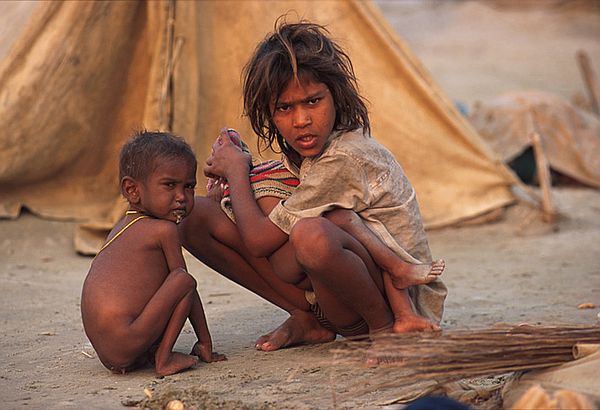
Today there are three sources of growing demand for food: population growth; rising affluence and the associated jump in meat, milk, and egg consumption; and the use of grain to produce fuel for cars.

Population growth is as old as agriculture itself. But the world is now adding close to 80 million people per year. Even worse, the overwhelming majority of these people are being added in countries where cropland is scarce, soils are eroding, and irrigation wells are going dry.

Even as we are multiplying in number, some 3 billion of us are trying to move up the food chain, consuming more grain-intensive livestock products. As incomes rise, annual grain consumption per person climbs from less than 400 pounds, as in India today, to roughly 1,600 pounds, as among those living high on the food chain in the United States, where diets tend to be heavy with meat and dairy products.

When the United States attempted to reduce its oil insecurity by converting grain into ethanol, the growth in world grain demand, traditionally around 20 million tons per year, suddenly jumped to over 50 million tons in 2007. Roughly 119 million tons of the 2009 U.S. grain harvest of 416 million tons went to ethanol distilleries, an amount that exceeds the grain harvests of Canada and Australia combined. This massive ethanol distillery investment in the United States launched an epic competition between cars and people for grain.

On the supply side of the food equation, several trends are making it more difficult to expand production rapidly enough to keep up with demand. These include soil erosion, aquifer depletion, more frequent crop-shrinking heat waves, melting ice sheets, melting mountain glaciers, and the diversion of irrigation water to cities.

Farmers are also losing cropland to nonfarm uses. Cars compete with people not only for the grain supply but also for the cropland itself. The United States, for example, has paved an area for cars larger than the state of Georgia. Every five cars added to the U.S. fleet means another acre of land will be paved over—the equivalent of a football field.

The implications for China of this relationship between cars and cropland are startling. In 2009, for the first time, more cars were sold in China than in the United States. If China were to reach the U.S. ownership rate of three cars for every four people, it would have over a billion cars, more than the entire world has today. The land that would have to be paved to accommodate these cars would be two thirds the area China currently has in rice.

This pressure on cropland worldwide is running up against increased demand for soybeans, which are the key to expanding the production of meat, milk, and eggs. Adding soybean meal to livestock and poultry feed sharply boosts the efficiency with which grain is converted into animal protein. This is why world soybean use climbed from 17 million tons in 1950 to 252 million tons in 2010, a 15-fold jump.

Nowhere is the soaring demand for soybeans more evident than in China, where the crop originated. As recently as 1995, China produced 14 million tons of soybeans and consumed 14 million tons. In 2010, it still produced 14 million tons, but it consumed a staggering 64 million tons. In fact, over half of the world’s soybean exports now go to China.

Demand is climbing, but since scientists have failed to increase yields rapidly, the world gets more soybeans largely by planting more soybeans. The soybean is devouring land in the United States, Brazil, and Argentina, which together account for four fifths of world soybean production and 90 percent of exports.

Ensuring future food security was once the exclusive responsibility of the ministry of agriculture, but this is changing. The minister of agriculture alone, no matter how competent, can no longer be expected to secure food supplies. Indeed, efforts by the minister of health and family planning to lower human fertility may have a greater effect on future food security than efforts in the ministry of agriculture to raise land fertility.

Similarly, if ministries of energy cannot quickly cut carbon emissions, the world will face crop-shrinking heat waves that can massively and unpredictably reduce harvests. Saving the mountain glaciers whose ice melt irrigates much of the cropland in China and India during the dry season is the responsibility of the ministry of energy, not solely the ministry of agriculture.

If the ministries of forestry and agriculture cannot work together to restore tree cover and reduce floods and soil erosion, grain harvests will shrink not only in smaller countries like Haiti and Mongolia, as they are doing, but also in larger countries, such as Russia and Argentina—both wheat exporters.

And where water shortages restrict food output, it will be up to ministries of water resources to do everything possible to raise national water productivity. With water, as with energy, the principal potential now is in increasing efficiency, not expanding supply.

In a world where cropland is scarce and becoming more so, decisions made in ministries of transportation on whether to develop land-consuming, auto-centered transport systems or more-diversified systems that are much less land-intensive will directly affect world food security.

In the end, it is up to ministries of finance to reallocate resources in a way that recognizes the new threats to security posed by agriculture’s deteriorating natural support systems, continuing population growth, human-driven climate change, and spreading water shortages. Since many ministries of government are involved, it is the head of state who must redefine security.

At the international level, we need to address the threat posed by growing climate volatility and the associated rise in food price volatility. The tripling of wheat, rice, corn, and soybean prices between 2007 and 2008 put enormous stresses on governments and low-income consumers. This price volatility also affects producers, since price uncertainty discourages investment by farmers.

In this unstable situation, a new mechanism to stabilize world grain prices is needed—in effect, a World Food Bank (WFB). This body would establish a support price and a ceiling price for wheat, rice, and corn. The WFB would buy grain when prices fell to the support level and return it to the market when prices reached the ceiling level, thus moderating price fluctuations in a way that would benefit both consumers and producers.

One simple way to improve food security is for the United States to eliminate the fuel ethanol subsidy and abolish the mandates that are driving the conversion of grain into fuel. This would help stabilize grain prices and buy some time in which to reverse the environmental and demographic trends that are undermining our future. It would also help relax the political tensions over food security that have emerged within importing countries.

And finally, we all have a role to play as individuals. Whether we decide to bike, bus, or drive to work will affect carbon emissions, climate change, and food security. The size of the car we drive to the supermarket and its effect on climate may indirectly affect the size of the bill at the supermarket checkout counter. At the family level, we need to hold the line at two children. And if we are living high on the food chain, we can eat less grain-intensive livestock products, improving our health while helping to stabilize climate. Food security is something in which we all have a stake—and a responsibility.

#   #   #

Adapted from Chapter 5, “The Emerging Politics of Food Scarcity” and Chapter 12, “Feeding Eight Billion” in Lester R. Brown, World on the Edge: How to Prevent Environmental and Economic Collapse
(New York: W.W. Norton & Company, 2011), available online at www.earth-policy.org/books/wote

Additional data and information sources at www.earth-policy.org

Feel free to pass this information along to friends, family members, and colleagues!
Not much I can add to that!

UPDATE:  Just a few hours after completing the Post, I saw this on the BBC News website.

The global consumption of fish has hit a record high, reaching an average of 17kg per person, a UN report has shown.

Fisheries and aquaculture supplied the world with about 145m tonnes in 2009, providing about 16% of the population’s animal protein intake.

The findings published by the Food and Agriculture Organization (FAO) also stressed that the status of global fish stocks had not improved.

It said that about 32% were overexploited, depleted or recovering.

“That there has been no improvement in the status of stocks is a matter of great concern,” said Richard Grainger, one of the report’s authors and FAO senior fish expert.

Full article on the BBC is here.


A new British passport.

Another smile for the week-end.

This is a real British passport application letter!!

Dear Minister,

I’m in the process of renewing my passport but I am a total loss to understand or believe the hoops I am being asked to jump through.

How is it that Bert Smith of T.V. Rentals Basingstoke has my address and telephone number and knows that I bought a satellite dish from them back in 1994, and yet, the Government is still asking me where I was born and on what date?

How come that nice West African immigrant chappy who comes round every Thursday night with his DVD rentals van can tell me every film or video I have had out since he started his business up eleven years ago, yet you still want me to remind you of my last three jobs, two of which were with contractors working for the government?

How come the T.V. detector van can tell if my T.V. is on, what channel I am watching and whether I have paid my licence or not, and yet if I win the government run lottery they have no idea I have won or where I am and will keep the bloody money to themselves if I fail to claim in good time.

Do you people do this by hand?

You have my birth date on numerous files you hold on me, including the one with all the income tax forms I’ve filed for the past 30-odd years. It’s on my health insurance card, my driver’s licence, on the last four passports I’ve had, on all those stupid customs declaration forms I’ve had to fill out before being allowed off the planes and boats over the last 30 years, and all those insufferable census forms that are done every ten years and the electoral registration forms I have to complete, by law, every time our lords and masters are up for re-election.

Would somebody please take note, once and for all, I was born in Maidenhead on the 4th of March 1957, my mother’s name is Mary, her maiden name was Reynolds, my father’s name is Robert, and I’d be absolutely astounded if that ever changed between now and the day I die!

I apologise Minister. I’m obviously not myself this morning. But between you and me, I have simply had enough! You mail the application to my house, then you ask me for my address. What is going on? Do you have a gang of Neanderthals working there? Look at my damn picture.

Do I look like Bin Laden? I don’t want to activate the Fifth Reich for God’s sake! I just want to go and park my weary backside on a sunny, sandy beach for a couple of week’s well-earned rest away from all this crap.

Well, I have to go now, because I have to go to back to Salisbury and get another copy of my birth certificate because you lost the last one. AND to the tune of 60 quid! What a racket THAT is!!

Would it be so complicated to have all the services in the same spot to assist in the issuance of a new passport the same day? But nooooo, that’d be too damn easy and maybe make sense. You’d rather have us running all over the place like chickens with our heads cut off, then find some tosser to confirm that it’s really me on thegoddamn picture – you know… the one where we’re not allowed to smile in case we look as if we are enjoying the process!

Hey, you know why we can’t smile? ‘Cause we’re totally jacked off!

I served in the armed forces for more than 25 years including over ten years at the Ministry of Defence in London . I have had security clearances which allowed me to sit in the Cabinet Office, five seats away from the Prime Minister while he was being briefed on the first Gulf War and I have been doing volunteer work for the British Red Cross ever since I left the Services. However, I have to get someone ‘important’ to verify who I am — you know, someone like my doctor… who, before he got his medical degree 6 months ago WAS LIVING IN PAKISTAN…

Yours sincerely,

An Irate British Citizen.

An answer to Britain’s economic issues.

A wonderful letter, purported to be real, showing some of the crazier aspects of UK life.

FROM: Nigel Johnson-Hill Esq.,
Park Farm,
Rake Road,
Milland,
Liphook,
Surrey,
GU30 7JT

TO: Rt Hon David Miliband MP,
Secretary of State,
Department for Environment,
Food and Rural Affairs (DEFRA),
Nobel House,
17 Smith Square,
London,
SW1P 3JR

Dear Secretary of State,

My friend, who is in farming at the moment, recently received a cheque for £3,000 from the Rural Payments Agency for not rearing pigs.

I would now like to join the “not rearing pigs” business.

In your opinion, what is the best kind of farm not to rear pigs on, and which is the best breed of pigs not to rear? I want to be sure I approach this endeavour in keeping with all government policies, as dictated by the EU under the Common Agricultural Policy.

I would prefer not to rear bacon pigs, but if this is not the type you want not rearing, I will just as gladly not rear porkers. Are there any advantages in not rearing rare breeds such as Saddlebacks or Gloucester Old Spots, or are there too many people already not rearing these?

As I see it, the hardest part of this programme will be keeping an accurate record of how many pigs I haven’t reared. Are there any Government or Local Authority courses on this?

My friend is very satisfied with this business. He has been rearing pigs for forty years or so, and the best he ever made on them was £1,422 in 1968. That is – until this year, when he received a cheque for not rearing any.

If I get £3,000 for not rearing 50 pigs, will I get £6,000 for not rearing 100? I plan to operate on a small scale at first, holding myself down to about 4,000 pigs not raised, which will mean about £240,000 for the first year. As I become more expert in not rearing pigs, I plan to be more ambitious, perhaps increasing to say, 40,000 pigs not reared in my second year, for which I should expect about £2.4 million from your department. Incidentally, I wonder if I would be eligible to receive tradable carbon credits for all these pigs not producing harmful and polluting methane gases?

Another point: These pigs that I plan not to rear will not eat 2,000 tonnes of cereals. I understand that you also pay farmers for not growing crops. Will I qualify for payments for not growing cereals to not feed the pigs I don’t rear?

I am also considering the “not milking cows” business, so please send any information you have on that too. Please could you also include the current Defra advice on set aside fields? Can this be done on an e-commerce basis with virtual fields (of which I seem to have several thousand hectares)?

In view of the above you will realise that I will be totally unemployed, and will therefore qualify for unemployment benefits. I shall of course be voting for your party at the next general election.

Yours faithfully,

Nigel Johnson-Hill
16 July 2009

Enjoy the week-end.

Afghanistan and truth!

“But better to be hurt by the truth than comforted with a lie.”

The quote is from the film, The Kite Runner, which was based on the book  of the same name written by Khaled Hosseini.

This Post is not about taking a position, at any level, about the West’s involvement in the war in Afghanistan – far too dangerous territory!  But it is a reflection on what truth means.

At first that proposition might appear bizarre, of course we know what truth means. My Thesaurus offers three meanings: Correspondence with fact or truth; Freedom from deceit or falseness; The quality of being actual or factual.  Clear?  H’mmm not really in this instance.

OK, to the motivation behind this article.

Last Sunday two outwardly disconnected actions came together, as often seems to happen, to cause me to ponder on how my opinions are formed.  The actions concerned Afghanistan.

The first was that a friend from the congregation gave me his copy of TIME Magazine for January 17th.  In it was an article about a Black Hawk Medevac unit in Afghanistan.  From the TIME website:

The Birds Of Hope: With A Black Hawk Medevac Unit In Afghanistan

By James Nachtwey Monday, Jan. 17, 2011

General William Tecumseh Sherman got it right. War is hell. But even within the cruelty of war, there exists mercy.

Across a dusty field, two U.S. Marines walk toward a helicopter, each carrying a bloodied and bandaged child. They hold the children as if they were their own. Although at this moment they appear as saviors, a few minutes earlier, they had called in air support in response to enemy fire. The shooter was among children, however (a fact that I have to believe was not known to the Marines), and two were seriously wounded by fragments from machine-gun rounds.

Innocent people are caught in the cross fire in all wars. That’s reality. The two Marines never signed up to hurt kids, and in the shock and confusion, their default reaction was to be protective of the children they indirectly had a hand in wounding. The kids were not left to die, as they might have been in another time and another place by other armies. Instead, a U.S. Army air-ambulance medevac crew was dispatched to fly them to the same medical facility that treats American casualties. If the shooter had survived, he too would have been helped.

Read more: http://www.time.com/time/magazine/article/0,9171,2041191,00.html#ixzz1Byu1S0xj

The article in TIME Magazine contained some emotionally powerful pictures, such as the one below.


A Marine carries an Afghan child.

The full description of the photograph, taken by James Nachtwey for TIME , is Helping Hand
A Marine carries an Afghan child, one of two wounded by coalition aircraft during an air support mission.

My reaction on reading the gruelling story was confused and difficult to articulate clearly but certainly not complimentary! Something along the lines of big and powerful nations, such as the USA, Russia and the United Kingdom, playing out their global strategies with no real insight into the pain and suffering caused by their big ‘war games’.

The second action was that Jean had returned a rental film to the local Blockbuster store and returned with another one that had caught her eye for us to watch on Sunday evening.  That film was The Kite Runner based on the book of the same name by Khaled Hosseini.

There’s a good summary of the plot of the film at WikiPedia.  Here’s a flavour.

In Kabul, prior to the Soviet invasion of Afghanistan, well-to-do young boy Amir and his loyal young Hazara servant Hassan are best of friends. Amir enjoys writing and literature, reading stories to the eager but illiterate Hassan. Amir’s Baba (father), is contemptuous of Amir’s writing and privately regards him as a weakling for letting Hassan protect him from bullies. Baba’s friend Rahim Khan demonstrates interest and encouragement to Amir. Assef, a bully with rancor towards Hazaras, and two accomplices confront Hassan and Amir, but Hassan prevents the attack with a slingshot, a birthday gift from Amir. Assef swears revenge, ridiculing their relationship as mere master and servant. .

Soon the Soviets invade Afghanistan; forcing Baba, a known anti-communist, to flee the country leaving Rahim Khan as property caretaker. En route to Pakistan, Baba bravely risks his life defending a female refugee from a Soviet soldier who demands to rape her in return for safe passage for all. Baba and Amir eventually reach the United States as humble refugees in Fremont, California. Baba tends a gas station while Amir attends community college and vends at a weekly flea market. There, Amir meets Soraya Taheri; Soraya is interested in Amir’s writing although her father, the ex-General Taheri, a proud traditional Pashtun, is contemptuous. Baba is stricken mortally ill but manages to obtain General Taheri’s permission for Amir to marry Soraya. Although Soraya feels bound to confess her previous relationships, they are happily married despite an inability to conceive children. As foreshadowed in the movie’s first scene, Amir’s debut novel is published, dedicated to Rahim Khan who encouraged his writing.

It was a fabulous film, one of the more thought-provoking films seen in many years.  If you haven’t seen it, do so.

So to the point of this article.

The film demonstrated to me that my rather black-and-white opinion of the West’s involvement in Afghanistan was based much more on my instincts that ‘war is bad’ and that the USA tends to throw its military weight around, than having a clue as to the enormous complexities, both at the level of a family and of the nation, that these conflicts entail.

The film showed a much more compassionate aspect to the activities of the USA, specifically in getting involved in Afghanistan and, more generally, in a policy of offering a new home and new hope to those from afar.

And for me, the realisation that while it may be said, ‘There is only one truth’, knowing what that truth is is something very much more challenging!

The first casualty when war comes is truth“. (Hiram W Johnson, senator for California, 1917)

Fairness in society

Very difficult times ahead but a fairer social order could be one outcome.

As is so often the case, a number of different lines of thought come together once again to highlight the pressures on society and my belief that we are in the ‘zone of change’ between the last 40 or 50 years and what is ahead for western societies.  There is no question that these are very difficult times as, I presume, all phases of change have been over many centuries.

On the 28th October there was a Post on Learning from Dogs about the recent book from Will Hutton, Them and Us.  That book masterfully articulates the core issues in British society arising out of some fundamental economic policy errors and the very difficult times that are being experienced right now.

The British are a lost tribe – disoriented, brooding and suspicious. They have lived through the biggest bank bail-out in history and the deepest recession since the 1930s, and they are now being warned that they face a decade of unparalleled public and private austerity.

As if to underline the fact that the economic situation is far from recovery, despite what is being promoted, here’s a recent article from Washington’s Blog. Almost impossible to take an extract that conveys the essence of this powerful (and scary) article – so just go here and read it.  Or if you haven’t the time here’s a taste:

SATURDAY, NOVEMBER 27, 2010

It’s Not Just the “Peripheral” European Countries … Financial Contagion Could Spread to “Core” Eurozone Countries and the U.S.

CNN notes:

Americans will not be spared if there’s a recession in Europe, even if U.S. bank exposure to European government debt is relatively limited.

SNIP

The European Union is the second largest market for U.S. exports, behind only Canada. The EU bought about $175 billion in U.S. goods in the first three quarters of this year. That’s up about 8% from a year ago.

So worsening problems in Europe will clearly be a drag on the U.S. as well.
Niall Ferguson, Marc Faber, and SocGen’s Edwards and Grice predicted 9 months ago that the European debt crisis would eventually spread to America.

But the question of what country the “contagion” might spread to next is really the wrong question altogether.

The real question is whether the wealth of the people around the world will continue to be shoveled into the bottomless pit of debts held by the big banks, or whether the people will prevail and the giant banks and bondholders will be forced to take a haircut. See thisthis and this.

So back to the issue of fairness.  There is no escaping the consequences, still playing out, of the ‘spend now, pay tomorrow’ culture of the last 30 or 40 years so then the main issue is how do we mitigate the consequences for those who are most exposed to some of less prettier aspects of modern life.  Ponder on that question while you read this recent piece from Open Democracy.

Fairness and the cost of life for the poor in Britain

Brian Landers26 November 2010

Most Britons had “never had it so good” despite the “so-called recession” declared Lord Young of Graffham.  His words were immediately disowned by David Cameron, who fired him. But in reality Young was only articulating what he and his circle are experiencing and privately believe.

For example, on the BBC’s Sunday morning Broadcasting House on 21 November, Lord Charles Powell who was Margaret Thatcher’s advisor, complained, “unfortunately he said the wrong thing. In terms of fact what he said was probably right, with interests rates low people are not particularly badly off at the moment. But some people are very badly off and it is insensitive, I suppose, to suggest that everyone is not doing too badly at this time. It does show that you can’t speak the truth in politics anymore you have to defer to what is politically correct”.

Well, there is another truth: that for thousands of pensioners and not just “some” of them, negative real interest rates on their savings are becoming a disaster. Even though for the heavily mortgaged wealthy, low interest rates do indeed make them much better off.

What Young’s comments illustrate, therefore, is that when we consider equality and inequality we need to look at expenditure patterns, which can be just as important as differences in income.

Historically debates on social equality focus overwhelmingly and inevitably on inequalities of income. We read, for example, that according to a study by Incomes Data Services chief executives of the UK’s 100 largest companies are now paid on average 88 times the pay of typical full-time workers and that this ratio is getting worse. Last year the multiple was 81 times and ten years ago top bosses took home 47 times the average wage.

But in addition to their income being a lot lower the poor also suffer more because life costs them more. There are two issues, one obvious, one less so.

The primary issue is one of fairness. Three for the price of two supermarket offers are great value only for those who can afford to buy two; those who can only afford one end up paying 50% more per unit. Is that fair?

Another supermarket example which received widespread but soon-forgotten newspaper coverage earlier this year is more subtle. Tesco owns three convenience store brands in this country: Tesco Express, Tesco Metro and One Stop. An enquiry in 2006 found that the corporation was charging more than 20% more for the same products in its One Stop stores than in its Tesco branded stores. Tesco responded that it was bringing prices down in One Stop but in 2010 further research showed that One Stop prices were still 14% higher than prices for the same product in the rest of Tesco. One Stop typically operated in less attractive (that is poorer) areas where there was no competition from other mega-corporations and where therefore significantly higher prices could be charged. Again that raises issues of fairness.

If such unfairness is somehow familiar there is a further layer that goes beyond fairness: we live in a society where in many tiny ways the poor actually subsidise the better off through the way patterns of expenditure are organised by the market place, (i.e., not just by providing cheap labour).

Consider for example the cost of owning a car.  Bernard Jullien of the University of Bordeaux analysed published data on household expenditure and trade data from car distributors (See Competition and Change 6, 2002). He showed that richer consumers were being cross-subsidised by poorer consumers. Distributors in France (and almost certainly elsewhere) were following a conscious policy of keeping new car prices lower to increase their market share. Then then marked up the prices of spare parts and maintenance to maintain their overall profit levels. Jullien found that the unintended consequence was that well off customers, who were more likely to buy new cars, ended up being subsidised by less well off customers who typically bought second hand cars that needed more frequent repair.

There are more examples if the term “well off” is extended to include corporations. The cost of producing and distributing the electricity needed to power a light bulb is the same whether the bulb is in a private house or in the office of a mega-corporation – and yet the corporation will undoubtedly pay far less. Quantity discounts typically reflect the purchasing power of the buyer rather than any scale economies for the seller.

What are apparently rational pricing strategies have the unintended consequence of ensuring that poor people pay more than the well off in ensuring the overall profits corporations need.

Then there is time. Time budget surveys have shown, for example, that the poor take much longer per mile to get to work than the rich because the forms of transport they use are typically much slower. Similarly the poor have to devote more time to food shopping and a host of other activities.

There is nothing conspiratorial about the way that the poor fare worse than the rich. Often it is just the accidental by-product of perfectly sensible business decisions. Indeed in some cases there may even be wider social benefits. Improved stock control with Just-In-Time inventory techniques and Call-Off procurement contracts has ensured that waste in many industries has been sharply reduced; it is unfortunate that in food retailing one consequence is that end-of-day price reductions on perishable products are now less common, again hurting the poor more than the rich.

What can be done to mitigate these expenditure inequalities? First, they deserve to be highlighted, if only because, like so much else, they are beyond the experience of the multimillionaires in and around the cabinet. Second, and especially if we are going to talk about Big Society and us being ‘all in it together’, we need to think about economic models that build into their measures of success their consequences for all of us.

[Published with the permission of Brian Landers and openDemocracy.net under a Creative Commons licence.]

By Paul Handover