Category: Flying

Nostalgia with wings!

Opening up the memory box.

Last Saturday, under the post title of The family flight, I wrote about the formation display given by five A350 XWB development aircraft.

That prompted a comment from Hariod Brawn:

He [my father] was an RAF pilot during the war and through to the early 1960’s. He test-piloted the Vulcan and Victor, though started on what he called ‘string bags’, by which he meant Tiger Moths. In between he flew the Spitfire, Lancaster, Meteor and specialised in flying in electrical storms, about which he wrote a manual for the RAF.

……

I took my father to see Vulcan XH558 fly what was then thought to be its final flight (it subsequently was overhauled and took to the skies again). It flew along the length of the runway at a 45 degree angle with its bomb bay doors open. On the inside of the doors in huge letters was the single word ‘farewell’. It was really quite an emotional experience both for my father and myself.

I thought it would be nice to include some video of XH558; that will be tomorrow’s post. For today, I wanted to reminisce from my own private flying days.
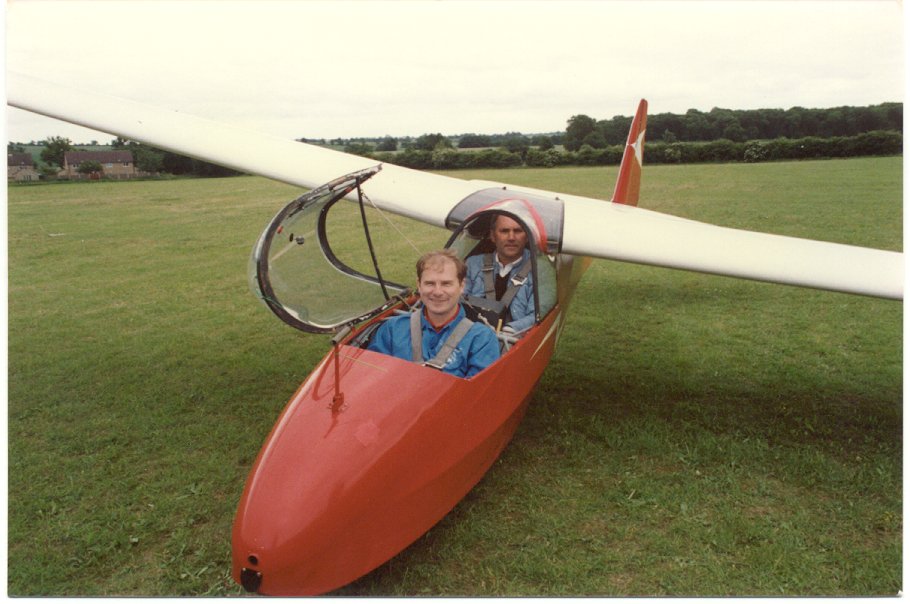
A K-7 two-seat glider.

My first exposure to private flying was on the 7th June, 1981 when, at Rattlesden Gliding Club in Suffolk, I was taken up for two air-experience circuits in a two-seater glider known as a ‘K7’.  I was immediately hooked! Those experience flights leading to a 4-minute flight (flight number 46) on the 6th September, 1981 that has the remark in my pilot’s log book: Solo!  Now fast forward to October, 1984 and my log book shows me attending a gliding instructor’s course at Lasham, resulting in me being issued with a British Gliding Association (BGA) Assistant Instructor Rating on the 14th October. (105/84).

Over on the power side of things, in March, 1984, I started Private Pilot training at the Suffolk Aero Club at Ipswich Airport and gained my PPL on the 9th November, 1984.  Subsequently, gaining my Instrument Rating in July, 1999 when I was then operating from Exeter Airport and flying frequently for business purposes.  For that ‘serious’ flying I used a Socata TB20, a French retractable, single-engined aircraft, based at Exeter.  A very fine, long-distance aircraft.
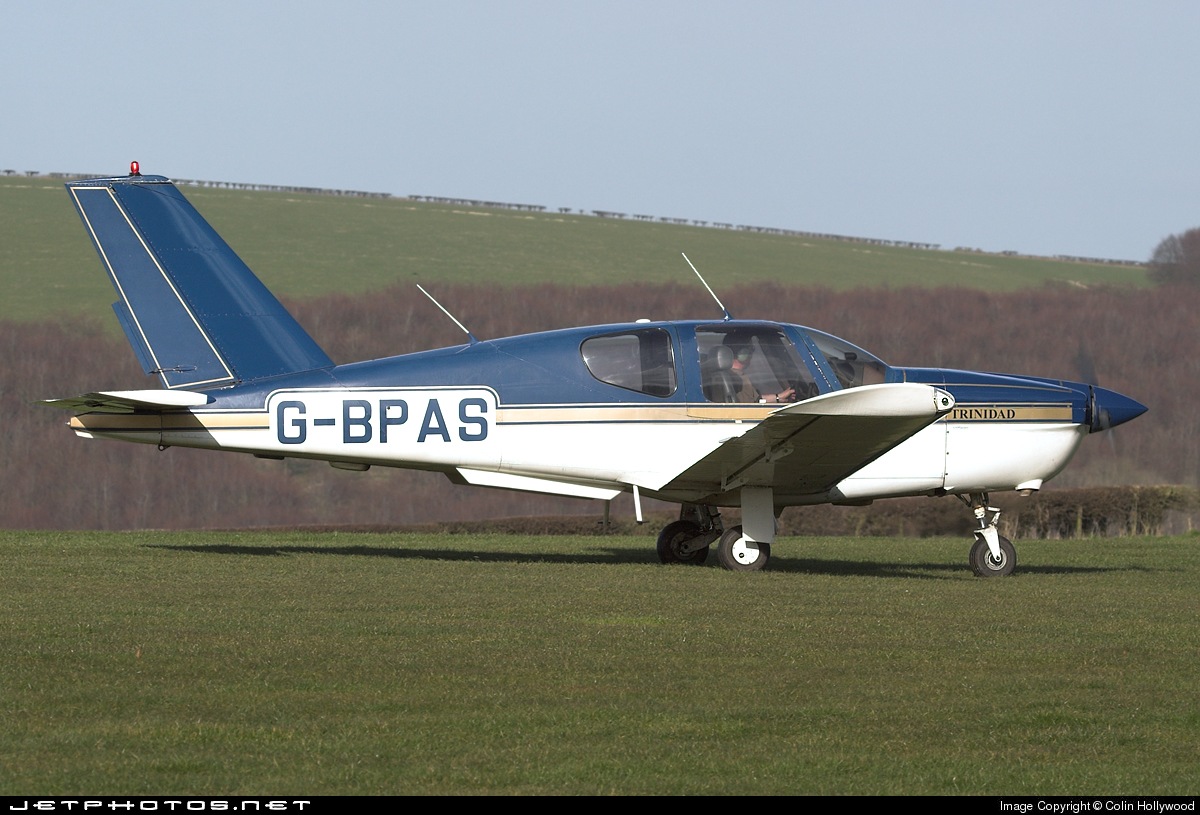
TB20, G-BPAS, photographed at Compton Abbas airfield (EGHA).

But the aircraft that I had the most fun flying was a dear old Piper Super Cub.  Here’s the background to the aircraft.

Piper Super Cub, L-21B, R-151

A/C Construction No. 18-3841, Frame No. 18-3843

Original Engine, Lycoming 135 Type 0-290-D2, 54/2441

Romeo 151 was one of a batch of 298 L-21’s delivered in 1954. There were 584 L-21B’s produced by Piper for military use, the ‘L’ standing for Liaison. The L-21B’s were PA-18-135’s with civil Lycoming 0-290-D2 engines, glasswork as most L-21A’s and L-18’s and a gross weight of 1760 lbs.

This aircraft was delivered to Koninklijke Luchtmacht, Dutch Air Force, on the 1st July, 1954 and registered R-151. After various homes R-151 transferred to the Dutch civil register as PH-GER, 1st April 1976 with 4,458 hours and shortly thereafter was registered to Vlieclub Hoogeveen, Certificate Number 2380.

On the 27th March, 1981 the aircraft was delivered to the UK with a total time of 5,043 hours and in September, 1981 became G-BIYR; ‘YR’. In April, 1983 YR was the first of type to be given a Public Transport CofA (Certificate of Airworthiness) and was used for training at Tollaton. YR reverted to a Private CofA in January, 1984 when purchased by Mike and Barbara Fairclough. The aircraft had by then accumulated 5,120 hours.

In 1992, YR was re-engined with a Lycoming 150HP, 0320-A2B No. L49809-27A (zero hours). Finally on the 2nd June, 1995 the aircraft was repainted in her original Dutch insignia and given CAA (UK Civil Aviation Authority) permission to use the original call-sign: Romeo 151.

The aircraft was based at and flown from Watchford Farm airstrip in South Devon, England.

Now forgive the nostalgic photographic memories!
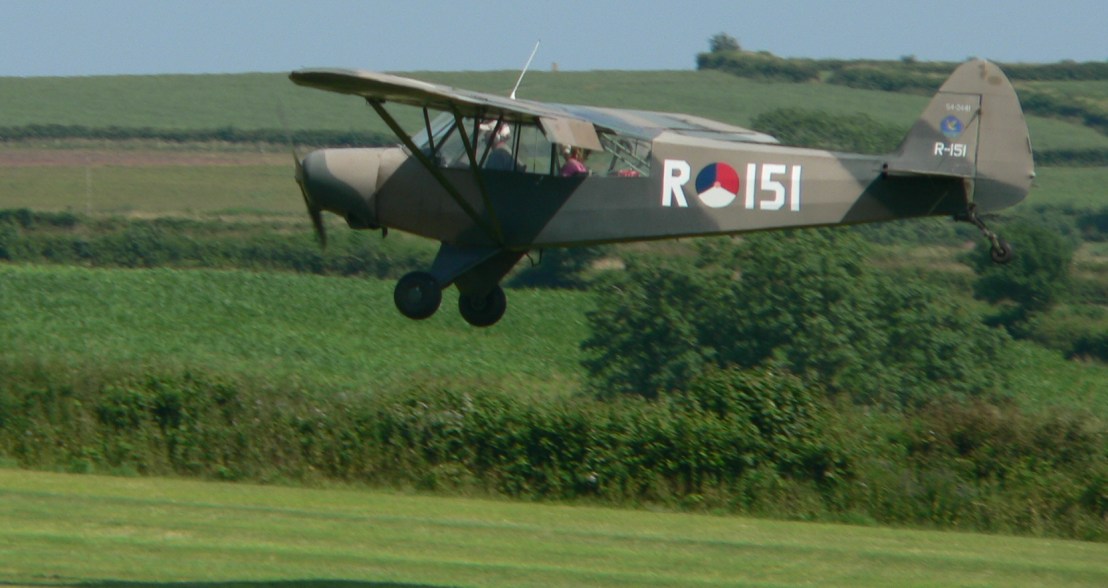
Approaching home in South Devon, England
Yours truly approaching Watchford Farm airstrip in South Devon, England
Flying in the French Alps, Mt Blanc in sight
Flying in the French Alps with Mont Blanc in sight
9,300 ft up in the French Alps
9,300 ft up in the French Alps!

Every time I went to the airfield with Pharaoh he always tried to climb into the cockpit.  So one day, I decided to see if he would sit in the rear seat and be strapped in.  As the next picture shows, there was absolutely no problem with that!
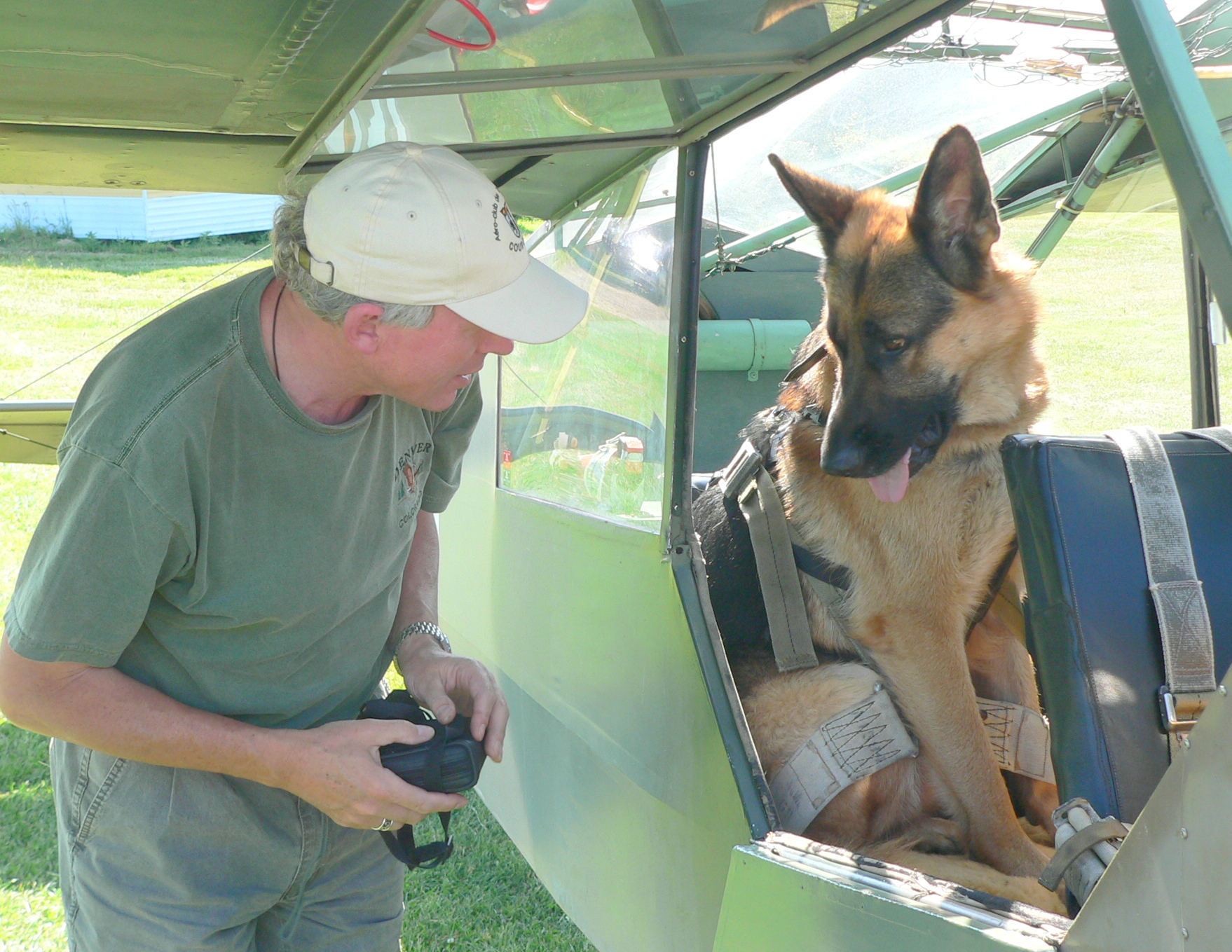
Come on Dad, let's get this thing off the ground!
Come on Dad, let’s get this thing off the ground!

My idea had been to fly a gentle circuit in the aircraft.  First, I did some taxying around Watchford’s large grass airfield to see how Pharaoh reacted.  He was perfectly behaved.

But then I thought long and hard about taking Pharaoh for a flight.  In the Piper Cub there is no autopilot so if Pharaoh struggled or became agitated it would have been almost impossible to fly the aircraft and cope with Pharaoh sitting in the seat behind me.  So, in the end, I abandoned the idea.  The chances are that it would have been fine.  But if something had gone wrong, the outcome just didn’t bear thinking about.

Thus we elected for taxying all around the airfield which, as the next picture shows, met with full doggie approval.  The date was July 2006.
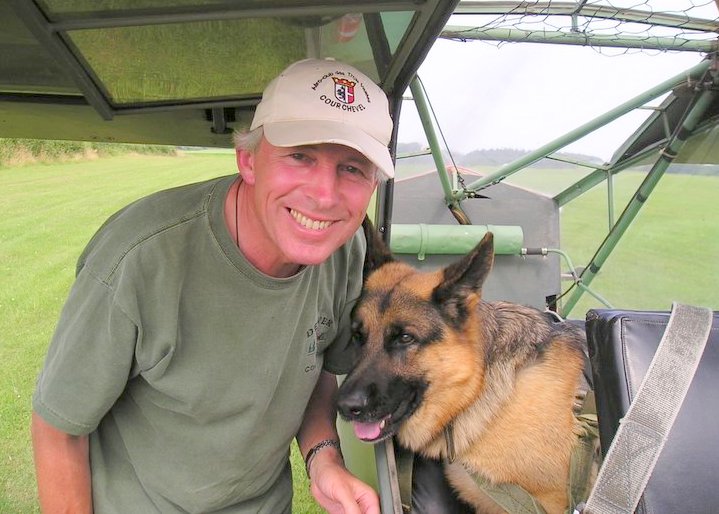
That was fun!
That was fun!

So enough of my recollections for today – tomorrow the Vulcan XH558.

The family flight!

A most unusual formation flight!

(and trust me, it’s highly watchable even for non-aviation bods!)

Dan Gomez recently sent me a link to a news item and video of a quite extraordinary formation flight. It concerns the fleet of five development A350 XWB development aircraft.

The Airbus A350 XWB
The Airbus A350 XWB

This picture was taken from a Press Release in 2013 on the Airbus website announcing the first flight:

14 June 2013

A new chapter has opened in Airbus’ 43-year history as the first A350 XWB, the world’s most efficient large twin-engined commercial aircraft, powered aloft this morning for its maiden flight at Blagnac in Toulouse, France at 10.00 hours local time. Equipped with Rolls-Royce Trent XWB turbofans, the A350 XWB first flight is taking place over south-western France.

An international crew of six is on board, comprising two Flight Test Pilots, one Test Flight Engineer and three Flight Test Engineers. At the controls of the A350 XWB’s first flight are Peter Chandler, Airbus’ Chief Test Pilot, and Guy Magrin, Project Pilot for the A350 XWB. Accompanying them in the cockpit is Pascal Verneau, the A350 XWB Project Test Flight Engineer. At their flight test stations in the main aircraft cabin and monitoring the progress of the flight via an extensive array of flight test instrumentation are the three flight test engineers: Fernando Alonso, Head of Airbus Flight & Integration Test Centre; Patrick du Ché, Head of Development Flight Tests; and Emanuele Costanzo, lead Flight Test Engineer for the Trent XWB engine.

This first flight marks the beginning of a test campaign totaling around 2,500 flight hours with a fleet of five development aircraft. The rigorous flight testing will lead to the certification of the A350-900 variant by the European EASA and US FAA airworthiness authorities, prior to entry into service in the second half of 2014 with first operator Qatar Airways.

Anyway, moving on to the video. Here it is:

Published on Dec 2, 2014

The five test and development A350-900s took to the skies for a formation flight in September 2014, bringing together all of the aircraft used for Airbus’ successful campaign leading to certification of this latest Airbus wide-body jetliner.

(Interesting to note that the video has already been watched approaching 1.7 million times!)

The beauty of flight.

Not, perhaps, in quite the way you might be anticipating!

A couple of weeks ago, I forwarded an item to my son, an airline Captain for some years now, that I read on the Big Think website. It was an item called The Accidental Beauty of Flight Paths.

The Accidental Beauty of Flight Paths
by FRANK JACOBS NOVEMBER 5, 2014

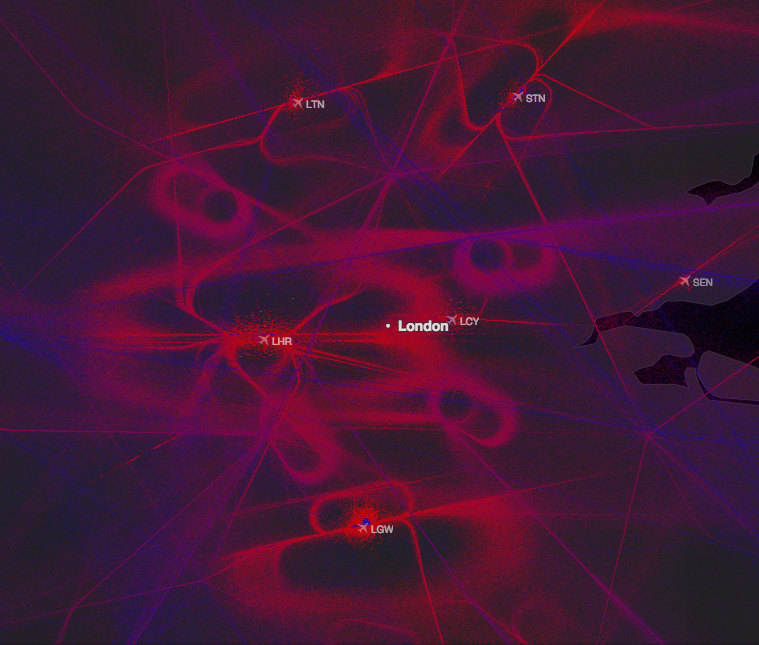
There is more between heaven and earth than bird migrations and weather fronts. These maps capture the poetic beauty of something utterly mundane and usually invisible: the flight patterns of the planes that bring us from airport A to airport B.

We live in the age of mass air travel. At any given moment, there are about 10,000 commercial planes airborne, carrying an estimated half a million passengers across the skies. We also live in the era of Big Data. Which means that the movements of those thousands of planes can be followed in real time on websites such as Plane Finder and Flightradar24.

London and the pretty holding patterns around its airports: Heathrow (LHR), Gatwick (LGW), City (LCY), Luton (LTN), Stansted (STN) and Southend-on-Sea (SEN).

You can read the full article here.

Alex, my son, then replied with a link to this item on the UK NATS website: Take a guided tour around UK airspace.

The skies above the UK have been brought to life like never before in a video showing a day of air traffic in less than three minutes.

Created from actual radar data showing over 7,000 flights, the video graphically illustrates the daily task facing air traffic controllers and the airspace features that help make it all work.


It finishes with an overview of the structure of UK airspace, highlighting the major air routes and showing how this ‘invisible infrastructure’ helps underpin the entire operation.

Matt Mills, NATS Head of Digital Communications, said: “We’ve made data visualisations in the past, but we wanted to now take people on a deeper journey into what makes UK airspace work and some of its important features.

Airspace might be the invisible infrastructure, but it is every bit as important as the airports and runways on the ground.

Created by air traffic management company, NATS, the video takes viewers on a unique tour of some of the key features of UK airspace – from the four holding stacks over London and the military training zones above Wales, to the helicopters delivering people and vital supplies to the North Sea oil and gas rigs.

It is a fascinating video.

Seventy years – Just like that!

1944 to 2014 in what seems like the blink of an eye.

At 7:30am UTC on November 8th, 1944 in the antenatal ward of Hampstead Heath General Hospital,  North-West London, yours truly took his first lung-full of air.

It would be impossible to list all the memorable things that have happened in these last seventy years and, anyway, it would bore your pants off!

So all I want to reflect upon were those first six months, despite me not remembering any moment of them.

For on May 8th, 1945 World War II ended.

Here’s the historic announcement by Sir Winston Churchill.

The Allies accepted the unconditional surrender of the defeated Third Reich on May 8, 1945. This brought an end to the Second World War in Europe after 2074 days.

My mother, still very much alive at the age of 94, recalls that on hearing that announcement from Churchill she looked down at me and knew her young baby boy wasn’t going to be killed by a German bomb.

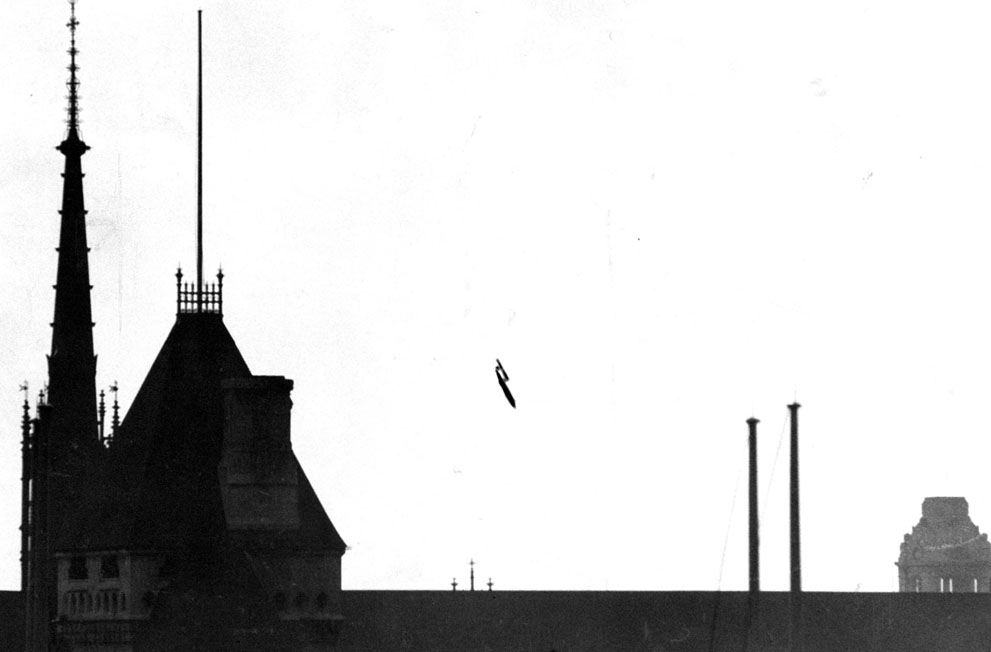
By no means was this a theoretical concern of hers. For in much of the preceding months the Germans had been hammering London with their V-1 “Buzz Bombs”. As this historic photograph shows.

A V-1, “buzz bomb”, plunging toward central London, 1945.


This bomb landed on a side road off Drury Lane blasted several buildings, including the office of the Daily Herald. Known as the Flying bomb, Buzz bomb or Doodlebug, V-1 was the first modern guided missile used in wartime and the forerunner of today’s cruise missile. The V-1 (and later V-2 ) added a new terror to an already terrible war – robot missiles. Once launched, these weapons flew without human intervention to strike distant targets.

Circumstances meant that my mother was living in North-West London when I was born and that’s where I was brought up for the first two years of my life.  Still remember the address: 17 Burnside Crescent, Alperton, North-West London.

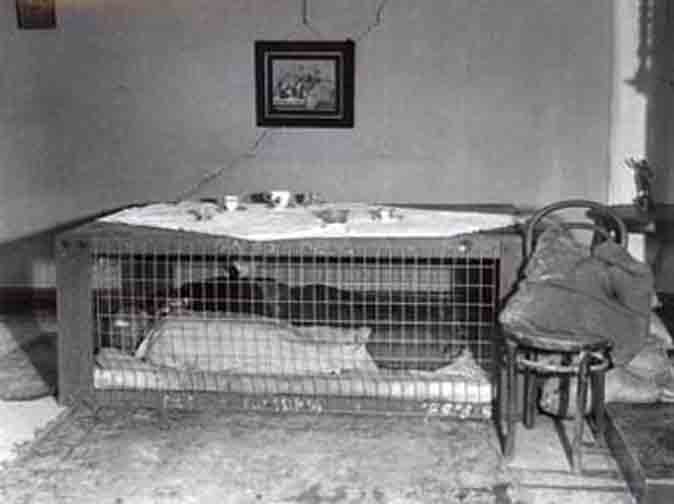
Burnside Crescent was close to factories that were being targeted by the Germans.  That meant that at night my mother and I slept in what was called a Morrison shelter.

An indoor Morrison shelter.

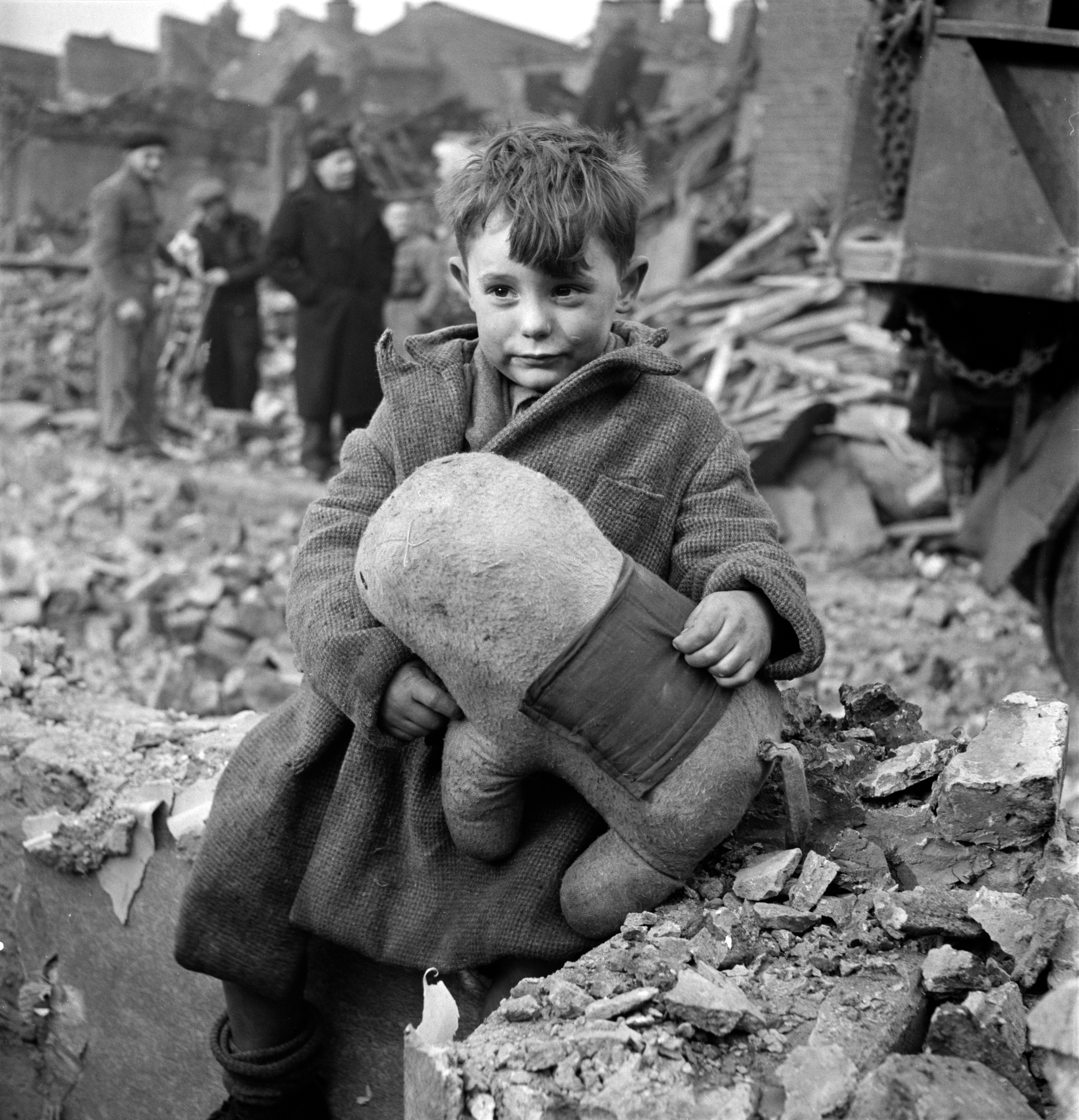
As if to underscore the hazards of early-1945 London, the photograph below is of a young boy, Toni Frisell, the sole family survivor from a V-1 bombing in 1945.

Toni Frissell London bombing 1945 wonder where he is now?
Toni Frissell – wonder where he is now?

So here I am still a living being and still loving my life.

How to close?

By coming all the way forward to modern times and the incredible technology that enables so much. Not just the world of blogging but such things as NASA’s Scientific Visualization Studio from where this compelling video was taken.

I wrote about my first six months that were not remembered one jot!

This quote, therefore, seems an apt statement for the end of today’s post.

“Time moves in one direction, memory in another.”

Quote from the author William Gibson

Thank you, Ben!

A thank you to all those that work so hard to stop fires from getting out of control.

I am drafting this post at a little after noon on the 4th., i.e. early afternoon yesterday.

It is yet another dry, hot day in a long run of hot, dry days. Our local online weather service, GrantsPassWeather.com, informs me that the temperature this afternoon (i.e. yesterday) is forecast to be a high of 93 deg F. or 34 deg C.  We last had monthly rain totals of more than an inch back in March.  At the top of the home page of Grants Pass Weather is a bold red banner proclaiming a Red Flag Warning for three counties: Jackson, Josephine and Eastern Curry.  We live in Josephine County and clicking that banner reveals:

Details:

…RED FLAG WARNING REMAINS IN EFFECT UNTIL 10 PM PDT THIS EVENING FOR COMBINATION OF STRONG WINDS AND LOW RELATIVE HUMIDITIES FOR FIRE WEATHER ZONES 280…281…617…619…620…621…622 AND 623…

* AFFECTED AREA: FIRE WEATHER ZONES 80…281…617…619…620…621…622 AND 623.

* HUMIDITY…MINIMUM RELATIVE HUMIDITY AT 10 TO 20 PERCENT FOLLOWED BY RECOVERIES TONIGHT AT 20 TO 40 PERCENT.

* WIND…NORTHEAST TO EAST WINDS 10 TO 20 MPH THROUGH THIS EVENING THEN 5 TO 15 MPH OVERNIGHT.

* IMPACTS…POSSIBLE PLUME DOMINATED BEHAVIOR ON ACTIVE FIRES AS STRONG WINDS AND LOW RELATIVE HUMIDITIES THROUGH THIS EVENING WILL CAUSE FIRES TO SPREAD VERY RAPIDLY.

* VIEW THE HAZARD AREA IN DETAIL AT HTTP://GO.USA.GOV/ZYV5

Information:

STRONG WINDS AND LOW RELATIVE HUMIDITIES WILL CAUSE FIRES TO SPREAD VERY RAPIDLY.

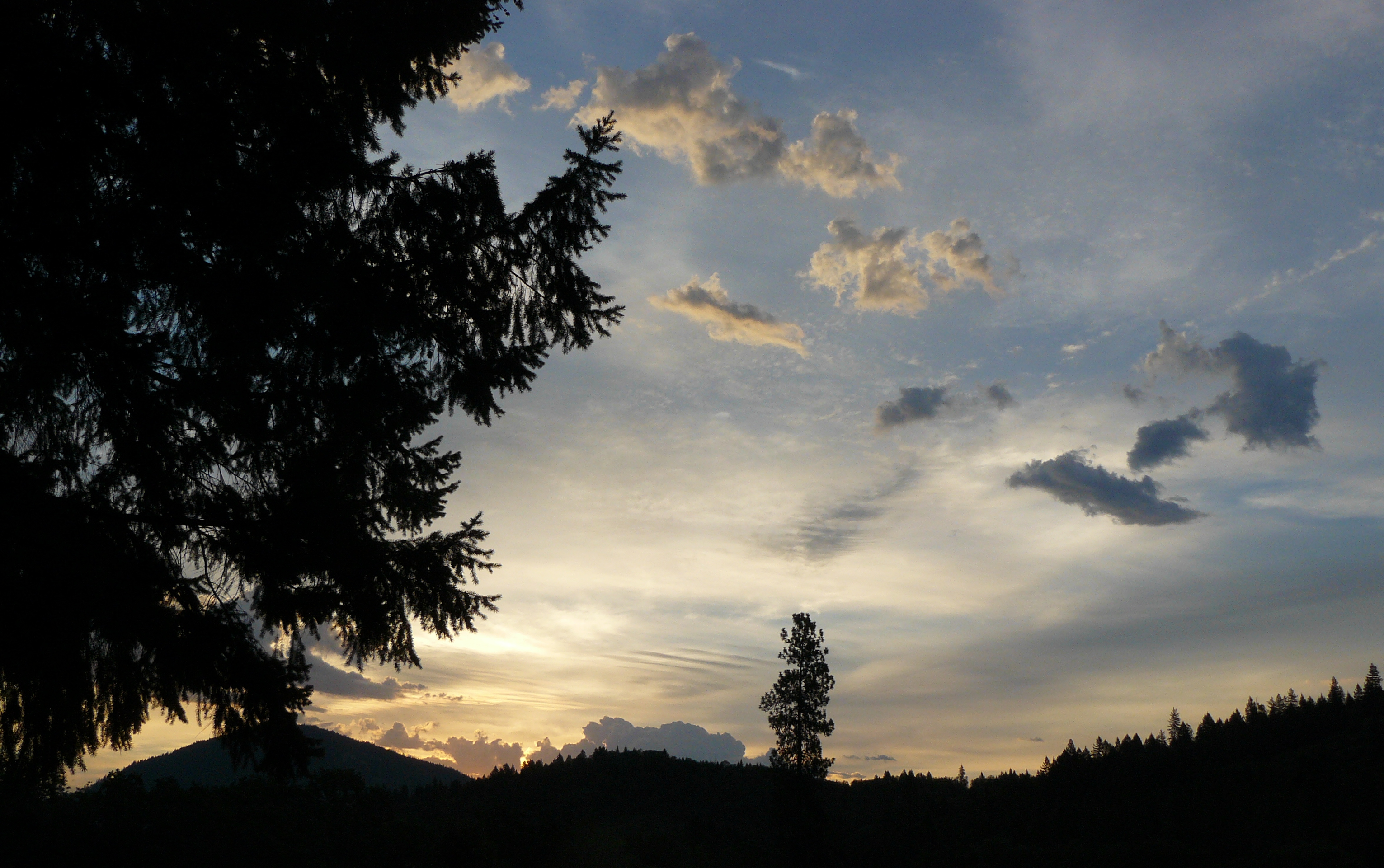
Little after 7am a few weeks ago - looking out to North-East.
Little after 7am a few weeks ago – looking out to North-East. Picture taken from the rear deck of our house near Merlin, Oregon.

Does this focus the mind?  You bet! The trees in the foreground of the above photograph are within our property. Our house is surrounded by tall oaks, pines and fir trees.

Now stay with me through what, at first, may seem like a disconnected change of topic.

Long, long time ago Jean met Ira Weisenfeld, a young vet making his way in the world.  Jean’s passion for rescuing feral street dogs meant that she was a more active user of a vet’s services than the average pet owner.  Jean and Ira became very good friends.

Earlier on this year, we had the pleasure of the company of Ira’s daughter, Amber, who came to see us with the man in her life, Ben Elkind.

Fast forward to the 1st September and Amber sent us the following email:

Hello Paul and Jean!

Hope you guys are doing well. Here is a BBC story about smokejumpers in Redding, CA where Ben works, he is interviewed too. Thought you might like it! Hope you had a wonderful summer. I just finished the boundary water canoe trip with Dad, it was very good.
Take care,
Amber

That BBC story explains:

Forest fires kept at bay in US by elite ‘smokejumpers’

26 August 2014 Last updated at 00:48 BST

The drought that has gripped much of the American West shows no sign of abating – yet despite the tinder-box conditions, so far less land in the region has been lost to wildfires in 2014 than in recent years.

That is partly due to an aggressive strategy to stop smaller forest fires before they become too big to handle.

At the frontline of this effort are the smokejumpers, airborne firefighters who parachute into the wilderness to get the blazes under control.

It’s a dangerous job for an elite group of highly-trained men and women. The BBC spoke to three smokejumpers – Ben Elkind, Gretchen Stumhofer and Luis Gomez – at their base in Redding, California.

Produced by the BBC’s Jack Garland.

Additional footage courtesy of Ben Elkind and Tye Erwin

Here is that film report.

The clouds above us.

A remarkable endeavour by the BBC.

A team of scientists take to the skies in one of the world's largest airships, for a unique exploration of Earth's most precious and mysterious environment - the atmosphere.
A team of scientists take to the skies in one of the world’s largest airships, for a unique exploration of Earth’s most precious and mysterious environment – the atmosphere.

In an example of what might be called a massive change of topic from yesterday’s post on Integrity and democracy, today’s offering to you, dear reader, is about the magnificent atmosphere upon which we all depend.

Here’s a clue.

Sunrise to our North-East at a little after 7am on Sunday, 13th July, 2014.

Yes, the BBC have embarked on what they are calling Operation Cloud Lab: Secrets of the Skies. Over on that website, one can read this:

Every Breath We Take: Understanding Our Atmosphere

The air around us is not just empty space; it is an integral part of the chemistry of life. Plants are made from carbon dioxide, nitrogen nourishes the soil and oxygen gives us the energy we need to keep our hearts pumping and our brains alive. But how did we come to understand what air is made of? How did we come to know that this invisible stuff around us contains anything at all?

Gabrielle Walker tells the remarkable story of the quest to understand the air. It’s a tale of heroes and underdogs, chance encounters and sheer blind luck that spans the entire history of science. It began as a simple desire to further our knowledge of the natural world, but it ended up uncovering raw materials that have shaped our modern world, unravelling the secrets of our own physiology and revealing why we are here at all.

There is much more to explore on the website, including this trailer to the programme.

Oh, here’s another ‘clue’ from Oregon.

Same morning, same sunrise.

The presenter of the BBC series is Felicity Aston who writes on her BBC Blog:

I joined Operation Cloud Lab: Secrets Of The Skies as the expedition leader and also as a meteorologist.

The plan was to fly from Florida to California, looking at the science of the skies.

But as well as scientists, there were plenty of other people on the team including three pilots, a ground crew of 14 that followed the airship by road and a full production team including two camera crews. Not everyone could be on board at once – the airship would never have got off the ground!

But I was really fortunate to spend a lot of time on board and flew most of the way across the continent.

Exploring in three dimensions rather than being limited to making observations from the ground was a revelation to me.

The clouds in the tropics around the Gulf of Mexico are huge, and being in the sky with them really brought home the vast scale of the forces at work.

Towering cumulus cloud in Florida.

We were able to travel over, under and through these monsters, revealing that clouds are about as far from the popular image of light and fluffy floating puffs of cotton wool as you can get! They are dense and heavy and full of destructive energy.

I remember looking down at the cloud layer from a plane as a child, and daydreaming about exploring this new world of unknown places, so I was very excited the first time we flew straight through a cloud.

I leaned out of the airship as far as I dared into the heart of a cloud and found that it was a dark, damp mass of floating fog (of course!) – no mysterious worlds – my childhood fantasies were crushed!

There’s more to read on her blog as well as some stupendous photographs of clouds.

So if this gives you a thrill then don’t delay in watching the full-length Episode One on YouTube before it gets taken down. (Warning: if you watch the opening first few minutes you will be hooked for the full hour!)

Now to close with, yes you guessed it, my final ‘clue’ from Oregon.

Beautiful Oregon dawn.

We live on the most beautiful planet!

Birds, castles and time immemorial.

A wonderful reminder of a very ancient custom.

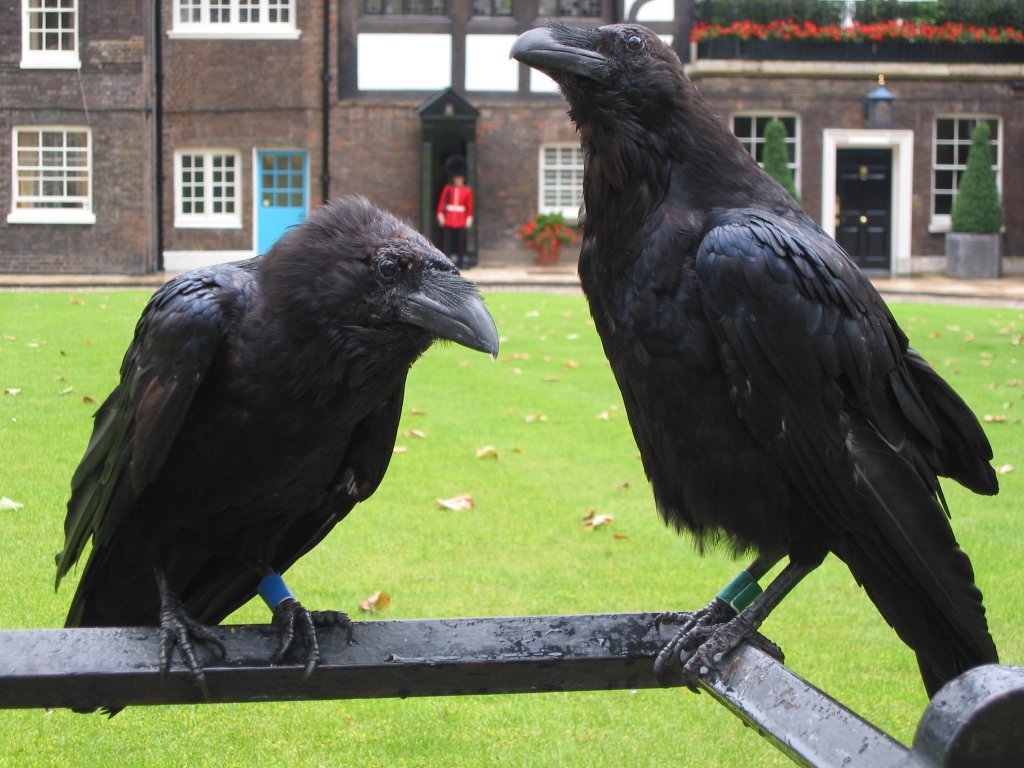
We recently watched a programme about Britain’s Castles and Palaces.  Part of the programme focussed on the long (and I mean ‘long’!) history of the Tower of London and the black ravens who watch over it.

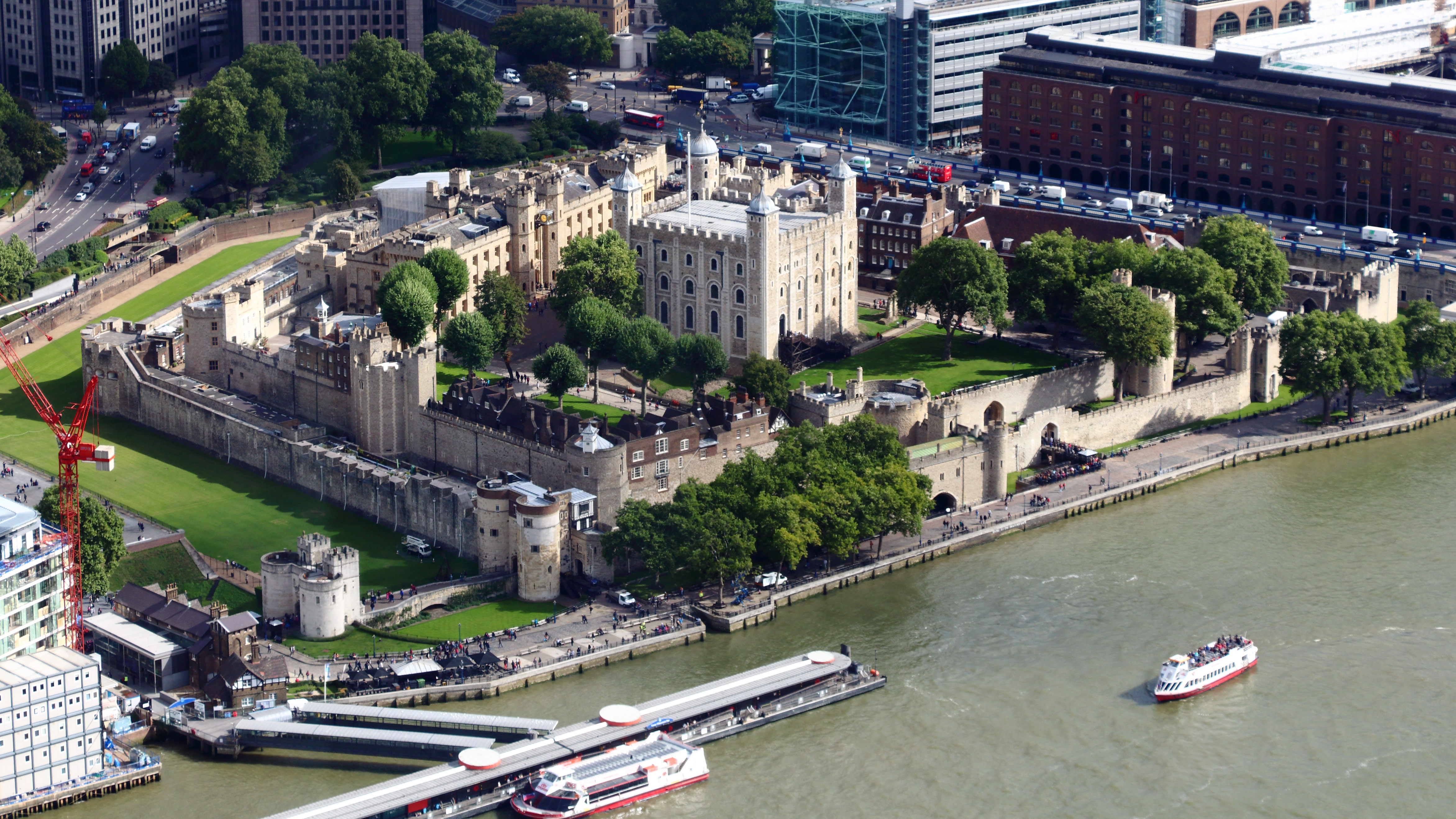
The Tower of London is old! Very old.

An aerial view of the Tower of London

As the website Britain Express explains:

Founded nearly a millennium ago, the Tower of London has been expanded upon over the centuries by many a king and queen. The first foundations were laid in 1078 and the castle has been constantly improved and extended.

The Tower of London is the oldest palace, fortress and prison in Europe. History has it that King Edward of England backed down on his promise to give the throne to William, Duke of Normandy and ended up giving the throne to Harold Godwinson, his English brother-in-law.

Foundations laid in 1078! 936 years ago!

Almost beyond imagination is the story, according to this BBC programme, that the ravens were known to be inhabiting this part of London even before those foundations were laid!

Defenders of the Realm!

I’m delighted to see that a segment of that programme has found its way onto YouTube.

Legend says that the kingdom and the Tower will fall if the six resident ravens ever leave the fortress…

There are nine ravens at the Tower today (the required six plus a few spare!). Their lodgings are to be found next to the Wakefield Tower. These magnificent birds, large members of the genus Corvus, the crow family, respond only to the Ravenmaster and should not be approached too closely by anyone else!

Rather puts all the craziness of present times into perspective!

D-Day anniversary muse.

Just a personal reflection.

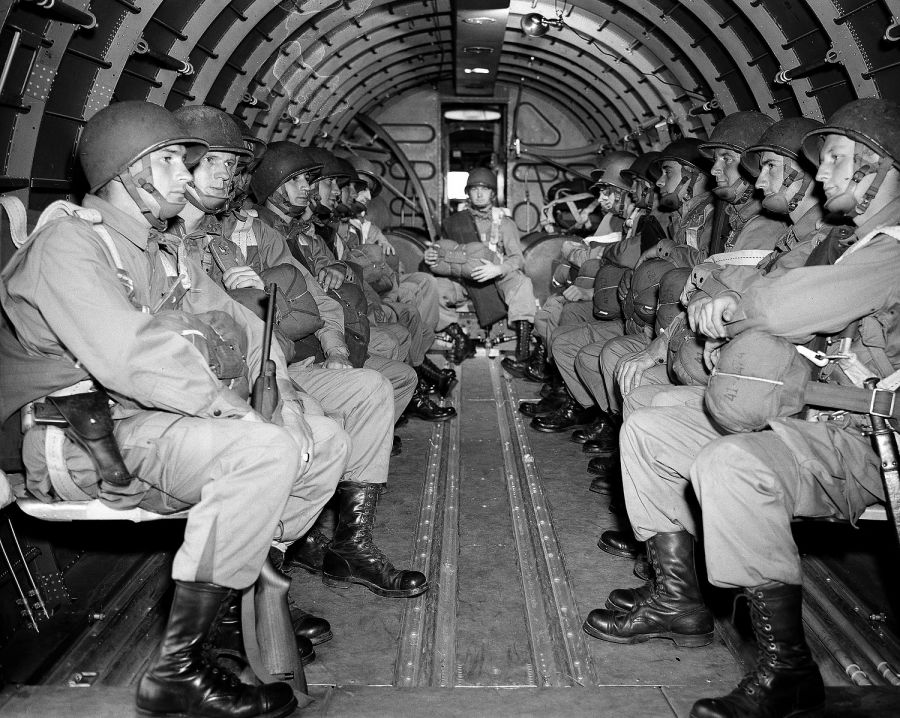
American paratroopers, heavily armed, sit inside a military plane as they soar over the English Channel en route to the Normandy French coast for the Allied D-Day invasion of the German stronghold during World War II, June 6, 1944. (AP Photo)

Seventy years ago, to this day, as the whole world now knows, the start of the end of World War II swung into action.  As this website put it (from where this photograph came),

On D-Day, June 6, 1944, Allied troops departed England on planes and ships, made the trip across the English Channel and attacked the beaches of Normandy in an attempt to break through Hitler’s “Atlantic Wall” and break his grip on Europe. Some 215,000 Allied soldiers, and roughly as many Germans, were killed or wounded during D-Day and the ensuing nearly three months it took to secure the Allied capture of Normandy.

On this day, seventy years ago, my mother was living in London four months pregnant with yours truly. I was born in November, 1944.

The USA frequently gets a hammering in the media, including blog sites, for a whole range of activities.

But the 6th June, 1944 reminds me that when the American people turn their hand to helping others across the world, they can be a most powerful force for good.

That I have lived my almost seventy years in an environment that has allowed me freedom and opportunity and that I write this as a relatively new resident of the United States of America, living happily in rural Oregon, is a testament to that force for good.

Thank you Yankees!

flags

Picture parade forty-four.

The final set of Bob’s adorable bird photographs.

(First set here, second set is here; last week’s set here.)

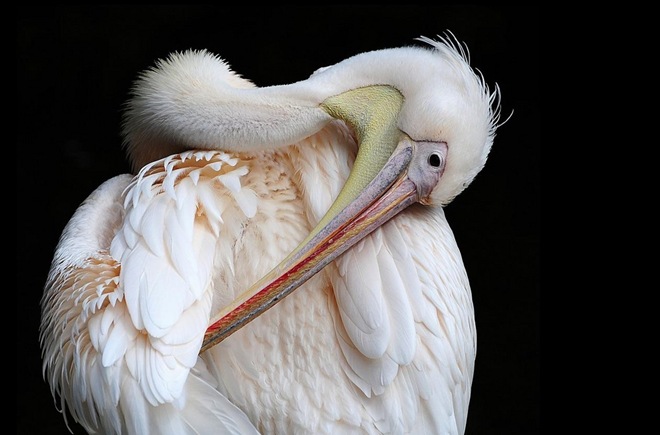
No, the brown part is not me, it is my “floatie cushion”.

oooo

bird25
What an attractive hors d’oeuvre!

oooo

Were you eating blackberries when you sneezed on my wing?

oooo

Hey, don't blame me, my mother was a Cardinal and my father was a Magpie.
Hey, don’t blame me, my mother was a Cardinal and my father was a Magpie.

oooo

Oh WOW, what a hoot. You really bought the bit about us being wise?

oooo

Oh how I hate it when it itches there!

oooo

Really? My mother flew south without me?

oooo

You all have a good week!

Picture parade forty-three.

Yet more of Bob’s fabulous bird photographs.

Carrying on from last week’s Picture parade forty-two.

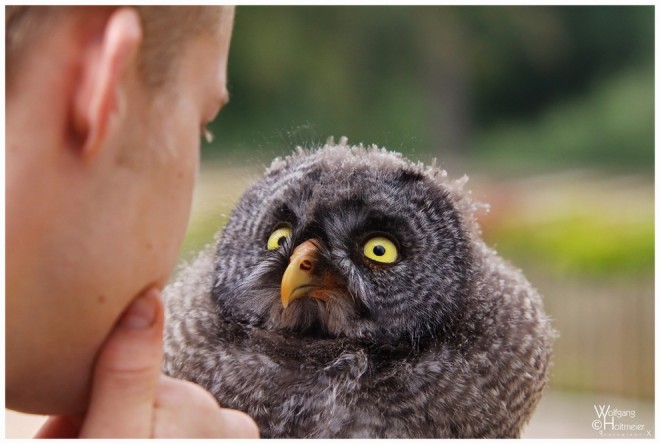
Yeh, well your eyes would get big too if someone had their fuzzy hands all over your bod!

oooo

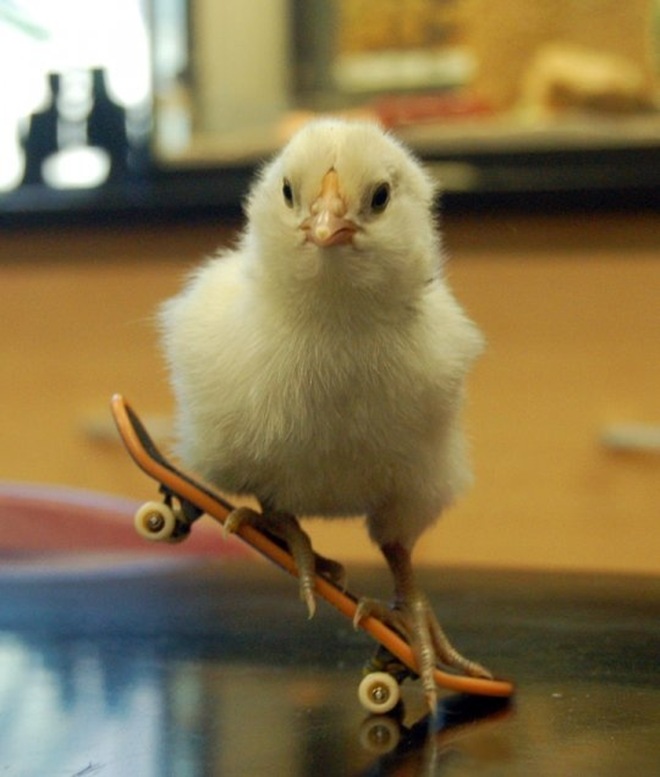
Which way did you say it was to the Xtreme Games?

oooo

With this disguise, they'll never figure out who robbed their nest!
With this disguise, they’ll never figure out who robbed their nest!

oooo

The doctor said it wasn't malignant but I think I'll get a second opinion.
The doctor said it wasn’t malignant but I think I’ll get a second opinion.

oooo

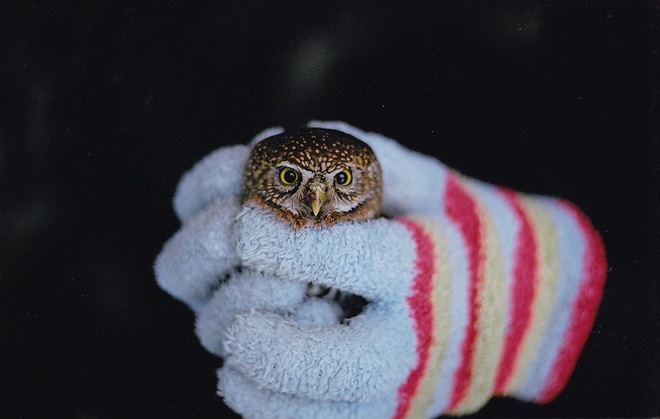
So sorry to have to ask all of you to help but I really do need that contact I dropped.

oooo

Don't look at me like that, haven't you ever heard of Santa Bird?
Don’t look at me like that, haven’t you ever heard of Santa Bird?

oooo

Oh, how I love government handouts!!

oooo

The final set of these fabulous photographs next Sunday.